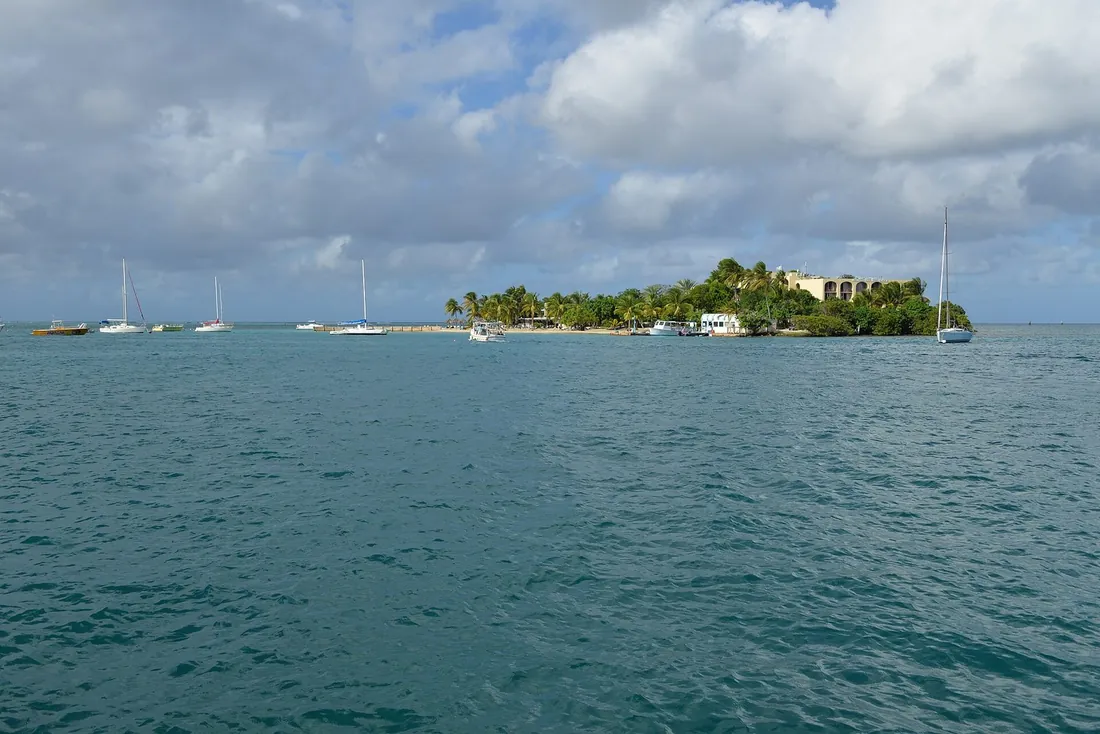
Every St. Croix trip starts with the same question: when should we come? This post walks the whole year, season by season. It covers the weather numbers month by month, the events calendar, the sea turtle season, the sargassum picture, the flight schedule, and how far ahead to book a villa for each part of the year, so you can pick your week on facts.
The short answer has not changed since we wrote the first version of this post. If your one priority is the driest, breeziest weather, come between mid-December and April and book early. If you want the best trade of weather against price and open calendars, come in May or June. If you want the island at its quietest and greenest, with the most availability and the lowest rates of the year, come between September and November and build a little flexibility into your plans.
The long answer is more useful, because "best" depends on what you are coming for. A February trip and a July trip are both good trips here; they are different trips. The winter visitor gets the Christmas Winds and the fullest calendar of nonstop flights. The July visitor gets Mango Melee, warmer water, an emptier island, and a villa calendar with room to move. St. Croix sits at about 17 degrees north, so the swing between its coolest month and its warmest is roughly five degrees. The sea is swimmable every day of the year. What actually changes through the year is rain, wind, crowds, price, and what is going on. That is what the rest of this post lays out.
How the year divides
Most Caribbean writing splits the year into a high season and a low season. On St. Croix it makes more sense to think in four parts.
- High season, mid-December through April. The coolest, driest, breeziest stretch. The most visitors, the highest villa rates, the most nonstop flights, and the biggest events. Calendars fill earliest here.
- Late spring, May and June. The value window. Weather still very good, crowds thin, rates step down, and the calendar still has life in it. This is the stretch we point most first-time guests toward when they ask us this question directly.
- Midsummer, July and August. Warm, quieter, and local. The island's summer events land here, the water is at its warmest, and villas that were fought over in February have open weeks.
- The green season, September through November. The quietest and rainiest stretch, the peak of hurricane season, and the best value of the year. The island turns deep green. Travelers who come now plan with a weather eye and are usually glad they did.
Two calendar notes cut across all four. Atlantic hurricane season runs June 1 to November 30 on paper, with August and September the most active months on the long-term record; we treat that in its own section below. And Sandy Point National Wildlife Refuge, the island's most photographed beach, runs on the sea turtles' calendar, open weekends only from September through March and closed completely from April 1 through August 31. Both of those facts should sit next to your dates before you book anything.
High season: mid-December through April
This is the classic Caribbean winter, and it earns its reputation. From roughly mid-December to mid-March the trade winds blow steady out of the east, a pattern islanders call the Christmas Winds. Days run around 84 to 85 degrees, nights drop to the low 70s, humidity eases, and rain thins out. February and March are the two driest months of the year on the long-term record, with March the driest of all at about an inch and a half of rain on average. Strings of cloudless days are normal. If you are escaping a mainland winter, this is the product you are picturing.
It is also when everyone else comes. The winter holidays and the February-to-March school break weeks are the busiest of the year. Popular villas book out first for Christmas and New Year's, then for the mid-winter weeks. Buck Island boats, the better dinner reservations in Christiansted, and the small stock of rental cars all tighten up in these months. St. Croix crowded is still nothing like resort-island crowded, and you will have beaches largely to yourself on weekday mornings even in February, but you feel the season in the booking, and you pay for it: winter rates are the highest of the year across the island's villas and small hotels, holidays highest of all.
The events calendar is at its fullest now too. The Crucian Christmas Festival, the island's carnival, runs from late December into the first days of January, closing with the children's and adults' parades through Frederiksted. Agriculture and Food Fair weekend lands in February, Mardi Croix parades down Cane Bay beach, and a February Jump Up usually fills downtown Christiansted. There is more on all of these below and in a year of events.
One thing winter is not: hot. Guests sometimes arrive in January expecting the wall of heat they met on a summer trip elsewhere. Winter here is warm and breezy, and after sunset on a windy East End night you may actually want a light layer. Pack for 84 and breezy, and you have packed correctly.
Late spring: May and June
When guests ask us for the single best trade of weather, price, and elbow room, we usually say late April through June. The winter crowds go home after Easter. Rates step down from their winter peak. The wind eases, which flattens the water on the east and north coasts and makes for calmer snorkeling days. Days warm into the upper 80s, and the sea does too.
May is on record as a wetter month than the winter, at about three and a half inches on average, but Caribbean rain rarely behaves the way mainland rain does. It usually arrives as a short shower that passes through, waters the hills, and gives the afternoon back. June then sits in a drier lull inside the wet season; on the long-term record June averages less rain than May, around two inches. A May or June trip that loses a whole day to weather is uncommon.
June 1 is the official opening of hurricane season, and it is worth saying clearly that early-season weeks are historically quiet ones. The active part of the season comes later, in August and September. Plenty of travelers who would rather skip those months are perfectly comfortable in June, and the booking advice in the hurricane section below, insurance bought early and flexible plans, applies from June 1 on.
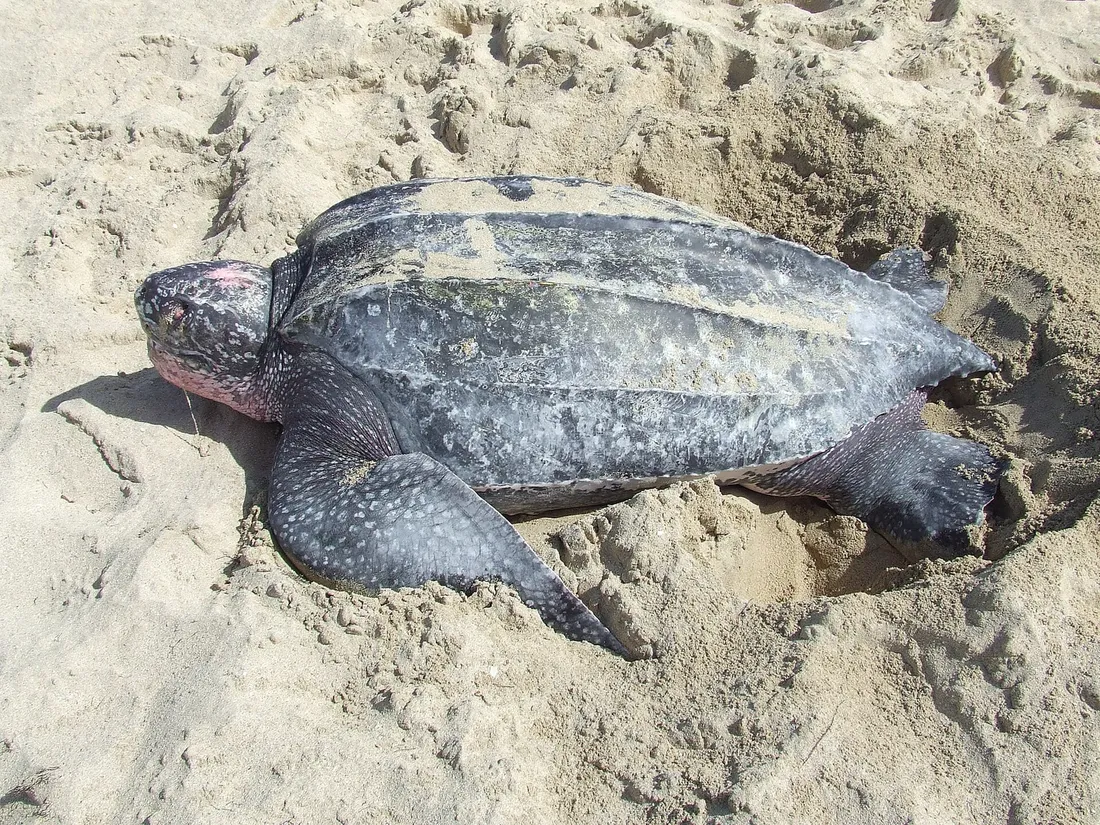
The signature event of this window is Taste of St. Croix, the island's chefs-and-restaurants tasting night, which ran its 26th edition in June 2026; dates move around, so check the current calendar. A late-May Jump Up has opened the summer in recent years as well. And leatherback turtle nesting is in full swing at Sandy Point, which is exactly why the refuge closes to the public on April 1; the guided turtle watch programs are the one legitimate way onto that beach in spring.
Midsummer: July and August
Summer on St. Croix runs warm and quiet. Daytime highs sit around 89, the warmest of the year, the nights stay in the upper 70s, and the water reaches its warmest and often its calmest. Crowds are the thinnest of any stretch outside the fall, which changes the feel of the island: you pull up to Cane Bay on a Tuesday and count the other cars on one hand, and the boat crews and bartenders have time to talk.
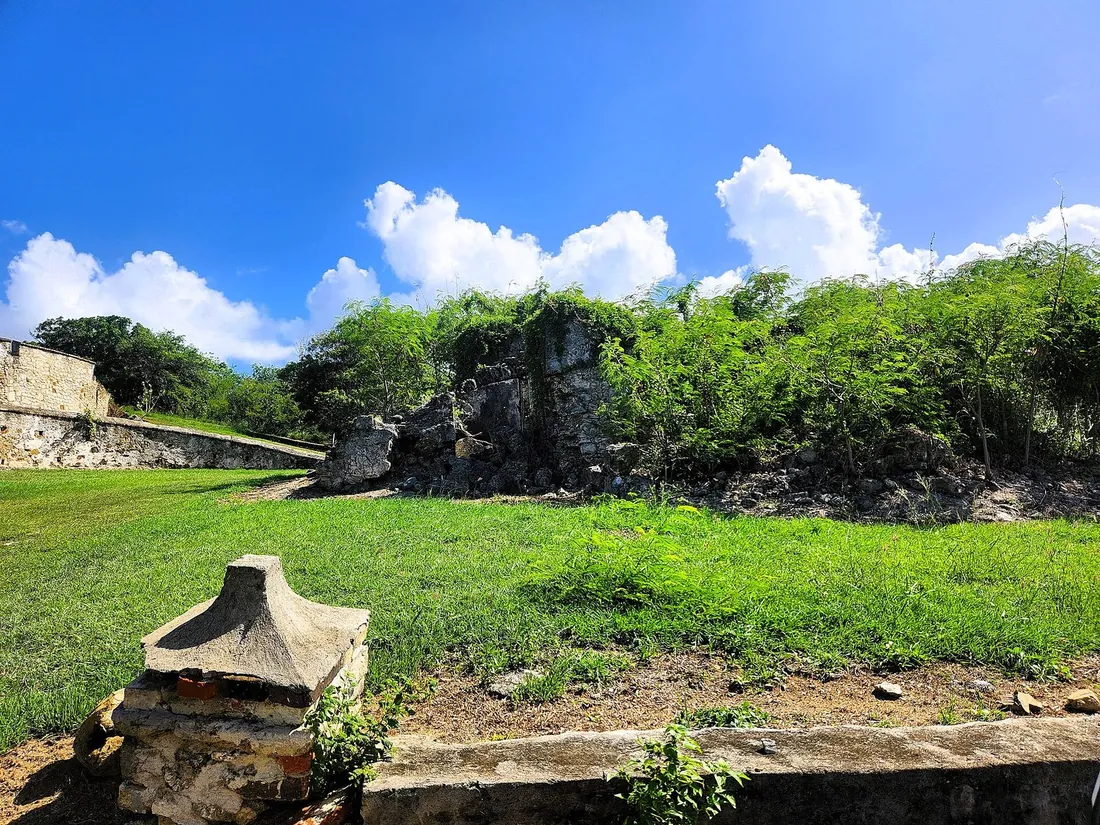
July is the island's most local month, in the best way. Emancipation Day on July 3 marks the 1848 march on Fort Frederik that ended slavery in the Danish West Indies, and Frederiksted marks it every year. The following weekend or so brings Mango Melee at the St. George Village Botanical Garden, a tropical-fruit festival that is one of the best single days on the calendar for a visiting family: mango tastings and competitions, local food, more than a hundred vendors, kids' activities in the garden's grounds. The 30th edition ran on a Sunday in mid-July 2026, 11 to 5, with adult admission around ten dollars at last check. A midsummer Jump Up usually lands in July too.
The full weather picture for midsummer has three parts. First, it is hotter and stickier than winter, and the Christmas Winds are long gone, so afternoons ask for shade, water, and a pool. Second, the rain record is moderate, roughly two and a half to three inches a month, mostly in brief showers. Third, from mid-August the tropics wake up: the active window of hurricane season is roughly mid-August to mid-October, so an August trip should carry the same insurance-and-flexibility plan as a fall trip. July, by the long-term record, sits before that window opens.
Summer is also when sargassum, the open-ocean seaweed that drifts through the whole Caribbean, tends to peak. It matters far less here than headlines suggest, and it gets its own section below, because which coast you swim on matters more than which month it is.
The green season: September through November
September, October, and November are the island's quiet months, and they are quietly wonderful for the right traveler. This is the wettest stretch of the year, about five inches a month on average, which together accounts for roughly 40 percent of the island's annual rain. The rain falls, the hills answer, and the island goes as green as it ever gets. The west-end rainforest is at its lushest, the roadside turns to flowers, and the light after an afternoon shower is the best of the year for photographs.
It is also the emptiest stretch. September is the single quietest month for visitors. Villas that require a fight in February sit open, rates are the lowest on the calendar, restaurants seat you without a wait, and dive boats run with half loads. Guests who take a September or October trip and get a normal weather week, which is the most common outcome, come home telling people they had the island to themselves. They are not exaggerating by much.
The trade-offs are real and worth stating. This is the heart of hurricane season, with the most active weeks running to mid-October, so a fall trip needs travel insurance bought at booking and a flexible attitude toward the forecast. A few island businesses take their own vacations or trim hours in September and October, so a restaurant list should be checked against the current week rather than last winter's. And the flight schedule is thinnest now; the winter nonstops have not started yet, so more itineraries connect through Miami or San Juan. All of it argues for booking the fall with open eyes, which is exactly what the next section is for.
One more fall fact that surprises people: Sandy Point reopens on September 1. From then through March 31 the refuge is open on Saturdays and Sundays, 10 a.m. to 4 p.m., and a fall weekend there, two miles of sand with a handful of people on it, is one of the best free things the island offers.
Hurricane season in plain terms
Atlantic hurricane season runs June 1 through November 30. Those dates describe the whole basin, from Africa to Texas; they do not mean six months of weather trouble on one 84-square-mile island. Most days inside the season here are ordinary warm days with a passing shower. The National Hurricane Center's long-term climatology puts the busiest part of the season in August and September, so the practical planning window to think hardest about is roughly mid-August through mid-October.
Storms do not ambush anyone. Systems are tracked and publicly forecast for days before they matter, so decisions about a trip get made against a real map, with your airline and with us, several days out. Airlines routinely issue change-fee waivers when a system threatens a route. What turns a tracked storm into a ruined vacation is a trip booked with no flexibility and no insurance, and both of those are choices.
The rules we give every guest booking between June and November are short. Buy travel insurance on the day you book, because policies only cover a storm that had no name when you bought them. Read the weather language in the policy. Favor changeable airfare when the price gap is small. Then stop worrying about it, because the odds on any given week are heavily in your favor, and September through November pays you back for the diligence with the emptiest beaches and the lowest rates of the year. The full booking mechanics, policy details and what happens if a storm is actually forecast for your dates, are in our hurricane season guide.
The year in numbers
The table below is the reference version of everything above. Temperatures and rainfall are the NOAA 1991 to 2020 climate normals for Christiansted at Henry E. Rohlsen Airport, rounded to whole degrees; treat them as long-term averages rather than promises, and remember that the wet west end catches noticeably more rain than the airport and the dry East End less. Events are the month's regulars; annual dates shift, so confirm against the current calendar before you plan a trip around one.
| Month | Avg high | Avg low | Rain | On the calendar |
|---|---|---|---|---|
| January | 84°F | 71°F | 1.9 in | Festival parades in Frederiksted; Christmas Winds; peak season |
| February | 85°F | 71°F | 1.4 in | AgriFest; Mardi Croix; a Jump Up most years |
| March | 85°F | 72°F | 1.6 in | Driest month on record; leatherback nesting begins; Sandy Point weekends end March 31 |
| April | 86°F | 73°F | 2.2 in | Turtle watch nights; Sandy Point closes April 1; crowds thin after Easter |
| May | 87°F | 75°F | 3.6 in | Value season opens; a late-May Jump Up in recent years |
| June | 89°F | 77°F | 1.9 in | Hurricane season opens June 1; Taste of St. Croix (typically); drier lull |
| July | 89°F | 77°F | 2.6 in | Emancipation Day July 3; Mango Melee; midsummer Jump Up most years |
| August | 90°F | 77°F | 3.2 in | Warmest stretch; quiet; active storm window opens mid-month |
| September | 89°F | 77°F | 4.9 in | Quietest month; Sandy Point reopens weekends Sept 1; peak of storm season |
| October | 88°F | 76°F | 5.0 in | Green season; active window runs to mid-month; lowest rates |
| November | 87°F | 74°F | 5.3 in | Wettest month on average; season ends Nov 30; a Jump Up opens the winter |
| December | 85°F | 73°F | 3.3 in | Christmas Winds arrive; Crucian Christmas Festival opens late month; holiday peak |
Read the spread, and the headline is how narrow it is. Six degrees separate the coolest average high from the warmest. No month averages below 84. The rain column is where the year actually moves, from an inch and a half in March to more than five inches in November, and even the wet months deliver most of it in short showers rather than lost days. For a deeper cut of the same data, see weather and when to visit; for a single month in detail, each month has its own page, from March at the dry end of the year to September at the quiet end.
The events calendar
If an event is the reason for the trip, book around the event and let the season follow. These are the fixtures, in calendar order. Dates move a little every year, and some are announced late, so treat the specifics as typical patterns and confirm before you buy flights.
Crucian Christmas Festival, late December to early January. The island's carnival: pageants, the Calypso and Soca Monarch competitions, a food fair, J'ouvert in the early hours, and a Festival Village that runs for days. It closes with the children's parade and the adults' parade, and those parades run through Frederiksted, on the west end, a detail that trips up visitors who assume everything happens in Christiansted. The 2025 to 2026 edition ran December 26 through January 3. If your trip covers New Year's week, this is happening around you; our festival guide has the full shape of it.
AgriFest, mid-February. The Virgin Islands Agriculture and Food Fair fills Estate Lower Love for a long weekend, usually around Presidents' Day; the 2026 edition, the 54th, ran February 14 to 16. Farm stands, livestock, plants, and the best single concentration of Crucian cooking on the calendar. Locals from all three islands come, and you should too if your dates line up; details in the AgriFest guide.
Mardi Croix, February. A beach-parade day at Cane Bay, the island's small and cheerful answer to Mardi Gras. The 2026 edition ran in early February.
Taste of St. Croix, late spring. The chefs-and-restaurants tasting event, one big evening of the island's kitchens in one room. The 26th edition ran in June 2026 at Divi Carina Bay; earlier editions have run in April, so check the date fresh each year.
Emancipation Day, July 3. A territorial holiday marking the 1848 emancipation proclaimed at Fort Frederik, observed in Frederiksted.
Mango Melee, mid-July. The tropical fruit festival at the St. George Village Botanical Garden: mango everything, local food, a hundred-plus vendors, and shaded grounds that make it work with kids. It has run for 30 years, typically on a July Sunday, 11 to 5.
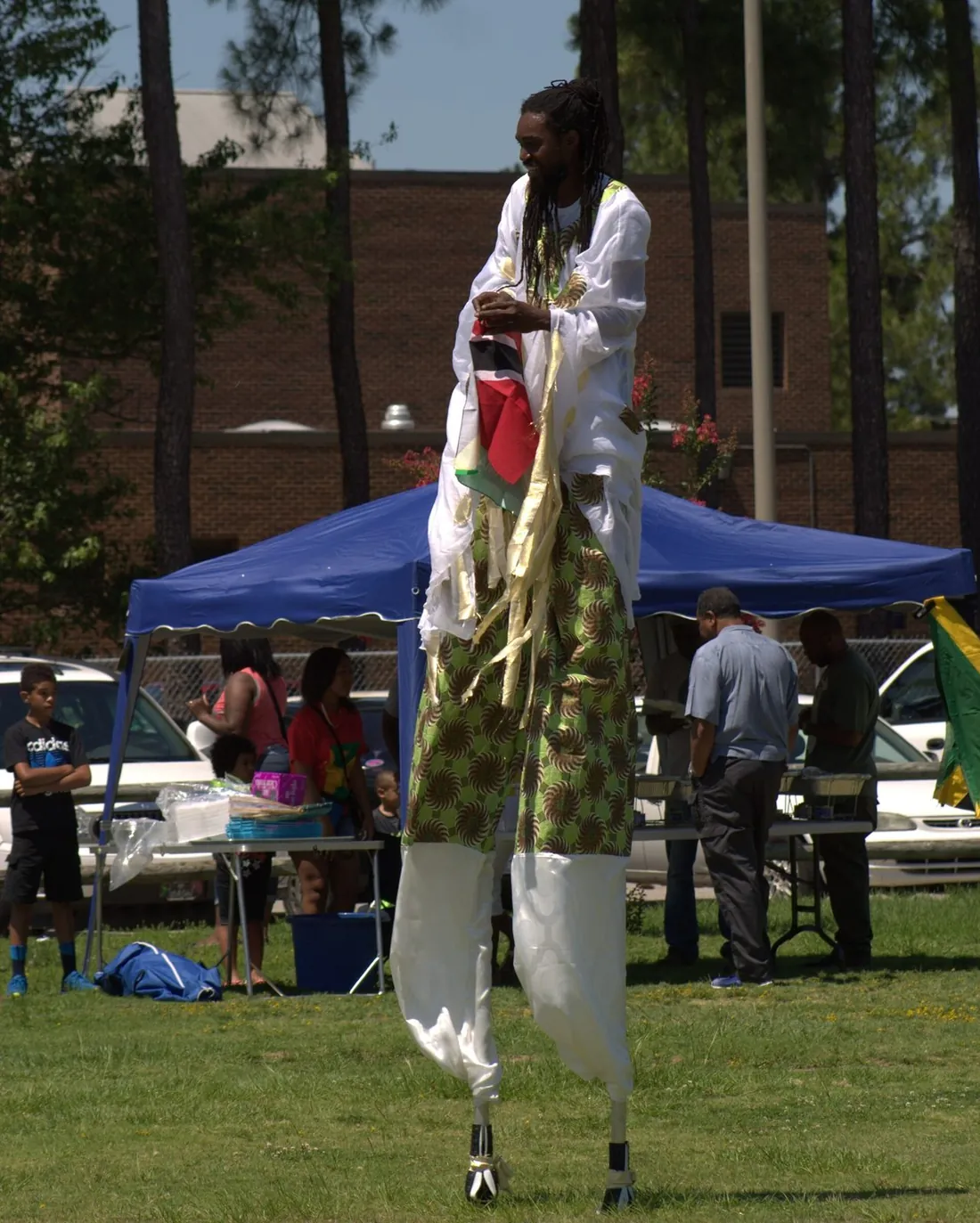
Jump Up, several times a year. Christiansted's evening street festival, roughly quarterly: recent editions have landed in February, late May, July, and the Friday after Thanksgiving. Streets close, mocko jumbies walk, shops and restaurants stay open late. Dates are announced weeks rather than months ahead, so check when you arrive rather than planning a trip around one; the Jump Up guide covers the night itself.
Turtle season
St. Croix runs on a second calendar that has nothing to do with tourism: three species of sea turtle nest here, and the biggest protected nesting beach in the United States sits on the island's southwest tip. Sandy Point National Wildlife Refuge exists for the leatherbacks, and its public hours follow their year.
- September 1 through March 31: the refuge is open to visitors on weekends only, Saturday and Sunday, 10 a.m. to 4 p.m.
- April 1 through August 31: closed to the public entirely, because leatherback nesting runs roughly March into July and the beach belongs to the turtles and the research teams.
Plan around those dates and the refuge rewards you with two miles of undeveloped sand; ignore them and you drive twenty minutes to a locked gate. During the closed months, guided programs are the exception: turtle watch nights, run with the research teams in spring, take small reserved groups onto the beach after dark to watch for a nesting leatherback. Spots are limited and go fast when dates are announced. Green and hawksbill turtles nest later and more widely, at Buck Island and the East End bays, with nesting running through the summer and hatchlings emerging into the fall.
If turtles are the point of your trip, the calendar answer is: come in spring for a chance at a leatherback on a guided night, or come September through March and simply walk Sandy Point on a weekend. And year-round, the easiest turtle sighting on St. Croix is in the water, over the seagrass at Chenay Bay or on a Buck Island trip, where daytime sightings are routine.
Sargassum, coast by coast
Sargassum is the drifting brown seaweed that has drifted through the whole Caribbean in waves since about 2011. Some years are light and some are heavy; 2025 set basin-wide records and 2026 has run close behind, by the University of South Florida's monthly outlooks. It arrives in pulses, and in most years the heaviest pulses reach the islands between spring and midsummer, tapering in the fall. None of this is unique to St. Croix, and none of it is constant: a beach can carry a brown line one week and be clear the next.
Geography does most of the sorting. The weed rides currents and trade winds out of the east and southeast, so east- and southeast-facing shores catch it first and hold it longest, while coasts that face north and west sit in the lee. On St. Croix that pattern generally means the exposed East End and south shore see the most of it in a heavy stretch, while the north-shore and west-end beaches that anchor most guests' swimming, Cane Bay, Davis Bay, Rainbow, the Frederiksted waterfront, stay clear far more often than not. Buck Island trips run on the protected side of the reef. We say "generally" on purpose: wind shifts move the picture week to week, and no one can promise any beach's condition a month out.
The practical advice is short. If you are traveling between roughly April and August of a heavy year, ask us about current conditions the week before you arrive rather than reading months-old reviews; the territory's Department of Planning and Natural Resources posts monthly updates, and the boat crews know the day-by-day truth. And if one beach has weed on it, drive fifteen minutes. On an island with this many coasts, the clean water is always nearby.
Flights follow the seasons too
One planning fact that surprises repeat Caribbean travelers: the St. Croix flight schedule breathes with the seasons, and it shapes trip math almost as much as the weather does. Year-round, the anchor is American's daily Miami nonstop, plus the short hops to San Juan that connect to everything. The rest of the nonstop map is a winter phenomenon. On the schedules published as of mid-2026: American's Charlotte flight runs Saturdays from early November and daily from mid-December, Delta's Atlanta service steps up from Saturdays to near-daily just before Christmas, American adds winter Saturday service from Chicago in December, and United opens Newark Saturday service at the end of October 2026, the first New York-area nonstop in decades. Airline schedules change constantly, so verify your own dates.
What this means in practice: a winter traveler from the eastern half of the mainland can often fly nonstop, while a September traveler should expect a connection through Miami or San Juan and an itinerary that takes a few hours longer. It also means winter award seats and cheap fares on the nonstops go early, which is one more reason the high-season booking clock starts sooner than people expect. Routes, seasons, and the inter-island options are kept current on our getting here page.
How far ahead to book a villa
We manage a small portfolio of individual homes and condos, which is the structural reason booking windows matter here: when a specific house is taken for your week, there is no identical room next door. A hotel sells a category; a villa calendar sells exact weeks of one house. That makes lead time the main lever you control, and the right lead time varies by season.
- Christmas and New Year's: across the Caribbean, these are the first weeks to fill on villa calendars, and St. Croix is no exception. Travelers set on a specific beachfront house for the holidays tend to book close to a year out, and high-season regulars commonly lock in the same week from one year to the next. Six months out, the holiday choices are leftovers.
- January through April: book six to nine months ahead for a full choice of houses, especially for the February and March school-break weeks and any week you need a large home. Inside three months you will still find good options; the most sought-after houses are typically spoken for by then.
- May and June: three to six months is comfortable. This window rewards planners with high-season weather odds at shoulder-season lead times, which is a large part of why we like it.
- July and August: a few months ahead is usually plenty, though families chasing the same midsummer school-vacation weeks should move earlier for the big houses.
- September through November: the shortest windows of the year. Trips put together a few weeks out routinely land a first-choice house, which makes fall the best stretch on the calendar for a spontaneous escape.
Those are the island market's typical patterns rather than laws, and one great cancellation can open a great week anywhere in the year, so it never hurts to ask. Rates move with the same tide, highest at the holidays and lowest in the fall, and every house's live calendar and pricing sit on its own page. Booking directly with us, rather than through a listing platform, also gets your questions answered by people on the island who can tell you what your specific week is actually like; the case for that is on our book direct page.
Matching the season to the trip
Put the pieces together and the year sorts itself by trip type rather than by a single best month.
- Escaping winter: January through March. You are buying the Christmas Winds and near-certain dry weather, and paying peak rates for them. Book early, and add AgriFest or a February Jump Up if the dates cooperate.
- A honeymoon or a couple's trip on a budget that still wants great weather: May or early June. Thin crowds, softer rates, calm water, long days.
- A family summer trip: late June through July. Warm water for the kids, Mango Melee, turtle programs early in the window, and villa calendars with room for a big group.
- Divers and snorkelers: most of the year works; many regulars favor late spring through summer for the calmer seas and warmest water, and the fall for empty boats. Winter's east wind can stir the exposed coasts while the west end stays calm.
- Turtle people: spring for the guided leatherback nights, fall and winter weekends for Sandy Point itself.
- Value hunters and quiet seekers: September through November, booked with insurance and flexibility. Lowest rates, greenest island, emptiest beaches.
- Festival travelers: the week between Christmas and January 3, booked far ahead, for the Crucian Christmas Festival and the Frederiksted parades.
If you take nothing else from this post, take this: every month here is workable, and complaints almost always come from a mismatch between the month and the expectation. A September guest expecting February's breeze, or a January guest expecting July's bathwater sea, wrote their own review before the plane landed. Set expectations off the table above and the island delivers in every season.
Questions guests ask
What is the cheapest time to visit St. Croix?
September through early December, excluding the Thanksgiving holiday week, is the least expensive stretch across villas, small hotels, and usually airfare. September and October sit at the bottom of the rate calendar. The trade-offs are the peak of hurricane season and a thinner flight schedule, so budget travelers should buy travel insurance at booking and favor changeable fares. May and June are the runner-up: rates well below winter with the year's most reliable weather odds still largely intact.
Is hurricane season a bad time to visit?
Six months of the calendar, June through November, sit inside the official season, and most weeks in that window are ordinary warm weather. The statistically active stretch is roughly mid-August to mid-October. Storms are forecast days in advance, airlines issue waivers when routes are threatened, and insurance bought before a storm has a name covers a disrupted trip. Come with that plan in place and fall is a legitimately great time here; come with no flexibility and no coverage and you are gambling for no reason.
When is the sea calmest for snorkeling?
The water is swimmable every month, and conditions vary more by coast than by season. As a general pattern, the winter trade winds put chop on the exposed east and north coasts while the west end stays calm, and late spring through summer brings the flattest water island-wide. Any calm morning is a good snorkeling morning at Cane Bay or off Frederiksted. Dive shops and boat crews read the day's conditions better than any calendar; ask them, and they will point you to the right coast.
When can I see sea turtles?
In the water, all year: green turtles graze the seagrass at Chenay Bay and around Buck Island every month. On the sand, it is regulated: leatherbacks nest at Sandy Point roughly March into July, when the refuge is closed except for guided turtle watch nights with the research teams, booked when spring dates are announced. Greens and hawksbills nest through summer at Buck Island and the East End bays. From September through March you can walk Sandy Point yourself on weekends, 10 to 4.
How far ahead should I book for Christmas or New Year's?
Close to a year for a specific house, and no later than early summer for a good choice of houses. The holiday fortnight is typically the first stretch to fill on the island's villa calendars, repeat visitors commonly reserve the same week season after season, and the winter nonstop flights sell their cheap seats early too. If you are starting late, ask anyway; cancellations happen every year, and a flexible arrival day sometimes unlocks a calendar that looks closed on the surface.
Is St. Croix crowded during high season?
Crowded by St. Croix standards, which are gentle. The island is 84 square miles with about 41,000 residents and no mega-resort strip, so even February distributes its visitors across dozens of beaches. What high season actually feels like: the best dinner tables want reservations, Buck Island boats sell out days ahead, rental cars need booking before you fly, and the famous beaches have company by late morning. Empty sand still exists in February; you find it a ten-minute drive from wherever everyone else parked.
Which months have sargassum?
In most recent years the heavier pulses arrive between April and August and taper through fall, with winter the most reliably clear stretch, and the amount swings a lot from year to year. Exposure matters more than the month: east- and southeast-facing shores catch the most, while the north-shore and west-end swimming beaches sit in the lee and stay clear far more often. If your dates fall in a heavy summer, ask us about conditions the week before you travel rather than guessing from old photos.
Where to stay in every season
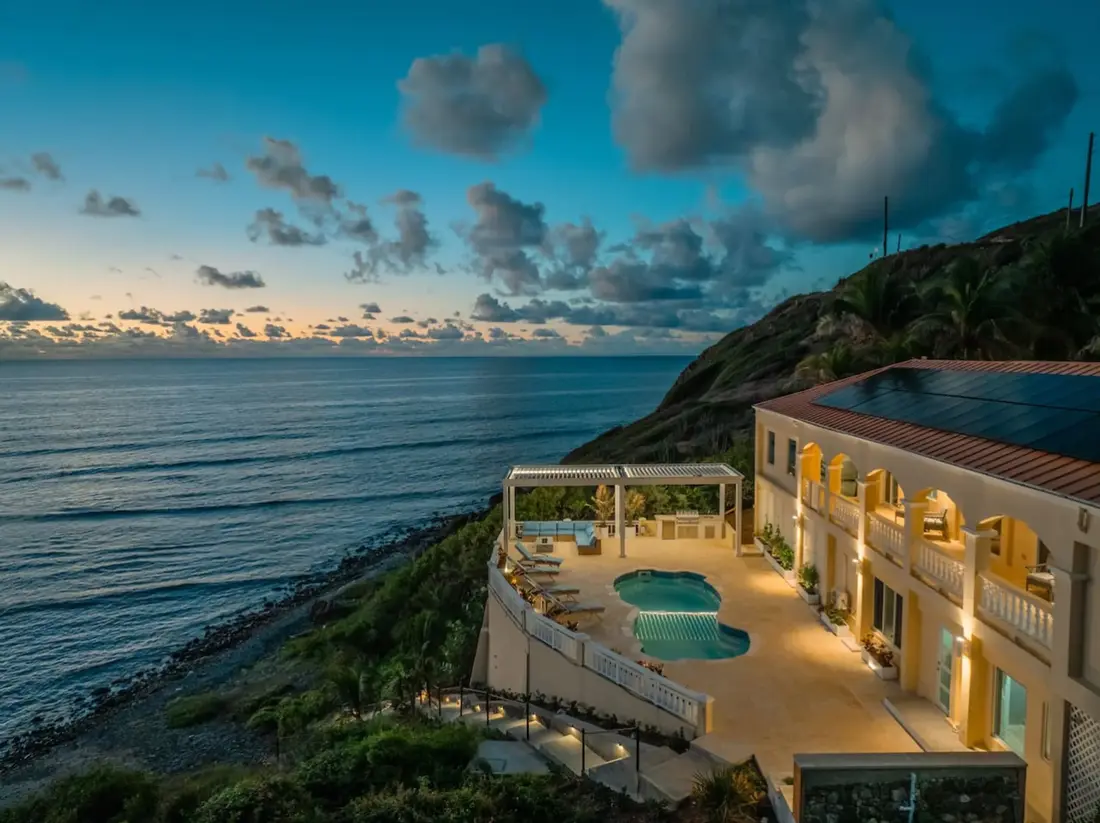
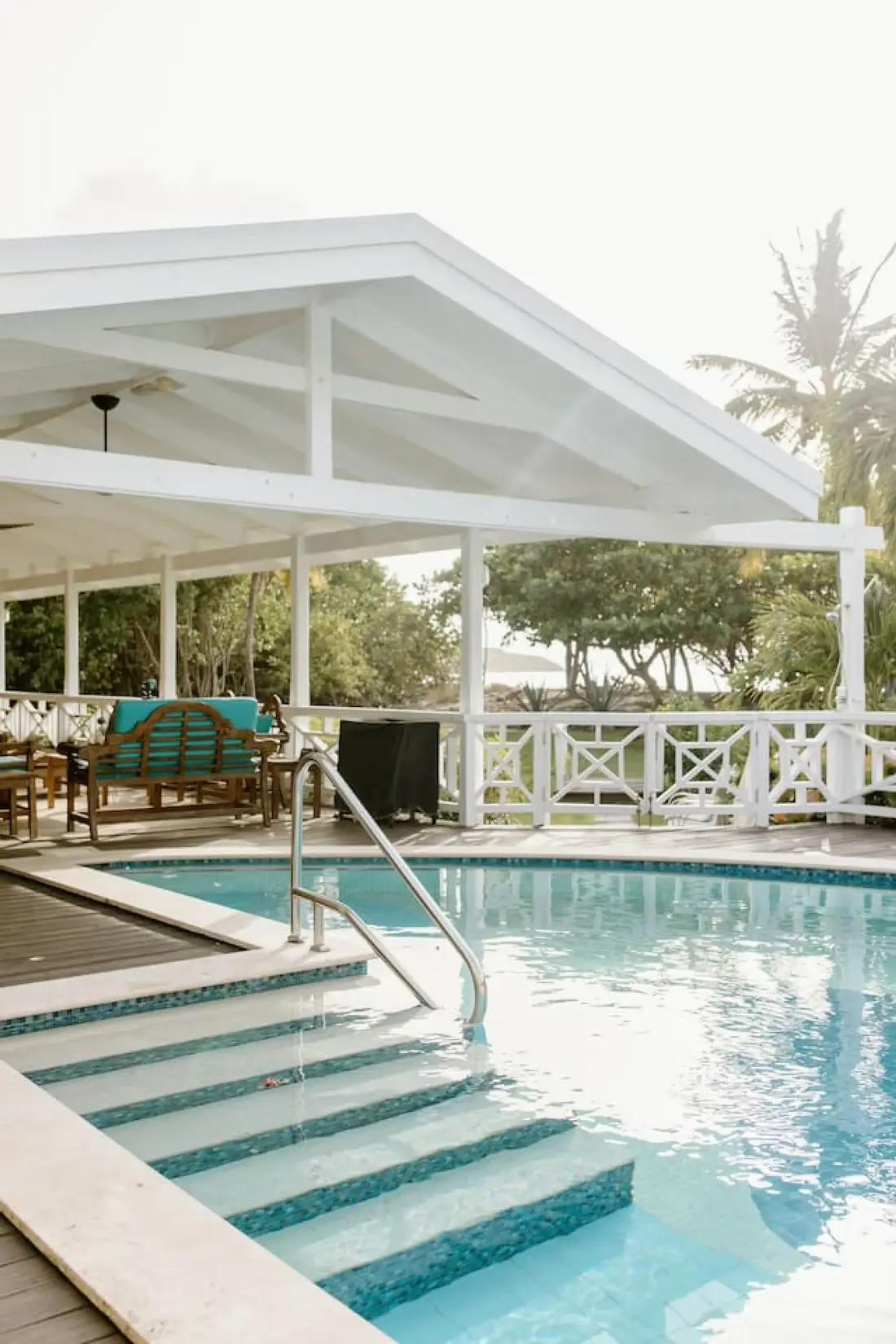
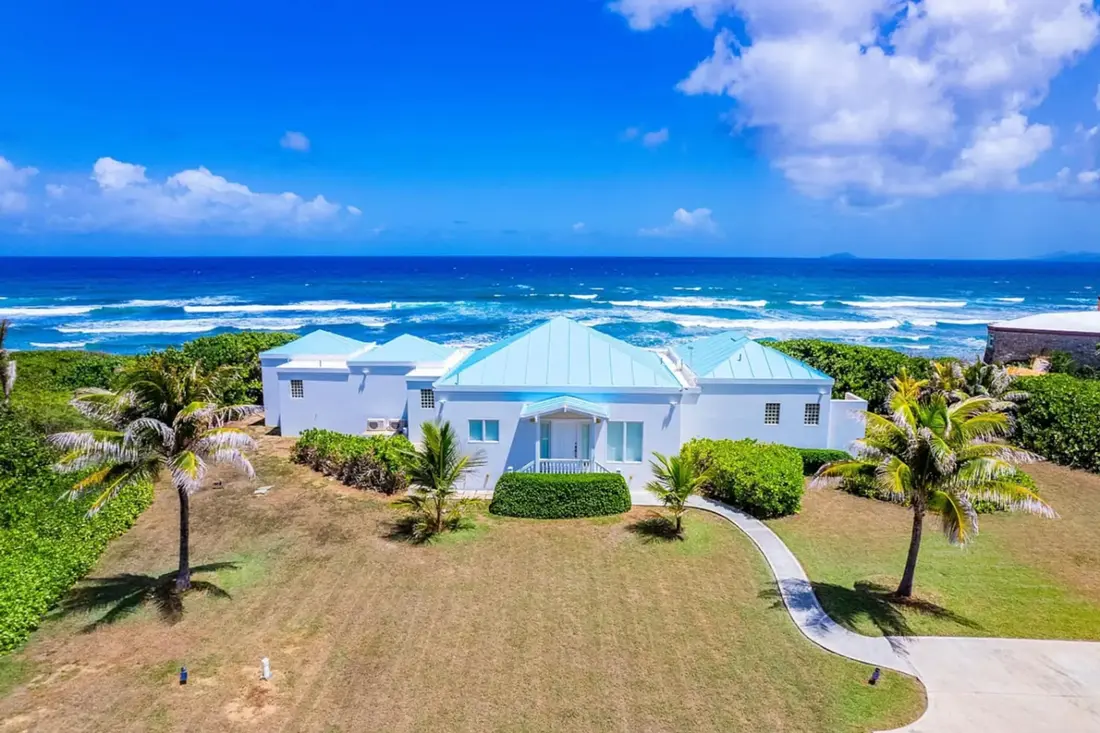
Whatever month wins, the villa question comes next, and the season can shape that choice too. Winter guests chasing the Christmas Winds tend to love the East End, where The Cerulean faces Buck Island from its own private beach. Families and groups gravitate to Shoy's Beach House, five bedrooms on a calm, walkable beach minutes from Christiansted, in any month school allows. Fall and summer travelers hunting sunsets and calm water do well on the west end, where Sunset Sea-Clusion sits closest to Sandy Point's weekend gate. Every home we manage, beachfront to hillside, is on the beachfront collection and villas pages with live calendars, and we answer questions from the island itself. Pick your season, then come find the house that fits it.
Sources
Written from official and first-party sources, checked August 2026. Hours, prices and event dates change — confirm before you go.