St. Croix in March
Statistically the driest month of the year, with leatherback season beginning at Sandy Point.
March is the driest month St. Croix gets, the last full month of the winter high season, and the month the leatherback turtles begin returning to Sandy Point. It hands you the island's most bankable weather and its most crowded, most expensive weeks in the same breath.
This page is the March reference for St. Croix: what the month's weather actually does, why the calendar and the rates run as hot as they ever do, the St. Patrick's parade that fills Christiansted, where the turtles and the whales stand, and what a March trip needs booked. If you are still deciding which month to pick, the best-time-to-visit essay sets all twelve beside each other; if you want the physics of why the trades blow and the showers pass, the weather guide lays out how the island's climate behaves once you land.
March on the weather record
March is the payoff month for anyone who books St. Croix on the promise of sun. On the long climate record it is the driest month of the year, drier than January and drier by a whisker than February, and the two of them anchor the dry end of the island's calendar together. The regional climatologies put March's average total near 1.2 inches, about 31 millimeters, spread across roughly nine days that register any measurable rain at all. What does fall tends to arrive as a fast trade-borne shower that crosses one coast and is gone inside a quarter of an hour, so a washed-out day in March is a genuine rarity.
Warmth is steady and mild. Drawing on the 1991-to-2020 averages kept at the island's airport, a normal March afternoon reaches about 85°F and a normal night bottoms out near 72°F, which pencils out to a round-the-clock mean close to 78 or 79°F. That is a degree or so above the depth of winter and still short of the high-80s heat the island runs from June onward. Daytime readings almost never climb past the mid-80s, and the long record has never produced anything remotely cold; a night below 68°F is about as chilly as March gets.
The sea is at the cool end of its yearly range in March, which on St. Croix still means warm. Station readings average about 79.7°F for the month, sliding between roughly 77 and 83°F, level with February as the coolest water the calendar offers and only a couple of degrees off the late-summer peak. Swimmers and snorkelers feel nothing but comfortable water; a diver holding still through a long second tank is the one person who might reach for a thin wetsuit. Overhead, the trade wind is the month's moving part, and March is when it changes character, which the next section takes up.
| What to expect | March figure | Against the rest of the year |
|---|---|---|
| Monthly rainfall | About 1.2 in (31 mm) | The driest month on the island's record |
| Days with rain | Around nine | Fewest of any month |
| Average high | About 85°F | A touch warmer than midwinter |
| Average low | About 72°F | Mild; a light layer only for a breezy night |
| Sea temperature | About 79.7°F | Tied with February for the year's coolest water |
| Trade wind | Brisk early, easing after mid-month | The Christmas Winds' last stand |
Those temperature and rainfall figures are the long-run normals gauged at Henry E. Rohlsen Airport; read them as averages rather than promises, and confirm any current forecast against radar once you are here.
When the Christmas Winds let go
From the middle of December the trade wind stiffens into the steady, muscular easterly the whole Caribbean knows as the Christmas Winds, and for three months it is the loudest fact of a St. Croix day. March is when it finally relents. The reinforcement generally slackens around the midpoint of the month, so the first half of March still blows firmly while the back half is the first calmer stretch the north coast has felt since autumn. For a visitor that split is worth planning around: a trip in the last ten days of March often finds flatter water on the exposed shores than a trip in the first ten.
The wind also decides which coast to use on any given day, and that logic runs all month. The easterly flow drives straight onto the north and east shores and leaves them choppier as the afternoon builds, while the shoreline at Frederiksted, tucked on the leeward west side, keeps its calm. The quiet hours are the mornings; the breeze builds to its midday high and softens again by dusk. Read the wind rather than the date on the calendar and you will pick the right beach nearly every time.
The busiest and priciest weeks
March closes out the winter high season, and it closes it at full volume. Together with February it carries the heaviest visitor demand on the calendar, which lands on a rental market with very little give: this is a small island, 84 square miles of it, with no high-rise resort row to soak up arrivals, so a finite stock of villas, cars, boat seats and good dinner tables all come under strain at once. Nightly villa rates hold at their yearly ceiling through the month and only ease once Easter has passed. None of that makes the beaches crowded the way a built-up resort coast is crowded; even now, a weekday morning on the sand can be close to your own. The pressure shows up in the logistics, not the shoreline.
The single busiest engine now is spring break. From late February through March, mainland college and school breaks stack week on week, and families make up the biggest share of them; the weeks bracketing the St. Patrick's parade, and any week that catches a March Easter, run hardest of all. Winter is also the fullest the flight schedule ever gets: the nonstop map links the island to Miami and Charlotte on American, Atlanta on Delta, and Newark on United's Saturday service, with quick connections routing through San Juan. That is why a mainland traveler can often reach the island without a change of plane in March, and why the cheap seats vanish first. Routes shift each season, so the current line-up sits on the getting here page.

What spring break looks like on St. Croix
Spring break fills the villas, but it is worth being clear about what that means here, because St. Croix does not run the spring-break scene the phrase conjures. There is no strip of beach clubs, no wet-t-shirt circuit, no row of party bars pumping until dawn. The island draws families, returning couples and repeat visitors far more than it draws crowds of undergraduates, and the tourism board sells it on quiet, culture and nature rather than nightlife. Even in its busiest month that character holds: the beaches stay low-key, the towns keep early hours, and a rowdy night out is something you would have to go looking for. Travelers who want a loud, packed spring break book Cancun or Punta Cana; travelers who want dependable March sun without that scene book here. The busiest single days are cruise-ship days, when Frederiksted's town beach and shops fill for a few hours before the ships pull out again.
The St. Patrick's Day Parade
The one event that defines March on St. Croix is the St. Patrick's Day Parade through Christiansted. It is a real island institution, not a transplanted novelty. It began in 1969, when a handful of local businessmen at a Queen Cross Street bar got to talking about why the Virgin Islands let St. Patrick's Day pass unmarked, and put together a first float from a stakebed truck with a piano on the back. The 2019 edition was the 50th, which places the 2026 parade in its late fifties. It runs on the Saturday nearest March 17, so in 2026 it falls on March 14.
The parade has grown into one of the biggest street parties of the St. Croix year, and plenty of regulars build a whole trip around it. Floats, marching bands, dance troupes and the island's mocko jumbie stilt dancers work through the streets of the historic town, and the crowd wears green from one end to the other. It reads as a family day as much as a party, with children lining the route through the afternoon and the bars busy after. If your dates land on that weekend, treat the parade as the centerpiece and arrange everything else around it, because it is one of the most-attended days downtown all year.
Transfer Day and the rest of the March calendar
Transfer Day falls on March 31 and is a territorial public holiday. It marks March 31, 1917, the day the Danish West Indies formally changed hands and these islands became American, sold to Washington for twenty-five million gold dollars. Expect government offices closed and a wreath-laying or ceremony to mark the anniversary; it is a quiet civic observance rather than a festival.
Easter is the calendar's wild card in March. Because its date drifts with the moon, Holy Week and Easter land in late March some years and in April in others; in 2026 Easter falls on April 5, but in 2027 it lands on March 28, pulling the island's beach-camping tradition and its cluster of holidays into March instead. When that happens, expect Cramer's Park, Salt River, Dorsch and the west-end beaches to fill with multi-day family camps, and treat the week as a peak one. The full account of Easter on the island sits in St. Croix in April, where the holiday usually falls.
Around those two dates the month keeps the island's standing monthly fixtures. The Christiansted galleries stay open late for the mid-month Art Thursday walk; Frederiksted's waterfront runs its free Rhythms at Sunset concert; and Leatherback Brewing in Kingshill has hosted a first-Saturday outdoor movie night. One thing to set expectations on: the St. Croix Yacht Club's international regatta, which some visitors associate with spring, has in recent years sailed in April rather than March, so do not count on race weekend if you are here now. Dates for all of these move, so confirm the current schedule once you are on island.
In the water
March water is on the mend. The long-period swell that far-off Atlantic storms send toward the north-facing coast all winter arrives less often as the season turns, and the trade-wind chop eases along with the wind through the back half of the month, so the exposed coasts flatten out more often than they did in January or February. The sea is warming off its cool-season low, too. Add the driest, sunniest air of the year and the runoff-free clarity that comes with it, and March delivers some of the best all-round conditions the island's water sees.
The Cane Bay Wall, the shore dive off the north coast that falls away toward thousands of feet, is on for more of the day as the wind quiets, and the crossing out to Buck Island and its marked snorkel trail rides smoother on the calmer days. It is a strong month for snorkeling and diving generally, and the flat, protected water at the Frederiksted Pier takes almost any day the north is up. Sea conditions are usually settled enough for the catamaran day sails out of Christiansted and Frederiksted, and the World Ocean School's tall ship, which keeps a winter berth in Christiansted Harbor, has typically wound up its public-sail season by the end of March. Whatever you have planned on the water, the mornings are calmest, so start early and let the wind fill in behind you.
Whales off the north shore
March is the closing stretch of the humpback season around the Virgin Islands. Through the winter the whales move down into these warm waters to breed and calve; come the end of winter they turn back toward the north, and February and March are when they pass St. Croix in the greatest numbers and closest to shore. The reason a small island gets them at all is the depth just offshore: the seabed drops into the Puerto Rico Trench a short swim from the sand, so deep-water animals can travel near enough to spot from land.
The north coast is the place to keep watch, with the water between Cane Bay and Salt River the most reported stretch. The island fields no dedicated whale-watching boats, though, so a March sighting is pure chance, something you catch from a bluff above the north shore, off a sailboat's rail, or from a dive boat out on that coast. Our standing line for guests holds: if a spout would make the trip, keep an eye on the deep water and count a whale as a windfall. By April the season has thinned to the odd late straggler.
Sandy Point's last open weekends
Sandy Point National Wildlife Refuge gives March a hard deadline. The refuge, a two-mile run of wild sand on the island's southwest corner and the biggest leatherback nesting ground under the American flag, has been open to the public on weekends since the first of September, and March is the last of it. Through the month the schedule holds: the public may enter only on Saturday and Sunday, between 10 a.m. and 4 p.m., with the gate locked the rest of the week. Bring water and shade, because the beach has no facilities at all.
Then it shuts. On April 1 the refuge closes to every visitor for the nesting season and stays that way until the weekend gate returns in the fall, on September 1. Those late-March weekends are the final chance to walk the beach until autumn, so if Sandy Point is on your list and your trip runs to the end of the month, take a weekend early rather than saving it for a Monday that will not come. How to get there, what the gate allows and the refuge's rules are all set out in the Sandy Point guide.
The leatherbacks come back
The reason the gate closes on April 1 is already arriving by the time it does. Late in March the first leatherback sea turtles of the year begin heaving ashore at Sandy Point after dark to dig and lay, the opening of a nesting run that builds through spring and carries deep into the summer. The research teams that tag and count them start their season on the same schedule. It is why the refuge is handed over to the turtles for five months: the animals show up right as the winter visiting season ends.
You will not, to be clear, meet a nesting turtle by walking in on a March weekend; the first arrivals are few, they come at night, and the daytime beach looks much as it did in February. What March marks is the start of the clock. The biology and the tagging history are on the leatherbacks at Sandy Point page, the three nesting species are covered in the sea turtles guide, and the guided Turtle Watch nights that become the only lawful way onto the sand after the closure are explained there. In the water, turtles are a year-round sight: greens are a common presence cropping turtle grass in the sheltered water at Chenay Bay, in any season.
The weather-and-price trade-off
If the single thing you want from a Caribbean week is near-certain sun, March holds the strongest claim on the St. Croix calendar. It is the driest month on the record, it carries the year's lowest count of rainy days, the sun sits high and strong, and the tail of the Christmas Winds keeps the heat from ever feeling heavy. No month here offers better odds of a dry, comfortable, wind-scrubbed week.
The catch is the bill. Those odds are the thing the crowds and the high rates are buying, and March asks the top of the market for them: peak nightly prices, the tightest villa calendars of the year, and a need to plan far out. That is the whole deal in one line, you are buying the surest weather on the island and paying its dearest rates for the privilege. Whether it is worth it turns on how much a reliably dry week means to you against a softer rate in, say, late April or the green-season fall.
Who should come in March
March fits three travelers especially well. First, the weather-certainty seeker: anyone spending real money on a winter escape who cannot afford to gamble it on rain gets the island's best odds this month. Second, families and spring-breakers tied to a fixed school or college week in late February or March who want warm, dry, settled days for it. Third, divers and snorkelers chasing the clearest, calmest water of the cool season, especially in the back half of the month once the wind lets up.
It is a weaker match for two others. Anyone whose priority is the cheapest week and a beach to themselves is looking at the wrong end of the calendar, the quiet green-season stretch of September through November; and anyone set on a warm, glassy, bathwater sea wants the summer, since March water is at its coolest and the first half of the month can still blow hard. The year-by-year rundown of what each month trades away runs through the best-time-to-visit essay.
Booking a March trip
Along with February, March is the hardest stretch of the year to pull together at the last minute, and the fix is simple: start early. For a free pick of houses, and for anything large or right on the water, plan six to nine months ahead; the weeks around the St. Patrick's parade, the stacked spring-break weeks, and any week that catches a March Easter go first and want the earliest commitment. Closer in than three months, good houses are still gettable, but the ones everybody wants have usually gone. If your dates are firm, sooner beats later every time.
Two things deserve booking in the same breath as the villa. A car is essential here. The island has no rideshare service at all, everyone drives on the left, and the sights are spread out along its length; the small pool of rental cars runs dry in the busy months, so book it the instant the house is confirmed; see the renting a car guide for the particulars. And the pieces that fill up day by day, a seat on a Buck Island boat, a set dive date, a good restaurant table in town, a table anywhere on parade weekend, reward locking down as soon as the trip is set. If the whole point of the visit is the parade or a Sandy Point weekend, treat that as the fixed date and build the rest of the week out from it.
March at a glance
A one-screen summary of the month. Annual event dates and posted hours both shift, so double-check anything you intend to build a day around.
| For your planning | March in short |
|---|---|
| Peak status | The last full month of winter high season; the busiest, priciest weeks |
| Signature event | St. Patrick's Day Parade, Christiansted (Saturday nearest March 17; March 14 in 2026) |
| Also on | Transfer Day (March 31); Easter and beach camping in a March-Easter year |
| Rainfall | About 1.2 in (31 mm), the driest month of the year |
| Daytime weather | Bright and mild; highs near 85°F, nights near 72°F |
| Wind | Christmas Winds strong early, easing after mid-March |
| Sea | Near 79.7°F, about as cool as it gets, warming late |
| Sandy Point | Saturdays and Sundays only, through March 31; closed from April 1 |
| Turtles | First leatherbacks nesting late in the month; greens in the water year-round |
| Whales | Humpback season's tail off the north shore; sightings by luck |
| Best for | Weather-certainty seekers, families and spring-breakers, cool-season divers |
Questions guests ask
Is March really the driest month on St. Croix?
Yes, by the long-term record. March averages only about 1.2 inches of rain, roughly 31 millimeters, the lowest of any month, with fewer rainy days than any other and a near-tie with February at the dry floor of the year. The rain that does fall is usually a brief shower carried through on the trade wind and gone in minutes. Bear in mind that the rain-catching hills of the northwest always tally more than the airport does, while the parched East End tallies less, so a shower over one coast frequently leaves another in full sun.
How crowded does St. Croix get in March?
Busy for St. Croix, which stays mild next to a resort island. With roughly 41,000 residents on 84 square miles and not one high-rise resort, the visitors scatter thin, and a beach at eight on a weekday can be nearly empty even in peak season. Where you feel March is in the moving parts: restaurant tables get tight, boat trips sell out several days out, the modest fleet of rental cars thins, and the better-known beaches pick up a crowd by mid-morning. The heaviest days are the spring-break weeks and the parade weekend.
Is St. Croix a spring-break party destination?
No, and that surprises some first-timers. There is no beach-club strip and no wall of party bars here; the island has no mega-resorts and sells itself on quiet, culture and nature. It draws families and returning couples far more than crowds of students, so even in March the beaches stay low-key and the towns keep early hours. You can find a lively bar, but a loud, packed spring-break atmosphere is not the island's character. Travelers who want that book Cancun or Punta Cana; those who want reliable sun and calm book St. Croix.
When is the St. Patrick's Day Parade?
On the Saturday closest to March 17, which puts it on March 14 in 2026, running through downtown Christiansted. It is a long-standing island tradition, first held in 1969 and marking its 50th edition in 2019, and it has become one of the biggest single days on the St. Croix calendar. Expect floats, marching bands, dancers and mocko jumbie stilt walkers, a crowd dressed head to toe in green, and a family-friendly afternoon that rolls into a busy evening. If your trip covers that weekend, plan your other bookings around it.
Can I visit Sandy Point in March?
Yes, on weekends, and March is your last chance until fall. Through the month the refuge admits the public on Saturday and Sunday only, ten to four, then closes to everyone on April 1 and stays shut through August 31 for nesting. A weekend walk gives you two miles of wild, empty sand on the southwest tip, often with just a few other people in sight. You will not see a nesting leatherback by day, since that starts at night late in the month, so go for the beach itself, and pack water and shade because there are no facilities.
Will I see turtles or whales in March?
Turtles in the water, yes, year-round: green turtles graze the sea grass in the calm shallows at Chenay Bay and turn up on Buck Island trips. Nesting leatherbacks only begin coming ashore at Sandy Point late in March, at night and in small numbers, so a daytime visit will not show one. Humpback whales are another matter of luck: February and March are the peak of their season here, watched for off the deep north shore, but the island has no whale-watching boats, so any sighting comes by chance from a lookout, a sail or a dive boat.
How far ahead should I book a March trip?
Plan on months, not weeks, and stretch that out for the peak dates. Roughly six to nine months of lead time opens the widest choice of houses, and the parade weekend, the spring-break run and any March-Easter week need the most notice because demand crests there. A month or two out you can still find something good, though the top houses will already be booked. Grab the rental car as soon as the villa is settled, since the island's small fleet sells out in season, and secure Buck Island boats and the better restaurant tables once your dates are locked.
Where to stay in March
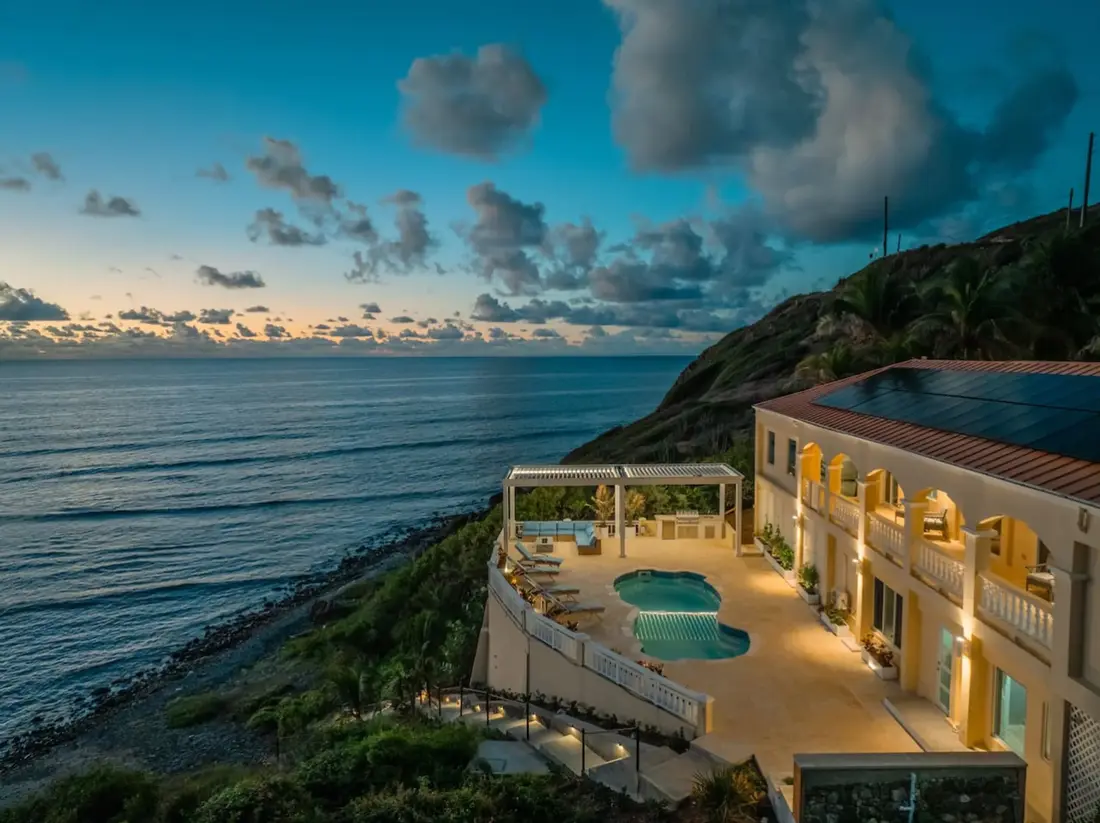
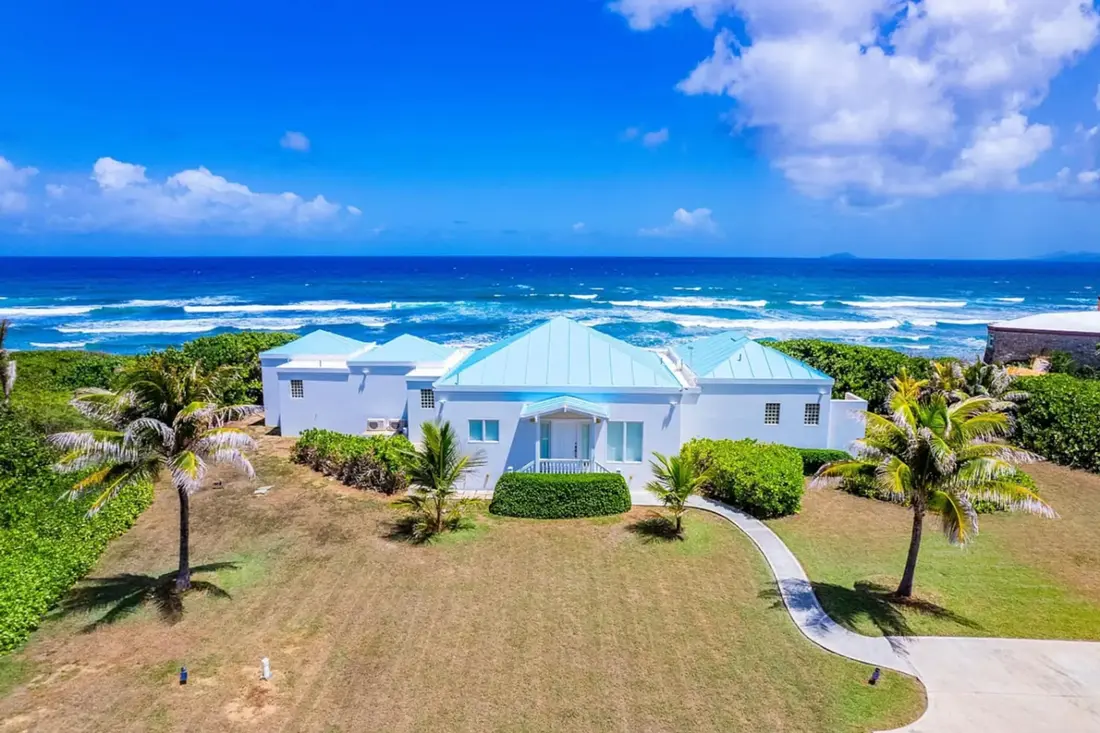
A peak-season week is one to spend in a house you can properly settle into, and early in March the wind still rewards a little thought about where that house sits. The East End catches the trades first and stays driest, comfortable and bright now; The Cerulean has a private beach of its own with a view over to Buck Island, handy for cool-season dives and a weekend drive to Sandy Point before the gate shuts, with the gentle Chenay Bay flats close by. Nearer Christiansted, Shoy's Beach House opens onto a calm, walkable swimming beach within reach of the town, the parade route and the restaurants. On the quieter west side by Frederiksted, Sunset Sea-Clusion lies nearest the flattest water and the sunset. Demand across the beachfront collection peaks this month, so get in touch early, and being on the island ourselves, we can tell you what a specific week usually brings.
Sources
Written from official and first-party sources, checked August 2026. Hours, prices and event dates change — confirm before you go.
In this guide
Stay nearby
On The Shoys beach: six bedrooms, six baths, pool and hot tub, room for twelve, and the beach through the back garden.
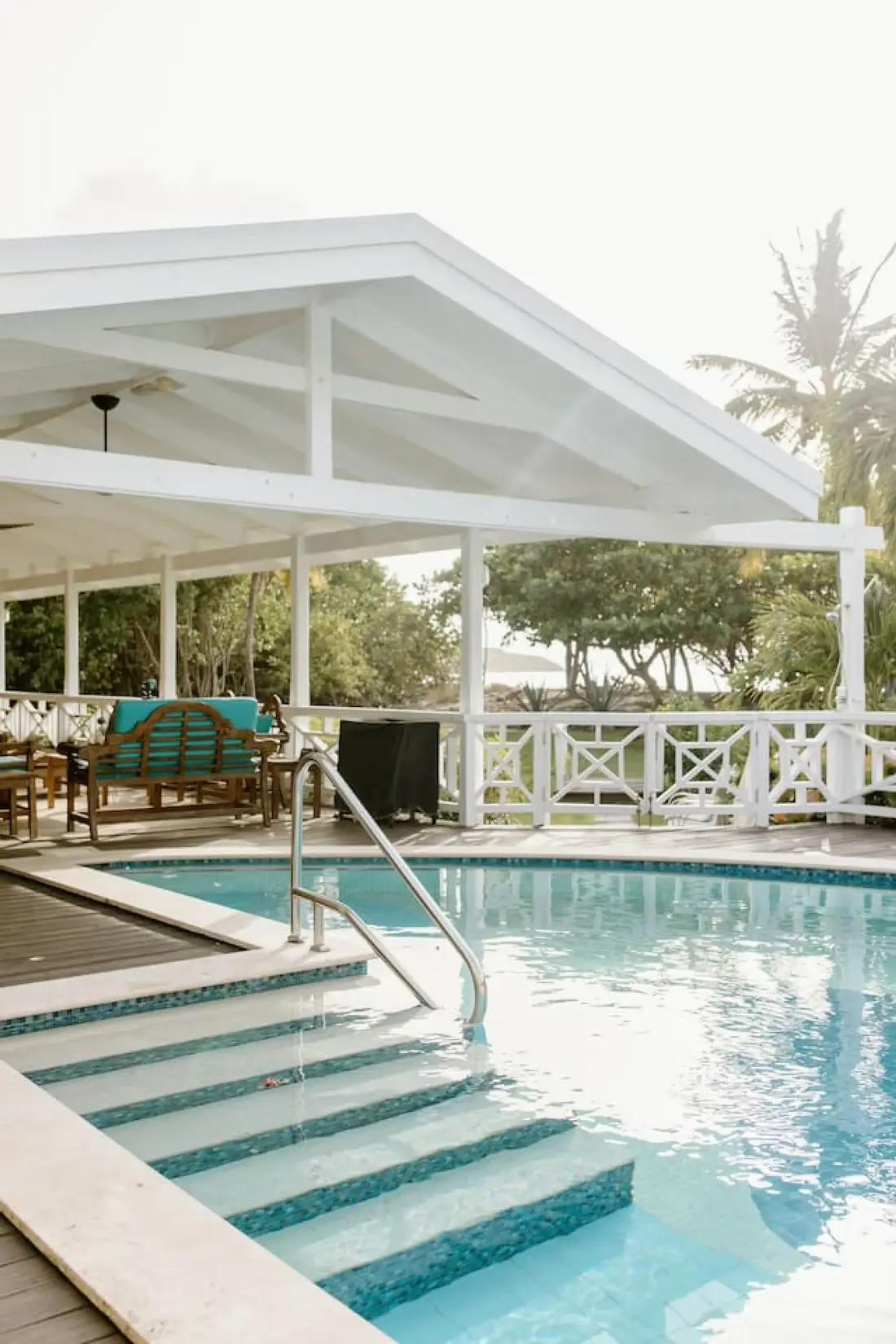 Shoy's Beach House6 bd · 6 ba · sleeps 12 · Christiansted
More in Month by Month
Sources
11 references, listed in full at the end of this guide — official park, refuge, tourism-board and business sources, checked August 2026.