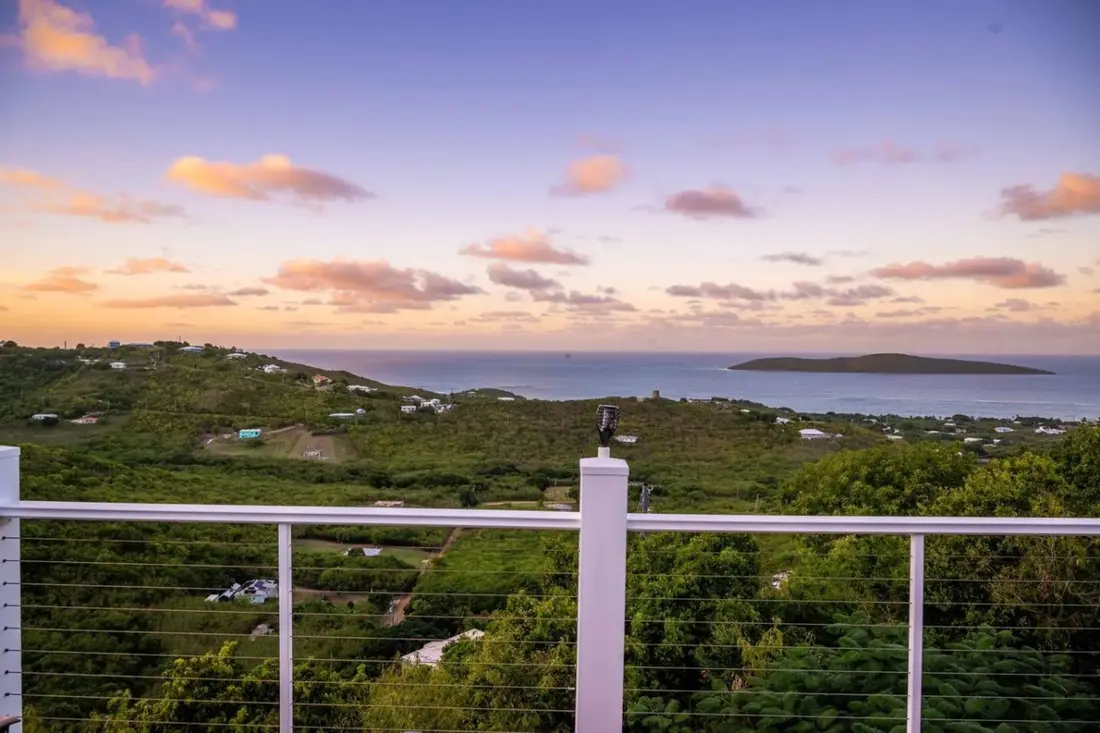
St. Croix in January
Peak season at its crispest: Christmas Winds, dry days near 83°F, and the tail of festival season.
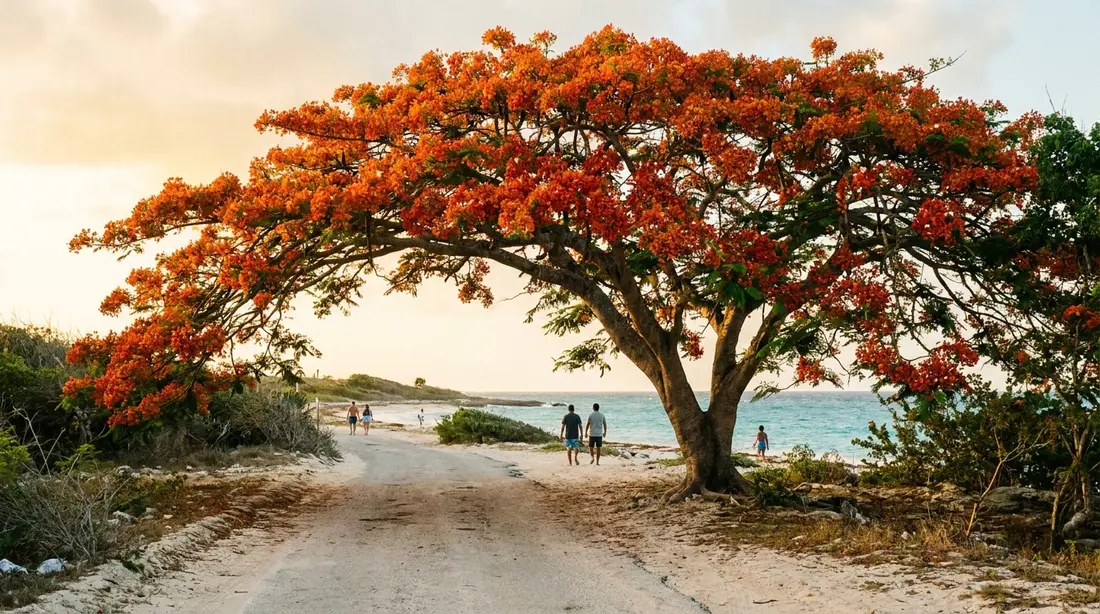
January is the coolest, breeziest and among the driest of St. Croix's twelve months, and it is the island's busiest. Daytime readings sit in the mid-80s, the Christmas Winds run hard out of the east, rain thins to a few short spells a week, and the sea holds near 80°F. This page is the January-specific reference: the month's climate normals, why it books out first, the festival's early-January close in Frederiksted, what the winter swell does to the north-shore water, where the whales and turtles stand this month, and how to plan a January week. For the year-round question of which month to choose, see our best-time-to-visit essay; for how the island's weather works in general, the weather guide covers the mechanics.
January's weather in numbers
The federal climate normals give January a precise shape. At Henry E. Rohlsen Airport, the NOAA 1991 to 2020 record puts the month's average daily high at 84.2°F and its average low at 71.2°F, for a daily mean of 77.7°F. That mean is the lowest of any month on the calendar, which makes January, by a fraction, the coolest month St. Croix has. Coolest is relative here: the number describes a Caribbean winter, warm enough for the beach every day and cool enough that a windy evening on the East End can ask for a second layer. Nights in the low 70s are the norm, and the long record has never produced frost or anything close to it.
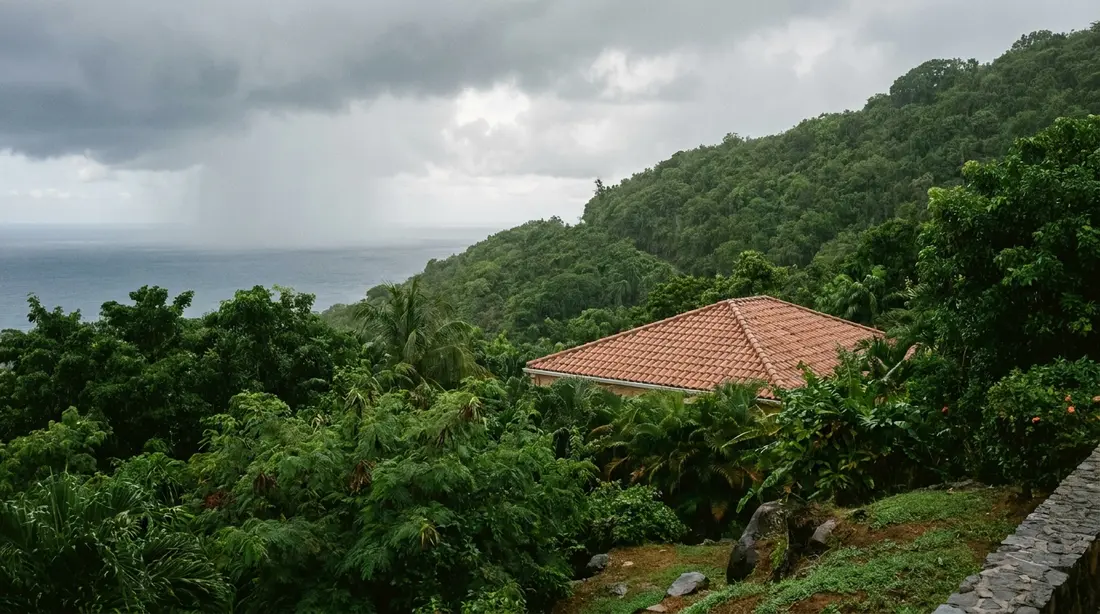
Rain is where January earns its reputation. The normal total is 1.94 inches for the whole month, down from December's 3.25 — and that drop from one month to the next is the dry season arriving. December still carries the tail of the wet year; January is where the reliably dry stretch settles in and holds through April. February and March run a little drier still on the long record, so January ranks just behind them, well inside the island's driest quarter, with runs of rain-free days the norm. When rain does come this month it tends to blow through as a quick morning cell on the trade wind and clear before lunch; the full picture of how island rain behaves is in the weather guide.
The sea barely moves. Water temperature around St. Croix averages about 80.4°F in January by the long-term station record, a degree or so off its September peak and still warm enough that most swimmers never think about it. Divers logging long, still bottom time in January are the ones most likely to want a thin wetsuit; snorkelers and swimmers rarely notice the season at all. The three winter months line up like this on the normals:
| Month | Avg high | Avg low | Daily mean | Avg rain |
|---|---|---|---|---|
| December | 85.1°F | 72.5°F | 78.8°F | 3.25 in |
| January | 84.2°F | 71.2°F | 77.7°F | 1.94 in |
| February | 84.6°F | 71.4°F | 78.0°F | 1.35 in |
Read across the table and the story is the rain column: the temperature holds within a degree while the rainfall roughly halves from December into January. That is the transition a January traveler is buying. For the same numbers across all twelve months, our best-time-to-visit essay has the annual table.
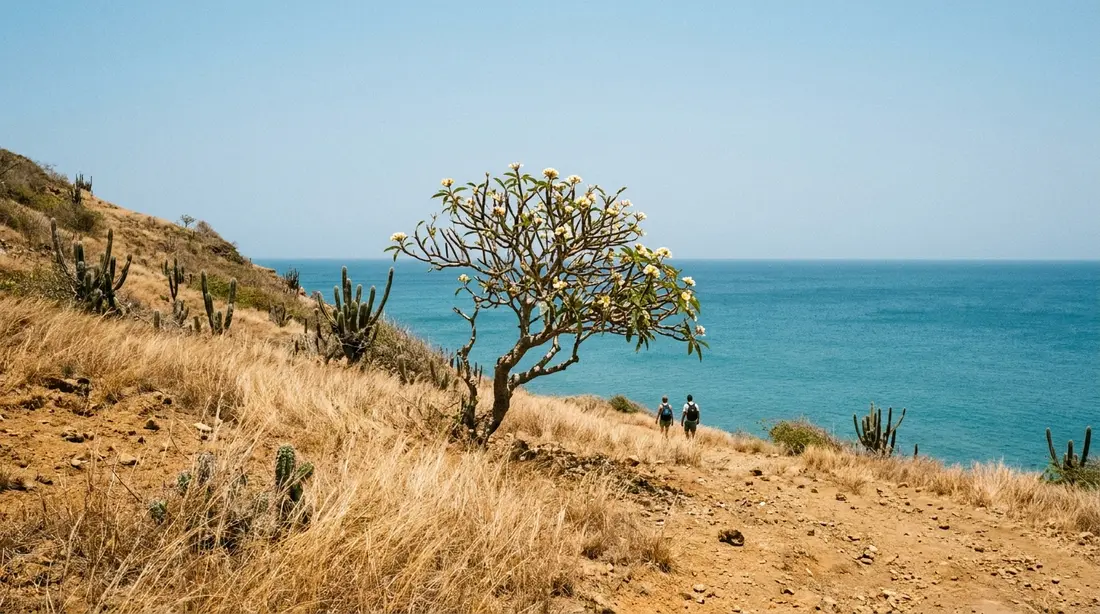
The Christmas Winds at full strength
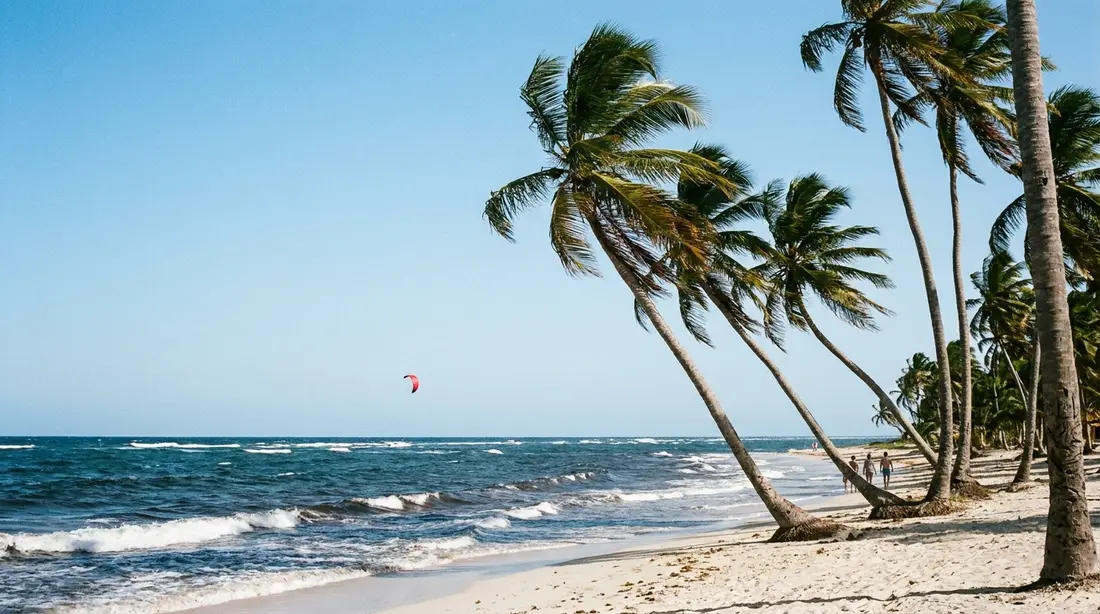
The defining feature of a January day is the wind. From about the middle of December to the middle of March the trade winds reinforce into the brisk, steady flow the region calls the Christmas Winds, and January sits in the heart of that run — the breeziest weeks of the St. Croix year. The air comes out of the east and east-northeast, day after day, and it does most of the work that makes the month comfortable: it carries the heat off an 84-degree afternoon and holds the humidity down, which is why a January afternoon feels lighter than a September one at nearly the same temperature.
The wind also sorts the coasts, and that split decides most January beach days. The flow hits the east and north shores straight on, so those coasts pick up chop as the day builds, while the west coast around Frederiksted sits in the island's wind shadow and stays calm. The daily clock matters too: mornings are the quietest hours, the breeze climbs to a peak in the early afternoon, and it backs off after about four. The full mechanics — why the wind runs on a daily schedule, how many knots it reaches, how winter north swell rides in underneath it — belong to the weather guide. For January, the thing to hold onto is that the breeze is a constant this month, stronger now than at any other point in the year, and it shapes the water more than the calendar date does.
Why January is peak season
January is high season, and the island feels it. This is the stretch mainland visitors book to get out of winter, and demand runs at its yearly peak from the Christmas holidays through the month. In plain terms: villa rates are at their highest, the sought-after houses fill first, Buck Island boats and the better dinner tables in Christiansted want booking in advance, and the island's small supply of rental cars tightens. None of that makes St. Croix crowded the way a resort strip is crowded — the island is 84 square miles with no mega-resorts, and a weekday morning still buys you a nearly empty beach — but the booking pressure is real, and it is worth planning around. The squeeze shows up in the extras rather than the sand: boat seats, restaurant tables and rental cars run short first, while the beaches stay abundant. The holiday fortnight that opens the season is its own subject in St. Croix in December.
The flight schedule is also at its fullest now, which is part of why January costs what it does. The winter nonstops are all running: American from Miami and Charlotte, Delta from Atlanta, the seasonal Saturday service from Chicago and Newark, plus the San Juan connections that reach everything else. A January traveler from the eastern mainland can usually fly nonstop, where a September traveler connects; the trade-off is that the cheap winter seats go early. Routes change every season, so confirm your own dates on the getting here page. The rule that matters most for January is simply to book early — how far ahead, by season, is laid out in our best-time-to-visit essay, and for January the answer is months, not weeks.
The Crucian Christmas Festival finale
January opens with the close of the island's carnival. The Crucian Christmas Festival runs from the days after Christmas into early January, and its two street parades — the children's parade and the adult parade — come down King Street in Frederiksted in the first days of the month, with Three Kings Day on January 6 marking the season's traditional finish. If your trip lands in that first week, the parades are happening around you; the festival's history, its full slate of events, and how to attend a parade day from a villa are in the Crucian Christmas Festival guide.
The water in January
January water is a story of two coasts. The Christmas Winds put chop on the exposed north and east shores through most afternoons, and winter adds the year's other water complication: ground swell. Storms far out in the North Atlantic send long-period waves south, and a north-swell day can stand up real surf on north-facing beaches under a clear, windless sky. For the north-shore hub at Cane Bay, that means the shore diving and snorkeling out over the Cane Bay Wall is a morning proposition in January, and on a big-swell day it can be blown out entirely. Divers check the marine forecast and the buoys before they commit, and the dive shops read the day's conditions at the counter each morning.
When the north is churned up, the answer is the west. The lee coast at Frederiksted stays calm while the rest of the island is working, which is why the Frederiksted Pier is the reliable any-conditions dive of the winter and the west-coast beaches are the standard rough-day fallback. Snorkeling anywhere on the island rewards an early start in January, before the breeze tops out; the snorkeling guide sorts the spots by exposure. Buck Island trips still run through the winter, weather permitting, and the crossing can be brisk on a windy day, so book them early in your stay to leave room to reschedule a blown day; the boat tour guide covers the operators.
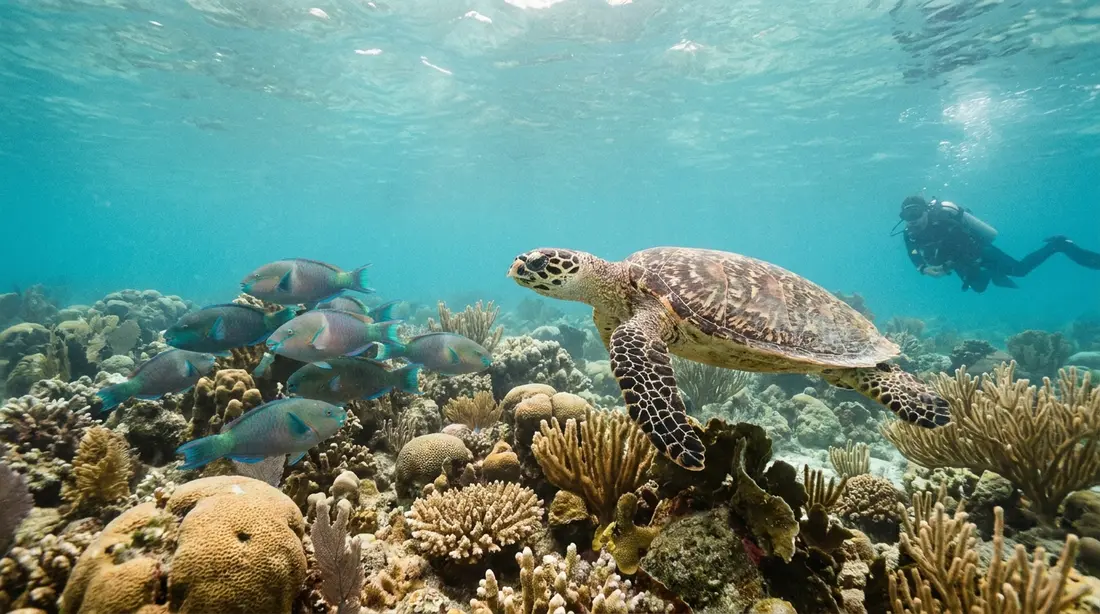
One winter upside offsets the chop. On the calm, dry stretches between swells, the nearshore water is at its clearest of the year, because little rain runs off the hills to cloud it — a still, rain-free January week can produce the longest underwater sightlines a visitor ever gets here. The same North Atlantic swell that shuts down Cane Bay on its rowdiest days also stands the island's modest winter surf up on the north-facing breaks, a January sight on the right morning and a reason to check the north shore before writing off a windy day.
Whale season begins
January is the front edge of humpback whale season. Each winter, humpbacks from the North Atlantic move down into Caribbean waters to breed and calve, and the season around the Virgin Islands is usually given as roughly January through April. The Virgin Islands sit toward the eastern edge of that winter breeding range, so the animals passing St. Croix are on their calving-and-mating grounds rather than feeding, which is part of why they hold to the deep water off the shelf instead of the shallows. On St. Croix the sightings build later than that opening date suggests — most come in February and March, off the north shore, where the shelf drops away close to land and a passing whale can be seen from the coast. January sightings do happen, occasionally as early as the last week of the month, but they are the exception this early rather than the rule.
Set expectations accordingly. There are no commercial whale-watching boats on St. Croix; whales here are spotted incidentally, from a sailing charter, from a dive boat, or from a north-shore vantage point such as the bluff above Cane Bay. A January guest who catches a spout offshore has caught a genuine piece of luck; a January guest who books a trip counting on whales has misread the calendar. For the month when the odds actually improve, see St. Croix in February.
Turtle season status in January
For sea turtles, January is a quiet, open month. Sandy Point National Wildlife Refuge — the two-mile beach on the island's southwest tip that protects the largest leatherback nesting site under U.S. jurisdiction — admits visitors on weekends only, Saturday and Sunday, with the gate open at ten in the morning and locked again by four in the afternoon, across the September 1 to March 31 season. January falls squarely inside that window, so a weekend day on your itinerary buys you one of the emptiest, widest beaches in the territory; the gate, the rules and the washboard drive are covered in the Sandy Point guide. On weekdays the gate stays locked.
What you will not meet in January is a nesting leatherback. The nesting season does not begin until roughly March, builds through the spring, and runs into July, and that is the reason the refuge shuts to visitors entirely from April 1 through August 31 — the turtles arrive well after January is over. The biology of the animal and the nesting calendar sit on the leatherback page. Turtles in the water are another matter and available year-round: green turtles feed over the seagrass flats at Chenay Bay on the sheltered East End through the winter, and the island-wide picture is in our sea turtles of St. Croix overview.
January events beyond the festival
Once the parades pass, January settles into the winter-season calendar, and there is more on it than the festival. Dates below follow the recent pattern; several are announced only weeks ahead, so confirm the current schedule before you build a plan around one.
- MLK weekend. The third Monday of January is a federal holiday — January 19 in 2026 — and the long weekend brings a bump of mainland visitors on top of the steady high-season crowd. Expect the popular beaches and restaurants to run busier across that weekend, and book anything time-sensitive ahead of it.
- The St. Croix Scenic 50. The island's ultramarathon has run in mid-January in recent years, a 50-kilometer race with a relay option, starting at Cane Bay in the early morning. It makes a spectator-friendly north-shore morning if your dates line up; confirm the current date before planning around it.
- Art Thursday. On the third Thursday of each month from November through May, the galleries, jewelry studios and shops of historic Christiansted stay open into the evening, roughly 5 to 8 at last check, for a gallery walk that has run since 1997. January's edition lands mid-month, and it is one of the easiest evenings in town.
- World Ocean School sails. The education nonprofit's tall ship keeps a winter berth in Christiansted Harbor, roughly November into March, and offers public afternoon sails; for the 2025 to 2026 season the ship is the Denis Sullivan, sailing Sunday through Friday from 4 to 6 p.m. with reservations required, per the operator at last check. Times and dates shift, so check ahead; the island's other sunset options are covered in our sunset sails guide.
- Waterfront nights. Frederiksted's waterfront hosts free evening concerts through the season, and Christiansted's boardwalk and restaurants stay lively; the fuller year of fixtures runs across the island's events calendar.
Booking a January trip
January is the hardest month of the year to book late, and the reasons stack. The Christmas-to-New-Year fortnight fills first on the island's villa calendars, often close to a year out, and repeat guests frequently hold the same week from one season to the next; the weeks after the holidays fill behind them. Minimum-stay requirements are standard over the holiday weeks. If a specific house for a January week matters to you, plan in months rather than weeks.
Two bookings should ride alongside the villa. Rental cars sell out island-wide in high season, so reserve the car when you reserve the house — driving is on the left, there is no Uber or Lyft, and a car is not optional here; the renting a car guide has the details. And the things that cap out day by day — Buck Island boat trips and the better dinner reservations in Christiansted — are worth locking in once your dates are set rather than on arrival. The season-by-season lead times for the villa itself are spelled out in the best-time essay; for January the short version is that earlier is better every time.
One timing note rewards the flexible. Peak season is not uniform across the month. The week or two right after the festival parades, roughly the second week of January, before Presidents' weekend and the February and March school breaks pull the next wave of visitors in, is often the quietest and best-value slice of the whole high season. The weather is identical to the holiday weeks — dry, breezy and sunny — but the holiday premium has come off the rates and calendars loosen a little. If you want January's conditions without the Christmas-week price and crush, that pocket is where to aim.
A realistic January week
What is a January week actually good for? Dry, bright, breezy days, mostly. You can plan around sunshine in January with more confidence than in any other month, and the wind keeps the heat easy to take. The rhythm that works: snorkel or dive in the calm early morning, spend the windy afternoon on the sheltered west coast or under a shaded gallery, and take the breeze off the water at sunset. A weekend day goes to Sandy Point or a run of west-end beaches. If your trip lands in the first week, the festival parades in Frederiksted are the centerpiece; later in the month, the Scenic 50, an Art Thursday in Christiansted, or an afternoon sail fill the calendar. Whale-watching is a bonus, never a plan. And even in peak season the beaches reward early risers — the famous spots have company by late morning and belong to you at eight.
January is a poor fit for exactly one kind of traveler: the one who wants glassy, flat water island-wide and a bathwater sea. That is a late-spring and summer product. January trades a degree or two of sea warmth and some north-shore calm for the driest air, the steadiest breeze and the fullest events calendar of the year. Set expectations against that, and the month delivers.
Packing for January
January is the breeziest month, and the packing list bends to the wind. The one thing visitors most often leave behind is a light layer: a long-sleeve shirt or a light sweater earns its space for a windy evening on the East End, an early boat departure, or a sunset sail, when the same breeze that made the afternoon pleasant turns cool once the sun is down. Everything else is standard Caribbean kit, with sun protection first — the wind masks a sun that is just as strong in January as in July and burns just as fast, so reef-safe sunscreen, a hat that will stay put in a breeze, and polarized sunglasses all matter more than the mild air suggests. Add water shoes for rocky entries. Rain gear is barely worth the suitcase space this month, since a passing shower clears before a jacket helps. The full year-round list is in the packing guide.
January at a glance
| Measure | January on St. Croix (at last check) |
|---|---|
| Average high / low | 84°F / 71°F (NOAA 1991–2020, Rohlsen Airport) |
| Daily mean | 77.7°F — the coolest month of the year |
| Sea temperature | About 80°F average |
| Average rainfall | 1.94 in — dry season; down sharply from December |
| Wind | Christmas Winds at peak; breeziest month, out of the east |
| Crowds and prices | High season; the busiest and most expensive stretch |
| Flights | Fullest nonstop schedule of the year |
| Sandy Point refuge | Open weekends, Sat–Sun 10–4 (Sept 1–Mar 31) |
| Leatherback nesting | Not yet — begins around March |
| Humpback whales | Season's early edge; most sightings Feb–Mar |
| Signature events | Festival parades (early Jan); Three Kings Day Jan 6; MLK weekend; Scenic 50; Art Thursday |
Questions guests ask
Does it rain much on St. Croix in January?
Not much. The NOAA normal for January is 1.94 inches for the entire month, which places it inside the island's driest quarter and well below December's 3.25 inches. When rain does arrive this month it usually comes as a brief cell that rides through on the trade wind and passes in minutes, not a day-long soaking. Long strings of rain-free days are the January norm, and you can plan beach and boat time around sunshine with more confidence than in any other month. Even so, the wet hills of the west end collect more rain than the airport gauge shows, and the arid East End less, so a shower on one coast often means clear skies on another.
How cold does it get at night in January?
Not cold by any mainland measure. January is the coolest month on the long record, with an average low around 71°F and a daily mean of 77.7°F, and the island has never recorded anything near frost. What surprises people is the wind chill of the Christmas Winds after dark: a breezy evening on the exposed East End, an early-morning boat ride, or a sunset sail can feel cool enough to want a light layer. Pack a long-sleeve shirt or light sweater for exactly those moments and you have covered the coldest January delivers.
Is January a good time to visit St. Croix?
For dry, breezy, sunny days and the fullest events calendar, yes — it is the classic Caribbean winter, which is why it is peak season. The costs are the flip side: the highest villa rates of the year, the tightest booking, and busy popular beaches by late morning. January disappoints only one kind of traveler, the one expecting the flat, glassy, bathwater sea of summer, since the winter trades keep the exposed coasts lively. If you want reliable sun and do not mind booking early and paying peak rates, January is hard to beat.
Can I see whales on St. Croix in January?
Occasionally, but do not count on it. Humpback season around the Virgin Islands runs roughly January through April, and January is its early edge; most St. Croix sightings come in February and March, off the north shore where deep water lies close to land. There are no commercial whale-watching tours on the island, so any sighting is incidental — from a sailing or dive charter, or from a north-shore lookout. A January whale is a lucky bonus, not something to plan the trip around; February and March raise the odds.
Is Sandy Point open in January?
Yes, on weekends. Sandy Point National Wildlife Refuge opens to visitors on Saturdays and Sundays throughout its September-to-March season, with the gate up at ten and down by four, and January weekends qualify, so you can walk the territory's longest, emptiest beach on a Saturday or Sunday. On weekdays the gate is locked, with no exceptions. You will not see nesting leatherbacks this month — their season starts around March, which is why the refuge closes completely from April through August — but a January weekend delivers two miles of undeveloped sand with only a handful of people on it.
How far ahead should I book a January villa?
Months ahead, and close to a year for the holiday weeks or a specific large house. The Christmas-to-New-Year fortnight fills first on the island's calendars, and the weeks after it fill behind. Book the rental car in the same stroke as the villa, since cars sell out island-wide in high season, and reserve Buck Island boats and prime dinner tables once your dates are set. The full lead-time breakdown by season is in that same best-time-to-visit essay; for January, the earlier you commit, the more choice you keep.
Is the Crucian Christmas Festival still on in January?
The finish of it, yes. The festival runs from just after Christmas into early January, and its children's and adult parades come down King Street in Frederiksted in the first days of the month, with Three Kings Day on January 6 as the traditional close. A trip in that first week lands right in it. The parades happen on the west end, not in Christiansted, which trips up first-time visitors, so plan a west-end day around one; the festival guide has the full schedule and the parade-day logistics.
What should I pack for a January trip?
Standard beach kit plus one addition: a light layer for the wind. The Christmas Winds make January the breeziest month, and evenings, boat rides and sails can feel cool, so bring a long-sleeve shirt or light sweater. Otherwise pack for strong sun despite the mild air — reef-safe sunscreen, a secure hat, polarized sunglasses — plus water shoes for rocky entries and swimwear you will live in. Skip the heavy rain gear; January showers pass too fast to matter. The complete year-round list is in the packing guide.
Where to stay in January
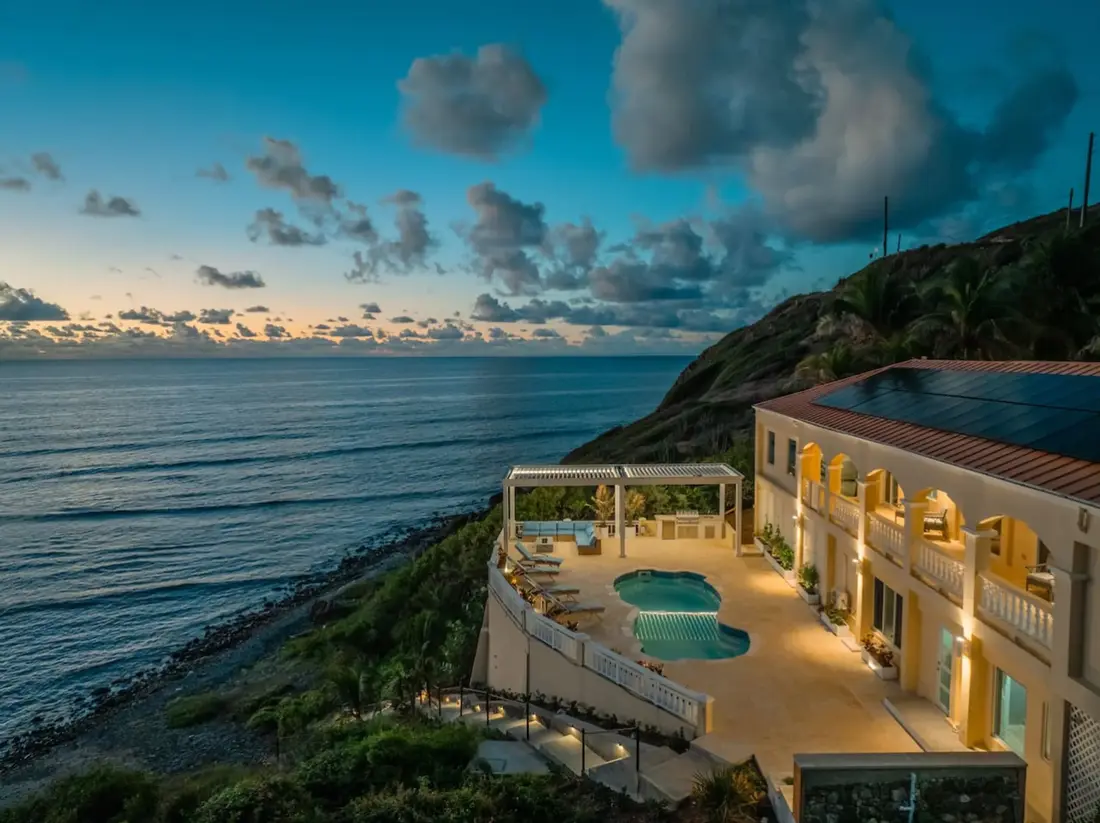
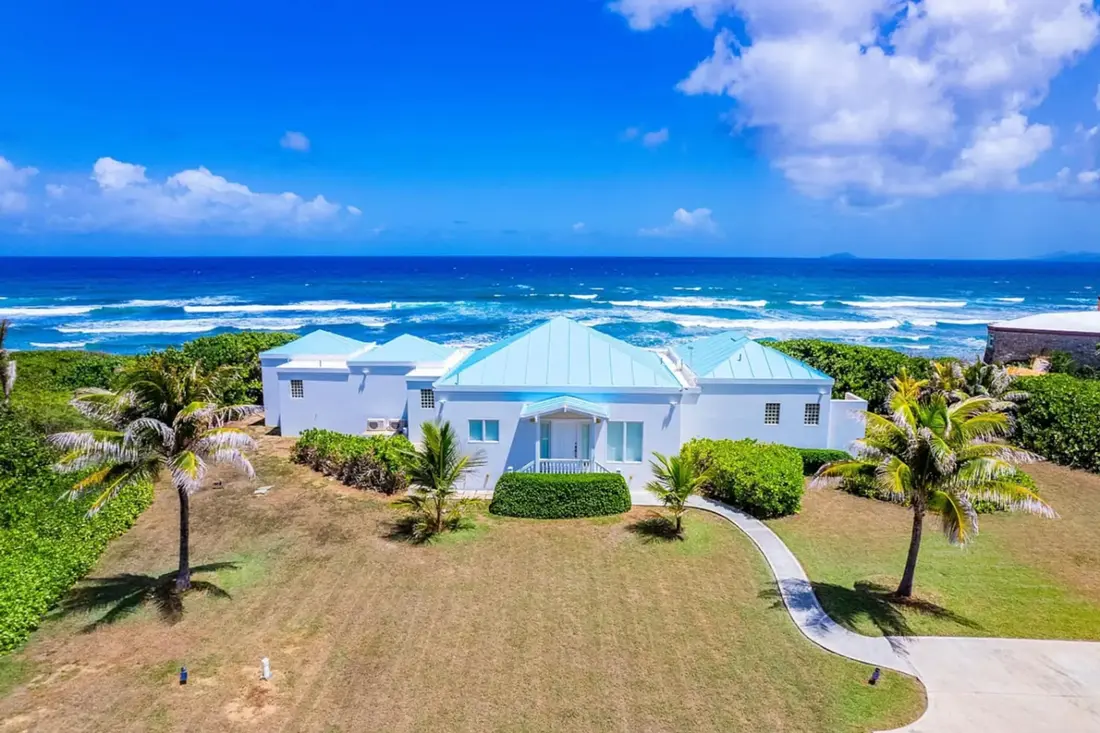
January guests do well to match the house to the wind. Our East End homes, including The Cerulean on its own beach facing Buck Island, sit first in line for the Christmas Winds that keep January afternoons comfortable, with the calm Chenay Bay seagrass and easy Christiansted access close by. Beachfront Shoy's Beach House pairs a sheltered swimming beach with that same steady breeze, minutes from town and the festival-season boardwalk. For the calmest water and the sunset side, Sunset Sea-Clusion holds the leeward west coast near Frederiksted and the Sandy Point weekend gate. January books early across the whole portfolio, so start the conversation months ahead; browse the beachfront collection and we will tell you what your week is likely to bring.
Sources
Written from official and first-party sources, checked August 2026. Hours, prices and event dates change — confirm before you go.
In this guide
Stay nearby
On The Shoys beach: six bedrooms, six baths, pool and hot tub, room for twelve, and the beach through the back garden.
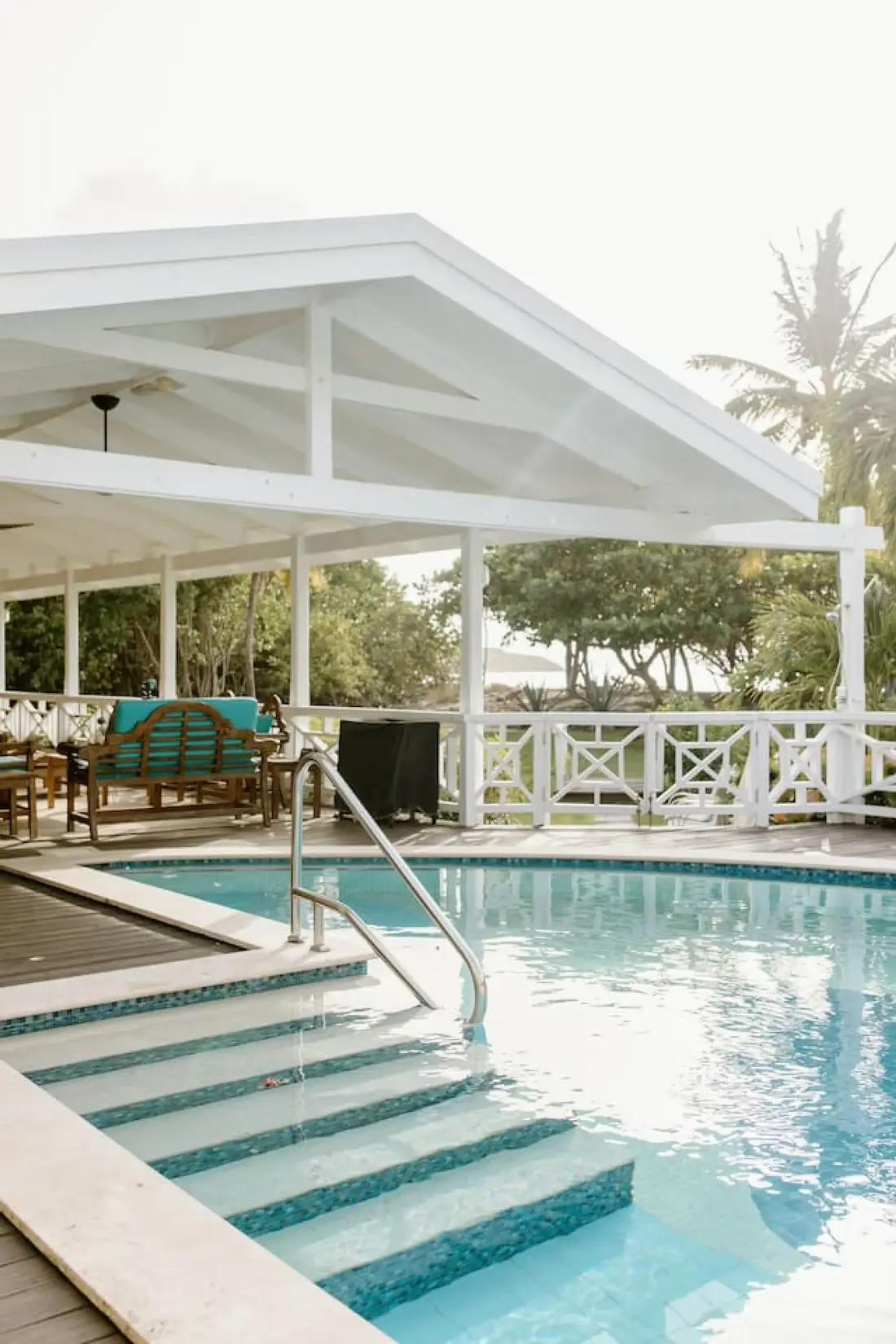 Shoy's Beach House6 bd · 6 ba · sleeps 12 · Christiansted
More in Month by Month
Sources
12 references, listed in full at the end of this guide — official park, refuge, tourism-board and business sources, checked August 2026.