Turtle Watch Season
In summer, guided night programs let you witness sea turtle nesting the right way — with the research teams, not despite them.
Turtle watching on St. Croix means one thing done one way: joining a guided night program to watch a leatherback haul ashore and lay her eggs, on the single stretch of sand where that happens, alongside the research crew that patrols the beach. It is not a walk you take alone with a flashlight, and no tour boat can sell you the sighting on demand. The nesting beach is a closed federal refuge for the whole nesting season, and the only lawful way onto it after dark is a reserved watch run by the people who study the turtles. This guide covers that experience from sign-up to sunrise: when the season runs, which programs exist and how to get on one, what a watch night actually involves, the rules that keep it harmless, and what to do about the hatchlings a summer beachgoer sometimes finds. For the animal itself, its size and biology, see the leatherback page; for the beach and its daytime access, the Sandy Point refuge guide.
What a turtle watch is here
A turtle watch on St. Croix is an organized, reservation-only evening spent on the nesting beach with trained leaders, arranged so that a small group sees a nesting leatherback with the research effort instead of underfoot. The framing matters, because the wrong version of this activity does real harm. A stranger with a phone light wandering the dry sand can drive a nesting female back into the water before she lays, crush an incubating nest she never sees, or scatter hatchlings inland to die. The guided model removes all of that. Leaders keep the group in one place, control the light, read the beach for the patrol, and step a group toward a turtle only once she has reached the state where an approach cannot spook her. Everything on this page assumes that model. There is no freelance turtle watching at Sandy Point that is both legal and safe for the animal.
The organized watch also solves a problem visitors rarely anticipate: leatherbacks nest at night, entirely, and the beach they use is sealed after dark to everyone else. Without a program there is simply no door. With one, a traveler gets the door plus a biologist to open it, which is the difference between a random chance and a fair one.

A beach that closes so you can visit it
Sandy Point National Wildlife Refuge runs on a calendar that looks contradictory until you see the logic. From September 1 through March 31 the refuge admits day visitors on Saturdays and Sundays, 10 a.m. to 4 p.m., and from April 1 through August 31 it shuts to the public completely. The closed months are the nesting months. So the stretch of the year when a leatherback might come ashore is exactly the stretch when the gate is locked to ordinary visitors, and the guided night watch is the one sanctioned exception carved into that closure. Daytime weekend access and turtle nesting almost never overlap: by the September reopening the leatherback season is over, and the spring weekends before the April closure catch only the first few crawls. The full access schedule, the gate, the drive and the daytime rules live in the refuge guide; this page is about the night door. The short version is that you cannot walk in to see a nesting turtle, and you can book your way in.
The season, month by month
Two clocks run at once on these beaches. Leatherbacks nest first, roughly March into July, concentrated at Sandy Point. Green and hawksbill turtles nest later and longer, from around June into November, with hawksbill activity recorded as early as April, and they spread across more beaches: Buck Island, the East End bays and Ha'penny as well as Sandy Point. Every nest then runs a second clock of its own, because incubation takes about two months, so hatchlings emerge roughly sixty days behind the female who laid them. That offset stretches turtle activity on the sand from the first spring crawl clear into winter. Territorial guidance places nesting across the islands from March into December, with turtles coming ashore to lay from about April through September and the green and hawksbill nests hatching heavily in October and November. The biology driving all of it, why leatherbacks nest when they do and how temperature sets a hatchling's fate, sits on the leatherback page; the table below is the watcher's version.
| Month | On the nesting beaches | Guided watch |
|---|---|---|
| January – February | No nesting; quiet sand | None; refuge open weekend days only |
| March | First leatherback crawls at Sandy Point | None yet; last daytime weekends before closure |
| April | Leatherback nesting building; refuge closes April 1 | Peak program month; reserved night watches run |
| May | Leatherback nesting continues; first leatherback hatchlings | Programs taper as the concentrated April run ends |
| June | Late leatherback nesting; green and hawksbill begin | Research-season visits by arrangement only |
| July – August | Leatherbacks finish; green and hawksbill in full nesting; hatchlings emerging nightly | By arrangement; refuge still closed to the public |
| September | Green and hawksbill nesting tapers; late nests still hatching | Refuge reopens weekend days September 1; season effectively over |
| October – November | Green and hawksbill hatching heaviest | None; open weekend days |
| December | Quiet sand; beach rebuilds | None; open weekend days |
The practical read: if you want to watch a leatherback nest, you are booking an April night, and you are doing it well ahead. Everything else in the calendar is either the wrong species, the wrong hour, or a locked gate.

Three species, three windows
Which turtle you can watch, and how, depends entirely on the species and the month. Leatherbacks are the ones the night programs exist for; they never settle in coastal water, so a nesting watch is the only realistic way to see one here. Greens and hawksbills are the everyday turtles, seen far more often in the water than on the sand, and watching them is a snorkeling matter covered in sea turtles of St. Croix rather than a night-program matter. The table sorts out who does what and when.
| Species | Nesting window | Hatching window | How a visitor watches it |
|---|---|---|---|
| Leatherback | Roughly March – July | Roughly May – September | Guided spring night watch at Sandy Point |
| Green | Roughly June – November | Fall into winter | Daytime snorkel over seagrass; rare nest sightings |
| Hawksbill | Roughly April – November | Summer into winter | Daytime reef snorkel; rare nest sightings |
Note what the table does not offer: a scheduled way to watch a green or hawksbill nest. Their nesting is scattered across many beaches and much of the year, without a public program built around it, so a beachgoer meets those species mostly by daylight in the water, and meets their nests only as tracks or staked plots. The one species with an organized watch is the leatherback, which is why the rest of this guide keeps circling back to spring nights at Sandy Point.
The Sandy Point leatherback watch
The main program is the U.S. Fish and Wildlife Service's Turtle Watch, an education effort that has run at the refuge since at least 1997 and that the service delivers with community partners, the St. Croix Environmental Association among them. In recent seasons it has taken the same shape. Watches run on Friday and Saturday nights through April. The evening opens with a presentation at the refuge's education pavilion, where leaders cover leatherback biology and the night's rules, and then the group moves out onto the dark beach to wait for a nesting female and to see the research team work. Start time has been around 7:45 p.m., and a night runs to midnight or later, which is the first thing to weigh before signing a family up.
Getting on one takes planning, not luck. Space on each night is limited, reservations are required with no walk-up option, and some dates are reserved for members of the partner organizations. Recent seasons have filled early; the 2026 season was posted as full. The move is to watch for the announcement of dates and book the moment they open, which usually means firming your travel window around April before the calendar is even out. Program details, organizers and dates shift from year to year, so confirm the current arrangement rather than assuming last season's holds. To reach the members-only nights, joining the St. Croix Environmental Association is the route; the group is at 5032 Anchor Way, Christiansted, reachable at 340-773-1989 at last check, and membership also opens its other nature programs through the year.
The St. Croix Sea Turtle Project
Behind the public watch stands the crew that actually walks the beach every night of the season. The St. Croix Sea Turtle Project is a non-profit working with the Fish and Wildlife Service and sponsored by The Ocean Foundation, and it runs the nightly patrols, tags the nesting females, and fields visitor questions about the research season by email at stxturtles@gmail.com. Its outreach reaches more than a thousand people a year and has included, beyond the leatherback watches, daytime beach walks, beach cleanups, bird watching, nature hikes and classroom programs across the island. The science reaches past the leatherback it is named for: in a recent year the crew tagged 52 green turtles and nine hawksbills, and the project supports students working toward marine biology. The project posts its current programs and season updates at seaturtlecensus.com. Offerings change season to season, so if the April night watches are full or your dates fall outside them, asking the project what else is running is worth an email; a daytime beach walk or a cleanup is a real, low-key way to stand on the science without a midnight commitment.
What the project cannot do is manufacture a leatherback on a given night, and it will not pretend otherwise. Its work is the patrol and the count; the watch is a window onto that work, offered on the nights the season and the staffing allow. Treat the email address as the front door for anything the public FWS program does not already cover.
The programs at a glance
| Program | Run by | When | How to join |
|---|---|---|---|
| Turtle Watch night | U.S. Fish and Wildlife Service with community partners | Friday and Saturday nights in April | Reserve ahead; some dates members-only; watch for the season announcement |
| Research-season visits and beach walks | St. Croix Sea Turtle Project | Varies through the nesting season | Email stxturtles@gmail.com; check seaturtlecensus.com |
| Membership and nature programs | St. Croix Environmental Association | Year-round | Join at 5032 Anchor Way, Christiansted; 340-773-1989 |
Cost is worth confirming when you book rather than assuming, because it moves season to season and some nights run as members-only events rather than paid tickets. The Fish and Wildlife Service Turtle Watch is an education program rather than a commercial tour, so for many visitors the real outlay is a St. Croix Environmental Association membership plus the effort to reserve early; the scarce resource is the seat, not the price. All figures and contacts here are current at last check and shift between seasons, so verify before you build a trip around a date.
What a watch night is actually like
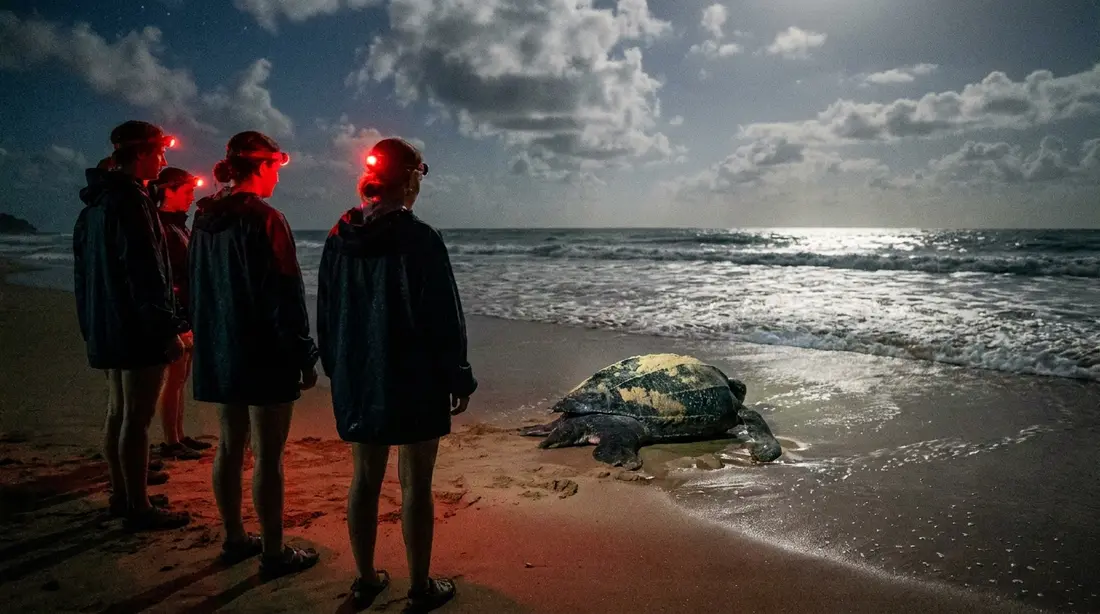
Set your expectations before you set your alarm. A watch night is mostly waiting. After the pavilion talk, the group settles on the dark sand and stays put, often for hours, while leaders and patrol members scan the beach for a crawl. The sky is the entertainment in the meantime, since the refuge has no lights and little around it, and the leaders fill the wait with the biology and the history of the place. Then, on some nights, a dark shape lifts out of the shallows and starts up the slope, and the character of the evening changes completely. A nesting leatherback is several hundred pounds of animal moving on flippers built for the open ocean, breathing in long audible sighs, and watchers consistently say the scale of it does not come through in photographs. Once she settles into laying she enters a still, trance-like state, and that is the window when leaders can bring a group in close and the research team reads her tags.
The part no program can promise is the turtle. Some nights the beach stays empty and the group goes home having seen the Milky Way and no leatherback. That is the deal you accept when you book, and the people running the watch say so at the start. Wild animals keep their own schedule; a nesting beach is not an aquarium. What a program does promise is the chance, the setting and the guidance to use both without harm, which is all anyone can fairly offer for an event like this. Guests who arrive expecting a sure thing leave disappointed; guests who arrive for the wait, and treat the turtle as the reward rather than the ticket, tend to remember the night either way.
The rules of a watch night
Every rule on a watch traces back to a single fact: a nesting leatherback is easily deterred until she commits to laying, and a beach full of hatchlings navigates by light. Break the rules and you can undo the very thing you came to see. Leaders enforce them, and all three local species carry Endangered Species Act protection, so interference is a federal matter as well as an ethical one.
- No white light, ever. White light on a nesting beach turns approaching females back to the sea and pulls emerging hatchlings the wrong way. Programs use red light only, pointed down, and only where a leader allows it. Leave the flashlight and the phone torch in the car.
- No flash, no screens. A single camera flash can abort a nesting attempt or scatter a hatchling run. Phone and camera screens count as white light. If you shoot at all, it is only when and how a leader says, without flash.
- Keep the distance the leaders set. Stay where you are placed and let the turtle do the approaching through her own progress up the beach. The group moves toward her, in her trance window, only on a leader's word.
- Stay quiet and low. Voices and silhouettes on the skyline can turn a female around before she starts. Sit, speak little, and keep still.
- Never touch a turtle, female or hatchling, and never handle eggs, tracks or the stakes marking nests. Those markers are research equipment.
- Follow the leader exactly. The whole point of the guided model is that someone who knows the animal decides when an approach is safe. Improvising defeats it.
Hatchling season and the wrong kind of help
Hatchlings are the other thing a summer or fall visitor might encounter, and they come with their own rule, which is mostly a rule about not helping. Because each nest hatches about two months after it was laid, and mostly after dark, hatchling emergences run from late spring through fall and into winter, well after the leatherback watches end and even after the refuge reopens its weekend days in September. A beachgoer on the East End bays or Ha'penny in that stretch might cross a scatter of tiny tracks at dawn, or, rarely, a straggler still on the sand. The instinct to pick it up and carry it to the water is exactly the wrong one. Hatchlings need the crawl itself: it is how they orient, how they build the strength to swim, and interrupting it can leave one unable to navigate. The same goes for an adult that looks stranded, an injured or hooked turtle, or one tangled in line. Do not carry it, refloat it, cut it loose or dig out a nest.
The right move is a phone call. The territory runs a Sea Turtle Assistance and Rescue network, STAR, which fields calls about turtles that are hurt, ill, hooked, stranded, dead, or wandering confused from anywhere in the territory, day and night, on 340-690-0474 at last check, and the refuge's wildlife biologist coordinates the response on St. Croix. While you wait, keep people, dogs and lights away, note the location, and leave a healthy hatchling an open, dark path to the sea. The full stranding-and-conduct picture is in sea turtles of St. Croix. Save the number before your beach week; a clear phoned-in report is the single best thing a passerby can offer.
The research the watch rides on
The reason a visitor can watch a nesting leatherback at all is a research program that has run on this beach for decades, and a few numbers show why the work is treated as consequential. Patrols meet and tag as many nesting females as they can each season, tracking individuals across years; one tagged female known as Rosie, first recorded in 1999, had returned to nest at Sandy Point more than fifty times by 2021. A single season's output spans all three species: in 2021 the project logged 1,075 green nests and 230 hawksbill nests alongside the leatherback count of 98 nests from 27 individual females, with more than 108,000 hatchlings produced across the beach, from over 150,000 eggs. The project also began satellite-tracking leatherbacks in 2020 with the New England Aquarium and partners in Puerto Rico, following eleven animals out to their distant feeding grounds to learn why Caribbean nesting has declined. The genetics side of the work can identify the fathers behind a clutch and assemble leatherback family trees across seasons, which is how the project traces survival and recruitment from one generation to the next. The long version of that story, the forty years of counting and what the trend means, lives on the leatherback page and the refuge guide. On a watch night, it is the reason the people beside you on the sand are reading tags in the dark.
Who a turtle watch suits
This is a program for patient people, and it helps to know that going in. The night is long, the seating is sand, the bugs are real, and the payoff is uncertain, which rewards travelers who enjoy the wait and frustrates those who want a scheduled spectacle. Families can do it well, with a caveat: the late finish and the stretches of stillness put it out of reach for young children, and the programs have set roughly age six as the floor for exactly that reason. A watch tends to land best with older kids who are already turtle-minded, teenagers, and adults who would happily spend an evening under a dark sky whether or not a turtle shows. Anyone who needs the sighting to feel the trip worked should weigh the odds first. For families with younger children who still want turtles, the daytime in-water route is the better call: an easy snorkel over the seagrass at Chenay Bay puts a green turtle within a child's reach on most calm mornings, and the wider family logistics are in traveling with kids.
What to bring to a watch
The packing list is short and specific. Wear dark clothing, since pale colors catch what little light there is, and closed shoes for walking soft sand in the dark. Bring insect repellent, because a still group on a warm beach at night is a target, and water for the hours. A red-filtered light is useful if the program permits one; a white flashlight or an uncovered phone is worse than useless and may get you asked to put it away. Leave the flash camera at the villa, or plan to shoot only as a leader directs. Above all, bring patience and a willingness to be told where to sit and when to move, which is the whole social contract of a guided watch. Everything else, the biology, the history and the light, the program provides.
Questions guests ask
How do I get on a turtle watch at Sandy Point?
Watch for the season announcement and reserve the instant dates open. The Fish and Wildlife Service Turtle Watch runs Friday and Saturday nights in April with limited space, no walk-ups, and some nights held for members of the partner groups, so joining the St. Croix Environmental Association can widen your options. For research-season visits or other programs outside those nights, email the St. Croix Sea Turtle Project at stxturtles@gmail.com and check seaturtlecensus.com. Book before you lock flights; recent seasons, including 2026, filled early. Confirm the current format each year, since organizers and dates move.
When exactly is turtle-watch season?
April, for the leatherback night programs. Leatherbacks nest at Sandy Point roughly March into July, and the organized watches concentrate in April when activity is dependable enough to justify putting a group on the beach. The refuge is closed to the public April 1 through August 31, so the watch is the only sanctioned way onto the sand in those months. Green and hawksbill turtles nest later, into November, but no scheduled public program is built around them; you meet those species by daylight in the water.
Will I see a turtle?
No, and any operation that promises one is not telling you the truth. Leatherbacks nest on their own schedule, and some watch nights end with no turtle on the beach. What a program promises is the chance under the right conditions, trained leaders, and a legal way onto a closed beach at night. Odds are best in April, at the heart of the nesting run. Go for the whole experience, the sky, the biology and the wait, and treat a nesting female as the reward rather than the reason the night succeeded.
Can I bring my kids?
Older ones, yes; small ones, no. Watches start around 7:45 p.m. and run past midnight, with long quiet stretches, so the programs set roughly age six as the minimum, and in practice the night suits turtle-minded older children and teenagers far better than restless little ones. For younger kids, the daytime in-water option is the winner: a calm-morning snorkel over the seagrass at Chenay Bay reliably turns up a green turtle at a child's pace. See traveling with kids for the rest of the family planning.
Can I just walk the beach at night to look myself?
No. Sandy Point is a closed federal refuge from April 1 through August 31, and walking it at night without a program is both illegal and harmful; a wandering light can turn a female back or send hatchlings inland. Enforcement is real on a beach patrolled nightly by researchers. The guided watch exists precisely so that a visitor can be on that sand at night lawfully and without hurting the animals. The daytime rules and the closure calendar are in the refuge guide.
What do I do if I find a hatchling or an injured turtle?
Phone STAR on 340-690-0474 (at last check), any hour, and don't handle the animal. This applies to a stranded, listless, hooked or entangled turtle, a dead one, or hatchlings crawling away from the sea. Never lift a hatchling into the water; that crawl down the sand is how it gets its bearings. Keep people, dogs and lights back, note the exact spot, and leave a healthy hatchling a clear, dark path to the sea. The full conduct guidance is in sea turtles of St. Croix.
Planning a turtle-watch trip from a villa
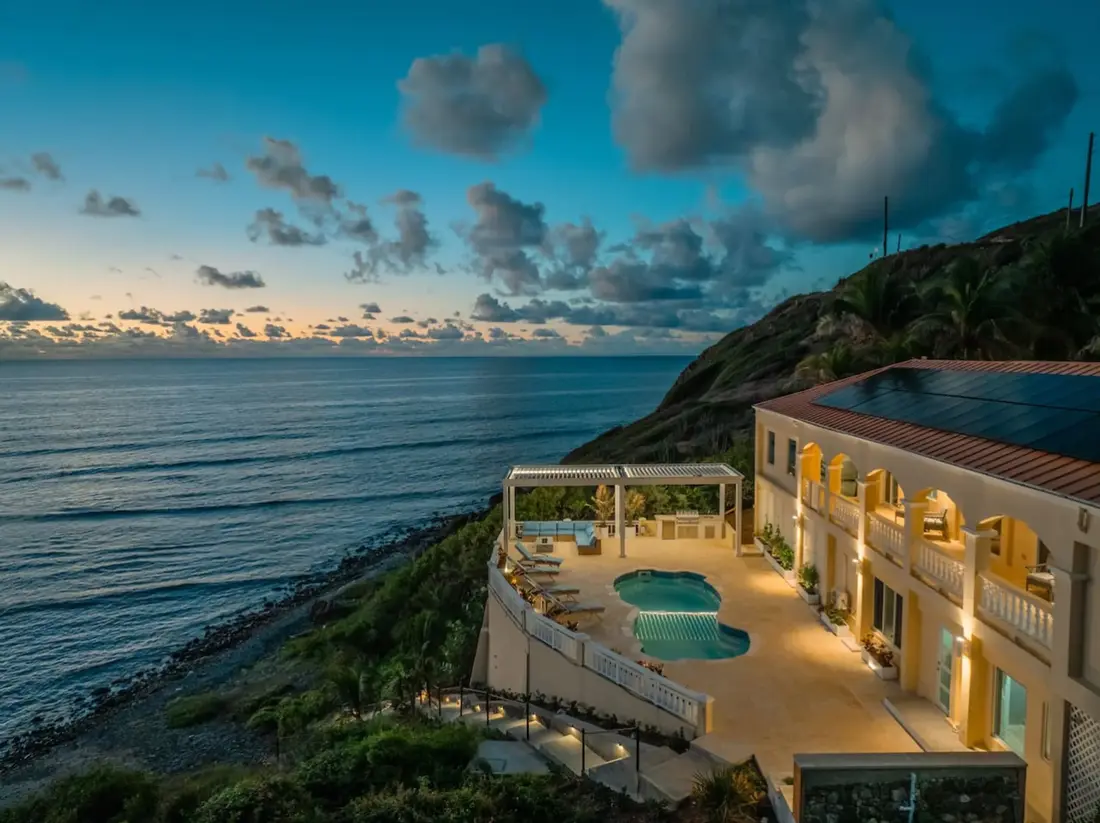
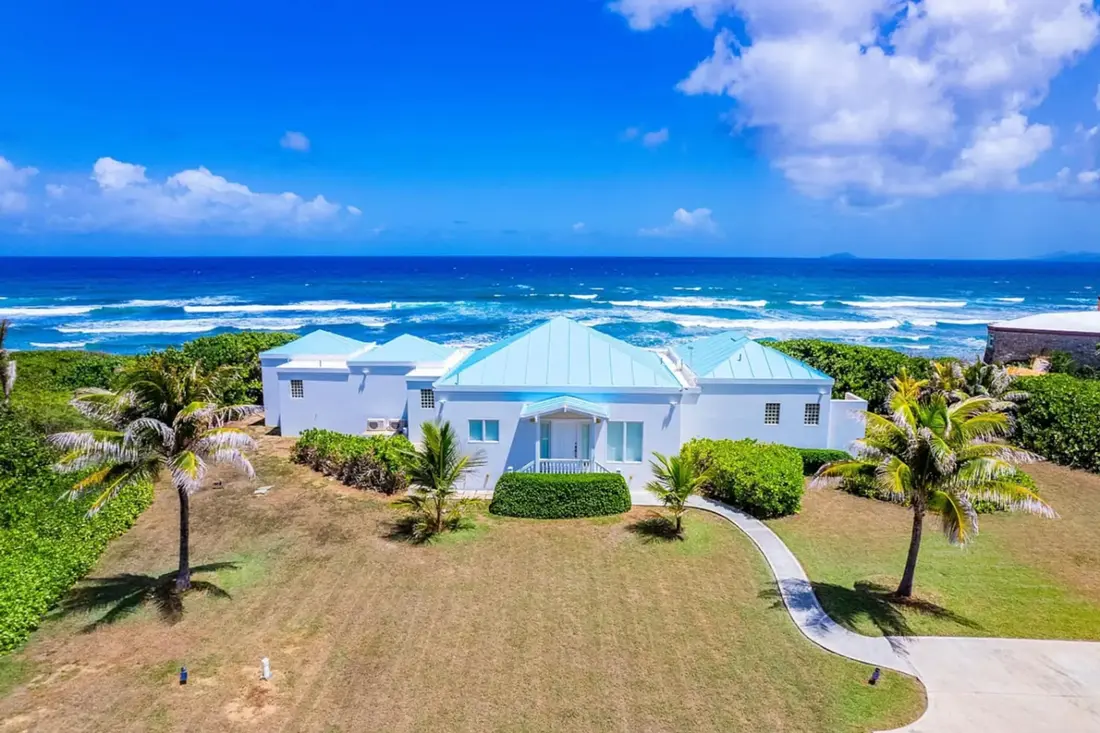
A watch runs from an evening pavilion talk well past midnight, so a west-end base earns its keep on the drive home. Our Sunset Sea-Clusion sits about fifteen minutes from the Sandy Point gate, the shortest late-night run of any home in the portfolio. Book the watch before the flights: April dates fill fast and capacity is the scarcest thing in this guide, so let the reservation set the trip rather than the other way around. Travelers chasing everyday turtles instead of the once-a-trip kind should look east, where our East End homes, including Dragonfly Villa and Moko Vista, put the Chenay Bay seagrass and the Buck Island departure docks minutes away for a daylight snorkel. Browse all villas and match the coast to the turtle you are after.
Sources
Written from official and first-party sources, checked August 2026. Hours, prices and event dates change — confirm before you go.
In this guide
Stay nearby
On The Shoys beach: six bedrooms, six baths, pool and hot tub, room for twelve, and the beach through the back garden.
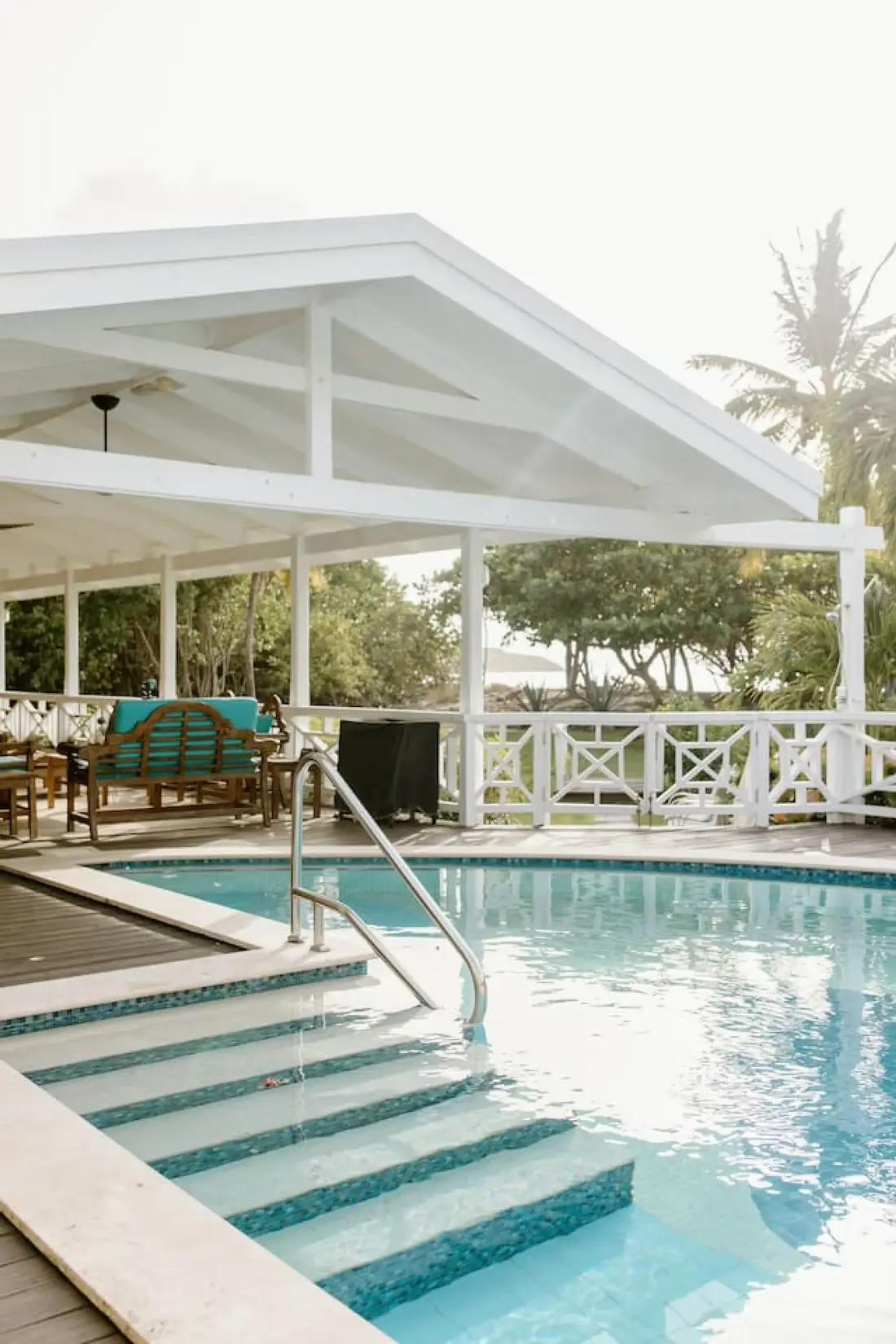 Shoy's Beach House6 bd · 6 ba · sleeps 12 · Christiansted
More in Events & Festivals
Sources
11 references, listed in full at the end of this guide — official park, refuge, tourism-board and business sources, checked August 2026.