St. Croix in February
Dry, breezy, and busy — with AgriFest's food-and-farm weekend and Mardi Croix at Cane Bay.
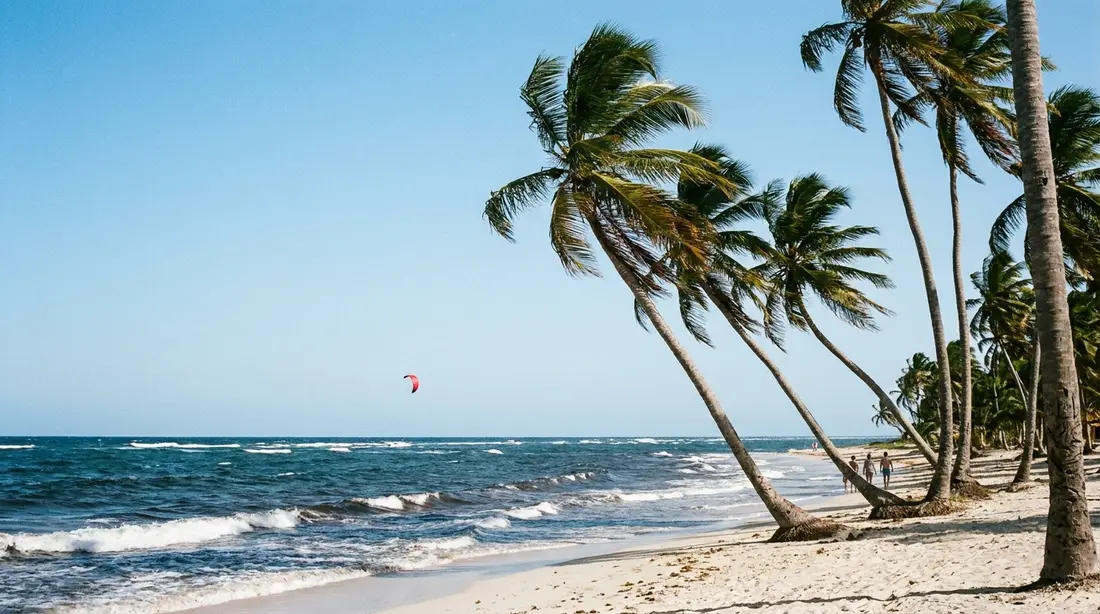
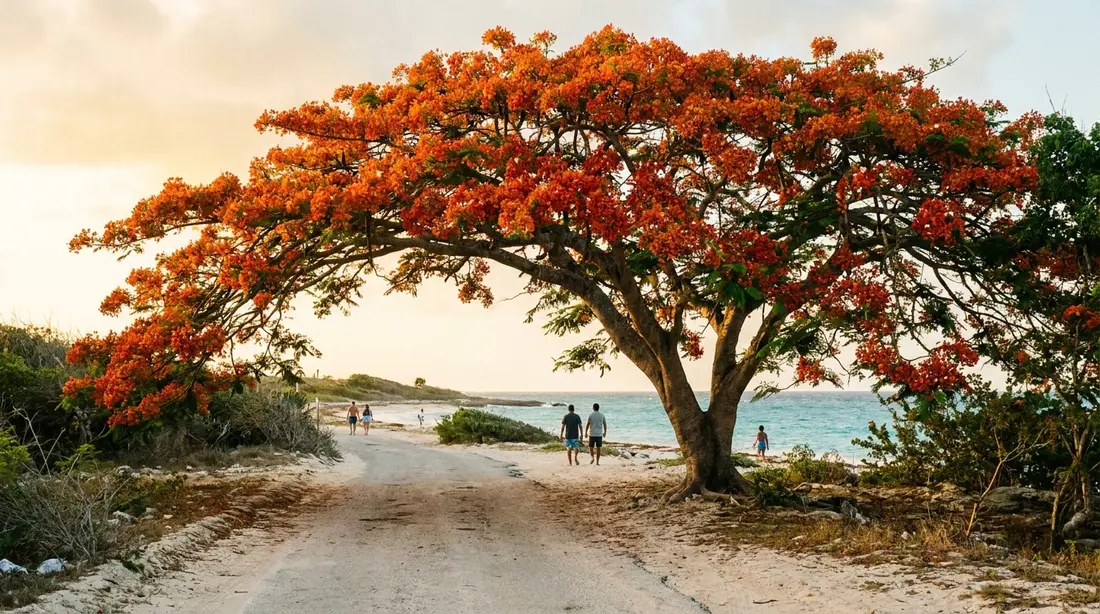
February is the sweet spot of a St. Croix winter: the driest air of the year, comfortable mid-80s warmth, and the trade wind that keeps a beach afternoon easy. It is also the island's busiest and priciest month, home to the biggest event on the Crucian calendar, AgriFest, and to the peak weeks for spotting humpback whales off the north shore. What follows sets out February on its own terms, the month's climate normals, why the calendar and the rates run hot now, the fair in full, the whales, the winter water, where the turtles stand, and how to book a February week. To weigh all twelve months against one another, read our best-time-to-visit essay; for the machinery behind island weather, the weather guide explains how it all works.
February's weather in numbers
February is the middle child of the dry season, and the numbers make its case. The federal 1991-to-2020 climate normals, recorded at Henry E. Rohlsen Airport, land a typical February day near 85°F and a typical night near 71°F, which works out to a daily average close to 78°F. Only January runs a shade cooler over the whole year, so February sits second on the list of the island's mildest months, warm enough for the water every day and cool enough that the breeze off the sea keeps an afternoon from ever feeling heavy. The long record has never turned up frost or anything near it, and 90-degree heat is a summer problem, not a February one.
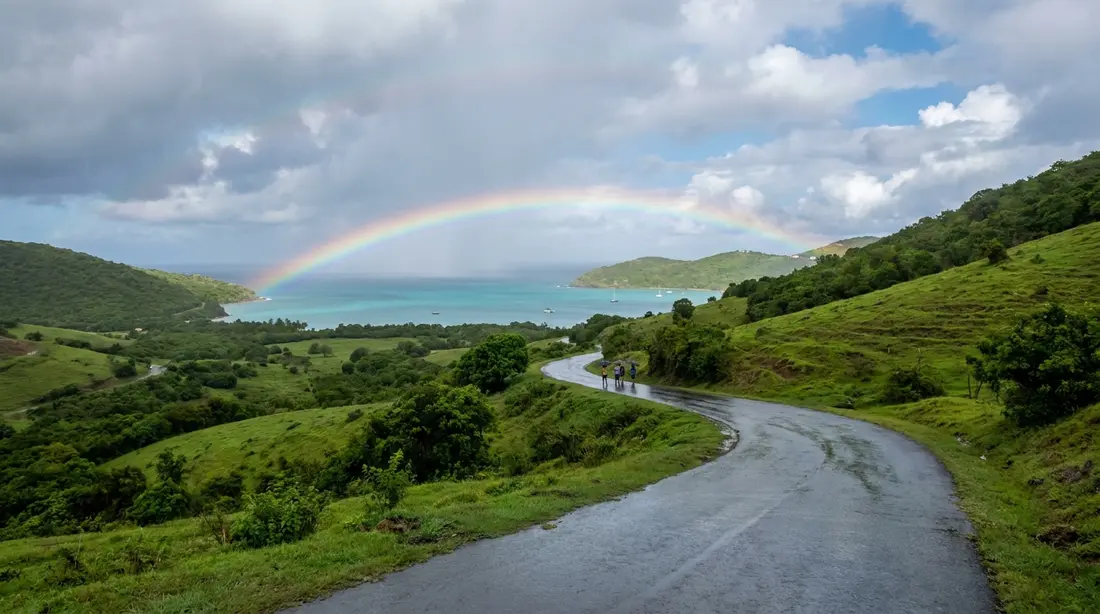
Rain is the figure that sets the month apart. On the long-term normal February collects only about 1.4 inches, which drops it into a near-tie for the bottom of the island's rain chart with March, the driest month by a hair. WeatherSpark's climatology tells the same story a different way: the chance of rain on a given day holds around seven percent through the month, about as low as St. Croix gets. When rain does come it is the usual island kind, a quick shower that blows through on the breeze and is gone, not a lost day. The wet northwest hills gather more than the airport ever records and the dry East End less, so a cell soaking one coast can leave the other bright.
The water is as cool as it gets here in February, and even that is mild. Station records put the average around 79.7°F, dropping to about 78°F and topping out near 81°F, a degree or two below the late-summer high and still fine for a long swim or snorkel. A diver spending a still hour on a second tank sometimes reaches for a thin wetsuit; everyone else is comfortable in a swimsuit. Overhead, the wind is the month's other constant. The reinforced winter trades, the stretch islanders call the Christmas Winds, are still blowing firmly out of the east through February, though their windiest weeks, late December into January, are behind them, and the full easing waits for March. WeatherSpark clocks the February average near 15 miles an hour, steady and almost always easterly. The air is drier and less sticky than at any other time of year, the muggy readings ease as the month goes on, and daylight lengthens from about eleven and a half hours at the start of February to close to twelve by its end. One thing the breeze hides: the February sun is as strong as any month's, so reef-safe sunscreen earns its place even on a cool, windy day.
| Measure | February | Where it ranks in the year |
|---|---|---|
| Average high | About 85°F | Typical winter warmth; a degree off the December-to-January floor |
| Average low | About 71°F | Among the coolest nights on the calendar |
| Daily mean | About 78°F | Second-mildest month, just above January |
| Rainfall | About 1.4 in | One of the two driest months, neck and neck with March |
| Sea temperature | About 79.7°F | At or beside the year's coolest water |
| Wind | Near 15 mph, east | Still the Christmas Winds, past their late-December peak |
The busiest, priciest month
February is the height of the St. Croix travel year. This is the month mainland visitors book to trade a northern winter for reliable sun, and demand runs at its yearly ceiling. In practice that means the top villa rates of the calendar, the most sought-after houses gone first, and the island's finite supply of rental cars, boat seats and prime dinner tables all under pressure. St. Croix at its busiest is still a quiet island by Caribbean standards, just 84 square miles with no resort strip, and a weekday-morning beach can be nearly your own, but the squeeze is real, and it shows up in the extras rather than on the sand.
Two stretches run hotter than the rest of the month. Presidents' Day, the third Monday of February, the 16th in 2026 and the 15th in 2027, anchors a long holiday weekend that pulls a wave of mainland travelers, and it happens to be the same weekend AgriFest fills the fairgrounds, so the middle of February is the single busiest patch of the island's busiest month. School-break weeks stack more visitors on through late February. Winter also puts the most nonstop flights of the year on the board right now, with American flying nonstop from Miami and Charlotte, Delta from Atlanta, United's Saturday service from Newark, and the short San Juan hops that connect onward. That is why an eastern-seaboard visitor can often reach the island without a connection this month, and why the cheap winter seats sell out well ahead. Airline routes shuffle from season to season; the current map lives on the getting here page. If you want peak-season weather without the peak crush, the quietest slice of high season is actually the second half of January, after the festival and before the February rush.
AgriFest, the island's biggest farm-and-food weekend
If one event defines February on St. Croix, it is AgriFest. Its full name is a mouthful, the Virgin Islands Agriculture and Food Fair. It is the territory's largest agricultural event. The fair takes over the Rudolph Shulterbrandt Agricultural Complex, the fairgrounds at Estate Lower Love, for a three-day weekend in the middle of the month. It has run for more than half a century; the 2026 edition, held February 14 to 16, was the 54th. The territory's Department of Agriculture stages it with UVI's School of Agriculture, plus backing from the V.I. Lottery, and it pulls in farmers, families and food vendors from across the three Virgin Islands, with delegations from neighboring Caribbean nations. For a visitor it is the fullest single day of Crucian food, farming and culture the year offers.
On the fairgrounds
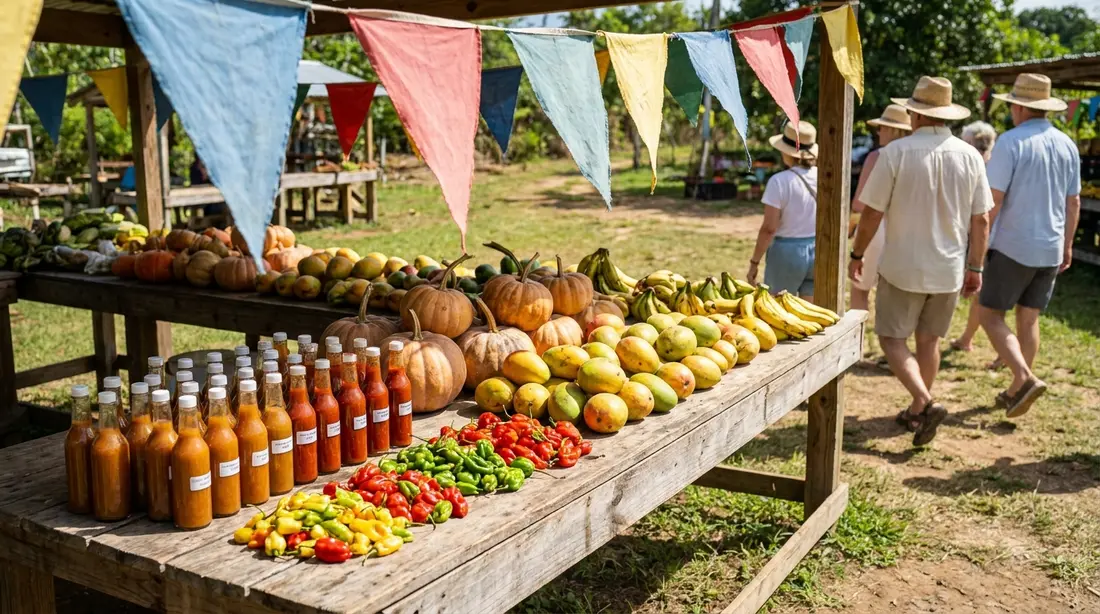
The grounds sort roughly into farm, food and stage. The agricultural heart is the livestock and produce: prize animals from farms all over the territory, tables of local fruit and vegetables, plant and seedling stalls, and exhibits and demonstrations built around the year's theme, which in 2026 tied agriculture to technology. The Farmer of the Year award is presented on the Saturday, after the ten o'clock opening ceremony. There are competitions and games, a fair fashion show, donkey-cart rides and a petting zoo that wins over younger children. The stage runs all day: steel-pan orchestras and school pan bands, mocko jumbie stilt dancers, cultural dance troupes and live bands. The traditional quelbe, or scratch-band, sound, the folk music of the Virgin Islands, threads through it.
The food village
The reason many locals come is the food. Vendors set up rows of cook stalls turning out the full run of Crucian plates: kallaloo, the green stew with West African roots; pate, the fried stuffed turnover; johnny cakes hot off the griddle; stewed and roast meats; and local juices and sweets to finish. It is the best place on the island to taste the dishes covered in our Crucian food guide in a single afternoon. Bring cash, since the stalls run on it, and come hungry and early, before the midday lines build.
Getting there and timing your day
AgriFest draws crowds from across St. Croix, and the approach roads at Estate Lower Love clog by late morning, worst on the Saturday of the opening and on the holiday Monday. The move is to arrive close to the nine o'clock gate, tour the livestock rings and the exhibits while the air is still cool, eat before the lines lengthen, and save the stage for the shaded part of the afternoon. Gates ran nine to six all three days in 2026. Adults paid $8 that year, children $5 and seniors $6 at last check. It is an open fairground in full sun, so a hat, sunscreen and water matter. AgriFest returns each year in mid-February, usually over the Presidents' Day weekend, but the exact dates move, so confirm them closer to your trip; if your week lines up, treat it as the centerpiece it is.
Whale-watching at its peak
February and March are the high point of humpback whale season around St. Croix. Through the winter, humpbacks cross the wider Caribbean to breed and calve in warm water; by late winter they are heading back north toward their feeding grounds, and these two months are when they pass closest and in the greatest numbers. What makes a small island unusual for this is the depth just offshore. Along the north coast the seabed falls away into the Puerto Rico Trench within roughly a hundred yards of land, plunging to thousands of feet, so whales that prefer deep water can swim near enough to be seen from the beach.
The north shore is the place to watch. Sightings are reported most often between Cane Bay and Salt River, from Cane Bay itself, the high ground around Judith's Fancy, Green Cay Marina, and the water a mile or so off Salt River, where a spout, a fluke or a breach can turn up without warning on a clear winter day. There is no dedicated whale-watching fleet here, so a sighting is usually a matter of luck, caught from a north-shore lookout, from the deck of a day sail, or from a dive boat working the north coast. In the peak weeks some sailing operators run trips that go looking, though no one can promise a whale on any given outing. We tell guests the same thing every winter: a February whale is a gift, never a booking. If a spout offshore would make your trip, keep your eyes on the deep water off the north shore and treat anything more as a bonus.
The rest of the February calendar
AgriFest anchors the month, but February keeps one of the fuller event calendars of the year around it. The specifics below follow the recent pattern; some dates are set only weeks ahead, and a few move with the Mardi Gras or the holiday calendar, so confirm the current year before you plan around one.
- Mardi Croix. St. Croix's own Mardi Gras, a costumed parade down the North Shore Road that ends at Cane Bay Beach with vendors, music and a swim. The Krewe de Croix runs it, the look borrows New Orleans purple, gold and green, and it lands on a February Saturday most years, now and then slipping into early March. The 2026 edition was February 7, themed "Caribbean FantaSea."
- The pre-Valentine's Jump Up. One of Christiansted's four street festivals a year usually falls in early February, close to Valentine's Day. The downtown blocks close to cars for the evening, roughly six to ten, and fill with steel pan, live bands, mocko jumbies, food stalls, and shops and restaurants trading late. The date surfaces only weeks out, so check once you land.
- The St. Croix Orchid Show. The St. Croix Orchid Society has staged its annual show and sale on the last weekend of February for more than half a century, in the halls of the St. George Village Botanical Garden. Its 2026 show, "Orchids for All Seasons," was the 54th. It runs Friday through Sunday, with hundreds of blooms judged and displayed and plants for sale.
- Art Thursday. On the third Thursday of the month, through the winter cultural season, the galleries and studios of historic Christiansted keep their doors open late with shows and live music, roughly five to eight at last check. February's edition falls mid-month.
- Valentine's Day. February 14 is a busy restaurant night island-wide, and the calm evening water makes a sunset sail a common way couples mark it. Reserve either well ahead in peak season.
The water in February
February water follows the winter rules. The Christmas Winds keep the exposed north and east coasts choppy through the middle of most days, so flat, clear water is a morning affair on those shores. Winter also brings the season's long-distance swell: storms far up in the North Atlantic push northerly ground swell down onto the island's north-facing beaches, raising real surf on a bright, calm-looking day and briefly closing out shore snorkeling at Cane Bay. When the north is up, the west coast at Frederiksted lies in the lee and stays flat, the standard fallback, and the reason the Frederiksted Pier dives in almost any weather.
None of that keeps you out of the sea. At about 79.7°F the water is cooler than in summer and still fine for a long snorkel, though a diver on a second tank may want a thin wetsuit. Take the calm early hours for anything that rewards flat water: shore-diving the Cane Bay Wall, a first snorkel over a sheltered reef, or a run out to Buck Island, where a windy-day crossing can be bumpy, so book boat trips early in the week and a blown day leaves room to try again. The snorkeling and scuba guides sort the sites by exposure, and the crews read each morning's conditions at the counter. And when whales are passing, the same deep north-shore water that stirs up on a windy day is where to look on a calm one.
Sandy Point and the turtles in February
February is one of the good months to walk Sandy Point. The refuge on the island's southwest corner, a long wild beach that the leatherback sea turtles have made the most important nesting site in the United States, keeps its winter hours all month: open to visitors on Saturdays and Sundays only, ten in the morning to four in the afternoon, and shut on weekdays. Those weekend hours run September 1 to March 31, so a February weekend is well inside the window; the drive out, the gate and the rules are in the Sandy Point guide. Carry water and shade, because there is nothing out there but sand.
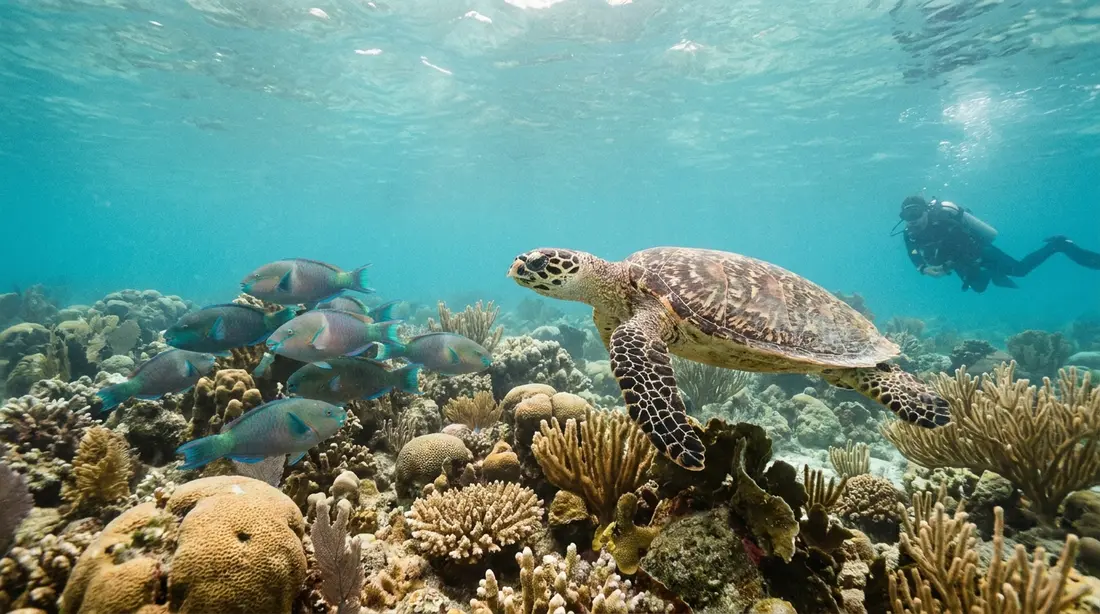
What you will not see yet is a nesting turtle. Leatherbacks begin hauling out at Sandy Point around March, build through spring and run into July, which is why the refuge closes to everyone from April 1 through August 31; in February the beach is still in its quiet pre-nesting weeks. The leatherback page covers the animal and its calendar, and the sea turtles guide runs through all three species that nest here. Turtles in the water are a different story, and a year-round one: green turtles graze the turtle grass in the calm East End shallows off Chenay Bay right through the winter.
Who February suits
February rewards the traveler who wants a sure thing. If your one priority is escaping a northern winter for dependable warmth and sun, this is the steadiest month on the St. Croix calendar: the driest air of the year, day after day of it, with the trade wind taking the edge off the heat. That certainty is exactly what the crowds and the rates are paying for, and it is worth stating, you buy the best winter weather odds on the island and you pay the year's top prices for them. It also suits anyone with a fixed reason to come now: an AgriFest weekend, a Presidents' Day school break, a chance at a humpback off the north shore, or a Sandy Point walk before the turtle closure.
February is a weaker match for two travelers. The one after the warmest, glassiest, bathwater sea is describing summer, not winter; February swaps a little water warmth and some north-coast calm for dry air and a steady breeze. And the one hunting the lowest rates and the emptiest beaches wants the far end of the year, the quiet green months of September through November, which are a different trip altogether. For the full side-by-side, the best-time-to-visit essay sets the twelve months against each other.
What to book for a February trip
February is one of the two hardest months to book on short notice, and the remedy is lead time. For your pick of the houses, and above all for anything large or beachfront, plan six to nine months out; the middle-of-February weeks around Presidents' Day and AgriFest, plus the school breaks that follow, are the first to fill and the ones to book earliest. Inside three months you can still land a good place, though the most-wanted houses are usually spoken for by then. How far ahead to plan, month by month, is covered in our best-time-to-visit essay; for February, sooner is always better.
Book two things alongside the villa. A car is not optional here, since there is no Uber or Lyft, driving is on the left, and the sights sit a drive apart, and the island keeps only a small rental fleet that empties in the high months, so lock one in the day you confirm the house; the renting a car guide covers it. And the experiences that cap out by the day, a Buck Island boat, the better dinner tables in Christiansted, a table on Valentine's night, are worth reserving the moment the trip is set, well before you land. If the trip is built around AgriFest or Mardi Croix, note that both fall on weekends that book like the peak they are.
February at a glance
The quick reference, with the standing reminder that dates move and hours change, so confirm anything you plan around.
| What to expect | February on St. Croix |
|---|---|
| Daytime weather | Dry and bright; highs about 85°F, nights about 71°F |
| Rain | About 1.4 in for the month, among the two driest with March |
| Sea and wind | Water about 79.7°F, the year's coolest; steady east Christmas Winds |
| Crowds and prices | Peak season; the year's busiest and priciest weeks |
| Flights | Fullest winter nonstop schedule; book early |
| Signature event | AgriFest, mid-February (Feb 14–16 in 2026), Estate Lower Love |
| Other events | Mardi Croix, a pre-Valentine's Jump Up, the Orchid Show, Art Thursday |
| Whales | Humpback peak; watch the deep north shore, no certainty |
| Sandy Point | Open Saturdays and Sundays, ten to four; pre-nesting |
| Best for | Winter-sun seekers, event travelers, whale hopefuls, planners |
Questions guests ask
Is February a good time to visit St. Croix?
It ranks at the very top for dependable winter sun. February brings the driest air of the year, comfortable mid-80s days, a steady cooling breeze, and the fullest events calendar on the island, led by AgriFest. The cost is the flip side of that popularity: the year's top villa rates and the tightest calendar, so you plan ahead and pay peak prices. The month suits everyone except the traveler chasing a warm, flat summer sea, because the winter trade wind keeps the open coasts active and the water sits at its coolest. If you want reliable sun and can commit early, little beats it.
How much rain does February bring?
Very little. The long-term normal is about 1.4 inches for the entire month, which puts February in a near-tie with March at the dry floor of the calendar, and WeatherSpark pegs the odds of a wet day at only about seven percent. Rain that does arrive tends to be a brief shower that blows across in minutes, not a day-long soaking, so sunny beach and boat days are something you can plan around. Bear in mind that the green northwest hills soak up more than the airport ever records and the parched East End far less, so rain over one part of the island often leaves another in sun.
When is AgriFest, and is it worth planning around?
AgriFest runs for three days in mid-February, usually over the Presidents' Day weekend; the 2026 edition was February 14 to 16, and the fair returns each year with dates confirmed closer in. If food, farming and local culture appeal, it is well worth building a day around, the biggest agricultural event in the territory and the best single lap of Crucian cooking on the calendar. Go in the morning before the crowds and the food lines, bring cash, and expect slow roads into Estate Lower Love around midday. Admission in 2026 ran $8 for adults, with lower rates for children and seniors.
Can you see humpback whales on St. Croix in February?
February is the best chance of the year, though nothing is certain. Humpbacks pass the island in the greatest numbers in February and March, and the north shore is where to look, because the Puerto Rico Trench drops to thousands of feet within about a hundred yards of the coast and the deep-water whales come in close. There is no dedicated whale-watching fleet on St. Croix, so sightings are usually incidental, from a north-shore vantage point, a day sail or a dive boat. Watch the deep water off Cane Bay, Judith's Fancy or Salt River on a clear day, and treat a whale as a lucky bonus.
Is Sandy Point open in February?
Yes, on weekends. The Sandy Point refuge admits visitors on Saturdays and Sundays only, ten in the morning to four in the afternoon, throughout its September-to-March season, so every February weekend qualifies, while the gate stays shut on weekdays. A weekend visit buys you a long, wild beach on the island's southwest corner that you may share with only a few others. You will not meet a nesting leatherback in February, since that season does not start until around March, which is also why the refuge closes to the public entirely from April 1 through August 31. Bring water and sun cover, as there are no facilities out there.
How far ahead should I book a February trip?
Months ahead, and more for the busiest weeks. Six to nine months out gives you the full range of houses to pick from, and the Presidents' Day and AgriFest stretch in the middle of the month wants the longest notice, since that is when demand peaks. Inside three months you can still land a good place, but the most sought-after houses are usually gone. Reserve the rental car the day you confirm the villa, since the island keeps only a small fleet and it sells out in season, and secure the Buck Island boat and the better dinner tables as soon as you know your dates. For February, the earlier you commit, the more you keep.
How crowded does St. Croix get in February?
Busy by the island's own gentle standard, which is a long way from a packed resort strip. The island covers only 84 square miles and holds some 41,000 residents, with no mega-resort anywhere on it, so even at the peak the crowd spreads thin across dozens of beaches, and an early weekday morning still finds you near-empty sand. High season shows up in the logistics rather than on the beach: dinner spots fill, boat charters book out days in advance, the small rental-car fleet runs short, and the well-known beaches draw a crowd by mid-morning. The middle of February, around Presidents' Day and AgriFest, is the peak of the peak.
Where to stay in February
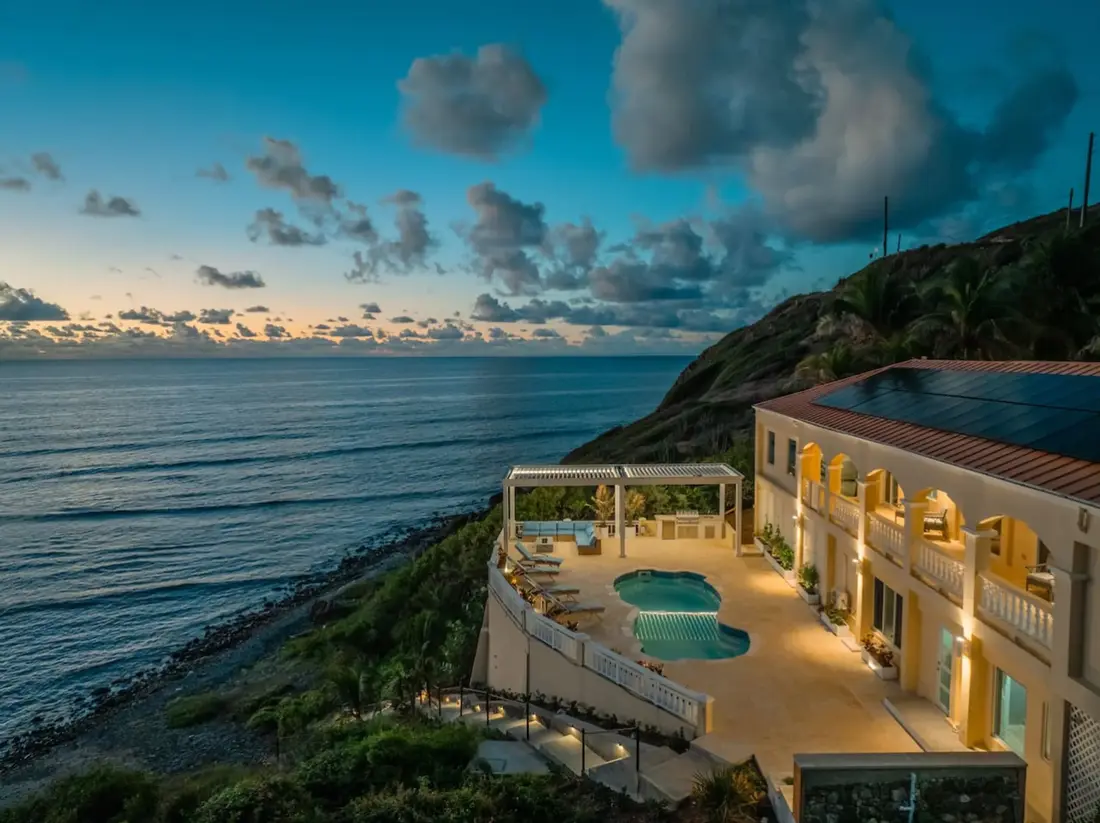
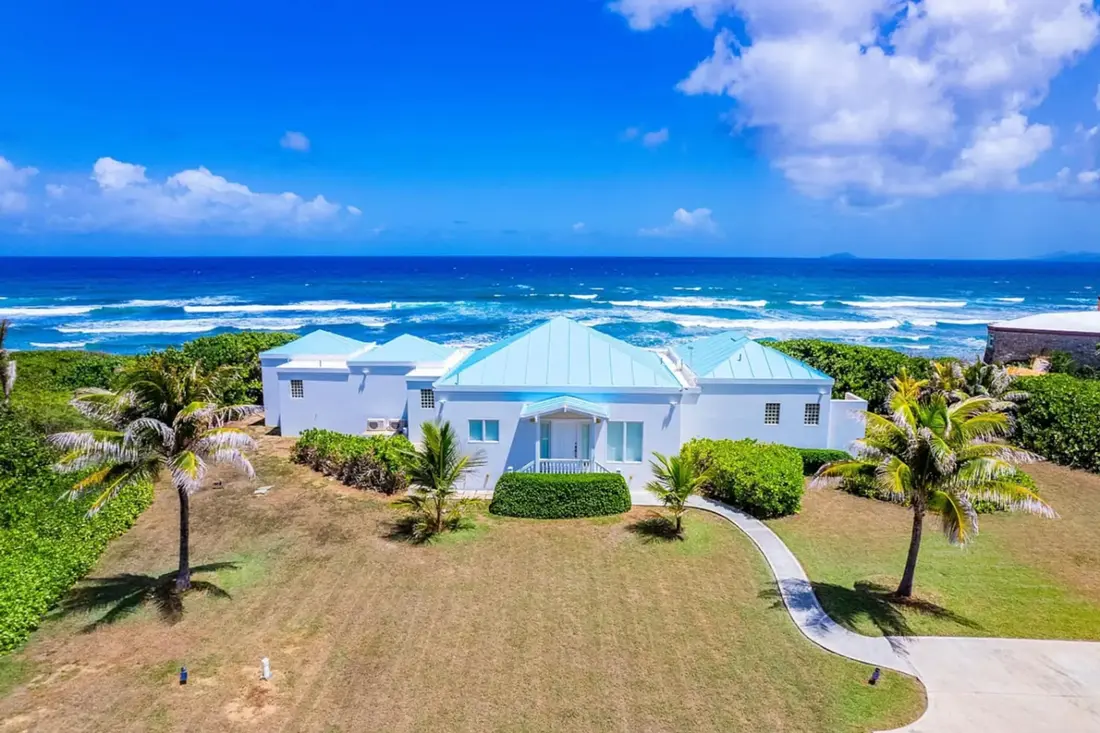
February suits a house you can settle into for a peak-season week, and the wind map helps place it. On the breezy East End, The Cerulean keeps its own stretch of sand across the water from Buck Island and stands first to catch the Christmas Winds that keep the afternoons easy, with the calm Chenay Bay shallows and quick Christiansted access nearby. Beachfront Shoy's Beach House gives a group a calm swimming beach and room to spread out, minutes from town, AgriFest and the dinner tables. On the leeward west coast near Frederiksted, Sunset Sea-Clusion sits closest to the flat water, the sunset, and the whale-watching north shore. February fills early across the beachfront collection, so start the conversation months ahead, and we can tell you from the island how a given week tends to run.
Sources
Written from official and first-party sources, checked August 2026. Hours, prices and event dates change — confirm before you go.
In this guide
Stay nearby
On The Shoys beach: six bedrooms, six baths, pool and hot tub, room for twelve, and the beach through the back garden.
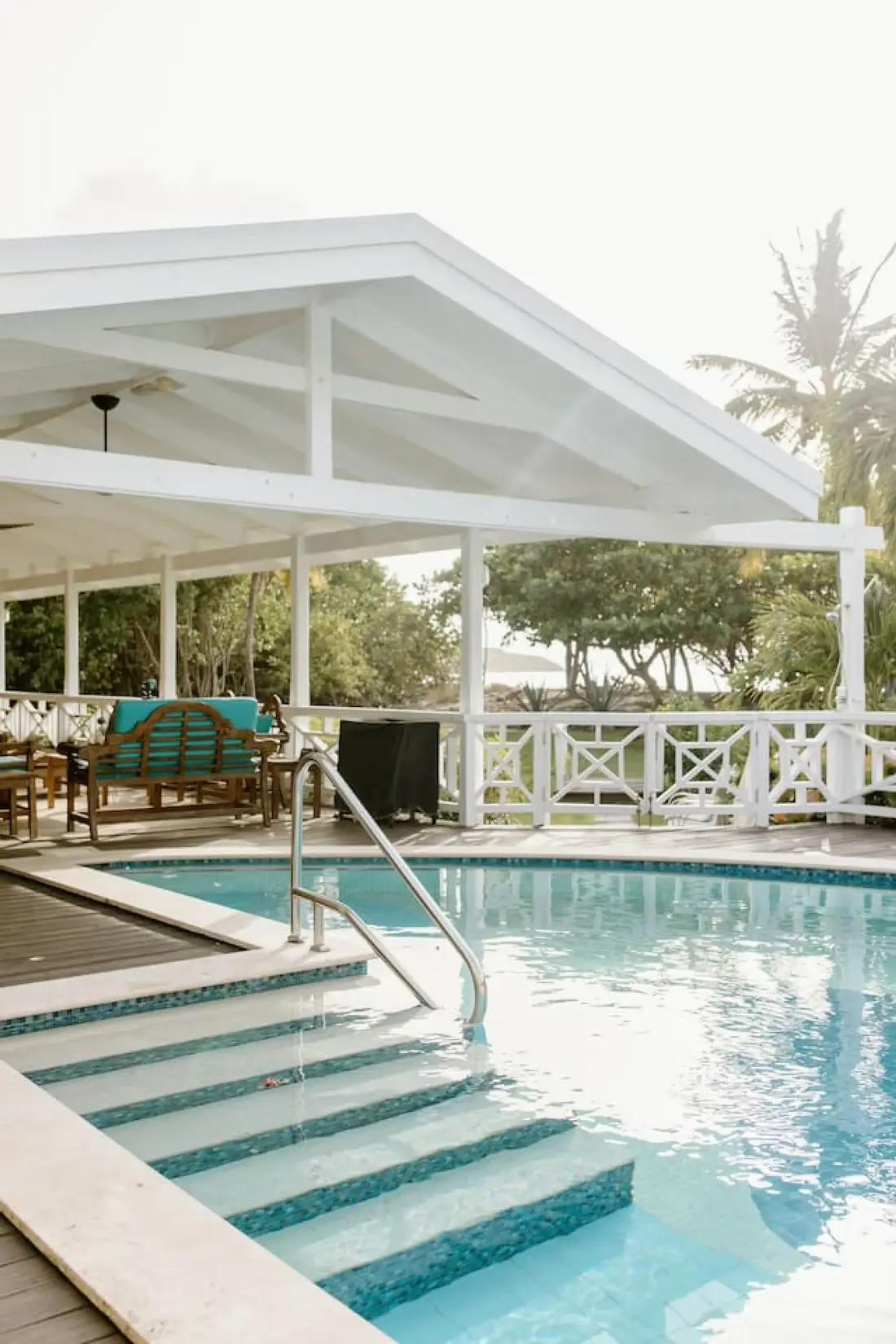 Shoy's Beach House6 bd · 6 ba · sleeps 12 · Christiansted
More in Month by Month
Sources
12 references, listed in full at the end of this guide — official park, refuge, tourism-board and business sources, checked August 2026.