Buck Island Boat Tours
Only five NPS-authorized operators can take you to Buck Island. Half-day vs full-day trips, what's included, and how to choose.
Every visit to Buck Island Reef National Monument starts with the same decision: which boat. The National Park Service authorizes a short list of concessionaires to carry passengers there, five companies as the Park Service lists them at last check, and no two run the day the same way. This page is the booking reference: each operator in detail, what the boat type changes, how half-day and full-day trips are built, where the boats leave from, and how to get a seat in the season you are traveling.
Why a short list of boats
The monument is a federal no-take marine reserve, and the Park Service controls commercial access to it the way it controls access to any national park: through concession authorizations. A company on the list holds a permit, follows the park's mooring and group-size rules, and briefs passengers on the regulations before anyone gets wet. A company off the list cannot legally land passengers there, however nice its boat. That is the whole system, and for a visitor it simplifies everything. You are choosing among a handful of vetted operations, all bound by identical park rules, so the real differences come down to boat, schedule, departure point, food and style.
What the monument actually is, its 1961 origin, its regulations and its wildlife, has its own page: the Buck Island Reef National Monument guide. The guided swim that anchors most trips is covered in the underwater trail guide, and the sand where boats spend their beach time in the Turtle Beach guide. This page stays on the dock: who carries you, and how.
One clarification worth making early, because visitors mix this up when browsing tour listings. St. Croix has a wider day-sail and sunset-sail fleet, including the live-music catamaran sailing out of Frederiksted, and those trips do their own thing along the coast. A sunset sail is a lovely evening; it is a different product from a monument landing. If a listing does not name Buck Island and the National Park Service authorization, assume the boat is going somewhere else. The wider fleet is covered in our day sails guide and sunset sails guide.
The five operators at last check
The Park Service's own directions page carries the authoritative list, and it is the list to trust over any third-party roundup. As published there at last check:
| Operator | Boats | Power | Leaves from |
|---|---|---|---|
| Big Beard's Adventure Tours | Renegade (42-ft sail cat), Adventure (42-ft power cat) | Sail and power | Christiansted boardwalk |
| Caribbean Sea Adventures | Multi-boat fleet incl. Celebration (41-ft power cat), Wave Dancer, Mile Mark | Power and sail | King's Wharf, Christiansted |
| Jolly Roger Charters | 42-ft sailing catamaran | Sail | Christiansted harbor |
| Llewellyn's Charters | Charis (37-ft trimaran, six passengers) | Sail only | St. Croix Yacht Club, Teague Bay |
| Buck Island Charters | Teroro II (42-ft trimaran), Dragonfly (38-ft trimaran) | Sail only | Green Cay Marina, East End |
Companies change hands, boats get sold, and permits turn over, so treat every detail below as a snapshot: accurate to each operator's published information at last check, worth a confirming glance at booking time. The sections that follow take the five in turn.
Big Beard's Adventure Tours
Big Beard's is the highest-volume name on the list and the one most first-time visitors end up aboard. The company checks passengers in on Queen Cross Street in downtown Christiansted, a few steps up from the boardwalk, and runs two very different boats: Renegade, a 42-foot sailing catamaran, and Adventure, a 42-foot power catamaran painted an unmistakable green.
The full-day trip runs about six hours aboard the sailing cat, departing at 9:30 a.m. at last check. The day opens on the water at the monument, snorkeling at Turtle Beach and then the guided underwater trail in small groups, and closes with a barbecue at the company's own beach stop, an all-you-can-eat spread the operator lists as burgers, hot dogs, veggie burgers, fresh fish and chips, with vodka punch and fruit punch poured alongside. As published at last check, the full day runs $135 for adults, $100 for kids 6 to 12, and $30 for ages 2 to 5.
The half-day cruise covers the monument in 3 to 3.5 hours aboard the power cat, twice daily, with gear, instruction, filtered water and punch on the ride home; $95 for adults, $72 for kids 6 to 12, and $26 for ages 2 to 5 as published at last check. Big Beard's notes that boats can be substituted depending on conditions and passenger counts, so book the trip, and treat the specific hull as the company's call. Cruise-ship passengers are asked to phone ahead rather than book online, and the crew wants advance notice of weak swimmers, which is a good sign rather than a warning: it means they plan flotation and attention before the boat leaves the dock.
Caribbean Sea Adventures
Caribbean Sea Adventures works from King's Wharf on the Christiansted waterfront and runs the largest fleet on the list, which makes it the operator with the most trip formats to choose from. The headline boat is Celebration, a 41-foot power catamaran the company outfits with shade, plush seating, boarding stairs, a freshwater shower, a proper bathroom and new snorkel gear.
The standard half-day snorkel aboard the power cat is a 3.5-hour trip departing at 9 a.m. and 1 p.m., with the crossing itself taking about 30 minutes, the fastest published run to the island. The format: land at Turtle Beach first for a snorkel lesson from the crew, then move to the east lagoon for the guided trail swim plus roughly an hour of free snorkeling. As published at last check the trip runs $95 for adults and $75 for ages 18 and under, with children under 2 free, gratuity extra, and a 28-passenger cap. In the June-to-October off-season, afternoon departures thin out to two days a week at last check, so summer visitors should treat the 9 a.m. boat as the reliable one.
Beyond the standard half day, the company publishes full-day formats that rotate by season: a sailing day aboard Wave Dancer, a beach-and-hike day and a snorkel-heavy day aboard Mile Mark, and private charters on several hulls. Its cancellation terms, published at last check, are the clearest on the island: full refund at 48 hours or more, half within 48 hours, nothing for same-day cancellations or no-shows. Read the individual trip description before booking, because the fleet is big enough that two Caribbean Sea Adventures trips can be entirely different days.
Jolly Roger Charters
Jolly Roger is Captain Mike's 42-foot sailing catamaran, moored in Christiansted harbor and boarding from the downtown waterfront. The operation sells half-day and full-day monument trips plus private charters, with snorkel gear and instruction included, and its stated policy is the thing regulars mention first: the boat is deliberately never overbooked. On an island where the biggest boats can carry large groups, Jolly Roger positions itself as the middle path, a full-size catamaran run at a personal scale, with a Coast Guard licensed captain and crew who handle the trail swim themselves.
The company publishes fewer fixed specifics than the two operators above, fewer set prices, fewer posted departure times, and works more like a charter operation with scheduled seats: contact, confirm the day's plan, book. That looser structure is a feature for travelers who want flexibility on timing or a semi-private feel without paying for a full private charter, and a drawback for planners who want a printed itinerary weeks out. Recent-season reviews confirm the boat active and sailing at last check.
Llewellyn's Charters
Llewellyn's is the list's smallest and longest-tenured personality: Llewellyn Westerman, a Crucian sailor and former Calypso King who has been sailing to Buck Island since 1960, carrying six passengers at a time aboard Charis, a 37-foot performance trimaran with no motor at all. The boat leaves from the St. Croix Yacht Club at Teague Bay on the East End, which puts its dock closer to the monument than any Christiansted departure.
This is the trip for people who want the crossing itself to be the experience: pure sail both ways, a six-person group, and a captain who narrates the island's history and culture from six decades of living it. It is also, by nature, the least standardized product on the list. There is no big-fleet website with a booking engine; arrangements are made by phone, and schedules follow wind and demand. Book it for the sailing and the company, and be flexible on the details. As the Park Service lists it at last check, the operation remains one of the five authorized concessionaires, a status it has held across generations of visitors.
Buck Island Charters, Teroro II and Dragonfly
The fifth authorization covers two trimarans sailing from Green Cay Marina on the East End: Teroro II, a 42-footer, and Dragonfly, a 38-footer. The operation, run by Captains Heinz and Carl, has been carrying visitors under sail since 1968 and still runs engine-free, a point the company makes proudly. Boarding is at the H dock at Tamarind Reef Resort, about three miles east of Christiansted on Route 82.
The standard day is a five-hour sail: check-in at 8:45 a.m., lines off at 9, back by around 2 p.m., with the guided trail swim and Turtle Beach time in between and snorkel gear included. Occasional afternoon departures return by sunset. Teroro II is certified for 36 passengers and deliberately capped at 24 by the operator; Dragonfly sails only as a private charter, up to 8 guests. As published at last check: $105 per adult and $85 per child under 12 on the scheduled Teroro II sail, with children under 2 free; a full Teroro II charter at $1,800 for up to 20 guests with hourly extensions available; and Dragonfly at $1,200 for the boat. A 50 percent deposit books the trip and cancellations are accepted up to 48 hours out, per the operator's published terms.
For guests staying on the East End, this departure point is the decisive advantage, covered in the drive-time section below. For everyone, the five-hour format is worth noticing: it is a half-day price bracket with closer to a full day's time on the water, which the short East End crossing makes possible.
Sail, power, or trimaran
The boat type changes the day more than most bookers expect, in four measurable ways: crossing time, motion, shade, and group size.
| Boat type | Crossing | Ride and shade | Typical group |
|---|---|---|---|
| Power catamaran | Fastest; about 30 minutes from Christiansted on the quickest published run | Stable twin-hull ride; most have hard-top shade | Up to 28 on the largest scheduled trips |
| Sailing catamaran | Slower, wind-dependent; motors assist when needed | Smooth and quiet under sail; shade varies by boat | Mid-size scheduled groups, plus charters |
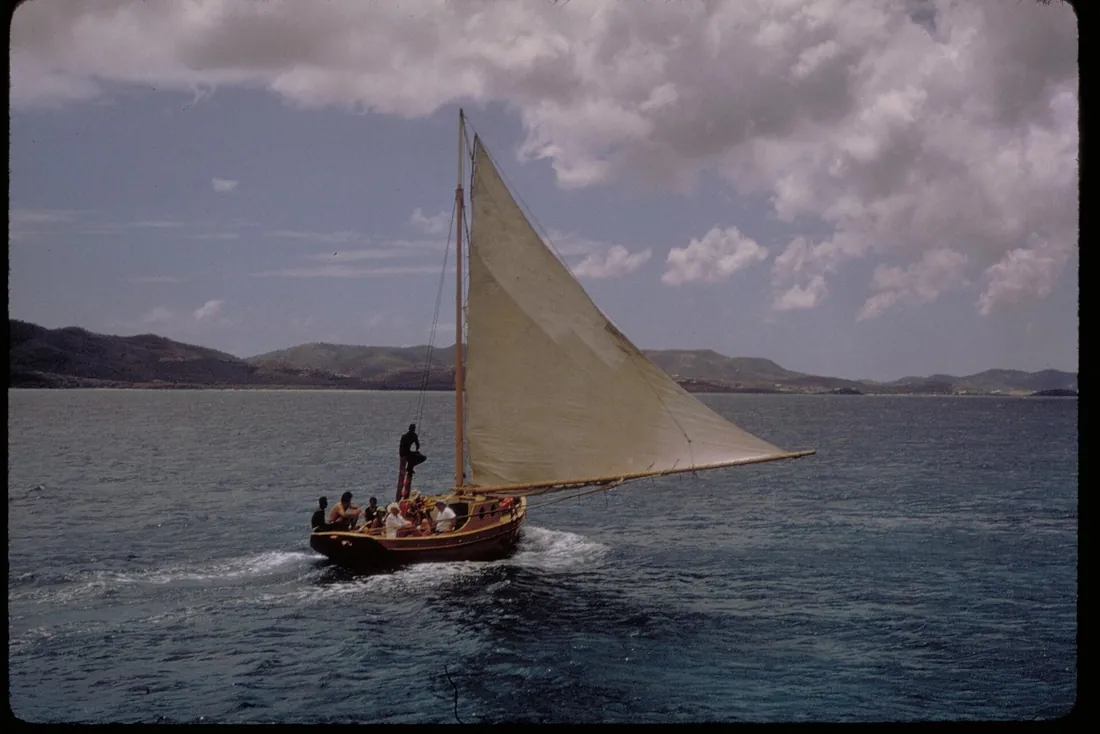
| Sailing trimaran | Slowest and quietest; the engine-free boats sail the whole way | Three hulls ride flat; open decks, bring sun cover | 6 to 24 depending on the boat |
The trade is simple. Power buys time: more minutes at the reef and the beach inside the same trip length, plus a schedule that holds regardless of wind. Sail buys the crossing: a quiet ride, no engine drone, and on the trimarans a piece of Crucian maritime tradition that predates the monument's mass popularity. Motion-sensitive passengers generally do better on the multihulls of either kind than they would on a monohull, and better on faster crossings than slow ones, since less time in the channel is less time for a stomach to argue. Families with restless small children tend to favor power for the same clock-based reason. Couples with no schedule tend to favor sail. Neither choice affects what happens at the island itself; the park's rules and the guided trail format are identical off every deck.
Half day and full day, hour by hour
Nearly every scheduled trip fits one of two shapes, and knowing the internal anatomy makes the choice easy.
A half-day trip runs 3 to 3.5 hours dock to dock on the powerboats, closer to five under sail from the East End. The sequence at last check, consistent across operators: cross to the island, stop at the west end beach for a snorkel lesson and some sand time, move to the east lagoon for the guided trail swim with free snorkeling after, then run home, usually with a drink poured on the return leg. Morning half days get the calmest water and the best light on the coral; afternoon half days suit late risers and cruise-ship schedules. What a half day omits: lunch, the island's hiking trail, and slack time. It is efficient by design.
A full-day trip runs about six hours and adds the middle of the day. The snorkeling happens in the morning block, then the trip feeds you, aboard, at a beach barbecue stop, or picnic-style depending on operator, and the afternoon holds long beach hours and, on some trips, the hike over the island's ridge to the overlook. Full days cost more, roughly $40 more per adult on the operator pricing published at last check, and the extra money buys unhurried time rather than more snorkeling.
Which to book: snorkel-first travelers and short-stay visitors take the morning half day, since the trail swim, the entire headline act, is fully present in it. Families with young kids often do better on the half day too; three hours matches a small child's attention span, six tests it. Beach lovers, groups celebrating something, and anyone whose trip has room for one long unstructured day take the full day. Seniors and nervous swimmers should weigh the operator more than the length, and the next section takes that up. First-timers worried about the swim itself should read the trail guide; the short version is that crews teach beginners on every trip and carry flotation for anyone who wants it.
Matching the boat to the group
A few plain pairings, drawn from how the operators describe their own trips:
- First-time snorkelers: any scheduled trip works, since the lesson-then-guided-swim format is universal, and the beach-first itineraries give beginners a shallow, sandy warm-up before the reef. Tell the crew at booking; every operator asks to know.
- Families with kids under 8: the shorter powerboat trips keep the day inside a child's endurance, and published kids' pricing at Big Beard's and Buck Island Charters makes the math friendly. Confident-swimmer households can go either length.
- Seniors and anyone with boarding concerns: the boat with published boarding stairs and a real bathroom is the comfortable pick; see the mobility notes below.
- Snorkel maximalists: the full-day snorkel-focused formats, or a private charter that lets you ask for extra water time.
- Sailors at heart: the engine-free trimarans from the East End, or the six-passenger Charis if the crossing matters more to you than the crowd.
- Groups of 8 to 24: a full-boat charter often beats buying seats individually; Dragonfly for 8, Teroro II for up to 20, and the bigger fleets quote private days on request. Our private charters guide covers the wider market.
Departure points and drive times
Boats leave from three places, and where you are staying should influence which dock you book.
The Christiansted waterfront hosts Big Beard's, Caribbean Sea Adventures and Jolly Roger, all boarding within a short walk of each other along the harbor. Check-in offices sit on Queen Cross Street and King's Wharf, and the boardwalk makes the before-and-after easy: coffee before a morning boat, lunch or drinks after. Drive times at a relaxed island pace: about 10 to 15 minutes from the East End villa areas, roughly 20 minutes from the north shore around Salt River, and 35 to 45 minutes from Frederiksted and the west end. Parking downtown takes a few extra minutes on busy mornings, so pad the arrival; operators ask for 30 minutes of lead time. Driving is on the left, covered with the rest of the road logistics in our getting around guide.
Green Cay Marina, three miles east of town on Route 82 at the Tamarind Reef Resort, is the Buck Island Charters dock. From the villa clusters around the East End it is a five-to-ten-minute drive, which changes the whole texture of a boat morning: an 8:45 check-in with a 8:30 departure from the villa, no town parking involved.
The St. Croix Yacht Club at Teague Bay, further east still, is Llewellyn's home dock, minutes from the easternmost villas and about 25 minutes from Christiansted.
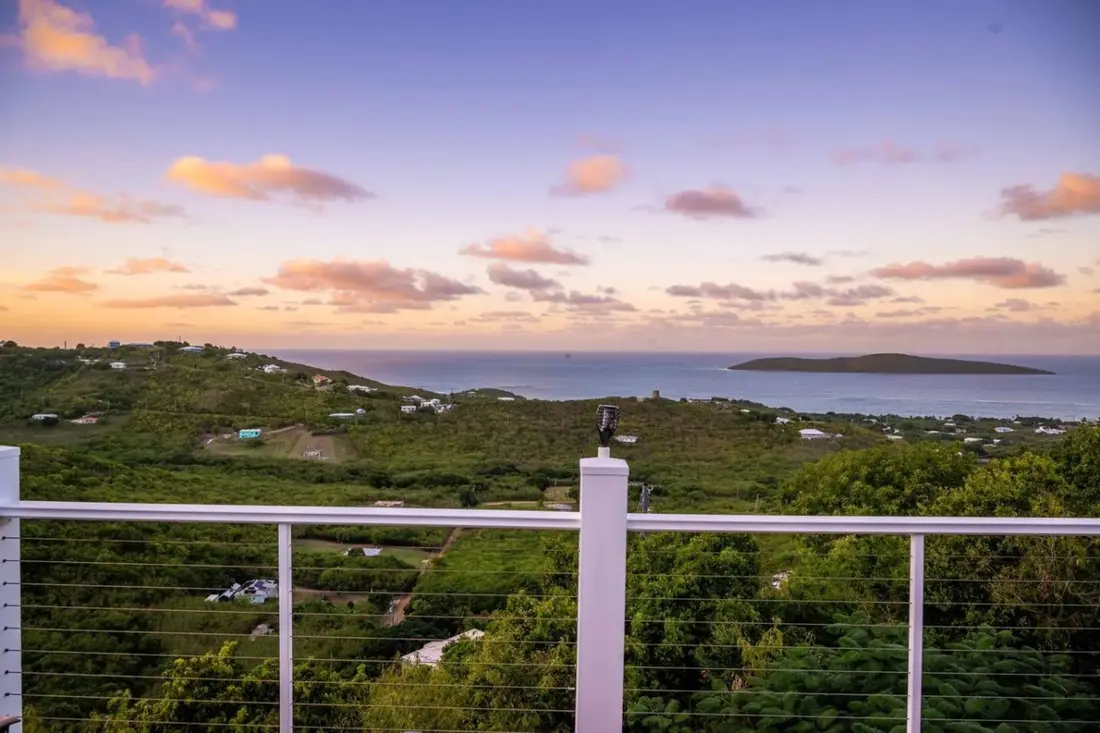
The pattern to exploit: west and central visitors should book Christiansted boats and combine the trip with a town day; East End guests should look hard at the two eastern docks first, then at Christiansted's faster boats if schedules clash. Guests at our East End houses can see the monument from the deck, and the run from that side of the island is the shortest water crossing of all.
Booking lead times and weather calls
How far ahead to book tracks the island's seasons. From mid-December through April, and across any holiday week, the fleet sells out at the scale you would expect of a capped concession system: a handful of boats, each with a passenger limit, serving the island's busiest months. Booking a couple of weeks ahead is the comfortable margin in that window, and further out costs nothing. May through November, a few days' notice is usually plenty, with one caveat: summer schedules thin, afternoon departures drop to fewer days at some operators, and a smaller schedule can fill even in a quiet month. Book the boat before you build the restaurant reservations around it, and put it early in your stay, a point the weather paragraph below explains.
Weather calls follow a pattern worth understanding in advance, at a pattern level rather than as any operator's specific promise. The captains decide, usually the evening before or the morning of, based on the channel rather than the sky; a gray day with flat water sails happily, and a sunny day behind a strong front may not. Winter trade winds make afternoons choppier than mornings, so morning departures cancel least. When a trip is called off, operators reschedule first and refund when rescheduling fails, and published cancellation terms, where they exist, run on 48-hour windows. The practical defense is calendar position: a boat booked for day two of a week's stay has five fallback days, and a boat booked for the last morning has none. Our weather guide covers the seasonal backdrop in full.
Private charters trade money for control. A chartered boat sails on your date with your group and, within park rules, your itinerary emphasis: more snorkel time, more beach, a hike stop. Published full-boat rates at last check start around $1,200 to $1,800 on the East End trimarans, and the larger operators quote by request. For a group of ten or more, split charter math often lands within sight of per-seat pricing, and the boat becomes yours.
What to bring aboard
The boats provide the snorkeling: masks, snorkels, fins, flotation and instruction come with every scheduled trip at last check, and gear quality on the fleet's newer boats is good. What you bring is the comfort layer, and one legal item.
- Mineral sunscreen, by law. The Virgin Islands banned sunscreens containing oxybenzone, octinoxate and octocrylene, the so-called toxic three Os, with the sale-and-possession ban effective March 30, 2020. Zinc oxide and titanium dioxide formulas are the compliant choice, they are sold all over the island, and the reef you are traveling to see is the reason the law exists. Apply before boarding; nothing goes on skin right before a swim over living coral.
- A hat, sunglasses and a long-sleeve layer. The channel doubles the sun with glare, and open trampoline decks on the trimarans have no shade of their own. A rash guard solves sunscreen, chill and jellyfish-adjacent nerves in one garment.
- Motion-sickness tablets, taken early. The crossings are short and the multihulls ride flat, so most people need nothing. Anyone with a history should dose 30 to 60 minutes before departure, since remedies work before nausea starts and do little after. Winter afternoons are the bumpiest window.
- Water shoes or sandals that can get wet. Beach landings and dinghy transfers mean wet feet somewhere; the sand is soft, so this is about comfort on the boat ladder, the deck and any hike, and bare feet work fine for the swim itself.
- A towel, a dry bag and cash. Towels are on you at most operators; a small dry bag keeps phones and the rental car key out of the spray; crews live substantially on gratuities, and 15 to 25 percent in cash at the dock is the working norm, with one operator publishing 20 to 25 percent as the expectation.
- Less than you think. The island has no shops, no rentals and no trash cans; everything you carry ashore comes back with you, and glass is banned on the sand outright.
Boarding and mobility notes
None of the concessionaires publishes a full accessibility specification, so travelers with mobility needs should call before booking rather than rely on any listing, this page included. What the published record does show at last check: Caribbean Sea Adventures fits Celebration with boarding stairs and an onboard bathroom, the friendliest published combination for stiff knees and long mornings; the Christiansted boats board from fixed docks downtown, which beats a beach launch; and most landings at the island involve some water: boats moor off West Beach and guests wade or ride a tender in, though the Park Service brochure notes a concrete pier on the south shore used for passenger off-loading and wheelchair access on some trips. Crews across the fleet are experienced at assisting less-mobile guests over the rail and down ladders, and a phone call describing your situation gets a straight answer about which boat and which day will treat you best. The island's own facilities, once ashore, are limited to picnic shelters and vault toilets on the west end sand.
Sea state through the year
The channel between St. Croix and the monument is the trip's only variable, and it follows the island's wind calendar closely enough to plan around.
| Months | Channel character | Booking posture |
|---|---|---|
| Mid-December to March | Christmas Winds bring brisk trades; mornings workable, afternoons choppy | Reserve 2 to 4 weeks out; take morning boats; book early in your stay |
| April to June | Trades ease; long calm spells; clear water | A week's notice is generous; any departure time works |
| July to October | Flattest, clearest stretch of the year between weather systems; hurricane season demands forecast awareness | Days-out booking fine; schedules thinner, confirm which days boats run |
| November to mid-December | Settled shoulder before winter wind fills in | Easy booking; the sleeper window for calm crossings and quiet boats |
No month is a wrong month; the fleet sails year-round and cancellations for weather are the exception in every season. Where Buck Island's water sits among the island's other snorkeling is mapped in the snorkeling reference, and the trip pairs naturally with the rest of a water-heavy itinerary from our experiences page.
Questions guests ask
How far in advance should we book a Buck Island boat?
In high season, mid-December through April and holiday weeks, reserve as soon as your dates are firm; a couple of weeks out is comfortable, and closer than a few days is gambling with a capped fleet. In summer and fall, a few days usually suffices, though thinner off-season schedules mean your preferred day may only have a morning boat, or no boat, at some operators. Whatever the season, schedule the trip for early in your stay so a windy day postpones it instead of erasing it.
What happens if the weather cancels the trip?
The captain makes the call, typically the evening before or early the same morning, based on the channel conditions rather than rain. Operators reschedule you onto the next available departure first and refund if no day works, and the published cancellation policies run on 48-hour windows at last check, with same-day guest cancellations generally unrefunded. This is the entire argument for booking the boat early in your week: a canceled day two becomes a sailed day four, and nobody loses anything but a little sequencing.
Can non-swimmers or weak swimmers do these trips?
Yes, with notice. Every operator asks to be told about hesitant swimmers in advance, crews carry flotation vests and noodles, snorkel lessons happen off a shallow sandy beach before anyone sees coral, and the guided trail swim moves at the group's pace in water that tops out around 12 feet. A non-swimming guest can still ride the boat, enjoy the beach and wade, and skip the trail. One caution: the swim between boat and beach or trail is real open water, brief as it is, so tell the crew and let them set you up rather than toughing it out silently.
Do we need to bring our own snorkel gear?
No. Masks, snorkels, fins and flotation are included on every scheduled concessionaire trip at last check, and the newer boats carry newer gear. Bringing your own mask is still worth it if you own one that fits your face perfectly, since fit is everything in a mask, and prescription-mask users should obviously pack theirs. Fins are the item most worth borrowing from the boat rather than hauling in a suitcase. If you snorkel elsewhere on the island during your stay, our gear notes live in the wider snorkeling reference.
Is the half-day trip enough, or is the full day worth it?
The half day contains the whole headline: the crossing, the guided underwater trail, beach time at the west end, and the ride home, in 3 to 5 hours depending on the boat. Book it if snorkeling is your priority or your trip is short. The full day adds lunch, long beach hours, and often the ridge hike to the overlook, at roughly $40 more per adult on published pricing at last check; book it if you want the island as a whole day rather than an activity. People who loved the half day sometimes book the other format later in the same week, which is its own answer.
How much should we tip the crew?
Plan on 15 to 25 percent of the trip price, in cash, handed over at the dock; one operator publishes 20 to 25 percent as the customary range, and none includes gratuity in the ticket at last check. The crew on a Buck Island boat does far more than drive: they teach beginners, guide the trail in the water, watch the group like lifeguards, cook on the barbecue trips, and get everyone up and down ladders all day. Budget the tip when you budget the tickets and the number will feel fair by the ride home.
Can we just rent a boat and go ourselves?
Only in a private vessel operating under the park's own rules, permits where required, designated anchorage at the west end, size limits, and no landing outside day-use hours, and there is no casual skiff-rental shortcut to the monument; passenger-carrying trips are the concessionaires' exclusive lane. The full private-vessel rulebook lives in the monument reference. For most visitors the real comparison is scheduled seat versus private charter of an authorized boat, and the charter wins whenever your group is big enough to fill it.
Villas a short drive from the docks
The East End is the natural base for a Buck Island trip week. The Cerulean and the Buck Island Overlook face the monument itself, and Moko Vista and Dragonfly sit minutes from Green Cay Marina, close enough that an 8:45 check-in for the sail feels leisurely. Christiansted's boats are an easy 15 minutes from the same doors. Browse the full set on our East End villas page; our on-island team books guests onto these boats routinely and knows which operator fits which group.
Sources
Written from official and first-party sources, checked August 2026. Hours, prices and event dates change — confirm before you go.
In this guide
Stay nearby
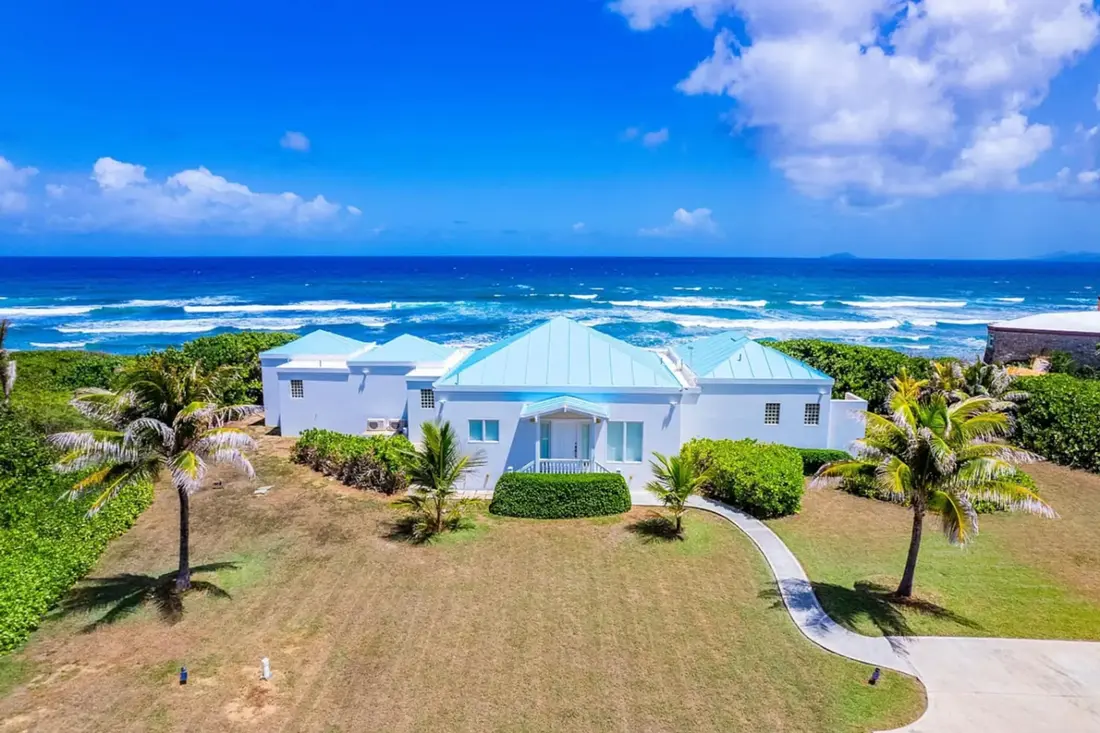
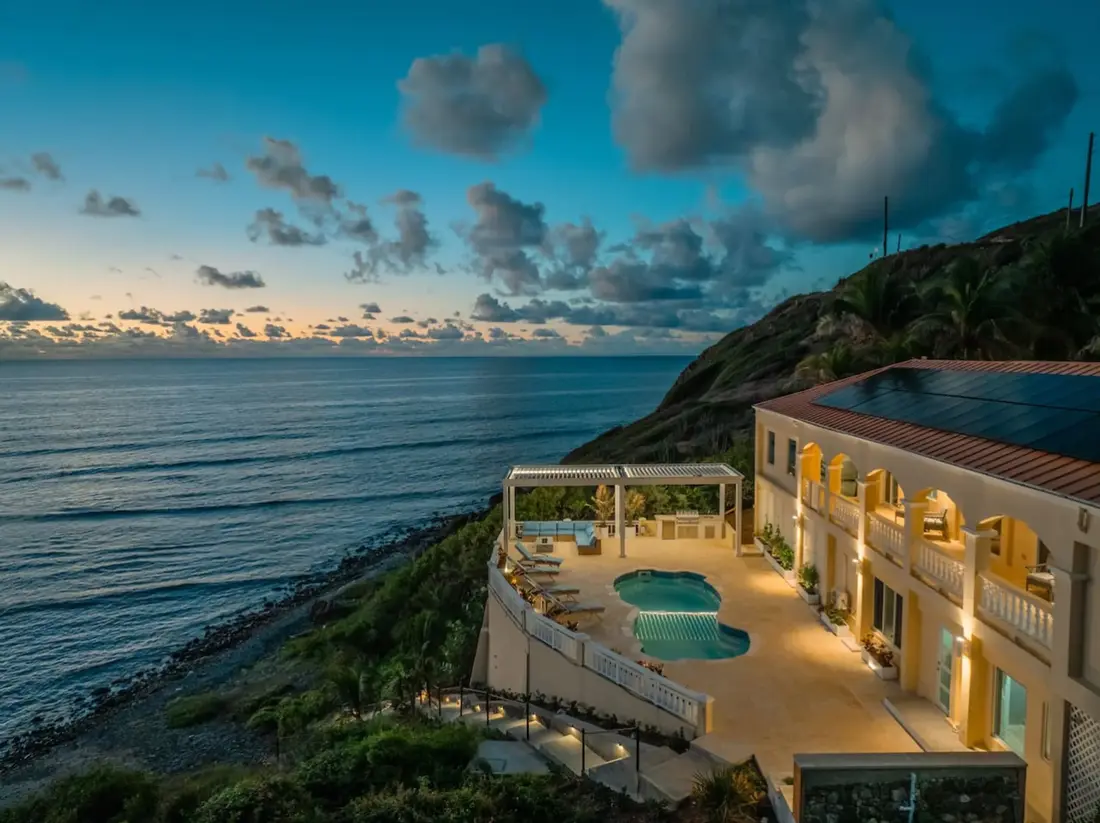
Private oceanfront on the East End with a sandy, swimmable beach, pool, outdoor kitchen and a separate guest cottage. Sleeps twelve.
 The Cerulean5 bd · 5 ba · sleeps 12 · Christiansted
More in On the Water
Sources
11 references, listed in full at the end of this guide — official park, refuge, tourism-board and business sources, checked August 2026.