Transfer Day, 1917
The U.S. bought the Danish West Indies for $25 million in gold on March 31, 1917. What changed, and what Transfer Day means now.
Transfer Day is March 31, the date in 1917 when Denmark handed the Danish West Indies to the United States and St. Croix, St. Thomas and St. John became the U.S. Virgin Islands. It is a paid territorial holiday, and it is the reason a visitor from the mainland reaches St. Croix on a domestic ticket, spends dollars, and carries no passport. This page is the deep account of that one afternoon and the American century it opened: how a sale fifty years in the making finally closed, what happened on the Christiansted wharf as the clock struck four, why the people being transferred were given no vote and no citizenship, and how the day is kept now. The island's full run of colonial owners is a separate story, told flag by flag in our seven flags of St. Croix guide; this page begins where that sequence ends.
What Transfer Day marks
On the afternoon of March 31, 1917, sovereignty over three Caribbean islands changed hands by treaty. Denmark, which had held St. Croix since 1733, sold its West Indian colony to the United States for $25 million in gold, and at ceremonies staged in each island town the Danish flag came down and the American flag went up. The population handed across that day came to roughly 26,000 people over the three islands, most of them descended from the enslaved Africans brought to work Danish sugar estates. The date has been observed every year since, and it appears on the U.S. Virgin Islands roster of public holidays as Transfer Day, one of the two great historical anniversaries the territory keeps. The other, Emancipation Day on July 3, records the end of slavery in 1848; most Crucians will tell you the older date carries the heavier meaning, yet March 31 is the hinge the island's modern life turns on, because nearly everything a mainland traveler now takes for granted about a St. Croix trip dates from it.
Fifty years of American interest
Washington had wanted a foothold in these waters for half a century before it got one. The first serious move came under Secretary of State William H. Seward, the same official who had just bought Alaska. Seward negotiated a treaty to purchase St. Thomas and St. John, signed on October 24, 1867, at a price of $7.5 million. The people of those two islands endorsed it in a plebiscite early in 1868, voting overwhelmingly to join the United States, and the Danish king Christian IX ratified it on January 31, 1868. Then it died in Washington. The impeachment fight around President Andrew Johnson swallowed the Senate's attention, the ridicule aimed at Seward over Alaska had drained any appetite for buying more distant land, and a run of disasters in the islands in the autumn of 1867, the San Narciso hurricane in late October followed by a violent earthquake and tsunami on November 18, made them look like a poor place to base a fleet. The Senate never brought the treaty to a vote, and it lapsed.
A second attempt came in 1902. This treaty covered all three islands for $5 million, and this time the roles reversed: the American side approved it and Denmark refused. Its upper chamber, the Landsting, split evenly, 32 votes to 32, on October 22, 1902, and a tied vote was a defeat. Among the Danish objections was that the arrangement offered the islanders neither a say in the sale nor any promise of American citizenship, a complaint that would prove prophetic. Two treaties in thirty-five years, both signed and both dead, left the islands Danish and left the idea of an American purchase looking permanently stalled.
The submarine that closed the deal
The First World War broke the deadlock. By 1916 the German submarine campaign had become the central fact of the Atlantic war, and American planners worried about a specific nightmare: if Germany overran Denmark in Europe, it might take Denmark's Caribbean colony with it, and a German naval base on St. Thomas would sit astride the sea lanes to the Panama Canal, which had opened only in 1914. Against that fear the price stopped mattering. Secretary of State Robert Lansing and Denmark's minister in Washington, Constantin Brun, signed a fresh treaty on August 4, 1916, and the U.S. Senate gave its consent on September 7. Denmark, uneasy about selling territory outright, referred the question to its own electorate in a national referendum on December 14, 1916, the first such vote in Danish history, and about 64 percent of Danish voters approved the sale. The two governments exchanged ratifications on January 17, 1917. One detail from 1916 matters for everything that follows, and this page returns to it below: unlike the islanders of 1868, the people of the Danish West Indies were not asked. Only Denmark's voters decided.
The price and the paperwork
The $25 million was an extraordinary sum for the ground involved. It ran more than three times what the United States had paid for the whole of Alaska in 1867, for a colony of some 133 square miles, which made the Virgin Islands, acre for acre, the most expensive territory the country had ever bought. The money was owed in gold, and gold in that quantity is a physical problem. Twenty-five million dollars in gold coin would have weighed on the order of 48 tons, far too much to ship south for a wharf-side handover, so on March 31, 1917, in Washington, Lansing settled the account by passing Brun a single U.S. Treasury warrant for the full amount rather than the metal itself. With that transfer of paper the colony formally became American, and the ceremonies in the islands that same afternoon were the public enactment of a purchase already paid.
The afternoon of March 31, 1917
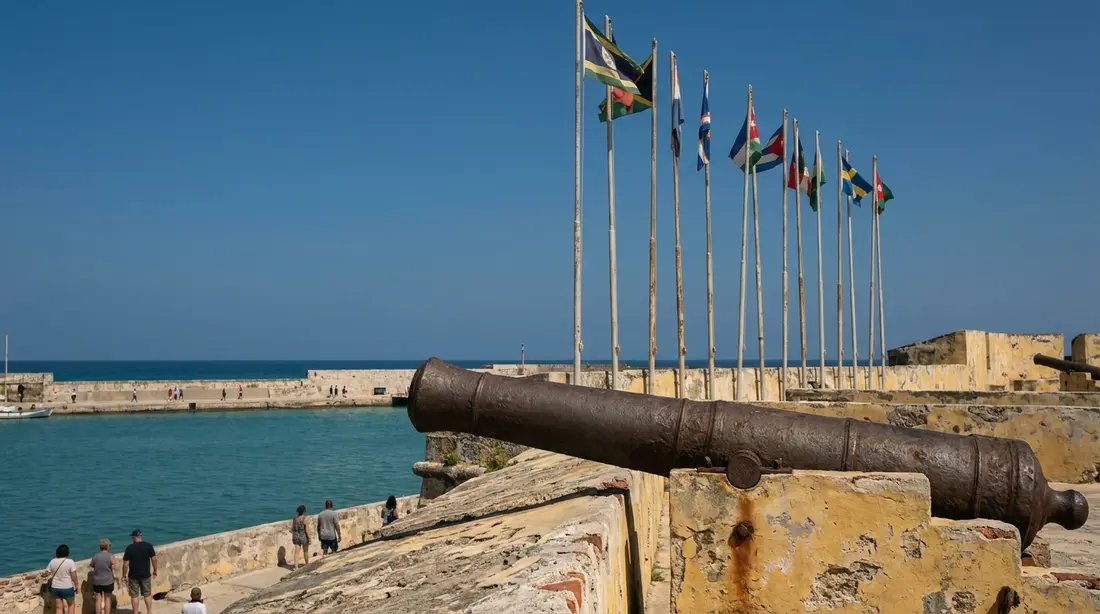
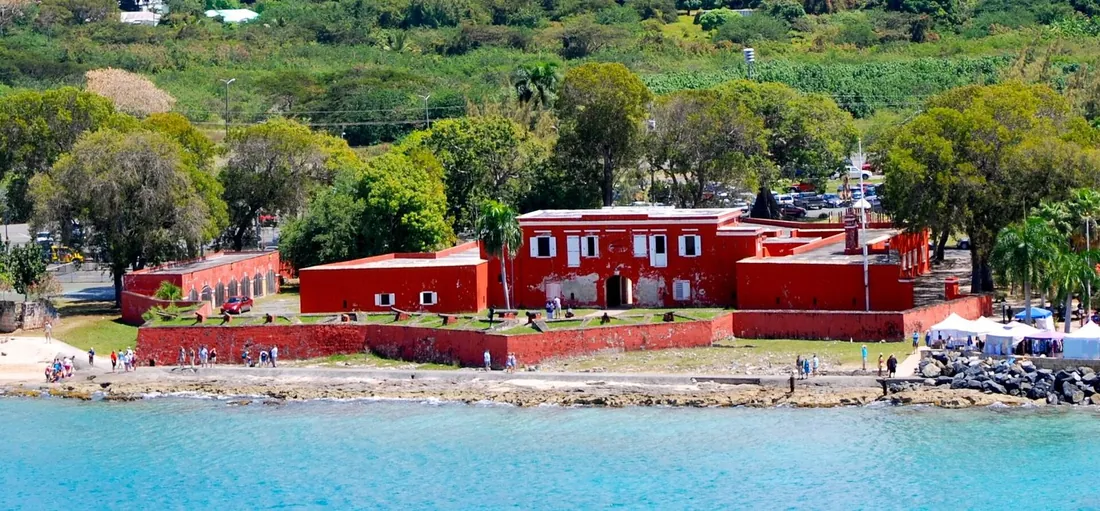
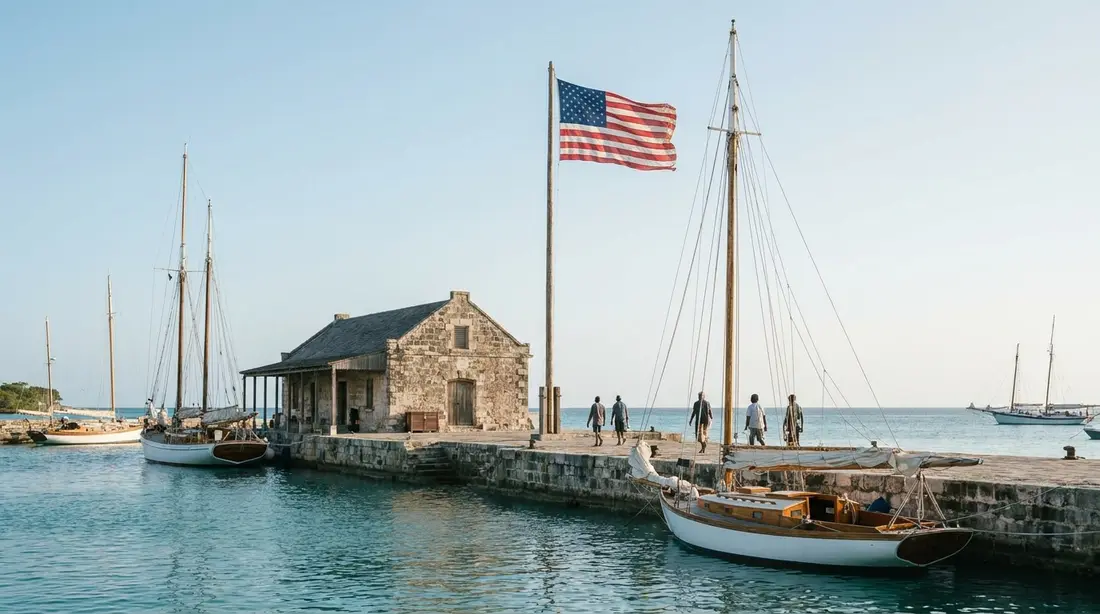
The handovers were timed for the same few hours on each island, so that a single date could carry the whole transfer. St. Croix ran two ceremonies, one in each of its towns, and the fuller of them took place at Christiansted, the old Danish capital on the north shore. At half past three, a half-company of Danish gendarmes under Captain F.N.C. Fuglede marched down from their barracks on Hospital Street and formed up along the waterfront below Fort Christiansvaern, with a party of American Marines under First Lieutenant Edward A. Willing drawn up to face them. As the first of four strokes rang from the clock on the Steeple Building, close to four o'clock, Government Secretary Will Jacobsen read out the Danish king's act of cession before the assembled townspeople and officials. The Christiansted Industrial Band played the Danish royal anthem as the Dannebrog was hauled down, then struck up "Hail Columbia" as the Stars and Stripes climbed the same staff. The structures ringing that wharf — the harbor fort, the weigh house, the old customs building, the company depot — make up the heart of the Christiansted National Historic Site today, which makes the exact ground of the ceremony one of the easiest historical spots on the island to stand on.
Frederiksted and St. Thomas that day
Across the island at Frederiksted, the second St. Croix ceremony had a warship for a backdrop. The cruiser USS Olympia, Admiral Dewey's flagship at Manila Bay in 1898, stood off the town from about midday under Captain Bion B. Bierer. Her deep draft could not clear the sandbar into Christiansted's harbor, so a detachment of her Marines was driven overland by automobile to join the capital's ceremony. At Frederiksted around four o'clock the proclamation was read, the Lutheran minister John Faber offered a prayer that honored the long history of the Danish flag over the islands, and a salute of twenty-one guns was fired as each flag came down and went up, answered from the fort and the warships lying in the roadstead while the Olympia's band played the American airs. The territory's capital had sat on St. Thomas since 1871, and the principal transfer of the day happened there at the same hour: Commander Edwin T. Pollock of the USS Hancock accepted the islands for the United States, the Danish governor Henri Konow signed for Denmark, and after a fifteen-gun salute from the Danish cruiser Valkyrien the Dannebrog was lowered to the royal anthem and a further twenty-one guns, and the American flag rose in its place. Three towns, one afternoon, and a colony of 184 years' standing changed nationality between lunch and dinner.
What changed and what stayed
Some things turned over quickly and others took years. The flag changed that afternoon; the money took far longer, since the Danish West Indian daler stayed in circulation until the U.S. dollar finally replaced it in 1934. A great deal simply carried on unchanged. The island kept driving on the left, and still does, one of the few places under the American flag that never switched sides of the road. It kept its Danish street names and the yellow-brick fort-and-arcade architecture that the Danish architecture walk reads sign by sign. It kept English, which had been the island's working language for generations even under Danish rule. What the transfer added were the practical American conveniences a modern trip runs on: a domestic flight from the mainland, no passport for U.S. citizens, covered in our no-passport guide, the dollar, and U.S. phone and mail service. What the transfer conspicuously did not add, for many years, was the American citizenship that would seem to go with all the rest, and that gap is the next part of the story.
The citizenship that did not come
The 1916 treaty deliberately left the islanders' legal standing for Congress to settle later, and Congress took its time. For the first decade under the American flag, Virgin Islanders occupied an odd middle status: they were U.S. nationals but not U.S. citizens, owing allegiance to the United States and traveling under its protection while holding none of citizenship's rights. Relief came with the act of February 25, 1927. It made citizens of the former Danish subjects who had been resident when the two governments swapped ratifications on January 17 of 1917 and who were still living under the U.S. flag — in the territory, on the mainland, or in Puerto Rico — so long as they had not taken the treaty's one-year window to keep their Danish nationality. That act still left people out, most obviously island natives who had already moved to other parts of the United States. A follow-up law dated June 28, 1932, sealed the gap, reaching island-born people wherever in the nation or its territories they then lived, regardless of where 1917 had found them. So the plain answer to when Virgin Islanders became Americans has three parts: 1917 for the land, 1927 and 1932 for the people. And even citizenship, when it came, arrived incomplete, a point the closing sections of this page take up.
Fourteen years under the Navy
Because the United States had bought the islands for a military reason, it handed them to the military to run. From 1917 until 1931 the U.S. Navy governed the territory, with the president appointing a naval officer as governor; the first was Rear Admiral James H. Oliver, and the first seven governors all came in uniform. The record of that rule reads two ways. The Navy did improve public health, sanitation and some civil infrastructure, real gains for an island that had them in short supply. But it governed by decree, kept the old Danish colonial councils with their narrow property-based franchise rather than opening the vote, and pressed an aggressive program of Americanization that discouraged languages other than English and gave little room to local custom. Economically the years were bleak. The sugar economy, already failing at the end of the Danish era, kept sliding; the total cultivated land across the islands dropped by around 60 percent under naval administration; and mainland Prohibition, in force from 1920, shut the market for the islands' rum, one of their last export earners. Work grew scarce, people emigrated, and the population fell by roughly a sixth. By the late 1920s outside observers were describing the territory as destitute.
Hoover, the poorhouse, and civilian rule
The turning point was a presidential visit that landed like an insult. On March 25, 1931, Herbert Hoover became the first sitting U.S. president to set foot in the Virgin Islands, and his public verdict stung the territory for a generation. He called the islands "an effective poorhouse," and told reporters, "Viewed from every point except remote naval contingencies, it was unfortunate that we ever acquired these islands," softening it only with the promise that, having taken on the responsibility, the United States "must do our best to help the inhabitants." That same year administration passed from the Navy to the Department of the Interior, and Paul M. Pearson took office as the first civilian governor. Civilian rule did not by itself hand the islands democracy; that came in stages Congress controlled. The Organic Act of 1936 established the islands' first modern civil government and widened the vote by dropping property and income tests. The Revised Organic Act of 1954 built the structure the territory still uses, including its single-chamber legislature. Virgin Islanders were permitted to elect their own governor only from 1970, when Melvin H. Evans became the first, and to send a nonvoting delegate to the U.S. House of Representatives only from 1972. A resident of the territory still cannot vote for president. The line from the 1917 transfer to a fully elected local government runs more than half a century long.
How Transfer Day is observed now
Transfer Day is a paid public holiday across the U.S. Virgin Islands, and because it is pinned to the calendar date of March 31 it never drifts from year to year. The government side of the island closes for it: offices, courts, public schools, banks and the post office all shut. The commemorations are civic and, in an ordinary year, restrained, wreath-layings and short programs at the historic forts and government houses, sometimes with remarks, music or a small parade, arranged close to the date rather than to a fixed script. On St. Croix the natural setting is the Christiansted waterfront where the 1917 ceremony took place. In most years the day reads as a reflective observance rather than a celebration, which is part of what sets it apart from the July holidays; the one great exception was the centennial in 2017, described in the next section. The date falls at the tail of the winter high season, which the March guide covers in full, and the rest of the island's year of dates sits in our events calendar.
| On March 31 | Status |
|---|---|
| Government offices, courts, public schools | Closed for the territorial holiday |
| Banks and the post office | Closed |
| Beaches, restaurants, shops, dive shops, tour boats, gas stations | Generally open and running normally |
| Commemorations | Wreath-layings and programs at the forts and government houses; times set near the date |
| Provisioning | Less of a concern than in July, since Transfer Day stands alone on the calendar |
As with any island holiday, confirm a specific ceremony time or a restaurant's hours directly, since small-island schedules move around the date.
The centennial in 2017
March 31, 2017 was the hundredth Transfer Day, and the territory marked it on a scale no ordinary year comes near. A centennial commission programmed months of events across St. Croix and St. Thomas: a territorial art exhibit that ran from late January into early April, historical tours through February and March, and a run of concerts, among them a Grand Centennial Concert on March 30 that brought the Copenhagen Brass Ensemble together with local performers, alongside a governor's reception the same evening. The day itself carried speeches, a parade, and a naturalization ceremony that swore in new U.S. citizens on the anniversary of the transfer. Denmark took part in the occasion: Prime Minister Lars Løkke Rasmussen traveled to the islands and spoke at the commemoration, and Danish cultural institutions mounted centennial programs of their own. What Denmark did not do was apologize. The anniversary reopened a long argument in Copenhagen over the country's part in the slave trade and colonialism, and the Danish government declined to issue a formal apology, with officials citing concern over legal liability; grassroots calls for an apology, and for reparations, continued on both sides of the Atlantic after the centennial passed.
A complicated anniversary
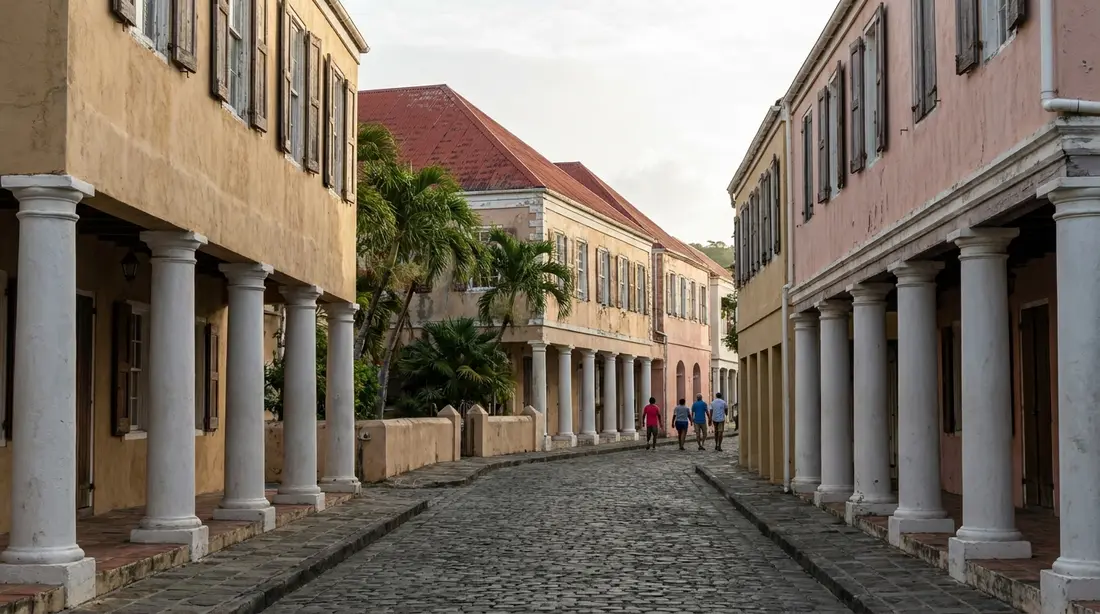
Transfer Day is an unusual thing to mark, and Virgin Islanders have never treated it as a simple celebration. At its root the event was the sale of a place and its people, and the people were not consulted. The contrast with 1868 is the sharpest way to see it: under the failed Seward treaty the islanders had actually been polled and had voted almost unanimously to become American, while in 1916, when the sale finally went through, only Danish voters were asked and the population being transferred had no vote at all. Those same people were then held for a decade as nationals without citizenship, and waited more than fifty years for the right to elect their own governor. That history sits inside a status question that is still open. The U.S. Virgin Islands remains an unincorporated U.S. territory whose residents are citizens who cannot vote for president while they live there and who have no voting member of Congress, and the territory's long economic dependence traces in part to the decline that ran right through the transfer years. Some Crucians keep March 31 as the start of the American connection that shapes their lives; others treat it as a day to reckon with what the transfer delivered and what it withheld. The territory's own commemorations tend to hold both readings at once, which is the fair way to take the day.
The wider history circuit
Transfer Day is one entry in a much longer island story, and the rest of it is mapped across our history guides for anyone who wants to follow it on the ground.
- Seven flags of St. Croix — the full sovereignty sequence from 1493 to 1917, Spain through Denmark, that the American flag closes.
- Emancipation Day and Fort Frederik — July 3, 1848, when the enslaved majority forced their own freedom at the west-end fort, the island's other great date.
- Salt River — the 1493 landing and the pre-European island, where the whole flag story begins.
- Christiansted National Historic Site — the Danish sugar-port machinery on the very wharf where the 1917 handover was staged.
- Estate Whim — the restored plantation that shows the economy the whole colonial period was built on.
Transfer Day timeline
| Date | Event |
|---|---|
| Oct 24, 1867 | Seward's treaty for St. Thomas and St. John signed, $7.5 million |
| Jan 1868 | Islanders' plebiscite approves; Danish king ratifies; U.S. Senate never acts |
| Oct 22, 1902 | Second treaty ($5 million, all three islands) fails on a 32-32 Danish tie |
| Aug 4, 1916 | Treaty signed by Lansing and Brun; U.S. Senate consents Sept 7 |
| Dec 14, 1916 | Danish national referendum approves the sale, about 64 percent in favor |
| Jan 17, 1917 | Ratifications exchanged; the purchase becomes final |
| Mar 31, 1917 | Transfer Day; ceremonies at Christiansted, Frederiksted and St. Thomas |
| 1917-1931 | U.S. Navy administers the territory |
| Feb 25, 1927 | Citizenship granted to islanders resident at the 1917 ratification |
| Mar 25, 1931 | Hoover visits; calls the islands "an effective poorhouse" |
| 1931 | Administration moves from the Navy to the Interior Department; first civilian governor |
| Jun 28, 1932 | Citizenship extended to island natives living elsewhere in the U.S. |
| 1936 / 1954 | Organic Act and Revised Organic Act build local civil government |
| 1970 / 1972 | First elected governor; first nonvoting delegate to Congress |
| Mar 31, 2017 | Centennial; territory-wide commemorations, Danish prime minister attends |
Questions guests ask
What exactly is Transfer Day?
It is the U.S. Virgin Islands holiday on March 31 marking the day in 1917 that the islands changed from Danish to American rule. On that afternoon Denmark formally transferred St. Croix, St. Thomas and St. John to the United States under a treaty that paid $25 million in gold, and the Danish flag was lowered and the American flag raised at ceremonies in each island town. Because it is fixed to the calendar date, Transfer Day never moves. It is one of two big historical anniversaries the territory keeps, the other being Emancipation Day on July 3, and it is a paid public holiday across the islands.
Why did the United States buy the islands?
Strategy, and specifically the First World War. American interest went back to the 1860s, but two earlier treaties, in 1867 and 1902, had both collapsed. What finally closed the deal in 1916 was the fear that Germany, whose submarines then dominated the Atlantic, might overrun Denmark in Europe and seize its Caribbean colony, planting a hostile naval base near the approaches to the new Panama Canal. To keep that from happening the United States paid a price it had twice balked at, $25 million in gold. The wider run of the island's owners before the Americans is laid out in our seven flags of St. Croix guide.
Did the Virgin Islanders get to vote on becoming American?
Not in 1916, and this is one of the harder facts of the day. When the sale finally went through, the only referendum held was in Denmark, on December 14, 1916, where Danish voters approved it. The people actually being transferred were not asked. The contrast with the failed 1867 treaty is stark: back then the islanders were polled in an 1868 plebiscite and voted almost unanimously to join the United States, but that treaty died in the U.S. Senate. So the transfer that did happen was carried out without the consent of the transferred population, which is a large part of why the anniversary is treated thoughtfully rather than as a straightforward celebration.
When did Virgin Islanders become U.S. citizens?
Later than the transfer, and in two steps. The 1917 handover made islanders U.S. nationals but not citizens, and that gap lasted a decade. The 1927 law (February 25) covered former Danish subjects resident at the January 1917 ratification who still lived under the flag, whether in the territory, stateside, or Puerto Rico. The 1932 follow-up (June 28) reached island-born people settled anywhere else across the United States. Even now citizenship is not complete: residents of the territory cannot vote for president and have no voting representative in Congress.
Is anything closed on Transfer Day, and what is it like for a visitor?
The government side of the island closes: offices, courts, public schools, banks and the post office. The tourist side generally runs as normal, so beaches, restaurants, shops, dive shops, tour boats and gas stations are open, which makes March 31 an easy day to be a visitor. You may find a wreath-laying or a short ceremony at one of the forts or government houses, usually arranged close to the date; the Christiansted waterfront is the natural place to look on St. Croix. Confirm any specific ceremony time locally, since small-island schedules shift, and treat the day as a quiet civic occasion.
What happened at the 2017 centennial?
The hundredth anniversary was marked far more elaborately than a normal Transfer Day. A centennial commission ran months of events across St. Croix and St. Thomas, including a territorial art exhibit, historical tours, concerts featuring a Copenhagen brass ensemble, a governor's reception, and, on the day itself, speeches, a parade and a naturalization ceremony for new citizens. Denmark's prime minister, Lars Løkke Rasmussen, attended and spoke. The centennial also reopened debate over Denmark's colonial and slave-trading past; the Danish government did not issue a formal apology, and grassroots calls for one, and for reparations, continued afterward.
Staying for a history day
A Transfer Day trip, or any history-minded stay, sits well within reach of our homes. Guests on the East End, at The Cerulean and across the East End collection, reach the Christiansted waterfront where the 1917 ceremony took place in about 15 minutes, which puts the fort, the historic site and a Danish-town walk inside an easy morning. Our Frederiksted home, Sunset Sea-Clusion, sits minutes from the west-end ground where the Olympia lay offshore that afternoon and where the July 3 story also unfolds. If a history day is a centerpiece of your visit, tell us when you book and we can help you line up the forts, Salt River, and the town history walks around your travel dates — and flag whether a Transfer Day or Emancipation Day ceremony lands while you are here. Getting between the sites is covered on our getting around page, and the whole portfolio is on the villas page.
Sources
Written from official and first-party sources, checked August 2026. Hours, prices and event dates change — confirm before you go.
In this guide
Stay nearby
On The Shoys beach: six bedrooms, six baths, pool and hot tub, room for twelve, and the beach through the back garden.
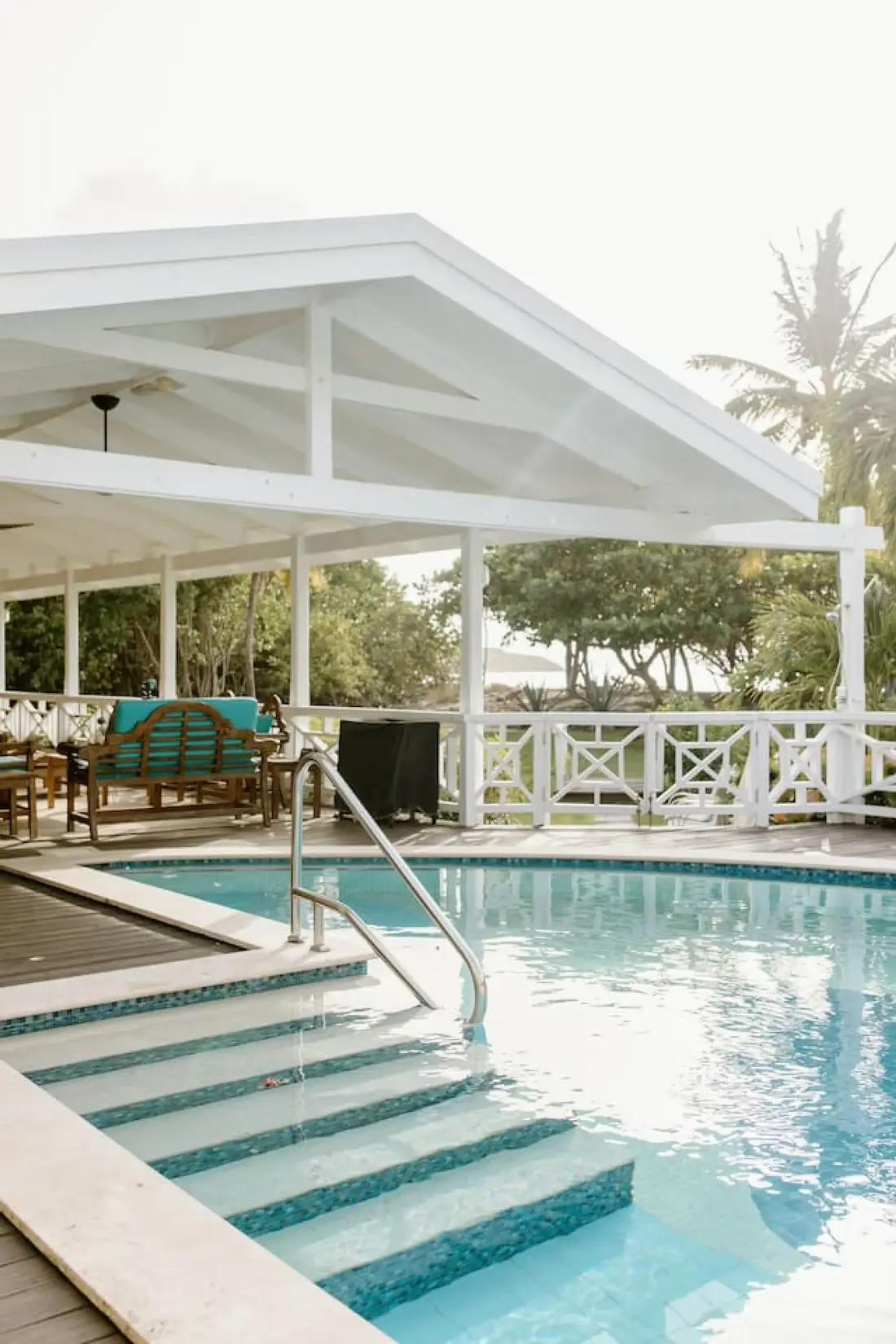 Shoy's Beach House6 bd · 6 ba · sleeps 12 · Christiansted
More in History & Culture
Sources
12 references, listed in full at the end of this guide — official park, refuge, tourism-board and business sources, checked August 2026.