Jet Skis & Watersports
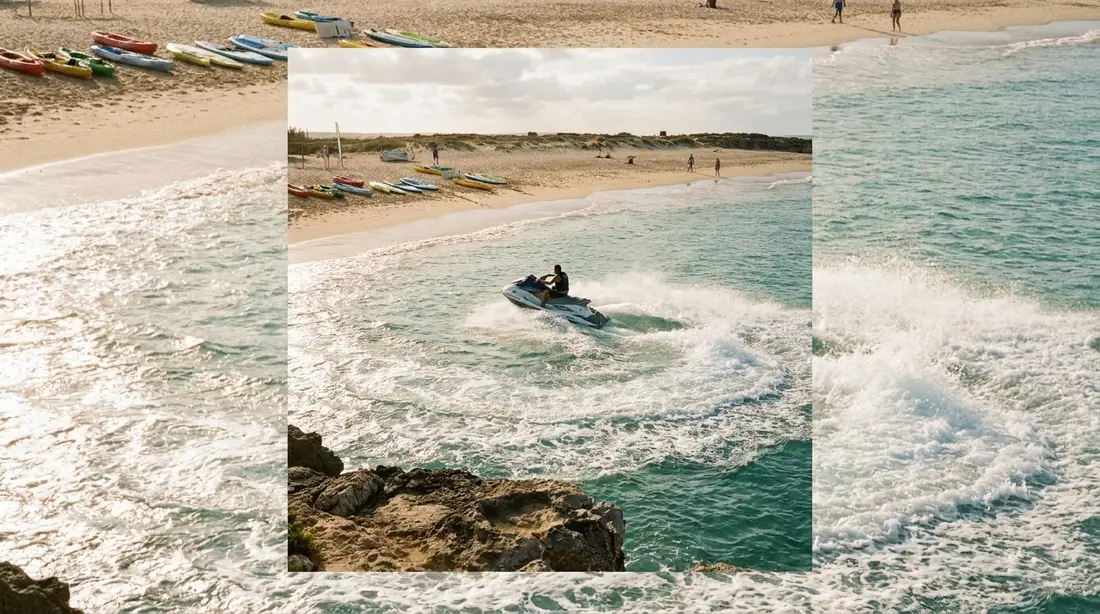
West End Water Sports runs jet ski tours and rentals from Rainbow Beach, plus kayaks, paddleboards, snorkel gear, and beach chairs.
St. Croix keeps a short roster of motorized and towed watersports, and the island is better for it. One beachfront outfitter runs the jet skis, one company flies the parasail, one school teaches the kites, and long stretches of protected water allow no machines at all. This page is the reference for all of it: who operates what, where the law lets a throttle open, where it never will, what the wind does month by month, and how to book without surprises.
What the island offers and what it does not
Set the expectation first. St. Croix built its water reputation on reefs, wrecks, sailboats and a glowing bay, and the visitor economy grew around fins and masts rather than horsepower. There is no strip of competing jet-ski stands here, no banana boats working a hotel row, no wake boats circling a marked course. The inventory of powered fun, at last check, comes down to four things: jet skis from a single beach operation on the west coast, a parasail boat out of Christiansted, guided rides on battery-driven Seascooters over a snorkel reef, and a kiteboarding school on the far East End using the same trade wind that pushes everything else on the island.
Two forces keep the list short. The first is geography: a 22-mile island lying broadside to a steady easterly wind has one naturally calm coast, the west, and that is where machine sports concentrate. The second is regulation: a big share of the nearshore water on the east half of the island sits inside a territorial marine park with zones that shut out personal watercraft entirely, and the waters around Buck Island ban them outright. The result is a specific, mappable answer to the question this page exists for. Machines run in the west. Wind sports run in the east. The middle belongs to snorkelers, sailboats and fishing charters.
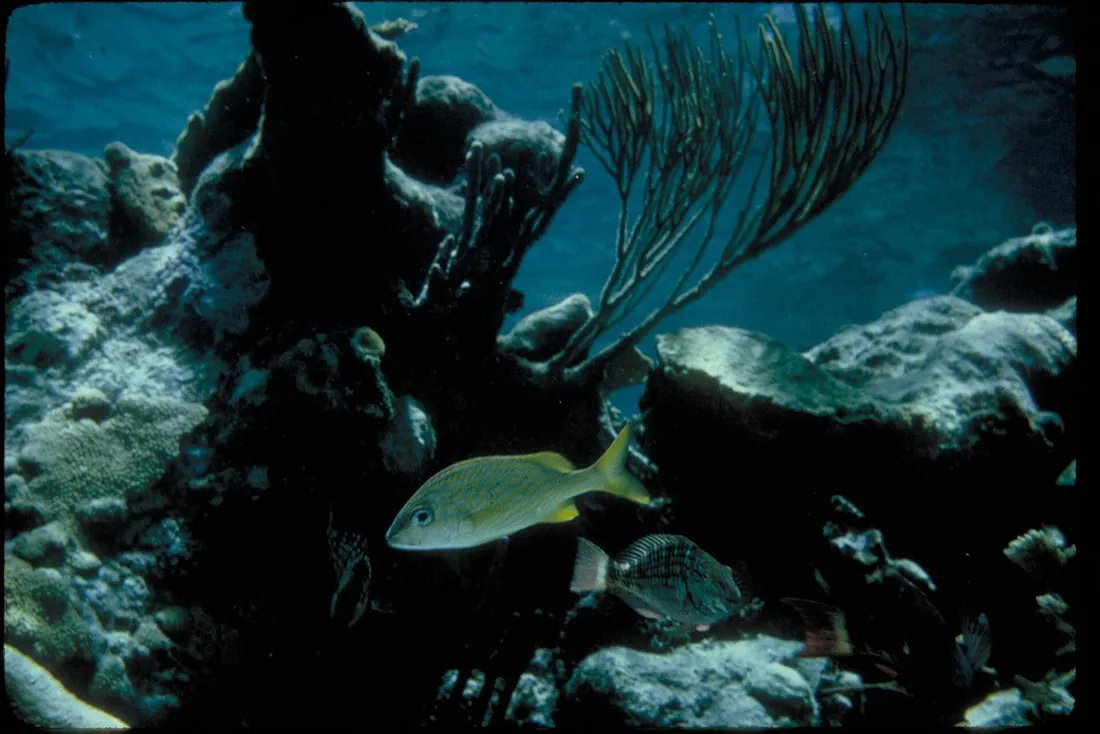
Jet skis on Rainbow Beach
Every jet ski that rents on St. Croix goes out from one place: West End Water Sports, the outfitter working directly off the sand at Rainbow Beach, a mile north of Frederiksted on the coast road. The company is the island's watersports department store. Beyond the skis, it rents kayaks, paddleboards, snorkel sets, chairs and umbrellas, and it sends guided ATV and side-by-side tours into the hills behind the coast, so a mixed group can split between water and dirt from the same patch of beach and meet afterward at Rhythms, the bar that has poured on this sand for around three decades. Frederiksted's town beach and its famous pier lie a short drive south.
The venue is the reason the business works. Rainbow faces west, with the full body of the island standing between it and the trade wind, so the sea off this beach lies flat on mornings when the East End is streaked white. Flat water is what a first-time rider wants and what a confident rider uses to open the machine up, and the west coast supplies it in every season. Winter's Christmas Winds, which roughen the north shore for weeks, barely reach this lee. The practical upshot: a jet-ski booking here almost never dies to conditions, though the operator, sensibly, keeps the final weather call for itself.
Riders share the water. The launch corridor is part of a public swimming beach, families float within sight of the rental racks, and snorkelers work the patch reef close to shore, so the operation confines free riding to a defined area off the beach and briefs every driver on clearances before the engine starts. Treat the briefing as law. The two standing courtesies of this coast are simple: give swimmers a wide margin everywhere, and keep well off the Frederiksted pier, whose pilings hold divers and snorkelers on most calm days. More on that structure in Frederiksted pier diving.
Free riding and guided tours
The offer splits into two products, and choosing between them is the main decision.
Unguided rental is the classic version: a half hour or a full hour on a machine inside the designated riding zone off the beach, with a passenger allowed behind the driver for a small additional charge. This is the pick for anyone whose goal is speed, spray and a grin, and for families rotating several riders through one booking window. The zone is generous enough to stretch a machine's legs, and the half-hour option turns out to be the right length for most first-timers, whose forearms fade sooner than they expect.
Guided coastal tours are the other product and the more memorable one. Small convoys, a handful of machines with a guide leading, leave the riding zone behind and travel real coastline for 45 or 75 minutes, single rider per ski, reserved in advance rather than walked up. Two routes run at last check. The southern run passes Frederiksted and carries on toward Sandy Point, where two miles of empty refuge beach, closed to foot traffic through the entire summer nesting season, scroll past at water level. The northern run traces the coast the opposite way, under the cliffs that climb toward the Hams Bluff lighthouse. Either way, a tour shows a rider more of St. Croix in an hour than most visitors see in a week of driving, and a guide who knows the shoreline handles navigation, pacing and the weather eye.
Prices move over time, so confirm when booking, but the pattern at last check put half-hour rentals in the mid-double digits of dollars, hourly rentals and the shorter guided tour in the mid-100s, and the long tour above 200, with passenger seats cheap to add on rentals and unavailable on tours. The current posted numbers, the deposit hold, the weight cap and the fine print live in our Rainbow Beach guide, which covers the whole operation desk by desk.
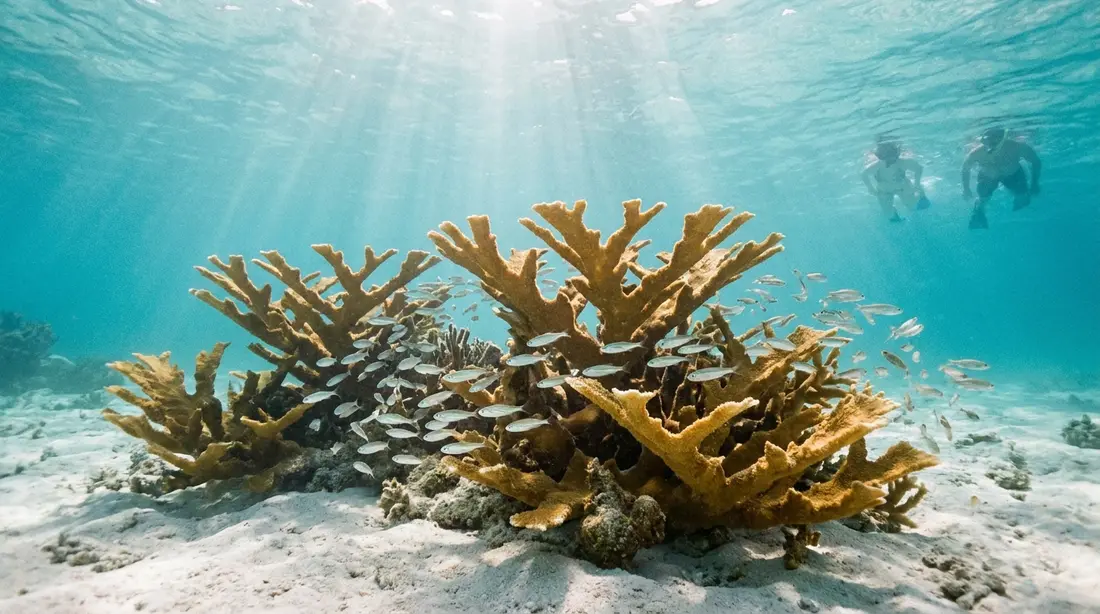
Who may drive: the rules behind the rental
Jet skis in the U.S. Virgin Islands answer to two layers of rules, and both matter to a visitor.
The territory's layer comes from the Department of Planning and Natural Resources, which administers the Virgin Islands boating regulations, including a chapter written specifically for motorboats and personal watercraft. As we read the rules at last check: nobody under 14 may operate a personal watercraft in territorial waters under any circumstances; operators and riders aged 14 through 18 must first complete a DPNR-approved boating safety course and hold the resulting Boating Safety Education Card, a credential that never expires; and every business renting motorized craft for a fee must hold a DPNR operator permit. Life jackets are part of the deal on any PWC, and rental fleets hand them out and require them as a matter of course. None of this is paperwork a visitor handles independently for a beach rental, because the second layer takes over.
The operator's layer is stricter and simpler. West End Water Sports sets its own floor at 16 years old to drive, requires photo identification, and has an adult of at least 21 sign for any driver under 18. A refundable damage hold goes on a card at check-in, machines carry a combined weight limit, tours want advance reservation, and cancellation windows close a day out. House rules of this kind override the statutory minimums in practice: the law might tolerate a 14-year-old with a safety card, and the rental desk still will not hand one a key. Families planning around a teenager should call ahead rather than argue on the sand.
One more territorial note: the USVI is American water, so U.S. Coast Guard equipment standards apply, and the DPNR enforcement boats that patrol the coasts treat PWC violations as boating violations, with the same authority they bring to any vessel.
Where machines cannot go
The east half of St. Croix's nearshore water carries real restrictions, and knowing them saves both fines and reef.
The St. Croix East End Marine Park, established by the territory in 2003, wraps roughly 60 square miles of water along about 17 miles of shoreline, running from the high-water mark out to the three-mile territorial limit around the island's eastern end. It is zoned like a city. Recreational zones permit boating, snorkeling, flagged diving, shore fishing and, notably, personal watercraft. No-take zones, drawn over the most sensitive mangroves, seagrass beds and reef lines, prohibit all extraction and explicitly ban personal watercraft, airboats and water skiing, while still allowing swimmers, snorkelers, flagged divers and boats in transit. Wildlife preserve zones protect turtle nesting water and require keeping at least 50 yards from any sea turtle. Open zones carry the fewest restrictions. The park's boundaries and zone maps are posted by DPNR, and the short version for a visiting rider is shorter still: the East End is not jet-ski water, and no St. Croix operator rents there anyway.
Buck Island Reef National Monument is stricter yet. Federal regulation, 36 CFR 7.73, governs the monument's waters, and the National Park Service's posted rules prohibit jet skiing and water skiing throughout, alongside the bans on fishing, collecting and lagoon anchoring. Park rangers have publicly cited jet-ski incursions among the violations they pursue. The island a mile and a half off the northeast shore is reached by authorized tour boats or private vessels under permit, and its underwater trail is swum, never ridden; the full picture is in our Buck Island guide.
Add the informal exclusions, harbor traffic lanes, the seaplane's landing water in Christiansted harbor, marked swim areas at every beach, and the map draws itself: the legal, sensible, rentable jet-ski water on St. Croix is the west coast riding zone and the two guided-tour routes, which is exactly where the island's one operator put itself.
Kiteboarding on the East End
Everything that makes the East End wrong for jet skis makes it right for kites. The island's eastern tip meets the trade wind first, with nothing upwind to soften it, and the shallow, reef-fringed bays out past Green Cay give a rider workable water inside the break. This is the wind-sports corner of St. Croix, and it has a dedicated school.
Kite St. Croix has taught kiteboarding on the island for more than a decade, with PASA-certified instructors and a waterfront base listed at Cotton Valley Shores on the far East End at last check. Lessons run from introductory ground school through to independent riding, and the operation has also rented paddleboards and kayaks from the same beach for the calm early hours before the breeze fills in. A second option appears seasonally: Leading Edge Kite School, a New Jersey outfit, has wintered on St. Croix and run lessons and rentals here roughly October through May at last check. Offerings, wing-foil availability and rental policies shift year to year at both, so write or call with dates rather than assuming; most schools rent independent gear on the strength of a lesson assessment or proven experience, standard practice in this sport everywhere.
The season follows the trades. From mid-December to mid-March the Christmas Winds deliver the steadiest, strongest breeze of the year, and that stretch is the dependable core of the kite calendar; the shoulder months on either side still produce ridable days, while late summer and fall go light and the schools thin their schedules. Mornings and middays serve kiting better than the dying evening breeze. Watchers get a show for free: on a winter afternoon the kites working off Cotton Valley are visible from most of the East End shoreline, and Cramer's Park makes a good grandstand.
Windsurfing today
Windsurfing on St. Croix is mostly a memory with good bones. The walk-up rental counter that served visitors for years operated from Protestant Cay in Christiansted harbor, and it went dark when Hotel on the Cay's watersports operation closed; at last check nothing standing has replaced it, and the windsurf listings that survive on older travel directories trace back to that era. The wind itself never left, and the same East End water that carries the kites would carry a board and sail, so the sport here now belongs to owners who travel with gear or ship it, and to anyone persistent enough to ask the kite school what it can arrange. Visitors who want a wind sport with an instructor and rental equipment should book kiteboarding, which is alive and well, rather than plan a windsurf holiday around gear that may not exist on island. If the situation changes, this page will change with it.
Parasailing over Christiansted
Parasailing has come and gone from St. Croix over the years, and at last check it is here. Parasail Virgin Islands, operating with Caribbean Sea Adventures, flies from the east end of the Christiansted boardwalk at King's Wharf, running multiple departures daily from morning through mid-afternoon in season. The format is the industry standard: a purpose-built winch boat carries up to a dozen passengers, flyers launch and land gently from the deck itself with no swimming involved, and two or three people fly together depending on combined weight. Posted terms at last check: about 105 dollars a person, minimum age 5 with a guardian's signature for minors, a combined flyer weight between roughly 160 and 450 pounds subject to the day's wind and the captain's judgment, and around 75 to 90 minutes on the water for the whole outing. The operator advertises a perfect safety record and membership in the professional parasail operators' association, and it closes for September and October, the heart of hurricane season.
What the ride buys is the view: Christiansted's red roofs and yellow fort from a few hundred feet up, the reef lines drawn across the harbor approaches, Buck Island on the horizon, and on clear winter days the green line of the north shore hills running west. Photographers should send the phone up in a leash or buy the boat's photo package; the crew has opinions on loose electronics, all of them earned. Book a morning slot in winter, when the light is low and the breeze is smooth, and treat afternoon slots in summer as the bumpier ride. The same company also runs boat charters and Buck Island trips from the neighboring dock.
Tubing, wakeboarding and water skiing
Here the inventory runs out, and it is better to say so than to send a family chasing a product that does not exist. At last check, no St. Croix operator sells tubing, wakeboarding or water skiing as a scheduled, bookable trip. Web searches surface listings that suggest otherwise, and they dissolve on inspection: some point to stale directory pages from past seasons, others to similarly named businesses in Florida and the Midwest, and none to a current St. Croix boat with a tow rope on its rate card. The picture differs on St. Thomas, where the resort-beach watersports economy still tows tubes daily, and guests for whom a towed sport is the whole point of the trip should know that before choosing islands.
The realistic route on St. Croix is a private charter with a captain willing to tow. Several charter boats here take custom day bookings, and a group that asks at booking time, specifically, whether the boat carries a tube, a tow line and insurance that covers towing, will occasionally find a yes, most often for family days on the calm west coast. Treat it as a favor to arrange, never a certainty, and expect the captain to pick the water and the weather. The legal overlay from earlier in this page applies in full: water skiing is banned throughout Buck Island's monument waters and in the marine park's no-take zones, which removes the postcard east-side locations and points any towing day west, where the flat lee water is the better venue anyway. Charter options and booking practice are in private boat charters.
Flyboards, e-foils and the gadget frontier
The newest generation of powered water toys has reached the Virgin Islands, and, at last check, stopped one island short. Electric hydrofoil boards and jet-powered flyboards rent and teach on St. Thomas, where at least two operators list them with current prices. On St. Croix, no operator's own booking pages carried either at last check. A handful of third-party travel pages still attach flyboarding to the Rainbow Beach operation, but the outfitter's own rental menu lists jet skis, paddle craft, snorkel gear and beach furniture, with no flyboard on it, which is the version to trust; a directory page outlives a discontinued product by years. Anyone determined to fly should call the Rainbow Beach desk and ask directly, and otherwise plan the e-foil session for a St. Thomas day. Given how quickly this niche moves, expect the answer to change eventually, in either direction.
Powered snorkeling with Seascooters
One more motor belongs on this page, the smallest one. Mermaid Adventures runs private snorkel tours built around handheld underwater Seascooters, battery-powered tow devices that pull a swimmer along at a gentle glide, at last check. The scooter solves the two problems that tire novice snorkelers, propulsion and distance, and lets a mixed-ability group cover far more reef than fins alone would, with the guide setting the route. It is the gentlest possible entry into motorized water fun: no license, no age drama, no wake, and the turtles barely look up. Tours are private bookings rather than walk-ups, so arrange ahead. For the island's self-propelled snorkeling map, start with snorkeling St. Croix and the best snorkeling beaches.
The conditions calendar
Every sport on this page runs on the same wind, and the wind keeps a schedule. The trades blow from the east and northeast essentially year-round; what changes is strength. Mid-December through mid-March brings the Christmas Winds, the year's briskest stretch, which is high season for kites, fine for jet skis in the western lee, and the period when a parasail captain watches the gust range most carefully. April and May ease. June through August turns light and glassy, the best months to open a jet ski's throttle on polished water and the months when kite schools go quiet. September through November is the lightest and emptiest window, with the tropical forecast as its asterisk and the parasail boat on its annual break for two of those months. Sea temperature barely moves, from the high 70s Fahrenheit in late winter to the mid 80s by early fall, so no season is a wetsuit season.
| Season | Trade wind | Jet ski (west coast) | Kiteboarding (East End) | Parasail (Christiansted) |
|---|---|---|---|---|
| Mid-Dec to mid-Mar | Strongest and steadiest of the year | Runs daily in the lee; book ahead in peak weeks | Prime season | Flying; smoothest slots in the morning |
| Apr to May | Moderating | Excellent | Good, tapering | Flying |
| Jun to Aug | Light | Glassiest water of the year | Marginal; schools thin out | Flying; afternoons can be lumpy with heat |
| Sep to Nov | Lightest; tropical systems possible | Open, quietest season | Off season | Closed Sep and Oct at last check |
Day by day, the pattern repeats in miniature: lightest air around dawn, building through the afternoon, easing at dusk. Powered sports and towed sports want the morning; kites want the midday build. The full climate picture, rain, storms, crowds, is in weather and when to visit.
Etiquette on a snorkeling island
St. Croix's watersports culture has an unwritten constitution, and machine riders are its most-watched citizens. The principles compress to four.
- Swimmers own the shore. Beaches here have no roped jet-ski corridors beyond the operator's own launch lane, so the buffer is the rider's job. Stand well off any beach with heads in the water, cross the Rainbow launch lane slowly, and never cut inside a group in the water to wave at the kids. At the pier, assume divers below whenever a flag flies, and stay clear regardless.
- Turtles outrank everyone. Green and hawksbill turtles feed in the seagrass along both coasts and leatherbacks nest at Sandy Point. The marine park's 50-yard rule for turtles is the right instinct island-wide: throttle down, alter course, let the animal decide the encounter. A machine's strike is one of the few injuries a turtle cannot outswim.
- Wake is a choice. Passing snorkelers, paddlers, moored boats or reef shallows, come off plane early and idle through. A jet ski's wake in two feet of reef water does actual damage, and a paddleboarder dumped by wake in open water is a rescue you caused. The paddling guide asks its readers to watch for you; return the favor.
- Sunscreen is gear. Reef-safe formulas only, here as everywhere on the island, and a rash guard beats reapplying at speed.
Booking and renting well
The island's rental patterns are consistent enough to plan around. Expect a card-based security hold on any machine, released after undamaged return; expect identification requirements and signatures for minors; expect check-in ahead of your slot rather than at it; and expect cancellation windows of about 24 hours, with late arrivals forfeiting. Weather calls belong to the operator, and the west coast's shelter means genuine weather cancellations are rare outside storm systems; ask when booking how refunds work if the operator, rather than you, calls off the session. Reserve guided jet-ski tours and parasail flights a day or more ahead year-round, and several days ahead from mid-December through April and on cruise-ship days, when the machines and the flight slots both sell through. Walk-up unguided rentals are usually gettable on quiet weekdays, never certain on busy ones. Kite lessons book by email exchange with dates and experience level. Bring cash for tips, a dry bag for the phone, and the driver's license you will be asked to show.
The reference table
| Sport | Where | Season | Book ahead? |
|---|---|---|---|
| Jet ski, free riding | Rainbow Beach riding zone, west coast | All year; summer glassiest | Walk-up possible; reserve on peak and ship days |
| Jet ski, coastal tour | Rainbow Beach south toward Sandy Point or north toward Hams Bluff | All year | Yes, at least a day |
| Parasailing | Christiansted boardwalk, King's Wharf | Nov to Aug at last check; closed Sep and Oct | Yes |
| Kiteboarding lessons | Cotton Valley, far East End | Core season mid-Dec to mid-Mar | Yes, by email with dates |
| Seascooter snorkel tour | Reef sites by arrangement | All year | Yes, private booking |
| Tubing, wake, ski | No standing operator; ask a private charter | Summer calm suits it best | Custom arrangement only |
| Flyboard, e-foil | Not offered on St. Croix at last check; St. Thomas has both | — | — |
| Windsurfing | No rental operation at last check; East End wind suits owners with gear | Winter trades | — |
Questions guests ask
Do I need a license to rent a jet ski on St. Croix?
No boating license, no. The rental operator's requirements govern in practice: a driver at least 16 years old with photo identification, an adult signature for anyone under 18, and a card for the damage hold. Territorial law adds a floor beneath that, banning operation under age 14 outright and requiring a DPNR-approved safety course and education card for operators aged 14 through 18, but the rental desk's stricter house rules mean a visiting adult simply shows ID, signs, and rides. Rules evolve; the desk's briefing on the day is the operative version.
Can I ride a jet ski to Buck Island?
No. Jet skiing is prohibited throughout Buck Island Reef National Monument under federal regulation, and rangers enforce it. The rental operation's machines are restricted to its west-coast riding area and guided routes in any case, an entire island away. Visit Buck Island the intended way, on one of the authorized tour boats out of Christiansted and Green Cay, and get the famous water with a mask on your face instead of a summons in your pocket.
Is there parasailing on St. Croix right now?
At last check, yes. Parasail Virgin Islands flies with Caribbean Sea Adventures from the east end of the Christiansted boardwalk, several times daily in season, at about 105 dollars a person with a minimum age of 5. The operation closes each September and October. Parasailing has historically come and gone from this island, which is why the question deserves a dated answer: this one reflects August 2026, and a quick confirmation call before a trip built around it is never wasted.
Where can kids do motorized watersports?
Three realistic options by age. The parasail boat takes flyers from age 5, flying light children tandem with an adult, and the boat ride pleases the ones waiting their turn. Jet-ski passengers ride behind a parent on unguided rentals at Rainbow Beach, subject to the machine's weight limit, while driving waits for 16. And a private Seascooter snorkel tour suits confident swimmers of most ages, with the guide adjusting pace. The all-ages fallback is the same one locals use: a calm-bay paddle from the family guide.
Why are there so few jet skis on St. Croix?
Market and map. The island's visitors skew toward divers, snorkelers, sailors and villa travelers rather than resort-strip crowds, so demand supports one strong beach operation rather than a fleet of stands. Meanwhile the marine park's no-take zones and Buck Island's federal waters put large, attractive stretches of coast off limits to personal watercraft, concentrating what demand exists onto the calm western lee. Most guests come to see the quiet as the amenity; the ones who want horsepower find it, in exactly one place, with flat water and a coastline tour attached.
Can I bring my own jet ski, e-foil or kite gear?
Kite gear travels easily and the East End wind will justify the baggage fees; board bags fly to St. Croix daily. A privately owned PWC is a bigger project, involving shipping, territorial registration questions and DPNR rules, worth it only for a long stay, and the zone bans apply to owners exactly as to renters. An e-foil in a case is feasible for experienced riders; charge it at the villa, launch from a quiet west-coast beach, and hold the same swimmer buffers a rental briefing would demand. When in doubt about a specific stretch of water, ask DPNR or the nearest operator before riding it.
What happens if the weather turns after I book?
Operators keep the weather call, and each posts its own cancellation terms; the common pattern gives you a full refund or rebooking when they cancel, and holds you to roughly a 24-hour window when you do. The west coast's shelter makes operator cancellations rare for jet skis outside named systems, while parasailing is more wind-sensitive and reschedules more often. In September and October, book anything weather-dependent with the understanding that the season owns the calendar, and front-load powered plans early in the trip so a blown day can slide later.
Watersports from our villas
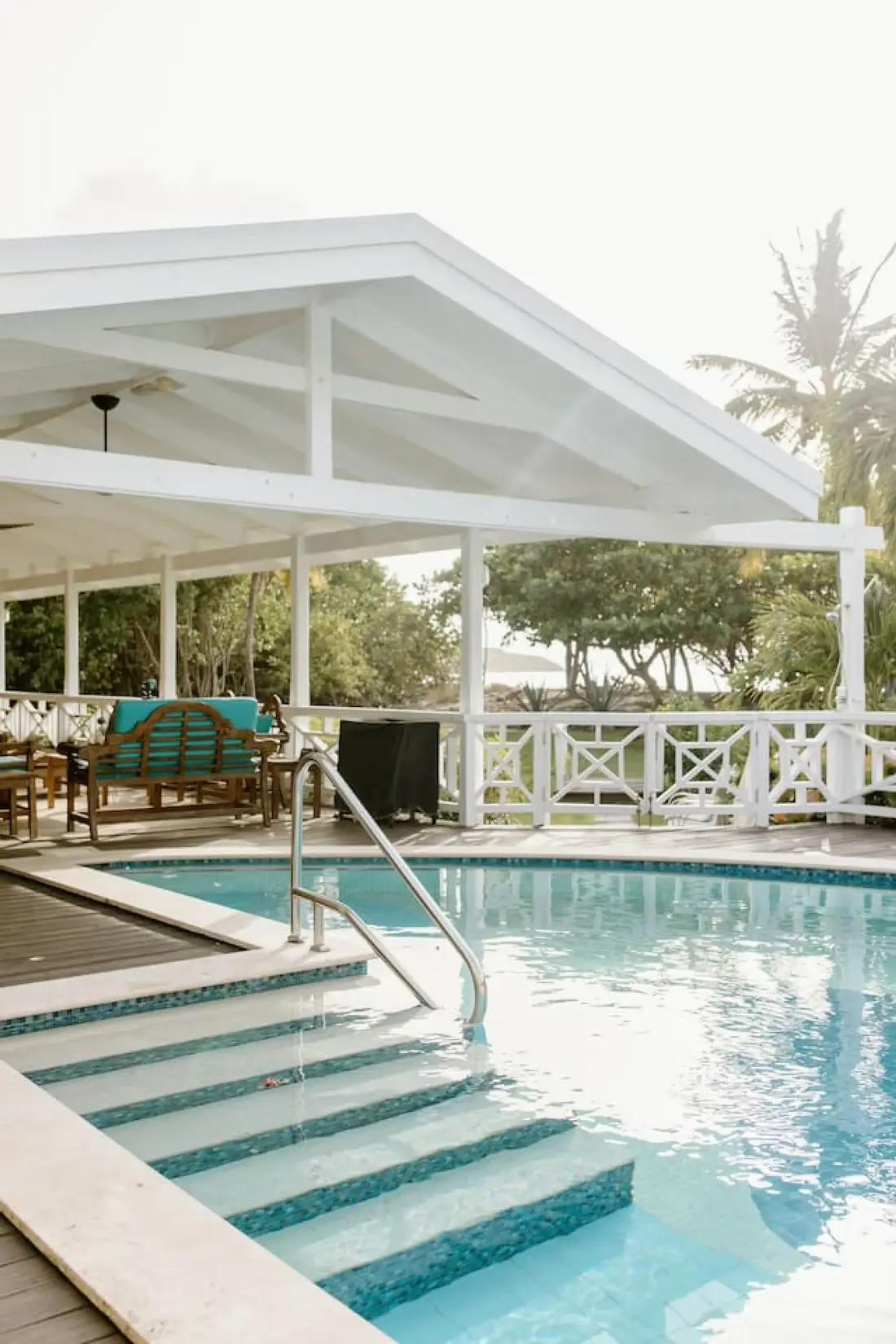
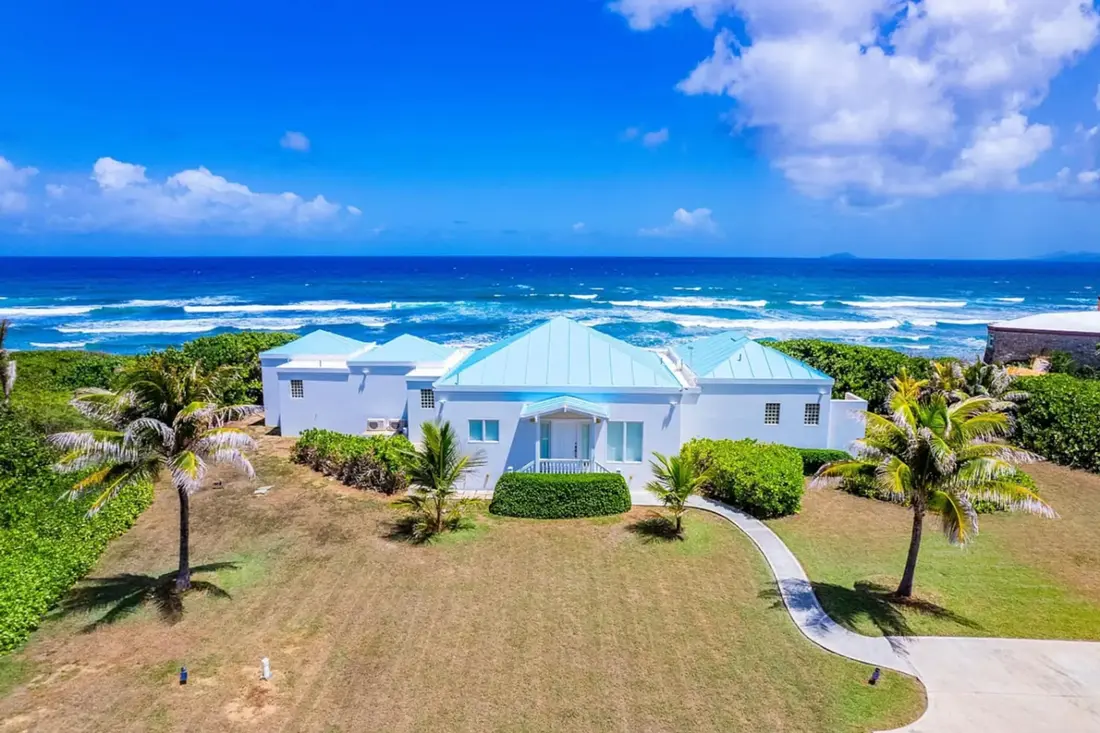
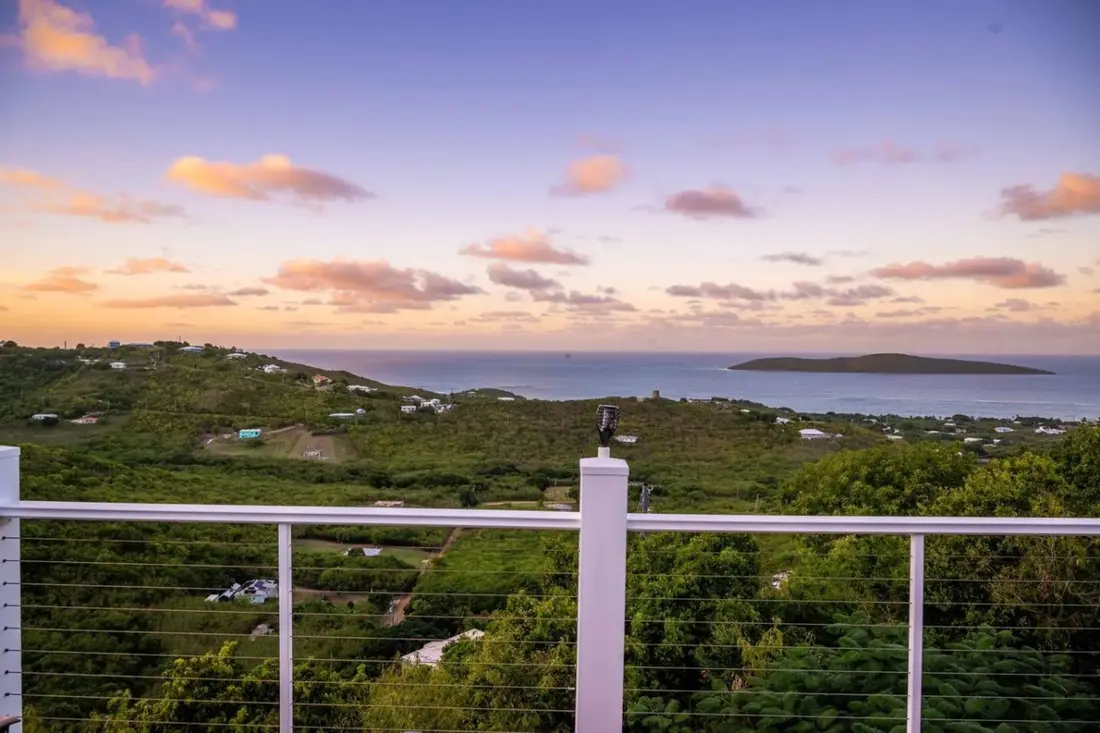
Geography sorts our homes neatly onto this page's map. Sunset Sea-Clusion in Frederiksted puts the Rainbow Beach jet skis five minutes from the door, close enough that a morning rental barely interrupts a beach day. The East End homes, including The Buck Island Overlook and Moko Vista, sit in kite country, with the winter wind show off Cotton Valley a short drive away, and Christiansted's parasail dock convenient to both coasts. Guests at The Cerulean tend to split the difference: paddle the home beach at dawn, machines in the west one day, a Buck Island boat the next. Tell us which sports your group wants and we will match the house to the water.
Sources
Written from official and first-party sources, checked August 2026. Hours, prices and event dates change — confirm before you go.
In this guide
Stay nearby
Private oceanfront on the East End with a sandy, swimmable beach, pool, outdoor kitchen and a separate guest cottage. Sleeps twelve.
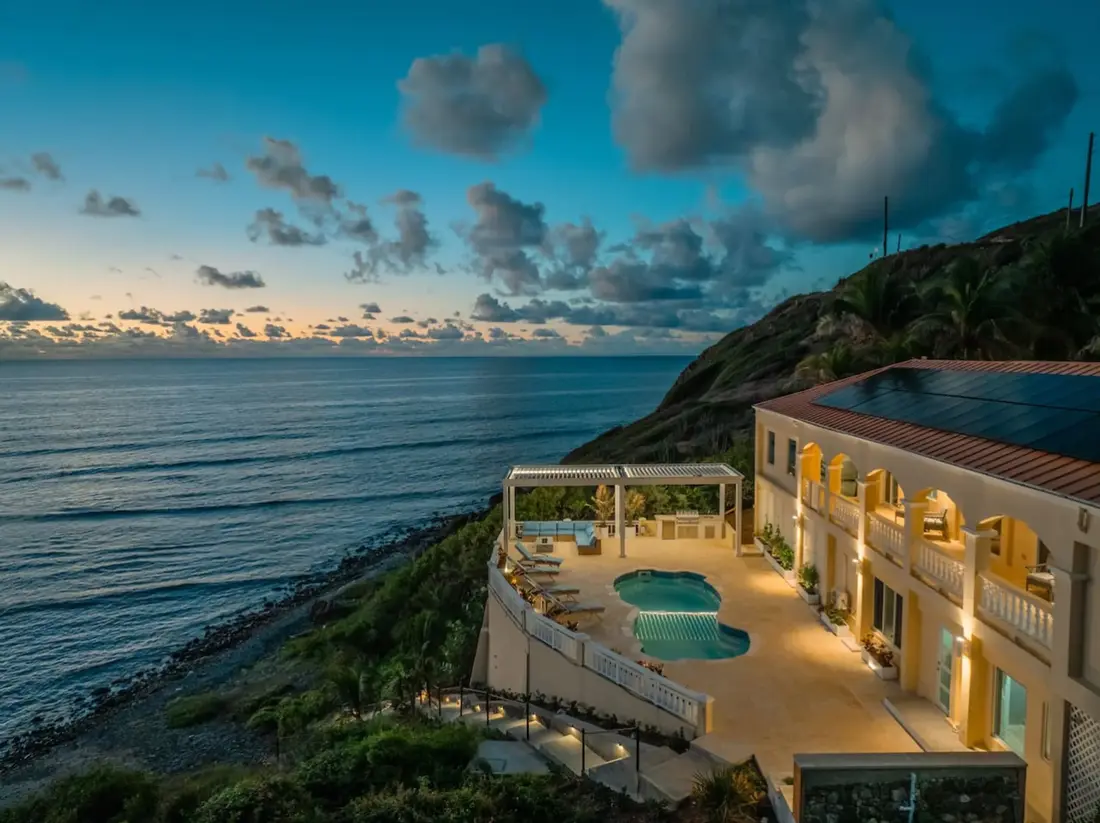 The Cerulean5 bd · 5 ba · sleeps 12 · Christiansted
More in On the Water
Sources
14 references, listed in full at the end of this guide — official park, refuge, tourism-board and business sources, checked August 2026.