The Butler Bay Wrecks
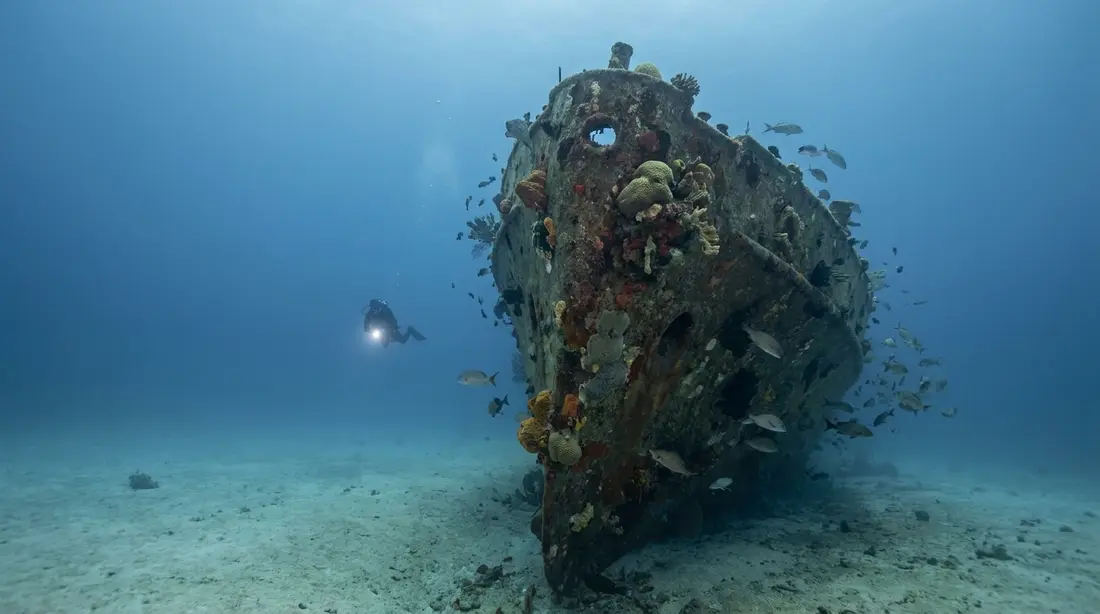
A cluster of shipwrecks north of Frederiksted: Suffolk Maid, Northwind, the Virgin Islander barge, and the deeper Rosaomaira.
The northwest corner of St. Croix holds the island's densest wreck diving. Off Butler Bay, on the sheltered west coast a short run up from Frederiksted, five vessels rest on the sand within a few fin-kicks of one another, along with a decommissioned research habitat and a scatter of old refinery trucks. Three of the ships sit shallow enough for a newly certified diver; two lie deep enough to demand advanced training and careful gas planning. This page takes each wreck in turn — what it was, how it came to be on the bottom, how deep it lies, and the marine life that has grown over it — and then covers the conditions, the operators and the safety rules that govern diving the cluster.
The wreck cluster off Butler Bay
Butler Bay sits on the northwest coast, roughly 2.7 miles up the shoreline from Frederiksted town. The trade winds blow out of the east for most of the year, which leaves this coast in the island's lee: while a north or east swell can close the wall dives on the far side of St. Croix, the water here often stays calm and clear. The wrecks lie close together on a sand bottom, so a single two-tank boat trip can string two or three sites onto one morning, usually pairing a shallow hull with either a deeper wreck or a nearby reef.
Five ships make up the cluster. Three are shallow — the trawler Suffolk Maid, the tug Northwind and the oil barge Virgin Islander — in water from about 15 to 80 feet. Two are deep: the freighter Rosaomaira, whose stern gear reaches past 110 feet, and an oil-refinery tug the shops call the Coakley Bay. Between them lie the Aegir underwater habitat and several old refinery trucks, which give the site a salvage-yard character no natural reef can match. Everything sits on open sand, so each wreck stands out as an isolated structure, an oasis of growth and fish on a plain bottom, easy to find and easy to circle. A 2018 USA Today readers' poll named the Butler Bay deep wrecks the top dive site in the Caribbean.
Because the sites span such a range of depths and skill levels, the cluster carries much of a dive week's roster on its own: an easy photographic wreck one morning, a deep advanced descent the next. What ties them together is the boat, the calm lee water and the story of how a working harbor's cast-offs became a reef.
The shallow wrecks
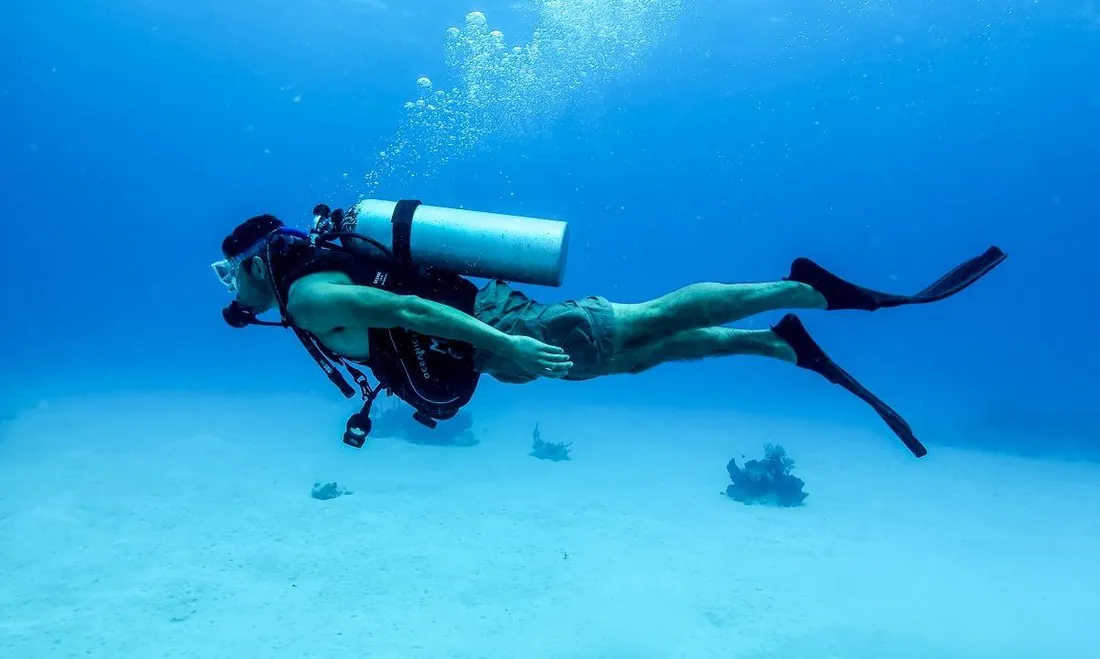
The three shallow wrecks share a bottom in the 50-to-80-foot range, with the tops of their structures far shallower. All three are within reach of an Open Water diver on a guided boat trip, and all three have been down long enough to carry heavy coral and sponge growth.
Suffolk Maid
The Suffolk Maid was a 144-foot steel-hulled trawler built for the North Sea fishery. A hurricane in 1984 drove her into the Frederiksted pier, and rather than scrap the hull, crews scuttled her off Butler Bay in December 1985. She lies in 60 to 80 feet of water with her name still legible on the bow. Creole wrasse are the standing residents, moving over the hull in loose clouds, and a green moray turns up often enough that guides point out its usual holes. The depth keeps her firmly in recreational limits while giving newer divers a real wreck to swim, with enough structure to practice orientation and buoyancy without ever going into an overhead.
Northwind
The Northwind is the group's easiest wreck and, by reputation, its most photographed. She was a 75-foot steel ocean tug that washed ashore at Frederiksted during Tropical Storm Klaus in 1985; Cruzan Divers sank her as an artificial reef in May 1986. Before that, the tug had a brief screen career, standing in as a working boat in the 1986 television movie Dreams of Gold: The Mel Fisher Story. She now rests upright in about 55 feet, with the top of her wheelhouse only 15 feet below the surface — shallow enough that snorkelers can look down on her outline and divers can spend a long, unhurried dive on a single tank. Barracuda, snapper, butterflyfish, angelfish, wrasse and gobies hold around the hull, a moray works the recesses, and green and hawksbill turtles pass through. The mix of shallow depth, intact shape and steady light makes her the cluster's photography wreck.
Virgin Islander
The Virgin Islander is the largest hull in the cluster: a 300-foot former oil barge scuttled in 1991. Her deepest point is about 70 feet and much of her sits closer to 50, so she reads as a long, low platform rather than a tall wreck. Decades on the bottom have buried the steel under growth — fans of pink Stylaster coral and golden cup coral, seafans, tubeworms and sponges cover the plating, and schools of snapper and chub hang over the deck while grouper and stingrays work the edges. Her flat, open layout makes her one of the more relaxed swims in the group, with little to snag and clear sightlines from end to end.
The deep wrecks
Two wrecks push past beginner depth and belong to divers with advanced certification and a plan for their gas and bottom time. Both are boat dives, both reward a slow descent, and neither should be a diver's first wreck.
Rosaomaira
The Rosaomaira — sometimes written Rosa Maria — is the signature deep dive of the coast, a 177-foot steel-hulled Venezuelan freighter. In 1986 she arrived carrying a cargo of cinder blocks and capsized while it was being offloaded. Salvors towed the hull out to Butler Bay and set dynamite to sink her; only about half the charge went off, and the ship rolled back upright as she went down. She now stands intact on the bottom, bow near 70 feet, propeller close to 110, and her deepest point around 117. Crew clothing and personal effects still lie in the cabins, which is part of what makes her compelling and part of why interior swims are a job for trained wreck divers only. A shy seahorse has long been reported at the back of the wreck; blackbar soldierfish, mahogany snapper and French, queen and gray angelfish patrol the structure, southern stingrays rest on the surrounding sand, and rope, stovepipe and barrel sponges have taken over the rails. This is a classic deep wreck: descend the mooring, tour the upright hull, keep an eye on your computer, and save the interior for another day unless you carry the training and the light.
Coakley Bay
The shops group a second deep wreck with the Rosaomaira: an oil-refinery tug they call the Coakley Bay, sunk deliberately as an artificial reef and, at the time it went down, the newest wreck on the island. It sits in about 60 feet, with its tower rising to roughly 30, and schools of Atlantic spadefish circle the structure in the open water above it. Because it lies deeper than the shallow trio but shallower than the Rosaomaira's stern, it often fills the second tank of a deep two-tank morning, giving advanced divers a moderate wreck to unwind on after the bigger descent. Visibility on the deep sites tends to run 80 to 100 feet, occasionally far more, with little to no current inside the bay.
The habitat and the oddments
Two features on the Butler Bay bottom are not ships at all. The larger is the Aegir, a decommissioned underwater research habitat named for a sea giant of Norse legend. It was built as a place for scientists to live and work on the sea floor for days at a stretch: two large cylinders joined by a central sphere, with ballast tanks that let it lower and raise itself rather than depend on a crane, and it was rated to depths beyond 500 feet.
The Aegir's presence here is a footnote to a bigger story. From 1977 to 1985, St. Croix hosted Hydrolab, the first undersea laboratory funded in part by the U.S. National Oceanic and Atmospheric Administration. Built in 1966, Hydrolab could house four aquanauts at a time; researchers ran roughly 180 missions from it in all, about 80 of them off St. Croix, using saturation diving to study the reefs at length. When Hydrolab was retired in 1985, the Aegir was brought from Hawaii to replace it in Salt River — but the funding fell through, the project was shelved, and the habitat was moved to Butler Bay, where it now sits among the wrecks as a relic of the island's era as a center of undersea science.
Nearby lie several old oil trucks, remnants of the island's refinery days, which the shops fold into a wreck tour as filler between the bigger structures. None of it was placed for scenery; each piece is a discard the reef has since claimed.
How the wrecks became reefs
The Butler Bay cluster is a working example of how a sunken ship turns into a reef. Submerged wrecks are the most common kind of artificial reef, and the principle is simple: a large, hard structure on an otherwise bare sand bottom gives marine life a place to attach and hide. On St. Croix the process began by accident and was finished on purpose. Storms delivered several of the hulls — the Suffolk Maid into the Frederiksted pier in 1984, the Northwind onto the shore after Tropical Storm Klaus in 1985 — and rather than haul the wrecks away for scrap, divers and salvors sank them in place as reefs. The Virgin Islander, the Rosaomaira and the Coakley Bay tug were all put down deliberately for the same reason.
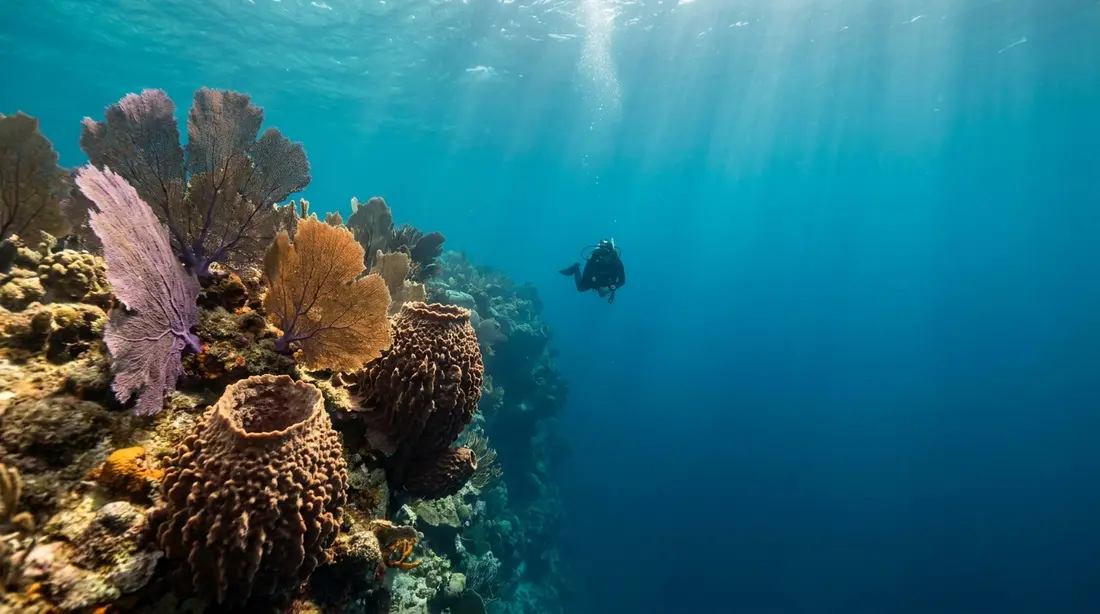
What happens next follows a familiar order. Sponges, hydroids and soft and stony corals settle first on the steel, building the encrusting layer that now covers the Virgin Islander's plating and the Rosaomaira's rails. That growth in turn feeds and shelters fish and invertebrates, from the creole wrasse over the Suffolk Maid to the spadefish above the Coakley Bay. Ships meant for sinking are cleaned of fuel and hazards first, so the structure can do its ecological work — enhancing habitat for corals and the animals that live among them — without poisoning the water. Given enough time, as these hulls show after three and four decades down, the line between wreck and reef effectively disappears.
The dive experience
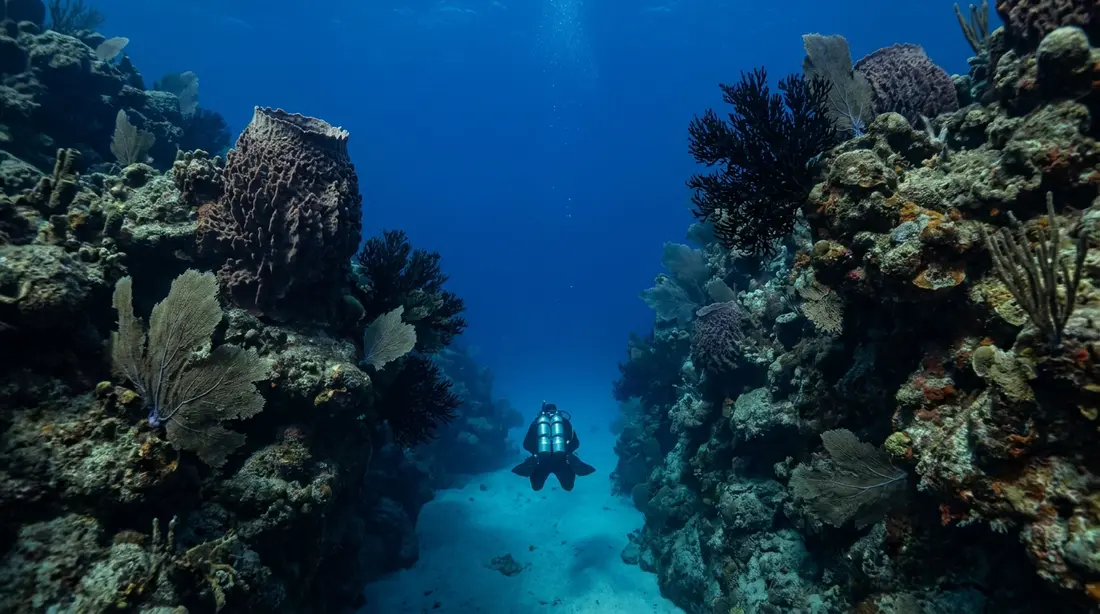
A Butler Bay wreck dive almost always begins at a mooring or a shot line and follows the shape of the hull. On the shallow wrecks the profile is generous: the Northwind's wheelhouse at 15 feet and the Virgin Islander's deck around 50 leave plenty of no-decompression time to circle the structure two or three times, hover over the growth, and hunt for the small animals that live in the plating. These are swim-around dives, worked from the outside of the wreck, and they suit divers who want to look at a reef with a story rather than test their limits.
The deep wrecks change the math. On the Rosaomaira, a descent to the propeller near 110 feet spends bottom time fast and leaves little margin for exploring, so most divers work the shallower bow and midships and treat the stern as a quick look. Nitrogen loading, gas consumption and the narrowing window for error are the whole discipline of the dive, and a computer and a turn-pressure agreed in the briefing keep it disciplined.
Penetration — swimming inside the hull — is a separate activity with its own training. The Rosaomaira's cabins still hold crew effects, and the temptation to go in is real, but an overhead environment removes the direct route to the surface and adds the risk of a silt-out that erases visibility in seconds. Recreational guidance is consistent: stay outside unless you hold a wreck-diving certification, carry redundant light and gas, and dive with someone trained to do the same. On a guided boat trip the briefing draws this line clearly, and the great majority of Butler Bay wreck diving happens on the outside of the steel, looking in.
Skill and certification
The cluster spans the full range of recreational diving, which is part of why it anchors a week on the island. A newly certified Open Water diver can enjoy the Northwind, the Suffolk Maid and the Virgin Islander on a guided boat trip, since all three sit within standard recreational depth and offer easy, open swims. Moving to the Rosaomaira's deeper reaches or the Coakley Bay tug calls for an Advanced Open Water card or the equivalent, along with the comfort that comes from a stack of logged dives. Interior penetration adds a wreck-diving specialty on top of that.
Divers looking to close those gaps can do it on the island. Two shops are PADI 5 Star Instructor Development Centers, and Advanced Open Water, deep and wreck specialties are all taught here; the fuller picture is in the learn to scuba dive guide, and the island-wide site catalog, operator roster and training options live on the scuba diving St. Croix page. Divers whose certifications have gone quiet should plan a refresher before a deep wreck, and at least one Frederiksted shop asks for a dive logged within the past two years before it will take you out on the boat.
Wreck, depth, skill and marine life at a glance
The depths below are the working figures the shops publish, rounded; the mooring, the tide and the guide shift them a little on the day. The table is for planning; the in-water briefing has the final say.
| Wreck | Depth | Skill | What you see |
|---|---|---|---|
| Suffolk Maid | 60 to 80 ft | Open Water and up | 144-ft trawler; creole wrasse, resident green moray |
| Northwind | 15 to 55 ft | Open Water and up | 75-ft tug; barracuda, turtles; the photography wreck |
| Virgin Islander | 50 to 70 ft | Open Water and up | 300-ft barge; heavy coral and sponge, snapper, grouper |
| Rosaomaira | 70 to 117 ft | Advanced | Intact 177-ft freighter; seahorse, angelfish, sponges |
| Coakley Bay tug | 30 to 60 ft | Advanced (deep pairing) | Refinery tug; Atlantic spadefish overhead |
| Aegir habitat | ~50 to 80 ft | With the wreck tour | Decommissioned research habitat, not a ship |
Conditions and seasons
The west coast is the reason the wrecks dive so reliably. The trade winds come out of the east nearly year-round, so Butler Bay sits in the lee, sheltered from the northerly swells that put surge on the north-shore wall. Water here is often diveable on days the far side of the island is blown out, which is why Frederiksted shops keep the pier and the wrecks as the fallback that saves a dive week.
Visibility is the coast's other gift. It averages around 100 feet across the cluster and can open toward 200 on the clearest days, though the deep wrecks tend to sit at the lower end, roughly 80 to 100. A slight current is normal over the shallow wrecks and usually mild to nonexistent on the deep pair inside the bay. Water temperature stays in the low 80s Fahrenheit through summer and slips only to the high 70s in winter, so a dive skin or a light wetsuit is all most visitors wear.
The flattest, clearest water of the year usually falls in summer and early fall; the tradeoff is hurricane season, which runs June through November and peaks in August and September — see the hurricane season guide for how the island actually experiences it. Winter diving is fine on this coast even when the Christmas Winds stiffen the trades and close the north-shore sites, since the lee holds. Whatever the month, the boat crew calls the site on the morning based on the wind and the swell, and the wrecks are frequently the answer.
Getting there and the operators
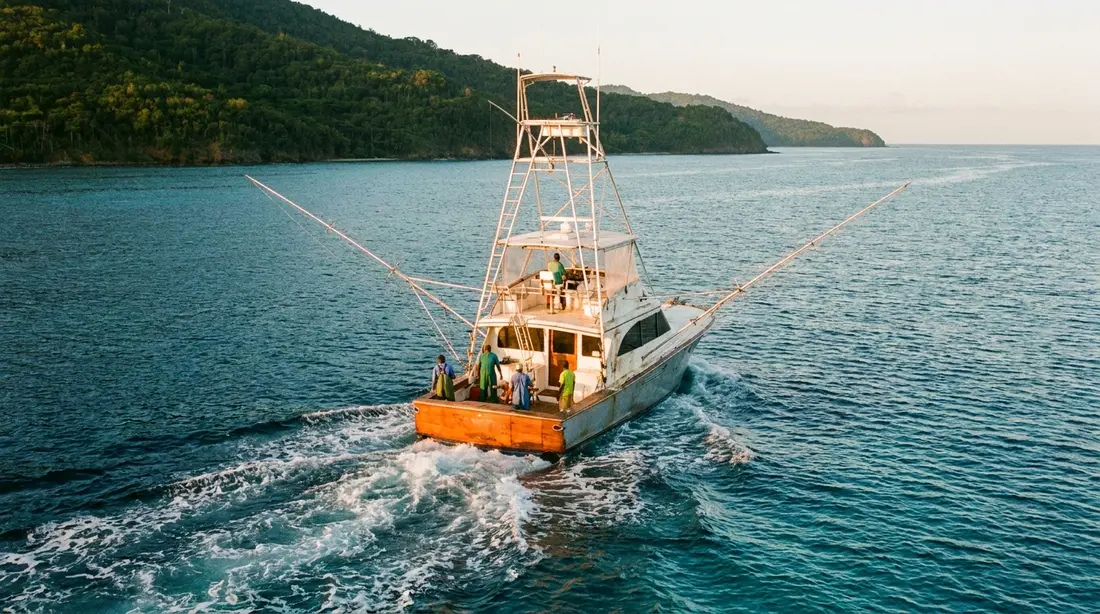
The wrecks are a boat dive. A shore approach exists — you can walk in and swim out — but it means a hard 15-to-20-minute finning in full kit at the surface against a possible current, which is why the shops run boats and why nearly everyone takes one. Trips leave from the west end, a short run down the coast to the mooring.
The west-end operators that run Butler Bay wreck trips include Cane Bay Dive Shop, which works from a Frederiksted base; Nep2une Scuba, the Frederiksted shop longtime visitors knew as N2theBlue; Crucian Adventure Divers, a small-group operation; and St. Croix SCUBA, which keeps shops in both towns and advertises diving every moored site on the island. Ask when you book which wrecks are on the day's plan and match them to your certification: a two-tank morning might pair the Northwind with the Rosaomaira, or a shallow wreck with a west-coast reef. Prices and schedules move with the season, so confirm at booking rather than on the dock. The full island operator roster, with what each shop specializes in, is on the scuba diving St. Croix page.
Wreck-diving safety and ethics
Wreck diving at Butler Bay follows a short list of rules that keep the sites both safe and worth diving.
Depth discipline comes first. The wrecks range from 15 to 117 feet, and the deep ones burn no-decompression time and breathing gas quickly. Plan the dive to the deepest point you will actually reach, watch your computer and your gas, and turn the dive on the number you set, not the one you hope for.
Penetration stays off the table without training. The overhead inside a hull removes the straight path to the surface and can silt out to zero visibility in seconds; go inside only with a wreck-diving certification, redundant light and gas, and a buddy trained the same way. On these wrecks the reward is on the outside anyway.
Take nothing and touch nothing. The coral and sponge growth is what makes a wreck worth diving, and it is fragile; the crew effects still inside the Rosaomaira are part of the site, not souvenirs. Look, photograph, and leave it where it lies.
Mind the surface. Shore divers tow a dive flag, and USVI law keeps oxybenzone, octinoxate and octocrylene out of sunscreen here, so bring a mineral formula.
Finally, leave nitrogen time before you fly. A single dive calls for at least a 12-hour wait before flying; a run of repetitive or multi-day diving pushes that to 18 hours or more, per Divers Alert Network guidance. Since a Butler Bay trip is usually part of a diving week, most visitors keep the last day dry. The scuba diving St. Croix page carries the fuller flying-after-diving math, and a night dive at the pier is the calmer way to spend an evening earlier in the trip.
Other west-coast dives nearby
Butler Bay is one stop on a short coast full of diving. A few minutes down the shore, the Frederiksted pier is the island's premier macro dive, a shallow forest of pilings from about 25 to 90 feet that holds seahorses, frogfish and octopus — the wreck cluster's natural pairing on a west-end day, covered in the Frederiksted Pier guide, and a different animal again after dark in the night diving guide. Further up the coast, the Cane Bay Wall falls away just a short swim off the sand, and on the north shore the Salt River Canyon cuts two dive walls inside a national park. For the full island catalog — the north-shore moored sites, the wall and the canyon in one place — start with the scuba diving St. Croix reference. Snorkelers in the group are not left out; the snorkeling guide covers the shallow-water side of the west coast.
Questions guests ask
Do I need to be an advanced diver to dive Butler Bay?
Not for most of the cluster. The three shallow wrecks — the Suffolk Maid, the Northwind and the Virgin Islander — sit within standard Open Water depth and dive as easy, open swims on a guided boat trip, so a newly certified diver can do them comfortably. The advanced card matters for the deep pair: the Rosaomaira reaches past 110 feet and the Coakley Bay tug sits around 60, and both call for the training and logged experience to handle depth, gas and bottom time. A good plan for a mixed-skill group is a two-tank morning that puts everyone on a shallow wreck first and sends the qualified divers deep on the second tank.
Can you dive inside the wrecks?
Only with wreck-diving training. The Rosaomaira in particular still holds crew clothing and personal effects in its cabins, and the pull to swim in is understandable, but the inside of a hull is an overhead environment: there is no straight line to the surface, and a kicked-up cloud of silt can drop visibility to nothing in seconds. Recreational guidance is to stay outside unless you hold a penetration certification and carry redundant light and gas with a buddy trained the same way. The great majority of Butler Bay diving happens on the outside of the steel, and the growth and fish life that make the wrecks worth the trip are all on the exterior.
How deep is the Rosaomaira?
Her bow sits around 70 feet, the deck runs deeper toward the stern, the propeller is near 110, and the deepest point on the sand is about 117 feet. That range puts her firmly in advanced-diver territory: the shallow parts are approachable, but reaching the propeller spends no-decompression time and breathing gas quickly. Most divers tour the bow and midships, take a look toward the stern, and leave with gas to spare. She stands upright and intact, so even a conservative profile that stays high on the wreck gives you the full shape of a 177-foot freighter.
What marine life lives on the wrecks?
Decades on the bottom have turned the hulls into reefs. The steel is covered in sponges — rope, stovepipe and barrel sponges on the Rosaomaira — along with pink Stylaster and golden cup corals and seafans on the Virgin Islander. Fish follow the structure: creole wrasse and a resident green moray on the Suffolk Maid; barracuda, snapper, butterflyfish, angelfish and turtles around the Northwind; blackbar soldierfish, mahogany snapper and French, queen and gray angelfish on the Rosaomaira, with a shy seahorse long reported at the back. Southern stingrays rest on the surrounding sand, and Atlantic spadefish circle the Coakley Bay tug in the water above it.
Is Butler Bay a shore dive or a boat dive?
In practice it is a boat dive. A shore approach exists, but it means a demanding 15-to-20-minute surface swim in full gear, often against a light current, before you even descend — enough to convince nearly everyone that the boat is the better call. The shops run short trips down the west coast to the moorings, and the boat also lets a two-tank morning cover more than one wreck. If you are set on shore diving the west end, the Frederiksted pier is the far easier walk-in entry, with the wrecks best left to the boat.
How many wrecks can you see in a day?
On a standard two-tank morning, most boats cover two wrecks, sometimes three, because the sites lie so close together on the same stretch of bottom. A common pairing puts a shallow wreck on one tank and either the Rosaomaira or a nearby reef on the other, which balances a deep, gas-hungry descent against an easy, long shallow dive. Divers who want to see the whole cluster — three shallow wrecks, two deep ones and the Aegir habitat — usually need two trips across a few days, spacing the deep dives out and leaving the required surface interval between them. The shops build the rotation around the group's certifications and the day's conditions.
When is the best time to dive Butler Bay?
The west coast dives well nearly year-round because it sits in the lee of the trade winds, but summer and early fall bring the calmest, clearest water — with hurricane season, June through November, as the tradeoff to watch. Winter diving holds up here even when the Christmas Winds and north swell close the wall on the far side of the island, which is exactly why the wrecks are the season's reliable fallback. Visibility averages around 100 feet most of the year. Whatever the forecast, the boat crew picks the site on the morning, and on a rough day the sheltered wrecks are often the answer.
Where to stay near the wrecks
The wrecks belong to the west end, and so does the easiest base for diving them. Our west-end villas put Frederiksted, the pier and the shops that run the wreck trips within a few minutes' drive, with the island's calmest water out front — the practical choice for a diving week built around Butler Bay. Divers who want the north-shore sites too will find the beachfront collection and the East End homes an easy morning's drive from the Christiansted boardwalk boats, with Cane Bay and Salt River on the way. Whichever coast you pick, the homes we manage give you an outdoor shower and room to rinse and hang gear that a run of wreck dives actually needs.
Sources
Written from official and first-party sources, checked August 2026. Hours, prices and event dates change — confirm before you go.
In this guide
Stay nearby
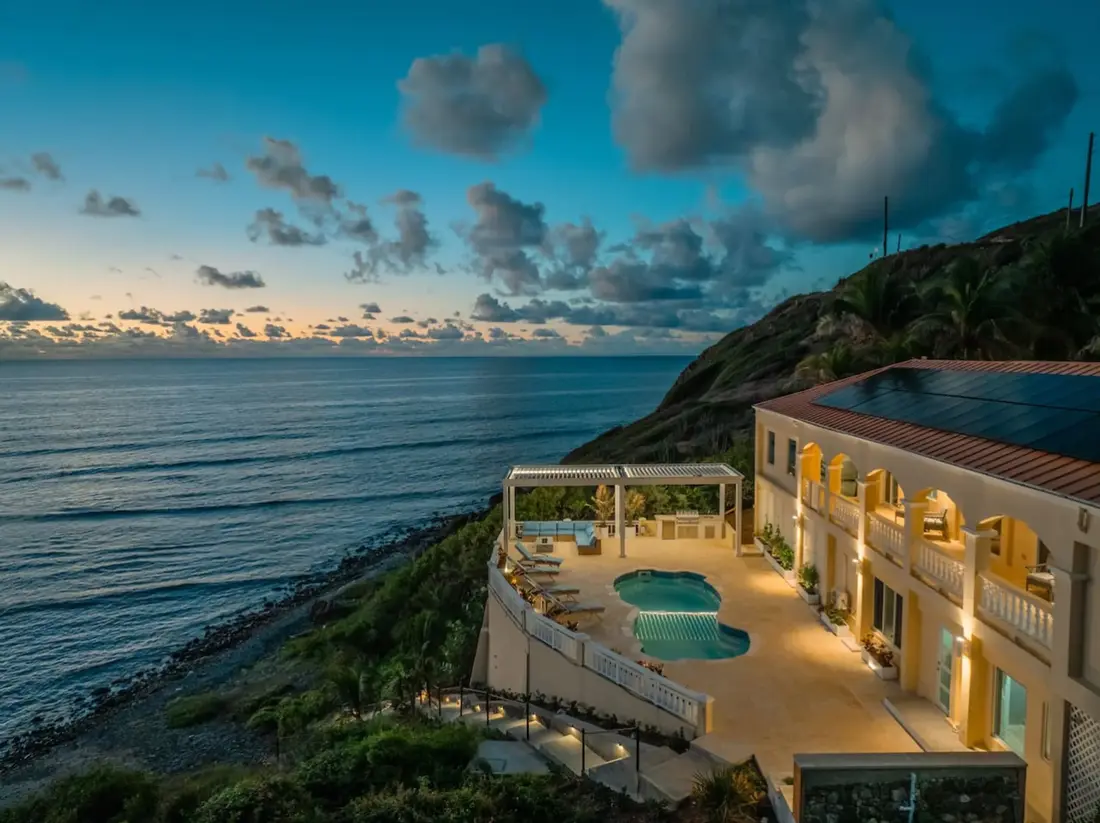
Private oceanfront on the East End with a sandy, swimmable beach, pool, outdoor kitchen and a separate guest cottage. Sleeps twelve.
 The Cerulean5 bd · 5 ba · sleeps 12 · Christiansted
More in On the Water
Sources
8 references, listed in full at the end of this guide — official park, refuge, tourism-board and business sources, checked August 2026.