One Day in Port
Docking at Frederiksted? How to spend a cruise day well: the pier, Rainbow Beach, the rainforest loop, or a fast run east.
Cruise ships calling at St. Croix tie up at the long pier in Frederiksted, on the island's west end, and passengers walk straight off into a small Danish-built town with a fort, a free art museum, and a swimmable beach inside five minutes on foot. This page is the shore-day playbook: how the port actually works, how to budget six to nine hours, and complete plans for four, six, and eight hours ashore.
How ships arrive at St. Croix
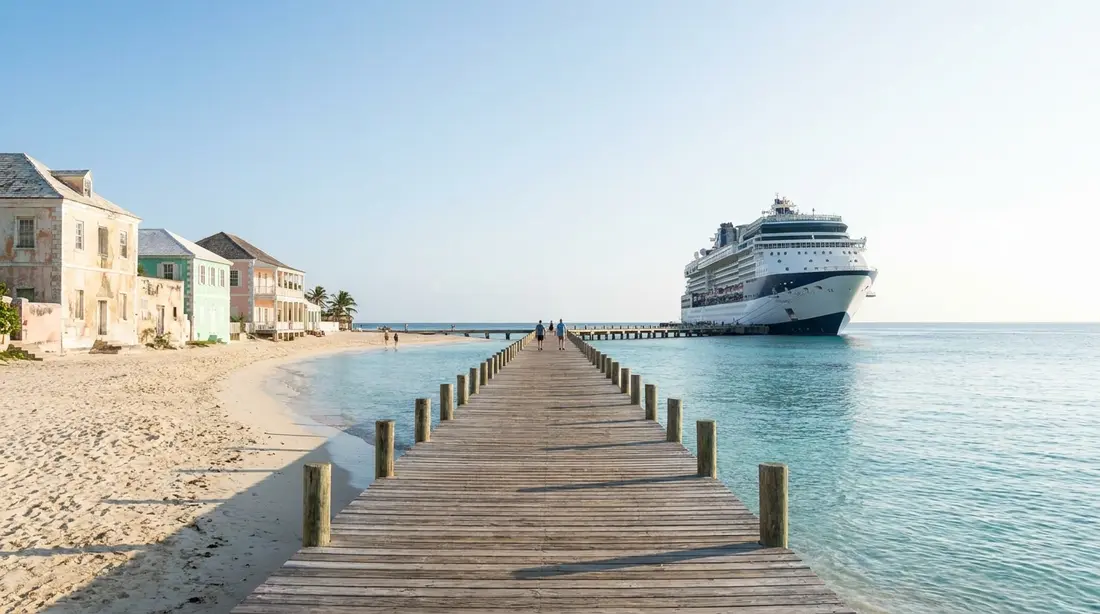
St. Croix is a docking port, and knowing that settles half your planning. There is no tender operation here: your ship comes alongside the Ann E. Abramson Marine Facility, the 1,526-foot pier at the foot of Frederiksted, and you walk down a gangway and along the pier deck to shore. The Virgin Islands Port Authority runs the facility with two cruise berths, the deeper south side taking the biggest ships in the rotation. The current pier opened in July 1994, replacing the one Hurricane Hugo wrecked in 1989, and pieces of the old structure still lie on the seabed nearby as a dive site.
What waits at the pier head is a town rather than a port compound. There is no fenced shopping mall between you and the island: the Claire L. Roker Visitors Center, public restrooms, and a security checkpoint sit at the entrance, and beyond them you are standing on Frederiksted's waterfront with the fort to your right and a row of cafes and shops down Strand Street to your left. While your ship is berthed, the pier itself is restricted to passengers and crew with ID, so keep your ship card on you all day.
One more piece of orientation worth having before you plan anything: Frederiksted faces due west on the island's calm, sheltered coast. The water beside the pier is routinely the flattest on St. Croix, the beaches start immediately north and south of town, and if your ship stays late enough, the sunset happens directly off the bow. The Frederiksted guide covers the town in full; this page covers the day.
Checking your ship's hours
The port schedule is public, which means you can plan a St. Croix shore day weeks before you sail. The Port Authority publishes each season's cruise calls, and several independent trackers repost them by date with arrival and departure times, so a quick search on your sail date tells you which ship is in and for how long. The season runs heaviest from December through March, when the island can see one or two calls a week, and thinner calls continue through the summer months.
Most St. Croix calls run roughly 8 a.m. to 5 p.m., with some scheduled 7 to 4. The 2025–26 season as published ran from October through the following September, with the biggest ships concentrated in the December-to-March peak and steadier, lighter traffic through June, July, and August. The number that actually governs your day is none of these: it is the all-aboard time printed in your ship's daily program, usually 30 minutes before scheduled departure. Write it down before you leave the cabin.
A minority of calls stay into the evening, and those are worth recognizing in advance, because Frederiksted is the sunset side of the island. The town faces due west over open water, waterfront tables go early as the light drops, and a ship that sails at 8 or 10 p.m. hands you the island's best sunset seat plus dinner ashore at no cost in daytime hours. If your schedule shows a late departure, move dinner off the ship and plan the last two hours around the seawall.
A clock detail that catches people: St. Croix keeps Atlantic Standard Time all year, with no daylight-saving change. In winter that is one hour ahead of the U.S. East Coast; in summer it matches Eastern Daylight Time. Some ships keep ship's time in port and some switch to local, and the daily program will say which applies. Confirm it, set your watch accordingly, and every plan below gets simpler.
The back-onboard math
Every good port day is built backward. Start from all-aboard and subtract, and the day designs itself; start from a wish list and add, and you spend the afternoon doing arithmetic on a beach chair.
Worked example for a 5 p.m. departure: all-aboard 4:30, which means walking the pier by 4:15, which means standing at the pier head by 4:00 to absorb any line at the checkpoint. From Rainbow Beach, a few minutes away by taxi, that means a 3:30 pickup. From Christiansted, 40 to 50 minutes across the island, it means rolling out of town by 2:45 at the latest, and 2:30 if you would rather not test the margin. The rule of thumb that falls out of this: reach the farthest point of your day before its halfway hour, and spend the second half of the day drifting back toward the pier rather than away from it.
Build one deliberate buffer into whatever you choose. An hour of slack at the west end costs you nothing, because the last hour spends perfectly well at the town beach or a waterfront bar within sight of your ship. The same hour of slack is the difference between a story and a problem if a tour van gets a flat on Centerline Road.

Taxis and tours at the pier head
On a ship morning, the ground transportation gathers where the pier meets the street: taxi vans, open-air trucks with bench seats, and drivers holding boards with the names of people who booked ahead. Shared rides load and go as they fill, and the busiest routes run all day, out to the west-end beaches and across to Christiansted.
St. Croix taxis charge published per-person rates rather than metered fares. At last check, port guides put short shared west-end hops in the range of $5 to $15 per person and a Christiansted round trip around $25 to $35 per person. Two habits keep it smooth: confirm the fare per person before you get in, and if a driver drops you at a beach, fix the pickup time and take a phone number before the van pulls away. Rideshare apps do not operate on the island, so the ride back is either the driver you arranged or a call to a dispatch number, and arranged beats improvised on a deadline.
Independent tour operators meet ships at the same spot, running island circuits, rainforest loops, and beach shuttles. The full picture of rates, dispatch numbers, and how the island's taxi system works lives in the taxis and getting around guide; for a single port day, the summary is that you will not struggle to find a ride out, and you should never leave the return to luck.
Four hours on foot
The shortest plan needs no vehicle at all, and it is a good day rather than a consolation prize. Everything in it sits within about ten minutes' walk of the gangway.
Start at Fort Frederik, the dark-red fort beside the pier. This is where emancipation in the Danish West Indies actually happened: on July 3, 1848, thousands of enslaved Crucians gathered here behind the leader remembered as General Buddhoe, and Governor-General Peter von Scholten declared them free. The fort's museum charges about $5 at last check and opens weekdays plus cruise-ship days, and the park in front of it carries Buddhoe's name.
From the fort, Strand Street runs south along the water. The Caribbean Museum Center for the Arts keeps free admission and shows working artists in a restored townhouse; Turtle's Deli builds sandwiches a block on; coffee means Polly's at the Pier, with the water in view from the counter. Give the side streets twenty minutes too, because the Victorian arcades and gingerbread woodwork date from the rebuilding after the 1878 Fireburn and reward a slow look.
Close the loop at Frederiksted Beach, the town beach that begins beside the pier and runs north. The sand is a two-minute walk from the checkpoint, the water is calm on almost every ship day, and the wash is a known producer of sea glass for anyone who walks it with their head down. Swim, rinse at the beach, and you can be back aboard for a late lunch without ever having gotten into a car.
Six hours on the west end
With six hours you can add the west end's best sand without adding any real risk, because nothing in this plan is more than a few minutes from the pier by road.
Rainbow Beach sits a bit over a mile north of town, and on ship days shared taxis run the hop continuously. It is the full-service option: chairs and umbrellas to rent, kayaks, paddleboards and jet skis from the watersports operation on the sand, and Rhythms beach bar for lunch and a painkiller with your feet still sandy. It is also where the day's crowd concentrates, which reads as either atmosphere or congestion depending on your taste.
If your taste says quieter, Dorsch Beach runs south of town past Sand Castle, with long sand, shade trees, and far fewer chairs; take the town beach north of the pier as the middle option. The full sweep of options within a short ride is mapped in beaches near Frederiksted.
Shape the six hours simply: town first while the morning is cool, one taxi hop to the beach by late morning, lunch at the beach bar or back on the waterfront, and a fixed pickup time that lands you at the pier head an hour before all-aboard. That final hour is not wasted; it is the fort you skipped, a last swim at the town beach, or a cold drink with your ship filling the view.
Eight hours across the island
Eight or nine hours ashore opens the interior and the far coast, with three routes that each fit a real time budget.
The closest pairing is Estate Whim and the Cruzan Rum Distillery. Whim's restored sugar plantation grounds sit about two miles from Frederiksted on Centerline Road; note that the great house itself has kept its interior shut since 2017, so the visit covers the grounds, mill, and outbuildings. Cruzan is a few minutes further, with weekday tours by reservation, at last check offered at 12, 1:30, and 3. The pair plus lunch fills five relaxed hours and never puts you more than 20 minutes from the ship.
The rainforest loop climbs Mahogany Road under the canopy, stops at the Domino Club to meet the famous beer-drinking pigs, and can fold in Creque Dam and a west-coast viewpoint before dropping back to sea level. Tour vans at the pier run versions of exactly this circuit on ship days.
Two substitutions worth knowing if the calendar fights you. Cruzan's tours run weekdays, so a weekend call can swap in the Captain Morgan visitor center's schedule or simply take Whim plus a longer beach block. And the St. George Village Botanical Garden, built into sugar-estate ruins mid-island on the Christiansted road, makes a strong half-stop on any cross-island run: old masonry, labeled tropical plantings, and shade, about 15 minutes from the pier.
The long play is Christiansted, roughly 45 minutes east by road. The round trip spends 90-plus minutes of your day in a vehicle and buys you the yellow fort, the boardwalk, the arcaded shopping streets, and the island's deepest restaurant bench. With eight hours ashore it works; with six it squeezes. A Buck Island half-day from Christiansted on top of that is possible on paper and tight in practice, and belongs only in a day arranged with an operator who plans around ship hours. One calendar note: Sandy Point, the island's grandest beach, opens weekends only from September through March and closes entirely April through August for turtle nesting, so it fits only a weekend winter call.
Swimming and snorkeling on a ship day
The Frederiksted pier is one of the Caribbean's famous snorkels, a colony of sponge-crusted pilings where slow searching turns up seahorses, frogfish, and octopus. Here is the fact cruise visitors need to hear: swimming and snorkeling around the pier are prohibited whenever a ship is berthed, for swimmer safety and ship security alike, and the ship in question is yours. The pilings go back on the menu only on ship-free days, which is a reason to return, and the pier diving guide covers what waits down there.
The good news is that the same coast offers easy water everywhere else. The town beach north of the pier has calm, clear shallows a short walk from the gangway, and Rainbow Beach adds rental gear to the equation. Confident snorkelers who want reef rather than sand can book with a west-end dive shop, since the local operations schedule shore trips and boat trips around cruise calls and know exactly which sites are open on a ship day. The island-wide picture, from the wall at Cane Bay to the East End bays, is in the snorkeling guide. Wherever you get in: reef-safe sunscreen, touch nothing, take nothing.
Ship excursions or independent plans
The excursion-desk question has a plain answer once you name the actual trade. Booking through the cruise line costs more and buys one assurance that nothing else buys: if a ship-sold tour runs late, the ship waits or the line gets you to the next port. Booking independently costs less, usually puts you in a smaller group, and often puts you in the same vans and boats the line resells, and the assurance does not come with it.
Price that assurance by distance and complexity. For anything on the west end, it is worth almost nothing, because you are minutes from the gangway all day and a walk would save you in a pinch. For a Christiansted afternoon it is worth a little, covered adequately by leaving town with a fat margin. For a Buck Island trip, dependent on a boat schedule at the island's far corner, it is worth the most, and that is the one outing where booking through the ship, or with an independent operator who explicitly works cruise calls and states a back-at-pier time, earns its premium.
St. Croix's independent operators are used to ship traffic and meet passengers at the pier head by arrangement. Book ahead rather than hoping to assemble a custom day on the sidewalk, confirm the return time in writing, and the risk gap between the two options narrows to nearly nothing.
The beach-only day
Plenty of passengers want exactly one thing from St. Croix: good sand, calm water, lunch, and zero logistics. This island makes that unusually easy, because the closest good beach requires no vehicle at all.
The minimum version: walk off the pier, turn north, and put your towel down on the town beach within five minutes. Swim, walk the sand looking for sea glass, take lunch on the waterfront a block away, and wander back with the checkpoint literally in view. The upgraded version costs one shared-taxi hop each way to Rainbow Beach, where chairs, umbrellas, gear, and a bar handle everything you did not carry.
Budget for the upgraded day, at last check: a few dollars per person for each taxi hop, modest chair and umbrella rental, and beach-bar lunch prices. Sunscreen aside, you can do the whole thing on what a single ship-sold beach excursion charges per person, and be back at the pier whenever you decide rather than when a bus does.
Eating ashore on a clock
Frederiksted feeds a port day at two speeds, and picking the right one is a timing decision. The fast lane is counter food: sandwiches from Turtle's Deli on Strand Street, coffee and a plate at Polly's, a taco and a cold drink at a beach bar between swims. None of it costs you more than a half hour, which is what you want when the day's real business is sand or a tour.
The slow lane is a waterfront table with the pier in the view, and it deserves a real slot in the plan rather than the leftovers. Here is the mechanic to respect: when a few thousand passengers come ashore into a small town, the strip's tables fill in one wave around midday. Eat at 11:30 or at 1:30 and you slide around the crush; walk up at 12:15 and you stand in it. The full roster of the strip, hours, and what each kitchen does best is in the Frederiksted restaurants guide. Cards are widely taken, service moves at island pace even on ship days, and a sit-down lunch is best treated as ninety minutes, which is exactly why it pairs with the four-hour walking plan and fights the eight-hour island plan.
Money, phones, and shopping ashore
The practicalities are the easiest of any Caribbean port because the flag does the work. The currency is the U.S. dollar, cards are widely accepted along the waterfront, and ATMs exist in town for the beach-bar cash you will want. U.S. phones treat St. Croix as domestic on most plans, so maps, calls to taxi dispatch, and the photo flood all work without a roaming thought; confirm your plan's terms if you carry a small carrier. Tipping runs on mainland norms.
Shoppers get one structural advantage worth knowing before the gangway: U.S. customs grants a larger duty-free exemption for goods from the U.S. Virgin Islands than from most other Caribbean stops, $1,600 per person at last check, with additional allowance for rum distilled in the territory. That, plus the Cruzan gift shop and the galleries and craft shops along Strand Street, is why the bottle count on the pier at 4 p.m. looks the way it does. Local pieces such as the crucian hook bracelet make the better souvenir case than anything mass-market.
Rain on a ship day
West-end rain usually arrives as a passing shower and quits within the hour, so the first move is a drink under a roof rather than a changed plan. If it settles in, the town copes better than most ports: the fort museum and the free art museum make an indoor pair a block apart, and the covered arcades built into Strand Street's facades after the 1878 fire were designed for exactly this kind of walking. The island's full wet-weather roster, distillery tours included, is in the rainy-day plan, and most of its west-end entries sit within a short ride of the pier.
Getting back to the ship
The return deserves the same planning as the outbound, so give it rules rather than hope. From anywhere on the west end, be at the pier head 45 to 60 minutes before all-aboard. From Christiansted or the East End, leave the far point two full hours before all-aboard, which prices in a slow van, a missed pickup, or road work on Centerline. If a driver is coming back for you, reconfirm by phone an hour ahead.
Know what lateness actually means. The ship waits for its own delayed excursions and, as a rule, for nobody else; the gangway comes up at all-aboard, and the pier checkpoint will not speed-run you through a line. If the worst happens, St. Croix is about the softest place in the Caribbean to miss a ship: you are on U.S. soil, so a U.S. citizen needs no passport to fly home, and the airport fields nonstop flights to Miami, Charlotte, and Atlanta plus constant short hops to St. Thomas. If the itinerary's next stop is St. Thomas, as it often is, the seaplane and the ferry both cross between the islands and a chastened reunion with your cabin is arrangeable. Your ship's port agent, listed on the daily program's port page, is the first call to make. Then never need any of this paragraph: build the buffer instead.
Plans by hours ashore
Targets below assume a 4:30 p.m. all-aboard; shift everything with your ship's actual times.
| Hours ashore | The plan | Transport | Be back at the pier head by |
|---|---|---|---|
| 3–4 | Fort, art museum, Strand Street, town beach | None; all on foot | 4:00, from five minutes away |
| 5–6 | Town walk plus Rainbow Beach and a beach-bar lunch | Shared taxi hop each way | 3:45, pickup fixed in advance |
| 6–7 | Rainforest loop: Mahogany Road, Domino Club, viewpoint | Booked tour van or taxi charter | 3:30 |
| 7–8 | Estate Whim grounds, Cruzan tour, late beach hour | Taxi charter or tour | 3:30 |
| 8–9 | Christiansted round trip: fort, boardwalk, lunch | Shared taxi or tour, 40–50 min each way | Leave Christiansted by 2:30 |
Questions guests ask
Does the ship dock at St. Croix or tender?
It docks. Cruise ships come alongside the Ann E. Abramson pier in Frederiksted and passengers walk off directly; there is no tender ride, no waiting for boat tickets, and no surf landing. The walk from a mid-ship gangway to the street is several hundred yards along the pier deck, flat the whole way, with the visitors center and restrooms at the shore end. Guests with mobility concerns should note the distance and ask the ship about assistance, but compared with tender ports this is about as easy as arrival gets.
Can I snorkel the pier while my ship is docked?
No. The water around the pier closes to swimmers and snorkelers whenever a ship is berthed, for safety and security, and that includes the ship you arrived on. On a ship day, swim at the town beach immediately north of the pier or at Rainbow Beach, or book a dive shop trip to a site that stays open. The famous piling snorkel, seahorses and octopus included, belongs to ship-free days, which is one of the better arguments for coming back on a land-based trip.
Is Christiansted worth it with one day ashore?
With eight or nine hours, yes, if town time is what you value: the round trip costs roughly 90 minutes of driving and delivers the fort, the boardwalk, and the island's best shopping and lunch streets. With six hours or fewer, the math turns against it, since the vehicle eats a quarter of your day and Frederiksted already offers a fort, a museum, beaches, and good food within a walk. Passengers who try to add Buck Island on top of a Christiansted run in one call are attempting the island's tightest schedule.
Do I need a passport to get off the ship here?
St. Croix is a U.S. territory, so U.S. citizens need no passport ashore; carry your ship card and a government photo ID as you would anywhere. Whatever documents your cruise itinerary required overall still apply for the voyage, and non-U.S. citizens should carry what the ship's staff advises for U.S. ports. The practical upside of the flag is real: U.S. phones work on domestic plans, the currency is the dollar, and if you somehow missed the ship you could fly home without a passport.
How easy is it to get a taxi at the pier?
On a ship day, easier than anywhere else on St. Croix: vans and open-air trucks stage at the pier entrance, shared rides load continuously for the beaches and Christiansted, and pre-booked drivers hold name signs. Rates are published per person rather than metered, so confirm the fare before boarding, and lock in any beach pickup time on the spot. The one caution is the return: staged supply serves the pier, so arrange your ride back rather than assuming a beach parking lot will produce one.
What happens if I miss the all-aboard?
The ship sails, unless you were on one of its own delayed excursions. Contact the port agent printed in the daily program, who handles exactly this. From St. Croix your recovery options are unusually good: nonstop flights to the U.S. mainland, and constant seaplane and ferry links to St. Thomas if that is the next call. It is a solvable, expensive problem. An hour of deliberate buffer at the west end, which spends pleasantly at a beach or a bar near the pier, makes it a hypothetical one.
Which plan is best with kids?
Keep the radius small. The town beach gives you calm, shallow, clear water five minutes from the gangway, with restrooms at the pier head and lunch a block away, and the fort's cannons and ramparts absorb an hour of any child's energy. Rainbow Beach adds rental floats and a sandy-feet lunch one short taxi hop away. Long vehicle loops are where ship days with kids go wrong; the rainforest circuit works for grade-schoolers who like pigs drinking near-beer, and the cross-island run is best saved for a return trip.
Coming back for a week
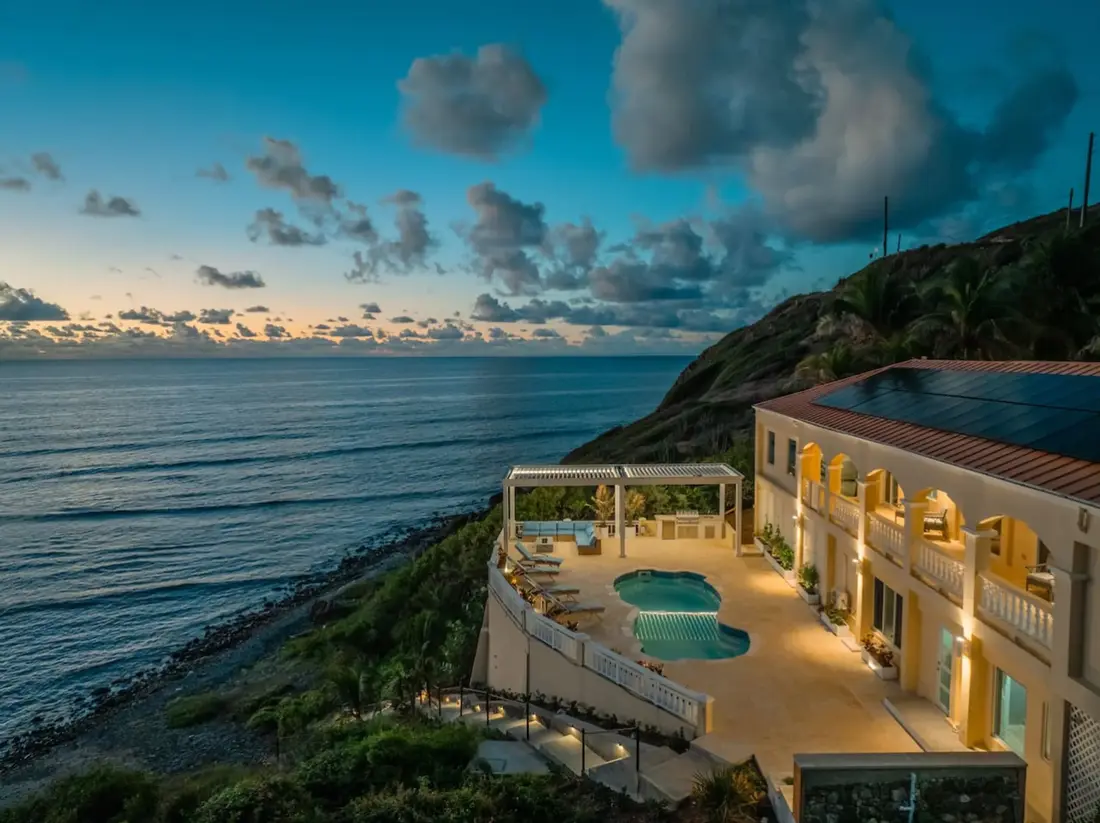
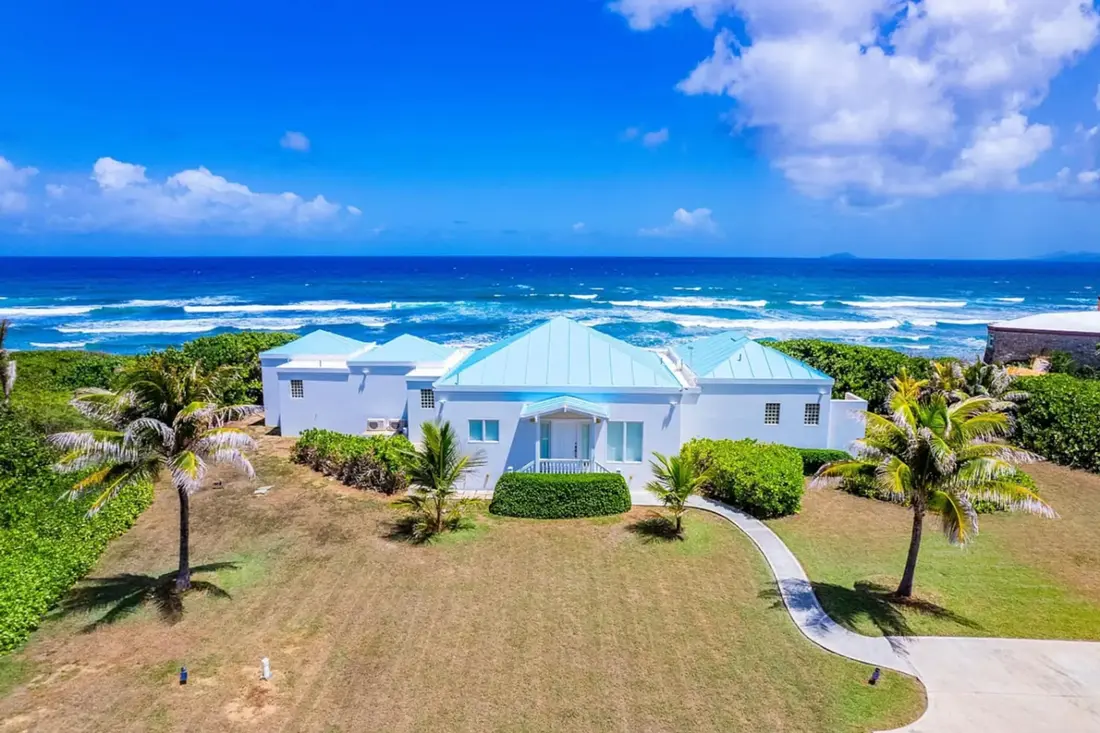
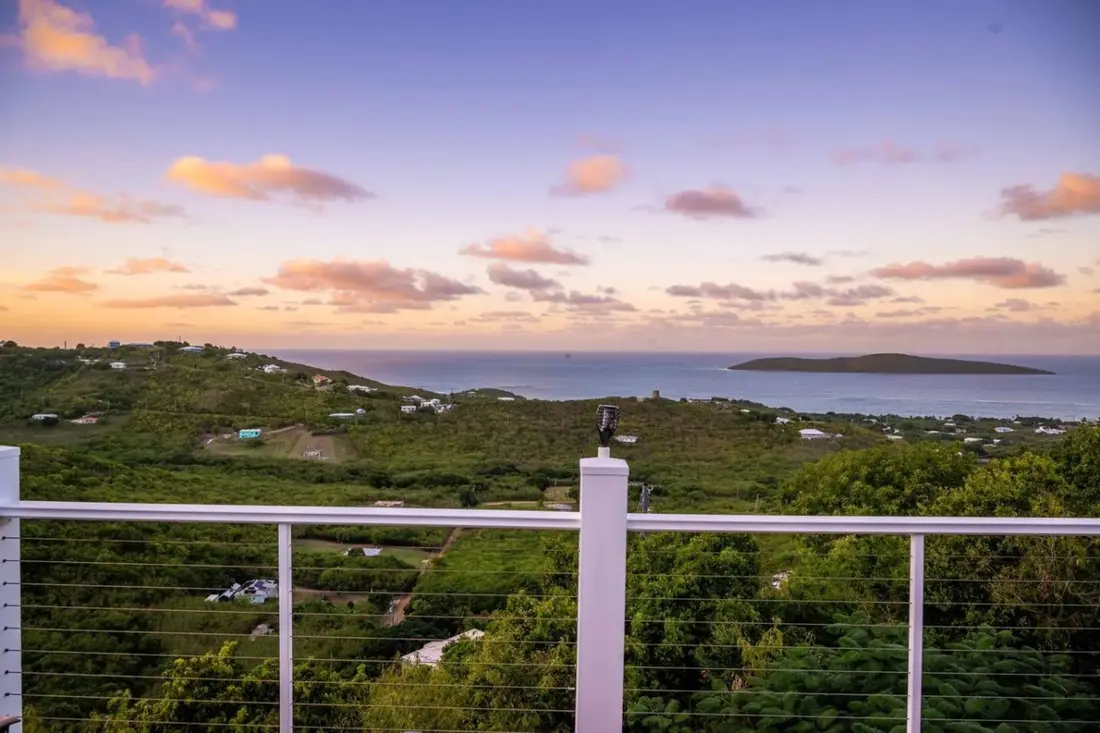
A port day shows you the west end between breakfast and all-aboard, and if it left you wanting the rest, that is the accurate instinct: the wall at Cane Bay, Buck Island without a countdown, the East End bays, and the sunset you sailed away from are all week-scale pleasures. Our villas put that week in a house on the water instead of a cabin at sea, and why St. Croix makes the longer case. Plenty of our guests met the island exactly the way you just did, with a ship card in a beach bag and an eye on the clock.
Sources
Written from official and first-party sources, checked August 2026. Hours, prices and event dates change — confirm before you go.
In this guide
Stay nearby
On The Shoys beach: six bedrooms, six baths, pool and hot tub, room for twelve, and the beach through the back garden.
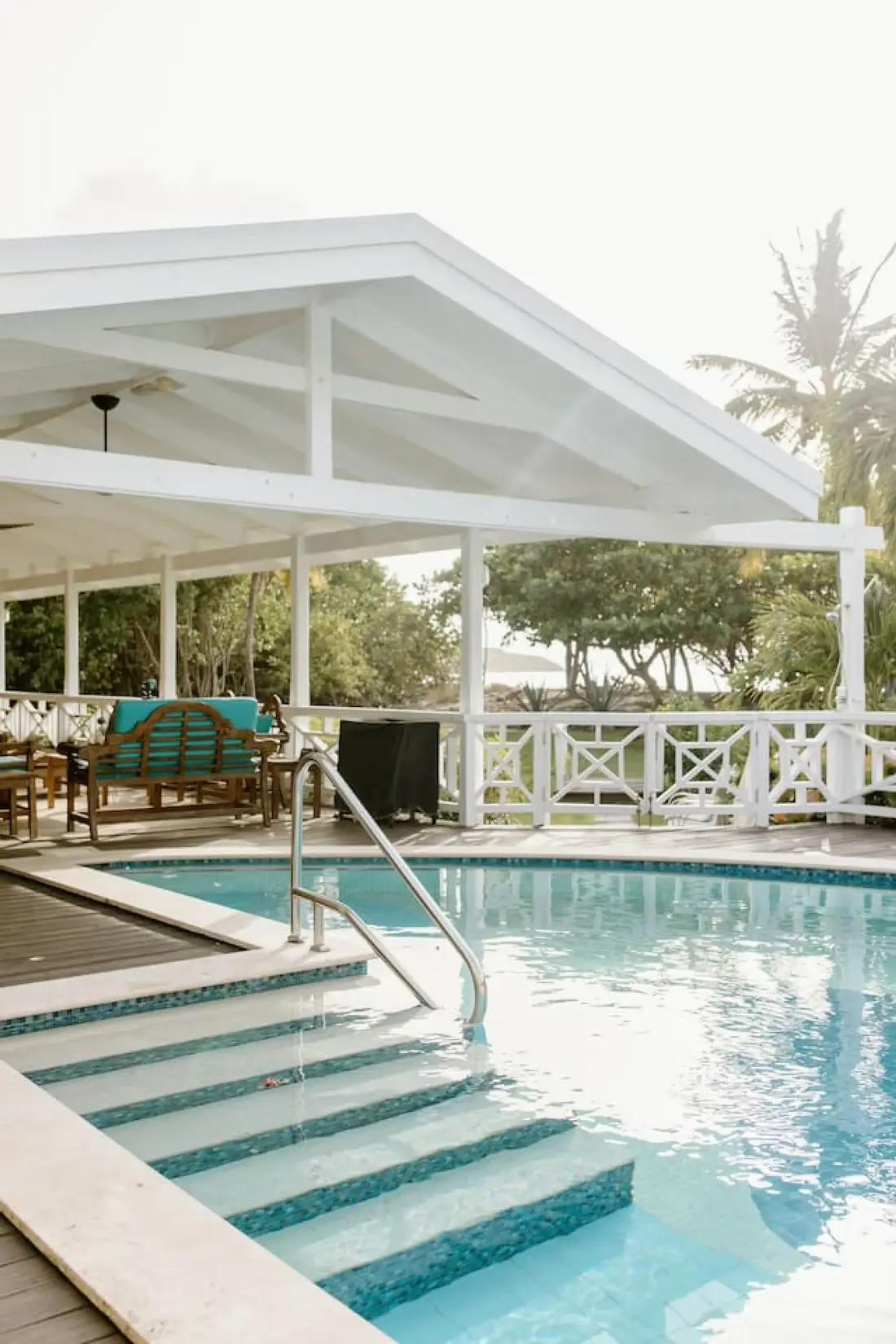 Shoy's Beach House6 bd · 6 ba · sleeps 12 · Christiansted
More in Itineraries
Sources
9 references, listed in full at the end of this guide — official park, refuge, tourism-board and business sources, checked August 2026.