The Best Snorkeling Beaches
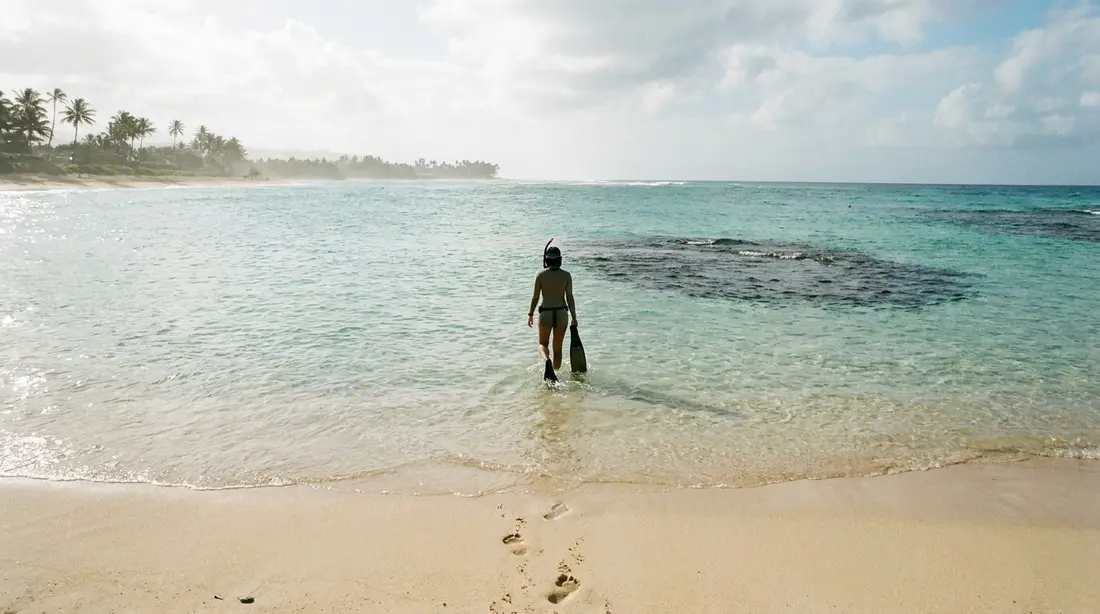
Where to snorkel straight off the sand on St. Croix: Cane Bay, the Frederiksted pier, Chenay Bay, and the hike-in bays of the East End.
Every snorkel spot on St. Croix already has its own page on this site. This page does the job none of them can do alone: it puts the beaches in order. The ranking below scores each one on what a snorkeler actually gets from the sand — how easy the walk-in is, what the reef delivers once you are over it, how many days a year the water cooperates, and what support waits on shore — then settles the head-to-head choices a real vacation week forces.
How this page ranks the beaches
Four measures decide every position on this list, and it helps to name them before arguing about the order.
Entry ease. How hard is it to get from towel to swimming? A flat sand walk-in scores high. A rocky waterline, a hike, or a swim of several hundred feet to the good part scores lower, no matter what sits at the far end.
Reef quality. What does the water hold once you are in it? Living coral with dense fish outranks patch reef, patch reef outranks seagrass for most snorkelers, and bare sand ranks last — with one caveat, because seagrass is turtle pasture and some guests would trade every coral head on the island for one turtle.
Conditions reliability. How many mornings a year does the spot actually work? A protected bay that produces 340 usable days beats a dramatic reef that winter swell shuts down for a week at a stretch. This axis moves the rankings more than visitors expect, which is why the seasonal re-rank table further down is the most useful thing on this page.
Facilities. Rentals, food, restrooms, easy parking. On an island where most beaches offer none of these, the few that do earn real credit, especially for families hauling gear.
What this page does without: descriptions. Each beach's full portrait — the sand, the bars, the parking, the history — lives in its own guide, linked at every mention. Depths, entries and marine life spot-by-spot live in the island snorkeling reference, and the craft of the sport — wind reading, gear fit, sunscreen law — lives in our journal essay on snorkeling well. Here, everything serves the comparison.
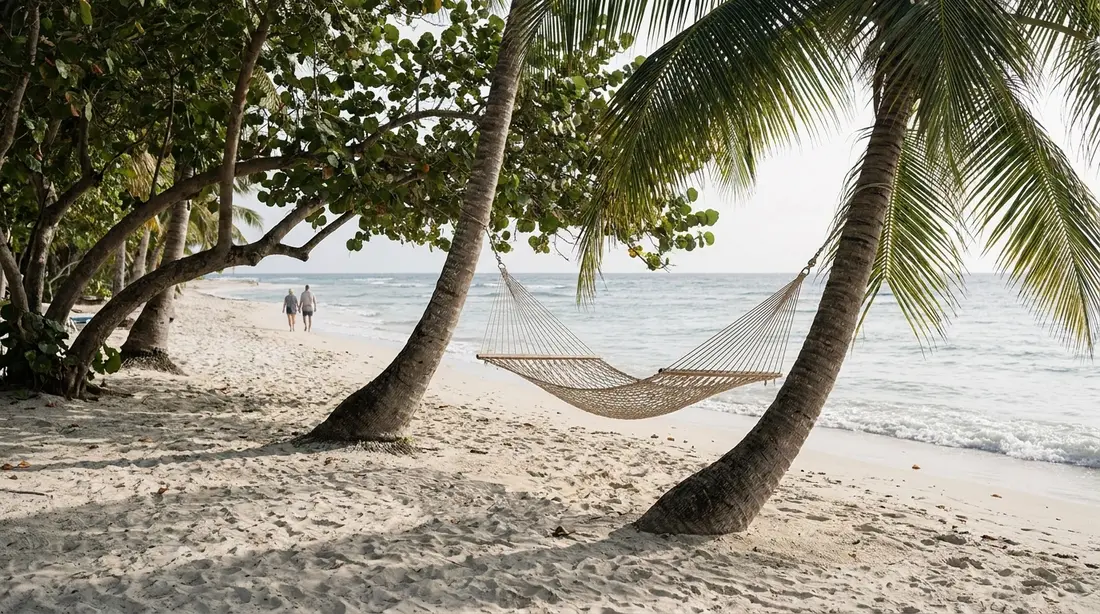
Tier one: the two reliable anchors, plus an asterisk
Two beaches, and one boat trip, sit above everything else on the island, and each earns the spot a different way.
Cane Bay ranks first on reef quality. No other walk-in on St. Croix puts elkhorn and staghorn stands, steady parrotfish traffic and regular turtles this close to a sand entry, and no other beach offers the option — for strong swimmers only — of continuing roughly 600 feet out to where the Cane Bay Wall tips over at about 40 feet and the bottom drops toward the abyss. It loses points on one axis only: reliability, because the north shore takes winter swell. Shore support is genuine — a pair of dive shops across the road, The Landing pouring lunch afterward — so on any calm morning, this is the answer.
The Frederiksted Pier ranks first on reliability and entry. The walk-in from the town beach crosses plain sand into the flattest water on St. Croix, workable nearly every day the island has, and the pilings hold a class of animal no reef here matches: octopus, seahorses and frogfish, plus clouds of juvenile fish, a lineup that gets the pier rated among the Caribbean's best shore snorkels. Its coral coverage cannot compete with Cane Bay's, and the cruise schedule can close it — swimming near the pier is barred while a ship is berthed — but as the percentage play, nothing on the list touches it. After dark the same pilings become the island's premier night dive, guided by the Frederiksted shops.
The asterisk is Buck Island's underwater trail, which would head this ranking if a beach towel could reach it. The marked route through the elkhorn lagoon of Buck Island Reef National Monument is the island's signature swim, and it fails this page's premise on the first test: entry is by authorized boat from the Christiansted boardwalk, with the crew guiding the route. Rank it first among snorkels, unranked among beaches, and give it one of your mornings anyway.
Tier two: excellent when their conditions arrive
The middle tier holds the beaches that beat tier one on certain days, for certain swimmers — which is exactly why a ranked list needs the conditions attached.
Chenay Bay is the tier's family flagship. Shallow seagrass and scattered patch reef inside a sheltered East End bay produce green turtles and southern stingrays for swimmers making almost no effort, in water calm enough for children who just learned to use a mask. What promotes it: a nervous or young snorkeler in the group, or a windy stretch that ruins the open coasts. What holds it out of tier one: judged purely as reef, it is minor.
The Shoys plays the same sheltered game with a better payoff for competent swimmers — the small reef at the eastern tip of the crescent holds rays, eels, conch and reef fish, and the beach stays quiet because access runs through the Estate Shoys gate. What promotes it: a calm clear morning and a wish for solitude ten minutes from Christiansted. What limits it: zero facilities, so every mask arrives in your own bag.
Rainbow Beach earns its slot on facilities rather than reef. The coral is modest and the fish are patch-reef regulars, but this is the one beach on St. Croix where snorkel gear rents right on the sand, with a bar behind you and flat west-coast water in front. What promotes it: first-timers, gearless travelers, and any day the wind is up everywhere else.
Davis Bay is the wildcard: two reefs, with the gentler inner one suiting beginners and the outer one rewarding confident swimmers, on a spectacular stretch of north shore. It shares Cane Bay's exposure and adds no dive shops and no bar, so it ranks as the connoisseur's second visit rather than anyone's first.
Jack's and Isaac's Bays would rank near the top on reef-plus-solitude — preserve waters sheltering hundreds of fish species, often with no other swimmer in sight — and rank here instead because everything about the visit is conditional. The approach is a hot walk from the lot near Point Udall, the waterline mixes sand with rock that calls for reef shoes, the East End needs a calm day, and you carry in all shade and water because the bays supply neither.
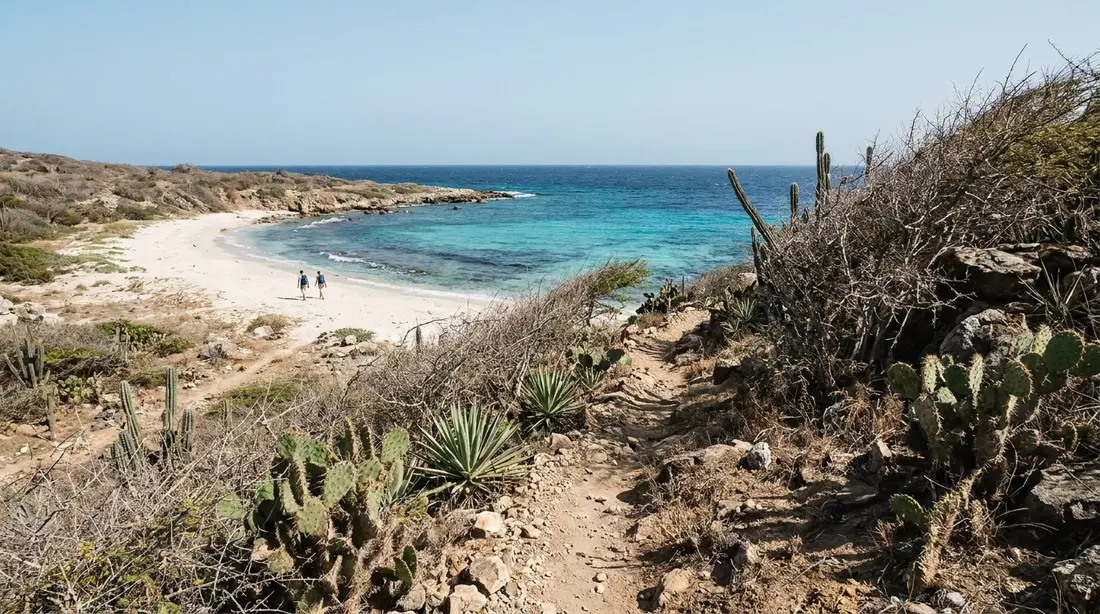
Tier three: wade-and-look shores
The bottom tier is for beaches where a mask improves a swim without ever becoming the reason to drive there. Cramer's Park gives families pavilions, picnic tables and easy shallow water on the East End, with snorkeling that amounts to sand, grass patches and passing fish. Columbus Landing at Salt River offers calm bay edges and real facilities, better read as a swim with occasional fish than as a reef trip. Grapetree, on the southeast shore, is a walking-and-swimming beach where a settled day lets a snorkeler poke along the margins. None of these disappoint if you arrive for the beach and pack the mask as a bonus; all three disappoint if the mask is the point.
The master ranking
The table compresses the tiers into one view. "Reliability" estimates how much of the year the spot produces a good snorkel for its intended swimmer.
| Rank | Beach | Entry | Underwater payoff | Reliability | Shore support |
|---|---|---|---|---|---|
| 1 | Cane Bay | Sand lane by the boat ramp | True coral reef, turtles, the wall option | High summer, interrupted in winter | Dive shops, food across the road |
| 2 | Frederiksted Pier | Flat sand beside the pier | Piling macro life, juvenile fish clouds | Highest on the island, minus ship days | Town restaurants, Nep2une Scuba nearby |
| 3 | Chenay Bay | Gentle sand wade | Turtles and rays over grass | Very high; protected bay | Concession varies; bring gear |
| 4 | The Shoys | Sand walk-in past the gate | Grass plus a small lively reef | High; sheltered northeast water | None |
| 5 | Rainbow Beach | Easiest on the list | Modest patch reef | Very high; west-coast lee | On-sand rentals, bar, chairs |
| 6 | Davis Bay | Sand, some rock at the margins | Two-level reef | Summer-strong, winter-shy | None public |
| 7 | Jack's and Isaac's | Hike plus rocky patches | Preserve reef, near-private | Calm days only | None at all |
| 8 | Cramer's Park | Easy shallow wade | Grass patches, scattered fish | High for swimming | Pavilions, picnic tables |
| — | Buck Island trail | Boat only, guided | The island's best coral swim | Crew-managed | Provisioned by the operator |
Cane Bay or the pier
This is the decision most snorkeling visitors actually face, usually more than once in a week, and the two spots split so cleanly that the choice almost makes itself once you ask three questions.
What is the sea doing? Check the north shore first, because it is the fussier of the two. A flat morning at Cane Bay is the better snorkel, full stop — more coral, more fish mass, more chance of a turtle, plus the wall for the strong. Any hint of swell surging over the inner reef flips the answer, since the pier sits in the lee of the entire island and shrugs off weather that makes Cane Bay unswimmable.
Who is swimming? Cane Bay rewards competence: the reef spreads out, distances add up, and the best of it asks for fins and comfort in open water. The pier asks only that you swim slowly and look closely; its treasures sit on fixed structure in calm water, which suits patient beginners and photographers better than open reef ever does.
What day is it? A cruise ship at the Frederiksted berth removes the pier from the menu for the duration, so the port schedule sometimes decides for you. Ship-free mornings are common; check the calendar the night before rather than after the 40-minute drive west.
The composite answer for a typical week: pier first if anyone in the group is unsure of themselves, Cane Bay first if the water is glassy and everyone swims, and ideally both, because they overlap almost nowhere in what they show you.
Chenay Bay or Cramer's Park with children
Both sit on the East End minutes apart, both offer shallow protected water, and they answer different family questions. Cramer's wins the picnic: pavilions, tables, room for the non-swimmers, and a long easy shallow that suits toddlers with buckets. Chenay wins the snorkel by a wide margin — its seagrass meadow feeds green turtles and its sand flats host stingrays, so a seven-year-old with a week-old mask skill has a real chance at a wildlife encounter Cramer's simply cannot stage. The efficient family day uses both: masks and turtles at Chenay in the calm of the morning, then lunch and shade at Cramer's when the trades pick up. If the group can manage only one stop and the kids can all float, Chenay is the call.
The Shoys or Chenay Bay
The two sheltered northeast bays sit close in both geography and tier, and groups without children face a genuine choice between them. Chenay is the broader, shallower, more forgiving venue, and its seagrass carries the better odds of a turtle grazing within sight of your towel; it is also the easier arrival, a plain drive to a plain beach. The Shoys demands slightly more — a name given at the Estate Shoys gate, a longer approach, your own gear with certainty — and pays it back with quieter sand and the one thing Chenay lacks: an actual reef, the pocket of coral at the crescent's eastern point where eels, conch and rays concentrate. The split, then: swimmers content to drift over meadow and watch for animals take Chenay; swimmers who want a destination inside the swim, something to reach and circle, take The Shoys. Couples staying near Christiansted often do one each on consecutive calm mornings, which settles the argument the enjoyable way.
Crowds, cruise days and the clock
Congestion sorts this ranking almost as sharply as swell does, and it follows rules you can plan around. The west side moves with the cruise schedule: a ship at the Frederiksted berth closes the pier to swimmers outright and fills Rainbow Beach by late morning, while a ship-free day hands you both at half occupancy. Cane Bay crowds on its own merits — mid-morning arrivals on winter weekends can circle for roadside parking — but the reef absorbs swimmers well, and an 8 a.m. start beats the rush in every season. The eastern bays run the opposite calendar: Chenay and Cramer's fill with local families on weekends and holidays and sit near-empty midweek, while The Shoys and the hike-in bays stay thin every day of the week. The general law of the list: the higher a beach ranks on facilities, the more company you should expect, and the beaches with nothing on shore keep handing out privacy as compensation.
East End grass or west side structure
The deeper trade hiding inside this ranking is between the island's two kinds of easy snorkeling. The sheltered eastern bays — Chenay, The Shoys — offer meadow snorkeling: wide, calm, shallow, with the payoff arriving as animals, turtles grazing and rays gliding, over a bottom that is frankly plain. The west side — the pier above all — offers structure snorkeling: fixed pilings and rock dense with life, where the payoff is variety and strangeness rather than a single charismatic animal. Guests who want a story go east; guests who want a spectacle go west; guests who cannot decide should notice that the two sit 40 minutes apart and the trades that roughen one rarely touch the other, so a single vacation can hold both without conflict. Only the true reef beaches of the north shore make you wait for permission from the weather.
How winter and summer reorder the list
The master ranking above assumes an average day. St. Croix does better than average in summer and worse in winter, and the reordering is predictable enough to plan around. From mid-December to mid-March the Christmas Winds stiffen the trades and Atlantic storms send long-period swell onto the north shore, which can put Cane Bay and Davis Bay out of commission for days even under blue sky. June through August the pattern inverts: the north coast flattens for weeks, the East End calms, and every beach on this page works most mornings. September through November, between weather systems, brings the glassiest water of the year to the whole island.
| Beach | Winter standing (Dec–Mar) | Summer standing (Jun–Aug) | What moves it |
|---|---|---|---|
| Cane Bay | Drops behind the pier; swell-dependent, catch the calm spells | Reclaims first place | North swell events |
| Frederiksted Pier | Rises to first; the winter default | Strong second | Cruise calendar, never the sea |
| Chenay Bay | Holds steady; textured but usable | Holds steady, glassier | Almost nothing |
| The Shoys | Holds; best on early calm mornings | Holds, with clearer reef days | Morning wind timing |
| Rainbow Beach | Rises; the lee keeps it flat | Steady | Cruise-day crowds |
| Davis Bay | Falls furthest; skip in swell | Rises sharply; outer reef opens up | Same swell as Cane Bay, no backup services |
| Jack's and Isaac's | Mostly off the board; East End chop | Best window of the year | Wind more than swell |
| Buck Island trail | Runs year-round; crews pick the route | Runs year-round | Operator judgment, booked-out boats |
The single most valuable planning consequence: in winter, hold your Cane Bay morning loosely and let the pier or the eastern bays absorb the swell days; in summer, book nothing and go wherever the mood points, because nearly everything works.
Reading a beach in sixty seconds
Our journal essay teaches the full five-minute condition check; here is the sprint version for deciding, car keys in hand, if the ranked beach in front of you is having a good day. One: scan the horizon for whitecaps — a scattered few are workable, a field of them says drive west. Two: watch the entry through a couple of wave sets and judge whether water is surging up the sand or lapping it. Three: judge the color over the reef — clean blue means visibility, milky or brown means runoff has clouded the morning. Four: look for snorkelers already out and moving comfortably, the cheapest condition report available. Five: pick a fixed point and check for steady lateral drift, and if you find current, plan to swim against it first. Any two failures, consult the seasonal table above and pick the beach the day is promoting instead.
Gear for a shore entry
Shore snorkeling here demands almost nothing: a mask that seals on your face, fins for any beach in tiers one and two, reef shoes for the rocky entries at Jack's and Isaac's, and mineral sunscreen, since USVI law bans formulas containing oxybenzone, octinoxate or octocrylene. Only Rainbow Beach rents on the sand; near the other ranked beaches you rent from the dive shops at Cane Bay or in Frederiksted, or arrive equipped. The full fit-and-selection detail lives in the journal essay and the island reference linked above; the only rule this page insists on is packing your own mask, because rental luck is the weakest link in an otherwise easy sport.
Beaches that look snorkelable and are not
Three beautiful shorelines lure snorkelers into wasted drives, and each deserves a plain warning. Sandy Point is two miles of postcard sand over a bottom of, mostly, more sand — no reef to speak of, frequent shore-break, and a federal schedule (weekends 10 to 4, September through March, shut entirely April through August for leatherback nesting) that rules out casual visits anyway. Go for the walk on an open weekend; leave the mask in the car. Dorsch Beach, south of Frederiksted, has the calm water of its coast and almost nothing to see through a mask — the bottom runs to clean sand with scattered fish, which makes it a lovely swimming beach mistaken often for a snorkeling one. And Ha'penny Beach on the south shore pairs long empty sand with genuine surf and current on many days; it belongs to walkers and, some days, surfers, and no snorkel plan should include it.
Safety across the ranking
One paragraph covers the whole list. No ranked beach here has a lifeguard, so the water judgment is yours: read conditions from the sand before entering, swim with a partner at the empty beaches, and keep children inside standing depth anywhere east of Christiansted. Enter over sand rather than rock, since urchins occupy exactly the shallows people wade through, and shuffle your feet where rays rest. In the water, stay horizontal with fins off the bottom, touch no coral — the living surface dies under a hand, and fire coral answers back — and give every turtle a clear lane to the surface it must reach to breathe. Near Frederiksted, honor the ship-day closure without testing it, and anywhere boats run, tow a bright float so a console driver can find you.
Questions guests ask
Which beach is the single best snorkel on St. Croix?
On a calm morning, Cane Bay, and it is a clear call: real coral, dependable fish, frequent turtles, and the only walk-in access to the island's famous wall, all from an easy sand entry with dive shops and food across the road. The moment the north shore turns rough, the crown passes to the Frederiksted Pier, whose sheltered water and piling life make it the best snorkel available on far more days per year. If the question means best swim of the whole trip regardless of entry, the guided Buck Island trail wins, from a boat.
Where should a first-time snorkeler start?
Chenay Bay, then Rainbow Beach, in that order. Chenay offers standing-depth water inside a protected bay with a real chance of a turtle or a stingray on the first outing — a payoff most learning venues cannot offer. Rainbow adds the practical advantages: gear rented steps from the water, a bar for the audience, and the flat west coast. After those two, a beginner who felt comfortable can graduate to the pier, then to Cane Bay's inner reef on a calm day, which is the island's natural skills ladder.
Does winter shut down Cane Bay completely?
No — it interrupts it. North swell arrives in episodes through the winter months, and between episodes Cane Bay produces mornings as good as any in July. The problem is that the episodes are hard to schedule around from home, since a swell event can occupy several consecutive days. The winter method is to keep Cane Bay as a flexible target, check it early in the trip, and hold the pier and the eastern bays as same-day substitutes. Guests visiting June through November rarely need the backup plan at all.
Why does Buck Island carry an asterisk instead of a rank?
Because this page ranks what your feet can reach. Buck Island Reef National Monument sits offshore, and its lagoon trail is reached only aboard an NPS-authorized operator's boat or a permitted private vessel, with crews guiding the swim. That makes it the island's finest snorkel and, for a shore ranking, a category error. It appears here so nobody mistakes the number-one beach for the number-one snorkel: budget one boat morning for the trip, and spend the rest of the week working down this list.
Which ranked beaches solve the gear problem for you?
Rainbow Beach, uniquely, rents masks and fins directly on the sand through West End Water Sports, which is why it outranks prettier reefs for travelers who packed light. Cane Bay comes close: the dive shops across the road rent snorkel sets and will tell you what the water is doing, which is worth as much as the gear. Frederiksted has shops in town near the pier. Everywhere else on the ranking — Chenay, The Shoys, Davis Bay, Jack's and Isaac's, Cramer's — assume you arrive carrying everything you will use.
Can you snorkel two tiers in one day?
Comfortably, if you respect the wind clock. The workable pattern is a tier-one or tier-two reef in the morning calm — Cane Bay, the pier, or The Shoys — followed by a sheltered second swim after lunch at Chenay or Rainbow, whose protected water forgives the afternoon chop that ends the day at exposed spots. The drive between any two ranked beaches stays under about 40 minutes. The pattern that fails: saving the north shore or the East End for afternoon, when the trades have usually taken them off the board.
Which beach gives the best odds of seeing a turtle?
Ranked by probability from the sand: Chenay Bay first, because green turtles feed on the seagrass there and a quiet swimmer over the meadow finds one most calm mornings; The Shoys second, on the same grass-bed logic with fewer people in the water; Cane Bay third, where sightings come over the reef and sand channels often enough that patience is usually rewarded. Isaac's Bay produces turtles too, for those who make the walk. Our sea turtles guide explains which species uses which habitat and the distance rules that keep encounters legal.
Is Davis Bay worth choosing over Cane Bay?
As a second north-shore visit, yes; as a substitute, rarely. The two share a coast and a swell exposure, so any day that ruins one generally ruins both — Davis is no backup plan. What Davis offers instead is a different flavor of the same coast: a two-level reef with a gentle inner section and a rewarding outer one, dramatically framed and much less trafficked, with no shops, no bar and no safety net. Snorkelers who loved Cane Bay and want it wilder should go; first-timers should not start there.
Snorkel beaches from our villas
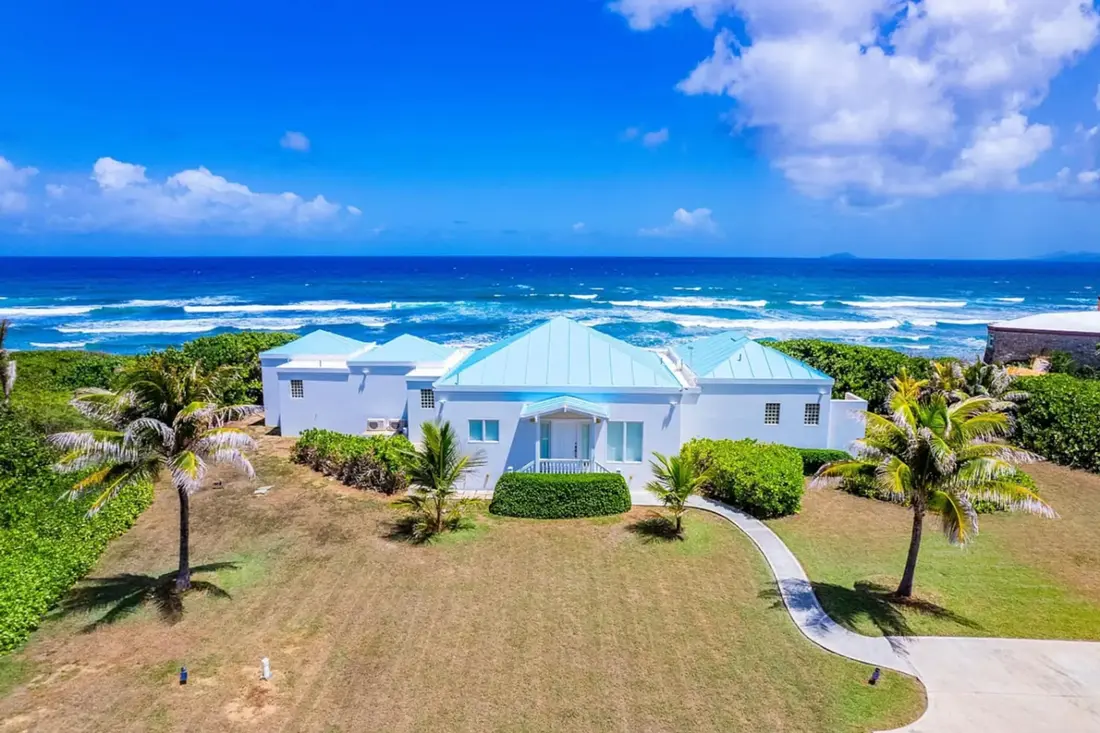
Which tier you wake up next to depends on the villa. Shoy's Beach House opens directly onto The Shoys, putting a ranked snorkel — grass, rays and the crescent-end reef — at the bottom of the lawn, the closest thing to snorkeling from home our portfolio offers. The Cerulean and our other East End homes sit minutes from Chenay Bay and the Jack's and Isaac's trailhead, with Buck Island in view across the water. From Sunset Sea-Clusion on the west side, the pier and Rainbow Beach are neighborhood swims. Tell us which tier fits your group and we will point you to the right front door.
Sources
Written from official and first-party sources, checked August 2026. Hours, prices and event dates change — confirm before you go.
In this guide
Stay nearby
Private oceanfront on the East End with a sandy, swimmable beach, pool, outdoor kitchen and a separate guest cottage. Sleeps twelve.
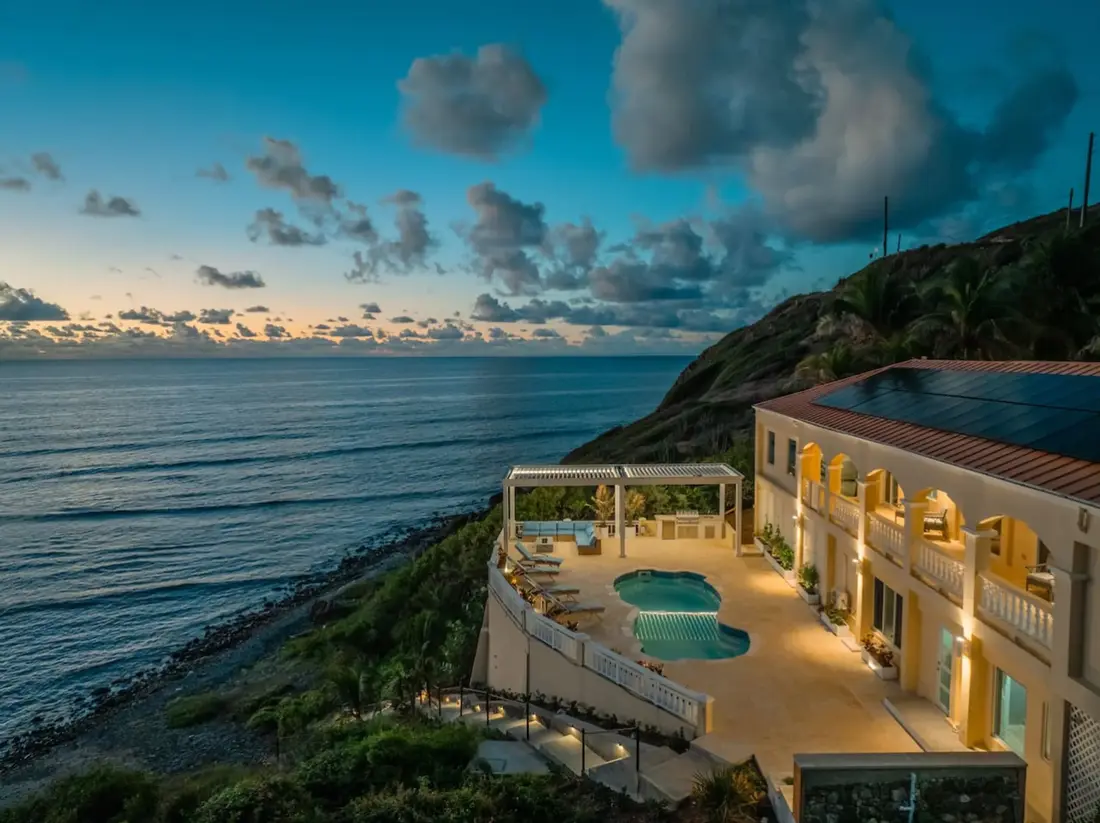 The Cerulean5 bd · 5 ba · sleeps 12 · Christiansted
More in Beaches
Sources
9 references, listed in full at the end of this guide — official park, refuge, tourism-board and business sources, checked August 2026.