Paddleboarding the Calm Bays
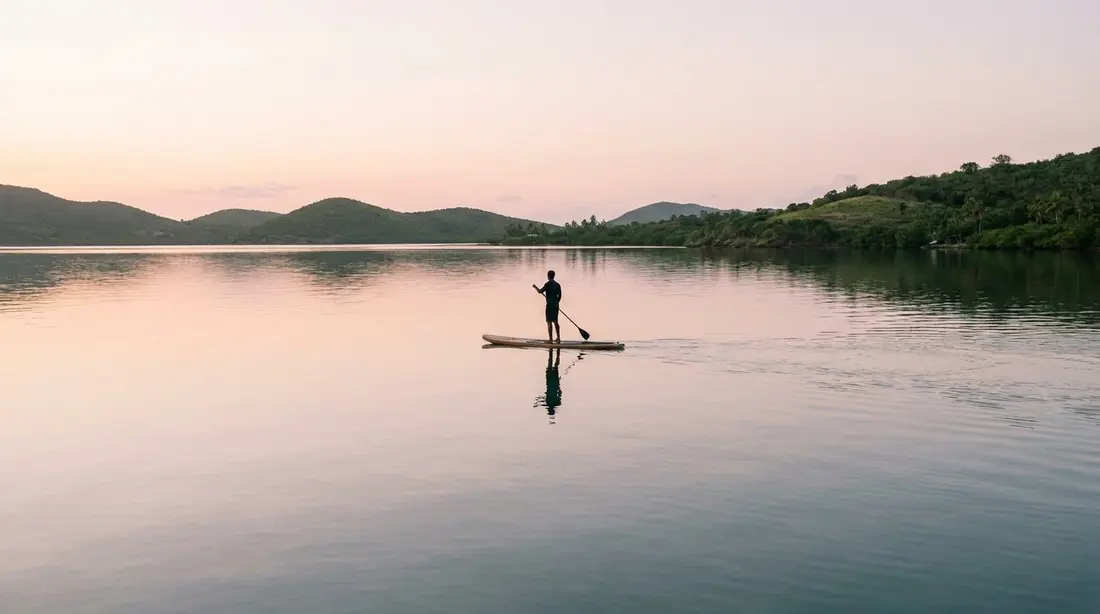
Chenay Bay and the protected East End coves are the easy-water picks for SUP and kayak mornings before the trade winds fill in.
St. Croix is a good paddling island that pretends to be a windy one. The trade wind that keeps the palms moving all afternoon goes quiet before breakfast, and the island's shape carves out bays where it barely reaches the water at all. This page maps that sheltered water: which bays stay flat, why they stay flat, where to launch, who rents boards and kayaks, and the small set of rules and habits that keep a trade-wind paddle easy instead of exhausting.
Where the calm water comes from
Wind needs distance to roughen the sea. A 15-knot breeze blowing across three miles of open water piles up steady chop; the same breeze crossing two hundred yards of bay behind a headland has no room to build anything taller than a ripple. Sailors call that working distance fetch, and fetch is the whole secret of St. Croix paddling. The trade wind arrives from the east and northeast nearly every day of the year, so any water with land, reef, or mangrove standing close on its east side is short-fetch water, and short-fetch water is flat water.
The island supplies two kinds of shelter. On the west coast, the entire 22-mile landmass stands between you and the breeze, which is why the sea off Frederiksted can look like a lake while the east tip is white-capped. In the northeast bays, the shelter is local: headlands, offshore reef, and cays cut the fetch down to a few hundred yards, so Chenay Bay or The Shoys can be workable even while open water beyond the reef line is not. Add the daily clock, wind is lightest around dawn and strongest in mid-afternoon, and you get the operating rule for the whole island: paddle early, paddle behind something, and treat the afternoon as time for the beach bar. One more piece of physics matters to paddlers specifically: standing upright, your own body is roughly a door's worth of sail area. The breeze pushes a standing paddler downwind far faster than it pushes a swimmer or a kayaker, which is why every rule on this page keeps coming back to the wind.
Paddle upwind first
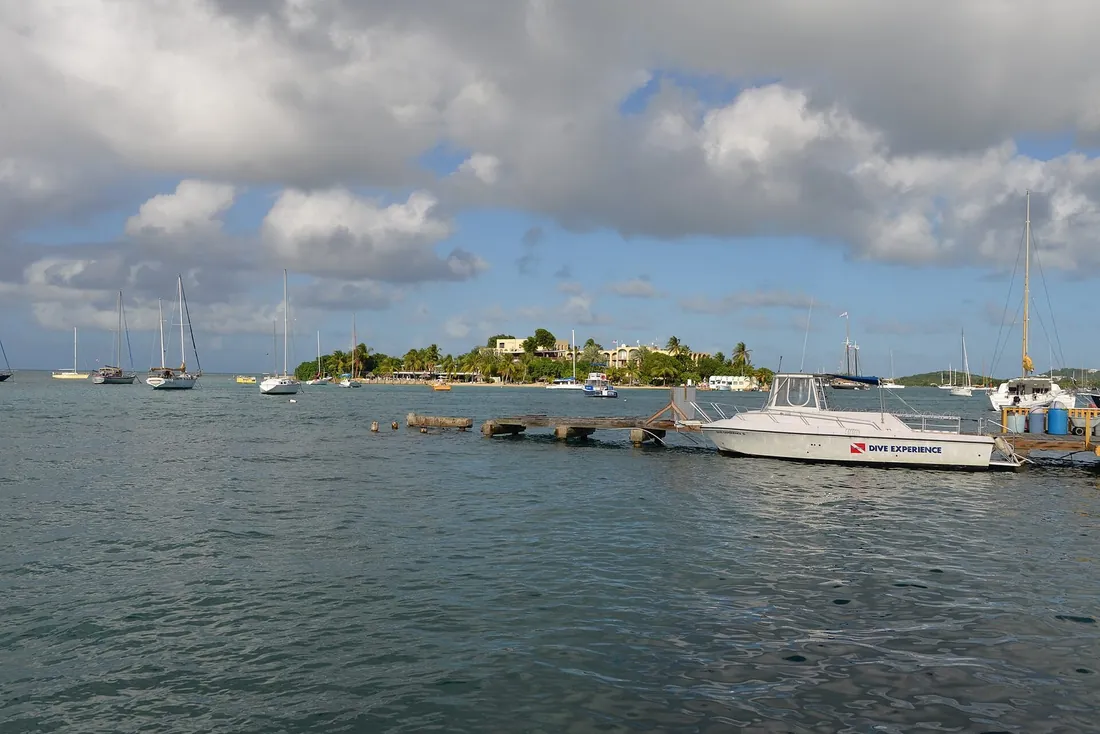
The one habit that separates comfortable trade-wind paddlers from the ones who get collected by a boat: start every session against the breeze. Going upwind first means the hard half of the trip happens while you are fresh, and the wind carries you home when you are tired. Do it in reverse, a lovely effortless glide downwind followed by a grinding slog back, and you discover why rental operators everywhere brief this rule before anything else. On St. Croix the trades are steady enough that the rule is easy to apply: face the breeze at the launch, note which way it wants to push you, and make the first leg into it. If you cannot make headway standing, kneel; if kneeling fails, lie prone and paddle the board like a surfer. Each drop in height cuts the wind's grip on you roughly in half.
Chenay Bay
Chenay Bay on the East End is the island's default answer for easy paddling. The bay sits between Green Cay Marina and the Bungalows on the Bay resort, opens north rather than into the trades, and carries reef across its mouth, so the inside water stays shallow and settled through most conditions. The bottom is seagrass and sand, the depth stays wading-friendly a long way out, and green turtles and southern stingrays work the grass all day, which gives even a short paddle something to look at. Rentals exist here when the resort's beach operation is running, its water-toy lineup has included kayaks and stand-up boards, but the operation comes and goes with the season, so anyone counting on gear should either call ahead or arrange a delivered board (covered below) and treat Chenay as a bring-your-own launch. Parking is the informal beach lot off the East End Road; the carry to the water is short and flat. Skill level: genuine beginner. This is where to put a first-timer, a nervous adult, or a family, and it is the closest reliable flat water to most of our Christiansted and East End homes.
The Shoys and the East End
The Shoys, the calm crescent behind the Estate Shoys gate beside The Buccaneer, paddles much the way it swims: protected, quiet, and short-fetch, with a small reef at its eastern end worth drifting over on a clear morning. Access runs through the guard gate, beach access applies under Virgin Islands law, give your name and carry your board in. There are no facilities and no rentals, so this is a spot for delivered or villa-based gear. Further east, the shoreline at Cotton Valley on the northeast coast is home base for Kite St. Croix, the island's kiteboarding school, which also rents paddleboards and kayaks from its waterfront location at Cotton Valley Shores at last check. The same wind exposure that makes Cotton Valley a kite venue makes it a place to paddle only in the early calm; when the breeze fills in, the kites go up and the paddleboards should come out of the water. Cramer's Park nearby offers easy swimming inside its reef, but the far East End in general takes the trade wind first and hardest, so treat everything past Green Cay as first-light water. The broader lay of this coast is in our East End guide.
Salt River Bay by day
Salt River Bay, the 1,015-acre national park on the north shore, is the most protected paddling water on St. Croix and the only place on the island where you can spend two hours on a board without ever feeling open sea. The bay is an estuary: mangrove forest, among the largest remaining stands in the Virgin Islands, lines its edges, reef guards its mouth, and the water inside moves at the pace of a pond. Paddling the mangrove fringe means gliding a few feet from the arching prop roots of red mangroves, which function as the bay's fish nursery; juvenile fish flicker in the root shadows, herons and pelicans hunt the shallows, and iguanas sit overhead in the branches. Boat traffic in and out of the marina keeps to an unhurried crawl, so the whole bay has the feel of a no-wake zone even where no sign says so.
Launching is straightforward because the operators are already here. Sea Thru Kayaks rents from 9001 Salt River Marina, Virgin Kayak Tours stages its rentals and tours from the marina as well, and Columbus Landing Beach inside the park, shallow, calm, with restrooms and picnic tables, works as a put-in for anyone bringing their own board. The full daytime story, the guided history-and-ecology paddles, the 1493 landing site, the ball court, lives in our daytime Salt River kayaking guide, and the after-dark version, the famous glowing lagoon, is covered start to finish in the bio bay guide. For self-guided paddlers the practical notes are simple: the bay is 20 to 25 minutes from Christiansted on Route 80, the marina has parking, and the mangrove edges are sheltered enough that Salt River remains the fallback venue on days when wind has scrubbed every other plan.
Altona Lagoon
Altona Lagoon is the flat water nobody tells visitors about. It sits immediately east of Gallows Bay on the edge of Christiansted, a broad, enclosed lagoon fronted by a public shoreline park with parking and picnic tables, and its geometry is close to ideal for a paddler: nearly landlocked, minimal fetch in any direction, no surf, and only the occasional small boat. Locals fish it for snapper and barracuda; a paddler crossing it sees mangrove shoreline, wading birds, and the hills behind Christiansted. There is no rental operation on site and no commercial tour running here at last check, which keeps the lagoon empty and makes it a natural destination for delivered rental gear or a board carried from a villa five minutes away. The lagoon also holds bioluminescent plankton, it is the island's second glowing bay, though the population shifts around and no operator guides it, a subject the bio bay guide treats in detail. By day, think of Altona as the practice pool: the place to find your feet on a board, test a new rental, or give a kid a first paddle before graduating to Chenay or Salt River. Water quality after heavy rain is the one caveat; like enclosed lagoons everywhere, it clears more slowly than the open coast.
The Christiansted harbor edge
Christiansted's harbor looks tempting from the boardwalk, flat green water, Protestant Cay a few hundred yards out, and on a windless morning it is calm. It is also a working harbor: the Buck Island fleet, dive boats, the ferry, and a scheduled seaplane all use this water, and the seaplane lands and takes off in the middle of it. That makes the harbor a paddle for experienced people who keep to the edges, close along the Gallows Bay side, outside the channel, eyes up, and no place for a beginner or a child. Since Hotel on the Cay's watersports operation closed, there is no rental counter on the harbor itself, which settles the question for most visitors. If the goal is paddling near town, Altona Lagoon is five minutes east and all of the calm with none of the traffic. If the goal is seeing the harbor from the water, the day-sail boats do it better; and the harbor's most famous wildlife, the tarpon that gather under the boardwalk lights, are watched from the rail, at night, without a board involved.
Frederiksted's west coast
The west coast is the island's safest bet. With the whole width of St. Croix blocking the trade wind, the water from Rainbow Beach south past Frederiksted's town beach to Dorsch Beach lies flat through most mornings and often stays workable all day, and when winter swell shuts down the north shore, the west usually keeps paddling. Frederiksted's glassy first hours are the closest thing the island has to dependable conditions: the pier standing in still water, sea glass in the wash at the town beach, and a shoreline you can run for a mile in either direction without leaving easy swimming depth. Launches are as simple as they come, park on the waterfront or at the beach lots, walk across sand, and step on, though on cruise-ship days the blocks near the pier fill early and the water gains swimmers, so start north or south of town and give the pier itself a wide berth (it is an active port structure, and the port closes water around docked ships).
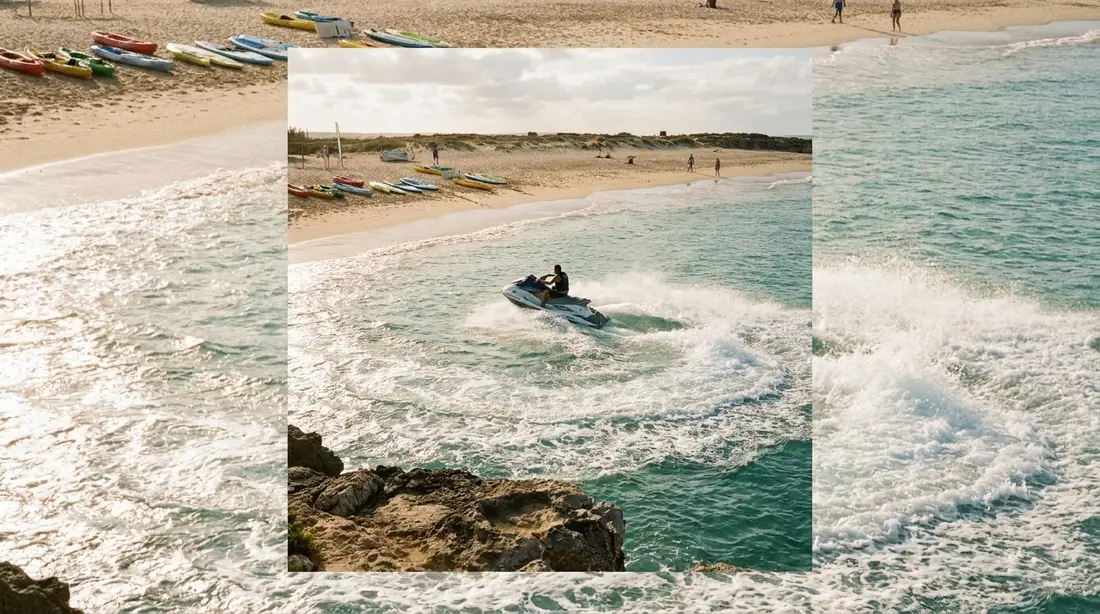
Rainbow Beach, a mile north of town, is the one place on the island where boards, kayaks, and everything else rent right on the sand: West End Water Sports runs its rental desk from the beach, by the hour, alongside jet skis whose launch lane paddlers should note and avoid. The full portrait of that beach, the desk, Rhythms, the day-pass logic, is in our Rainbow Beach guide. St. Croix Surf and SUP, a locally owned school founded in 2022 by Crucian surfer Bryce Scott, teaches surf and paddleboard lessons on this coast at last check, the natural choice for anyone who wants instruction rather than a bare rental. Our west-end villa Sunset Sea-Clusion sits minutes from all of it.
Cane Bay on a flat day
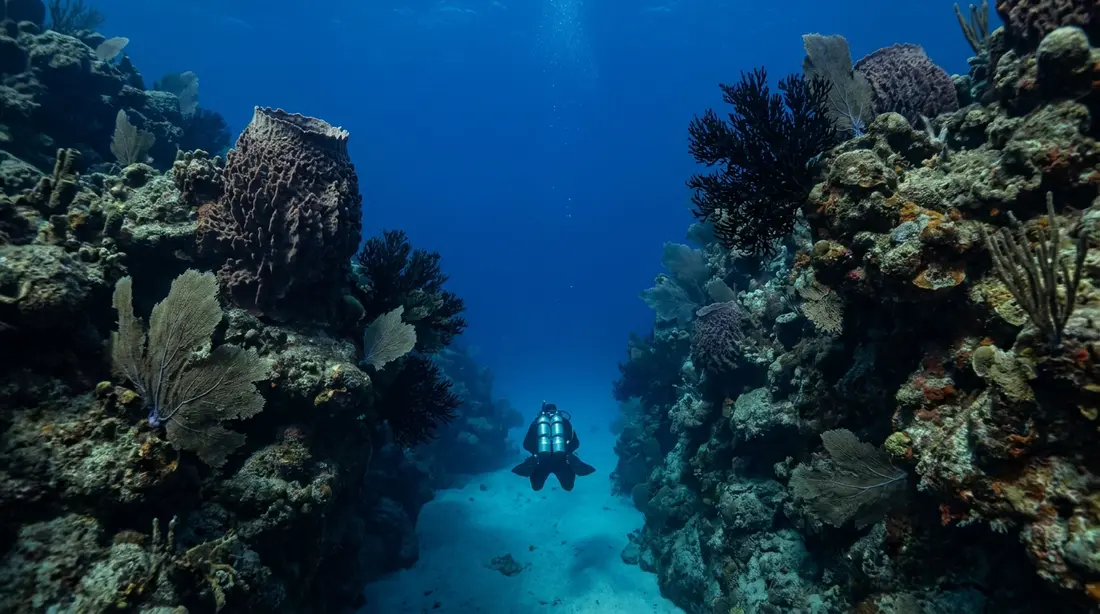
Cane Bay is a conditions call. On a settled summer morning the bay is a spectacular paddle: you cross the shallow reef shelf, and roughly a hundred yards out the bottom simply leaves, the Cane Bay Wall dropping toward abyssal depth, with the color shift from turquoise to ink readable from a standing height better than from any snorkel. On those days a paddler shares the water with snorkelers and divers and should watch for bubbles and dive flags. The rest of the year demands respect: the north shore takes the trade-wind chop directly, and winter adds long-period Atlantic swell that can turn the bay to breaking surf even on a windless day. The test is simple and visual, if anything is breaking white across the bay, it is a beach day; if the surface reads smooth to the mooring buoys, the window is open, and it closes as the wind builds toward midday. Davis Bay next door follows identical logic. Treat the entire north shore as a summer-morning venue, keep a leash on over the reef, and know that the sheltered fallback, Salt River, is only ten minutes east.
Rentals, delivery and lessons
St. Croix's rental scene splits into three patterns: desks at the water (walk up, rent, paddle), the Salt River operators (rent at the marina, paddle the park), and island-wide delivery (gear brought to your villa or beach of choice). All prices and hours below are as of our last check; confirm when you book.
| Operator | Base | Gear and services | Notes at last check |
|---|---|---|---|
| West End Water Sports | Rainbow Beach | Paddleboards, single and double kayaks, snorkel gear, chairs | Rented by the hour from the desk on the sand; the island's walk-up option |
| Sea Thru Kayaks VI | 9001 Salt River Marina | Standard SUP from $70, transparent SUP from $80, electric eSUP from $90, sit-on-top kayaks from $60 per boat, glass-bottom kayaks from $70 | Hourly to full-day; office Monday to Saturday, 10 to 4; boards ages 12 and up |
| Virgin Kayak Tours | Salt River Marina | SUPs, single and tandem kayaks, pedal-drive Hobies; guided day and night tours | By appointment; gear back by 5 p.m.; 260-pound limit per paddler |
| Sea Sports St. Croix | Delivery island-wide | Kayaks, paddleboards, snorkel gear, chairs and umbrellas | Seven-day delivery and pickup anywhere on island; free delivery over $100 |
| BushTribe Eco Adventures | Christiansted | Kayak and SUP rentals, guided eco tours | Rentals aimed at independent paddling of the Salt River bays |
| Kite St. Croix | Cotton Valley Shores, East End | Paddleboard and kayak rentals; kiteboarding lessons | East End waterfront base; early mornings for paddling |
| St. Croix Surf and SUP | West end | Surf and SUP lessons, group and private | Locally owned school, founded 2022 |
The delivery pattern deserves a highlight because it changes how a villa week works. Sea Sports St. Croix will drop kayaks and boards at your villa or any beach, seven days a week, and collect them when you are done, which means a group at a beachfront home can keep a board on the lawn all week and paddle whenever the morning looks right instead of building the day around a rental counter's hours. For a family of mixed abilities, one delivered board plus one delivered kayak covers everyone. Jet skis and the rest of the powered rental world are a separate subject, covered in jet skis and watersports.
Coast Guard rules for paddlers
Because St. Croix is U.S. water, federal rules apply, and the Coast Guard classifies a stand-up paddleboard as a vessel whenever it operates beyond the limits of a swimming, surfing, or bathing area. Inside a marked swim zone or the surf line, a board is beach gear and none of this applies; the moment you stroke out across a bay, you are legally a boat, and the carriage rules follow:
- Life jacket. Every paddler needs a Coast Guard-approved PFD. Paddlers 13 and older may carry it on the board rather than wear it, wearing it is smarter, and low-profile inflatable belt packs make it painless. Children 12 and under must wear theirs.
- Sound device. A whistle, clipped to the PFD, so you can signal a boat that has not seen you.
- Light after dark. A white light (a flashlight qualifies) to show if you are out between sunset and sunrise. In practice, night paddling here belongs with the guided bio-bay tours, whose operators handle lighting.
Rental operators supply PFDs with every board and kayak. A leash is NOT federally required, but no experienced paddler skips one, and the next section explains why it matters more on a trade-wind island than almost anywhere else.
Gusts, leashes and falling
Three skills cover nearly every situation a visiting paddler meets here. First, read the gusts before they arrive: a gust shows itself as a dark, textured patch moving across the surface toward you. When you see one coming, widen your stance, drop your weight slightly, and paddle through it on the downwind side of the board; if the day is delivering gusts you cannot stand through, kneel and carry on, nothing about kneeling is failure, it is simply the lower gear.
Second, wear the leash. On a windy island the leash is less about surf and entirely about separation: an unmanned board catches wind like a leaf and skates downwind faster than most people can swim. Fall without a leash in a breeze and you can watch your board leave for the horizon while you tread water. The leash keeps board and swimmer attached, and the board is your flotation, your visibility to boats, and your ride home.
Third, fall on purpose. Over sand, in the deeper water beyond the wading zone, falling is a non-event: feet-first, away from the board. Over reef, the rules tighten, fall FLAT, spreading the landing across your back or side rather than plunging feet-down onto coral, and climb back on from the deep side. Better still, do not stand over shallow reef at all: cross reef shelves on your knees, where a stumble drops you inches instead of feet. Fins take the first hit in shallow water, so give any brown or dark patch of bottom more clearance than looks necessary. None of this is drama; it is the same short briefing every good rental desk gives, and it is the difference between a scraped fin and a scraped guest.
Wildlife from a board
A paddleboard is a moving observation deck, standing height plus polarized glasses turns clear shallow water into an aquarium view that swimmers at surface level never get. Over the seagrass at Chenay Bay and The Shoys, the regulars are green turtles, which graze the meadows and surface to breathe every few minutes; from above you spot the dark oval of a shell against pale grass long before a snorkeler would. Southern stingrays read as gray diamonds gliding over the sand between grass patches, often with a shadow trailing them. Drift quietly and both will carry on feeding beneath you; churn the water chasing them and they leave. Keep a respectful distance from any turtle at the surface, they are protected, and the encounter lasts longer anyway when you let it happen.
At Salt River the show is the nursery itself: clouds of juvenile fish among the mangrove roots, herons stalking the shallows, pelicans hitting bait, and the occasional tarpon rolling in the deeper channel, a silver flash and a swirl. Altona Lagoon adds barracuda hanging motionless near the mangrove edge, more curious than concerning. At Cane Bay on a flat day the phenomenon is geological rather than biological: the visible edge of the island's underwater cliff, with reef fish thick on the shelf before the blue. What you will NOT see from a board, sensibly, is Buck Island's underwater trail; that water is a boat trip, covered in Buck Island boat tours.
Paddling with kids
St. Croix is an easy island to introduce a child to paddling, provided the venue does the work. Chenay Bay is the standing answer: water shallow enough to stand in far from shore, no surf, and turtles as motivation. Altona Lagoon runs a close second for pure calm. The mechanics that work: a child 12 or under wears a properly fitted PFD, no exceptions, federal rule and common sense agree; small kids ride kneeling or sitting on the nose of an adult's board, facing forward, hands on the deck; kids big enough for their own board stay within voice range and inside the bay, and everyone comes in when the wind arrives. Tandem kayaks flatten the skill curve further, a parent in the stern turns the whole outing into a guided tour, and the pedal-drive kayaks at Salt River let a family cover mangrove shoreline with zero paddling technique. Rental age floors matter when booking: Sea Thru's boards run ages 12 and up, its kayaks from age 5, so a mixed-age family at Salt River typically ends up with one board and one kayak, which happens to be the ideal combination anyway. More on the island with children in St. Croix with kids.
Season by season
The 7-to-10 a.m. window works all year; what changes is how much the rest of the day forgives. From mid-December to mid-March the Christmas Winds run, the breeziest stretch of the year, and paddling becomes strictly a first-hours discipline: west coast and Salt River most days, northeast bays early, north shore rarely, since winter also brings the long-period swell that closes Cane Bay. April and May ease off. Summer, June through August, is the paddler's season: lighter trades, the north shore open for business, and morning water at Chenay or Frederiksted that reads as polished as the island offers. September through November, the quiet season, keeps the light winds and adds the year's warmest, emptiest water, at the price of watching the tropical forecast, and any storm system's leftover swell, during hurricane season. In every month the sun is the underrated hazard: on a board you stand in full reflection with no shade, so a long-sleeve sun shirt, hat, and reef-safe sunscreen (required sense in a territory whose reefs are the whole attraction) beat bare skin and regret. General climate detail is in weather and when to visit.
Bay-by-bay reference
| Water | Launch and parking | Wind shelter | Skill |
|---|---|---|---|
| Chenay Bay | Beach lot off East End Road; short flat carry | Reef across the mouth, opens north; sheltered most days | Beginner |
| The Shoys | Through the Estate Shoys gate; carry in, no facilities | Northeast crescent, short fetch | Beginner (bring gear) |
| Salt River Bay | Salt River Marina or Columbus Landing Beach; both with parking | Mangrove-lined estuary; best shelter on island | Beginner; works when all else is blown |
| Altona Lagoon | Shoreline park east of Gallows Bay; parking at the park | Near-landlocked; minimal fetch any direction | Beginner; practice water |
| Christiansted harbor | No rental base; edges only | Calm surface, heavy traffic, seaplane operations | Experienced only; better options nearby |
| Frederiksted and Dorsch | Waterfront and beach lots; walk-across-sand launches | Full lee of the island; flattest coast | Beginner; watch cruise-day crowds |
| Rainbow Beach | Beach lot; rental desk on the sand | West-coast lee | Beginner; stay clear of the jet-ski lane |
| Cane Bay | Roadside parking opposite the sand | Exposed north shore; summer mornings only | Intermediate; flat days, leash on |
| Cotton Valley | Kite St. Croix waterfront base | East End exposure; first light only | Intermediate |
Questions guests ask
Do I need paddleboarding experience for these bays?
No. Chenay Bay, Altona Lagoon, Salt River, and the Frederiksted shore are all genuine first-timer water: flat, shallow near shore, and forgiving. Most people stand and travel within fifteen minutes, and kneeling covers anyone who does not. The places that do demand experience are specific and listed above, the harbor, Cane Bay outside of settled conditions, and the far East End once the wind is up. If you want actual instruction rather than trial and error, St. Croix Surf and SUP teaches lessons on the west end, and the Salt River operators brief every rental before it leaves the marina.
Can I paddle to Buck Island?
No, and please do not try. Buck Island sits about a mile and a half off the northeast shore across an open, current-carrying channel that bears no resemblance to the sheltered bays in this guide, and the island is a no-take national monument where landing requires either one of the five authorized boat operators or a National Park Service private-vessel permit. The concessionaire boats cross daily, carry your snorkel gear for you, and cost less than a rescue. Details in the Buck Island boat tours guide.
Can I get a board without driving anywhere?
Yes. Sea Sports St. Croix delivers kayaks, paddleboards, and snorkel gear anywhere on the island seven days a week, with free delivery above a modest order size at last check, and picks everything up when you finish. For guests at beachfront homes this is the best arrangement on the island: the board lives at the villa, and every calm morning becomes a paddle without a counter, a car, or a schedule. Rental desks at Rainbow Beach and Salt River cover the walk-up case.
What do I do if the wind catches me out?
Get low and get behind something. Kneel first, prone-paddle if kneeling is not enough, and angle for the nearest lee, a headland, the mangrove edge, any shoreline that blocks the east. Never abandon the board; it floats better than you do and is far easier for a boat to spot. This situation is also why the upwind-first rule exists: if you spent your fresh energy paddling into the breeze, the wind that built during your session is now pushing you home rather than out. On St. Croix the trades strengthen toward mid-afternoon rather than arriving as squalls, so an early start makes the scenario mostly theoretical.
Do children need life jackets on a paddleboard?
Yes. Under Coast Guard rules a paddleboard outside a swim area is a vessel, and children 12 and under must wear an approved, properly fitted PFD, worn, on the body, the whole time. Paddlers 13 and up must have a PFD with them but may stow it on the board. Every rental operator on the island includes PFDs with the gear, and the child sizes are worth checking for fit at handover rather than at the water.
When is the water flattest?
Summer mornings, June through August, between roughly 7 and 10 a.m., with the September-to-November quiet season close behind. In any month, dawn to mid-morning beats everything after lunch, because the trade wind builds with the day's heat and peaks in the afternoon. The winter Christmas Winds, mid-December to mid-March, compress the paddle window to the first hours and push the venue choice west and into Salt River. Whatever the season, the sequence is the same: paddle early, then hand the afternoon to the wind.
Can I paddle at night?
Only one night paddle makes sense here, and it is guided: the bioluminescent lagoon at Salt River, where kayak operators run tours on the dark nights of each month. Independent night paddling means Coast Guard light requirements, boat traffic you cannot see, and no one who knows where you are, all risk, no reward, when the guided version exists precisely to handle those problems. Read the bio bay guide for operators, dark-night calendars, and what the glow actually looks like from a kayak.
Paddling from our villas
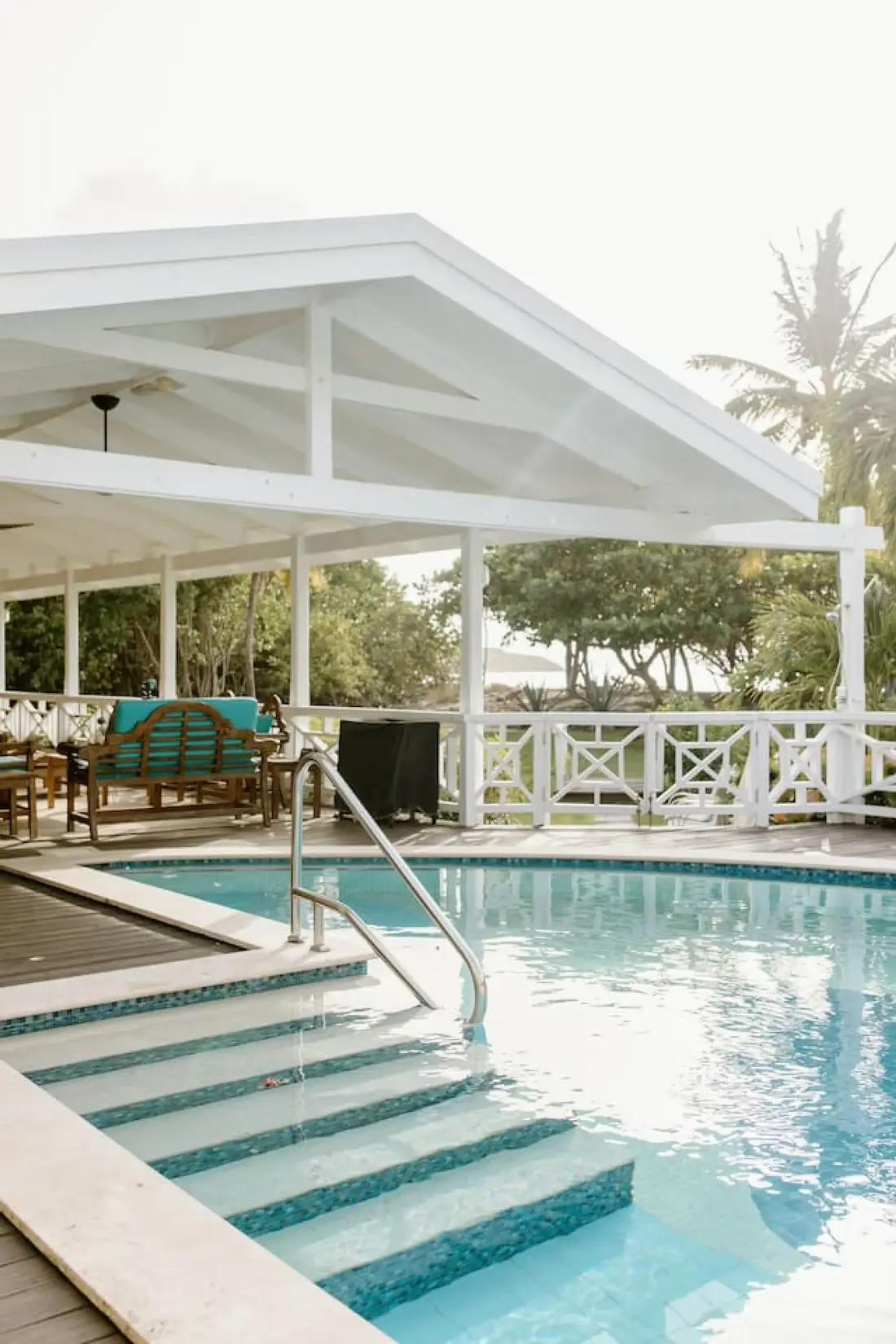
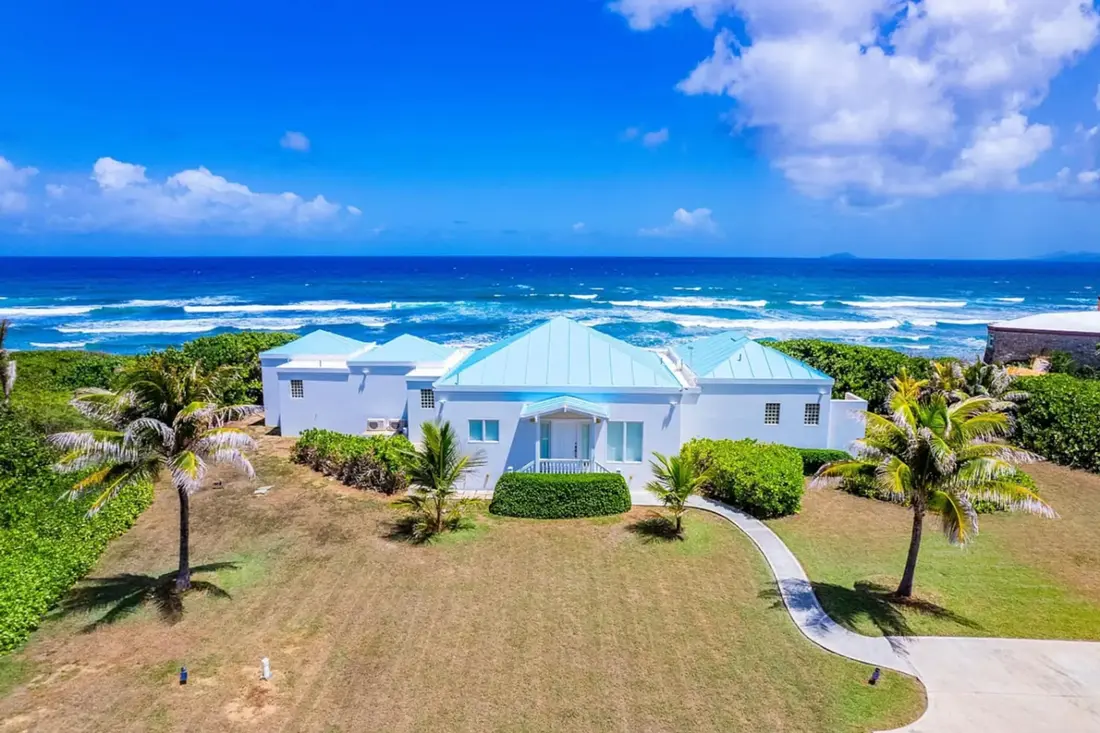
Several of our homes put the morning paddle at the bottom of the yard. The Cerulean fronts its own sandy, swimmable beach with direct access to calm, reef-protected water, walk the board off the lawn and launch. Toes in the Sand Beach House opens straight onto the sand from the front door, and Shoy's Beach House sits on The Shoys itself, the sheltered crescent described above. On the west coast, Sunset Sea-Clusion is minutes from Rainbow Beach and Frederiksted's flat mornings. Add a delivered rental board for the week and any of them becomes its own paddle base; browse the beachfront collection or ask us which bay fits your group.
Sources
Written from official and first-party sources, checked August 2026. Hours, prices and event dates change — confirm before you go.
In this guide
Stay nearby
Private oceanfront on the East End with a sandy, swimmable beach, pool, outdoor kitchen and a separate guest cottage. Sleeps twelve.
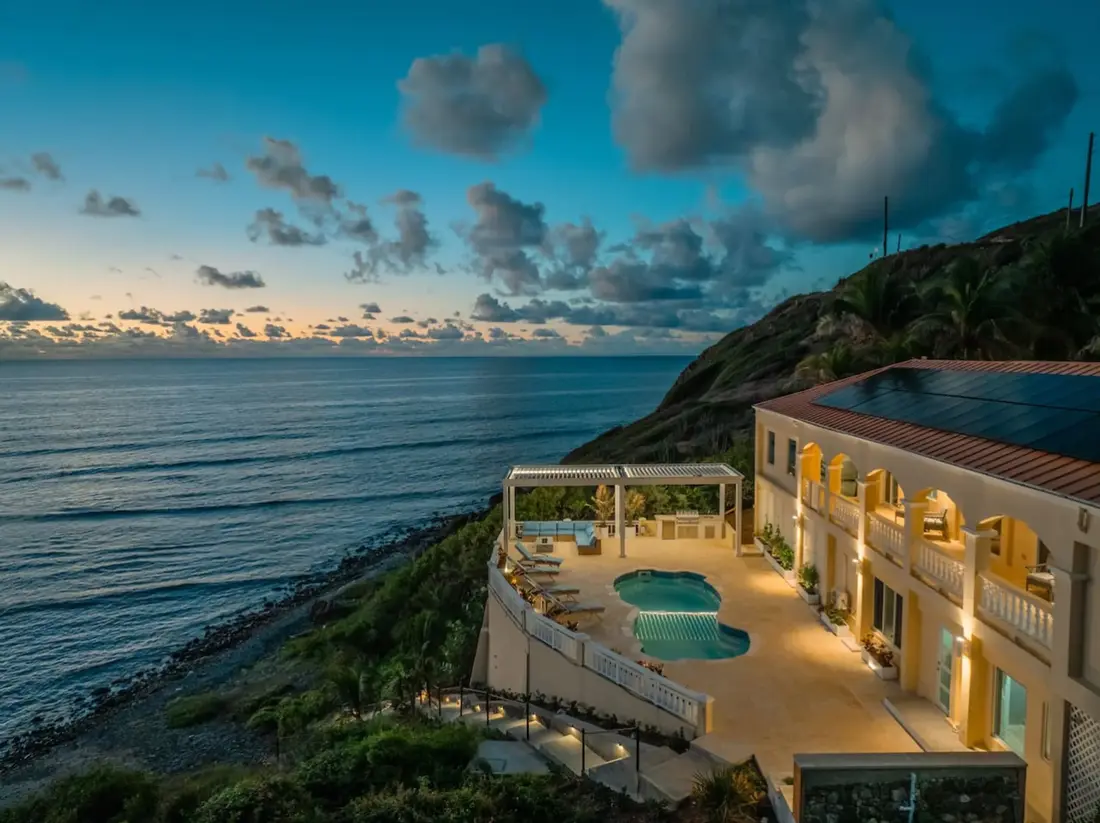 The Cerulean5 bd · 5 ba · sleeps 12 · Christiansted
More in On the Water
Sources
12 references, listed in full at the end of this guide — official park, refuge, tourism-board and business sources, checked August 2026.