The Elkhorn Reefs
Two-thirds of Buck Island sits behind an elkhorn coral barrier reef. What elkhorn is, why it matters, and how to swim near it well.
Elkhorn coral is the reason St. Croix has reefs worth flying to. The branching, tan-colored animal that science files under the name Acropora palmata is the master builder of shallow Caribbean reefs, and for roughly five thousand years it did most of the work of turning open sea into the barrier that shelters this island's beaches. This page is the site's reference for the coral itself and the reefs it makes: what elkhorn is, the kinds of reef ringing St. Croix, the disease and heat that gutted them, the work underway to grow them back, and where a visitor can still swim over healthy stands.
What elkhorn coral is
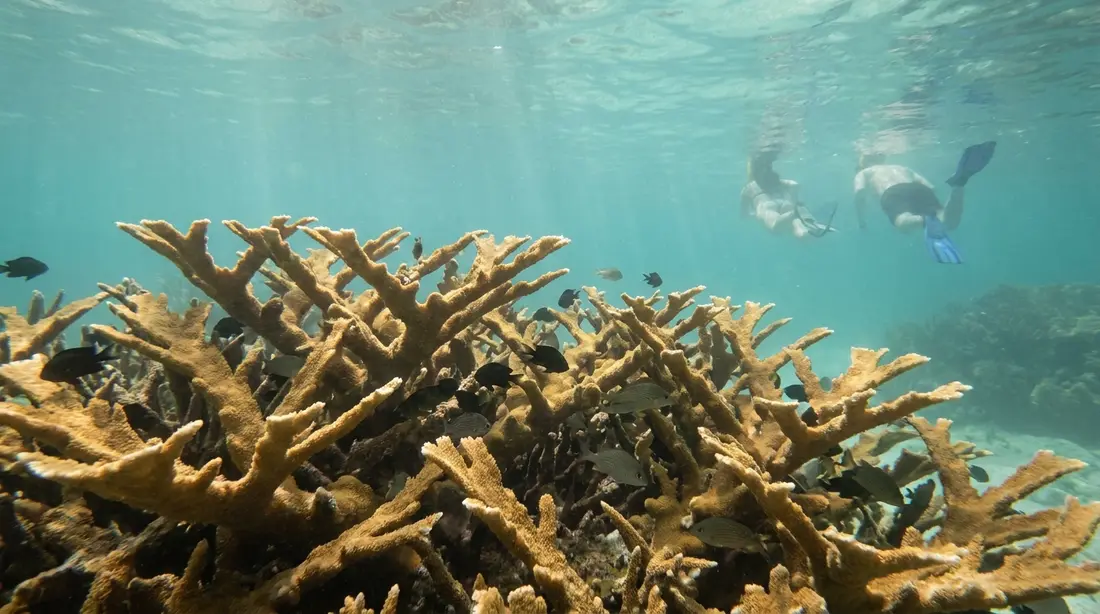
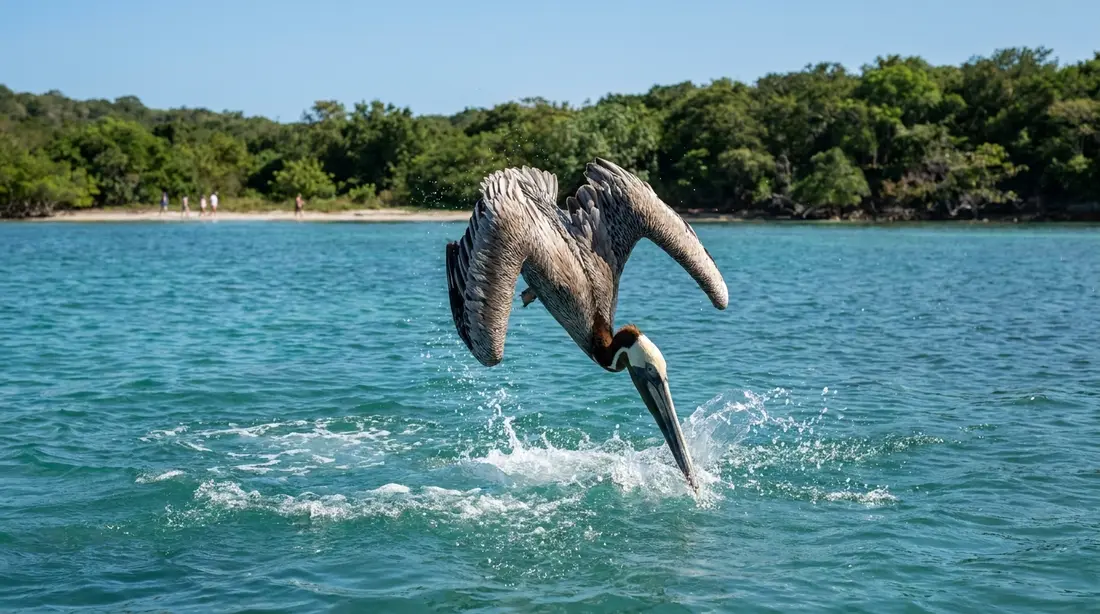
An elkhorn coral looks exactly like its name. Flattened branches spread out from a central trunk in the shape of a moose or elk rack, or of a hand held open, and a big colony can screen a patch of reef like a hedge. NOAA measures a single branch at up to fifteen inches wide, an inch or two thick, and a full colony at six feet tall and a dozen feet across. The color is the pale brown of weak tea, tipped in white where the coral is actively laying down new skeleton. In clear water with plenty of light it grows fast for a stony coral, adding as much as five inches of branch in a year, and a colony that escapes disease and storms can live for centuries.
The animal behind the rock is easy to lose sight of. A coral colony is a shared skeleton built by thousands of tiny polyps, each a soft, anemone-like body sitting in a limestone cup it secretes beneath itself. The living coral is only that thin surface film; everything below is the accumulated stone of generations. Inside the tissue live microscopic algae called zooxanthellae, which photosynthesize and hand most of their sugars to the coral in exchange for shelter, and it is those algae, not the coral, that supply the color and most of the food. That partnership is why elkhorn needs clear, shallow, sunlit water, and it is also the weak point that a hot summer exploits.
Elkhorn lives in the top fifteen feet of the water column, in the high-energy zone where waves break, across the Bahamas, Florida and the Caribbean. That is the same water a snorkeler occupies, which is the simple reason elkhorn is the coral most visitors actually meet.
How elkhorn builds a reef
Elkhorn is a reef's front line. It grows tallest and fastest right at the reef crest, the shallowest ridge where the open ocean first trips over the shelf, and its dense thickets take the punch out of incoming surf. Behind that living breakwater the water calms, and slower corals, sea fans, sponges and the whole reef community fill in the sheltered space. NOAA credits elkhorn, together with staghorn and the boulder-shaped star corals, with building the region's reefs over the last five thousand years. Remove the elkhorn and the loss runs deeper than one coral: the structure that made room for everything else goes with it.
It reproduces two ways, and both matter to its recovery. Once a year, on a few nights after a full moon in the late summer, entire reefs of elkhorn spawn at the same time, releasing eggs and sperm that meet and fertilize near the surface before drifting off to settle as new colonies somewhere downstream. The other route is breakage. A branch snapped off by a storm, or by a careless fin, can land on hard bottom, cement itself down, and grow into a whole new colony that is a clone of its parent. Fragmentation lets elkhorn rebuild a patch of reef quickly, but it also means a stand can be large and genetically narrow at the same time, which is one reason disease can move through it so fast.
The branching shape does a second job beyond wave defense: it is habitat. The gaps between branches shelter juvenile fish, spiny lobster and the small life that feeds the bigger animals a snorkeler comes to see. A living elkhorn thicket is one of the busiest addresses on the reef.
The reef types of St. Croix
St. Croix is ringed by more than one kind of reef, and knowing which is which explains where to swim and what you will find there.
Fringing reefs are the common type. They grow straight off the shore, or a short way out from it, with little or no lagoon in between, and most of St. Croix's shoreline reef is this kind. The shallow reef you cross to reach the drop at Cane Bay, the two reefs at Davis Bay, and the coral off the East End beaches are all fringing reef, close enough to reach from the sand.
Barrier reefs stand well offshore, separated from the land they protect by a lagoon, and they are rare in United States waters. St. Croix has the standout example: the elkhorn barrier reef that wraps roughly two-thirds of Buck Island, holding a calm lagoon behind it on the island's north and east sides. The National Park Service calls this elkhorn barrier reef unique within U.S. waters, and it was the reason President Kennedy made the island a national monument back in 1961. The reef's own detailed history, and the marked route through its lagoon, live in the underwater trail guide.
Patch reefs are isolated coral heads and mounds scattered over sand and seagrass in the sheltered bays. They are what you drift over at Chenay Bay, The Shoys and the calm shallows at Rainbow Beach: small, low-effort, and good for turtles and rays.
The shelf edge is not a coral type but the outer boundary of the island's shallow platform, where reef gives way to a wall that falls toward deep water. The Cane Bay Wall is that edge, and its geology and dive profile have their own page. One more category is worth naming for completeness: artificial reef, the sponge-crusted pilings of the Frederiksted Pier and the sunken ships at Butler Bay, where coral colonizes man-made structure.
| Reef type | Where on St. Croix | What lives there |
|---|---|---|
| Fringing reef | Cane Bay shallows, Davis Bay, East End bays | Elkhorn and staghorn stands, parrotfish, blue tang, turtles |
| Barrier reef | Buck Island's north and east lagoon (boat access only) | The island's densest elkhorn; large, unbothered reef fish; hawksbills |
| Patch reef | Chenay Bay, The Shoys, Rainbow Beach | Coral heads over seagrass and sand; rays, conch, juvenile fish |
| Shelf edge (the wall) | North shore off Cane Bay and Salt River | Sponges, black coral, sharks and rays along the drop |
| Artificial reef | Frederiksted Pier pilings, Butler Bay wrecks | Sponge-crusted structure; seahorses, octopus, macro life |
White-band disease and the loss of elkhorn
The reason an intact elkhorn stand is now a rare thing has a name: white-band disease. It shows as a band of clean white dead skeleton advancing along a branch, killing the living tissue as it goes and leaving bare rock behind. It targets the acroporids specifically, meaning elkhorn and its cousin staghorn, and it swept the Caribbean beginning in the late 1970s and through the 1980s.
The toll was staggering. NOAA puts the elkhorn decline across the region at about 97 percent, roughly nineteen of every twenty colonies gone, which leaves the species at a small fraction of the abundance older divers remember. In 2006 the federal government listed both elkhorn and staghorn as threatened under the Endangered Species Act, the first reef-building corals to receive that protection. The exact cause of white-band has never been fully pinned down, though the evidence points to a bacterial agent, and warmer water appears to make outbreaks worse.
That single collapse reset the baseline for every reef on this island and across the Caribbean. It is why the elkhorn a visitor sees today grows in scattered stands rather than continuous forests, and why the surviving patches are watched and protected as closely as they are. Buck Island's own reef carries the most closely counted version of the die-off, with decades of figures tracing exactly how far its elkhorn fell and how far it has come back; those numbers belong to the underwater trail guide, which tells that reef's story in full.
Warming seas and bleaching
The threat that now sits above all the others is heat. When seawater stays too warm for too long, the partnership at the center of a coral breaks down: the stressed animal expels the algae living in its tissue, loses its color, and turns bone white. That is bleaching, and it is not death by itself, but a bleached coral has lost its main food supply, and if the heat holds it starves. A short warm spell it can recover from; a long one it often cannot.
The U.S. Virgin Islands lived a hard example in 2005. Through that summer and fall, water temperatures climbed past 30 degrees Celsius and nearly every coral species in the territory bleached, elkhorn among them, which was the first time elkhorn had been recorded bleaching in the USVI at all. At the territory's long-term monitoring sites, average coral cover more than halved within a year of the event and kept falling afterward, and a wave of white-plague disease followed on the deeper reefs, a familiar one-two punch in which heat weakens the coral and disease finishes it.
The pattern has only sharpened since. NOAA now names ocean warming and acidification as the leading threats to elkhorn's survival, and the record marine heat of 2023 killed between 89 and 100 percent of the known wild and restored elkhorn colonies in the Florida Keys, a warning the whole region is reading closely. Keeping track of it on St. Croix falls largely to the Territorial Coral Reef Monitoring Program, run by the University of the Virgin Islands, which has surveyed reef health at fourteen permanent sites around the island since 2001 and supplies the data that tells scientists which reefs are holding and which are slipping.
Stony coral tissue loss disease
The newest pressure is also, by many measures, the worst coral disease ever recorded. Stony coral tissue loss disease, or SCTLD, was first seen off Miami in 2014 and has since spread across the Caribbean to reefs in eighteen countries and territories. Its lesions are patches of bare white skeleton that expand fast across a colony, and an infected coral usually dies within weeks to months. It attacks more than twenty stony-coral species, and its very broad menu is part of what makes it so dangerous.
Which corals it hits matters for St. Croix. SCTLD goes hardest after the brain, star, maze and pillar corals, the massive, slow-growing species that build the body of a reef. Elkhorn and staghorn are much less susceptible, so the acroporids largely dodged this particular disease, though that is cold comfort for coral that white-band had already reduced to a remnant decades earlier. The disease instead went after the boulder corals that fill in the reef behind the elkhorn crest, thinning the very structure a reef depends on.
The disease reached the U.S. Virgin Islands in January 2019, first confirmed on a reef off St. Thomas, and worked toward St. Croix's reefs after that. Its cause is still unknown, but it responds to antibiotics, which points at a bacterial component and shapes the treatment described below. Buck Island's specific outbreak, and the tally of colonies its rangers treated, are documented in the underwater trail guide.
Storm damage
Hurricanes are the oldest pressure on the list, and the one elkhorn is best built for. The coral evolved alongside Caribbean storms, and fragmentation, the way a broken branch becomes a new colony, is in part an adaptation to being smashed. A healthy, dense stand can seed the reef around it with the very pieces a storm tears loose. The trouble is what happens when the reef is already weak. A sparse stand that has lost most of its colonies to disease does not reseed from a hurricane; it simply loses more coral, faster than the survivors can regrow.
St. Croix has taken direct hits. Hurricane Hugo struck in 1989, and Irma and Maria crossed the region in 2017, and each did real damage to shallow reef. Warmer seas also feed stronger storms, so the heat threat and the storm threat compound one another rather than acting alone. The detailed record of what one major storm did to Buck Island's elkhorn, measured before and after, sits with that reef's own history in the trail guide.
Set side by side, the four pressures on St. Croix's reefs sort out like this.
| Pressure | What it does | What it hits hardest |
|---|---|---|
| White-band disease | Kills tissue along a spreading band, from the 1970s on | Elkhorn and staghorn (the acroporids) |
| Warming and bleaching | Heat forces out the coral's algae; prolonged heat starves it | Nearly all species; worse in record-hot years |
| SCTLD | Fast-spreading lesions of bare skeleton; usually fatal | Brain, star, maze and pillar corals; not mainly acroporids |
| Storms | Break and scatter coral; worse on already-weakened reefs | Shallow reef crests, exposed north-shore reef |
Restoration on St. Croix
The other half of the story is being written on this island, and it is hopeful without pretending the reef is fixed. The Nature Conservancy runs a coral nursery and laboratory at Estate Little Princess on St. Croix, its Virgin Islands Coral Innovation Hub, which NOAA's Coral Reef Conservation Program designated a Coral Reef Research Center in 2024. The facility grows corals two ways: from fragments, using a technique called micro-fragmentation that speeds up growth, and from the reef's own spawning, capturing eggs and sperm during the late-summer mass spawn and rearing the larvae to the point where they can be settled onto the reef, work done with the research group SECORE International.
The scale is real. In the 2023 spawning season the hub produced more than two million coral embryos and settled well over a hundred thousand young corals, and it outplanted more than 1,200 fragments of elkhorn along with finger coral and brain coral. Earlier phases put over 24,500 corals across some 50 acres of reef, aiming at 90 acres inside the St. Croix East End Marine Park and focused on five species listed as threatened under the Endangered Species Act, elkhorn and staghorn among them, backed by a 6.6-million-dollar restoration grant. The clearest proof it works grows just offshore: elkhorn that the Conservancy outplanted at Green Cay off St. Croix in 2012 matured and now spawns on its own, seeding the reef the natural way.
Against the disease, crews use triage. The most effective local treatment for SCTLD so far is an amoxicillin paste, a formulation called Base2b that time-releases the antibiotic when smeared directly onto a diseased margin, halting the lesion in a majority of cases. It is not a cure and not preventive, so new lesions can appear on a treated colony later, and the effort on the ground is coordinated with the coastal-zone division of the territory's Department of Planning and Natural Resources and its partners.
The caveat has to be stated. Restoration plants thousands where the sea lost millions, and it cannot outrun warming on its own. What it can do is keep the species and its genetic variety alive, rebuild specific reefs, and buy time for cooler water and stronger protection to do the rest. The nurseries are insurance, not a substitute for the reef repairing itself.
Where you can see healthy elkhorn today
Plenty of the island's elkhorn is gone, but a visitor can still swim over living stands, and a few places stand out.
The densest and best-protected elkhorn is in the Buck Island lagoon, reached by boat with a guide, where the barrier reef's shallow grottoes are built from it; the marked route through them is covered in the underwater trail guide. Closer to a beach towel, the fringing reef at Cane Bay carries wild elkhorn and staghorn a short swim off the sand, alongside in-water restoration plots that crews tend on the shallows; the site detail is in the Cane Bay Wall guide. The hike-in reefs at Jack's and Isaac's Bays on the far East End mix branching coral and sea fans with almost no crowd. And while the Frederiksted Pier is not an elkhorn site, it is the clearest lesson on the island in how quickly coral colonizes bare structure.
This page names the reefs; the full spot-by-spot detail, with entries, depths and skill levels, lives in the snorkeling reference and the shorter best snorkeling beaches list, and the dive version is in the scuba guide. The hawksbill turtles that graze the sponges on these reefs, and their role in keeping coral healthy, are covered in the sea turtles guide.
What the reef does for St. Croix
The reef is not scenery the island can take or leave. It is working infrastructure, and three of its jobs touch every visitor directly.
The first is coastline protection. A reef crest is a submerged breakwater, and a healthy reef can strip up to 97 percent of a wave's energy before it reaches the shore, with the crest alone accounting for the bulk of that. The U.S. Geological Survey estimates that coral reefs prevent more than 1.8 billion dollars in flood damage across the United States every year. On a low island ringed by reef, that is the difference between a beach that stays put and a shoreline that scours away in the next big swell, which is exactly why a dead or flattened reef is a coastal-hazard problem and not only a wildlife one.
The second job is the beach itself. Most of that white Caribbean sand began life as reef, the coral, shell and limestone broken down by surf and, above all, by the parrotfish that scrape algae off the coral all day and pass the ground-up rock as fine sand. Fewer reefs, and fewer of the fish that live on them, means less new sand arriving to replace what the sea carries off.
The third is food and livelihood. The branching coral is nursery and shelter for the fish a reef runs on, and reef fisheries are worth more than 100 million dollars a year across the United States; on St. Croix the same reefs feed the nearshore food web that the island's pot-fish tradition depends on, working alongside the mangroves and seagrass covered in the island landscapes guide. Add the diving and snorkeling that draw visitors in the first place, and the reef turns out to be one of the island's quiet economic engines.
Swimming and diving without harming the reef
Every rule that follows makes sense once you remember what a coral colony actually is: a film of living tissue a fraction of an inch thick, stretched over the limestone skeleton it took decades to build. A hand, a fin, a dragged gauge or a planted knee scrapes that skin off, and the bare patch it leaves is an open door for the same diseases that gutted these reefs. So the core rule is contact: swim flat, keep your fins behind you, and put no part of yourself against the coral. If you tire, roll onto your back and rest on the water, never on the reef.
Sunscreen is law here, not preference. Since March 2020 it has been illegal to sell or even carry sunscreen made with oxybenzone, octinoxate or octocrylene anywhere in the U.S. Virgin Islands, because those chemicals damage coral and coral larvae. The compliant choice is a mineral formula whose active ingredient is zinc oxide or titanium dioxide, and the better choice is a long-sleeve sun shirt, which covers more skin and needs no lotion at all. Read the ingredient panel rather than a marketing label, since a product can call itself reef-friendly and still contain a banned chemical.
On a boat, the rule is the anchor. A dropped anchor and its dragging chain can smash decades of coral growth in seconds, which is why the island's dive sites are moored rather than anchored, and why Buck Island restricts anchoring to one sand-bottomed area and bans it on the reef entirely. Use the moorings, take only photographs, and leave every shell and coral fragment where it lies.
How visitors can help
A week on the island is enough time to do the reef some small, real good, mostly by making a few informed choices.
The first is to report what you see. Reef monitoring runs on observations, and a snorkeler who notices a patch of bleached white coral, a colony with a spreading lesion, or a turtle in distress can pass it to a dive shop or the park and add a data point that matters. For sick, hurt or stranded sea turtles the territory runs a dedicated rescue line, detailed in the turtle guide; for coral, the local shops and the National Park Service are the people to tell.
The second is to choose operators well. Pick dive and snorkel outfits that use moorings, brief the no-touch rules, and treat the reef as the point of the trip; skip anyone who invites you to stand on coral, chase animals or feed the fish. The third is to support the work already happening, from the Nature Conservancy's restoration in the East End Marine Park to the reef-cleanup and lionfish-control dives some shops run. And carry a mesh bag for any trash you find in the water.
The reason the small stuff counts is compounding. A reef under less local stress, cleaner water, less physical contact, healthy fish populations, bleaches less severely in a hot year and recovers faster afterward. Nobody snorkeling on vacation can cool the ocean, but a reef that its visitors treat gently is a reef with a better chance the next time the water runs warm.
Questions guests ask
Is the elkhorn coral basically dead, or is it still worth seeing?
It is greatly reduced but far from gone, and it is very much worth seeing. Disease erased roughly 97 percent of the Caribbean's elkhorn beginning in the 1980s, so the continuous forests older divers remember are no more. What remains on St. Croix are protected stands, densest in the Buck Island lagoon, plus wild patches at Cane Bay and the East End reefs and a growing number of restored colonies planted by conservation crews. You can still float over healthy, branching elkhorn here on an ordinary morning. Knowing what it survived only makes the swim better.
What is the difference between elkhorn and staghorn coral?
Shape, mostly. Elkhorn has broad, flattened branches that spread like the palm of a hand or an elk's rack, and it builds the shallow reef crest where waves break. Staghorn has thinner, rounder branches that fork like antlers, and it tends to grow a little deeper and in more sheltered water. Both belong to the genus Acropora, both are among the fastest-growing Caribbean corals, both were hit hard by white-band disease, and both are listed as threatened under the Endangered Species Act. You will see the two named together throughout the island's reefs and in the restoration nurseries.
Why can't I wear my normal sunscreen?
Because it is against the law and it is bad for the reef. The U.S. Virgin Islands has banned the sale and possession of any sunscreen containing oxybenzone, octinoxate or octocrylene since March 2020, since those chemicals harm both adult coral and coral larvae. Switch to a mineral sunscreen based on zinc oxide or titanium dioxide, or wear a sun shirt and cut how much lotion you need at all. Check the ingredient list rather than trusting a reef-safe label on the front, because banned chemicals still appear in products that market themselves that way.
Can I visit the coral nursery or see the restoration work?
The Nature Conservancy's Coral Innovation Hub at Estate Little Princess is a working research laboratory rather than a general visitor attraction, so it is not a walk-in tour. The restoration you can actually see is in the water: outplanted colonies and nursery structures on the reef at Cane Bay and other north-shore sites, which the dive shops know and can point you toward. Ask an operator whether any current outplanting or reef-cleanup dives are open to guests. The East End Marine Park is the area where much of the planting is aimed.
Will climate change kill St. Croix's reefs?
Warming is the single biggest threat, and the reefs are under pressure: bleaching years are getting hotter and more frequent, and a bad one can kill coral over wide areas. It would be wrong to pretend otherwise. It would also be wrong to write the reef off. Protection, disease treatment and restoration are keeping stands and genotypes alive, and reefs under less local stress ride out heat better and bounce back faster. The realistic picture is a reef that needs cooler water to have a long future, and a lot of people working hard to keep it in the game until it gets there.
When does elkhorn coral spawn?
Once a year, on a few nights following a full moon in the late summer, usually August or September. On those nights whole reefs release eggs and sperm at nearly the same moment, a synchronized event that gives the drifting larvae their best odds of meeting and settling. Visitors will not time a trip around it, and the spawn happens after dark offshore, but it is the moment the restoration teams wait all year for, because catching that spawn is how the nurseries grow new corals from scratch rather than from fragments.
Villas with reef access
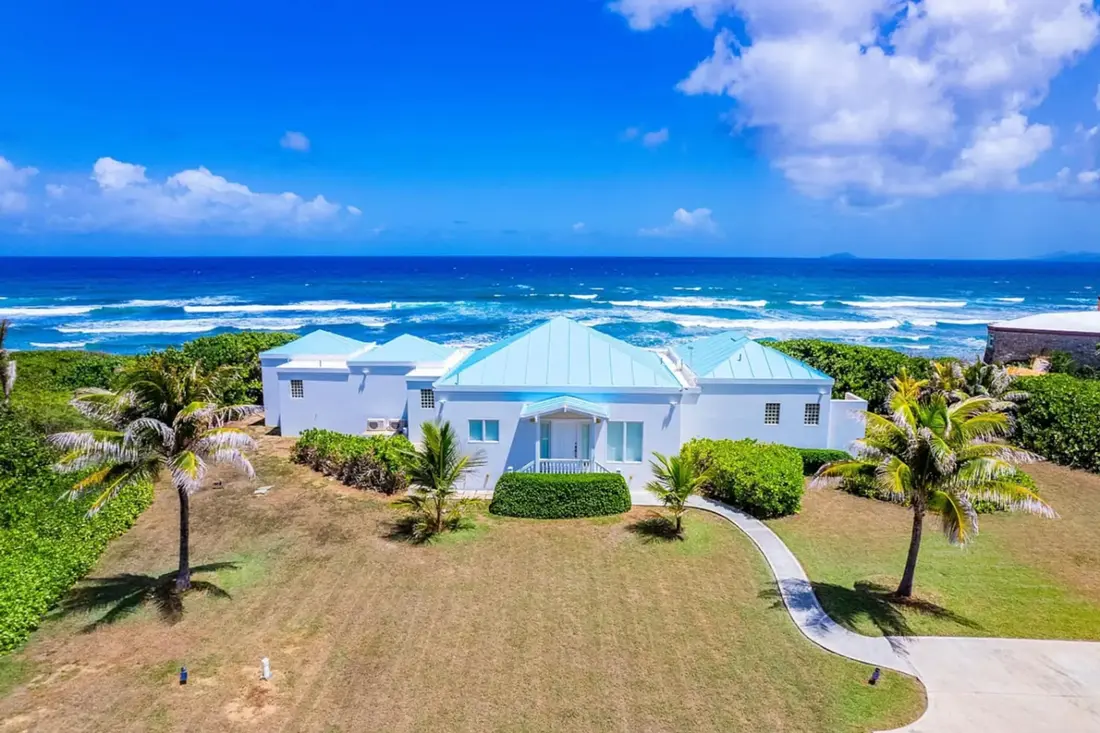
Where you stay decides which reef is your home water. Our East End villas sit closest to the barrier reef: The Cerulean and the Buck Island Overlook look straight across the channel at the elkhorn stand inside Buck Island's lagoon, a short boat ride from their own docks. Shoy's Beach House opens onto a calm patch-reef beach where the coral is a swim from the sand. The north-shore fringing reef and the Cane Bay wall are an easy drive from most of the beachfront collection. Whichever coast you choose, our team can line up the boat, the guide and the reef-safe basics, and the full set is on the villas page.
Sources
Written from official and first-party sources, checked August 2026. Hours, prices and event dates change — confirm before you go.
In this guide
Stay nearby
Private oceanfront on the East End with a sandy, swimmable beach, pool, outdoor kitchen and a separate guest cottage. Sleeps twelve.
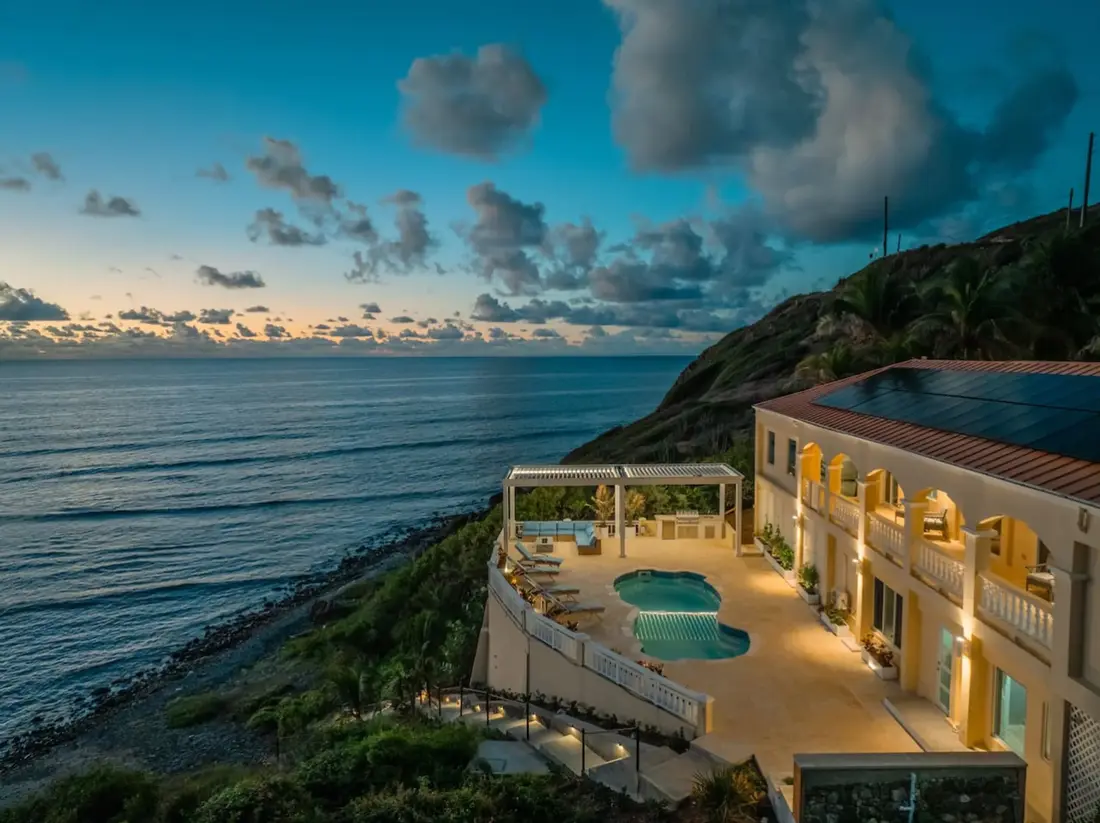 The Cerulean5 bd · 5 ba · sleeps 12 · Christiansted
More in Nature & Wildlife
Sources
12 references, listed in full at the end of this guide — official park, refuge, tourism-board and business sources, checked August 2026.