The Adventure Week
Dive the wall, night-kayak the bio bay, hike to the tide pools, and finish at the easternmost sunrise in the U.S.
This is the seven-day plan for the trip where the alarm goes off early and the gear bag is the heaviest thing in the luggage: wall dives, a night paddle in a glowing bay, a tide-pool hike, a full day inside a national monument, and the first sunrise in the United States. The order of the days is the whole trick, because five of these activities answer to a boat schedule, a moon phase, a tide table, a swell forecast, or a federal gate — and this page puts all of those constraints in one place before it builds the week around them.
Who this week is for
The plan assumes a group that wants one real objective every day and treats the villa as the recovery room. It works best for certified divers, people who hike on vacation, and anyone willing to set a 5 a.m. alarm twice in a week. It does NOT require that everyone in the group dives: every dive slot below has a snorkel version at the same site, and the deep pages linked from each day spell those out. It also assumes a rental car from the first morning; the distances are short — roughly 22 miles at the island's longest — but the start times are early and the trailheads are unserved by anything else. What it deliberately leaves out: resort days, long lunches, and shopping. Those belong to the general itineraries linked at the end of this page. Here, the mornings belong to the water, the afternoons to the land, and one evening to a bay that only performs in the dark.
The bookings that set the order
Every hard constraint on the island's adventure calendar, gathered in one section. Read this before picking flight dates, because two of these — the moon and the Sandy Point season — are decided before you ever land.
- Buck Island boats sell out. Only five operators hold permits to land visitors in the monument, capacity is fixed, and in the winter high season the good departures go a week or more out. Reserve as soon as flights are set, and aim the trip at the front half of the week so a weather scrub can be remade. Details and boat-by-boat differences are in the boat tours guide.
- The bio bay runs on the moon. Glow paddles at Salt River go out in the dark half of the lunar month and stand down around the full moon. Check a moon table against your travel window before anything else is booked; the bio bay guide explains how the operators schedule around moonrise.
- Sandy Point has a gate and a season. The refuge admits visitors on Saturdays and Sundays, 10 a.m. to 4 p.m., from September through the end of March — and it shuts completely from April 1 through August 31 while leatherbacks nest. If walking that two-mile beach matters to you, the calendar decides your dates. See the refuge guide.
- The wall wants a calm morning. Cane Bay diving is easiest on flat early water; trade-wind chop builds after midday year-round, and from December to March a long-period north swell can close the entry for days. That is why the wall sits early in this week — a blown day can slide, a blown last day cannot.
- Annaly wants a dry spell and a low tide. The tide pools are only safe at low tide in calm seas, and the trail is misery after rain. This activity floats to whichever day the forecast hands you.
- The Frederiksted pier closes to divers when a ship is in. Cruise and military calls are published ahead, and the dive shops plan around them; ask when you book.
- The flight home sets the last dive. Divers Alert Network guidance calls for a surface interval of 12 hours or more before flying after a single dive, and 18 or more once you have logged several across the trip. Build the final day on land.
| Constraint | The rule | What it fixes in the plan |
|---|---|---|
| Buck Island permits | Five authorized boats; winter demand outruns seats | Book first; place the trip on Day 3 |
| Moon phase | Glow tours run in the dark half of the month | Bio bay lands on the darkest night you have |
| Sandy Point season | Weekends 10–4, September–March; closed April–August | A weekend slot, only in season |
| North swell | Winter events can shut Cane Bay entries | Wall dive on Day 2, with a west-side fallback |
| Tide and rain | Annaly needs low tide, calm seas, dry trail | Hike floats to the driest day |
| Ship schedule | Pier off-limits to divers with a vessel docked | Pier day set against the published calls |
| Flying after diving | 12+ hours after one dive, 18+ after several | Day 7 stays dry |
How the sequence is built
Four principles order the week. First, the fragile things go early: anything a forecast can cancel — the boat crossing, the wall entry — sits in the front half so the back half can absorb a re-run. Second, water in the morning, pavement in the afternoon: seas are calmest before noon in every season here, so dives, crossings, and paddles start early, and museums, rum, and beach bars fill the after-lunch hours. Third, the alarms are rationed: there are exactly two pre-dawn starts in this plan, on Day 5 and never back to back with the bio bay's late night. Fourth, the last full day carries nothing that can strand the trip — no tanks, no tide windows — which is also what the flying-after-diving math requires. The result is a week where a canceled Day 2 or Day 3 slides into Day 7's open slot and nothing else has to move.
Day 1: arrival, keys, gear
Most flights put you on island by mid-afternoon. Collect the car — reserve it months out in winter, per the rental car guide — and remember the traffic keeps left. Provision on the way to the villa: this week eats early breakfasts, and villa kitchens beat 6 a.m. restaurant hunting. Then run the gear check while daylight lasts: certification cards where you can find them, masks defogged, reef shoes matched to feet, headlamps charged for the two dark starts, and a dry bag staged by the door. Make the confirmation calls tonight — the boat for Day 3, the dive shop for tomorrow, the kayak outfitter for whichever night the moon favors. Finish with dinner within a short walk of wherever you are based and an early night; the week starts pulling from here. Guests basing east should note their Buck Island boat may leave from Green Cay Marina rather than the Christiansted boardwalk, which buys an extra half hour of sleep.
Day 2: the wall, then the north shore
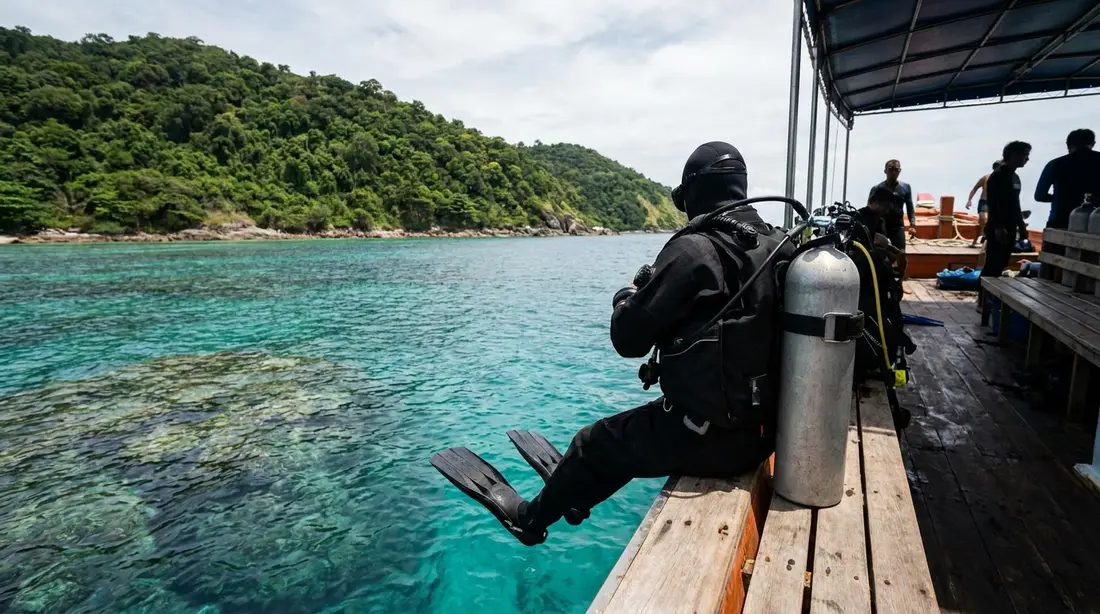
The Cane Bay Wall is the island's signature dive and the most weather-exposed item on the list, so it gets the first calm morning. The drop-off starts around 40 feet, roughly a hundred yards off the sand, and the slope past its lip keeps going for thousands of feet; go with a local operation for the first dive — Cane Bay Dive Shop runs both guided shore entries and boat trips — and let them read the entry. Two tanks fill the morning. The wall guide covers profiles, the swim out, and the snorkel version for non-divers, who can see the wall's edge from the surface on a clear day. The afternoon stays put: lunch at the beach bar steps from the sand, a lazy second snorkel inside the reef, and nothing that requires being anywhere. If tonight happens to be your darkest night of the week, the bio bay slots here — Salt River sits ten minutes east — otherwise it stays attached to Day 5's schedule. Either way, no late night before tomorrow's boat.
Day 3: Buck Island
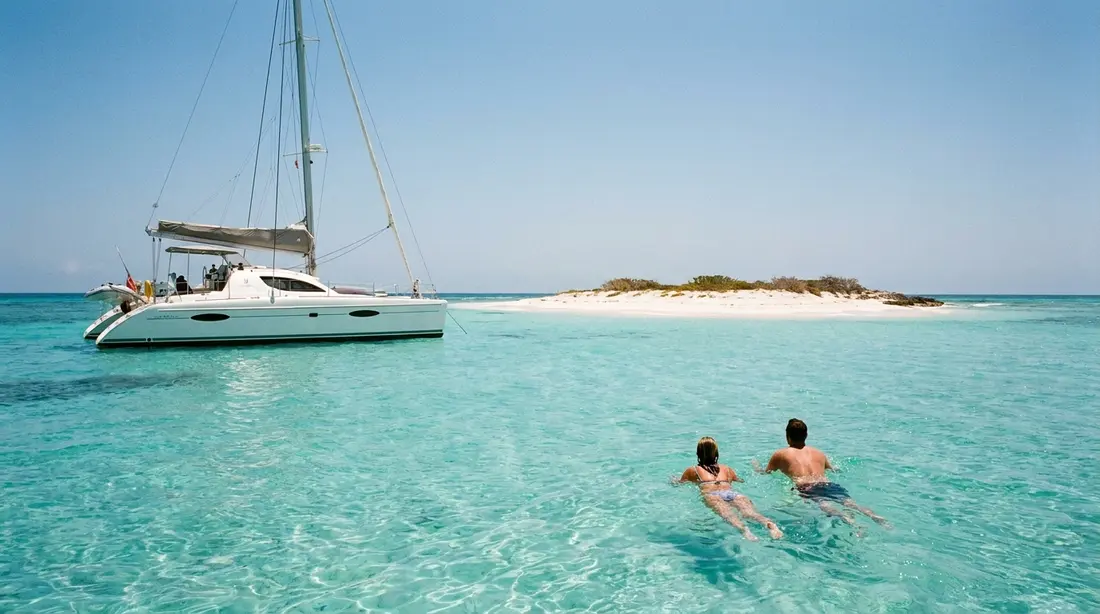
The full-day trip, booked before you flew. Morning crossings are the smooth ones, anywhere from 40 to 90 minutes by vessel and wind, and the day divides between the marked snorkel trail through the east lagoon and the beach hours at the island's west end. Divers should know the monument is a no-take reserve where in-water time happens only on authorized trips — this is a mask-and-fins day, and it earns its place in an adventure week on the strength of the reef alone. The land trail to the island's overlook adds a short, hot, worthwhile climb for whoever wants elevation with their lagoon. The monument closes at 5 p.m., so evenings are always free; land, rinse, and eat near the harbor. If wind scrubs the trip, this is the plan's first proof of design: the boat rebooks into Day 7's open slot and nothing downstream moves. A half-day version exists for groups who want the afternoon back — the boat tours page compares them.
Day 4: Annaly Bay and the west
The default slot for the tide-pool hike, movable by forecast. The Annaly Bay trail runs about 3.6 miles round trip with roughly 550 feet of gain from the Carambola trailhead, and the pools themselves are a low-tide, calm-sea proposition only — surge has hurt people there, and the rule in the current guide stands: first-timers go with a local guide, and nobody enters the pools with swell running. Check the tide table the night before and start early enough to be off the rock before the wind builds. The reward for the effort is the west end's easiest afternoon: up Mahogany Road into the forest for a plate and a MamaWanna at the Mt. Pellier Domino Club, pigs included, then down to Rainbow Beach for the last hours of light. West End Water Sports rents jet skis, kayaks, and ATVs on that sand if anyone still has energy to burn; details live in the watersports guide. The sun sets over water on this coast. Stay for it.
Day 5: dawn at Point Udall, then a fork
The first hard alarm. Drive east in the dark to Point Udall and watch the day arrive at the easternmost point of the country from the Millennium Monument — it is a drive-up, so the only cost is sleep. From there the day forks by group. Divers take the second tank day: the Butler Bay wrecks off the west coast or the Salt River canyon walls, both boat mornings, both bookable once you have seen how the week's weather is trending. Everyone else stays east: the calm-bay paddling guide maps Chenay Bay and the Shoys, where kayaks and boards go out over turtle grass in water the trades barely touch, and the Goat Hill ridge (about 672 feet) adds a stiff walk with a view back over everything you have done so far. Tonight is the bio bay's default night: a late paddle pairs well with a day that started before sunrise only because tomorrow's start is soft.
Day 6: the pier and the town
Frederiksted's pier is the softest adventure day of the week, which is why it sits here. The pilings hold the island's strangest small life — seahorses, frogfish, octopus — in 25 to 90 feet of calm west-coast water, and the site works three ways: as a shore dive, as the island's best night dive, or as a snorkel straight off the beach for everyone without a card. The one rule: divers stay out whenever a ship is docked, so this day was set against the published calls back on Day 1. Out of the water by noon, the town fills the afternoon — the fort where emancipation was proclaimed in 1848, Strand Street lunch, sea glass on the town beach — and the pier guide carries every site detail. If the group dives tonight rather than this morning, note the math: a night dive here still clears a mid-morning flight two days later with room to spare. Sunset is included at no charge on this coast.
Day 7: the flex day
Deliberately empty, and by now the week has told you what goes here. A scrubbed Buck Island crossing lands in this slot. A postponed wall morning lands here — though divers flying tomorrow should keep it to snorkeling and count their hours. If nothing fell through, the menu is the week's leftovers: the Ham's Bluff walk, a half-hour climb to a 1915 Danish lighthouse above the northwest cliffs; a Lang Bank fishing half day, where charter boats work the grounds beyond the east tip for mahi, wahoo, and marlin — see the fishing guide; or, in season and on a weekend, the Sandy Point gate. If the sky argues, the rainy day plan holds the island's indoor circuit, and the Cruzan distillery's weekday tour times (12, 1:30, and 3 at last check, by reservation) fit a wet afternoon exactly. And if the week went perfectly, the correct move is the pool, the deck, and the packing you have been ignoring. No tanks today if you fly in the morning.
The swap system
Weather edits every good itinerary. These are the standard rewrites, in the order they usually happen:
- North swell arrives. Winter's long-period swell shuts Cane Bay entries while leaving the west coast in the lee. Flip Days 2 and 6: pier first, wall later in the week when the event passes. This is the same move the dive shops make, and it costs the plan nothing.
- The boat cancels. Buck Island operators make conservative weather calls, especially December through March. The rebooking goes to Day 7; the freed day becomes east-side snorkeling at the Shoys or Chenay Bay, or a watersports hour at Rainbow Beach.
- The moon is wrong all week. Around the full moon the glow tours stand down. The operators run alternatives — lit night paddles in clear kayaks, sunset trips — that are good outings sold as exactly what they are. Take one or skip it; never expect glow on a bright night.
- Rain settles in. Short showers change nothing here. A settled wet day cancels Annaly outright — wet rock and swell are the two things the tide pools do not forgive — and activates the rainy-day circuit. The hike takes the next dry slot, tide permitting.
- A ship parks at the pier. The dive moves to the next clear day or converts to a snorkel day at Rainbow and Dorsch beaches. The calls are published, so this surprise is rare.
- Someone gets a cold. Congestion and diving do not mix. The stuffed-up diver takes surface duty for a day; every dive site here has a same-boat snorkel option, so nobody sits in the car.
Certification, fitness, and who can do what
The plain reading of what each anchor demands. Diving the wall, the wrecks, the canyon, or the pier at night requires an open-water certification card; bring it, because shops check. Uncertified travelers have two paths: an introductory dive under an instructor's direct supervision, which several shops offer at easy sites, or the full course — but a course consumes three to four days of pool, theory, and training dives, and it reshapes this week into a different (worthwhile) trip. The learn-to-dive guide lays out both. The hikes ask for real fitness rather than credentials: Annaly's distance, gain, loose rock, and heat make it the physical test of the week; Goat Hill is shorter and steeper; Ham's Bluff is an uphill road walk most reasonably fit people finish without drama. And a full third of the plan needs no card and no legs: the bio bay goes out in stable double kayaks on flat water, the Buck Island trail is a guided snorkel with flotation offered, the pier snorkel starts from a beach, and Point Udall asks only that you get out of bed.
| Anchor | Requires | Open to |
|---|---|---|
| Cane Bay Wall dive | Certification; guide recommended first time | Snorkelers see the edge on clear, calm days |
| Butler Bay / Salt River dives | Certification; boat trip | Divers only; others take the East End paddle |
| Frederiksted pier | Certification to dive; nothing to snorkel | Everyone, on ship-free days for divers |
| Buck Island trail | Basic swimming; guided | Everyone on an authorized boat |
| Bio bay paddle | Nothing; operator age minimums vary | Everyone, on dark-moon nights |
| Annaly tide pools | Fitness; low tide, calm seas, dry trail | Sure-footed hikers; guide for first-timers |
| Goat Hill / Ham's Bluff | Fitness for steep grades | Most hikers |
| Point Udall dawn | An alarm clock | Everyone; it is a drive-up |
Gear and logistics for the week
The car question has a one-word answer — yes — and the rental guide linked on Day 1 covers the rest, including the left-side driving that stops feeling strange by Day 2. On dive gear: every shop rents complete kits, certified divers who own a mask, computer, or wetsuit should bring them, and independent shore divers can arrange tank fills through the shops; the diving guide maps who rents what and where. Sunscreen is regulated here: territorial law bans oxybenzone, octinoxate, and octocrylene, so pack mineral-based bottles and skip the argument at the beach. Beyond that, the packing list for this specific week is short and specific: reef shoes for rocky entries, a headlamp per person for the two dark starts, a dry bag for boat and kayak days, two liters of water per hiker for Annaly, and a long-sleeve swim shirt that replaces most of the sunscreen debate. Phones work on U.S. networks; download the tide table and the moon calendar anyway. Book-before-you-fly list, in order: the Buck Island boat, the bio bay night, the first dive, the car.
The week at a glance
| Day | Morning | Afternoon / evening | Book ahead |
|---|---|---|---|
| 1 | Fly in, car, provisions | Gear check, confirmations, early dinner | Car, weeks out in winter |
| 2 | Cane Bay Wall, two tanks | North shore lunch and reef snorkel | Dive shop slot |
| 3 | Buck Island crossing | Lagoon trail, beach, back by 5 | Boat, before you fly |
| 4 | Annaly Bay tide pools | Domino Club, Rainbow Beach sunset | Guide if first time |
| 5 | Point Udall dawn; dive boat or East End paddle | Goat Hill or rest; bio bay after dark | Kayak tour by moon date |
| 6 | Pier snorkel or dive | Frederiksted town, west sunset | Check ship calendar |
| 7 | Flex: remade boat, Ham's Bluff, Lang Bank | Pool, pack; no tanks before a morning flight | Charter if fishing |
The five-day compression
With five days, cut by redundancy rather than by preference. The fork day and the flex day go first: Day 5's second dive morning disappears (the wall already gave you the island's best diving), and Day 7's insurance slot is a luxury a short trip cannot carry — which means a canceled boat now costs you Buck Island, so watch the forecast when you book. The compressed shape: arrive and rig on Day 1; wall on the first calm morning; Buck Island on Day 3; Annaly plus the west end on Day 4; and a final day that opens at Point Udall, closes at the pier, and keeps divers dry if the flight is early the next day. The bio bay attaches to whichever evening the moon allows. What this version loses is slack, and the swap system above shrinks to one move: anything canceled converts to snorkeling. Groups that want the same island with the pressure off should read the five-day itinerary instead — same anchors, gentler spacing.
The version with kids
The skeleton survives a family surprisingly well because most anchors already have a shallow end. Buck Island stays — the trail is guided, flotation is offered, and the beach absorbs whatever attention span remains. The bio bay stays for older kids; operators set their own age minimums, so ask when booking. The pier day becomes a snorkel-only day, which children tend to prefer anyway once the first seahorse appears. The substitutions: the wall morning becomes a calm-bay session at Chenay Bay, where turtles graze in standing-depth water; Annaly is an adult outing — the distance, heat, and surge rules are wrong for young kids, so split the group and send the shore team to Cramer's Park; and the pre-dawn starts drop to one, because Point Udall is worth a single family-wide grumble. Afternoons end at the villa pool without exception. The family itinerary is the full week built on that logic, and the traveling-with-kids guide carries the practical layer: car seats, groceries, and the ice cream stop.
Questions guests ask
Can non-divers do this whole week?
Yes, with the fork built in. Every dive morning has a same-site surface version: snorkelers see the wall's edge from above at Cane Bay, the pier's pilings from the beach, and the Buck Island trail was designed for masks rather than tanks in the first place. Day 5's dive boat swaps for the East End paddle. The only thing a non-diver misses is the wreck morning, and the trade — turtles over grass flats at Chenay Bay — is no punishment. Mixed groups work best when the divers take mornings and everyone reunites for the afternoons, which is exactly how this plan is drawn.
What time of year suits the adventure week best?
Every month works; what changes is which day is fragile. December through March brings the Christmas Winds — lively crossings, possible north swell at the wall, peak demand for boat seats — so book everything early and lean on the swap system. May through October typically brings the flattest seas and the easiest shore entries of the year, with hurricane season (June 1 to November 30, most active August to October) argued down with flexible bookings and travel insurance rather than avoidance. The Sandy Point gate only exists September through March, on weekends, if that beach is on your list.
How far ahead should the boats and tours be booked?
In winter, reserve the Buck Island boat and the bio bay night as soon as flights are ticketed — capacity on both is fixed by permit and by moonlight, and the good winter departures go first. The first dive slot deserves a call the same week. In the quieter summer months a week's notice usually suffices for boats, though the bio bay still binds to the lunar calendar no matter the season. The rental car is the sleeper: the island's fleet is finite, and winter weeks have caught visitors flat before. Everything else on the plan — hikes, beaches, the pier snorkel, Point Udall — needs no reservation at all.
Does the bioluminescent bay always glow?
No, and no operator worth booking says otherwise. The organisms are present year-round, and brightness varies with moon, cloud, wind, and recent weather; the industry's own answer is the lunar calendar it publishes, with tours running in the dark half of the month and alternatives offered around the full moon. Book the darkest night your dates allow, let the outfitter make any weather call, and treat an off night the way you would a cloudy sunset. The bio bay guide explains the mechanism and the odds in full.
How hard is the Annaly Bay hike, really?
It is the most demanding item on this page: about 3.6 miles round trip, roughly 550 feet of climbing on the return, loose and rocky footing, and real heat once the sun is up. Reasonably fit hikers handle it; flip-flop walkers do not. The pools themselves are the actual risk — they are safe only at low tide in calm seas, people have been injured there in surge, and the standing rule is a guide for the first visit and a hard no whenever swell is running. Start early, carry water, and check the tide table the night before.
Where does fishing fit in this week?
Lang Bank, the offshore ground a few miles past the east tip, holds the headline species — mahi, wahoo, kingfish, tuna, and billfish — and a half-day charter fits the plan in two places: the Day 5 fork, for the part of the group not on the dive boat, or the Day 7 flex slot if the week's weather never claimed it. Charters book ahead like the dive boats do, winter especially. Divers should remember boats and tanks share the same mornings, so fishing and a dive day do not stack for the same person.
Can this itinerary run without a rental car?
Not realistically. Taxis exist and taxi tours are good for town days, but this plan starts at trailheads and boat ramps before most services wake up, and St. Croix has no Uber and no Lyft to fill the gaps. A carless version survives only if you base in Christiansted, keep the boardwalk boat departures, and hand the wall, Annaly, Point Udall, and the west end to organized tours — at which point it has become a different, thinner week. Rent the car, drive on the left, and the whole island opens.
Where to base the week
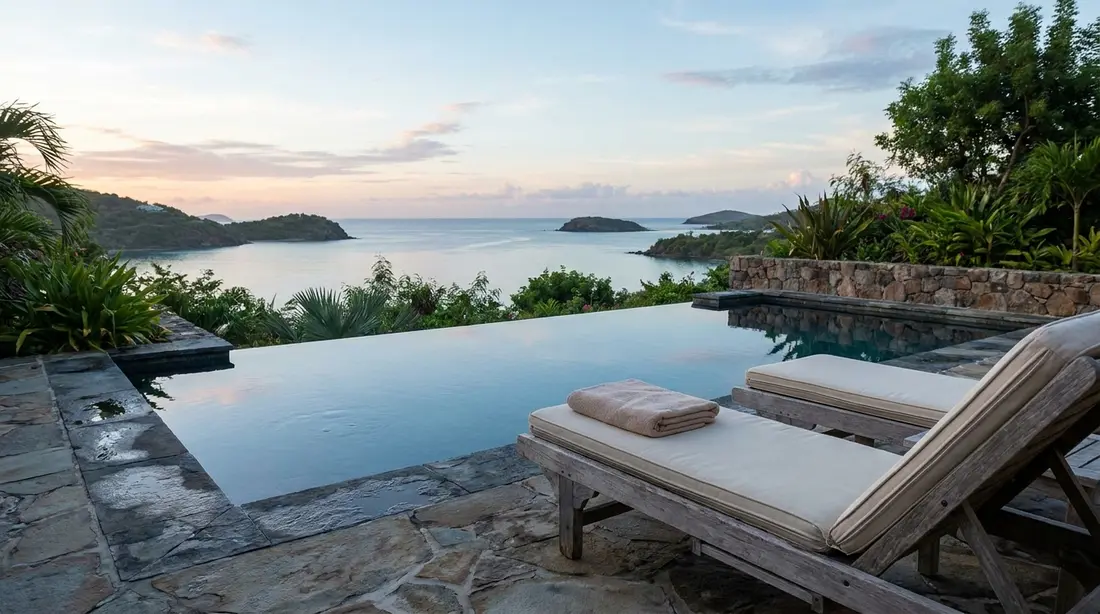
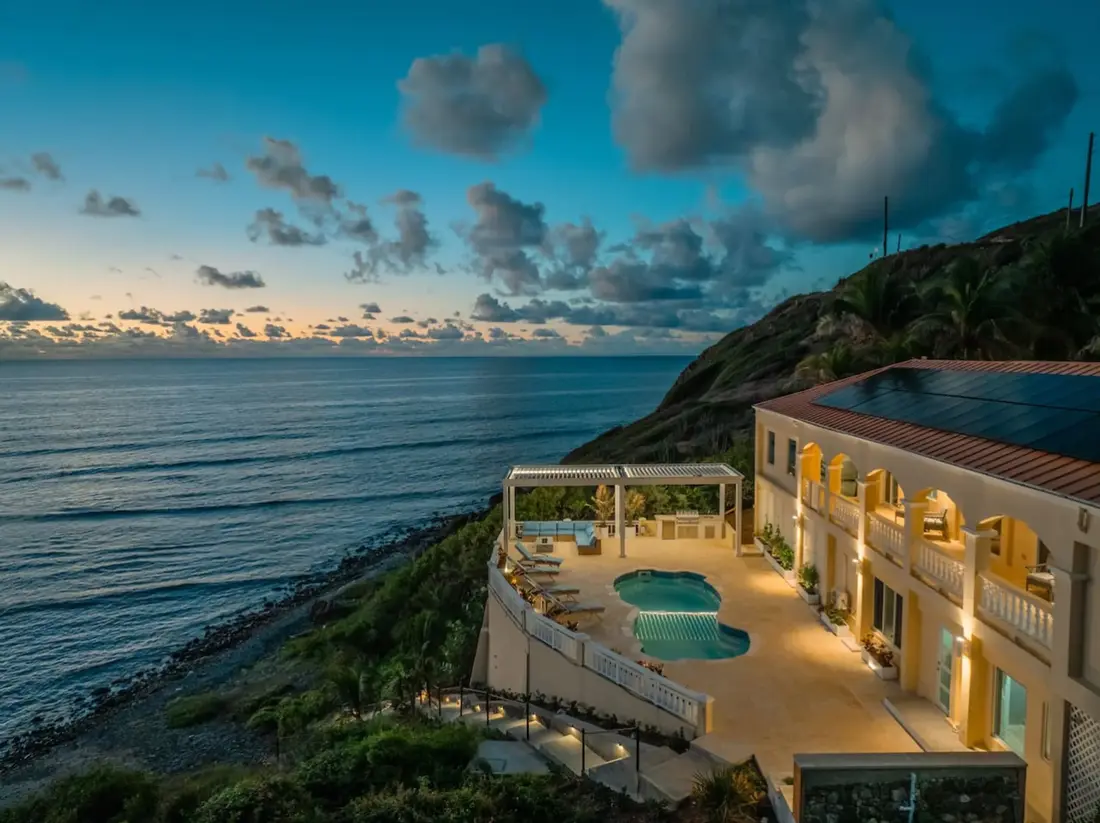
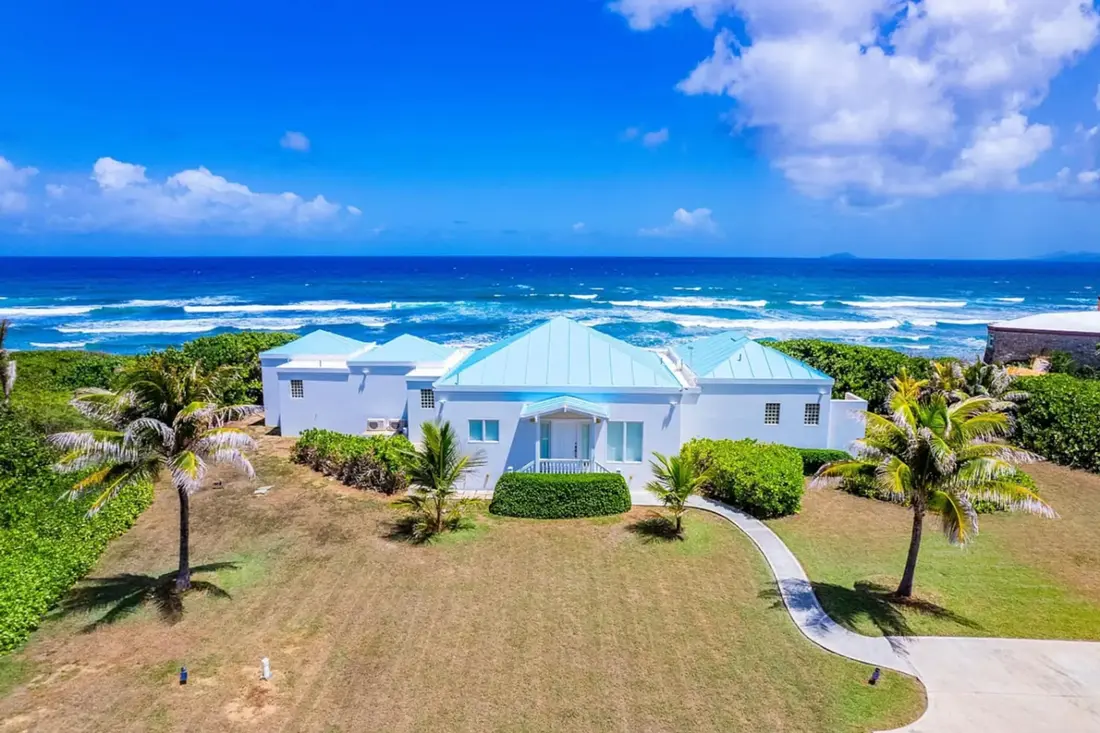
The plan crosses the island daily, so base for the mornings you care about most. An east-side base puts Point Udall, the calm paddling bays, and the Green Cay Marina boat departures minutes away — The Cerulean and Dragonfly Villa both sit on that side, facing the water this week keeps returning to, with pools for the afternoons the plan protects. A Christiansted base splits every distance and keeps the boardwalk boats and dinners walkable. Basing west trades convenient boat mornings for the pier at your doorstep and the sunset every evening — Sunset Sea-Clusion is our Frederiksted option. See all twelve villas; any of them ends an adventure day well.
Sources
Written from official and first-party sources, checked August 2026. Hours, prices and event dates change — confirm before you go.
In this guide
Stay nearby
On The Shoys beach: six bedrooms, six baths, pool and hot tub, room for twelve, and the beach through the back garden.
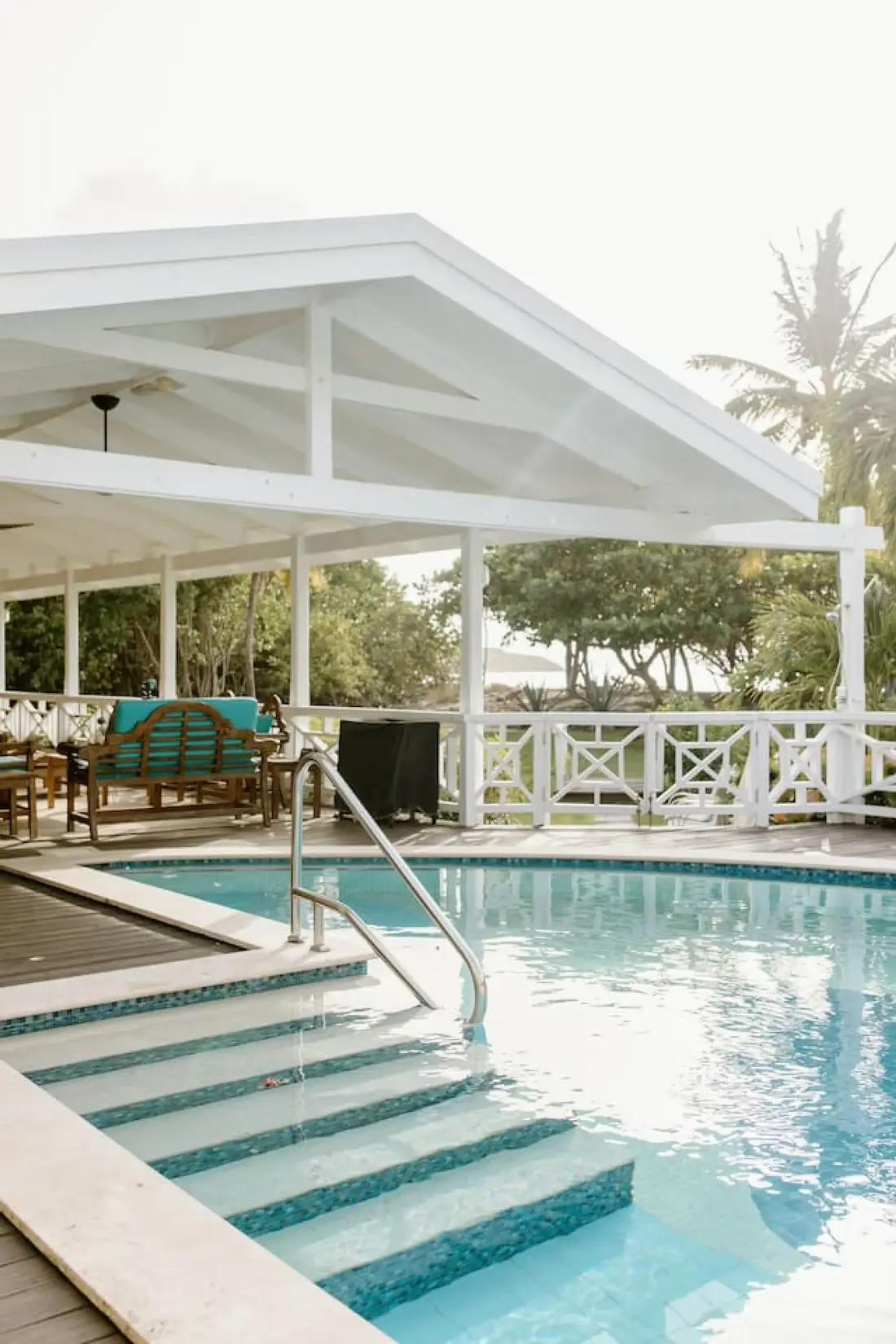 Shoy's Beach House6 bd · 6 ba · sleeps 12 · Christiansted
More in Itineraries
Sources
9 references, listed in full at the end of this guide — official park, refuge, tourism-board and business sources, checked August 2026.