Deep-Sea Fishing & Lang Bank
Lang Bank sits 3 to 10 miles off the east tip: mahi, wahoo, tuna, and billfish minutes from the harbor. The island's charter fleet, explained.
St. Croix is the rare island where a trolling boat clears the harbor and is over serious depth before the coffee cools. The shelf under Christiansted falls from about 100 feet to 1,000 feet within minutes of the marina, Lang Bank bends around the east tip three to ten miles out, and the species list runs from schooling mahi to blue marlin. This page is the fishing reference: how this water works, what each fish does on a line and a plate, which techniques fill which trip, and what happens to the catch at the end of the day. For boats, rates and booking mechanics, the roster lives in the private charters guide.
The water St. Croix fishes
Start with a map fact that shapes every trip: St. Croix stands on its own underwater platform. The northern Virgin Islands, St. Thomas and St. John among them, share a shallow bank with Puerto Rico and the British islands, and the famous North Drop hangs off that bank's edge. Forty miles south, St. Croix rises alone. Between the two runs the Virgin Islands Trough, a gash in the seafloor charted at roughly 4,300 meters deep, better than 14,000 feet, and about 60 kilometers across. The practical translation for an angler: this island is ringed by abyssal water on all sides, and the transition from reef to open ocean happens close enough to shore that captains often set lines a couple of miles outside Christiansted harbor.
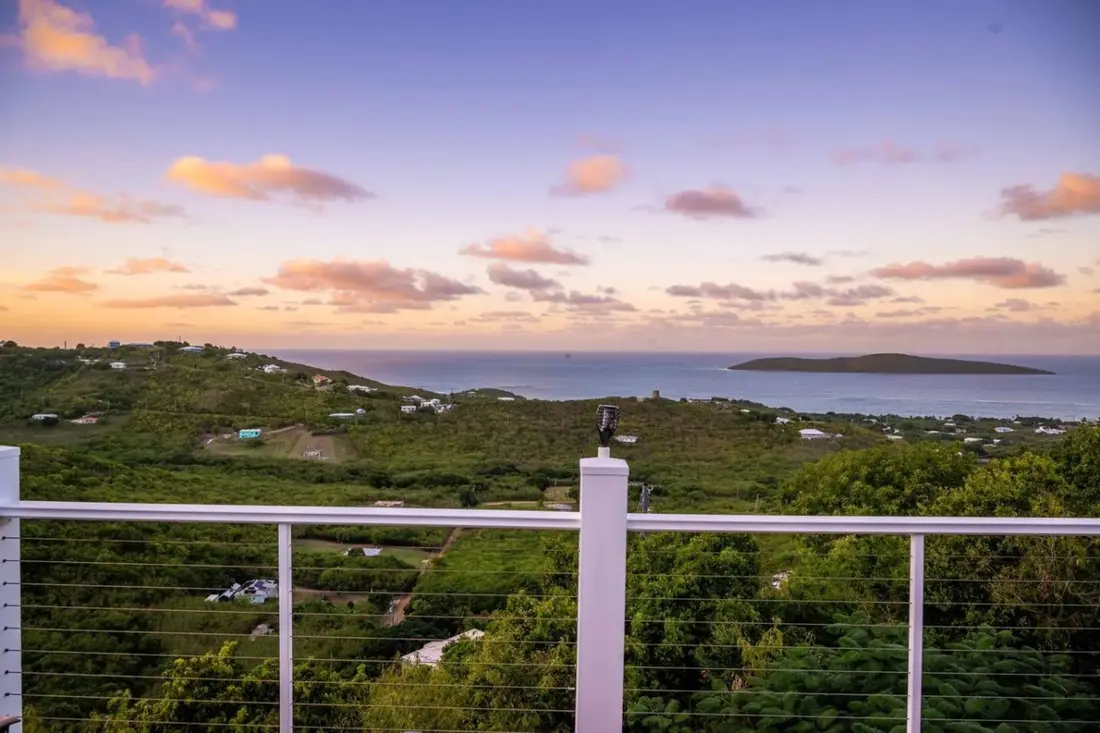
The east tip owns the marquee ground. Lang Bank is a drowned plateau reaching out three to ten miles beyond Point Udall, ringed by abrupt walls where current climbing the structure lifts bait toward the surface. Predators stack along those edges, which is why one bank can produce snapper on the bottom and a marlin bite on top during the same trip. Crews fish its rim by trolling and its floor by dropping, and a boat wanting to cover the bank end to end generally books six hours or more.
The south side matters too. St. Croix's southern shelf edge falls away as sharply as the east, close in, and boats work that line when wind or bite favors it, while the shelf areas all around the island hold wahoo, blackfin and kingfish through the year. The upshot is unusual freedom: on most islands the fishing grounds are a committed run in one direction, while here a captain can pick a drop by the morning's conditions.
Fish aggregating devices
The territory adds man-made structure to all that natural edge. The Division of Fish and Wildlife inside DPNR has anchored fish aggregating devices, FADs, off the Virgin Islands since the 1980s, and announced a fresh territory-wide set in September 2020, including a station roughly eight miles west of Ham's Bluff on St. Croix's northwest corner. Each is a yellow surface buoy fitted with a radar reflector and a flashing light, moored over deep water, and the program is paid for through the federal Sport Fish Restoration Fund with the stated goal of pulling fishing effort off the crowded nearshore reefs and onto open-water species.
Why a bare buoy draws fish is one of the ocean's better tricks: drifting and anchored objects collect small marine life, bait schools gather to them, and mahi, wahoo and tuna patrol the neighborhood. The published territory species guidance lists FADs as productive ground for nearly every pelagic in these waters. For a visiting angler the takeaway is simply that local captains have more than one kind of structure to run to on a given morning, and a slow rim on Lang Bank does not end the day. Buoy positions change as moorings age and storms pass, so treat any FAD chart as a snapshot; the working fleet always knows the current set.
Mahi
Dolphin fish, mahi on every island menu, is the crowd-pleaser of this ocean, and its calendar here has two acts. The published territory guidance puts the main run from October through January, with strong secondary pulses listed in May and July, and St. Croix's own tournament schedule backs the spring: the island's dolphin tournament is fished in April, and the 2025 edition, the event's 25th, was won with an 81-pound aggregate of mahi. Between those windows the fish never fully leave, showing around FADs, current edges and anything adrift.
On the line, mahi are theater. They hit trolled ballyhoo and small lures at full speed, jump repeatedly, light up in electric blues and golds, and travel in company, so a hooked fish often brings the school to the boat. Crews use that habit, keeping one fish in the water while anglers pitch baits to its followers, and a single good stop can fill the box. Tackle stays relatively light, which makes this the pelagic most enjoyable for newer anglers and strong kids.
At the table, mahi is the island standard for a reason: mild, slightly sweet white meat that takes a grill, a pan or a fryer without complaint. It appears on St. Croix menus year-round, and a bag of fillets from your own trip beats any of them. It is also the pelagic most forgiving of a cook who has never handled fish, which matters on villa night.
Wahoo
If St. Croix fishing has a signature fish, it is this one. Wahoo hold on the shelf edges all year by the published guidance, with the best of it running September through May and the cool months at the center; the Golden Hook club schedules its wahoo tournament for November as the climax of its series. The fish is built like a torpedo with a razor mouth, and the strike is the sport's adrenaline benchmark: a wahoo hits trolled baits at a dead sprint, published estimates credit the species with bursts near 50 miles an hour, and the first run can empty a reel's top third in seconds.
Crews rig for that violence. Wahoo teeth shear monofilament, so spreads carry wire leaders, and many boats pull baits faster than the standard troll, sometimes with weighted heads to keep lures tracking below the chop; the scream of the drag does the rest. Doubles and triples happen when a pack finds the spread, and then a calm cockpit turns very busy very quickly.
The eating justifies the fuss. Wahoo, kingfish's bigger and cleaner-flavored cousin, yields firm, bright-white meat that locals rank at the top of the island's table fish, and it appears in Crucian kitchens in everything from grilled steaks to fish and fungi. One caution for the cook: it is lean and dries out fast, so pull it off the heat early. A winter charter that boxes a wahoo has, by most local judgment, already paid for itself.
Tuna
Three tunas figure in a St. Croix season. Yellowfin, the prize, is listed from August through February in the territory guidance, working the drops and the FADs; fish here run from schoolie size to heavy, and even a modest yellowfin outpulls everything else in its weight class. The fight is the appeal: no jumps, no theatrics, just deep circles and stubborn weight that turns a 20-minute fish into a memory anglers keep. Blackfin tuna, smaller and darker, hold over the shelf and around bait schools all year and are a dependable filler on days when the glamour species sulk. Skipjack round out the set, year-round and eager, often the first fish of the morning.
Table quality sorts the same way. Yellowfin is sashimi-grade in the hands of any crew that bleeds and ices it promptly, and a villa platter of raw yellowfin cut an hour before dinner is a meal no restaurant on island can improve on. Blackfin is stronger-flavored, excellent seared rare or as poke. Skipjack is the crew's choice more often than the cooler's, prized as strip bait as much as food. If tuna is your specific goal, say so at booking: crews adjust spreads with feathers and smaller lures when tuna are the day's design rather than the accident.
Billfish
The Virgin Islands earned their blue-water reputation on marlin, and while most of that legend was written on the North Drop off St. Thomas, including a 1,282-pound blue weighed there in 1977, St. Croix fishes its own edges for the same animals with far less company. The published season list reads: blue marlin possible all year and best May through October, white marlin best in April and May, sailfish October through March. Summer's calm seas and the full-moon periods carry the strongest expectations, and local crews name marlin among their standing targets through the warm months.
Know what you are signing up for. A blue marlin is the most demanding fish in this ocean: hookups are earned over long hours of trolling, the fight can run past an hour of real physical work, and many days produce nothing at all, which is exactly why the hookup means what it does. Sailfish and white marlin come smaller, faster to the boat and spectacular in the air, and the winter sailfish window overlaps the wahoo run nicely for anglers who want both possibilities in one spread.
The ethic is settled here: billfish go back. The territory's flagship billfish event, the July Open run by the Virgin Islands Game Fishing Club out of St. Thomas since the 1960s, is fished entirely on release, no billfish brought to a dock, and that standard defines the recreational culture across both districts. Expect circle-hook rigging, a boatside photo, and a healthy fish swimming away. Any crew on this island will tell you the same before you ask.
The inshore year
The half of St. Croix fishing that never depends on a calm forecast happens inside and along the reef line. Kingfish patrol the mid-shelf and drop-offs all year with the guidance listing February through May as the best of it; cero and Spanish-type mackerel work the near-shore reefs; jacks, from bar jacks to bruiser crevalles, roam wherever bait balls up; yellowtail and other snappers hold near structure; and barracuda are a certainty on any reef edge any month, a fish that fights far better than its reputation and goes back in the water here for reasons the ciguatera section explains.
Tarpon are the inshore headliner. They live around harbors, lagoons and the mangrove edges year-round, listed best March through October, and hooking one from a small boat is a violent, airborne event entirely out of proportion to the calm water it happens in. Tarpon and bonefish are release fish across the territory, all sport, no cooler.
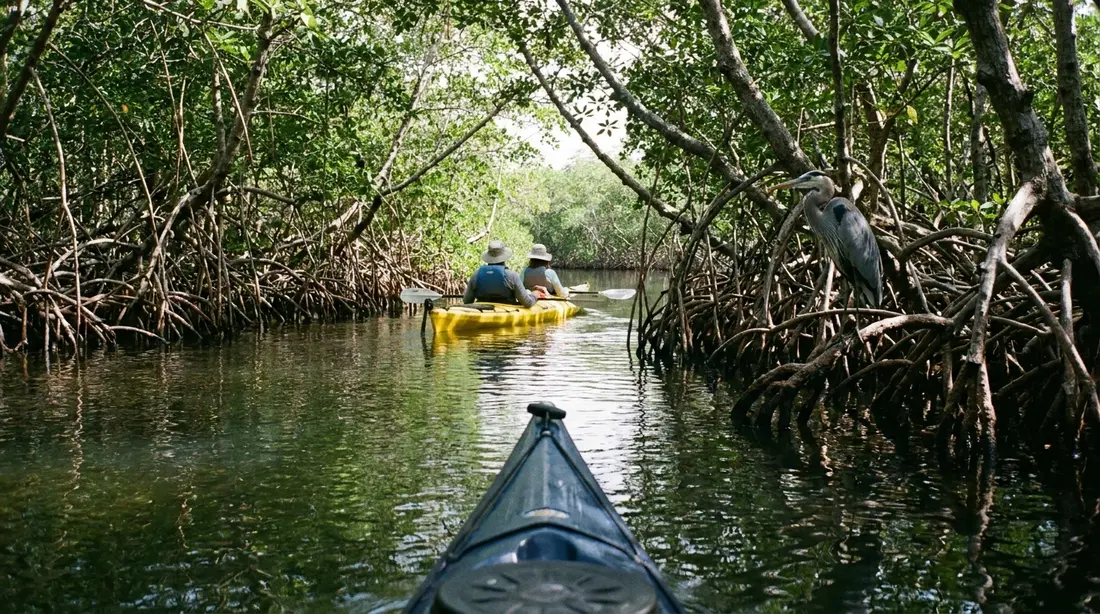
The south shore adds a version of this most visitors never hear about: flats fishing from kayaks. Behind the barrier reef east of the island's south-side piers lies a sheet of seagrass shallows, mangrove lanes and sand flats around the little barrier cay locals call Shell Island, and a guided operation, Silver Kings Kayak Charters, runs pedal-drive kayaks out of the Molasses Pier area to sight-cast it for tarpon, snook, jacks and the rest. It is quiet, shallow, casting-lesson friendly and good with children, and it costs a fraction of an offshore day. The wider south and east shorelines are covered in the East End guide.
Trolling, the standard day
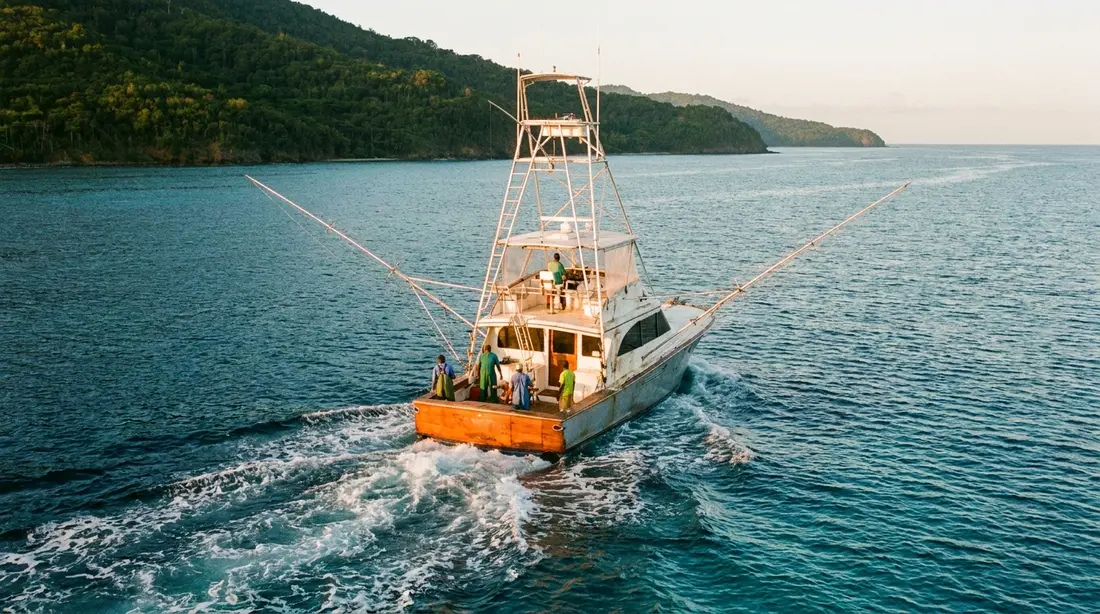
Book an offshore trip here and the default method is trolling: the boat pulls a spread of baits at walking-to-jogging speed along the drops while everyone watches the flat lines and the ocean behind them. The St. Croix pattern, as the boats themselves describe it, is rigged ballyhoo, a slender baitfish sewn onto a leader so it swims naturally, mixed with artificial lures, run at staggered distances off the stern and often off outriggers that spread the pattern wider than the boat. Some mornings begin with catching live bait before the run out, when season and target call for it.
The rhythm surprises first-timers. Trolling is long quiet punctuated by seconds of chaos: a reel howls, the crew calls the strike, someone is in the chair or braced at the gunwale, and the rest of the spread gets cleared while the fish takes its first run. Anglers rotate strikes by agreement, so settle the order early and nobody sulks at the dock. Between bites the mate is constantly working, checking baits for washouts, watching for birds, frigatebirds over bait being the ocean's most reliable billboard, and adjusting the spread as conditions change.
Nobody needs experience. The crew hooks the fish or hands you the rod as it happens, coaches the fight, and handles everything at the boat. What you supply is attention and arms; the reference skill worth practicing in advance is simply keeping the rod tip up and reeling when told.
Deep-dropping and the electric reel
The second offshore method uses the shelf vertically. Because the bottom plunges from about 100 to about 1,000 feet just minutes off the harbor, St. Croix boats can run true deep-drop trips without a long steam: multi-hook rigs baited and sent down 400 to 800 feet, usually on electric reels that handle the quarter-mile of cranking, with manual gear available for anglers who want to feel every foot of it. The flagship target as published locally is red silk snapper, part of the deepwater snapper group that comes up brilliant crimson and eats as well as anything in this ocean, and deep trips are sold at slightly lower boat rates than the trolling days.
The appeal is certainty and novelty in equal parts. Bottom fish do not care that the surface bite is slow, so deep-dropping produces dinner on days the pelagics refuse, and watching a fish materialize out of 600 feet of blue is its own event. The technique also suits mixed groups: anglers take turns at the reel, there is no chair time or heavy fight, and the boat sits rather than trolls, though the drift over deep water still moves enough that queasy guests should read the preparation section below. Boats also blend methods on request, trolling the rim of the bank between drops so the day carries both possibilities at once. If a freezer full of snapper is the goal rather than a trophy, say exactly that when booking; it changes the plan the captain builds.
Half day against full day
The short-run geography makes St. Croix one of the few islands where a four-hour trip is real offshore fishing rather than a boat ride with a cameo. Lines go down minutes from the dock, so a half day buys perhaps three hours of actual fishing time along the near drops, enough for wahoo, mahi, tuna, kingfish and the deep-drop program, and it fits families, first-timers and anyone pairing the trip with an afternoon plan. The trade-offs: a half day works the water closest to the harbor, revisits nothing, and gives a slow bite no time to turn.
The full day, six to eight hours, is a different product. It reaches and properly covers Lang Bank, whose end-to-end tour the local guidance itself prices at six hours minimum; it allows the crew to chase a pattern, moving from a dead rim to a FAD to a current edge until something works; and it is the only realistic marlin trip, because billfish are a bet paid in hours. It also simply catches more, since the fish here bite on tide and light changes a short trip may never see. The working rule the fleet's own trip menus imply: book the half day for the experience and the dinner, the full day for the species list, and the deep-drop trip when the goal is a full cooler regardless of what the surface is doing. In every format, mornings load the odds, calmer seas and a bite that generally favors first light.
Keeping the catch
The question every villa group asks first has a per-boat answer with a strong island pattern. Food fish that come over the rail, mahi, wahoo, tuna, kingfish where the crew approves it, deepwater snapper, generally go home with the party that caught them: at least one Christiansted operation publishes complimentary cleaning outright, and bagged fillets at the dock are the fleet's normal courtesy rather than a luxury. Billfish are never on the menu, as covered above, and tarpon and bonefish swim away by territory practice. Between those poles sits the crew's judgment: the same boat that ices your wahoo without a second thought will release certain reef fish on the spot, and the published wording for that policy, keepers depend on species and where they were caught, is the ciguatera section in commercial disguise.
Two courtesies keep it smooth. First, ask the policy when you book rather than at the fish box, so nobody negotiates over a gaffed fish. Second, respect the pattern the island itself follows: eat what you keep, keep what the crew clears, and let the rest go. Sport boxes here fill fast enough in season that restraint costs nothing. If the group cannot use a big catch, say so; crews and their extended families have used surplus fish on this island for generations, and offering it is good manners.
Ciguatera, in plain terms
One food-safety topic belongs in any Caribbean fishing reference, and it rewards plain language. Ciguatera is a natural toxin produced by microscopic algae that grow on reef surfaces. Small reef fish graze it, bigger fish eat them, and the toxin concentrates as it climbs, so the risk lives in large, old, reef-feeding predators: barracuda above all, along with big grouper, amberjack, hogfish and some large snappers from certain grounds. The toxin has no taste or smell, and no amount of cooking, freezing or marinating touches it. The Caribbean, the Virgin Islands included, is one of the regions where it is a standing fact of life, which is why locals simply do not eat barracuda and why market habits here skew toward known-safe species and grounds.
Here is the reassuring half. The fish a St. Croix charter targets for the table, mahi, wahoo, tuna, and the deepwater snappers brought up from far below the reef zone, are open-ocean and deep-slope feeders outside the classic transmission chain, which is exactly why the fleet keeps them with confidence. The local knowledge is the real safeguard: crews who have fished these banks for decades know which species from which grounds are eaten on this island and which go back, and their release decisions are that knowledge working on your behalf. Follow one visitor's rule and the subject stays theoretical: eat what your crew keeps for you, and do not eat reef predators from unknown sources, barracuda ever, or a big grouper somebody's cousin speared. Symptoms of a mistake are miserable rather than usually dangerous, but a vacation is a bad week to learn the details.
The tournament year
St. Croix supports a real club scene, and its calendar is a useful bite forecast even for visitors who never enter. The Golden Hook Fishing Club, the island's sportfishing institution, runs a series across the year: its Golden Hook Challenge in late winter, a dolphin tournament each April, the Guy and Gal Reel Challenge in October, and the wahoo tournament in November as the series finale. The 2025 dolphin event was the 25th annual, and entry across the series is open to visitors and non-boat-owners, so a villa group that books a charter during a tournament window can fish it; the club's channels carry each year's dates and rules. Read the schedule as scouting: the club stages each event when its species peaks, which independently confirms the spring mahi pulse and the early-winter wahoo run described above.
The territory's marquee billfish event belongs to the other district: the Virgin Islands Game Fishing Club's July Open, fished out of St. Thomas over the July full moon since the club's early years, all release, and among the longest-running angling competitions in the region. Serious billfish anglers sometimes pair a St. Croix stay with that scene's dates, and the seaplane and ferry logistics for a St. Thomas day are covered in the St. Thomas day trip guide. Around any tournament week, on either island, book boats early; the good crews enter their own events.
The boats, briefly
Because this page is about the fishing, the full operator profiles, rates, capacities and booking terms stay on the charters page; here is the working roster in one paragraph. Caribbean Sea Adventures fields its sportfishing program at Green Cay Marina, the East End's fishing dock. Captain Cook Charters fishes half and full days from the same marina aboard a 33-foot Pursuit. Hook and Sun Fishing Charters, in Christiansted harbor, publishes trip menus across offshore, inshore and the deep-drop program. Fish On St Croix lists swordfish among its deep-sea targets alongside the billfish, wahoo, mahi, tuna and kingfish. St. Croix Deep Blue Charters works blue water off the Christiansted side, and Down South Charters folds fishing into its custom powerboat days. Gone Ketchin', long based at Salt River Marina and known for trolling the pelagic roster from marlin to barracuda, had a dead website at last check, so verify it is running before you plan around it. Silver Kings Kayak Charters covers the south-shore flats described above.
Matching the trip to the group
Fishing days fail on miscasting more than on slow bites, so choose by the group's real appetite.
- Families with kids. Book short and busy: a half-day inshore or near-shore trip on calm water, where mackerel, jacks, snapper and small tuna keep rods bending on a child's attention span, beats six hours of offshore quiet every time. The flats-kayak trip suits older kids who can cast; the deep-drop trip works for families who want dinner and turn-taking without rough-water hours.
- First-time offshore anglers. The half-day troll is the right dose: real strikes, a real fish box, done by lunch. Upgrade to a full day only if everyone aboard wants to be there at hour seven.
- Serious anglers. Full day, stated targets, and a conversation with the captain about season and recent water before you pick the date. Winter for the wahoo-sailfish overlap, summer for marlin, and a tournament week if the calendar cooperates.
- Mixed villa groups. Split the ambitions: send the diehards on a full day early in the week and run a family half day later, or book a boat that will troll the bank's rim and deep-drop in one trip. The charters guide maps which boats carry which group sizes.
Preparing for a fishing day
An offshore day asks more of a body than a sail does, and the difference is the motion. A trolling boat holds working speed through open-ocean swell for hours, and the season shapes the ride: the winter trades that bring the best wahoo fishing also bring the year's lumpiest offshore water, while summer serves the calmest seas alongside the marlin. Anyone with a motion-sickness history should take their remedy 30 to 60 minutes before the dock, since nothing works after symptoms start, then spend the day low in the boat, aft, eyes on the horizon during quiet stretches. Eat a normal light breakfast, skip the heavy night out beforehand, and stay on water rather than coffee. If the group's stomachs are a known problem, the inshore and flats options fish flat water all winter; the island's wind calendar is in the weather guide.
Pack short: polarized sunglasses, which double as fish-spotting gear, a brimmed hat that ties, reef-legal mineral sunscreen applied before boarding, deck-friendly shoes, something dry to wear on the run back in, and a soft cooler waiting in the car for the fillets. Leave your own tackle at home unless the boat approves it; every charter here fishes its own gear, included in the rate. Cash for the crew's tip belongs in the bag, and the territory's recreational fishing license, which applies to charter guests, is a small piece of pre-trip paperwork many boats simply handle; the current rules and the one question to ask at booking are laid out in the charters guide's license section.
Species, seasons and methods
The table condenses the published territory guidance and local tournament calendar into one reference. Seasons are patterns, never promises, and the week's truth belongs to the fleet.
| Species | Season as published | How it is fished here | At the table |
|---|---|---|---|
| Mahi (dolphin fish) | Peak October to January; spring pulses, April tournament, May and July listed | Trolled ballyhoo and lures on the drops and FADs; school fish pitched to at the boat | Excellent; mild white meat, the island standard |
| Wahoo | All year; best September to May, November tournament | Fast trolling with wire leaders along shelf edges | Outstanding; firm and lean, keep it off high heat too long |
| Yellowfin tuna | August to February | Trolling lures, feathers and ballyhoo over the drops and FADs | Sashimi grade when bled and iced |
| Blackfin and skipjack | All year | Feathers and small lures over shelf areas and bait schools | Good seared or raw; skipjack often kept for bait |
| Blue marlin | All year; best May to October | Lure and bait spreads along the banks; hours-long commitment | Released, territory-wide practice |
| White marlin and sailfish | April to May; October to March respectively | Ballyhoo spreads on the drops | Released |
| Kingfish | All year; best February to May | Trolling mid-shelf and drop-offs | Eaten locally; follow the crew's keep call |
| Deepwater snapper | All year | Deep-drop rigs, 400 to 800 feet, electric reels | Superb; the deep trip's whole point |
| Tarpon | All year; best March to October | Inshore live bait and casting; flats kayaks on the south shore | Released, all sport |
| Barracuda | All year | Inshore trolling and casting on reef edges | Released here; see the ciguatera section |
Questions guests ask
How likely are we to actually catch fish?
No boat promises a catch, and the good crews volunteer that up front. That said, St. Croix's odds structure favors visitors: multiple species run at once in every season, the grounds start minutes from the dock so more of your paid hours are fishing hours, and the deep-drop option produces bottom fish on days the surface bite quits. A realistic frame for a winter half day is a cooler with mahi or a wahoo in it more often than an empty one; a realistic frame for marlin is a genuine bet that pays rarely and pays big. Book the trip type that matches which of those outcomes you are buying.
Which month is best overall?
There is no wrong one, only different menus. December through March stacks wahoo, sailfish, yellowfin and mahi at the price of bouncier seas; April and May add white marlin and the spring mahi pulse on moderating water; June through October is marlin season on the calmest ocean of the year, hurricane forecasts permitting; and the inshore roster never closes. Anglers with one specific fish in mind should pick the window from the table above, then confirm with a captain that the current year is behaving.
Can beginners and kids do an offshore trip?
Yes, with casting. Crews here run trips for complete novices constantly, hook the fish, coach the fight and handle the boat-side work, so nobody needs skill, only reasonable arms and patience. For children the two real variables are attention span and motion: a four-hour trip on a calmer month works for most kids past early grade school, while the inshore half day or the deep-drop trip, with its turn-taking and steady action, works younger. Tell the boat the ages when you book and let them shape the day; they would rather adjust the plan than host a miserable eight-year-old.
What does a trip cost and what is included?
Fishing here sells by the whole boat, with published four-hour trips around the $1,000 mark and full days around $1,600 at last check, gear, bait, ice and crew included and gratuity on top. Split across a villa group of four to six anglers the per-head figure lands near a nice dinner out, with dinner itself often in the fish box. The complete rate cards, boat capacities, deposit norms and the operator list are maintained on the private charters page, which is the booking companion to this one.
Do we need our own gear or licenses?
Gear, no: every charter fishes its own rods, reels, terminal tackle and bait, included in the boat price, and most prefer it that way. Licenses, yes in principle: the territory requires recreational anglers, charter guests included, to hold its individual license, with free categories for kids, seniors and others, and in practice the boats either handle it or point you at the short online application. One question at booking settles your situation; the fuller rules live in the charters guide.
Can we eat what we catch, and who cooks it?
That is the best part of the whole exercise. Crews clean and bag the keepers, one operation publishes free cleaning outright, and every home in our portfolio runs a full kitchen that can receive them. From there: grill it yourselves, or hand the bag to one of the island's private chefs, most of whom treat cook-your-catch as a standing request, and the private chefs guide lists them. The groceries guide covers the limes, rice and cold beer the fillets deserve.
Where do the boats leave from?
Three clusters. Most offshore boats stage on the Christiansted side, along the boardwalk and harbor, or at Green Cay Marina on the East End, both a short run from Lang Bank and the north drops. Salt River Marina on the north shore holds others, near the Salt River corridor. The south-shore kayak flats trips launch from the Molasses Pier area. West-side guests should note the FAD moored off the northwest coast and ask which boats work that water; the geography section above explains why every coast here has an edge nearby.
The catch and our villas
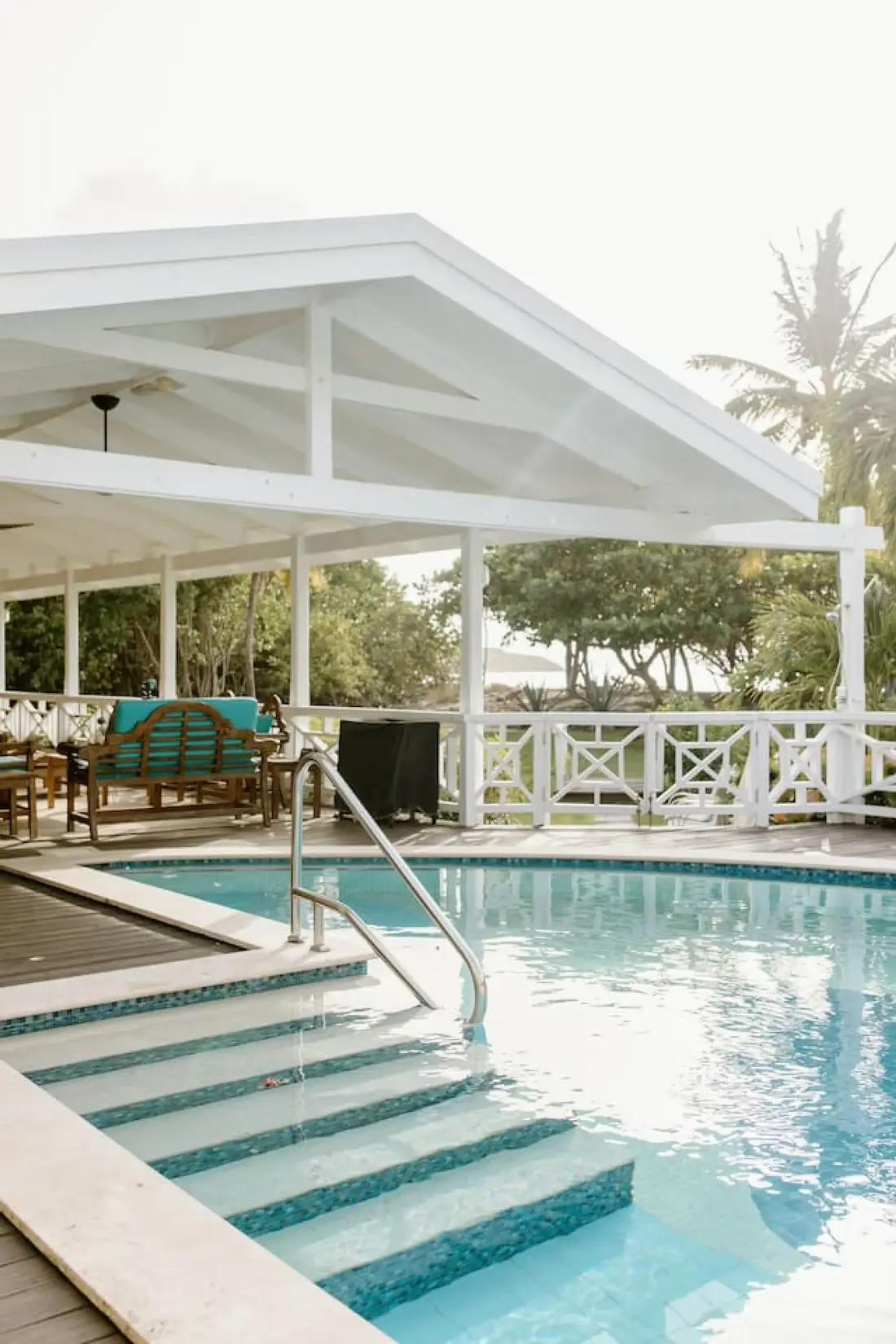
The fishing day ends in a kitchen, and that is where a villa beats any hotel on this island. Each of our houses runs a full kitchen, and the fillet bag from a charter turns into the best dinner of most stays. Guests in our East End homes sleep closest to Green Cay Marina's sportfishers, with The Cerulean a short drive from both the marina and the Christiansted fleet; our largest houses hold the multi-angler crews this sport's whole-boat economics favor, and west-side guests at Sunset Sea-Clusion grill their wahoo over the sunset that side owns. Tell our team the week you want to fish and the fish you want, and we will match you with the right dock.
Sources
Written from official and first-party sources, checked August 2026. Hours, prices and event dates change — confirm before you go.
In this guide
Stay nearby
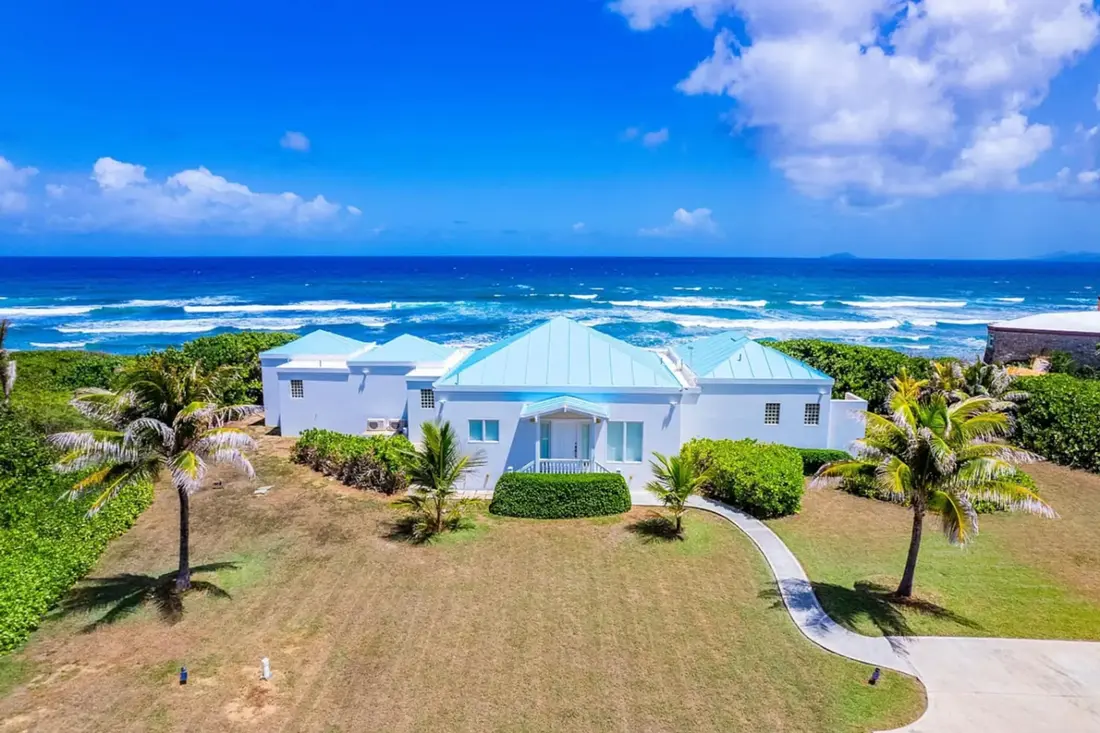
Private oceanfront on the East End with a sandy, swimmable beach, pool, outdoor kitchen and a separate guest cottage. Sleeps twelve.
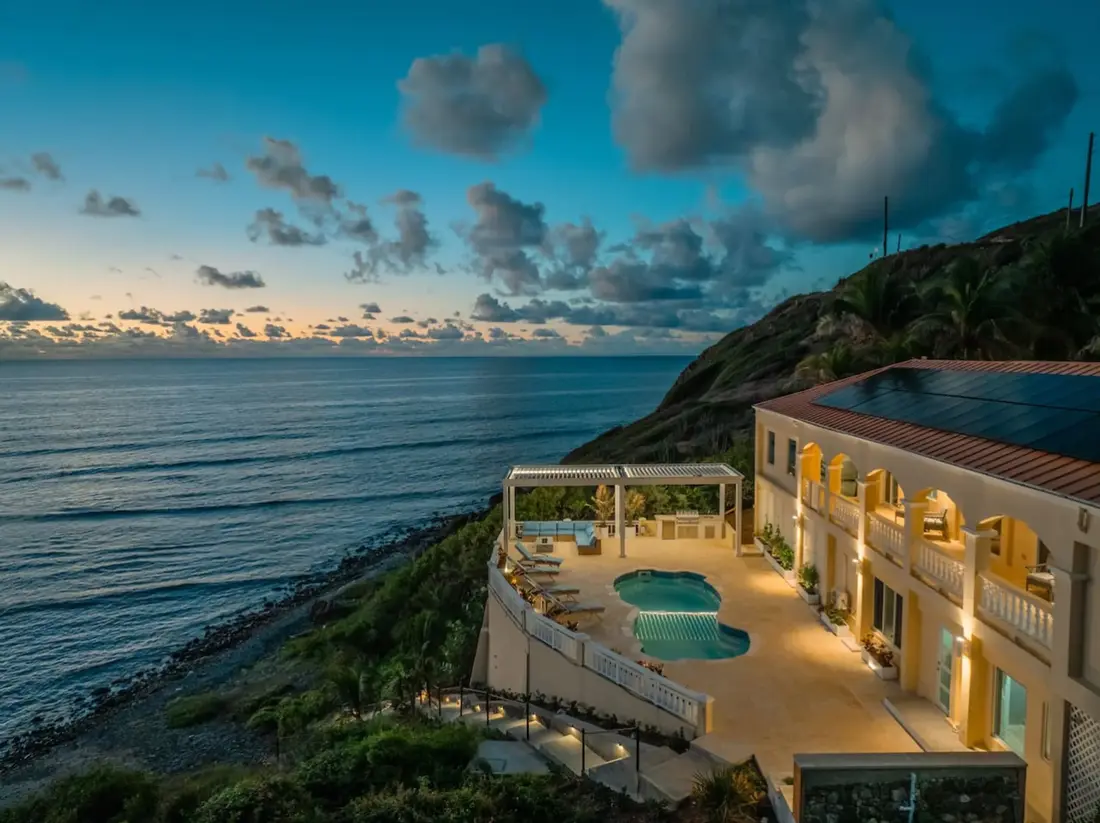 The Cerulean5 bd · 5 ba · sleeps 12 · Christiansted
More in On the Water
Sources
12 references, listed in full at the end of this guide — official park, refuge, tourism-board and business sources, checked August 2026.