
Five Days on St. Croix
Both towns, the wall, the bio bay, the East End, and one slow beach day. Five days is the island's sweet spot.
Five days on St. Croix is enough for the island's three essential days plus two you get to choose, and short enough that every yes costs a no. This page is built around those choices: the three anchors that survive every shortening of a St. Croix trip, the menus for the two open days, and the list of things a five-day visit should drop without guilt.
The five-day accounting
Start with arithmetic most itineraries skip. A five-day trip rarely contains five usable days. The first one loses its morning to airports and its first hour on island to the rental counter and the grocery run, and the last one belongs mostly to checkout and the flight. What a five-day booking really holds is three to four full days plus two fractions, and a plan that pretends otherwise ends in a rushed week and a skipped nap. So this page budgets the fractions separately — an arrival-salvage plan at the top, a departure-reality plan at the bottom — and spends the full days on the things that earn them.
The full days divide cleanly. Three of them are settled questions on this island: a boat day at the reef monument offshore, a day on the west end, and a morning in Christiansted, which shares its day with whatever you like. The remaining one or two days are open, and the right way to fill them is from a short menu rather than from ambition. Everything below follows one triage principle: when a five-day trip has to choose, it keeps the things that exist nowhere else — the protected reef, the 1848 fort, the rum house running since 1760 — and drops the things that resemble a very good beach day somewhere else in the Caribbean, because the very good beach day is already built into every remaining afternoon.
Two background constraints frame all of it. St. Croix stretches about 22 miles, Christiansted on its northeast shore and Frederiksted on its west coast, and crossing between them takes around 40 minutes of driving on the left side of the road in a normal American car. There is no Uber or Lyft here, so the car gets reserved when the flights do. And for U.S. citizens the whole trip is domestic: no passport out, no customs home. The car guide and the flights guide carry those details so this page can spend its space on decisions.
The arrival fraction
What Day 1 gives you depends entirely on when the plane lands, so plan it in two versions.
An afternoon arrival leaves room for exactly three errands, in this order: the car, the groceries, the water. Pick up the rental, spend the first ten minutes of driving somewhere calm getting the left-side habit installed, and stop at Seaside Market or Plaza Extra before the villa rather than promising yourself a second outing later — on a five-day trip, every kitchen breakfast you stock tonight buys back a restaurant hour you do not have. Then get wet before sunset. The first swim is the switch that turns a travel day into a vacation day, and no villa in this portfolio is far from water. If your base is near Christiansted, close the evening on the harbor boardwalk with dinner at Galangal or Shupe's, depending on how dressed anyone feels; if it is not, dinner from the grocery bags on the deck is the correct call, and the boardwalk keeps.
An evening arrival gets the reset plan instead: car, one bag of essentials if a store is still open, villa, bed. Resist the urge to schedule redemption at dawn. The trade you make instead is quieter — tomorrow starts unhurried, with the real grocery run folded into its first hour and the first swim moved to mid-morning. Guests who fight an evening arrival by stacking the next day usually pay for it on the boat.
Either version ends with the same five minutes of homework: confirm the boat reservation you made before flying, look up which half of the moon's cycle your dates sit in (this decides one evening later), and check the week's forecast once, then stop checking it.
Anchor one: Buck Island
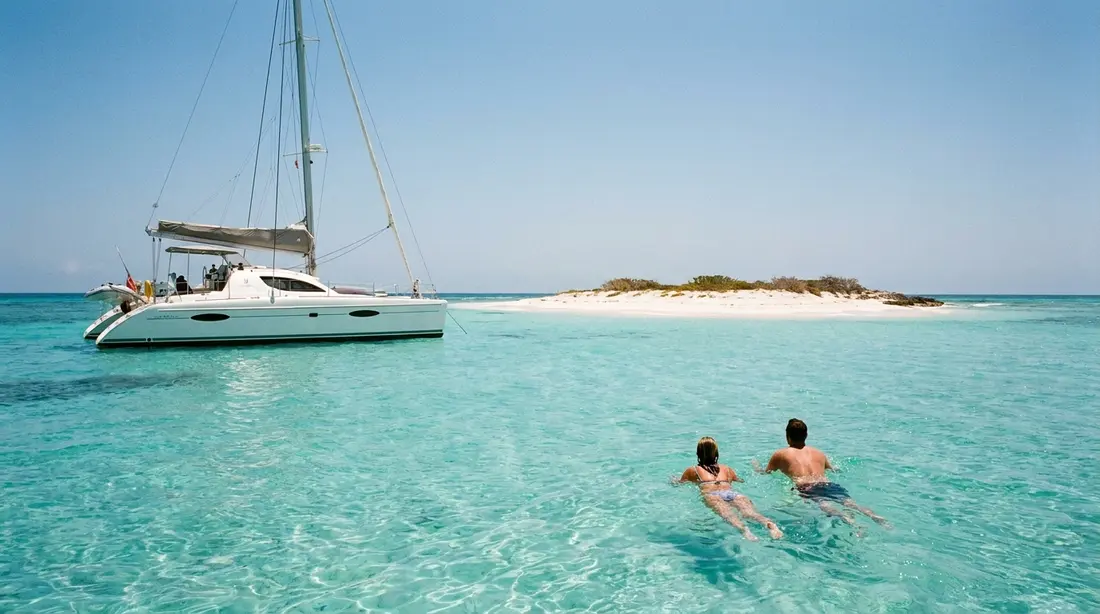
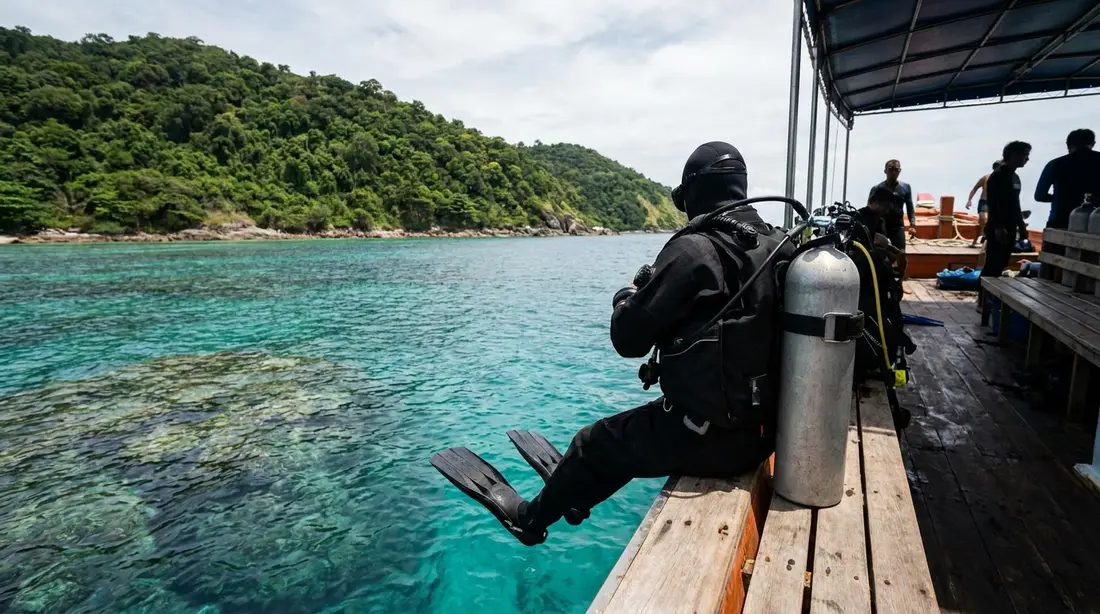
Every itinerary this site publishes shortens differently, and one day survives all of them. Buck Island Reef National Monument has carried federal protection since 1961, its surrounding water is a full no-take reserve, and the condition of the coral is the direct result; the swim trail marked along the lagoon floor is among a handful of underwater trails in the country, and Turtle Beach, the white stretch on the little island's west end, ends the trip in knee-deep clear water. No skill beyond ordinary swimming is required, guides run the trail, and flotation comes with the boat. When a five-day trip cuts, this day is the last thing standing.
The booking constraint, in one line: access runs only through a small set of Park Service concessionaires with fixed passenger counts, so the boat gets reserved before you fly — the boat tours guide compares every permitted operator and the half-day against full-day question.
Placement is the five-day trip's most consequential scheduling call, and the rule is this: put the boat on your first full day, and never on your last. Wind cancellations get rebooked rather than refunded, so the reservation needs open days behind it to fall into, and a five-day trip has fewer of those than a week does. The seven-day plan can afford to spend two days finding its legs first; you cannot. Book the earliest departure your group will make, plan nothing for that evening beyond dinner, and treat the day as spent — a full morning of reef swimming uses people up more thoroughly than the distance suggests. Guests based on the East End should ask their operator about leaving from Green Cay Marina instead of the Christiansted waterfront and pocket the saved drive.
Anchor two: the west day
The island's west end holds its history, its rainforest, and its sunset-facing coast, and a five-day trip gives it exactly one day. That day must be a weekday, because the west end's indoor half runs on weekday clocks — pin this day to the calendar before placing anything else around it.
Here is the choice the seven-day plan never forces: at five days you tour Estate Whim or Cruzan, and you pick one. Trying both means spending the day's best beach hours in parking lots. The logic for each:
- Choose Cruzan if the working island interests you more than the historical one. Estate Diamond has produced rum continuously since 1760, the tour walks a functioning distillery with the molasses in the air, and weekday slots run three times across the early afternoon — noon, half past one, and three, per the distillery at last check — with a reservation requested a few days out — the distillery guide has the mechanics. Bottles bought here fly home in checked bags, a fact worth remembering four days from now.
- Choose Whim if the history is the draw. Estate Whim is the restored sugar plantation whose windmill and grounds explain what built this island; the great house interior has been closed since the 2017 hurricanes, so the visit lives outdoors, and posted days are limited — Wednesdays and Saturdays at last check — which can decide your west day's date all by itself.
Around the one tour, the day assembles itself. Drive up Mahogany Road, where the forest closes over the pavement — a ten-minute detour proves the island's wet green half exists, and the Domino Club, pouring under the canopy since 1971, cash only, is the stop if the group wants the full strange glory of it. Come down to Frederiksted for the fort: the red-brick Fort Frederik is where emancipation was proclaimed to the crowd in July 1848, and even ten minutes on the ramparts changes what the rest of the coast means. Walk out on the pier if the light is good. Then finish at Rainbow Beach north of town, where the water stays calm, chairs rent by the day, the beach bar has held its corner for around three decades, and the sun goes down over open sea — the one card the east side of the island cannot play. Eat on the west coast before making the 40-minute drive home; an upgrade for couples and celebrating groups is a seat on a Frederiksted sunset sail, booked ahead because the boats are small.
One calendar note: if your trip includes a Saturday or Sunday between September and March, Sandy Point — the two-mile undeveloped refuge beach, open weekend days 10 to 4 in that window and closed entirely April through August for leatherback nesting — can claim the west day's beach hours. The gate schedule decides, never you.
Anchor three: the town morning
Christiansted deserves a day and gets a morning; the two-hour version, done early, covers a remarkable amount. Fort Christiansvaern opens at 8:30 at last check, and the cool first hour is the right one for its ramparts and cells. The National Historic Site around it — the Steeple Building, the Scale House, the old customs house — sits inside a few walkable blocks, and the town itself does half the teaching: pastel Danish masonry, red roofs, and the arcaded sidewalks that have been shading King and Company Streets since the 1700s. Alexander Hamilton grew up two streets from the fort and clerked here before New York. The Christiansted guide maps the loop building by building.
The two-hour discipline matters because of what it protects: the afternoon. Finish with a boardwalk lunch over the harbor while the seaplanes come and go, pick up a hook bracelet on Company Street if the souvenir question needs settling, and be back at a beach or the villa pool by two. On a five-day trip the town morning always shares its day — usually with the first flex afternoon below — so treat noon as a hard stop. Groups that let town sprawl into a full day are spending flex hours they will want back on Day 5.
The two flex days
What remains after the anchors is the trip's actual character: one or two open days, chosen from a menu instead of assembled from everything. Pick by the group you have, and notice that each option is a single decision, made the night before over dinner.
The deeper-water option
For groups that surfaced from Buck Island wanting more, the north shore is the answer. At Cane Bay the sand gives way to a reef shelf, and about a hundred yards out the bottom tips over the lip of the Cane Bay Wall, a drop that starts near 40 feet and continues into serious blue. Snorkelers can swim out and hang over the edge on a calm, clear morning; certified divers walk in from the beach, which almost nowhere else lets you do. Go before noon, while the sea is at its flattest, and stay for the afternoon — the beach bar is steps away, and AMA, the restaurant on the sand, serves Tuesday through Saturday at last check. On the way there or back, Salt River Bay earns its stop: Columbus Landing Beach inside the national park is calm, shallow, has restrooms and grills, and marks the 1493 landing site — the only known ground now under the U.S. flag where Columbus's crew came ashore. A daytime kayak through the mangroves is the longer version of that stop.
The whole-island option
For groups that would rather see everything once than one thing deeply, spend a flex day on the perimeter drive. The circuit strings together the Salt River overlook, the north shore beaches, the quiet south coast, and whichever roadside pate stop appears at lunch, and it asks almost nothing of anyone's knees, which makes it the default pick for mixed-energy groups and the day after the boat. Important triage note: the loop is a choice for a flex day, never an addition to one — a group that books the loop and the deep-snorkel morning and a second beach day has quietly rebuilt the seven-day trip inside a five-day booking.
The second-beach option
The plainest choice and, by guest report, the least regretted: another day of sand, picked for contrast with wherever your villa sits. East End groups walk into the Nature Conservancy preserve at Jack's and Isaac's Bays — a cactus-lined 20-minute trail, then a beach with no facilities and frequently no people — or take Goat Hill's ridge climb first and swim after. Families aim at Chenay Bay's shallow, turtle-grazed water or the pavilions at Cramer's Park. Lunch on this side of the island means Duggan's Reef or The Deep End. West-based groups flip it and claim Dorsch or Frederiksted's town beach. Whatever the pick, the flex-day beach comes with the trip's easiest evening attached: pool, grill, early night.
The evening that binds to the moon
One flex evening is spoken for if your dates cooperate. Salt River's bioluminescent bay glows year-round, but moonlight drowns the effect, so outfitters schedule their paddles around each month's new-moon stretch. Check the phase against your dates on arrival night; if a dark stretch lands inside your five days, book the tour onto whichever evening follows an easy day, and let it outrank any dinner plan it collides with. If the moon is full all week, let it go without ceremony — this is the first thing the weather-and-sky triage removes, and it will be here next trip.
The weather swap
One rule handles nearly every disruption: anchors slide onto flex days, never the reverse. A scrubbed boat rebooks into flex day one or two; a north swell that closes Cane Bay sends the water group to the calmer Frederiksted side; a wet day — rare outside autumn — swaps in the rainy day plan's museums and tasting rooms and gives its date to whatever it displaced. This is the structural reason the flex days exist unassigned: they are the trip's shock absorbers, and a five-day plan with every day pre-committed has none. Season shifts the odds — steadier wind in winter, flatter seas in late summer, the insurance-and-flexibility caveat in storm season — and the weather guide makes the month-by-month case.
The cut list
Triage means saying what goes. These are the things a five-day trip drops, with the reasons, so the group can stop relitigating them at breakfast.
- The Annaly Bay tide pools. The hike is 3.6 miles round trip with real climbing, it is only safe at low tide in calm seas, and it therefore needs a spare morning held open against conditions — a luxury this trip does not carry. Cut it and feel nothing; it is the first stop on the ten-day version of this island.
- The second dive day. Certified divers get the wall once, from shore, on a flex morning. The Frederiksted Pier at night and the Butler Bay wrecks are a different trip — the adventure week exists precisely because that program cannot compress into five days, and attempting the compression is the classic five-day error: six alarms, a bent schedule, and a group that saw everything while enjoying little of it.
- Doing all three flex menus. Covered above, worth repeating: the loop, the deep-snorkel day, and the second beach day are one slot's competitors, never a sequence.
- The St. Thomas day trip. The seaplane and ferry make it possible; five days make it foolish. A day spent in transit to a busier island is a full fifth of this trip.
- The do-nothing day. The week-long trip schedules one and is right to; here it shrinks to do-nothing afternoons, which the anchor-plus-satellite structure already provides. This is the one cut that costs something real, and it is the price of the shorter booking.
What is deliberately absent from this list: Buck Island, the west day, and the town morning. Groups sometimes propose trading the town morning for a beach hour; take the trade only if someone has been here before. First visits that skip both towns come home having seen a resort island that St. Croix, specifically, is not.
The departure fraction
The last day plans backward from the flight. Rohlsen's departure routine is domestic-plus-one-step — no customs for U.S. citizens, but there is a federal agriculture inspection before check-in, so the buffer is a normal domestic buffer with a small tax on it; the flights guide linked above covers timing. From that anchor, the morning's one real question gets answered: does the last swim happen? With a mid-afternoon or later flight, yes — checkout, then two unhurried hours at the beach nearest the villa, with the swimsuits riding home in a plastic bag because nothing line-dries in island humidity. With a morning flight, no, and the correct response is to have taken the last swim the previous evening on purpose rather than to attempt a dawn sprint. Rum from the west day goes into checked luggage. Gas the car near the airport; the stations cluster on the main roads, and returning it empty-handed of receipts costs more than the fuel. Guests who build an elaborate final morning learn that the airport's rhythm eats plans; guests who build a simple one get a swim.
The three- and four-day variant
Shrink below five days and the triage principle sharpens into a single instruction: pick one coast and stay on it. A long weekend spent commuting across the island returns home with a windshield tour; the same weekend spent inside one zone feels complete.
Based east or in Christiansted, the three-day shape is: town morning and a calm East End bay the first day, Buck Island the second, and a final day built from Point Udall, the hike-in bays, and a long lunch at the water. The west end waits for the return trip, minus one exception — if a September-to-March weekend day falls inside the window, Sandy Point justifies the one crossing. Based west, invert it: fort, Rainbow, the rainforest road and the one tour, with the boat still worth the eastward drive on the middle day because it is worth nearly anything. A fourth day, wherever it lands, becomes the single flex day and follows the same menus as above, one pick only. The three-day page writes the cruise-length version out in full; going the other direction, groups that read this whole page and feel cramped should hear that as a diagnosis — the trip they are describing is the seven-day itinerary, and the fix is two more nights, booked now.
The drive-time budget
The pacing rule underneath every choice above can be stated as a number: keep planned driving under about an hour a day, total. The island makes this easy if the day has one anchor and hard if it has two, because the anchors live in different zones — town sits northeast, the boat leaves from the northeast coast or the East End marinas, Cane Bay is mid-north-shore, and the west program is a 40-minute cross from most of the villa inventory. Stack two zoned anchors in one day and the car claims two-plus hours of it, which on a five-day trip is a tenth of a vacation day spent watching roundabouts.
One anchor beats two for a second reason that has nothing to do with roads: tropical sun and salt water tax people faster than they expect, and the vacationer who was useless by 4 p.m. after a reef morning was normal rather than unfit. The structure that survives contact with actual bodies is one zoned anchor, satellites within ten minutes of it, and an evening chosen by coast — harbor dinners when based east, over-water sunsets when west. Morning is for water everywhere on this island: the wind builds after lunch, so seas are flattest and clearest early, and every swim scheduled before noon is better than the same swim at three. The five-day plans that fail are almost never short of time; they are short of afternoons their own mornings did not spend.
The plan in one table
| Slot | Holds | Cut or moved if |
|---|---|---|
| Arrival fraction | Car, groceries, first swim; reset plan after dark | Never cut; it shrinks on its own |
| Full day 1 | Buck Island, booked pre-trip | Wind — slides onto a flex day, which is why they stay open |
| Full day 2 | Town morning, flex afternoon at a calm bay | Repeat visitors may trade town for water |
| Full day 3 | The west day: one tour, fort, Rainbow sunset | Pinned to a weekday; Sandy Point may claim its beach hours in season |
| Full day 4 | Flex: deeper water, the loop, or a second beach | Absorbs anything the weather moved; one menu pick only |
| Departure fraction | Last swim if the flight allows; agriculture check buffer | Morning flights convert the swim to the prior evening |
| Moon-dependent evening | Bio bay paddle on a dark-phase night | Full moon all week — release it, no substitute needed |
Questions guests ask
Is five days enough for St. Croix?
Enough for the essential island, with choices; short of the comfortable one. Five days covers the reef monument, one full west day, Christiansted, and one or two chosen extras, all at a livable pace, and that is a complete first trip by any fair standard. What it lacks is redundancy — spare days for weather, a second pass at a favorite, the empty day that makes a week restful. Treat five days as the trip that determines which longer trip you take next. A large share of this site's repeat guests ran exactly that sequence.
What must be booked before the flight?
Two things absolutely: the rental car, because the island has no rideshare and the agencies run out in season, and the Buck Island boat, because permitted capacity is small and fixed. Two more reward a pre-trip look: the bio bay tour if the moon favors your dates, and the Cruzan tour slot or a sunset sail seat a few days out. Dinner reservations matter for the handful of small rooms in winter; one table booked from home covers the celebration night. Everything else on this page books on island or needs no booking.
Which day should the boat go on?
The first full day, as a rule, and the reasoning is pure insurance: operators cancel conservatively for wind, cancellations rebook rather than refund, and a Day 2 reservation has three days behind it to land in while a Day 5 reservation has none. The costs of going early — a group still settling in, an early alarm — are real and smaller. If the forecast for your first full day looks marginal when you book, ask the operator directly; they know their own cancellation patterns better than any app does.
Can the bio bay, the boat, and the west day all fit?
Usually, because they occupy different slots: the boat and the west program each take a day, while the bio bay takes an evening, weather and moon permitting. The collision to avoid is stacking the bio bay onto the west day's night — the paddle launches from Salt River on the north shore, and adding it to a day that ends in Frederiksted builds a late, tired, cross-island triangle. Attach it to the town-morning day or a flex day instead, and keep the west evening for the sunset it exists for.
How much of the trip is spent driving?
Under this plan, very little: one deliberate crossing for the west day, short zoned hops otherwise, and a total that stays inside about an hour on most days. The left-side adjustment takes most drivers a day and is easier than advertised, since the cars are ordinary left-hand-drive U.S. models. The habits that help: a co-pilot for the first day's roundabouts, headlights and patience on the unlit cross-island stretches, and no long drives scheduled after reef mornings, when the driver is the tiredest person on the island.
What does a five-day trip cost beyond the villa?
The fixed spends are the car for five days and one boat ticket per person, the latter being most groups' largest single line. The optional tier is short here by design: one distillery or museum admission, the bio bay tour if the moon allows, maybe a sail. Beaches, forts-for-pocket-change, Point Udall, and the entire east-end trail system cost nothing or nearly so. The grocery run on arrival is the quiet saver — five breakfasts and two deck dinners from a villa kitchen shorten the restaurant column noticeably. Exact prices move; the operator pages linked through this guide carry current ones.
What changes with kids along?
The skeleton holds and the satellites change. Buck Island works for confident swimmers with operator age minimums checked at booking; the calm bays — Chenay, Cramer's Park, The Shoys — replace the deeper-water flex options; the town morning shortens to the fort's cannons and an ice cream; and the west day keeps the fort and Rainbow while dropping the distillery tour, which children rate exactly as you would predict. Bedtimes argue for the eastern half of the plan generally. The family itinerary rebuilds a full week around those constraints, and its logic compresses to five days the same way this page compresses the general week.
The base decides more at five days
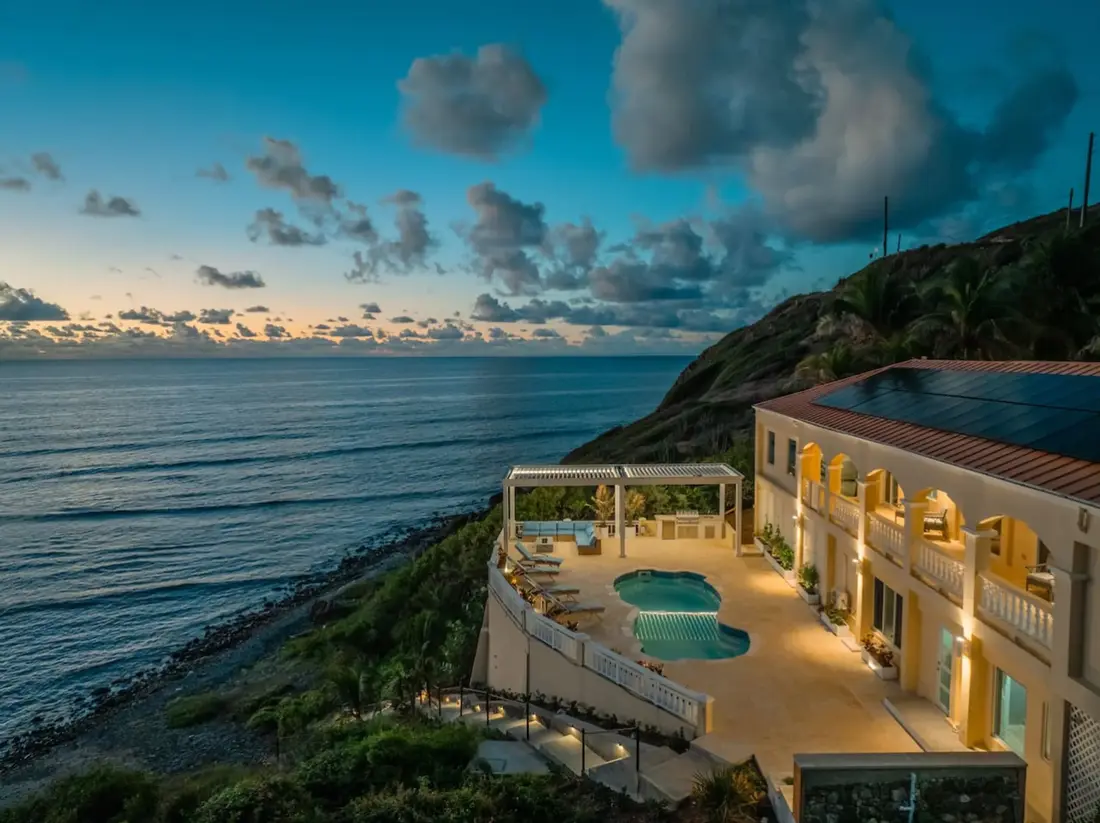
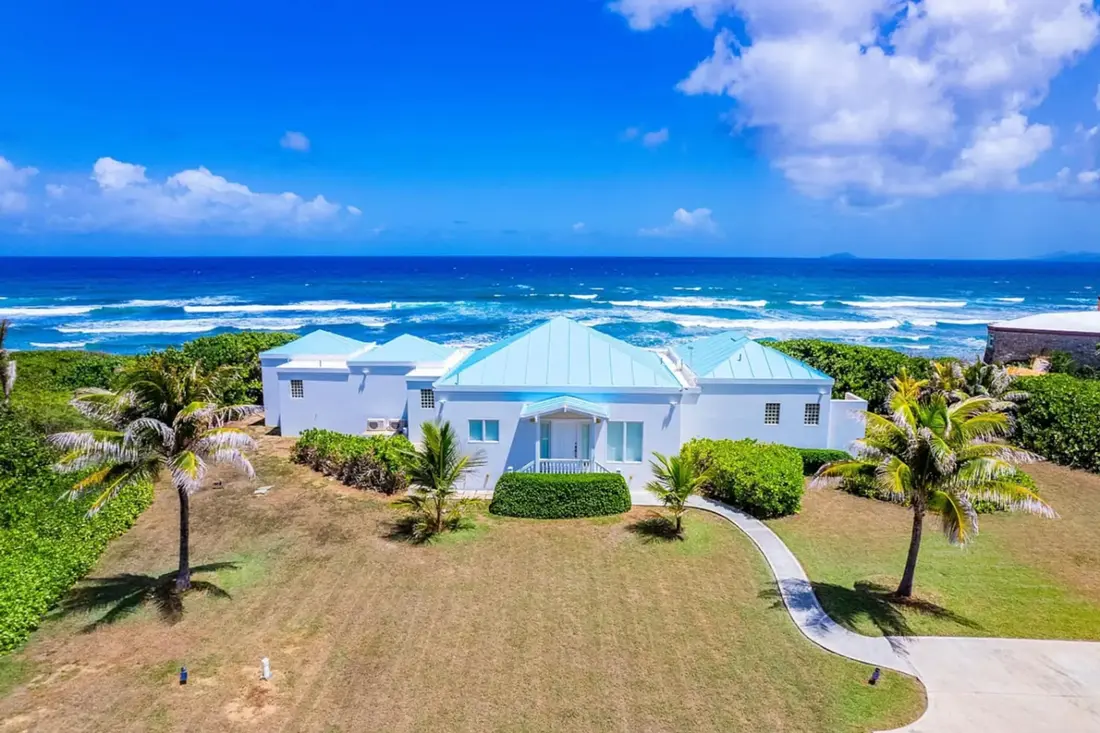
On a week-long trip the villa's location bends the plan; on a five-day trip it picks half of it, because with fewer days each saved crossing is worth more. A Christiansted base — most of our homes, from the in-town condos to Shoy's Beach House on its own beach — puts the fort walk, the boardwalk, the boat docks and the calm bays within minutes, and pays for its one long drive west with everything else short. An East End base like The Cerulean or Dragonfly adds Point Udall at sunrise for the cost of fifteen minutes and points straight at the preserve beaches, with Green Cay departures trimming the boat morning. A west-side base, Sunset Sea-Clusion, inverts the whole grid: the west day dissolves into ordinary evenings, the sunset is nightly, and the one long drive runs east to town and the boat instead. Pick the base to match the trip's center of gravity, and the five days stop fighting the map.
Sources
Written from official and first-party sources, checked August 2026. Hours, prices and event dates change — confirm before you go.
In this guide
Stay nearby
On The Shoys beach: six bedrooms, six baths, pool and hot tub, room for twelve, and the beach through the back garden.
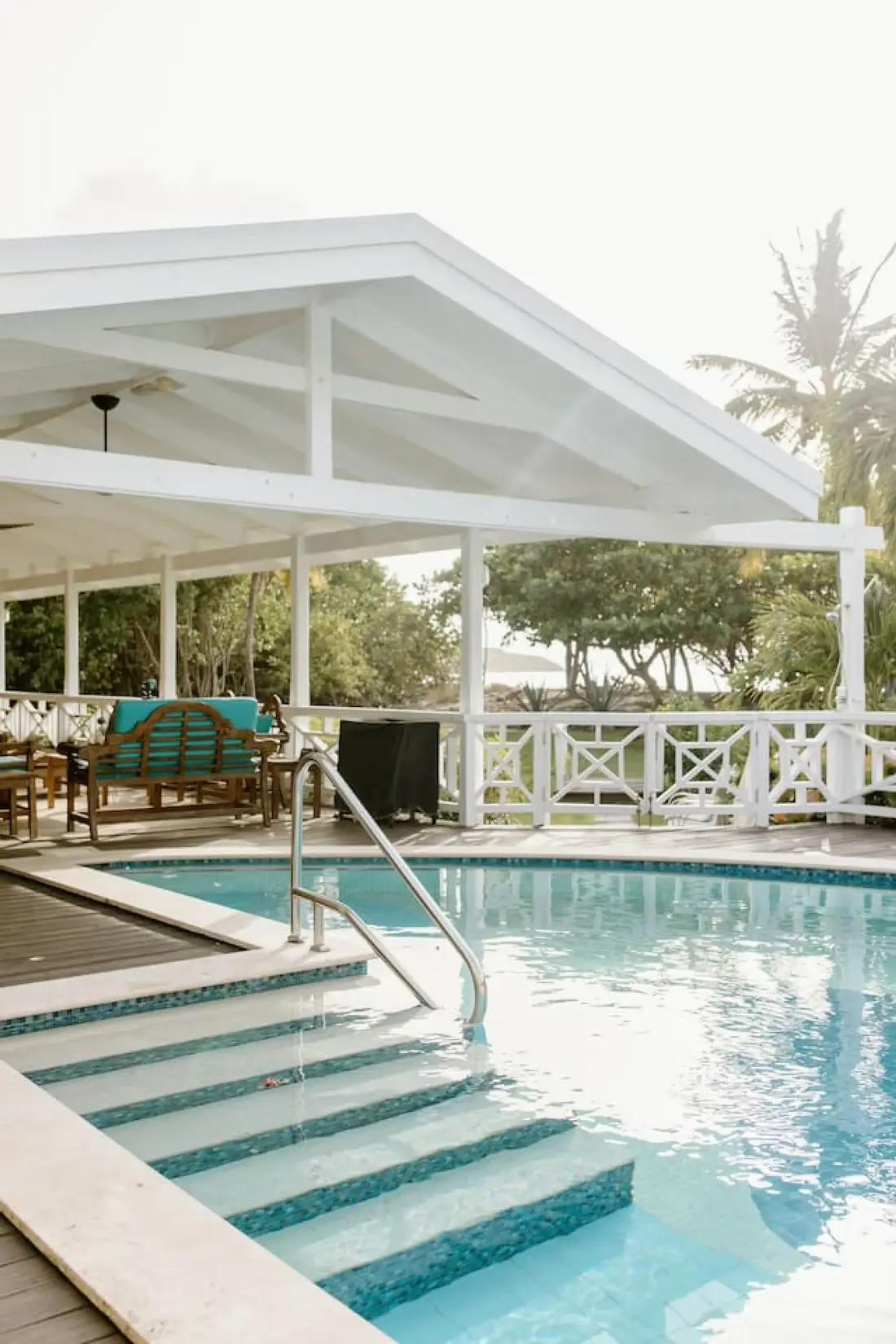 Shoy's Beach House6 bd · 6 ba · sleeps 12 · Christiansted
More in Itineraries
Sources
10 references, listed in full at the end of this guide — official park, refuge, tourism-board and business sources, checked August 2026.