Sailing St. Croix
Day sails, seasonal tall-ship deck time with World Ocean School, and the harbor culture of Christiansted's boardwalk.
St. Croix lies about 40 miles south of the rest of the Virgin Islands, off to one side of the charter circuit that runs through St. Thomas, St. John and the British Virgin Islands. That gap is the whole character of sailing here. The water is the same warm, trade-blown Caribbean the northern islands are known for. The boat traffic on it is a fraction of theirs. This page is the island's sailing overview: the wind and the water, the ways a visitor actually gets aboard, the yacht club and its races, the marinas and anchorages, and the view from a cruising deck, with links to the pages that cover each kind of trip in full.
Where St. Croix sits on the sailing map
The northern Virgin Islands form one of the tightest cruising grounds anywhere. St. Thomas runs a large day-charter trade off its cruise piers, and the British Virgin Islands, an hour's flight or a long day's sail north, hold one of the world's biggest bareboat fleets, with hundreds of rental yachts turning over every Saturday out of Tortola. St. Croix sits apart from all of it. There is no bareboat base here, no marina the size of the northern hubs, and the scheduled fleet you can sail on is short enough to name in a paragraph.
The crossing is part of the reason for the quiet. A boat sailing down from St. Thomas carries the trades the whole way, but the return north is a hard windward beat into that same wind, some 40 miles of open water dead upwind, and that one-way arithmetic keeps most northern bareboats from ever making the trip. The boats that sail St. Croix mostly belong to St. Croix.
For a visitor that scarcity is mostly a gift. The reefs are less crowded, the anchorages quieter, and the boat you book is usually run by the person at the wheel. The cost of it is choice: where the BVI offer a hundred hulls, St. Croix offers a handful, so sailing here means picking from a short, well-known list rather than shopping a fleet. The island is also the biggest of the U.S. Virgin Islands and United States soil, which strips away a layer of friction the rest of the region carries. No passport is needed for U.S. citizens, boats arriving from other U.S. ports clear nothing on the way in, and only vessels coming from foreign waters, the BVI included, report to customs. The wider arrival picture, by air and by ferry, is in our getting to St. Croix guide.
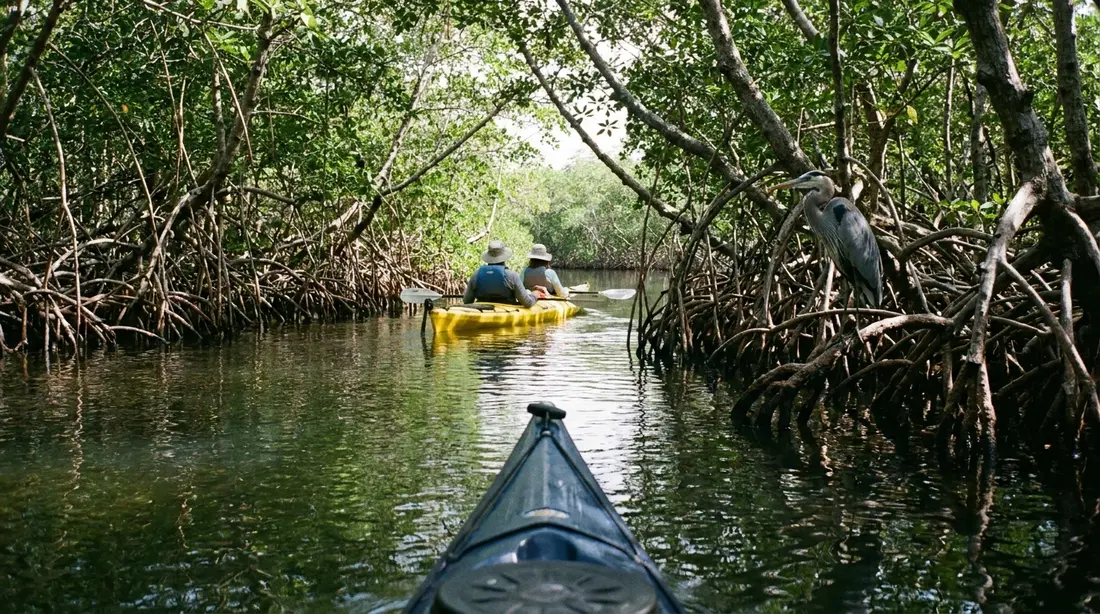
The trade winds
St. Croix sails on the northeast trades, and they blow nearly every day of the year. Offshore they run about 15 to 22 knots on an ordinary day. The direction turns on a seasonal hinge. In the winter months the wind sits a little north of due east and stiffens, often 15 to 20 knots and up, while by early summer it backs toward the southeast and eases to 10 to 15, then softens further to 5 to 10 in the late-summer lulls. The reinforced winter breeze carries a local name, the Christmas Winds, and it runs roughly from mid-December into March. That stretch delivers the strongest and steadiest sailing of the year, along with the liveliest water to cross.
Two patterns hold in every season. The breeze is softest around dawn and builds through the afternoon, so the smoothest sailing is a morning errand and the friskiest is after lunch. And the tide barely matters: the range here runs well under two feet, so current is rarely the thing a sailor plans around. Wind is. The full season-by-season weather picture, rain and heat included, is laid out in our weather and when to visit guide.
| Season | Trade winds | What it means under sail |
|---|---|---|
| Mid-December to March | North of east, 15 to 20 knots and up; the Christmas Winds | Strongest, steadiest sailing; brisk channels and lively crossings |
| April to June | Easing toward the southeast, 10 to 15 knots | Gentler wind, flatter seas, clear water; a favorite stretch |
| July to October | Southeast, often light, down to 5 to 10 knots in the lulls | Calmest surface of the year; watch the hurricane-season forecast |
| November to mid-December | Trades filling back in from the northeast | Settled shoulder before winter; quiet water and quiet boats |
How the four coasts sail
Set a long, low island broadside to a steady easterly wind and each shore ends up with conditions of its own. Reading them is most of what local knowledge amounts to here.
The East End, from Teague Bay out to Point Udall, is the windward corner. It meets the trades first and fullest, which makes it the island's natural racecourse and the reason the yacht club stands there. Teague Bay itself lies behind a reef, so it holds flat water for dinghies even while the wind honks over the top. The north shore, running west past Christiansted, Salt River and Cane Bay, is working water: the harbors stay calm behind their reefs while the open sea offshore carries whatever the trades are doing, and the run out to Buck Island is the classic St. Croix sail, a fast reach out to the reef and back. The west end around Frederiksted lies in the island's shelter, the downwind shore, where the water lies flattest and the calm-water day sails and evening trips go out. The south and southeast coasts are the exposed side, open to swell that wraps around the island and stitched with reef, which a cruising boat treats as a daylight-only, eyes-on proposition.
The upshot for planning is simple. The same winter trades that raise whitecaps off the open north shore leave the sheltered west coast calm, which is why the bulk of the island's easy sailing happens off Frederiksted. When the wind is up and you still want a proper sail, the East End and the Buck Island run are where to find it.
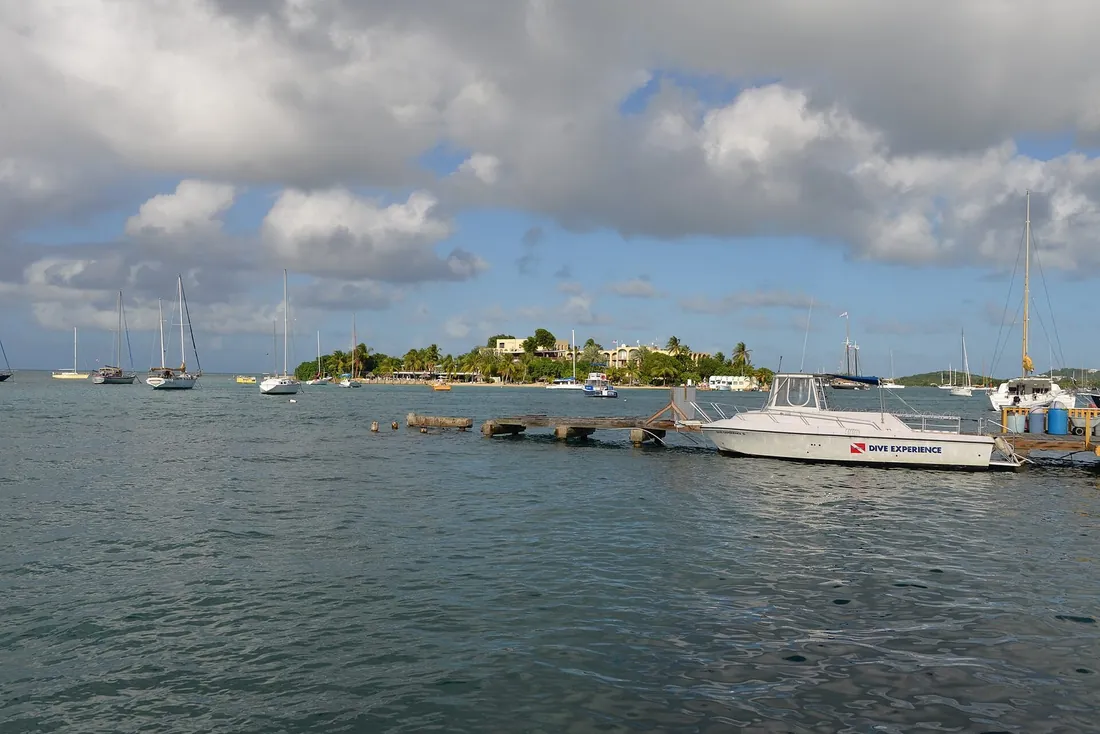
Ways to get out under sail
Nearly every visitor sails one of five ways, and each has a full reference page of its own here. The short version of the menu:
Crewed day sails
The everyday sailing here is the crewed day trip on a small multihull, most of it pointed at Buck Island or the calm west coast. The fleet is owner-run and short, with names like Caribbean Sea Adventures, Big Beard's, Jolly Roger and the East End trimarans Teroro II and Dragonfly. Which boat suits which kind of day, and how a sailing day unfolds hour by hour, is the subject of the day sails and catamarans guide.
Sunset and music sails
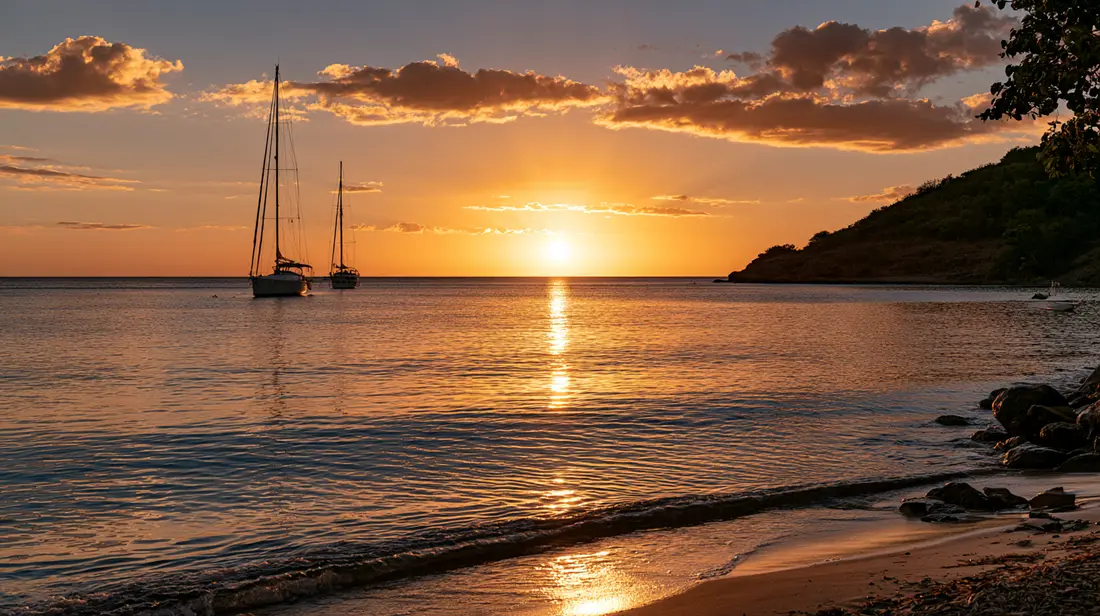
At dusk the boats go out for the sky rather than the snorkel. The signature trip is Lyric Sails' live-music evening on the west coast aboard the 63-foot catamaran Jolly Mon, with more evening cruises leaving the Christiansted boardwalk. Every evening operator, coast and price sits in the sunset sails guide.
The Buck Island snorkel sail
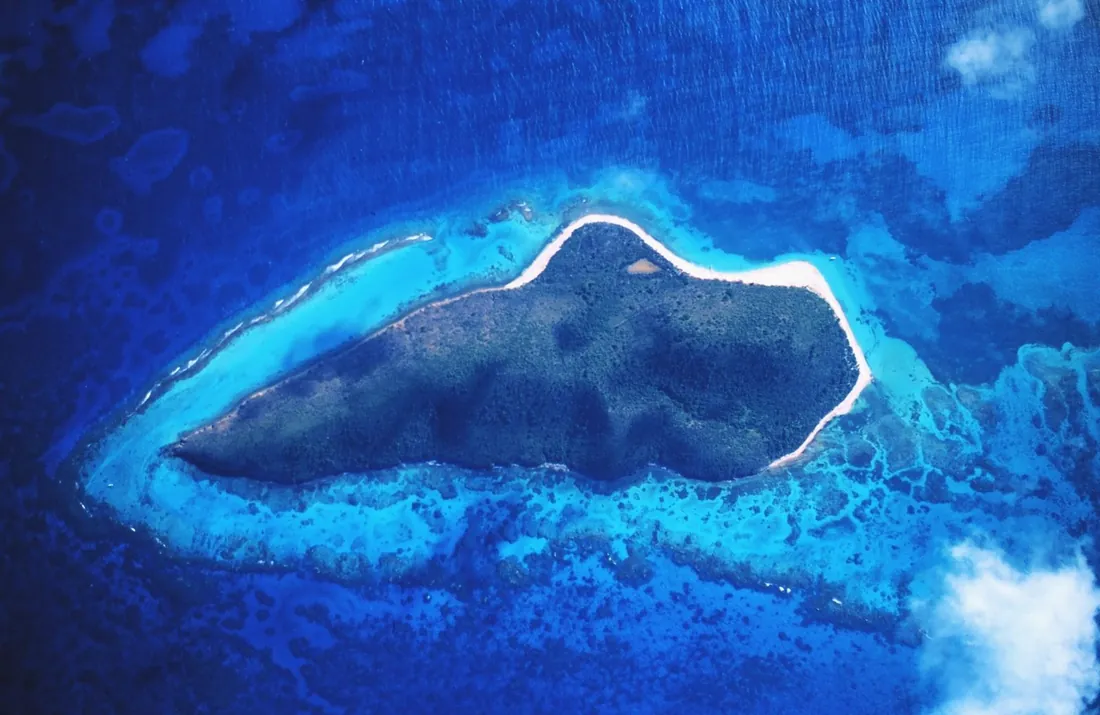
The classic St. Croix sail crosses to Buck Island Reef National Monument, a 19,015-acre no-take reserve just off the northeast tip of the island, for the marked underwater trail and Turtle Beach. Only five National Park Service concessionaires may carry passengers there. The Buck Island Reef National Monument guide covers the reserve itself, the underwater trail guide covers the swim, and the Buck Island boat tours guide covers choosing and booking a boat.
Private charters, term charters and bareboats
Book a whole boat and the day bends to your group: your route, your pace, your date. St. Croix's private fleet runs from a six-guest boat off the Frederiksted pier to the 49-passenger Jolly Mon. What the island does not have is the northern islands' by-the-week term charters and self-drive bareboats, which remain a BVI product; visitors who want to steer for themselves generally hire a captain who will hand over the helm. The whole-boat market, fishing included, is in the private boat charters guide.
The tall ship and the school sail
In winter an educational nonprofit, World Ocean School, bases a wooden schooner in Christiansted, in recent seasons the Denis Sullivan, standing in for its historic flagship Roseway, and sells public late-afternoon sails that fund its programs. The organization has run seamanship and marine-science voyages for St. Croix students for years, so a public ticket doubles as support for that work. The schooner and its evening sails are detailed in the sunset sails guide.
Learning to sail
Sailing instruction on St. Croix runs mostly through the St. Croix Yacht Club, and it is aimed at the young. The club's junior program takes children from age 5 to 18 and runs across all four seasons, carrying a sailor from a first season in an Optimist, the boxy little single-hander that novices start in, up through double-handed 420s and single-handed ILCA dinghies, the class most people still call the Laser, for those who catch the racing bug. The stated aim is a lifelong habit rather than a week's novelty, and this program is the pipeline that keeps the island's regattas full of local names.
Adults have a thinner menu. The yacht club is a private, member-oriented club rather than a public sailing school, and St. Croix has no commercial learn-to-sail academy of the kind found in larger charter ports at last check. A visiting adult who wants to learn the ropes, or simply take a turn at the wheel, is best served by a crewed charter: several captains here will teach a willing guest and hand over the helm in open water, a point covered in the private charters guide. Anyone set on formal lessons should contact the club directly to ask what is open to visitors in a given season.
The St. Croix Yacht Club
Organized sailing on St. Croix goes back to the 1930s and to one man's boat. Anton Teytaud, later a club founder, took up racing after a friend built a Snipe dinghy from plans printed in Rudder Magazine, and Teytaud bought one of his own; races soon grew to draw sailors and fishermen from St. Thomas. By 1940 he had moved up to a Comet and joined the Club Nautico in San Juan. Around 1949 a group including Teytaud, Ted Dale, Bob Sloan and Wilfred "Bomba" Allick formed the Comanche Sailing Club to organize one-design racing.
That group became the St. Croix Yacht Club. In its early years it gathered in Christiansted, first around town and then in rooms above the old cable office on King Street, with a gallery over the harbor. Its Memorial Day Regatta, first sailed in 1955, is the oldest continuously run regatta in the Virgin Islands. At the end of that decade the club moved to the water it races today: it bought two waterfront acres at Teague Bay on the East End in October 1959 for $35,000, finished a clubhouse by the summer of 1961, and held the housewarming that August. The club is still private, but its dinghies and keelboats are a familiar sight off the East End, and regatta weekends are the easy time for a visitor to watch, from the East End shore.
The racing year
The yacht club keeps a calendar of races through the year, from bathtub-simple beginner dinghies to keelboats, most of it sailed in and around Teague Bay. The recurring events, with their usual timing, run like this at last check:
| Event | Usual timing | What it is |
|---|---|---|
| Town Trips | Through the year | Races from the yacht club out to a destination and back |
| Crucian Open | Late January or early February | Multiclass dinghy regatta |
| St. Croix International Regatta | February | The marquee keelboat event, racing the water toward Buck Island |
| ISCA / ILCA Open | Memorial Day weekend | Single-handed dinghy racing, sometimes a team format with neighboring islands |
| Friday Night Blows | Last Friday of each month | Late-afternoon dinghy races inside Teague Bay |
| Back to School Regatta | Early September | One-day event for dinghies and beginners |
| Chandler Memorial | Early November | Two-day multiclass dinghy regatta |
| Commodore's Alumni Regatta | Late December | One-day race in 420s and ILCAs for experienced sailors |
Classes range from the Optimist up to keelboats, and dates shift year to year with the calendar and the volunteers, so anyone hoping to catch or join a race should confirm the current schedule with the club. The monthly Friday Night Blows are the most reliable spectacle for a casual visitor, sailed close to shore inside the bay in the last of the afternoon light.
The St. Croix International Regatta
The island's marquee sailing event is the St. Croix International Regatta, and it began with one racer's ambition. In 1992 Commodore Nick Castruccio set out to bring a big-boat regatta to the Buck Island Channel and pull crews from around the Caribbean, and he talked Mumm's Champagne into sponsoring it. The first Mumm's Cup, sailed that October, drew 69 boats; Peter Holmberg, racing with Team Heineken, won it and collected his weight in champagne, a prize that became part of the event's lore.
The yacht club has hosted the regatta since 1993. When Mumm's stepped away in 1999, the local Innovative Companies took over as sponsor through 2007, and the winning skipper's prize switched to his weight in Cruzan Rum from the island's own distillery. A run of hurricanes in the 1990s pushed the event out of the fall and into February, where the settled late-winter weather suits it. Later touches marked its history: a Dick Newick Perpetual Award for the leading multihull, added in 2013, and the renaming of the big-boat race as Captain Nick's Race for the founder. The bigger boats race the open water north of the island, taking in the rougher seas around Buck Island, while the youngest sailors run their Optimists inside Teague Bay, a fleet that has topped thirty boats in recent editions. Entries have come from Puerto Rico, the wider Virgin Islands and farther afield, which is what puts the international in the name. Dates and entry details change each year, so confirm the current edition before planning a trip around it.
Marinas and anchorages
St. Croix's boating infrastructure clusters on the north shore, around Christiansted and eastward. The main facilities, running from town out to the East End:
St. Croix Marine Center, Gallows Bay. The island's full-service yard sits just east of Christiansted on the edge of the harbor, with roughly 44 transient and permanent slips able to take vessels up to about 125 feet, gas and diesel at the dock, haul-and-launch service, showers and a chandlery for parts. For a cruiser it is the place to fuel, provision and, if the season calls for it, come out of the water.
Green Cay Marina, north coast. A few minutes east of town at Tamarind Reef, this 154-slip marina wraps a sheltered lagoon and serves live-aboard and recreational boats alike, with good protection in a blow and the shortest hop to Buck Island of any base. The East End day-sail trimarans and the sportfishing boats work out of here, close to our East End villas.
Salt River Marina, north shore. Small and quiet, with showers, water, shore power, fuel, ice and a few transient slips, Salt River is reached through a narrow cut in the barrier reef and a winding six-foot channel that leads back toward the mangroves. That mangrove-lined water is the most protected on the island, and the bay is also a national park; the wider area is covered in the Salt River guide.
Christiansted harbor. The town anchorage lies behind a barrier reef in sand and coral, with moderate shelter from the trades and a dinghy landing right at the boardwalk. The scheduled day-sail catamarans moor along this waterfront, steps from the restaurants of the Christiansted boardwalk.
Out at Teague Bay, the St. Croix Yacht Club is the East End's racing base, though a private one. On the west coast, Frederiksted offers an open, deep roadstead with good shelter from the easterly trades, where a winter westerly swell is the only regular intruder.
The cruising sailor's St. Croix
A boat arriving under its own sail meets an island guarded by reef. Both main harbors, Christiansted and Salt River, are entered through cuts in a barrier reef, which means daylight arrivals in good light and settled conditions rather than a night approach. The exposed south and southeast coasts, reef-lined and open to swell, are best given a wide berth. Christiansted's entrance channel is marked, but the reef on either side is unforgiving, and the standing local advice is to run it with the sun high and behind you. Once inside, the north-shore bays and the west coast hold the calmest water, the same shelter the day boats rely on.
Clearing in is simple by regional standards. As U.S. territory, St. Croix asks nothing of boats coming from the U.S. mainland or the other U.S. islands. A vessel arriving from a foreign port, such as the BVI or somewhere down-island, reports to U.S. Customs and Border Protection at the Christiansted port of entry on arrival. Requirements do change, so a skipper should confirm the current procedure before crossing.
On storms, the plain word is caution. Salt River's mangroves are the island's traditional refuge in heavy weather, but St. Croix is not a cyclone-grade hurricane hole and it is not a place to leave a boat unattended through the season; owners who keep a yacht here haul it at the Gallows Bay yard or move it out of the hurricane belt. The season and its planning are covered in the hurricane season guide. Provisioning is easy: full supermarkets, a fish market and a farmers market keep a galley stocked, as our groceries and provisioning guide lays out. Anglers running their own boat or a hired one will find the offshore picture in the deep-sea fishing guide, and where Buck Island's reef fits among the island's other swims in the snorkeling guide.
The island that builds boats
One measure of how deep sailing runs here is that St. Croix does not only sail boats, it builds them. Gold Coast Yachts, founded at Salt River in 1983 by Roger Hatfield and Chris Difede, has turned out well over a hundred multihulls in four decades, catamarans and trimarans for charter fleets, ferry services and private owners, shipped to customers far beyond the Caribbean. Some of the very boats that carry visitors across to Buck Island came off this yard. A working multihull builder on an island this size is unusual, and it is part of why the local sailing culture has the roots it does.
Who should sail how
The right way to get on the water depends on who is aboard.
- Couples. An evening on the water is the easy choice, a west-coast music sail or a small private charter timed to sunset. See the sunset sails guide.
- Families with children. A Buck Island half-day snorkel sail or a calm-water afternoon off Frederiksted suits mixed ages and short attention spans; families staying longer can look at the yacht club's youth program. The day sails guide sorts the options.
- Sailors at heart. The engine-free East End trimarans, a crewed charter with real helm time, or a visit timed to a regatta will scratch the itch. Start with the private charters guide.
- Cruisers arriving by boat. The marina and anchorage notes above, plus the customs and storm cautions, are the place to begin.
The same choices, laid out as a table:
| Way to sail | Best for | Covered in |
|---|---|---|
| Crewed day sail | First-timers, families, a full day out | Day sails and catamarans |
| Sunset or music sail | Couples, easy evenings, the light show | Sunset sails |
| Buck Island snorkel sail | Snorkelers, the classic island trip | Buck Island boat tours |
| Private whole-boat charter | Groups, celebrations, your own route and pace | Private boat charters |
| Engine-free trimaran sail | Sailors who want the crossing itself | Day sails and catamarans |
| Tall-ship public sail (winter) | A quiet evening under classic rig | Sunset sails |
Questions guests ask
Is St. Croix a good place to go sailing?
Yes, with a character of its own. The trades blow steadily most of the year, the west coast and the north-shore bays give calm water for easy days, and the East End serves real breeze for anyone who wants a proper sail. What sets the island apart from the busy northern Virgin Islands is quiet: far fewer boats share the water, the anchorages are calmer, and the reefs see lighter traffic. The trade-off is a smaller fleet and no self-drive bareboats, so most visitors sail on a crewed boat picked from a short list rather than renting one to skipper themselves.
What are the ways to get out on the water under sail?
Five, broadly. Crewed day sails on small catamarans and trimarans, covered in the day sails guide; sunset and live-music evening sails, in the sunset sails guide; the Buck Island snorkel sail with one of five park concessionaires, in the boat tours guide; whole-boat private charters for a group, in the private charters guide; and, in winter, public sails aboard a visiting tall ship. Each links to a full page above. The right one depends on what you are after: reef, sky, privacy or the feel of the sailing itself.
Can adults learn to sail on St. Croix?
Formal instruction here is built mainly for children, through the St. Croix Yacht Club's junior program for ages 5 to 18. The club is a private club rather than a public sailing school, and the island has no commercial learn-to-sail academy at last check. An adult who wants to learn the basics or take the wheel is usually best off booking a crewed charter and asking the captain for helm time, which several will give a willing guest. For anything more formal, contact the yacht club to ask what is open to visitors that season.
Can visitors watch the yacht racing?
Yes. The yacht club races through the year off Teague Bay on the East End, and while the club itself is private, the racing is easy to watch from the shore on that side of the island. The monthly Friday Night Blows, sailed close in during the late afternoon, are the most dependable show, and the February St. Croix International Regatta is the big one, with keelboats racing the open water toward Buck Island and children in Optimists inside the bay. Confirm dates with the club, since they move year to year.
What time of year has the best sailing wind?
The winter months, from about mid-December into March, bring the strongest and steadiest trades, the reinforced breeze locals call the Christmas Winds; that is the liveliest sailing and the busiest stretch on the water. Late spring and early summer ease to gentler winds and flatter seas, pleasant for relaxed sails and kinder to anyone prone to seasickness. Late summer can go light and still between weather systems. Hurricane season runs June through November and calls for a flexible plan, which the weather guide covers in full.
Where do boats dock and anchor?
Most of the island's boating is on the north shore. Christiansted harbor holds the town anchorage and the day-sail fleet; Gallows Bay just east has the full-service yard with fuel and haul-out; Green Cay Marina, minutes farther on, has 154 slips and the shortest run to Buck Island; and Salt River, entered through a reef cut, offers the most protected water and a small marina. The St. Croix Yacht Club sits at Teague Bay on the island's East End, and Frederiksted anchors boats in an open roadstead on the calm west coast.
Sailing days from our villas
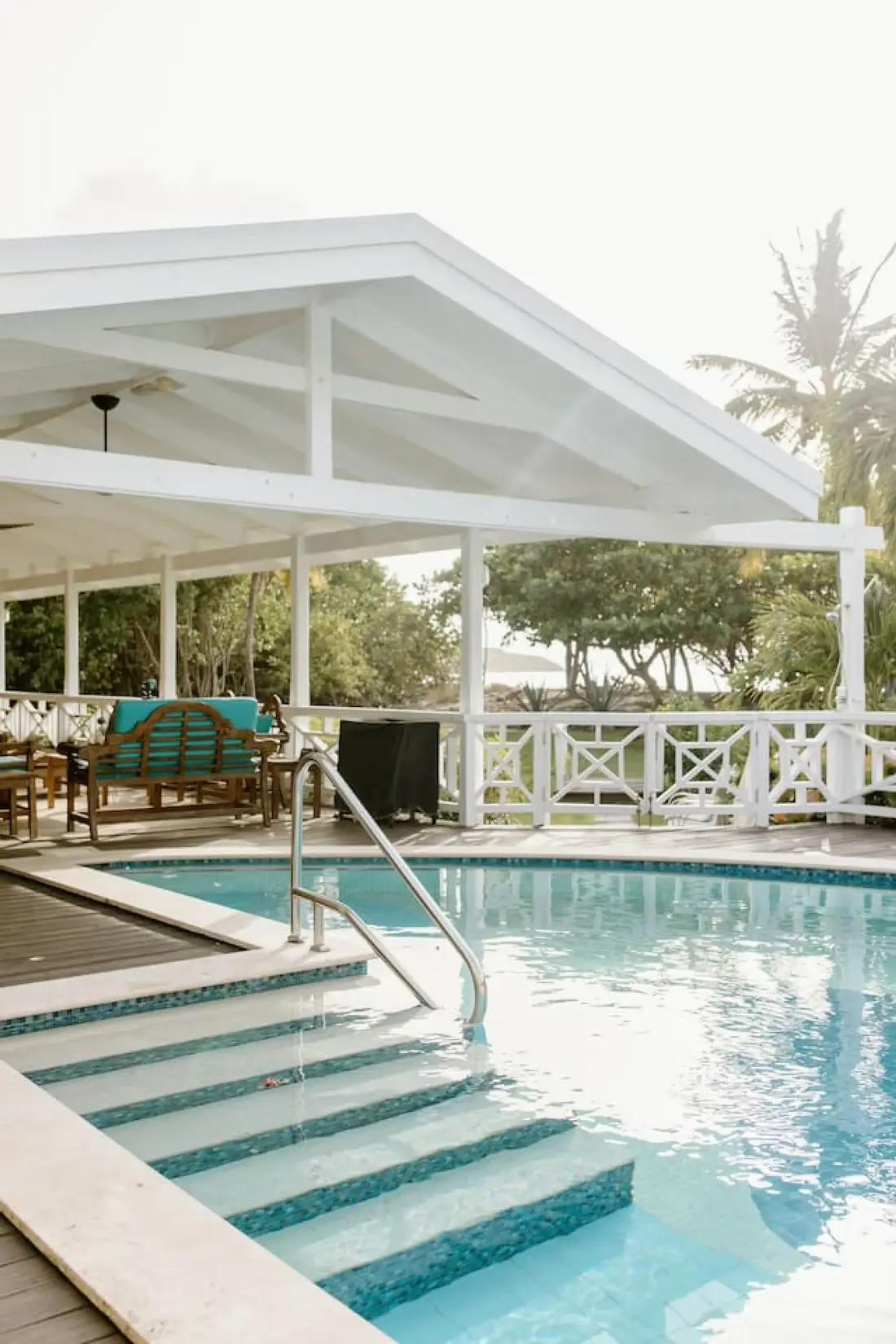
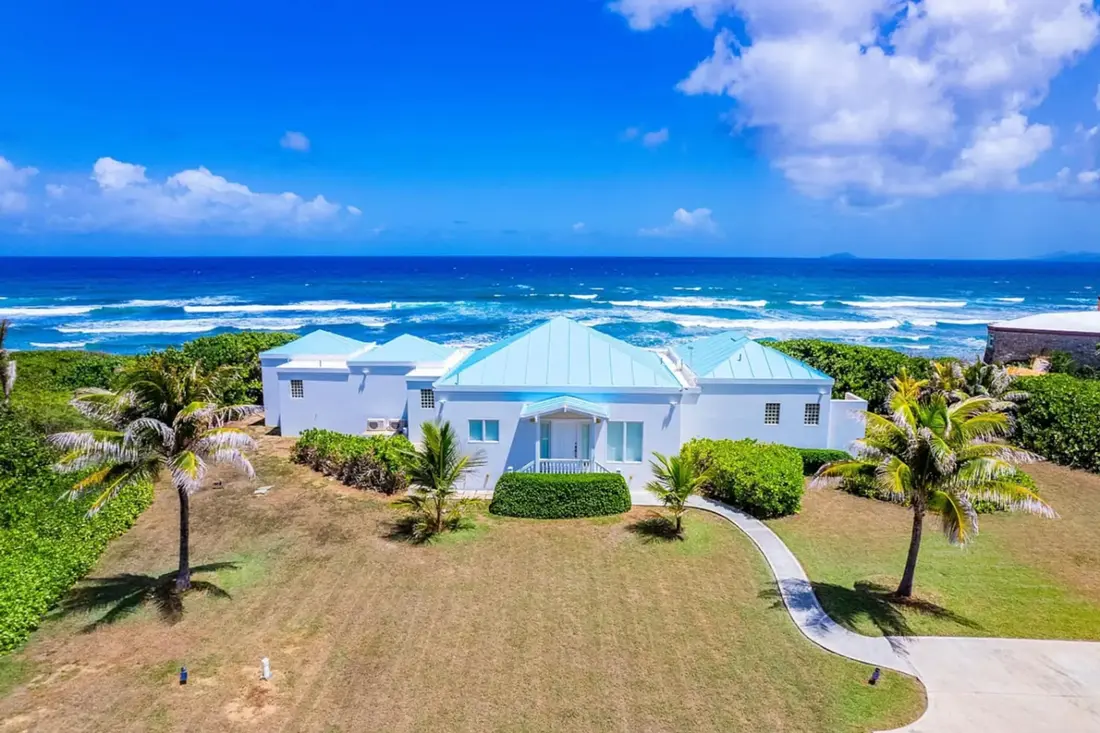
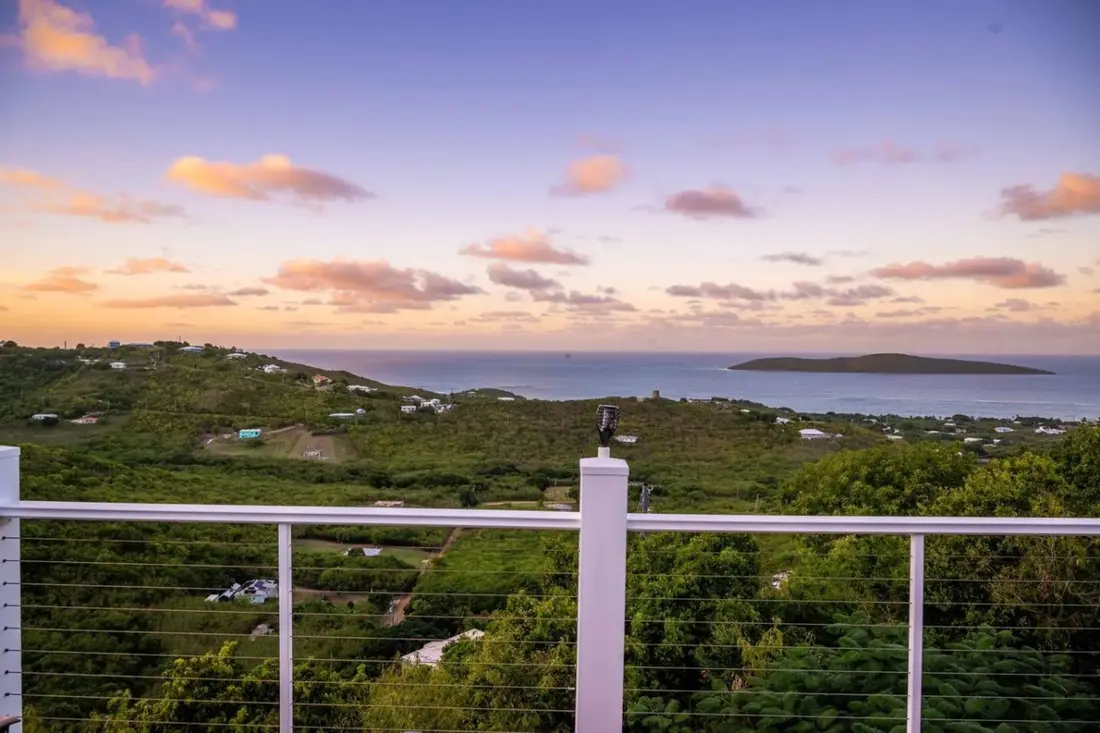
Where you stay shapes how easily you get on the water. Our East End villas sit closest to the sailing, minutes from the yacht club and Green Cay Marina, and homes like The Buck Island Overlook and The Cerulean face straight across the channel toward the water the boats cross to. Dragonfly Villa and Moko Vista share that short run to the docks. On the calm west coast, Sunset Sea-Clusion faces the horizon the Frederiksted sunset sails head into. Our on-island team books guests onto the right boats all season and can match the trip, the coast and the group to the villa you choose.
Sources
Written from official and first-party sources, checked August 2026. Hours, prices and event dates change — confirm before you go.
In this guide
Stay nearby
Private oceanfront on the East End with a sandy, swimmable beach, pool, outdoor kitchen and a separate guest cottage. Sleeps twelve.
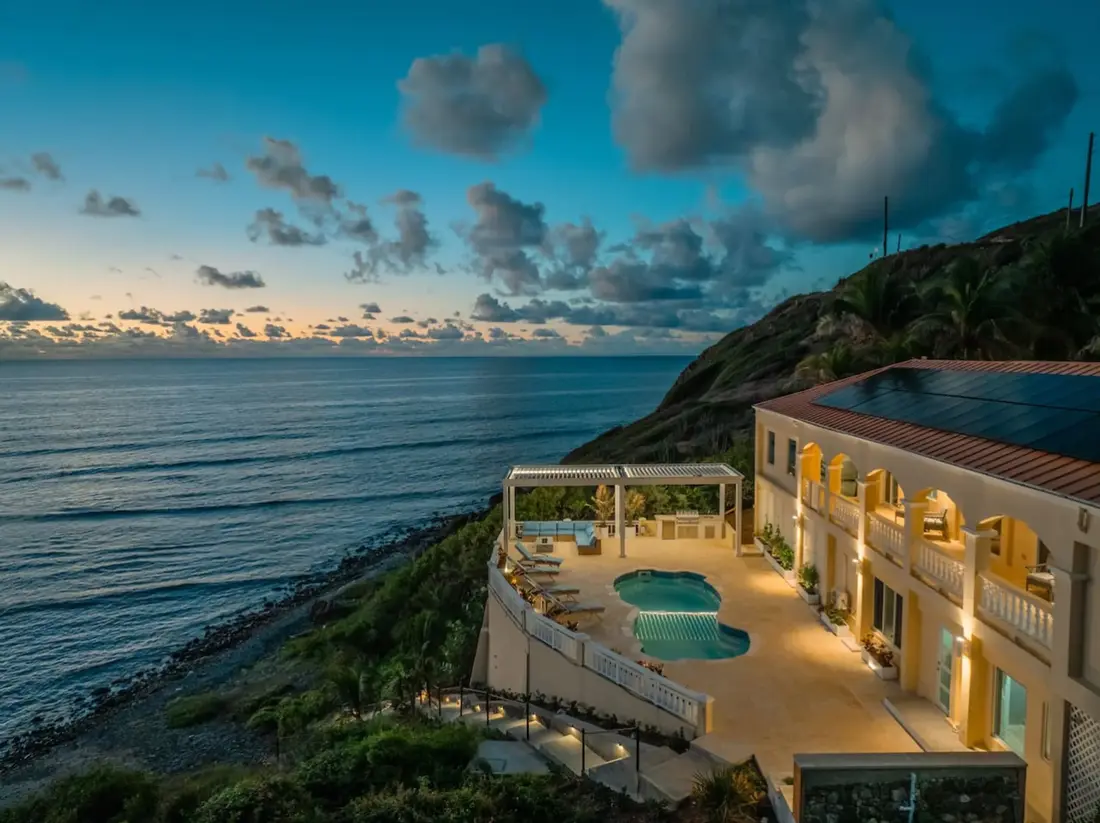 The Cerulean5 bd · 5 ba · sleeps 12 · Christiansted
More in On the Water
Sources
10 references, listed in full at the end of this guide — official park, refuge, tourism-board and business sources, checked August 2026.