Grapetree Beach
A long, narrow stretch of white sand backed by sea grape trees on the southeast shore. Seclusion without facilities, and sometimes a little surf.
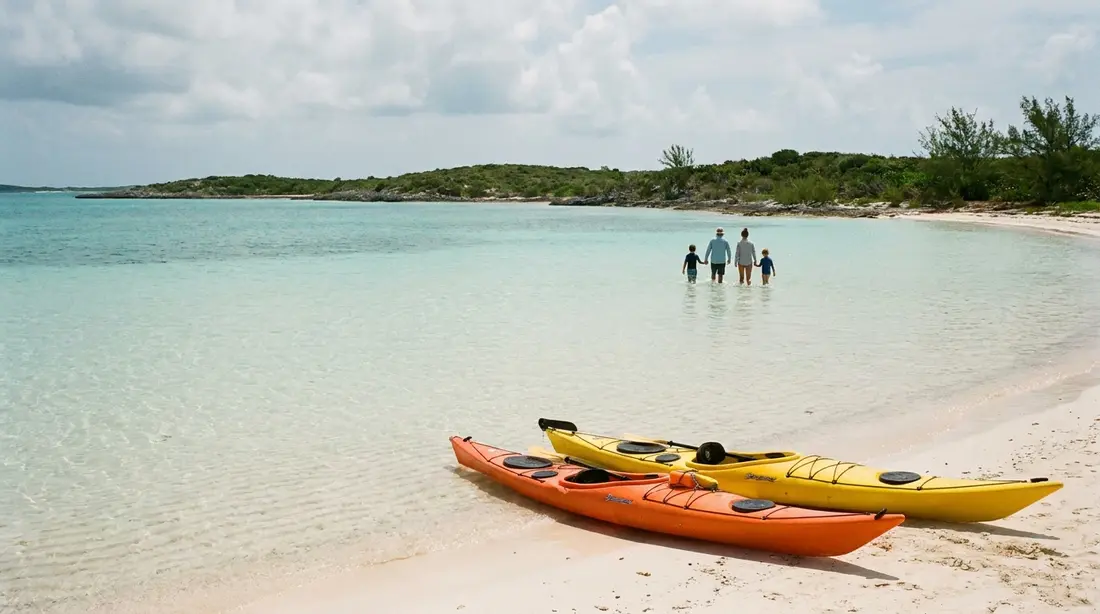
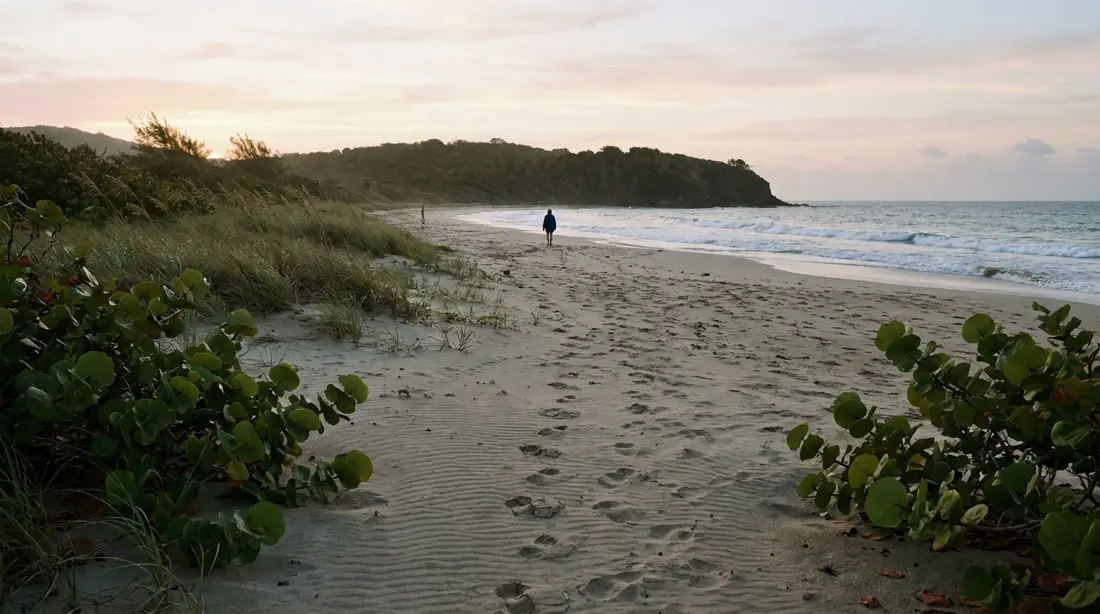
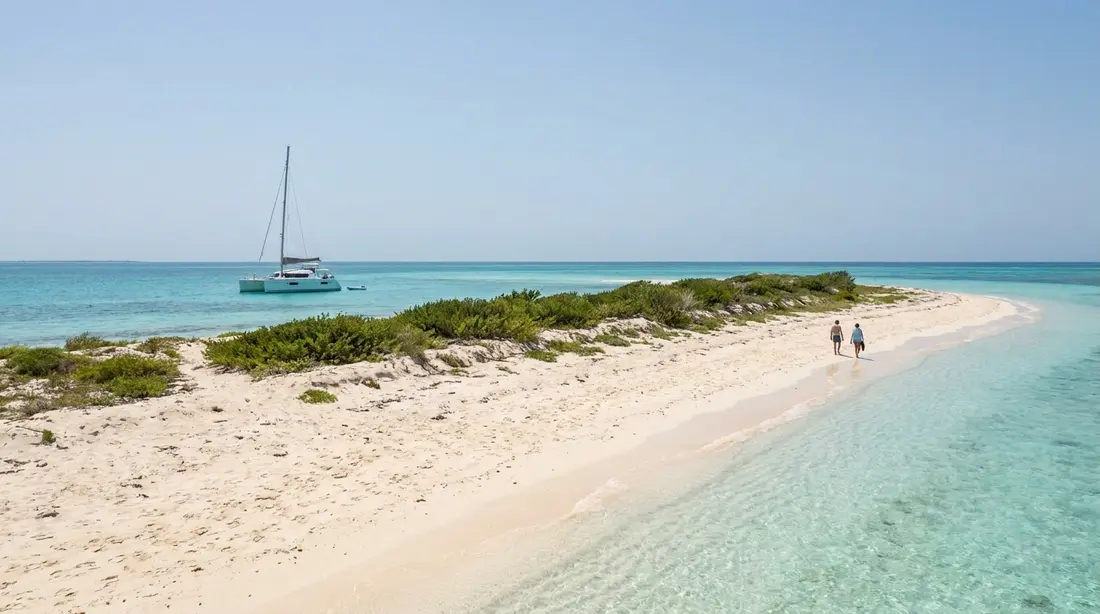
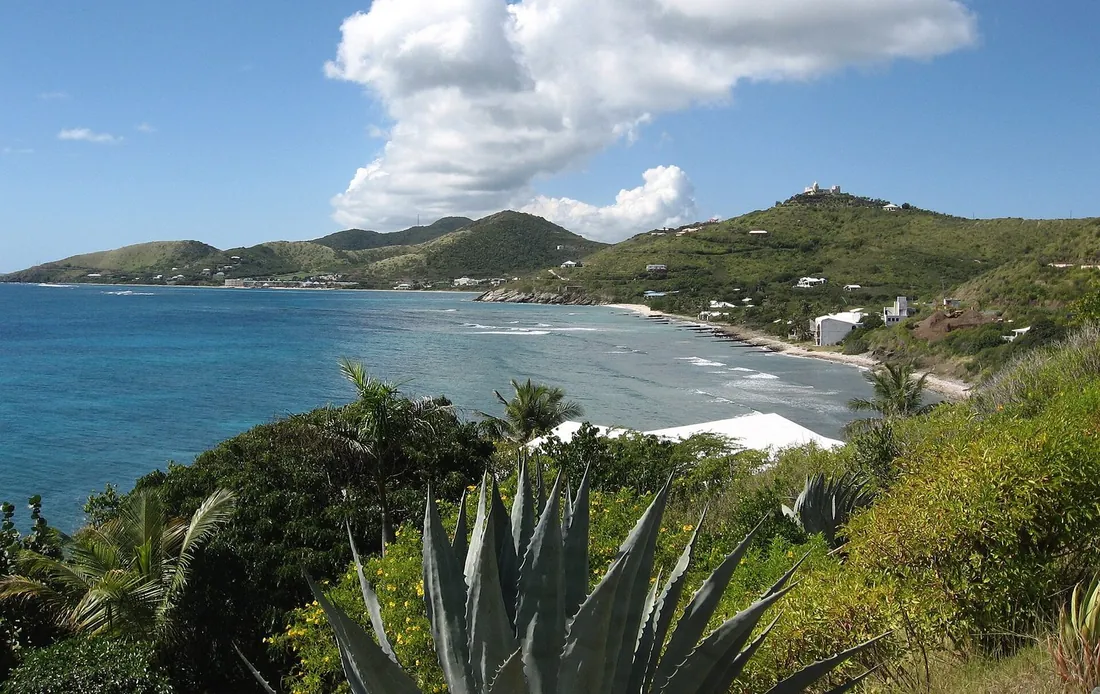
Grapetree Beach runs along Grapetree Bay on St. Croix's south-east shore: a long strand of very white sand with sea grapes at its back, private homes behind the trees, and a small reborn hotel at one end. There are no facilities on the public sand and the water carries some surf on many days. What the beach offers instead is room, shade, quiet, and one of the stranger histories of any shoreline on the island. This page is the full reference: the setting, the swim, the hotel story, the resort down the road, the marine-park rules, and the practical details of a day here.
The other East End coast
The East End of St. Croix has two coastlines, and they behave differently. The north-east side bends into sheltered bays, which is where the dependable family swimming lives: The Shoys, Chenay Bay, Cramer's Park. Grapetree sits on the opposite side of the same wedge of land, on South Shore Road, where the coast looks south-east across open water with nothing between it and the trade swell except a barrier reef.
That orientation decides most of what follows in this guide. The beach catches morning sun directly, so it is one of the island's natural sunrise beaches; the listing for it points out that the south-east facing makes early visits the scenic ones. It also means the sea state changes with the wind in a way the protected north-east bays never do. On a settled day the reef does its work and the bay lies flat. After a windy stretch the same water arrives with push and chop. Neither state is a surprise once you know which shore you are standing on.
The immediate neighbors define the beach's borders. To the east, the land climbs toward Point Udall and the undeveloped bays at the island's tip. To the west along the same road sits the Divi Carina Bay resort at Turner Hole, the East End's one full-service hotel operation, covered later in this page. Between those bookends, Grapetree Bay holds a residential shoreline: houses above and behind the sand, the small Grapetree Bay Hotel on its rise, and long stretches where nothing is built at all. The wider quarter, both coasts of it, is mapped in the East End guide.
The sand
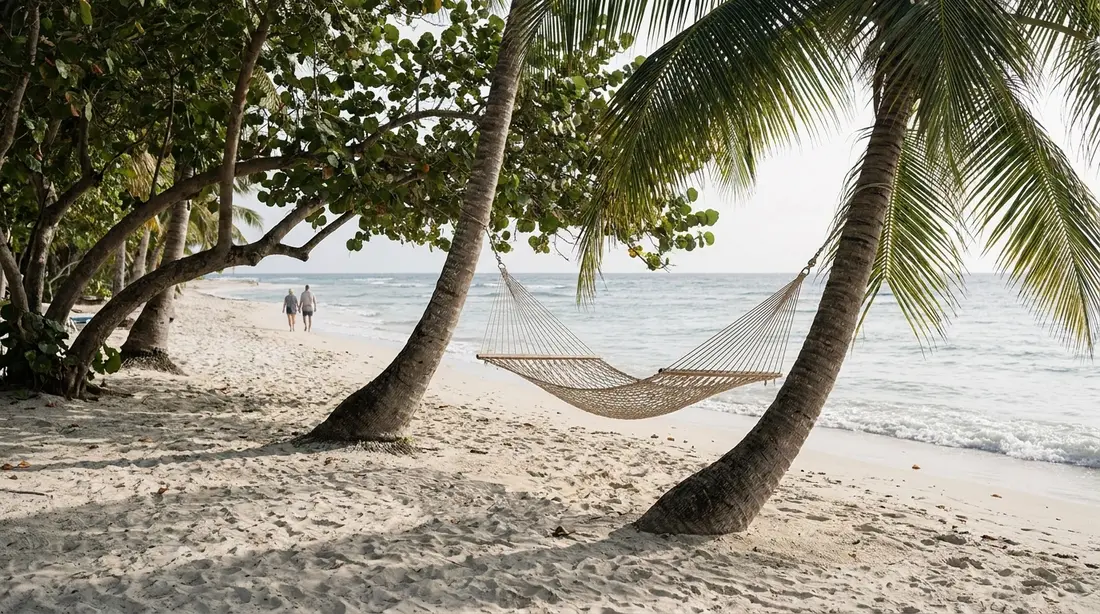
The sand itself is the draw. It is soft and notably white, running a long, uninterrupted line along the bay, with rockier ground at either end where the shore turns to stone. Those rocky sections are worth a few minutes rather than a swim; they make natural benches for watching the water work.
The sea grape trees behind the beach matter more here than at most beaches, because this is the dry end of a dry island. The eastern third of St. Croix grows cactus and scrub rather than forest, and shade is scarce at nearly every beach on this end. Grapetree's tree line throws real shadow for real hours, which changes what a day here feels like in the middle of the afternoon. Claim a spot where the grapes overhang and the no-facilities problem shrinks considerably.
Behind the trees the neighborhood is private homes, and the beach's own listing asks visitors to treat it that way. Walk in by the public access, keep to the sand, and skip shortcuts through yards. The arrangement is the standard Virgin Islands one: the shoreline is open to everyone, the land behind it is not.
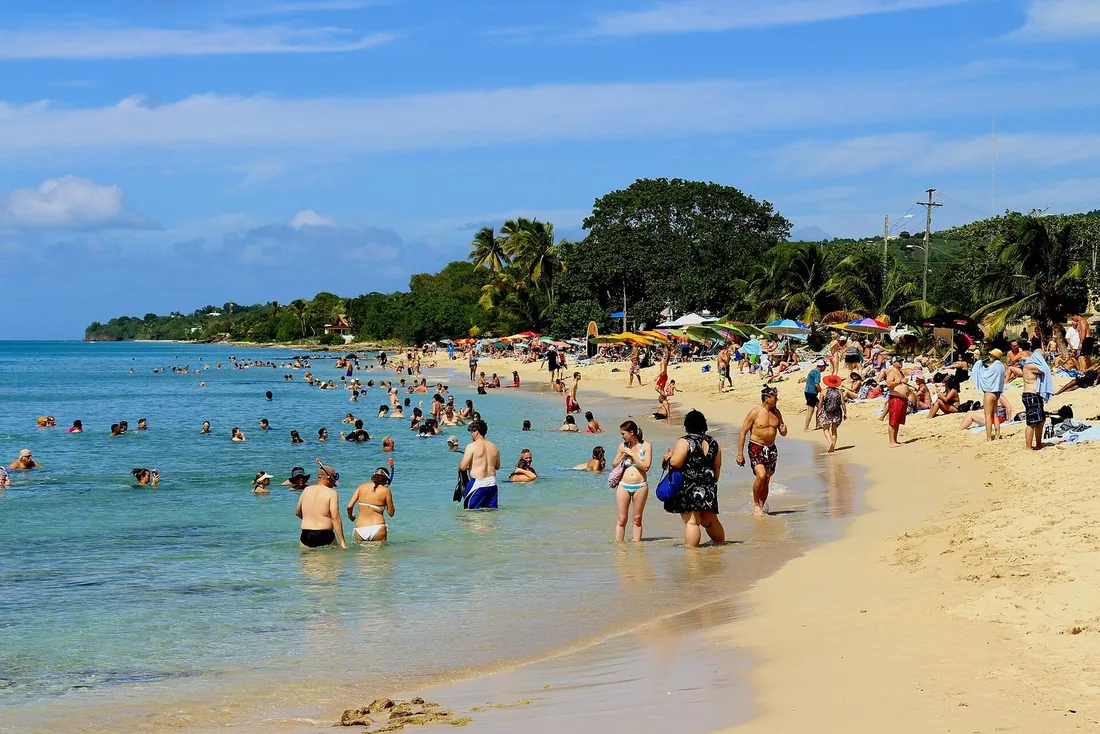
Crowds are close to a non-subject. On weekdays it is normal to have hundreds of yards of sand to yourself or to share the whole bay with a handful of people. Weekends bring a few more household groups without changing the character. If you have been to Rainbow Beach on a busy afternoon, this is the opposite proposition.
The tree the beach is named for
The name on the map describes the tree line. The sea grape, Coccoloba uvifera, is the round-leaved coastal tree native across the Caribbean and tropical Americas, and it is close to the perfect plant for this exact shoreline: highly salt-tolerant, wind-resistant, happy in pure sand, and able to shrug off the droughts that define the East End. Its big circular leaves, 6 to 12 inches across, are what throw the useful shade behind the sand.
The tree earns its keep beyond comfort. Sea grapes trap blowing sand in their leaves, limbs and stalks, which stabilizes the beach itself and slows erosion, so the grove behind Grapetree is part of why there is a Grapetree. And the name is literal: the trees hang grape-like clusters of fruit that ripen to deep purple, edible off the branch and traditionally cooked into jams and jellies where they grow. If your visit lands in late summer when clusters are ripening, you are looking at the beach's namesake crop. Birds work the same clusters, which keeps the tree line noisier than the empty sand suggests.
Swimming here
The swim deserves a straight description, because Grapetree is the beach where reading the day matters most among the East End's drivable options.
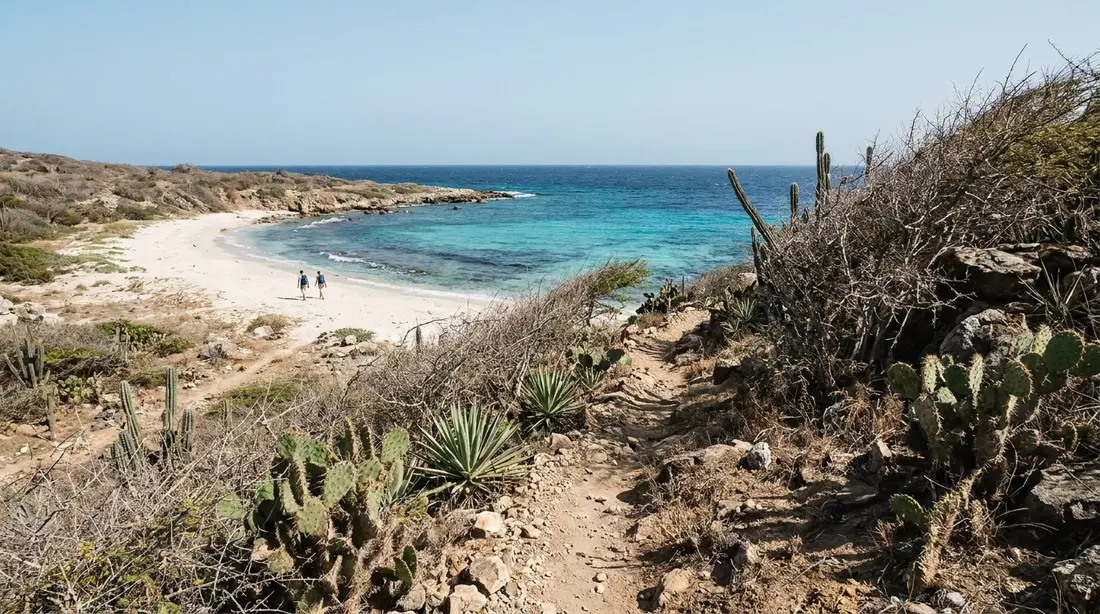
A barrier reef stands offshore and knocks down most of what the open sea sends in. On calm days, and there are many, the water inside it is friendly and the bay swims beautifully. The bottom is seagrass over sand rather than coral, which sets the snorkeling expectations: fewer reef fish than you would meet at Cane Bay or on the Buck Island trail, and a real chance of the better sighting instead, because green sea turtles graze on exactly this kind of bottom. Swimmers here see turtles often enough that the beach's reputation includes them.
The other half of the truth: this is the windward side. When the trades have been running hard, surf gets through, the shorebreak thickens, and currents move along the bay. There is no lifeguard, the same as essentially every beach on St. Croix. The working rules are simple. Judge the water from the sand before anyone gets wet. Swim in the morning, when the wind is lowest almost year-round. Keep small children out of the water here on any day with visible white water and take them to the north-east bays instead, which is what those bays are for. And when the sea is loud, let Grapetree be a walking beach; it is one of the island's best at exactly that job.
Strong swimmers and beach walkers get the most from this shore. Sunbathers who want quiet get the rest. Families with toddlers have better options fifteen minutes away, and there is no shame in using them.
The hotel in its first life
The small hotel above the eastern end of the sand carries more history than its size suggests. The Grapetree Bay Hotel opened in the early 1960s and spent that decade as one of St. Croix's glamour addresses: a secluded resort built around its beachfront pool, with a dining room the property's own history describes as celebrated across the Caribbean in those years.
The strangest chapter is the art. In 1965 the hotel commissioned a young French painter named Daniel Buren to spend a year on St. Croix producing frescoes and mosaics for the property. Buren went on to become one of the most famous conceptual artists in the world, the man behind the striped columns in the courtyard of the Palais Royal in Paris, and art historians mark his St. Croix year as part of the period when he was working his way toward the striped format that made his name. For a few decades, a beach hotel on the quiet side of the East End held early works by a future giant of contemporary art.
Hugo and the thirty-year ruin
Hurricane Hugo crossed St. Croix on September 17 and 18, 1989, as one of the most destructive storms in the island's recorded history, and it effectively ended the Grapetree Bay Hotel's first life. The property was left in ruins, and unlike most of the island, it never rebuilt in the storm's aftermath. The shells of the buildings stood above the beach for roughly three decades, slowly coming apart in the salt air, and a generation of beachgoers knew Grapetree as the beach with the ruins. Most of Buren's work on the property was lost with the buildings.
That long vacancy shaped the beach's modern character. With the hotel dark, Grapetree spent thirty years as a purely local shoreline, which is a large part of why it still feels the way it does on a weekday.
The hotel today
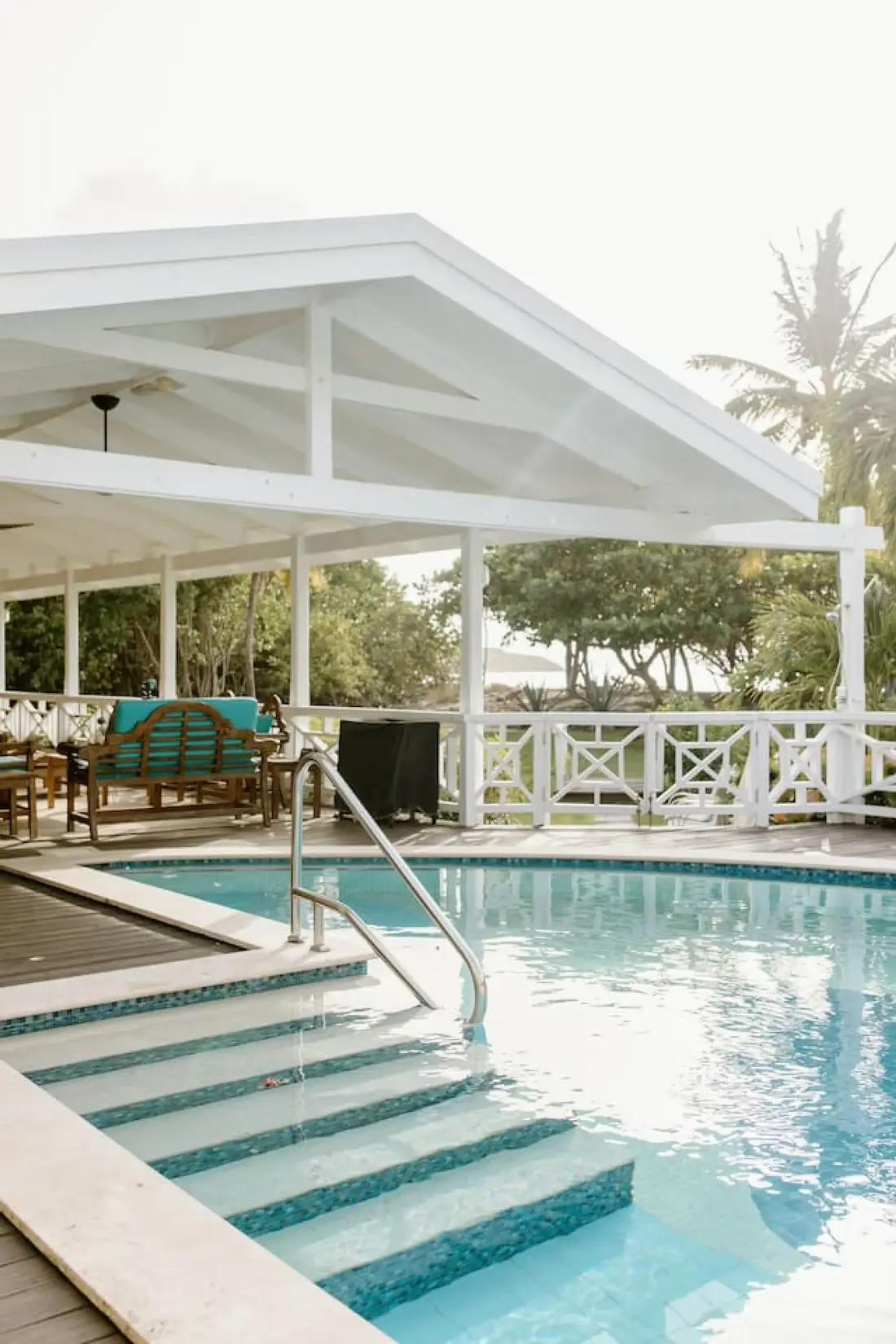
The second life began in October 2021, when a renovation brought the property back as the Grapetree Bay Hotel & Villas: 18 guest rooms at reopening, a pool above the beach, and a set of seaside villas being restored in stages, on grounds of about 45 acres at 5000 South Grapetree Road. The rebuild leaned into the 1960s history rather than erasing it, and where Buren's frescoes once were, the walls now carry marine-life murals by the local artist Barbara Gelardi.
For a beach visitor, the hotel changes the old bring-everything math in useful ways. At last check the property ran three food-and-drink venues: the Sea Terrace Restaurant for casual lunches, dinners and a Sunday brunch, the Far East Steakhouse as the reservation-required fine-dining room on weekend nights, and the East End Bar as the walk-in outdoor spot for pizza, sandwiches and drinks; the full rundown of that bar and every other table on this side of the island lives in East End restaurants. Pool passes have been sold to non-guests at times as well. All of it is a small operation with hours that move seasonally, so call ahead before you build a beach day around lunch or a pool pass there; the sand asks nothing, the hotel requires a working phone number.
Divi Carina Bay down the shore
West along Route 60, at Turner Hole, stands the East End's other hotel story, and its arc runs on almost the same clock. Hugo flattened what stood on that land in 1989 too, and the site sat empty until Divi Resorts built new in the late 1990s. The timing was rough: the resort's casino building was nearly finished when Hurricane Lenny wrecked it in November 1999, and the rebuilt version opened in March 2000. That casino became the first legal gaming floor in the U.S. Virgin Islands and remained, at last check, the territory's only one. Hurricane Maria closed the whole resort in 2017 for a multi-year rebuild, and it has since operated as Carina Bay, an adults-only all-inclusive with its casino running and some amenities still returning in phases; treat every detail of its current form as worth confirming, because the property has been a work in progress for years.
What Divi means for a Grapetree day is context rather than services. Its beach at Turner Hole is a separate strand with its own entry in the beach rundown. Its presence puts staffed buildings, and in a pinch food and drink at resort prices, ten minutes from otherwise empty sand. The resort has also served as the island's food-festival venue; the 26th Taste of St. Croix was held there on June 11, 2026. And it enables the East End's oddest evening pairing: a day on a shore with no development in sight, then blackjack after dark at the territory's lone casino, an option the rainy-day plan also keeps in its pocket.
Inside the marine park
The water at Grapetree is protected water. The bay sits within the St. Croix East End Marine Park, the territory's own marine protected area, whose full zone system is laid out in our East End reference page. What matters standing on this particular sand: Grapetree Bay's waters fall in a no-take zone. Every form of fishing is off the table here, line, spear, traps and conch diving alike, and personal watercraft are prohibited, which is one quiet reason the bay stays as peaceful as it does. Swimming, snorkeling and paddling are all welcome.
The zoning changes one bay over. At Turner Hole the park designation is recreational, where hook-and-line fishing from the beach is allowed out to 100 feet. So an angler's short answer is: not at Grapetree, yes with limits at the next beach west. Everywhere in the park, coral, shells and anything living stay where they are.
Turtles on this shore
Sea turtles show up at Grapetree in two ways. In the water, green turtles feed over the bay's seagrass, and a snorkeler moving slowly along the grass line has a fair shot at watching one graze; it is the beach's best underwater show. On the sand, the picture is less documented. The East End's proven nesting strongholds are the protected bays next door, Jack's and Isaac's, which hold the island's densest green and hawksbill nesting, and East End beaches generally see activity in season. Whether any given summer puts nests on Grapetree itself is not something we will claim; treat the possibility with respect anyway.
The conduct rules cost nothing and cover every case: no lights on the sand at night in the June-through-fall months, a wide berth for any turtle on land or in the water, no touching, and hands off any marked or disturbed patch of sand. The turtle watch guide covers the season and the guided options, and sea turtles of St. Croix covers the animals themselves.
The long-walk day
Some beaches are for the water and some are for the shore, and Grapetree on a windy weekday makes the second case as well as anywhere on St. Croix. The program is short: arrive mid-morning with a chair, a book, water and lunch, put the chair under a sea grape, and alternate reading with walking the full length of the bay. The length is the point. Few St. Croix beaches let you walk far enough in a straight line to lose the sound of your own parking spot; this one does, with the reef drawing its white line offshore and, on many days, no other footprints ahead of you.
Walkers who want more can note that route descriptions reach Jack Bay, the wilder of the two preserve beaches, from the eastern end of Grapetree's sand as well as from the Point Udall lot. The Point Udall approach is the established one and the right choice for most people; details in Jack's and Isaac's Bays. Either way, the pairing of Grapetree with the preserve bays and a Point Udall sunrise makes a complete East End day without a single ticket, reservation or fee in it.
Getting there and parking
From Christiansted, take South Shore Road, Route 60, east past the Divi Carina Bay resort. At the Grapetree Bay Hotel sign, turn right onto South Grapetree Bay Road and stay on it to the end, then turn right; the public parking area is on the left, just west of the hotel property, with the beach access from there. Budget 25 to 30 minutes from town, less from the East End villas. The road is paved and an ordinary rental car does the whole trip; St. Croix drives on the left, and our driving primer covers the adjustment.
Two small courtesies keep this access pleasant for everyone. Park in the public area rather than improvising along residential road edges, and leave nothing visible in the car, the standard practice at every quiet beach lot on the island, covered with the rest in safety and common sense.
What to bring
Count on zero services at the sand: no restrooms, no rinse showers, no chair or umbrella vendors, no lifeguard, no food or water for sale on the beach itself. The hotel behind the eastern end may solve lunch if its hours cooperate, and Divi sits ten minutes west, but the correct plan assumes neither.
- More drinking water than feels necessary; this is the hot, dry end of the island.
- Sun protection sized for a shore with no built shade, even though the sea grapes help.
- Food, and a bag to carry every scrap of it back out; there is no trash service.
- Chairs or a mat, and reef-safe sunscreen for the seagrass and the turtles that eat it.
- Snorkel gear if the day is calm; water shoes for the rocky ends.
The full island checklist is in the packing list.
When the south shore is at its best
Grapetree's calendar is the windward-shore calendar, and it runs roughly opposite to what winter visitors expect from the Caribbean.
From mid-December to mid-March the Christmas Winds blow, the strongest sustained trades of the year, and this coast takes them head-on: more swell over the reef, more shorebreak, more walking days than swimming days. The beach stays beautiful and mostly empty, and mornings still produce swimmable windows, but a winter visitor should hold plans loosely and keep a protected north-east bay as the same-day backup.
From late spring through summer the trades slacken, and this is Grapetree's season: the bay at its flattest, the water at its warmest, the seagrass snorkel at its easiest, and the sunrise arriving at a civilized hour on a beach that faces it. The east end's dryness is the bonus; when summer showers work the island's green west, this shore is usually still in sun. September through November trades a statistical hurricane-season risk, covered in the hurricane season guide, for the emptiest sand of the year and frequently gentle seas between weather systems. The island-wide picture is in weather and when to visit.
| Season | Typical sea state at Grapetree | Best use of the beach |
|---|---|---|
| Mid-December to mid-March | Liveliest of the year; Christmas Winds push swell and chop through more days | Long walks, sunrise visits, morning swims on the calm days only |
| April to June | Settling; flat mornings become the norm | Swimming and seagrass snorkeling, before the wind wakes up |
| July and August | Generally the gentlest water, warm and often clear | Full beach days; earliest start for heat, best turtle-spotting odds |
| September to November | Often calm between systems; watch forecasts in the storm season | Emptiest months; swim on the good days, walk out the rest |
Grapetree at a glance
| Item | The short answer |
|---|---|
| Shore and facing | South-east coast of the East End; faces the sunrise and the trade swell |
| Facilities on the sand | None; small hotel behind the east end with food and drink, hours vary |
| Water | Barrier reef offshore; seagrass bottom; calm to surfy by day and season |
| Marine park status | No-take zone: no fishing of any kind, no personal watercraft |
| Crowds | Among the lightest of any drivable St. Croix beach |
| Drive from Christiansted | 25 to 30 minutes via Route 60 |
| Best months for swimming | Roughly April through August, mornings first in every month |
Questions guests ask
Is Grapetree Beach open to the public?
Yes. All beaches in the U.S. Virgin Islands are public up from the water, and Grapetree has a public parking area and access point just west of the hotel property at the end of South Grapetree Bay Road. What is private is the land behind the sand: the homes in the trees and the hotel's own grounds, pool and lounges, which belong to its guests unless you have bought a pass or a meal. Use the public access, settle on the open sand, and the whole bay is yours to walk without anyone's permission.
Can children swim here?
On a calm day, older kids who swim well can enjoy the inside of the reef with an adult in the water beside them. As a default family beach, no; the south-east shore carries shorebreak and moving water too many days, and there is no lifeguard. The island solves this for you: Chenay Bay and Cramer's Park, both shallow, sheltered and 15 minutes away by car, are the purpose-built answers for small children, and using Grapetree for the picnic-and-walk portion of the day works fine at any age.
Is the snorkeling worth bringing gear for?
Bring it on calm days, and set expectations correctly. The bottom is seagrass, so you are touring a meadow rather than a reef: fewer fish, less coral, and the real prize is a grazing green turtle, which this bay produces regularly. Visibility is best in the settled months and in the morning. If the day turns out flat and clear, swimming the grass line with a slow kick is a quietly excellent hour. For coral and fish density, save the gear for Cane Bay or a Buck Island trip and let Grapetree be the turtle lottery.
Can we get lunch at the beach?
Sometimes, and it should never be the plan of record. The Grapetree Bay Hotel behind the eastern end has run casual dining and a bar open to walk-ins, at last check with limited afternoon-into-evening hours, and the Divi resort sits ten minutes west with resort-priced options. Small East End operations change hours with the season, so call the same day if lunch matters. The dependable version of a Grapetree day is the cooler you packed, eaten in sea-grape shade, with the restaurant as a pleasant surprise rather than a dependency.
Why can't we fish or jet-ski here?
Because the bay's waters sit in a no-take zone of the St. Croix East End Marine Park. The designation bans all fishing, from a hand line to a spear to a fish trap, along with taking conch or anything else living, and it prohibits personal watercraft in the same waters. The rules protect the seagrass and reef system that feeds the turtles this page keeps mentioning. Anglers have a legal option one bay west at Turner Hole, where the recreational zoning allows line fishing from the beach out to 100 feet.
Is it safe to leave things in the car at the lot?
Treat the Grapetree lot the way you would any quiet trailhead parking anywhere: take valuables with you or leave them at the villa, keep the car visibly empty, and lock it. St. Croix's beach-lot problem is opportunistic and preventable, and an empty back seat removes the opportunity. On the sand itself, the practical risk is even lower, since on most days you can see every other person on the beach from your chair. The broader rundown is in our safety guide.
Is Grapetree a good sunrise beach?
Yes, and it is the comfortable version of the East End sunrise. The beach faces south-east, straight into the first light, so the sun comes up over the water from the sand itself; the beach's own listing recommends early visits for exactly this reason. Point Udall remains the ceremonial choice, the first light in the United States from a windy headland, and the two do not compete: plenty of guests do the monument at dawn, then drop to Grapetree afterward for coffee on an empty beach while the light is still low. If you would rather skip the early drive up the point road, sunrise from a chair here loses very little.
Grapetree or Jack's and Isaac's for a secluded day?
Grapetree if you want to drive to the sand, bring real comfort, chairs, a cooler, an umbrella, and have shade without effort; it is seclusion at zero physical cost. Jack's and Isaac's if you want the wilder article: a hot 15-to-20-minute trail each way, nothing you did not carry, and the best odds on the island of a beach with no one on it. The two sit close together, so ambitious days do both, the preserve bays in the cool morning and Grapetree's easier sand for the afternoon.
Staying near Grapetree
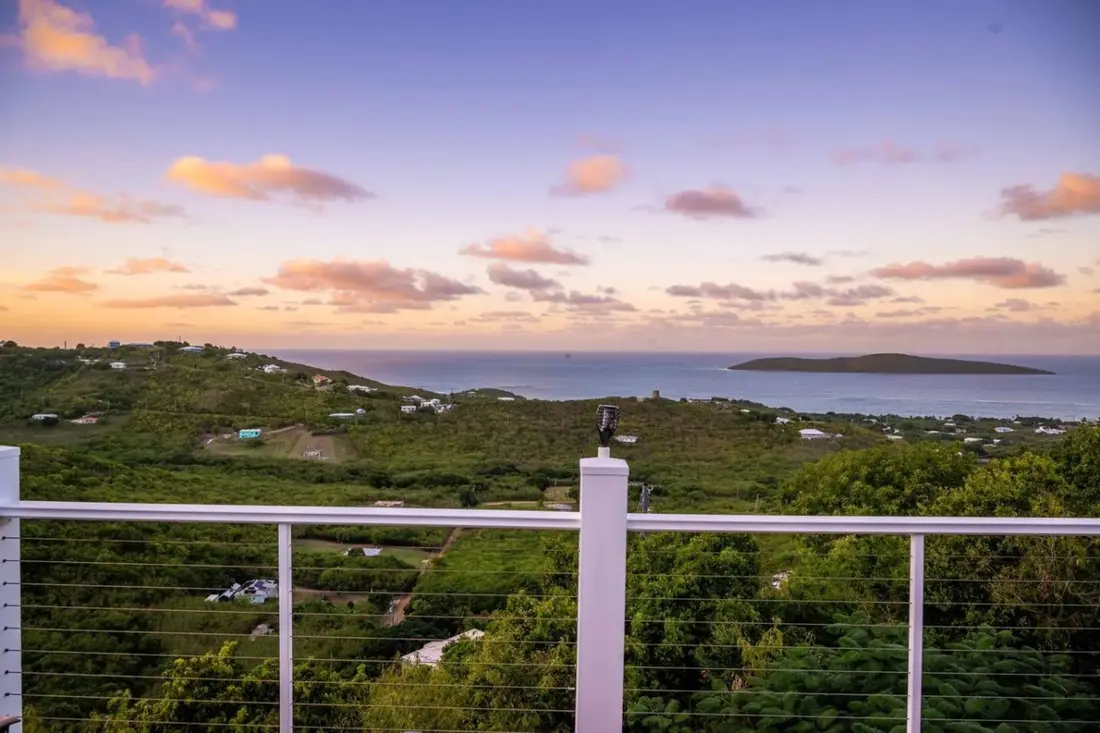
Our closest homes to this shore are the two hilltop houses on the East End ridges. Dragonfly Villa sleeps eight behind its own gate, with solar power, a saltwater infinity pool and water views in two directions, a short drive from the Route 60 turn. Moko Vista is the two-bedroom version of the same idea, a quiet hilltop base for a couple or small family that plans its days around beaches exactly like this one. Both put Grapetree, Point Udall and the preserve bays inside a 15-minute radius. The rest of our houses on this side of the island are in the East End collection; ask us which one fits your group and we will answer from experience.
Sources
Written from official and first-party sources, checked August 2026. Hours, prices and event dates change — confirm before you go.
In this guide
Stay nearby
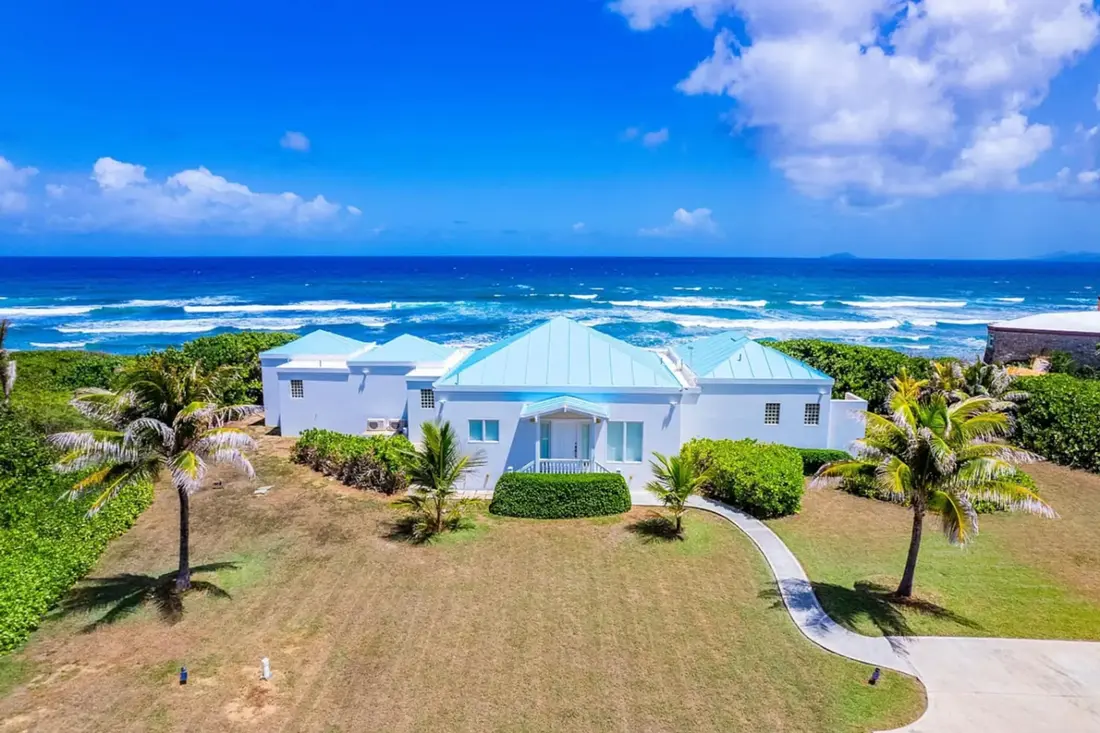
Private oceanfront on the East End with a sandy, swimmable beach, pool, outdoor kitchen and a separate guest cottage. Sleeps twelve.
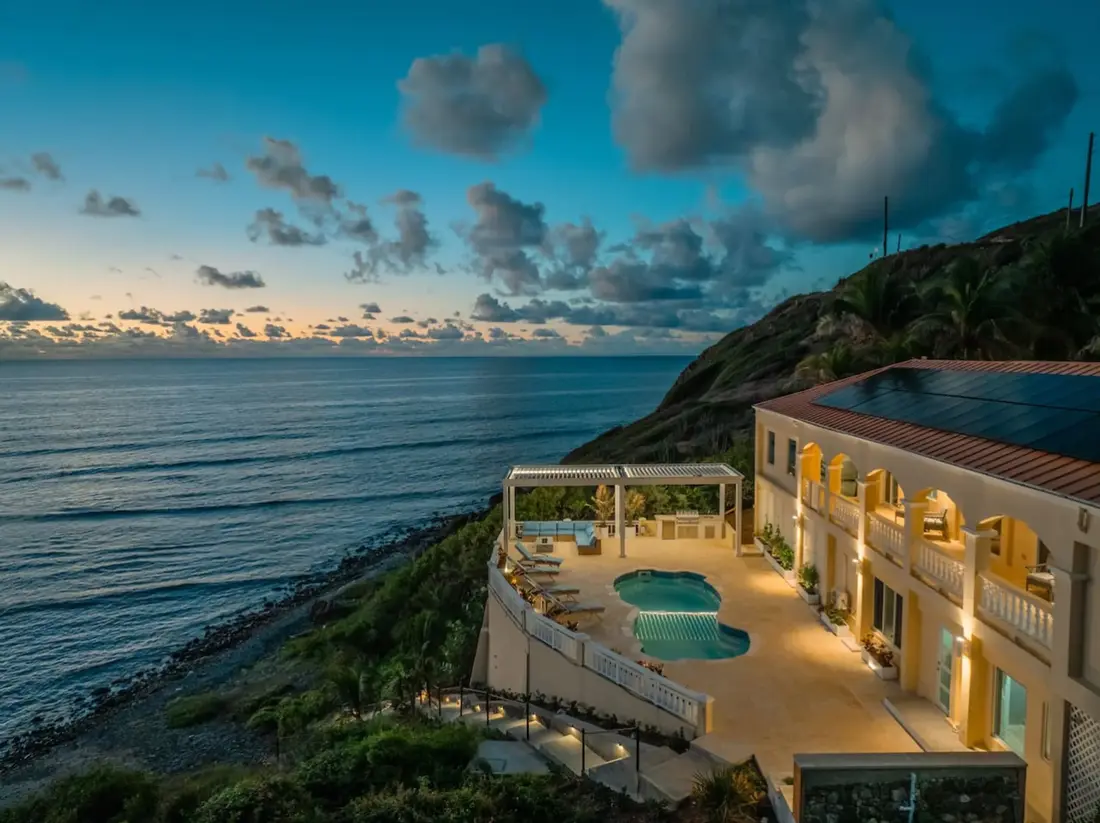 The Cerulean5 bd · 5 ba · sleeps 12 · Christiansted
Sources
12 references, listed in full at the end of this guide — official park, refuge, tourism-board and business sources, checked August 2026.