Cramer's Park
A public East End park beach near Point Udall with pavilions, easy swimming, and a local, family-gathering feel.
Cramer's Park is the public beach park of St. Croix's East End: a territorial park on the north shore near Point Udall, with pavilions, grills, restrooms, tree shade and shallow water that stays gentle most mornings. It is also a genuine local institution, the site of weekend cookouts and one of the oldest Easter camping traditions in the Virgin Islands. This page covers the whole picture — the park, the water, the weekend culture, the rules, and how to build an East End day around it.
What Cramer's Park is
Cramer's Park is a public park of the U.S. Virgin Islands government, one of the few developed beach parks in the territory and the only one on St. Croix's East End. You will see the name written two ways — Cramer Park on some maps and official notices, Cramer's Park in everyday speech and on most visitor references — and both mean the same stretch of sand off Route 82, the East End Road, a few minutes short of Point Udall.
Two layers of government meet here, and knowing which does what explains the signage. The land side — the pavilions, grills, restrooms and grounds — is a territorial park facility. The water side sits inside the St. Croix East End Marine Park, the first territorial park established in the U.S. Virgin Islands, created on January 9, 2003 and administered by the Coastal Zone Management division of the Department of Planning and Natural Resources. The marine park covers about 60 square miles of sea along the eastern end of the island, protecting what DPNR describes as the largest island barrier reef system in the Caribbean, and Cramer's beach frontage falls within its recreational zone. The practical result for a beach visitor: the sand works like a public park, and the water carries posted conservation rules, both covered below.
What that status buys you is infrastructure, which is rare currency on this island. Most St. Croix beaches offer sand and nothing else. Cramer's has paved parking, covered structures with picnic tables, barbecue grills, restrooms and ramp access. On the dry, cactus-scrub East End — where every other beach requires you to carry in everything including your own shade — that makes it the practical anchor for a full day outdoors.
The setting
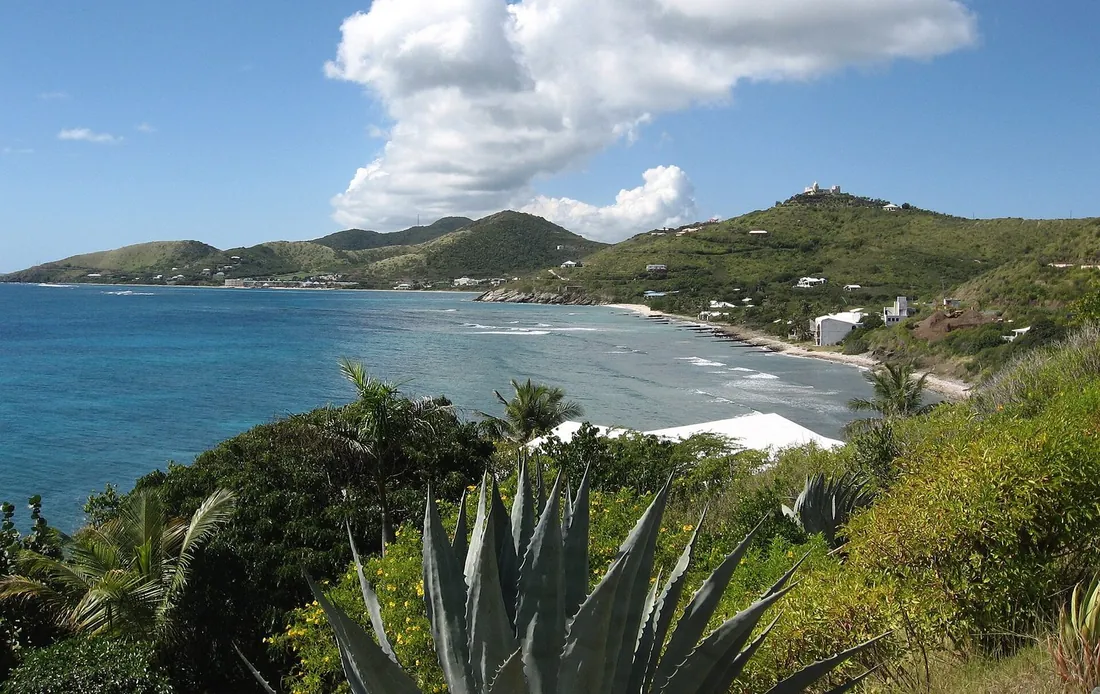
The park occupies a reach of north-facing shore with Knight Bay to one side and Boiler Bay to the other, in the driest, emptiest quarter of St. Croix. The drive out from Christiansted on Route 82 takes about 20 to 25 minutes and is its own reward: the vegetation shortens from green to scrub as you go east, Buck Island rides the horizon on your left, and by the time the Cramer's turn appears the road has nearly run out of island. Point Udall, where Route 82 dead-ends at the easternmost point of the United States, is only a few minutes further on.
That position at the end of the road shapes the park's character. There is no town nearby, no resort, no commercial strip — the closest kitchens are back toward Teague Bay and Green Cay. What surrounds the park instead is the open geography of the East End: hills of cactus and thorn scrub, the wind, and the sea on both sides of a narrowing peninsula. Arrive on a Tuesday and the loudest thing present is usually the water.
The sand and the water
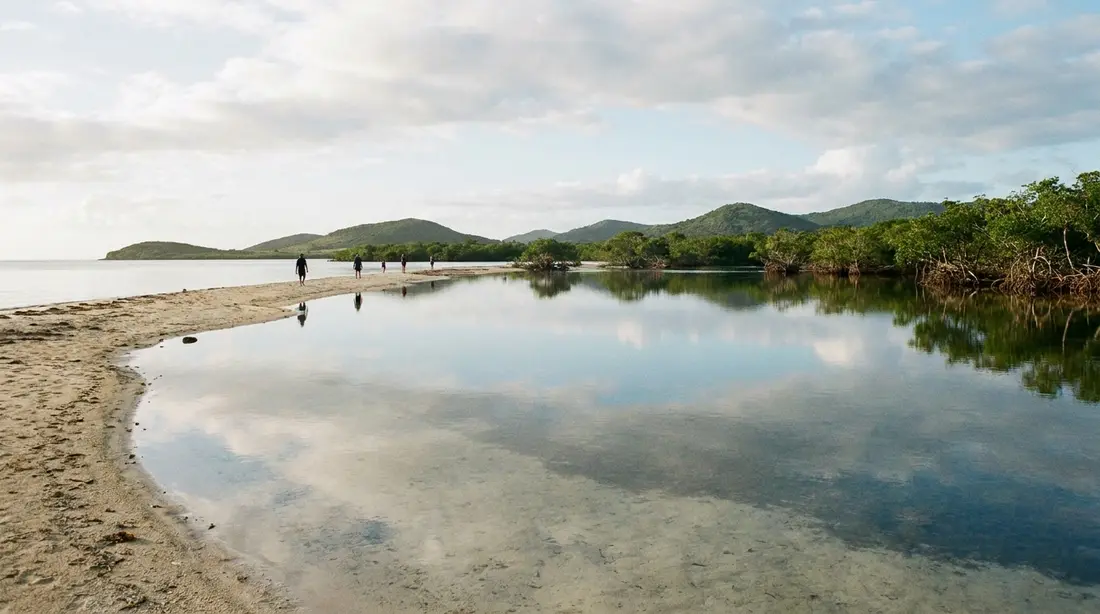
The beach itself runs long and open, with soft light sand and a bottom that deepens gradually — you can wade a good distance before the water reaches your chest. The bays here bend in behind reef and headland the way the whole northeast coast does, so the water close to shore is usually settled, particularly in the morning before the trade winds build through the afternoon. On typical days the swimming is as easy as anywhere on the island: a flat entry, no rocks underfoot in the main swimming stretch, and enough room that even a busy Sunday leaves open water.
The shallows are the reason so many Crucian families raised their children on this sand, and the reason visiting families with small swimmers end up here too. A child can stand, a nervous swimmer can touch bottom for a long way out, and the deepening is gradual enough that everyone finds their own depth. Conditions still deserve a look before anyone gets wet: this is open ocean, the wind has more reach on the East End than on the sheltered west coast, and a north winter swell or a windy afternoon can put chop on water that was glass at eight in the morning. No lifeguard watches this beach — true of essentially every beach on St. Croix — so an adult reads the water from the sand first, every time.
Shade, pavilions and what the facilities are really like
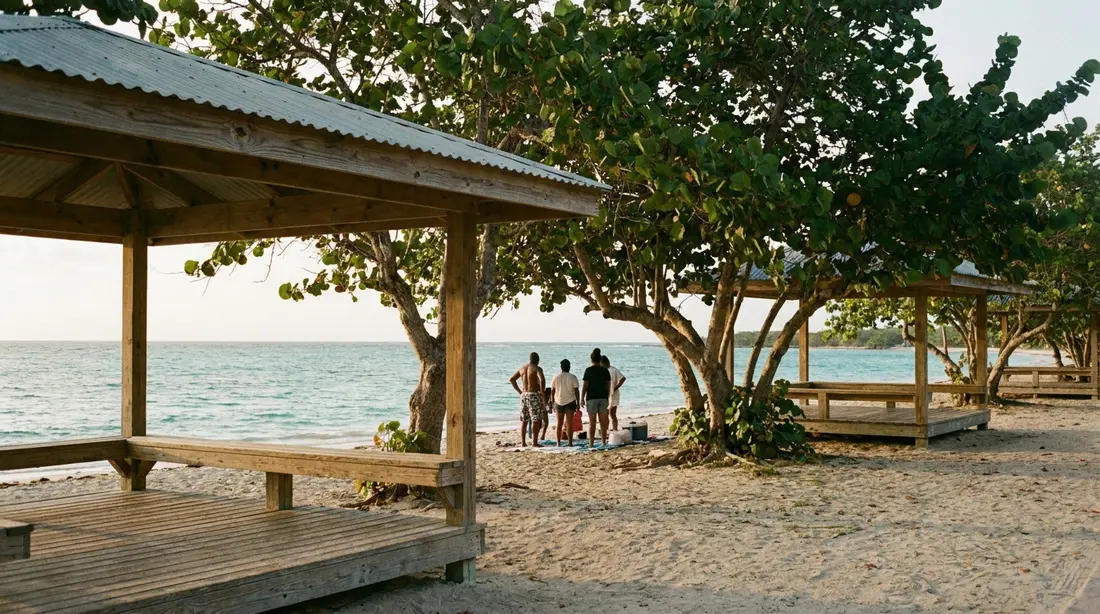
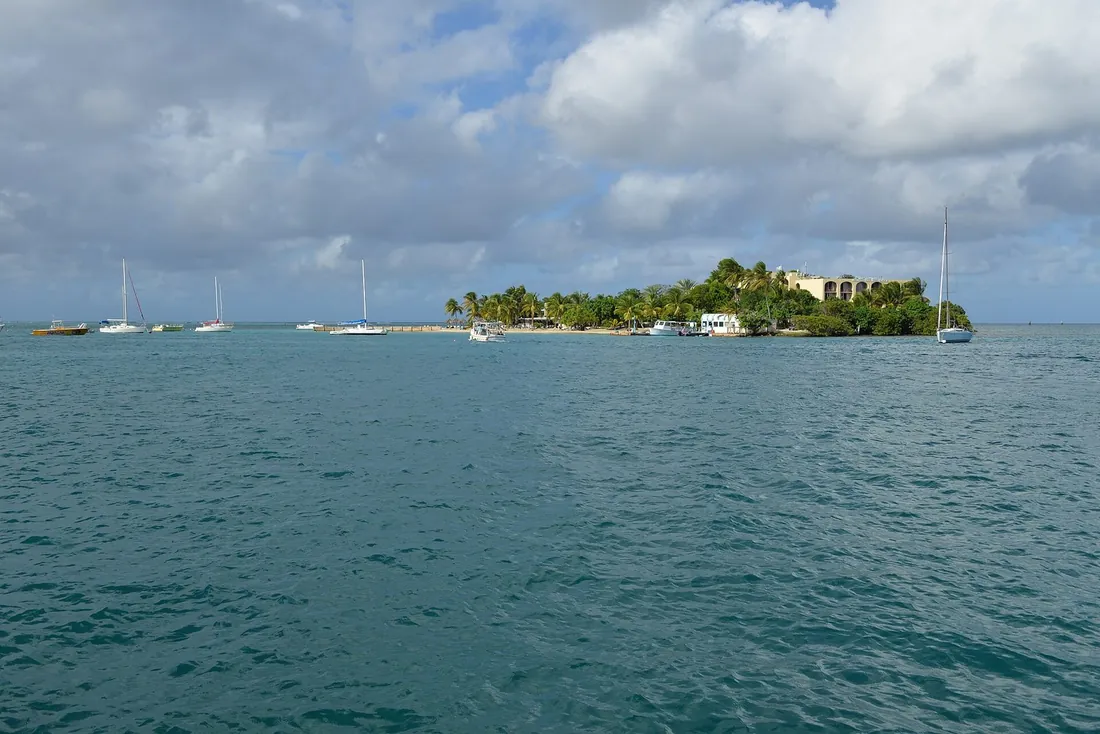
Shade is the quiet luxury of Cramer's Park. The East End is the arid end of St. Croix, and most of its beaches offer no relief from the sun beyond what you carry. Cramer's grows a stand of sea grape trees that throw genuine shade over sand and picnic ground, and the covered pavilions add roofed tables on top of that. For a long beach day with children, or any beach day in the high sun of summer, this is the difference between lasting until afternoon and retreating by eleven.
Set expectations correctly on the built facilities. The pavilions, grills, restrooms and ramps exist and see steady use, and the parking is paved. Their condition varies with maintenance cycles and the last storm season, as public facilities on any island do: at any given visit the restrooms may be clean, rough or locked, a grill grate may be missing, and a pavilion roof may show its age. Bring drinking water regardless — there is no concession, no vendor and no shop at the park or anywhere near it, and you should not count on potable taps. The working rule for Cramer's is the same as for the wilder beaches, softened one notch: pack in what your day needs, pack out everything you brought, and treat whatever infrastructure is working as a bonus.
The weekend scene
Cramer's Park belongs to St. Croix's families in a way no hotel beach ever will, and the weekend is when you see it. Saturdays and Sundays — and any holiday — fill the pavilions and the shade line with multi-generation gatherings: grills going by mid-morning, coolers stacked, dominoes clacking on the picnic tables, music from more than one direction, kids running the shallows in packs. Birthday parties, church groups and family reunions book out whole pavilions. It is loud, social and completely welcoming; it is also unmistakably a local space that visitors are guests in, and the visitors who enjoy it most are the ones who arrive with that understanding.
If that scene sounds like the trip — and eating grilled chicken in the shade while three generations of a Crucian family celebrate something two tables over is a better window into island life than any excursion — then come on a Sunday, set up at a polite distance, say good afternoon to your neighbors, and enjoy one of the Caribbean's better free shows. If what you want is quiet water and an empty towel line, come Monday through Friday instead, when the same park runs close to deserted and you may share a quarter mile of sand with a handful of people. Few beaches anywhere change personality so completely between Thursday and Sunday, and the trick to Cramer's is simply choosing which park you want.
The Easter camping tradition
Once a year the weekend scene becomes something bigger. Beach camping over the Easter holiday is a Virgin Islands tradition that goes back generations, and Cramer's Park is one of its principal grounds. In the weeks around Easter, tent compounds rise on St. Croix's beaches from Cramer's in the east to Salt River in the middle to Dorsch and Rainbow in the west: not overnight bivouacs but true family camps, with kitchens, generators, tarped living rooms and bunk tents, occupied for days and sometimes weeks. Island press coverage of recent seasons found campers who have held the same spot for 20, 30 and 35 years, camping with three and four generations of their families, and describes Sunday egg hunts, fishing, dominoes and open invitations to whoever walks past. Families interviewed at Cramer's describe it as heritage — keeping a legacy their parents and grandparents started on the same sand.
The territory manages the season actively. DPNR publishes camping rules for the Easter period covering the East End Marine Park beaches, and the recurring points are consistent year to year: all temporary structures come down and leave with you at the end of the stay; no cutting or damaging coastal vegetation; no dogs or horses; no cars, ATVs or motorbikes on the sand; open fires require a permit from the V.I. Fire Service; garbage leaves with the campers; and DPNR enforcement officers patrol the season. In some years the government has placed portable toilets and extra trash service at the camping beaches for a roughly two-week window around the holiday, which tells you the real scale of the event. Local reporting from the 2025 season also noted campers paying a daily fee — about $100 at that report — to reserve a Cramer's pavilion with electricity for their camp; treat any figure like that as changeable and check with DPNR if it matters to your plans.
For a villa guest the takeaway is short: you will almost certainly never camp here — you have a villa — but if your trip lands in the weeks around Easter, expect Cramer's and the other camping beaches to be joyfully, fully occupied, and plan your quiet-beach days at the hike-in bays or on a weekday morning elsewhere.
Snorkeling and the water beyond the swimmers
Be straightforward about the snorkeling: Cramer's is a swimming and picnic beach first, and its underwater interest is modest by St. Croix's own high standard. The bottom near shore runs to sand and seagrass, with scattered rock and patch reef further out. Over the grass you have a fair chance of a turtle, a ray or a conch shell trail; the patch reef holds the usual small tropical fish. It is a pleasant tow-a-mask-around beach, and a good one for a child's first practice runs in easy water. It is a different sport from the island's headline snorkeling — the Buck Island trail, the Cane Bay reef, the Frederiksted pier — and nobody should drive out east expecting those. The snorkeling guide ranks the island's water properly.
Two things in Cramer's water are worth knowing about anyway. In 2019 a demonstration coral nursery was installed on a patch reef called Sweeper's Knoll just outside the park, a restoration project built with help from The Nature Conservancy to show how nursery-grown coral is raised and outplanted; the marine park runs community events around it. And an Aqualink monitoring buoy stationed at Cramer's reports real-time wind and wave conditions for the marine park — a working piece of the reef-science infrastructure that the East End Marine Park exists to support.
Marine park rules at the beach
Because the water off Cramer's sits inside the East End Marine Park's recreational zone, a short set of rules applies that does not exist at, say, Rainbow Beach. They are posted, enforced and easy to comply with:
- Fishing from shore is hook-and-line only, from the beach out to 100 feet. The DPNR rule covers the north shore from Chenay Bay around to Cramer's, and the south shore from Grapetree Point to Great Pond.
- No spearfishing, and no taking of conch, lobster or whelk from any marine park beach access.
- Snorkeling, swimming and boating are welcome in the recreational zone; personal watercraft are restricted to a designated corridor between Cottongarden Point and Teague Point.
- Coral, shells, sea fans and everything else living or dead on the bottom stays where it is. Other zones of the marine park — no-take areas and turtle wildlife preserves, including the bays at Jack's and Isaac's — carry stricter rules of their own.
The marine park runs a public education program as well as an enforcement one. Through its office and the Friends of the East End Marine Park volunteer group, it hosts beach cleanups, seagrass seine surveys, bio-blitzes and tours of the coral nursery, several of them staged from Cramer's because the park is the marine park's easiest public doorway. Sea turtles add one more courtesy to the list: green and hawksbill turtles nest on East End shores, which is part of why the camping rules ban vehicles on the sand and the cutting of beach vegetation. If you ever find turtle tracks or a marked nest on this coast, give them a wide berth and leave them exactly as found, and keep lights off the sand after dark in nesting season.
Cramer's Park with children
Families rate Cramer's near the top of the island's kid beaches, and the reasons stack: water shallow enough to stand in far from shore and usually settled in the morning; real shade for the nap-and-snack hours; tables and grills so lunch does not live in a hot car; restrooms on site; and enough running room that a bored seven-year-old has somewhere to go. The kids guide and the family week plan both slot it into the rotation alongside Chenay Bay, which is the other standing answer out east — Chenay is smaller, shallower still and closer to town; Cramer's brings the pavilions, the space and the park feel. Between the two, most families staying on the East End try both inside a week.
The cautions are the standard St. Croix set, worth restating because this beach feels so easy: no lifeguard, so the adults are the lifeguards; the afternoon wind can turn flat water choppy, so swim the morning; and the sun on the East End is fierce even by Caribbean standards, so rash guards and the shade line do the real protective work.
Building an East End day around it
Cramer's sits in the middle of St. Croix's best half-day cluster, and it slots naturally into the classic East End sequence:
- Dawn at Point Udall. Watch the country's first sunrise from the Millennium Monument, a few minutes past the Cramer's turn — details in the Point Udall guide.
- Morning at Cramer's. Drop back down Route 82 and take the early swim while the park is empty and the water is at its calmest, with the pavilion shade waiting for breakfast from the cooler.
- The hike-in bays. The trailhead for Jack's and Isaac's Bays leaves from the lot just below Point Udall; the walk-in beaches at the island's tip are the East End's wilder counterpart to Cramer's tame comfort — see the Jack's and Isaac's guide.
- Lunch back west. Nothing sells food at Cramer's or anywhere near it, so lunch means a short drive back toward town: Duggan's Reef on the sand at Teague Bay for the sit-down version, or the Deep End at Tamarind Reef for the everyday all-day option. The East End restaurant guide maps the (short) list.
- The bigger loop. Walkers can add Goat Hill for the view over the whole quarter, and the south-shore ribbon at Grapetree shows the windward side of the same peninsula. The East End guide assembles the full day, and the beach overview places Cramer's in the island-wide ranking.
Seasons, wind and sargassum
The East End is the island's windward, and Cramer's feels the seasons more than the sheltered west coast does. Winter (December through March) brings the strongest trades and the occasional north swell, which can stir the bay in the afternoons while mornings stay swimmable; it is also peak season, though "crowded" at Cramer's still only means the weekends. Summer runs hotter, calmer and emptier, with the flattest water of the year and the shade trees earning their keep. The wind machine follows a daily script year-round: calmest at dawn, building from late morning, strongest mid-afternoon — one more argument for the early start that everything on the East End rewards. Hurricane season runs June through November, and a storm passing far offshore can push swell onto this coast days later, so a rough September day at Cramer's may trace to weather that never came near the island. For the wider weather picture, see weather and when to visit.
Sargassum deserves an unvarnished sentence. The open-ocean seaweed arrives in the Caribbean on currents from the east, so east- and southeast-facing shores catch it first and worst, and recent years — 2025 set records across the region, and 2026 opened with active advisories — have brought heavy pulses to the U.S. Virgin Islands in spring and summer. Cramer's faces north, which spares it the worst of what piles onto the southeast coast, but East End beaches generally can take seaweed in a bad week where the leeward west coast stays clean. Conditions change weekly; if the water matters most on a given day, look before you commit, and keep a west-coast beach in reserve during the spring-summer sargassum window.
Practical notes
- Cost and hours: free entry. It is a managed park with posted hours; check the signs at the entrance and do not plan around the gate being open before dawn or after dark. (Sunrise chasers park at Point Udall, which has no gate, and swim at Cramer's afterward.)
- Bring: drinking water, food, reef-safe sunscreen and everything else the day needs. No vendor, no rentals, no shop. Charcoal if you plan to grill.
- Cars: the lot is unattended, and the park's quiet weekdays are exactly when an unattended lot deserves respect. Leave nothing visible in the vehicle — the same discipline you would use at the Jack's and Isaac's trailhead up the road. This is standard island practice on remote lots, and it costs nothing.
- Phones: signal on the far East End is patchy. Download maps before you drive out.
- Getting there: Route 82 east from Christiansted, roughly 20 to 25 minutes; the park entrance is signed on the left before the road climbs to Point Udall, near the big white radio-telescope dish that marks this stretch of the East End Road (the East End guide explains what it is). A car is required — no bus route or taxi stand serves the East End beaches; see getting around.
- Manners: weekends are family territory. Give the pavilion gatherings room rather than claiming a corner of one, keep your own music inside your own towel radius, greet people — a "good morning" is basic courtesy across the Virgin Islands — and leave the sand cleaner than you found it. Guests who do this are welcome; the tradition of sharing this park is older than tourism here.
Choosing your Cramer's day
| Day type | When to go | Notes |
|---|---|---|
| Quiet swim and empty sand | Weekday, 8 to 11 a.m. | Calmest water of the day; often nearly private |
| Full family beach day | Any weekday morning through mid-afternoon | Claim shade early; pack all food and water |
| Local weekend atmosphere | Saturday or Sunday from late morning | Cookouts, music, full pavilions; arrive as a good guest |
| Sunrise pairing | Dawn at Point Udall, then the first swim here | Gate hours may lag sunrise; have coffee, not a schedule |
| Snorkel look-around | Calm mornings, light wind | Grass and patch reef; manage expectations |
| Easter and holiday weeks | Expect full camps and big crowds | Enjoy the spectacle or swim elsewhere midweek |
Questions guests ask
Is Cramer's Park open to tourists, or is it a locals-only beach?
Fully open — it is a public park, and every beach in the territory is public under Virgin Islands law in any case. The distinction that matters is cultural, and it is mild: on weekends the park operates as St. Croix's living room, and visitors do best as considerate guests in it rather than as claimants to it. Nobody will make you feel unwelcome; plenty of visitors get waved over to a grill. On weekdays the question dissolves entirely, because there is usually no one there at all.
Does it cost anything to use the beach or the pavilions?
Walking in, parking, swimming and using the general picnic ground are free. The pavilions work informally on ordinary days — first come, first shaded — while big gatherings and the Easter camps arrange them through the territory, and recent local reporting mentioned a daily rental fee for a powered pavilion during camping season. If you want to lock in a pavilion for an event, contact DPNR; for a normal beach day, just arrive early enough to pick your shade.
Can visitors camp at Cramer's Park?
Camping is permitted — this is one of very few St. Croix beaches where it is — and the rules DPNR publishes around the Easter season are the template: structures dismantled at the end of the stay, fire permits from the V.I. Fire Service, no vehicles on the sand, no cutting vegetation, no dogs or horses, all trash out. In practice, visiting villa guests never camp; the tradition is a local and family one, and for a guest the practical value of knowing about it is simply to expect a full, festive park in the weeks around Easter.
How does Cramer's compare with Chenay Bay for kids?
They solve slightly different mornings. Chenay is closer to Christiansted, smaller and even more sheltered, with the shallowest, stillest water on the East End and turtles over the grass — the pick for toddlers and first snorkels. Cramer's is the bigger day out: more sand, more room to run, real pavilions, grills and restrooms, and shade you can spend a whole day under. With small children and one morning, take Chenay; with a mixed-age crew and a cooler, take Cramer's; staying a week out east, you will do both.
Is the snorkeling worth bringing gear for?
Bring the gear if it is already in the car, and expect a gentle grass-and-patch-reef swim rather than a destination reef. The likely rewards are a turtle over the seagrass, small fish on the rocks and easy conditions for beginners; the island's serious snorkeling lives at Buck Island, Cane Bay and the Frederiksted pier. There is real marine-science work in this water — a coral nursery on the Sweeper's Knoll patch reef just outside the park and a monitoring buoy offshore — which makes the marine park rules easy to respect even on a casual swim.
Is Cramer's Park safe?
The same answer as the rest of rural St. Croix: yes with ordinary sense. Swim mornings and watch the wind, because no lifeguard exists here or on practically any island beach. Do not leave valuables visible in the parked car, especially on empty weekdays. At night the park is closed and the East End is dark; treat it as a daylight destination. The weekend crowds, for their part, are families — the risk they pose is being handed a plate of food.
What food options are near Cramer's Park?
None at the park — no concession, no truck, nothing walkable. The nearest kitchens are back west along Route 82: Duggan's Reef at Teague Bay, a beachfront institution since 1983, and the Deep End at Tamarind Reef, the East End's reliable all-day bar and grill. The standing local move is to grab sandwiches or picnic supplies in town on the way out and cook or picnic at the pavilions, which is what the grills are for.
Staying near Cramer's Park
Most of our portfolio sits on the Christiansted side and the East End, which puts Cramer's Park inside a short drive of nearly every home — and makes the sunrise-swim morning easy instead of an alarm-clock sacrifice. Dragonfly Villa and The Cerulean both sit minutes from the Route 82 corridor, Ocean View Villa and The Buck Island Overlook watch the same coast the park sits on, and the whole East End collection treats Cramer's, Chenay and the Point Udall loop as neighborhood amenities. Tell us the week you are considering and we will point you to the house that fits the mornings you want to have.
Sources
Written from official and first-party sources, checked August 2026. Hours, prices and event dates change — confirm before you go.
In this guide
Stay nearby
Private oceanfront on the East End with a sandy, swimmable beach, pool, outdoor kitchen and a separate guest cottage. Sleeps twelve.
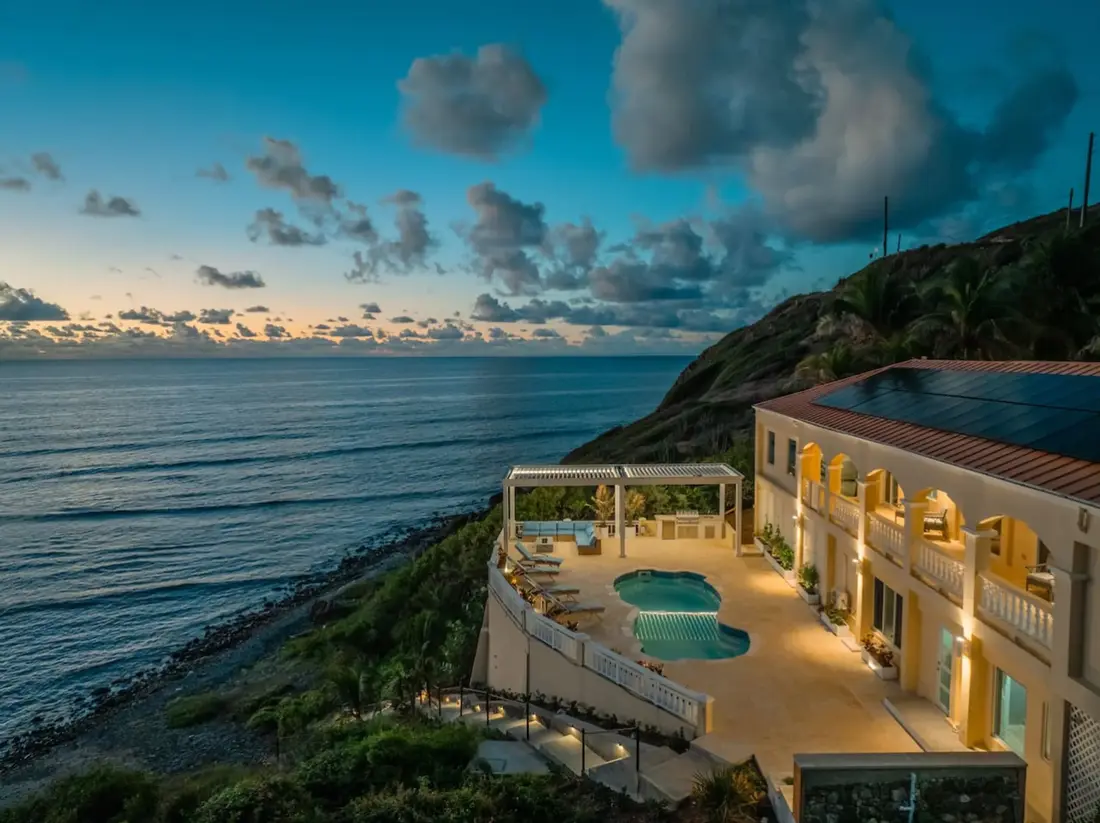 The Cerulean5 bd · 5 ba · sleeps 12 · Christiansted
Sources
11 references, listed in full at the end of this guide — official park, refuge, tourism-board and business sources, checked August 2026.