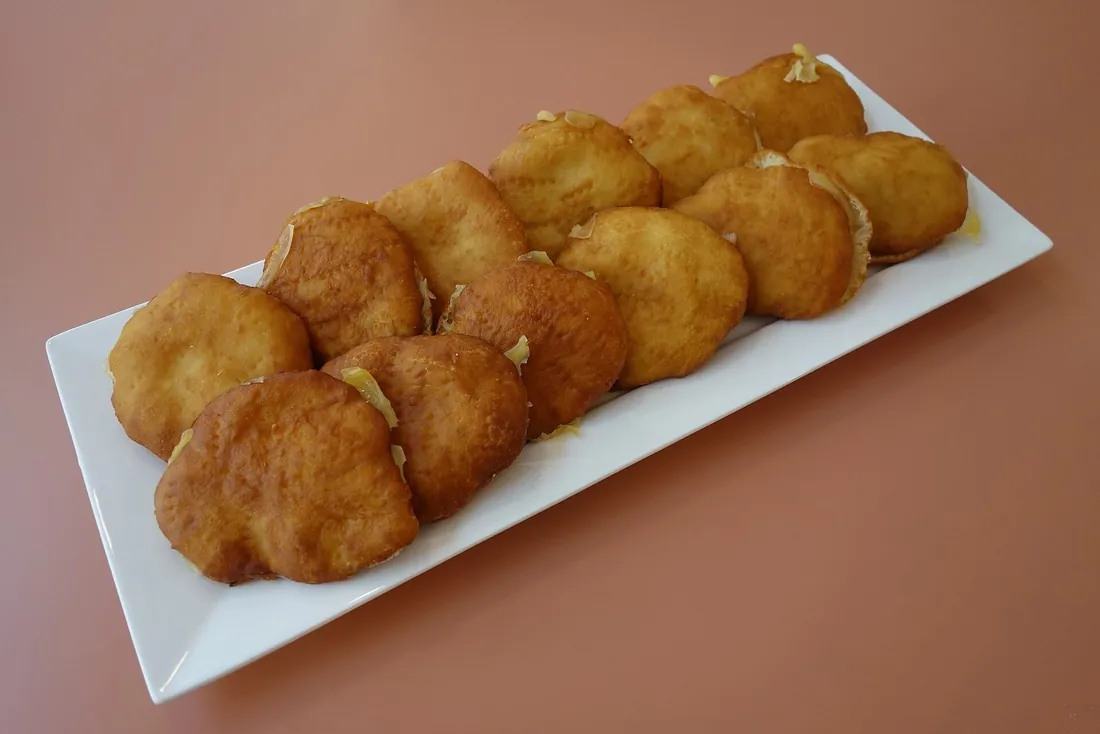
Pate & Johnny Cakes
The fried, stuffed pastry and the golden fry bread that anchor Crucian street food. Saltfish, beef, or veggie — how to order like you mean it.
St. Croix's street food starts with two pieces of fried dough. The pate (pa-TAY) is a stuffed half-moon turnover, filled with saltfish, beef, chicken, conch or vegetables and fried until the seam blisters. The johnny cake is the plain one: a puffed round of fry bread served beside chicken, fish and the traditional breakfast. This page is the full reference — what they are, where they came from, the rest of the street-food family around them, and the verified places to buy them.
What a pate is
A pate is a filled pastry that goes into hot oil instead of an oven. The cook rolls a soft flour dough into a circle, spoons a seasoned filling onto one half, folds the other half over, crimps the edge with a fork or a fingertip, and fries the whole thing until it colors. The result is shaped like a half-moon, sized somewhere between a hand and a plate depending on the vendor, and eaten out of a paper napkin while it is still too hot.
The dough is the part outsiders get wrong. It is soft and slightly chewy, closer to a fried bread than to flaky pastry — Caribbean food writers describe the texture as sitting between a "bake" (the fried dough of the eastern Caribbean) and a pie crust. It blisters and crisps at the edges in the fryer and stays tender in the middle, which is why a good pate can be eaten one-handed without shattering down your shirt.
Say it pa-TAY, with the stress on the second syllable. French pâté, the meat spread, is a different word and a different food that happens to share the letters. On St. Croix the word means one thing, everyone knows what you are asking for, and most vendors will just ask "what kind?"
The fillings
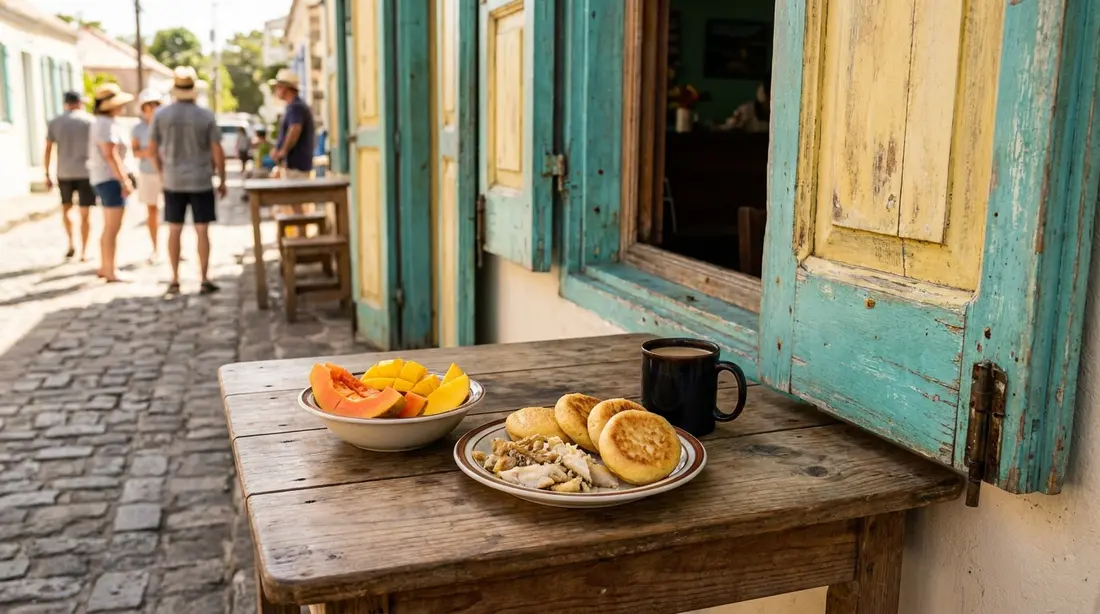
Every vendor has a house range, and it usually draws from the same short list:
- Saltfish — the classic. Salt-cured fish, soaked and flaked, cooked down with onion, sweet pepper and thyme. This is the filling most often named as the original and the benchmark.
- Beef — the crowd-pleaser: ground beef seasoned dark and savory, sometimes with a little heat. The safest first order for a skeptic.
- Chicken — common at trucks and booths, seasoned like the beef.
- Conch — a treat when a vendor has it; chopped conch in a seasoned base. Rosa's Booth near Whim has made its name partly on this one.
- Snapper and other fish — some stands run a fresh-fish pate when the catch allows.
- Veggie — widely available; the fillings vary by kitchen.
Seasoning level varies from mild to warm; scotch-bonnet heat is usually offered as pepper sauce on the side rather than baked in. If it matters, ask before you order — vendors answer that question all day and nobody minds. Sizes vary too: some booths fry palm-sized snack pates, others fold turnovers big enough to count as lunch with a cold drink, and pricing follows size, a few dollars either way at last check.
Pate versus the Jamaican patty
Visitors who know the Jamaican beef patty expect the same thing here and get something different. The differences are simple and worth stating. A Jamaican patty is baked, and its crust is dry, flaky and tinted yellow with turmeric or curry powder — it sheds golden crumbs when you bite it. A Crucian pate is fried, and its crust is soft, blistered and breadlike. Patties tend to carry their heat inside the filling, scotch bonnet included; pates usually keep the heat on the side. The two share the turnover shape and the general idea of meat in dough, and that is where the kinship ends. A pate is also its own thing next to the Latin American empanada, whose crust is thinner and shorter. If you want the comparison in one sentence: patty is pastry, pate is fried bread with something good inside.
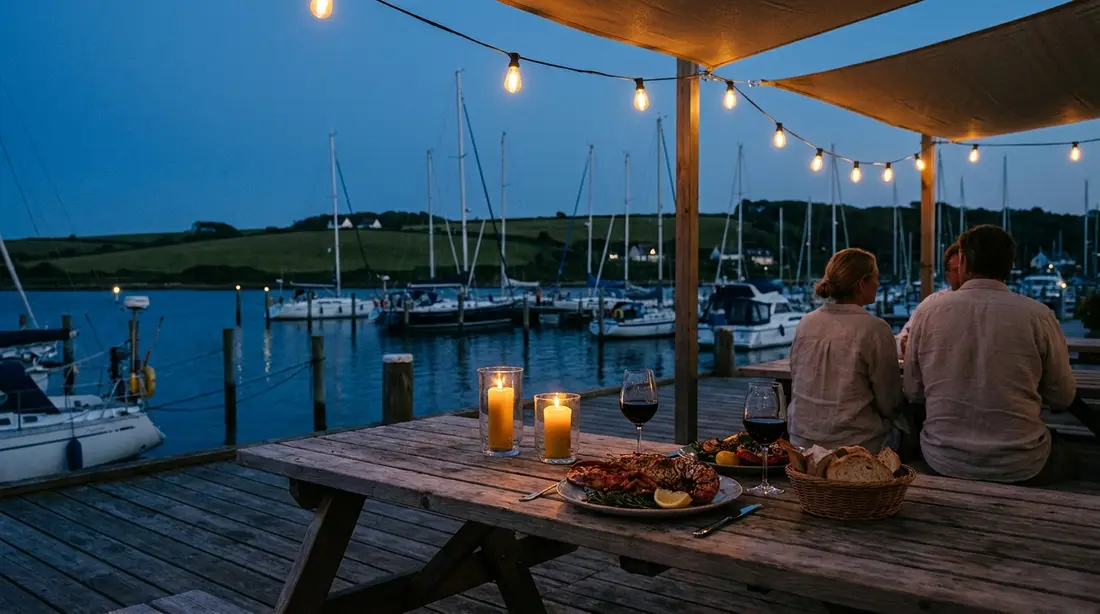
Johnny cakes
The johnny cake is fried dough with nothing inside, and that is the whole point. The Crucian version is a white-flour dough — flour, a little sugar, baking powder, fat and liquid, no yeast — rested, cut into rounds or ovals, and fried in oil until it puffs. It comes out golden, faintly sweet, crackly at the surface and pillowy in the center, and it does the job bread does everywhere: it rides beside the main thing and gets better the closer it sits to it.
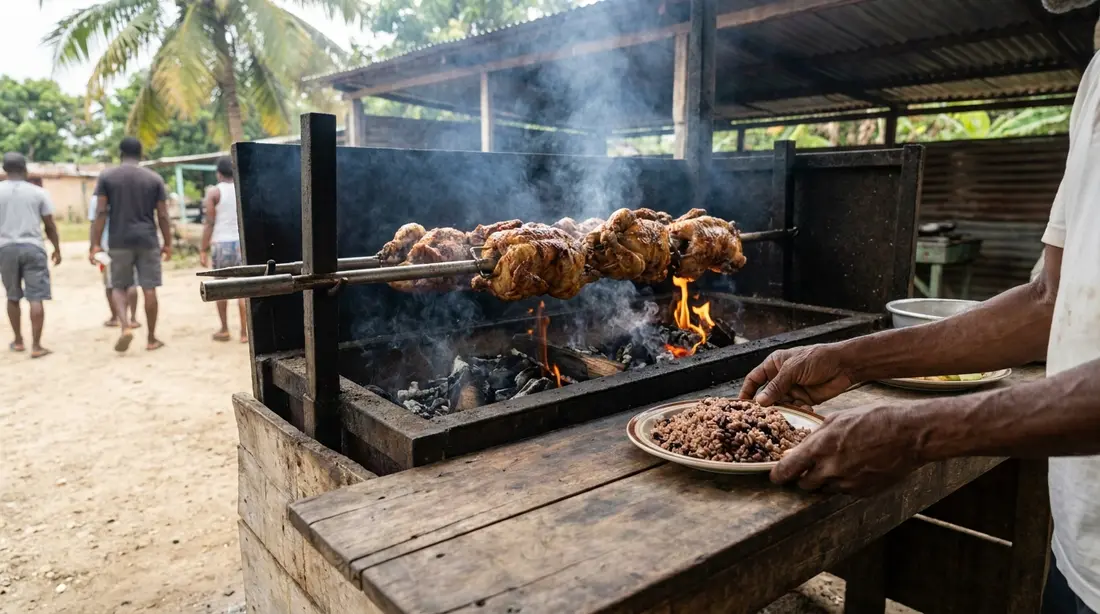
Crucians eat johnny cakes three ways. As the bread in a traditional saltfish breakfast, where it mops the pan juices. As the standard side with roast or stewed meats — the famous pairing on island is with spit-roasted chicken at La Reine Chicken Shack, where an order of chicken comes with johnny cakes as a matter of course. And on their own, straight from the oil, from a festival tent or a truck window, which is how most visitors meet them. They are at their best within minutes of frying; a johnny cake that has sat an hour is still bread, but the magic is in the first ten minutes.
The journey-cake question
Where the name comes from is argued, and this page states it as an argument rather than settling it. The account most often repeated in the Virgin Islands is that "johnny cake" began as "journey cake" — a durable fried or griddled bread that field workers and travelers carried and ate on the way, with the word softening across generations of Caribbean accents until journey became johnny. Food historians studying the North American johnnycake (a flat griddled cornmeal bread from the U.S. mainland that shares the name and little else) offer other candidate origins, including "Shawnee cake" and older words for corn breads. What is not in dispute: the Caribbean johnny cake became its own dish — wheat flour instead of cornmeal, fried instead of griddled, puffed instead of flat — and on St. Croix the older name has almost disappeared from speech. You will hear johnny cake, and on menus sometimes one word, johnnycake.
Dumb bread, the third bread
One more traditional bread belongs in this reference because it shows up in the same breakfasts: dumb bread, a dense, lightly sweet round baked without yeast, often with shredded coconut worked into the dough. The name is usually traced to "dum," the sealed-pot cooking technique (dum pukht) carried to the Caribbean by Indian indentured workers who came after emancipation — the bread was traditionally baked in a covered pot with coals below and on the lid, an oven improvised from a coal pot. In the classic Crucian breakfast, dumb bread and johnny cakes are the two interchangeable breads beside the saltfish, and the choice between them is mostly a matter of household habit. Bakeries sell dumb bread by the round; a warm slice with butter and a slab of cheddar is a local institution of its own, and the coconut version passes for dessert.
Where the tradition comes from
This food has a documented history, and it is worth telling straight. St. Croix's kitchen was built under Danish rule (1733 to 1917) by enslaved West Africans, and its foundations are the foods of that era. Plantation rations were set by law — accounts of the Danish West Indies describe a weekly allowance of about six quarts of cornmeal and six salted fish per enslaved person — and out of exactly those two ingredients came fungi and saltfish, the pairing that still anchors the island's traditional table. Enslaved people grew their own provisions where they could, sold produce at Sunday markets, and kept West African cooking alive in dishes like kallaloo, the stewed-greens pot with clear African ancestry.
Frying dough in oil is one of the oldest, cheapest ways to turn flour into a meal, and the pate and the johnny cake both descend from that economy: portable, filling, made from shelf-stable staples, sold from booths and baskets long before anyone called it street food. After emancipation in 1848, indentured workers and migrants from India and the eastern Caribbean added their own layers — the roti, the dumb-bread technique — and Denmark left a few traces of its own, most visibly red grout (from the Danish rødgrød), a guava-and-tapioca dessert still served on Transfer Day. The result is a creole kitchen in the true sense: African at the base, with Danish, Indian, Puerto Rican and eastern-Caribbean layers on top. Eating a saltfish pate from a roadside booth is about as direct a taste of that history as the island offers.
Saltfish, the anchor filling
Saltfish deserves its own entry because it is both the classic pate filling and a dish in its own right. It is fish — historically North Atlantic cod, today often other white fish — preserved in salt and dried until it keeps without refrigeration. Before cooking it is soaked, traditionally overnight, to rehydrate the flesh and pull the salt back out, then flaked and sautéed with onion, sweet pepper, tomato and thyme. That sauté is the pate filling; piled on a plate it is the center of the traditional Crucian breakfast — saltfish, boiled eggs, cooked greens, and johnny cakes or dumb bread alongside. The breakfast is covered in our breakfast and brunch guide, and it is not on every menu; bakeries and local takeout kitchens are where to ask, and morning is when to ask.
Fish and fungi, the national plate
The plate that outranks all others in Virgin Islands tradition is fish and fungi, and in June 2024 local food organizations and coverage marked it being named the Virgin Islands' national dish; the neighboring British Virgin Islands list it as their official territorial dish as well. Fungi is cornmeal cooked with okra and butter into a soft, spoonable mound — the island cousin of polenta. The name is pronounced FOON-jee. The fish half is typically a whole or filleted local catch, pan-fried or boiled and then finished in a creole-style sauce of onion, sweet pepper, celery and a measured amount of scotch bonnet, with lime on the side. The dish descends directly from the plantation ration described above, which is why it carries the weight it does: it is survival cooking refined into a signature. Our kallaloo and fungi guide covers it in more depth.
Kallaloo, and how it is spelled
Kallaloo is the island's deep green stew: leafy greens and okra cooked down with fish, crab, conch or pork into something between a soup and a gravy, seasoned with thyme and hot pepper. It is West African in ancestry and ceremonial in practice — on St. Croix it is the traditional Old Year's Night (New Year's Eve) dish, historically a communal pot built from what each household contributed, including the bone from the Christmas ham. A note on spelling, because you will see both: the Virgin Islands write it kallaloo (sometimes callaloo), while Trinidad and much of the eastern Caribbean write callaloo — and the Trinidadian dish is different, built on dasheen (taro) leaves and coconut milk. Same word family, two dishes. On a St. Croix menu or a festival chalkboard, kallaloo means the Virgin Islands pot.
Roti and the eastern-Caribbean table
St. Croix's street-food family extends past its own borders because the island's population does. Generations of migration from Trinidad, the smaller eastern-Caribbean islands and the wider West Indies brought the roti — a soft flatbread wrapped around curried chicken, goat, conch or channa (chickpeas) — and it is now as much a Crucian lunch as the pate. The long-standing address for it is Singh's Fast Food at the west end of King Street in Christiansted, a counter-service West Indian kitchen serving roti, curry goat, oxtail, conch and, when available, doubles (the Trinidadian chickpea-and-fried-bread street snack). Listed hours vary by source, so treat it as a daytime stop and call 340-773-7357 if the trip depends on it. Food vans around the island sell roti alongside pates, which tells you how completely the dish has been adopted.
The drinks that go with it
Street food comes with its own drink list, and two local bottles are worth knowing on sight.
- Maubi — a bittersweet drink brewed from the bark of the maubi (mauby) tree with spices like cinnamon, clove and orange peel. Traditionally it is fermented with a starter from the last batch, which gives it a frothy head that pushes out of the longneck bottles it is sold in. The first taste is close to root beer; the aftertaste turns bitter, and people are rarely neutral about it. It is a holiday fixture and a year-round vendor item.
- Seamoss — a thick, milky drink made from a red seaweed boiled down to a gel and blended with milk, sugar, nutmeg, cinnamon and vanilla. Cold, sweet and closer to a milkshake than a juice. Sold bottled at markets and by drink vendors at fairs.
- The rest of the cooler — sorrel (the crimson hibiscus drink of the Christmas season), homemade ginger beer, bush teas brewed from local herbs, passionfruit and tamarind juices, and coquito around the holidays. Local bottlers and festival vendors carry a rotating cast of all of these.
None of this replaces the rum side of the island, which has its own guides: the Cruzan distillery tour, the Captain Morgan visitor center and Mutiny Island Vodka.
The sweets
The sweet end of the street-food table is fruit-driven and old-fashioned, sold at fairs, bakeries and roadside tables:
- Tamarind balls — tamarind pulp worked with sugar and rolled into sticky, sweet-sour spheres. An old-time candy that never left.
- Gooseberry stew — small, tart local gooseberries stewed down with sugar and spice; classically spooned over vanilla ice cream. Tamarind gets the same stew treatment.
- Sugar cakes and candies — coconut and ginger confections made in home kitchens and sold by the bag.
- Fruit tarts — small pastries filled with coconut, pineapple or guava, a bakery-case standard.
- Black cake and red grout — the two heirloom desserts: the dark, rum-soaked Christmas fruitcake, and the Danish-descended guava-tapioca pudding tied to Transfer Day.
For the café-and-bakery version of a sweet tooth — pastries, ice cream, coffee — see coffee and sweets.
Where to buy them
These are the named, verified-at-last-check stops. Street food turns over fast, so treat every entry as "confirm before you drive across the island for it."
- La Reine Chicken Shack (mid-island, in the La Reine commercial area where Route 75 meets Centerline Road) — the island's benchmark johnny cakes, served with rotisserie chicken and local sides from an open-air, cash-friendly operation that has fed St. Croix for decades. Posted hours at last check ran late morning to evening, closed Sunday. The full writeup is in the local institutions guide.
- Rosa's Booth (Estate Whim, by the Whim ballpark on the Frederiksted end) — a family-run takeout window that has sold pates for more than 50 years, with fillings that run to conch, saltfish, beef and snapper, plus frozen ice pops for the drive. Hours are informal; afternoons are the usual window, batches are fried fresh, and sellouts are routine. It sits minutes from Estate Whim Museum, which makes a natural pairing.
- Singh's Fast Food (King Street, Christiansted) — the roti and West Indian curry counter described above; sources also list pates. Daytime; call ahead.
- Food trucks and vans — the island's rolling kitchens are a primary pate source, parked at trailheads of commerce: near Christiansted, along Centerline Road, by beaches on busy days. Trucks change names and corners often enough that listing them here would age badly; the working method is to treat any parked van with a handwritten menu and local plates as a candidate, and a short line of islanders at the window as a review.
- Bakeries and delis — town bakeries sell pates, dumb bread and fruit tarts in the morning. The bakery counters at the Plaza Extra supermarkets and at Seaside Market and Deli in Christiansted put the same tradition behind glass; see groceries and provisioning.
One closure to note, because old articles still cite it: Harvey's, the Christiansted standard-bearer for home-style Crucian plates, is permanently closed. Current sit-down options live in the Christiansted and Frederiksted restaurant guides.
The festival food villages
The highest concentration of this food in one place happens at the island's fairs, where dozens of cooks set up side by side and the only problem is capacity — yours.
- AgriFest (mid-February, Estate Lower Love) — the Virgin Islands' agriculture and food fair, and the single best event for traditional plates: pates, johnny cakes, kallaloo, fish and fungi, maubi, seamoss and the whole sweets table, cooked by people competing for local reputations. The 2026 edition, the 54th, ran February 14 to 16.
- Crucian Christmas Festival (late December into early January) — carnival season, with a food fair and a festival village in Frederiksted where the traditional cooks and drink vendors set up through the season's parades and shows.
- Virgin Islands Paté Festival (June, St. Croix Agricultural Fairgrounds) — yes, the pate has its own festival. The fourth annual edition ran June 21, 2026, with vendor competition, live music and moko jumbies; admission has been modest (about $10 adult at last check). If your trip lands in June, this is the single-day pate education.
- Jump Up (several evenings a year, Christiansted) — the downtown street festival brings vendors, including food, onto the boardwalk blocks.
The June restaurant event, Taste of St. Croix, is the chef-driven counterpart — a different genre, same island pride.
How to order
Street-food logistics on St. Croix reward a little preparation:
- Carry cash. Small bills. Some booths and trucks take cards now; the classics often do not, and La Reine is cash-only by most accounts. See money and tipping.
- Go early. Pates fry in batches, and when the batch is gone the answer is "finish" — done for the day. Morning and midday are the reliable hours; late afternoon is the gamble.
- Expect sellouts, and take them as data. A stand that sells out daily is a stand worth returning to earlier.
- Ask what is good today. Fillings rotate with supply. Conch and fresh-fish pates exist when the catch does.
- Pepper sauce is opt-in. Heat is usually a bottle on the counter. Start light; scotch bonnet is serious.
- Let it cool a minute. The filling comes out of the fryer at lava temperature. Every islander has burned a mouth learning this; you are allowed to skip the lesson.
What, where, when
| Food | Reliable sources | Best timing |
|---|---|---|
| Pate (saltfish, beef, conch) | Rosa's Booth, food trucks, bakeries, Singh's | Morning to midday; batches sell out |
| Johnny cakes | La Reine Chicken Shack, festival tents | Lunch onward; freshest with a chicken order |
| Saltfish breakfast | Bakeries, local takeout kitchens | Morning only; ask, it is rarely posted |
| Fish and fungi, kallaloo | Local kitchens, AgriFest, festival food fairs | Lunch; festivals for the full spread |
| Roti | Singh's Fast Food, food vans | Lunch, daytime hours |
| Maubi, seamoss, sorrel | Festival vendors, markets, local bottlers | Year-round; sorrel peaks at Christmas |
| Tamarind balls, gooseberry stew, tarts | Fair tables, bakeries, roadside vendors | Year-round; biggest range at AgriFest |
Making them at the villa
Both foods are within reach of a rental-kitchen cook, and every ingredient is on island. The common home method described in local recipes and food writing runs like this. For johnny cakes: a simple dough of white flour, baking powder, a little sugar and salt, a spoon of butter or shortening, and enough water or milk to bring it together; rest it, shape rounds, and shallow-fry in hot oil until each side is deep gold. For pates: a similar soft dough, rolled into circles around a cooked filling — the saltfish version means soaking the fish several hours or overnight, then flaking it and sautéing with onion, sweet pepper, thyme and tomato — then sealed at the edge and fried. We are a villa company, so we will not pretend to hold a family recipe; the proportions belong to the island's cooks, and printed versions differ house to house.
Shopping is easy: flour, cornmeal, okra and oil at any market, salted fish at the supermarkets, and the bakery counter for a benchmark pate to compare yours against. The provisioning guide maps the stores. If the group would rather watch a professional, private chefs on island will cook a Crucian menu in your villa and narrate it while they work. And for the rest of the traditional menu beyond the fried-dough department, start from the Crucian food guide.
Questions guests ask
What is a St. Croix pate?
A fried turnover: soft flour dough folded over a seasoned filling and deep-fried to a blistered gold. Standard fillings are saltfish, beef, chicken, conch and veggie, with fresh fish appearing when the catch allows. It is pronounced pa-TAY, sold at booths, bakeries and food trucks for a few dollars in cash, and eaten hot out of the paper. It is unrelated to French pâté beyond the spelling.
How is a pate different from a Jamaican patty?
Cooking method and crust. The Jamaican patty is baked in a dry, flaky, turmeric-yellow pastry and often carries scotch-bonnet heat inside. The Crucian pate is fried, with a soft, chewy, breadlike shell, and heat usually comes as pepper sauce on the side. Fillings overlap — beef, chicken, seafood — but the bite is completely different. Neither is an empanada, which uses a thinner crust again.
What do johnny cakes taste like?
Lightly sweet fried bread: a crackly golden surface over a warm, airy middle. There is no filling and little seasoning, which is the point — they carry whatever they are served with, classically spit-roasted chicken, stewed meats or a saltfish breakfast. Fresh from the oil they are outstanding; after an hour they are ordinary, so eat them where you buy them.
Where are the best johnny cakes on St. Croix?
The name that comes up first, from locals and food writers alike, is La Reine Chicken Shack mid-island, where johnny cakes come standard with the rotisserie chicken. Beyond that, festival food tents — AgriFest in February above all — fry them fresh in volume, and bakeries and trucks around the island sell them day to day. Bring cash for the classic spots and go before late afternoon.
Is fungi made from mushrooms?
No. Virgin Islands fungi (pronounced FOON-jee) is cornmeal cooked with okra and butter into a soft, polenta-like side dish. It anchors fish and fungi, the plate honored as the Virgin Islands' national dish, and its history goes back to plantation-era rations of cornmeal and salted fish. The mushroom kingdom is spelled the same and has nothing to do with dinner here.
What is maubi?
A traditional drink brewed from the bark of the maubi (mauby) tree with warm spices, usually fermented lightly with a starter saved from the previous batch. It pours with a big foamy head, starts sweet like root beer and finishes bitter. Islanders grow up on it; visitors split roughly down the middle. Look for it in longneck bottles at festivals, markets and roadside coolers, alongside seamoss and sorrel.
Can I get pates with no meat or no heat?
Yes on both. Veggie pates are a standard offering at most booths and trucks, and fillings are generally seasoned savory rather than hot — scotch-bonnet pepper sauce is an add-on you control. If you have allergies, ask the vendor what is in the filling before ordering; these are small kitchens with one fryer, and you will get a straight answer fast. Note that a shared fryer means veggie pates and meat pates usually meet the same oil.
Street food and a villa kitchen
Street food and villa travel fit together well: eat the island's cooking by day, then come home to a full kitchen instead of a hotel minibar. Our guests provision once, keep the fridge stocked with maubi and mango, and let a pate habit develop naturally between beaches. The Cerulean on the East End and Shoy's Beach House outside Christiansted both put serious kitchens a short drive from town bakeries and truck stops, and the whole villa collection is managed by people on island who can point you to whoever fried the best batch this week. Ask us; this is a subject our team holds opinions on.
Sources
Written from official and first-party sources, checked August 2026. Hours, prices and event dates change — confirm before you go.
In this guide
Stay nearby
On The Shoys beach: six bedrooms, six baths, pool and hot tub, room for twelve, and the beach through the back garden.
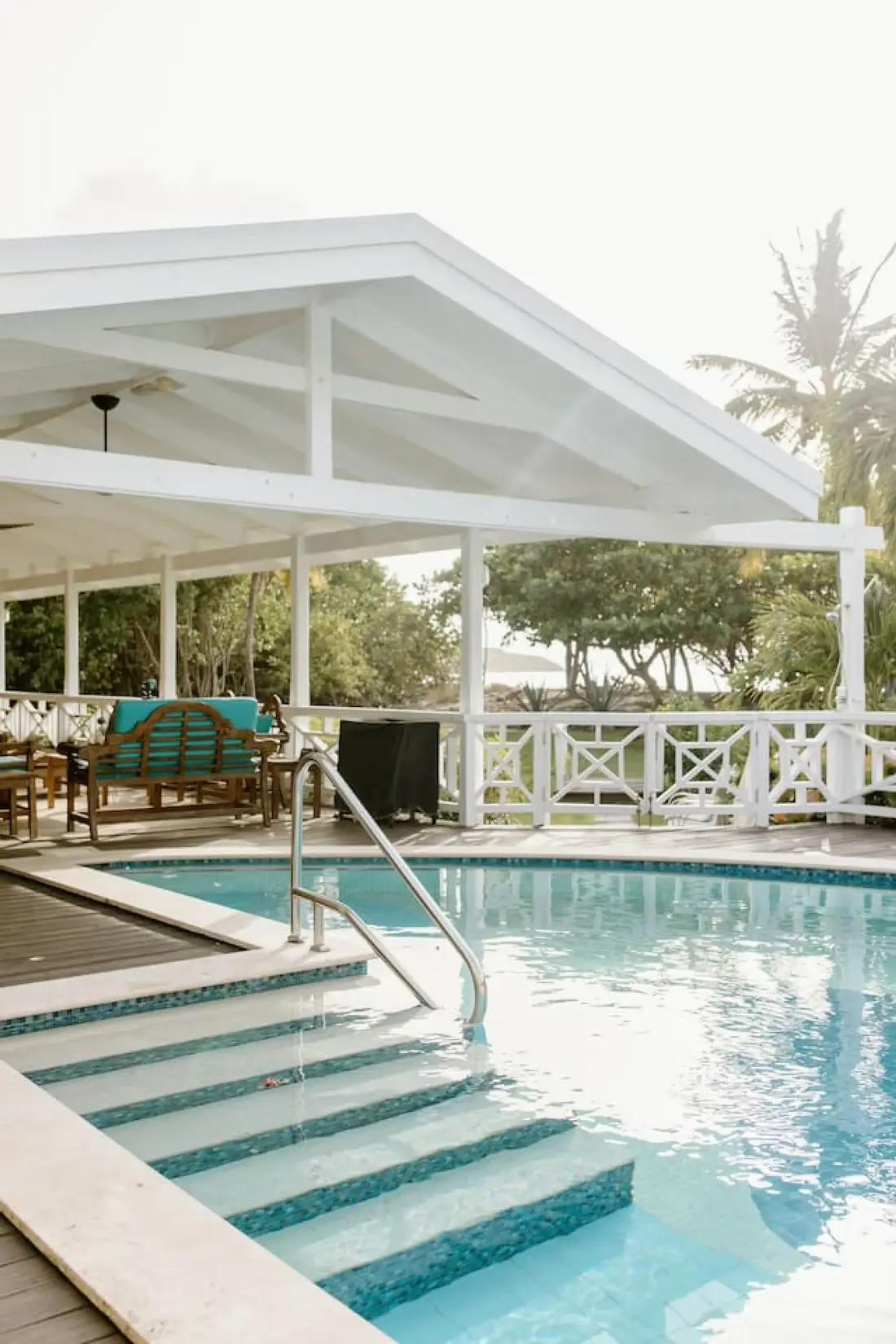 Shoy's Beach House6 bd · 6 ba · sleeps 12 · Christiansted
More in Food & Drink
Sources
12 references, listed in full at the end of this guide — official park, refuge, tourism-board and business sources, checked August 2026.