Daytime Kayaking at Salt River
Paddle mangrove shorelines and the 1493 landing site by daylight, with guided historical and ecological tours of the national park.
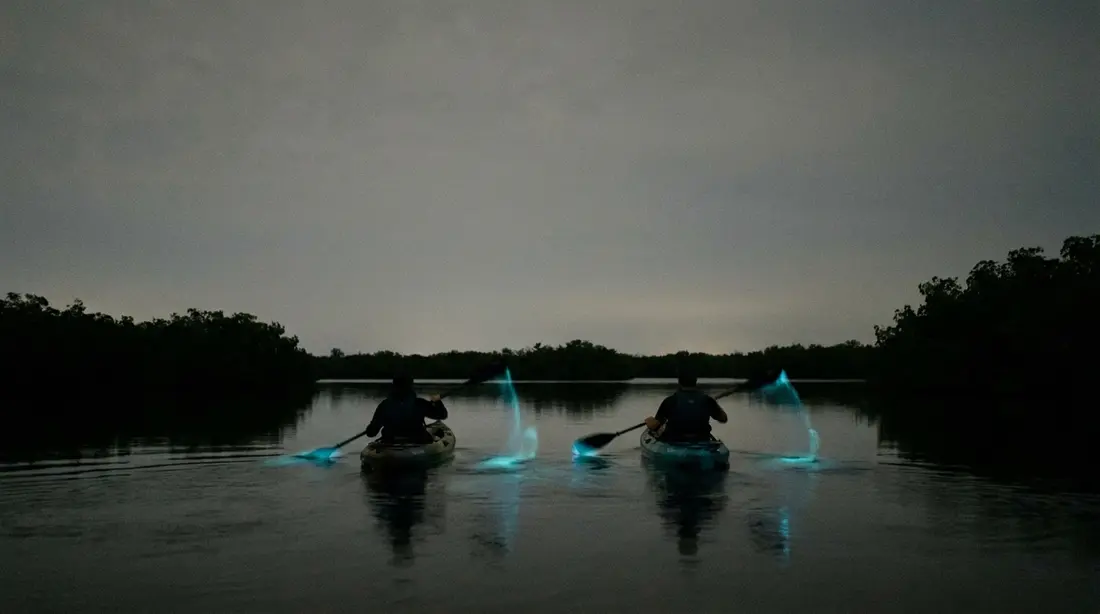
Salt River Bay draws its crowds after dark, when the water sparks blue-green around every paddle. By daylight the same bay is a different outing, and for a lot of guests it is the better one: a flat, wind-sheltered two-hour paddle along a mangrove estuary, past the beach where a Columbus landing party came ashore in 1493 and the grassy banks of a colonial fort, with the whole scene lit well enough to actually take in. This page is the reference for the daytime kayak — what the paddle is, who runs it, which boat to choose, the route through the bay's two arms, and how to fold it into the famous glow. The after-dark trip has its own guide at bio-bay kayak tours.
The daytime paddle
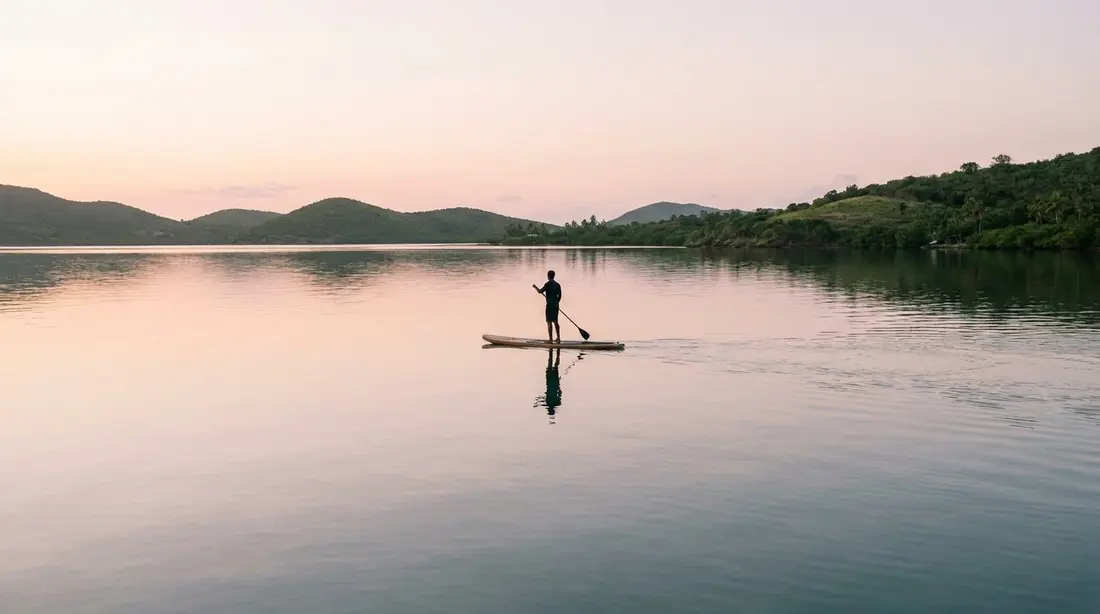
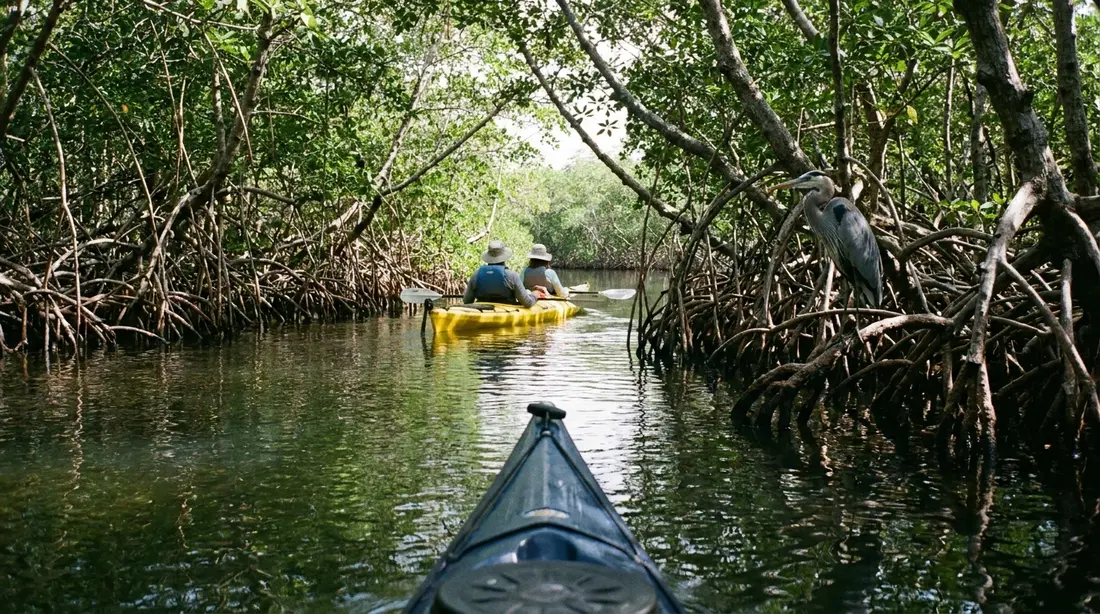
A daylight trip on Salt River is a gentle thing. You meet at the marina on the bay's eastern arm, sign in, and a guide fits you to a kayak and runs the safety talk while there is plenty of light to see hand signals and read the water. Then the group slides out of the harbor channel and into the estuary, and the pace drops to a drift. The bay inside the reef is the most protected paddling water on the island — a broad, shallow, near-still sheet ringed by dark green mangrove — so there is no surf to punch through, no chop to fight, and no open ocean at any point. Most trips run about two hours dock to dock, which is enough to work the mangrove edges, cross toward the historic western side of the bay, and come back without anyone's arms giving out.
The plain advantage of going by day is that you can see. The night tour trades sight for the glow: you paddle in full dark and watch light trail off the blades. In daylight the trade runs the other way. The water over the seagrass reads pale green and tea-brown, clear enough in a dry spell to pick out conch tracks and darting fish on the bottom, and the birds, the roots, the fort banks and the far headlands are all in view the whole time. Guides use the daylight to talk: the estuary and the reef at the mouth, the mangroves and what shelters in them, the Taino and Kalinago who lived on this bay for centuries, the migratory birds overhead, and the 1493 landing the western beach is named for. It is a paddle and a short lesson at once, and it asks almost nothing of your fitness.
The route through the bay's two arms
Salt River is a two-armed bay: a slim, reef-screened mouth where it meets the open sea, and it widens inside to a sheltered estuary, with a low finger of land on either side. The marina sits on the eastern arm, and that is where the paddle begins. From the dock a guided loop typically hugs the mangrove fringe, threads into the quiet channels where the roots close in overhead, and works across the inner water toward the western arm, where the land rises to Salt River Point and the old fort. The full geography of the bay — which road spur reaches which side, where to park, how the pieces fit — belongs to the Salt River area guide; from a kayak it simplifies to a sheltered circuit you never have to leave.
The distances are short by design. Nothing on a day tour crosses the mouth into open water, and the whole route stays inside the wind shadow of the mangroves, so a first-timer covers it comfortably in a couple of hours with time to stop and look. One arm of the estuary, Sugar Bay, has been the site of red-mangrove replanting over the years, so parts of the shoreline you pass are a forest being rebuilt rather than an old one. Guides pick the day's line by the wind and the group, working the lee shore and turning back before anyone tires, which is the luxury of a bay that offers calm water in every direction at once.
Guided tour or rental
There are two ways to do the daytime bay, and they suit different people. A guided tour puts a local in the boat with you: a set route, a running commentary on the history and the wildlife, gear handed to you at the water, and someone reading the conditions and steering the group. It runs about two hours, costs roughly $50 to $60 a person at last check, and is the right call for first-timers, families, and anyone who wants the story that turns a pretty paddle into a place with 2,000 years behind it. A rental is the other route: you take a boat for a half or full day and go on your own clock, which costs less by the hour if you plan to linger and lets you stop wherever you like, at the price of no narration and your own navigation.
Renters have a free launch of their own. Columbus Landing Beach, on the bay's western arm, is the easiest self-put-in on the north shore — flat, knee-deep, no surf to time — and it opens straight onto the mangrove shoreline; the beach's own page covers that launch, the parking, and the swim in full at Columbus Landing Beach. For the complete roster of who rents boats and boards across the island, including delivery to a villa, see the paddleboard guide, which carries the rental table so this page does not have to. The short version: book a guided tour if you want the history and an easy first paddle; rent if you are comfortable on the water and want the bay on your own terms.
The daytime operators
Three outfits run daytime kayaking at Salt River, all staging from the marina area, and all better known for their after-dark trips. Their daylight products, verified at last check:
- Virgin Kayak Tours runs the Historical & Ecological Day Tour, the guided daylight paddle most visitors take. It leaves the marina at 10 a.m., lasts about two hours, and uses Hobie Mirage pedal-drive kayaks. Pricing was seasonal at last check — about $55 from mid-November to mid-August and $50 through the early fall — with an early-bird discount for booking a month ahead, and the minimum age is 5, with a 260-pound limit per paddler. Guides cover the mangrove estuary and reef, the Taino and Kalinago history, the birds, and the 1493 encounter. Trips are by appointment, so reserve rather than turning up.
- Sea Thru Kayaks VI, the see-through-boat specialists, run two daytime trips: a guided National Park paddle and a Glass-Bottom Kayak tour of the bay, each about two hours and around $60 a person at last check, both open to ages 5 and up, and the park paddle includes a short beach stop. They also rent boats for self-guided paddling — a sit-on-top ocean kayak from about $60 a boat and a glass-bottom kayak from about $70, by the half or full day. Their marina office and shop kept Monday-to-Saturday hours, roughly 10 to 4, at last check.
- BushTribe Eco Adventures runs a longer morning paddle at Salt River — around three hours at last check — winding through the mangrove channels in clear-hull kayaks and on paddleboards, with the same guided, interpretive style as their night trip. They work sites around the whole island, so they are a good single contact for several days of activity; confirm the current morning schedule when you call.
Prices, ages, and start times all drift; every figure here is a last-check reading, so reconfirm the current details straight with the operator. One useful daytime note: the guided day tours take younger children than the night trips do — age 5 on the daylight paddles, against the higher floors the same companies set after dark — which makes daytime the family-friendly half of the bay.
Sit-on-top, pedal-drive, or glass-bottom
The boat you sit in changes a day paddle more than most people expect, and the daytime choices differ from the night ones. A plain sit-on-top kayak is the simplest and cheapest: stable, forgiving, easy to climb back onto, and all most paddlers need for a flat bay. A pedal-drive Hobie moves by leg power through foot pedals, which leaves your hands free — for binoculars, a phone, or steadying a small child — and needs no paddling skill at all; on a birding-heavy, look-around trip like this one, free hands are worth a lot. The glass-bottom or clear kayak is the daytime special. In daylight you look straight down through the hull at the seagrass, the conch, the fish and the rays crossing the sand, which is the one thing the night trip cannot offer, since after dark that same transparent floor shows the glow instead. If the underwater view is the point of your paddle, the clear boat earns its few extra dollars specifically by day.
A kayak is not the only way to paddle the bay. A stand-up paddleboard puts you on your feet for a higher, aquarium-style view down into the water, at the cost of catching more wind and asking more balance; Salt River works well for both, and the standing option, its rentals and its trade-wind rules, is covered in the paddleboard guide. For a mixed-age family the common answer is one glass-bottom tandem and one pedal kayak, which between them carry the kids, the gear and the grown-ups without anyone needing technique.
What you see by day
The mangrove edge is the heart of a daylight paddle. The red mangroves stand on arching stilt roots at the waterline, and a kayak lets you slide right up to them; the sheltered, root-tangled shallows are a nursery for young reef fish, an ecology the mangroves of Salt River guide covers in full. From the boat, the life is mostly what moves. Herons and egrets stalk the margins, brown pelicans crash the shallows for bait, frigatebirds ride high over the mouth, and small fish flicker in the root shadows; the island-wide picture of what lives here is in the wildlife guide. Over the open grass you can spot conch on the bottom and southern stingrays gliding across the sand, and iguanas often sit out on the overhanging limbs, watching the boats go by.
Green turtles use the bay too, and a guide will point one out when it surfaces, but no operator will promise a sighting — they come and go with the seagrass and the season. The water itself is part of the show by day. Fed by the largest watershed on this coast, the estuary reads a little browner than the clear turquoise off the leeward beaches, stained by mangrove tannins, and in a dry spell it clears enough to read the bottom in the shallows. Night gives you the glow; day gives you the whole living scene the glow hides in.
The history you paddle past
Daylight is also what lets you see the history, and on this bay the history is unusually thick. From the water on the western arm you look onto Columbus Landing Beach, the calm strand where a landing party from Columbus's second voyage came ashore on November 14, 1493 — the one beach in the country where his crews are known to have stepped onto land. Above it, on the low rise of Salt River Point, sit the grassy triangular banks of Fort Salé, an earthen fort first thrown up in 1641 and among the oldest surviving European earthworks in the hemisphere, plain to pick out once a guide shows you the shape. The flat ground behind the point is where archaeologists uncovered the only known ceremonial ball court in the Lesser Antilles.
All of that is a one-line pointer here on purpose: the settlement that stood on this bay for roughly 2,000 years, the eyewitness accounts of the 1493 fight, the fort, and the excavations are told properly in the Salt River, 1493 guide, which is worth reading before you paddle so the grassy banks stop being a plain green field. What the daytime kayak adds is the vantage. You approach the landing beach the way the fleet's longboat did, from the water, with the fort site on the height above and the mangroves closing the bay behind — five centuries of the island's story laid out from a seat a foot above the surface.
Timing, tide, and current
The wind is the one variable that matters, and it runs on a daily clock. The trade wind is lightest at dawn and stiffens as the day warms, so the glassiest water and the calmest paddle come in the morning, and the standard advice is to book the earliest tour the operator offers. By mid-afternoon the breeze is up; on the sheltered estuary that still means an easy paddle rather than a hard one, but the flat-calm hour is the early one.
Tide and current barely enter into it, which is part of why this is such a beginner-friendly bay. St. Croix sits in a nearly tideless corner of the Caribbean — the daily rise and fall at Christiansted runs on the order of a foot or two, not the wide tides of the mainland coasts — so the estuary carries only a weak tidal current and never runs like a river. The reef across the mouth absorbs the ocean swell before it reaches the inner water, so even on a day when the north shore is rough outside, the bay behind the reef stays paddle-flat. The one condition that changes the day is rain: after a real downpour the estuary clouds green-brown for a day or two as the watershed drains, which does not stop the paddle but does dull the through-the-hull view, so a glass-bottom trip pays off best in a settled dry stretch.
Who it suits
This is close to the most beginner-proof paddle on the island. The water is flat and shallow, the route never leaves shelter, the guided pace is unhurried, and the pedal-drive boats remove even the need to know how to paddle. No experience is required for any of the guided day tours, and the operators brief every group before it leaves the dock. For families the case is stronger still: the daylight tours take children from age 5, younger than the same companies allow after dark, and small children ride up front in a tandem while a guide keeps the group together. A nervous adult, a grandparent, a first-timer, and a five-year-old can all do this trip in the same convoy.
Choosing between a kayak and a paddleboard mostly comes down to how you want to sit. A kayak keeps you low and stable, seated, with room for a child and a dry bag between your knees — the easier platform for mixed groups and for anyone who would rather look around than balance. A board stands you up for a better downward view and a bit of a core workout, and takes more wind for it; the standing case, with its own venues and rules, is in the paddleboard guide. For most visiting families the seated kayak, and especially the hands-free pedal boat, is the lower-stress choice by a wide margin.
Combining the bay by day and night
The bay's best trick is to do it twice in one day. Paddle the mangroves and the history by daylight, go back to town for an early dinner, then return after sunset for the glow tour off the same dock — the one shoreline as scenery at midday and as light after ten. The night trip only runs when the sky goes dark, across the moonless nights of each month, and you pick the date off the lunar calendar rather than by convenience, so settle that first; the science, the lunar calendar, the operators and their night prices are all in the bio-bay guide. If a beach day suits the group better than two paddles, pair the morning tour with a swim and a picnic at Columbus Landing Beach on the western arm, and use the area guide for how the whole bay fits a day. Divers can run the daylight equivalent, a two-tank morning on the canyon walls off the same marina, covered in diving Salt River Canyon.
Conditions through the year
There is no wrong season for the daytime paddle, because the sheltered bay shrugs off most of what the weather does; what shifts is the margin. Summer mornings, roughly June through August, give the lightest trades and the flattest, clearest water of the year. The quiet months of September through November keep the calm and the warmth, with the tropical-storm forecast as the thing to watch during hurricane season. From mid-December into March the Christmas Winds are the breeziest stretch, and long north swell can pile up outside the mouth even under a blue sky — but that swell breaks on the reef, and the estuary behind it usually stays workable when the open coast does not, which is why Salt River is the paddle that survives a windy week. Across every month the pattern holds: go early. The month-by-month detail is in the weather guide, and the same north-shore run pairs the bay with Cane Bay in the island driving guide.
What to bring
The operators supply the boat, the paddle and a life jacket, so the rest is small and personal. Pack for two hours of sun on open water, and confirm any specifics with your operator when you book.
- Clothes that can get wet. Quick-dry fabric over cotton; you will take drips off the blade and the odd splash.
- A long-sleeve sun shirt. On the water it beats repeated sunscreen, and it keeps the reef chemistry down.
- Hat, sunglasses and a strap. There is no shade on the bay, and a strap saves the glasses when you lean over the side.
- Reef-safe sunscreen. Mineral-based only, as the territory's law and the estuary both require.
- Water, and cash to tip the guide. Nothing is sold at the bay; carry more water than you think two hours needs.
- Water shoes or sandals that stay on your feet. The launch and any beach stop mean wading over soft, seagrassy bottom.
- A small dry bag. For a phone, a key fob and the cash; leave everything else at the villa.
- Binoculars, if you own them. The birds work the mangrove edge, and a drifting boat gets close.
Paddling the mangroves lightly
The bay is a national park and a working fish nursery, so the daytime paddle carries a short conservation code, and the operators brief it. Do not grab, pull, or break the mangrove roots and branches, and stay in the channels your guide uses rather than pushing into the shallows over the seedlings; the reasons the root forest matters to every reef on this coast are in the mangroves of Salt River guide. Wear only mineral sunscreen, give any turtle or ray room and never chase it, and take nothing and leave nothing — pack every scrap of trash back out. None of this slows the trip down; it is the difference between a bay that keeps performing and one that quietly stops, and it is the price of paddling somewhere this alive.
Day kayak facts
The daytime trips at a glance, with figures as of our last check. Prices, ages and times move; confirm when you book.
| Trip | Operator | Length | Price at last check | Min age | Boat |
|---|---|---|---|---|---|
| Historical & Ecological Day Tour | Virgin Kayak Tours | About 2 hours, 10 a.m. start | $50 to $55 per person, seasonal | 5 | Pedal-drive Hobie |
| National Park paddle | Sea Thru Kayaks VI | About 2 hours | Around $60 per person | 5 | Sit-on-top, with a beach stop |
| Glass-Bottom Kayak tour | Sea Thru Kayaks VI | About 2 hours | Around $60 per person | 5 | Transparent hull |
| Morning Salt River paddle | BushTribe Eco Adventures | About 3 hours | Confirm when booking | Ask when booking | Clear-hull kayak or board |
| Self-guided rental | Sea Thru Kayaks VI | Half or full day | From $60 a boat; glass-bottom from $70 | 5 | Sit-on-top or glass-bottom |
Questions guests ask
Is the daytime paddle worth doing if we are already booked on the night glow tour?
Yes, because they are two different trips on the same water. The night tour is about the glow and takes place in full dark, so you feel the bay more than you see it. The daytime paddle is about everything the dark hides — the mangrove roots, the birds, the fish and rays in the shallows, the fort banks and the landing beach, all in clear view. Plenty of guests do both on purpose: a morning tour for the scenery and the history, and a separate night tour, on a dark-moon date, for the light. If you can only fit one and the glow is the goal, book the night; if you want to understand the place you are paddling over, add the day.
Do we need any kayaking experience?
None. The bay is flat and sheltered, the route never leaves calm water, and the guided pace is slow, so first-timers do this comfortably. The pedal-drive Hobie kayaks remove even the paddling skill, since your legs do the work and your hands stay free. Every guided tour includes a briefing and gear at the dock, and guides shepherd the whole group. If you are anxious about balance, ask for a tandem and tell the guide; they run nervous first-timers all the time.
Can young children come on the daytime trip?
Yes, and daytime is the more child-friendly half of the bay. The guided day tours take children from age 5 at last check, a lower floor than the same operators set for their night trips, and small children sit tandem with an adult. Every paddler wears a provided life jacket. The practical limits are attention span and sitting still for a couple of hours; a pedal boat helps, since a child can ride hands-free up front while a parent drives with their legs.
Should we take a guided tour or just rent a kayak?
Take the guided tour if you want the history and ecology narrated, an easy first paddle, and someone else reading the wind — it runs about two hours for roughly $50 to $60 a person at last check. Rent if you are comfortable on the water, want to set your own pace, and plan to stay out long enough that a half-day boat is better value. Renters can self-launch free from Columbus Landing Beach on the western arm; the full rental roster, including villa delivery, is in the paddleboard guide, and the beach launch is covered on the Columbus Landing page.
What will we actually see out there?
The reliable sights are the mangrove edge, the birds working it — herons, egrets, brown pelicans, frigatebirds — and, in clear water, fish, conch and rays over the seagrass, with iguanas in the branches above. Sea turtles are regular but never promised; a guide will point one out if it surfaces. You will also paddle past the 1493 landing beach and the fort earthworks on the point. What you will not see by day is the glow, which only shows in the dark; that is the night tour's job.
When is the best time of day to go?
Morning. The trade wind is lightest around dawn and builds through the afternoon, so the flattest water and the clearest light come early, and the earliest tour of the day is the calmest. Any month works, since the reef and mangroves keep the inner bay sheltered year-round, but after heavy rain give the estuary a day or two to clear before a glass-bottom trip, when the runoff clouds the water. Summer mornings are the glassiest of all.
Where to stay for a day on the water
Our homes cluster on the Christiansted side of the island, so the marina is a little under half an hour up the north-coast road — close enough to paddle in the morning and be back at the villa by lunch, or to run the day-and-night double without a long drive between. Guests at our East End villas and the beachfront collection reach the bay along the waterfront and Route 80, and several of these houses keep kayaks or paddleboards that carry easily to the Columbus Landing launch. Because the night glow tour turns on the moon, let us know when you are traveling and we can help you pick the dark-sky nights and set a calm-water morning against them. Browse them all on the villas page.
Sources
Written from official and first-party sources, checked August 2026. Hours, prices and event dates change — confirm before you go.
In this guide
Stay nearby
Private oceanfront on the East End with a sandy, swimmable beach, pool, outdoor kitchen and a separate guest cottage. Sleeps twelve.
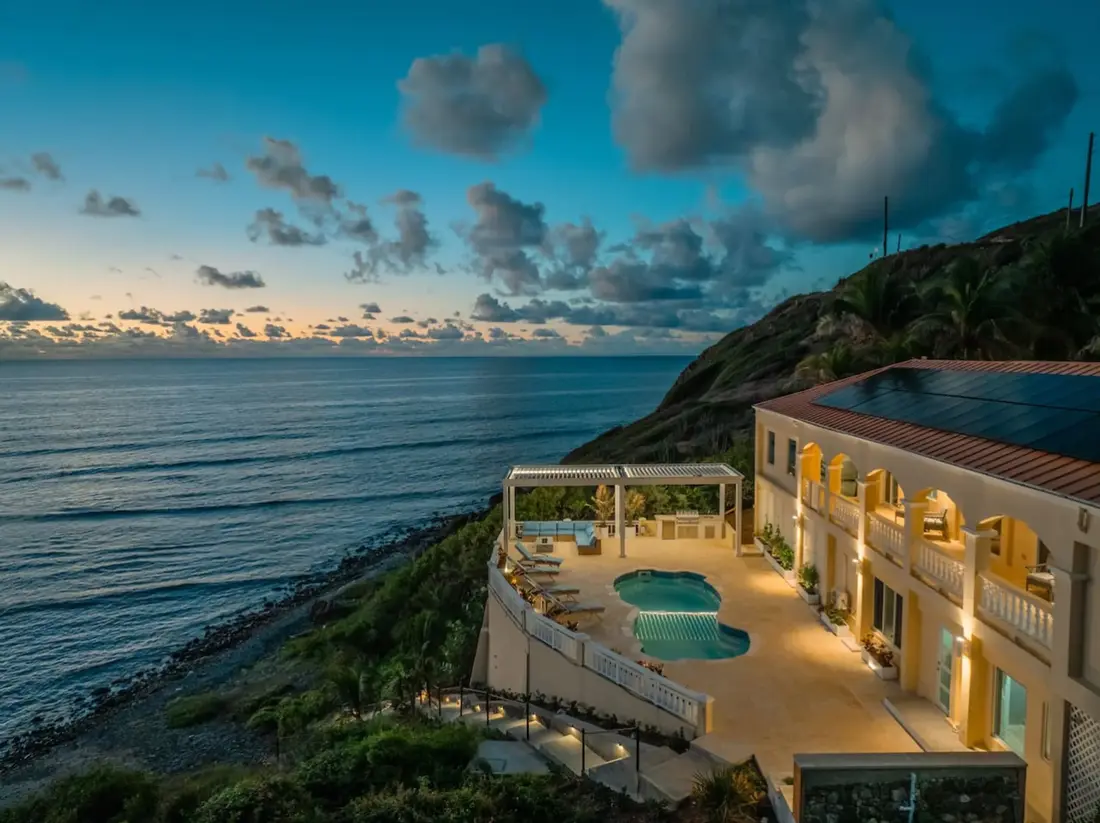 The Cerulean5 bd · 5 ba · sleeps 12 · Christiansted
More in On the Water
Sources
10 references, listed in full at the end of this guide — official park, refuge, tourism-board and business sources, checked August 2026.