Money & Tipping
U.S. dollars, normal U.S. cards and tipping habits, and the handful of beloved spots that still prefer cash.
St. Croix runs on the U.S. dollar, U.S. banks, and the tipping habits you already know. There is no sales tax on the price tag, no currency to exchange, and no foreign-transaction fee on any card, ever. This page is the island's full money reference: what gets added to a bill and what does not, where plastic rules and where paper still does, which banks operate here, who to tip and how much, and the mistakes that cost visitors real dollars.
The framework first, because it settles most questions before they come up. The U.S. Virgin Islands is a United States territory. The money in your pocket is legal tender the moment you land. Your checking account, your credit cards, your banking app, and your direct deposits all behave exactly as they do in Ohio. Swiping a card in Christiansted is a domestic transaction in every sense that matters to a bank's fee schedule. What follows is the fine print that the framework leaves out, and St. Croix does have some fine print.
The dollar and the domestic card
Start with the fee that never shows up. A foreign-transaction fee is what card issuers charge when a purchase settles in another country or another currency. Neither condition can occur here. Every register on St. Croix charges dollars through the U.S. payment system, so the 1 to 3 percent surcharge that shadows a trip to Mexico or France has no trigger. You do not need a no-foreign-fee card for this trip. You do not need to call anything in ahead of time either, though a quick travel note in your banking app costs nothing and spares you the rare fraud hold on a first Caribbean charge from an issuer with a jumpy algorithm.
Nothing else about the plumbing changes. Debit PINs work. Contactless tap works wherever a terminal supports it, which on St. Croix means the supermarkets, the chain pharmacies, and most full-service restaurants. Checks from mainland banks are a harder sell at small businesses, same as anywhere. Zelle, Venmo, and the rest function normally on island phones, and a few small operators use them in place of a card reader; let the vendor offer rather than assuming. The postal system is USPS at domestic rates, the outlets are standard American 110-volt, and if you lose your wallet, your bank mails a replacement card to a U.S. address like any other. For the border-crossing side of the trip, including the generous duty-free allowance on the way home, see no passport needed.

Taxes on the island bill
The USVI levies no general sales tax. The number on the shelf is the number at the register, which mainland visitors tend to notice on the second day and enjoy for the rest of the week. The territory funds itself differently: businesses pay a 5 percent gross receipts tax on their revenue. That tax lands on the merchant's side of the ledger rather than yours, and posted prices already carry it, the way posted prices everywhere carry rent.
Two additions do reach a visitor's paperwork, and both are worth recognizing on sight.
- The hotel room occupancy tax: 12.5 percent. Every lodging stay shorter than 90 days owes it, villas included. By statute it applies to the gross rate, meaning the room or villa rate plus add-on charges such as energy surcharges or maintenance fees. You will see it itemized on your booking confirmation rather than paying it in person, so it belongs in the trip budget from the start. Stays of 90 days and longer fall outside it, one of several economics covered in long stays on St. Croix.
- Restaurant service charges. Some restaurants add a fixed percentage to the check, most commonly for larger parties, and some resort bars and beachfront operations apply one across the board. It is always printed on the bill. Read the bottom lines before you compute a tip, because a service charge stands in for one; more on that below.
That is the complete list. There is no departure tax when you fly home to the mainland, no resort-fee statute, and no value-added tax. Agricultural inspection at the airport screens your bags for produce, and it screens for free.
Where cards work
Cards carry most of a St. Croix trip without friction. Every business built for volume takes them: the supermarkets covered in groceries and provisioning, the pharmacies, the rental-car counters, the dive shops, the boutiques and galleries in both towns, the marinas, and effectively every sit-down restaurant on the island. Charter operators, kayak outfitters, and tour companies book online with a card like their mainland counterparts. Fuel is card-friendly at the larger stations, with a caveat covered in the next section.
One island attraction has gone further than the mainland norm: the Cruzan Rum Distillery operates cashless. Tours and tastings there go on a card, and bills in hand will not help you. It is the only spot on the island where carrying cash is the mistake.
The practical reading: a couple staying near Christiansted, eating at full-service restaurants, and booking activities online could pass a week here using a card for 90 percent of their spending. What fills the remaining 10 percent is the interesting part of the island.
Where cash still wins
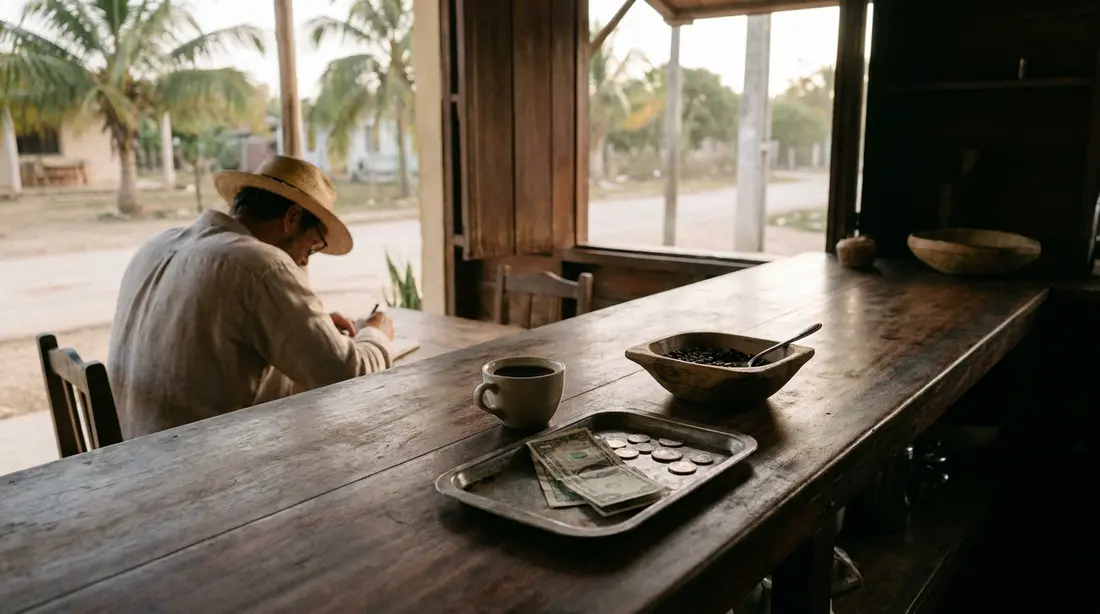
St. Croix keeps a real cash layer, and it maps almost perfectly onto the experiences guests remember. The pattern: the smaller and more beloved the operation, the more likely it runs on paper.
- The Mt. Pellier Domino Club in the rainforest is strictly cash, and there is no machine on the grounds, so the nearest ATM is a long winding drive away. Arrive supplied for lunch, drinks, and the famous beer-drinking pigs. Details in the Domino Club guide.
- La Reine Chicken Shack, the mid-island institution for rotisserie chicken and johnny cakes, is a bills-only operation by most accounts. It shares that habit with much of the island's classic food tier; see the local food institutions.
- Roadside food vans, fruit stands, and fish coolers transact in cash, small denominations preferred. So do the vendor tents at food fairs, AgriFest, and the Jump Up street festivals in Christiansted.
- Taxis quote their published rates as cash fares. Card and app acceptance exists driver by driver and cannot be counted on curbside; the full picture is in taxis and getting around.
- Gas pumps, sometimes. Long-running local reporting has noted that a number of St. Croix stations never installed card readers at the self-serve pumps, so payment goes to the attendant or the window, and a few of those prefer cash. The big stations take cards without drama. Keep a twenty in the console and no fuel stop can strand you.
Is there a discount for paying cash? Sometimes, quietly, at small operations that would rather skip card-processing costs, and posted dual pricing does exist at scattered fuel stations, as it does on the mainland. Nothing island-wide or reliable enough to plan around. Treat any cash price as a pleasant surprise rather than a strategy.
Banks and ATMs on St. Croix
Four retail banks operate on the island, all of them U.S.-regulated.
- FirstBank VI runs the widest footprint at last check: Christiansted locations on King Street and in the Orange Grove and Sunny Isle areas mid-island, plus a Strand Street branch in Frederiksted.
- Banco Popular banks from the Orange Grove and Sunny Isle shopping areas and advertises one of the larger ATM networks in the territory.
- Oriental Bank, which absorbed Scotiabank's Virgin Islands business in 2019, maintains St. Croix operations with its own routing number for the island.
- Bank of St. Croix, headquartered at Gallows Bay outside Christiansted, participates in the Allpoint, MoneyPass, and Alliance One networks, which waive surcharges for cards from thousands of mainland institutions.
The geography lesson inside that list: machines cluster in Christiansted, in Frederiksted, and around the mid-island shopping centers along Centerline Road. The East End, where many villas sit, has essentially no bank presence, and the rainforest has none at all. So the working rule is to withdraw where the banks are, during an early grocery or town run, rather than expecting a machine near the beach when the food van appears.
On fees, the arithmetic is the same as home, only with fewer escape routes. An out-of-network withdrawal can be charged twice, once by the machine's owner and once by your own bank, and the private machines bolted inside bars and convenience stores charge the most for the least. A bank-branch ATM in town is always the cheaper pull, and if your home bank belongs to Allpoint or MoneyPass, the Bank of St. Croix machines may cost you nothing. Check your card's network logos before the trip; it is a thirty-second look that can save a few dollars per withdrawal.
Two timing notes. Branch lobbies keep short island hours, generally weekday mornings into mid-afternoon. And banks close for territorial holidays the mainland calendar does not list, July 3, Emancipation Day, among them, so stock your wallet before any holiday weekend.
Restaurant and bar tipping
Mainland arithmetic applies. The published local guidance and the practiced norm agree on 15 to 20 percent for table service, computed on the total. Bar service runs 10 to 15 percent of the tab or the familiar dollar-or-two per round. Buffet-style service, where it exists, runs around 10 percent. If a sommelier or a maitre d' earns a spot in your evening, the island guidance mirrors the mainland there too: 15 to 20 percent of the wine bill for the former, a five or a ten for the latter. Camping at a table well past the meal is worth a few extra points on the tip; the island's guidance suggests 5 to 10 percent more after the two-hour mark, which is fair to a server watching a section stand still.
The one discipline that matters more here than at home: look at the check before you tip. Service charges appear on St. Croix bills often enough, on big parties, at resort operations, at some waterfront bars, that double-tipping is the most common visitor overpayment on the island. A printed service charge is the tip unless the service moved you to add on top of it. When the line is absent, tip your normal number. When you cannot tell what a line means, ask; servers answer that question daily and would rather you ask than stiff them on a misread.
Cash tips on card payments are always welcome, and at the cash-only institutions above they are the only kind. Fold tip money into your cash planning for exactly those stops.
Tipping drivers and porters
Taxi tipping on St. Croix comes in two shapes because the fares do. Shared vans charge flat per-person rates set by a published tariff, and the everyday courtesy is rounding: a fare of $16 becomes a twenty for a couple, and everyone moves on. Metered-style private runs and airport transfers with luggage handling earn a percentage, with the island's published guidance putting 10 to 15 percent of the fare as the norm and more deserved when a driver loads a week of groceries or waits through an errand. Fare mechanics, the tariff system, and the cash-first reality of the trade live in taxis and getting around; this page's job is only the tip.
Around the airport, the old porter arithmetic holds: a couple of dollars for the first bag and a dollar for each after it if a skycap handles your luggage. Shuttle and courtesy-van drivers see a couple of dollars per rider. None of this is policed, all of it is noticed, and small bills make each moment painless, which is the recurring theme of cash on this island.
Tipping at the villa
A villa stay has fewer tipping moments than a resort stay, and different ones. There is no bellhop, no doorman, no nightly turndown. The people who serve a villa week are a housekeeping team, sometimes a mid-stay cleaner, and whatever private staff you hire in. Here is how the customs sort out, stated as patterns rather than rules, because published villa-specific standards do not exist the way hotel standards do.
- Housekeeping. The hotel benchmark in the local guidance is a couple of dollars per day. At a villa the equivalent practice is a single cash amount left at departure for the crew that resets the house, scaled to the size of the home and the state you leave it in. If your booking includes a mid-stay clean, a separate tip handed over that day reaches the person who actually did the work.
- Private chefs. Quotes sometimes fold gratuity in and sometimes leave it out, and the only reliable move is to ask when booking and get the answer in writing. When it is excluded, restaurant-style percentages are the working norm. The full engagement playbook is in private chefs and catering.
- Massage therapists, trainers, and other in-villa services. Tip as you would at home for the same service, unless the quote says gratuity is included.
- Our own answer. Norms above are patterns, and houses differ. If you want to know what is customary for the specific team at your villa, ask us directly; we would rather tell you than leave you guessing at the kitchen counter on departure morning.
Tipping crews, guides and instructors
Boat days generate the trip's largest single tips, and the local published guidance is specific enough to quote. Dive operations: 10 to 15 percent of the trip price, or $5 to $10 per tank per diver, handed to the crew. Sailing charters: 15 to 20 percent of the charter cost. Fishing charters: around 15 percent, given to the mate who rigged, gaffed, and cleaned. Guided island tours: about 15 percent of the tour price, flexed for how good the guide actually was. A useful cross-check that matches what crews themselves describe: $5 to $10 per guest for a standard half-day group trip, scaled up for full days and private charters.
Two mechanics make these tips land well. First, bring the tip in cash even when the booking went on a card; charter tip lines exist but cash on the dock reaches the crew that day. Second, on a private charter, hand it to the captain or the mate directly with a word about what stood out. The island's boat community is small, crews remember generous guests, and returning visitors get remembered right back. The trips themselves are covered in Buck Island boat tours and day sails and catamarans.
Grocery baggers
One local custom deserves its own heading so it does not catch you flat-footed at the register. At the big St. Croix supermarkets, baggers will bag your order, load the cart, and wheel it to your car, and island guides describe tipping them as the expected courtesy. A dollar or two covers it, more for a provisioning haul that fills a trunk. Keep singles from your first cash withdrawal for exactly this. If you prefer to push your own cart, a friendly decline is fine; the custom is service for tip, freely offered both ways. Visitors from regions where bagging help vanished decades ago tend to find the whole exchange charming once they know it is coming.
What a villa week costs, category by category
We will not invent a total for you, because party size, season, and appetite swing the number by multiples. What stays constant is the shape of the spending, and knowing the shape lets you budget your own week accurately.
- The villa is the anchor, and season moves it more than any other lever. Winter holidays price highest, late spring through fall prices softest, and the calendar mechanics are laid out in weather and when to visit. Add the 12.5 percent occupancy tax from this page when comparing quotes.
- The car is close to non-optional and priced per day, so it scales with trip length rather than party size, which quietly favors bigger groups. Rates, agencies, and the fuel math are in renting a car; fuel itself stays modest on an island 22 miles end to end.
- Food is the lever you control. A villa kitchen is the whole financial argument for this style of trip: groceries cost more than mainland groceries, and restaurant dinners cost more than groceries by the usual wide margin. Where you set the dial between home-cooked breakfasts and nights out determines more of the final bill than any other choice you make on island. The store-by-store reality is in groceries and provisioning, and the structural comparison in villa vs. hotel.
- The boat day is the big single ticket. Buck Island trips, day sails, dive packages, and fishing charters price per person or per boat, and one great water day for a family often outspends the grocery week. Budget it deliberately, book it early, and add the crew tip from the section above.
- The remainder is small. Museum admissions, beach-bar lunches, distillery tours, and tips are real line items but minor ones. A cushion of cash for the food-van and roadside layer completes the picture.
Money mistakes visitors make
The classic international traps do not exist here. Nobody will offer to charge your card in a home currency at a bad rate, because there is no other currency; dynamic currency conversion is a problem for a different trip. The mistakes on St. Croix are more ordinary and more avoidable.
- Driving to the rainforest with no cash. The Domino Club has no machine and takes no cards. This is the single most common money story guests bring home sheepishly.
- Feeding the convenience-store ATM. Private machines stack an owner's surcharge on your bank's out-of-network fee. Bank branches in town charge less, and network-partner machines can charge nothing.
- Arriving broke before a holiday weekend. Territorial holidays close banks on dates mainland calendars miss. Withdraw ahead of any long weekend, especially around July.
- Underestimating provisioning. First-visit grocery sticker shock is real and documented in the groceries guide. Budget the first big run generously and the rest of the week self-corrects.
- Carrying only large bills. A hundred-dollar bill is hard to break at a food van at lunchtime and impossible in a taxi at dawn. Ask for twenties and smaller at the bank, and hoard your singles for tips and baggers.
- Double-tipping over a service charge. Read the check. The line is printed when it exists.
- Treating the occupancy tax as a surprise. The 12.5 percent is statutory, universal for short stays, and should be in your comparison math from the first quote.
- Showing up at Cruzan with cash only. The one cashless landmark on an island full of cash-only ones. Bring the card there.
Prices in context
Expect most things to cost more than they do at home, and expect the gap to vary too much for one clean percentage. The reason fits in a sentence: almost everything sold here arrives by sea, and freight, handling, and small-market economics ride along on the shelf price. Groceries show it most visibly, restaurant menus show it at the usual restaurant multiple, and fuel typically posts above the mainland average. The honorable exception is rum. It is distilled on the island, excise-advantaged, and sold everywhere at prices that startle mainland buyers in the good direction, which is why the five-liter duty-free allowance described in no passport needed exists and why departing suitcases clink. Nothing else joins rum on the cheaper-than-home list. Price a week with that one asymmetry in mind and the register will hold no surprises. Guests choosing between seasons can also shave real money off the same trip; the value calendar is in weather and when to visit.
Card, cash and tip norms at a glance
| Spending | Card or cash | Tip norm at last check |
|---|---|---|
| Sit-down restaurants | Card fine nearly everywhere | 15-20% of total; skip if a service charge is printed |
| Bars | Card fine | 10-15% of tab, or $1-2 per round |
| Supermarkets | Card, tap supported | $1-2 to the bagger who walks the cart out |
| Food vans, roadside stands, festival tents | Cash, small bills | Tip jar optional |
| Mt. Pellier Domino Club | Cash only, no ATM on site | Bar norms apply |
| Cruzan Distillery | Card only | None expected on tours |
| Taxis and shared vans | Cash-first; card driver by driver | Round up on van fares; 10-15% on private runs |
| Boat charters and dive trips | Card to book | Crew in cash: 10-20% by trip type, or $5-10 per tank |
| Guided tours | Card to book | About 15% of tour price |
| Villa housekeeping | Cash | Left at departure for the team; ask us for specifics |
| Private chefs | Per quote | Restaurant range unless gratuity is in the quote |
| Fuel | Card at larger stations; some pumps cash-first | None |
Questions guests ask
Do I need to notify my bank before traveling to St. Croix?
Strictly, no. Your charges here post as domestic U.S. transactions, so there is no requirement and no foreign-fee consequence. In practice, a first-ever charge from the Virgin Islands occasionally trips an issuer's fraud model, and a declined card at a rental counter is an annoying way to spend twenty minutes. Most banking apps let you log travel in a few taps, so do it on the plane and forget about it. Bring a second card on a different network regardless; that advice has nothing to do with St. Croix and everything to do with traveling anywhere.
Will my credit card charge a foreign transaction fee here?
No, and it cannot. That fee applies to transactions processed outside the United States or in another currency. The USVI is inside the U.S. banking system and prices everything in dollars, so the fee's own terms never activate. This holds for every issuer and every card, including the ones that charge the fee heavily elsewhere. Debit withdrawals follow ordinary domestic ATM fee rules instead: your bank's out-of-network fee plus the machine owner's surcharge, both avoidable with the network homework described on this page.
How much cash should we carry for a week?
Enough for the cash layer and the tips, which for most parties means a moderate withdrawal early in the trip rather than a money belt. Count your likely cash stops: a Domino Club visit, food vans and roadside fruit, any taxi days, bagger tips, and the crew tip for a boat day if you want to hand it over in cash. Prefer twenties and smaller; keep singles alive deliberately. If you run low mid-week, the bank ATMs in town during any grocery run solve it in five minutes.
Is there sales tax on St. Croix?
No general sales tax exists anywhere in the U.S. Virgin Islands, so shelf prices are final at the register. The territory taxes businesses on gross receipts at 5 percent, which is baked into pricing rather than added at checkout. The two visitor-facing additions are the 12.5 percent occupancy tax on lodging stays under 90 days, which appears on your booking paperwork, and discretionary restaurant service charges, which appear printed on the check when a restaurant applies one. Neither ever shows up as a surprise if you read the two documents involved.
Do people use Venmo, Zelle or Apple Pay on the island?
Where the infrastructure exists, yes. Tap-to-pay works at the supermarkets, pharmacies, and most full-service restaurants, exactly as at home. Some small operators, fitness instructors, and tour guides accept Venmo or Zelle informally instead of running cards, and one taxi app operates cashless by design. But the cash-only tier of the island, the food vans, the Domino Club, the roadside stands, is cash-only in the full sense: no reader, no QR code, no exceptions. Phone payments supplement paper here; they do not replace it.
Should we tip the villa housekeeper daily like a hotel?
The hotel custom is daily because different staff clean the room each day. A villa usually has one consistent team, so the working custom is one departure tip left in cash for the crew that resets the house, with a separate tip on the day of any mid-stay clean so it reaches the right hands. Scale it to the size of the home and the week's wear. If you would rather have a number than a principle, ask us about the specific team at your villa and we will give you a straight answer.
The chef's quote says gratuity is included. Do we add more?
Not unless you want to. An included gratuity is the tip; that is its entire purpose, and no chef on the island expects a second one on top. When an evening exceeds the brief, a modest cash add-on is a warm gesture, never an obligation. The important discipline sits earlier in the process: get the gratuity treatment stated in writing when you book, because quotes on the island are structured both ways and the awkwardness of guessing at the table is entirely avoidable with one question up front.
Where should we get cash on arrival day?
Fold it into the first grocery run rather than making it its own errand. The mid-island shopping areas along the airport-to-villa routes hold bank branches and their ATMs within steps of the supermarkets, so one stop covers provisions and paper together. Bank-owned machines beat the standalone units in bars and convenience stores on fees every time, and if your home card belongs to the Allpoint or MoneyPass networks, the Bank of St. Croix machines may waive the surcharge entirely. Ask the teller for small bills if you go inside during lobby hours.
Money at a villa stay
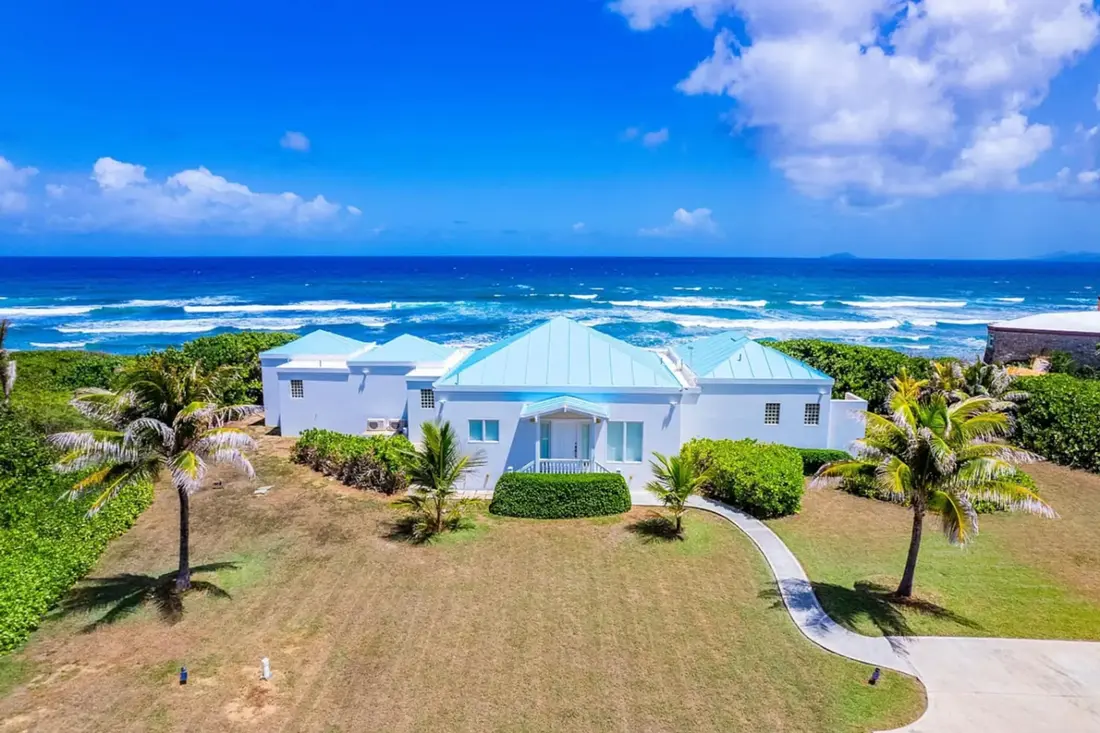
Every home in our portfolio prices in dollars, books with any U.S. card, and itemizes the occupancy tax on the confirmation, so the arithmetic on this page is the arithmetic on your paperwork. The kitchen at The Cerulean or any of our family villas is where the food lever from the budgeting section becomes real: stock it once and the week's spending bends toward the beach instead of the check. And the tipping questions this page answers in patterns, we answer in specifics; ask us about your villa's housekeeping team, chef arrangements, or anything else money-related before you land. Browse the full collection at our villas.
Sources
Written from official and first-party sources, checked August 2026. Hours, prices and event dates change — confirm before you go.
In this guide
Stay nearby
On The Shoys beach: six bedrooms, six baths, pool and hot tub, room for twelve, and the beach through the back garden.
 Shoy's Beach House6 bd · 6 ba · sleeps 12 · Christiansted
More in Plan Your Trip
Sources
12 references, listed in full at the end of this guide — official park, refuge, tourism-board and business sources, checked August 2026.