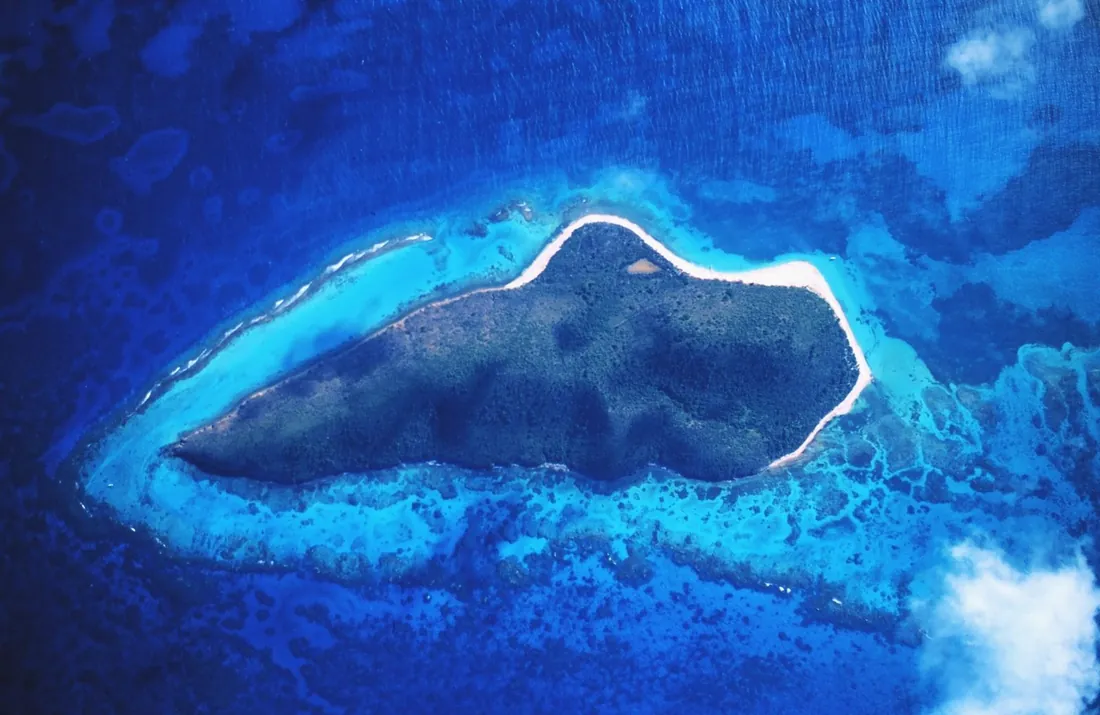
Most people planning a Caribbean trip start with the same five or six names and never get past them. This post makes the case for a different pick: St. Croix, the largest of the U.S. Virgin Islands. It covers the passport question, the two towns, Buck Island, the food and rum culture, the flights, and what a week here actually feels like.
Here is the short version. St. Croix is American soil, so U.S. citizens fly in on a driver's license and fly home without standing in a customs line. It is 84 square miles, which is big by Caribbean standards, and it holds two real towns, a national monument you reach by boat, a rainforest on one end and cactus scrub on the other, three distilleries, and beaches you will often have to yourself. It never built the mega-resort strip, and most weeks that absence is exactly the point.
The long version follows. Everything below is the kind of thing we tell guests before they book, and it is the same case we would make to a friend who asked where to go this winter. For the full island reference, see our St. Croix page.
The usual Caribbean short list
The default Caribbean trip looks like this: a passport renewal, a currency exchange, a roaming plan, a big resort with a wristband, a beach chair reserved at 7 a.m., and a customs line on the way home. The destinations that dominate the search results are built around volume. They move a lot of people through efficiently, and for some trips that is fine.
St. Croix runs on a different model. There is no wall of high-rise resorts. Lodging here skews toward villas, condos, and small hotels, and the island's population is about 41,000 spread over 84 square miles. Visitors spread out the same way residents do. You rent a car, you pick your beaches by mood, and you eat where the island eats. The trade-off is real: there is no swim-up bar and no 400-lounger pool deck. You get room, quiet, and a place with a working culture of its own.
We built a whole comparison series that puts St. Croix side by side with specific destinations, from Aruba to Turks and Caicos, if you want the destination-by-destination detail; it gets its own section near the end of this post. The sections that follow stay at the level of the argument itself.
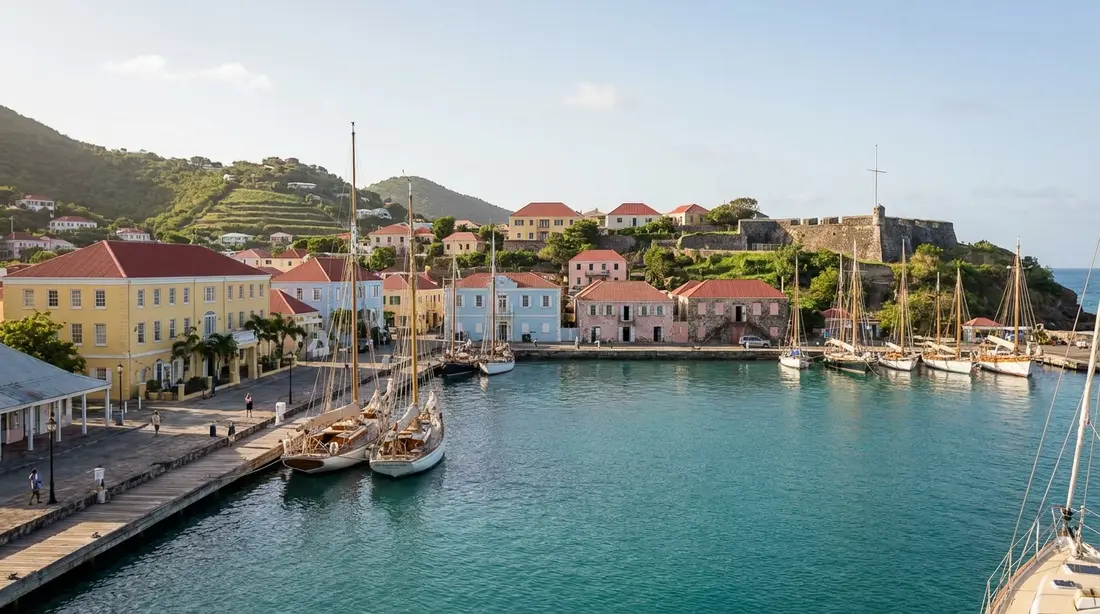
No passport for U.S. citizens
Start with the single most practical advantage. The U.S. Virgin Islands are a U.S. territory, and U.S. citizens do not need a passport to fly here from the mainland or Puerto Rico. A REAL ID-compliant driver's license gets you through security, the same as a flight to Denver. As of May 2025, TSA requires that REAL ID (look for the star in the corner of your license) or another accepted ID such as a passport, so check your license before you book, and see our FAQ for the current details.
That one fact quietly removes a whole layer of trip friction. Nobody in your group needs a passport renewal rushed through eight weeks before departure. A family of five saves the renewal fees outright. If a passport is expired, lost, or was never issued, the trip still happens.
The territory question keeps paying off after you land. The currency is the U.S. dollar, so there is no exchange rate to track and no airport currency counter taking a cut. Your phone works on U.S. networks under the familiar area code 340, so most mainland plans treat calls and data as domestic; check your carrier, but for the large majority of guests there are no roaming charges at all. Mail runs through the U.S. Postal Service. Your bank card works the way it does at home.
The trip home is simpler too. There is no foreign customs hall when you land back in Miami or Atlanta. Instead, you clear a U.S. pre-clearance and agriculture check at the St. Croix airport before you board. And the shopping math is better than almost anywhere else Americans travel: returning residents get a $1,600 duty-free exemption from the U.S. Virgin Islands, double the standard $800 allowance for foreign trips. Within that exemption, U.S. Customs and Border Protection allows up to five liters of alcohol per adult, as long as at least four liters were bought in the territory and at least one liter was produced here. On an island with a rum distillery that has been at it since 1760, that last rule is easy to satisfy.
One note for non-U.S. citizens: the USVI follows regular U.S. entry rules, so travelers from other countries need whatever documents they would need to enter the United States. For most guests reading this, though, the headline stands. The Caribbean, no passport required.
Room to spread out
St. Croix is the largest of the U.S. Virgin Islands, roughly 22 miles long and 7 miles wide. That size matters more than it sounds. Smaller islands funnel everyone to the same two or three beaches and the same restaurant row. Here, the crowd has square mileage to dissolve into.
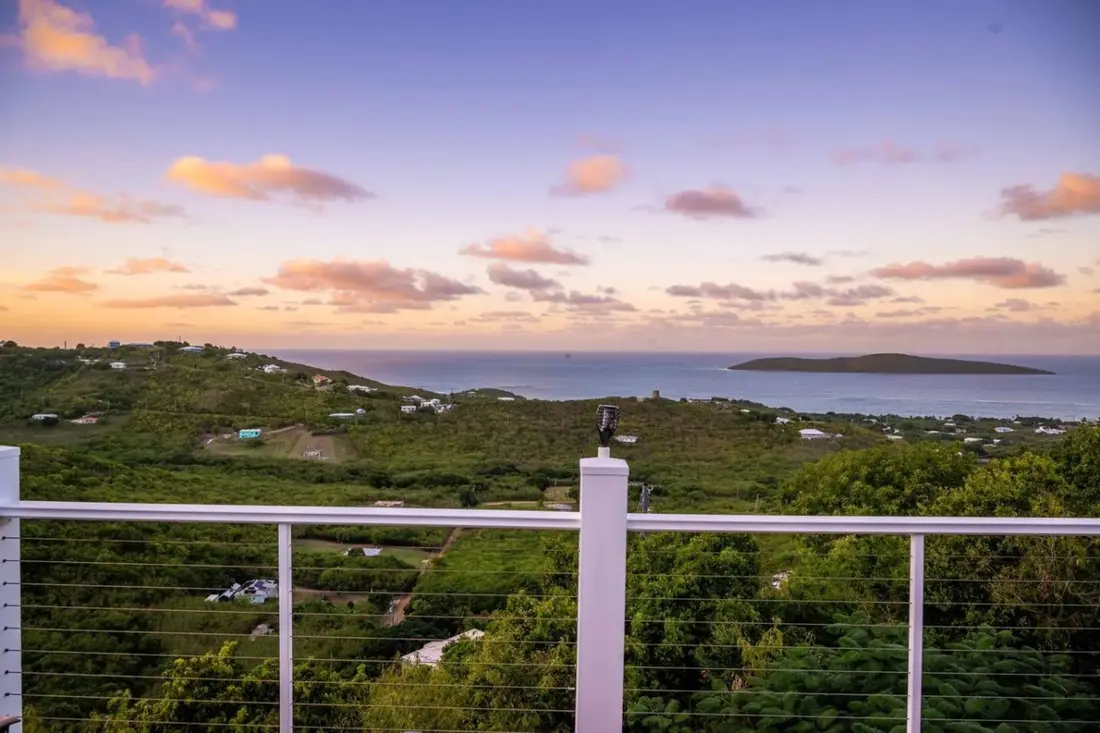
The island also packs two climates into those 84 square miles. The west end is green and wet, with a rainforest of mahogany and kapok trees along Mahogany Road and more than 50 inches of rain a year. The east end is dry cactus scrub that ends at Point Udall, the easternmost point of the United States, where a stone sundial monument marks the spot that saw the country's first sunrise of the year 2000. You can stand in the rainforest in the morning and on a desert headland by mid-afternoon, with a beach stop in between. Ruined stone windmills from the sugar era, when the island held more than 150 mills, still stand in pastures and yards along the way.
The practical effect on a vacation is pacing. Two anchors a day is plenty here: a morning on the water, an afternoon in a town or on a trail, dinner facing the sunset. Nothing is more than about 45 minutes from anything else by car, and almost nothing requires a reservation made months out. The island rewards the kind of trip where you leave room to change your mind.
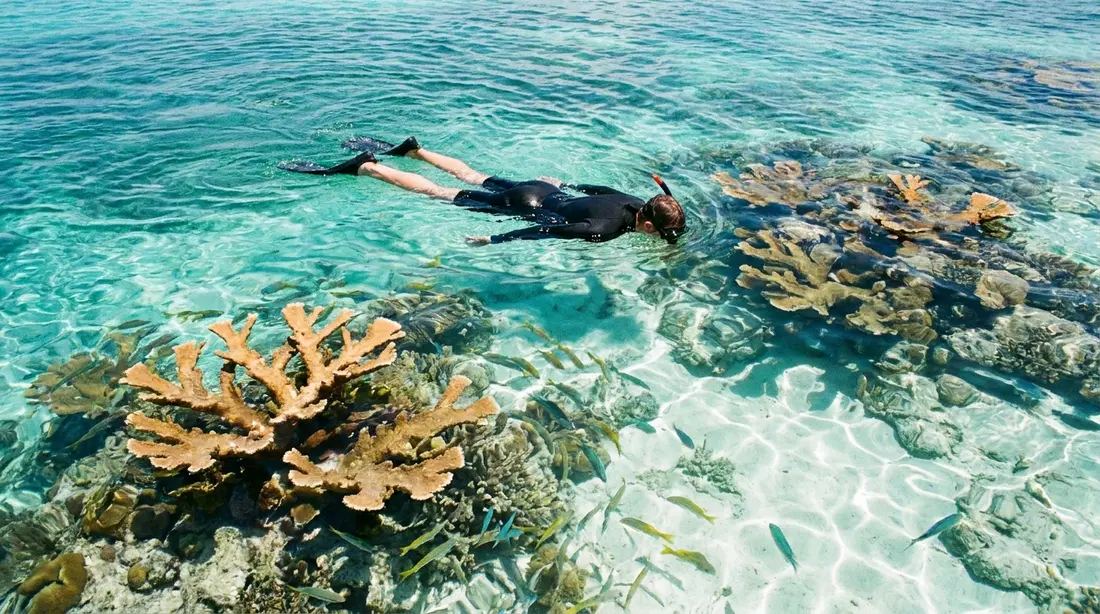
Christiansted
Most Caribbean destinations give you a cruise-port shopping strip and call it a town. St. Croix gives you two real ones, and they are nothing alike.
Christiansted, on the northeast coast, was founded by the Danes in 1734 and served as the capital of the Danish West Indies. The waterfront is now Christiansted National Historic Site, the first National Park Service unit in the Virgin Islands, established in 1952. It protects five structures: Fort Christiansvaern, finished around 1740 in yellow Danish brick; the Steeple Building; the Scale House; the Danish Customs House; and the Danish West India and Guinea Company Warehouse. The fort is open daily, 8:30 to 4:30 at last check, closed Thanksgiving and Christmas, and you can walk its ramparts and powder rooms on your own.
The town around the fort is one of the world's few African-Danish towns, built by enslaved Africans to Danish plans. Pastel stone buildings with red roofs line King and Company Streets, and arcaded sidewalks, called galleries, keep you shaded as you walk. Alexander Hamilton grew up here; he lived on Company Street as a boy, where his mother kept a shop, and clerked for the trading firm Beekman and Cruger before sailing for New York in 1772. History here is the actual fabric of the town rather than a plaque by a parking lot.
Modern Christiansted lives on the boardwalk. Restaurants and bars face the harbor, the Buck Island boats tie up steps away, and on Jump Up nights, several evenings a year, the downtown turns into a street festival with mocko jumbie stilt dancers and music. It is a town you can spend three separate evenings in without repeating yourself.
Frederiksted
Frederiksted anchors the west end, a flat grid of streets laid out in the 1750s beside Fort Frederik, the red fort on the sand. This is the island's emancipation ground. On July 3, 1848, around 8,000 enslaved people led by Moses "General Buddhoe" Gottlieb marched on the fort, and Governor-General Peter von Scholten proclaimed emancipation from its ramparts. July 3 remains a Virgin Islands holiday. Thirty years later, the Fireburn labor revolt of 1878, led by four women including "Queen Mary" Thomas, burned much of the town; the gingerbread Victorian look Frederiksted wears today dates to that rebuild.
The town faces due west, which makes it the island's sunset gallery. The water off Frederiksted's town beach is calm and clear, the pier is one of the Caribbean's best-known shore dives, and the sand is a known hunting ground for sea glass. On days when a cruise ship is at the pier the town wakes up with vendors and music; on the other days it is one of the quietest waterfronts in the territory. In early January, the Crucian Christmas Festival's adult and children's parades run through Frederiksted's King Street, the island's biggest party of the year.
Two towns means two moods on one trip. Christiansted for harbor evenings and history on foot, Frederiksted for sunsets and the long, calm west-coast water. Most guests end up with a favorite, and few agree on which.
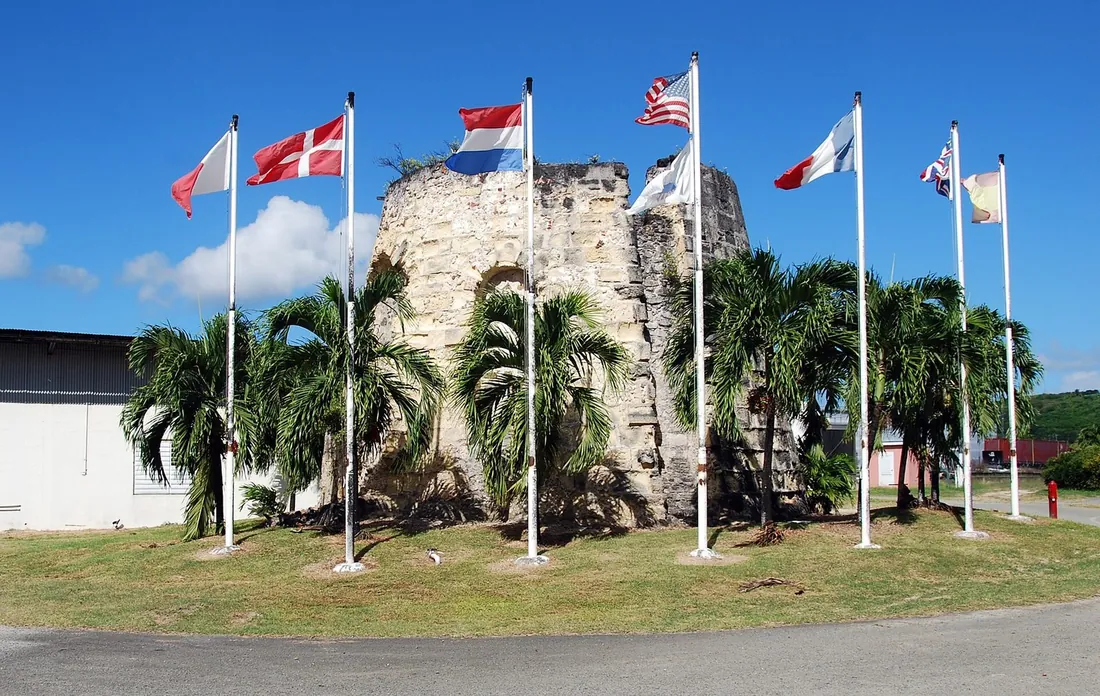
Buck Island
Every Caribbean island promises snorkeling. St. Croix has a national monument dedicated to it. Buck Island Reef National Monument sits about a mile and a half off the northeast shore, established by President Kennedy in 1961 to protect what his proclamation called one of the finest marine gardens in the Caribbean Sea, and expanded in 2001 to 19,015 acres, nearly all of it underwater and all of it a no-take marine reserve.
The heart of the trip is the marked underwater snorkel trail on the island's east lagoon, one of only three underwater trails in the United States. You swim a lane through elkhorn coral formations, reading interpretive markers on the sea floor as reef fish work the coral around you. An elkhorn barrier reef surrounds two-thirds of the island. Above water, the 176-acre island itself is undeveloped: a trail climbs about 300 feet to an observation point, and Turtle Beach on the west end is a stretch of powder sand that regularly makes best-beach lists. Hawksbill, green, and leatherback turtles nest here, along with brown pelicans and least terns.
Access is controlled, which is why it stays this way. You go with one of five National Park Service concessionaires sailing from Christiansted and the north shore, on half-day or full-day trips, with the crossing running 40 to 90 minutes depending on the boat. It books out in winter, so this is the one thing we tell guests to reserve before they land. See our experiences page for how a Buck Island day fits into a week.
The rest of the water
Buck Island is the headline, and it is still only one entry on the list. The Cane Bay Wall runs along the north shore, a coral drop-off that starts about 40 feet down roughly 100 yards off the beach and falls away toward depths measured in thousands of feet. Divers fly here for it, and strong snorkelers can look over its edge from the surface on calm mornings. Frederiksted Pier is the macro dive, 25 to 90 feet of pilings holding seahorses, frogfish, and octopus, and a favorite night dive. The Butler Bay wrecks sit off the northwest coast for divers who want steel.
Salt River Bay, on the north shore, covers two superlatives at once. It is the only documented place where Columbus's men set foot on what is now U.S. soil, in November 1493, and the bay is one of the world's few year-round bioluminescent bays. Operators run night kayak tours, some in clear-bottom kayaks, and on a dark night the water lights up around every paddle stroke. The glow varies with the moon phase, so book against the operators' calendars rather than a fixed night.
Add day sails, offshore fishing over Lang Bank off the east tip, paddleboards in the protected East End bays, and kayak rentals at the calm beaches, and the water column here works harder than the brochure version of the Caribbean ever asks it to. Our guides section covers each of these in detail.
The beaches
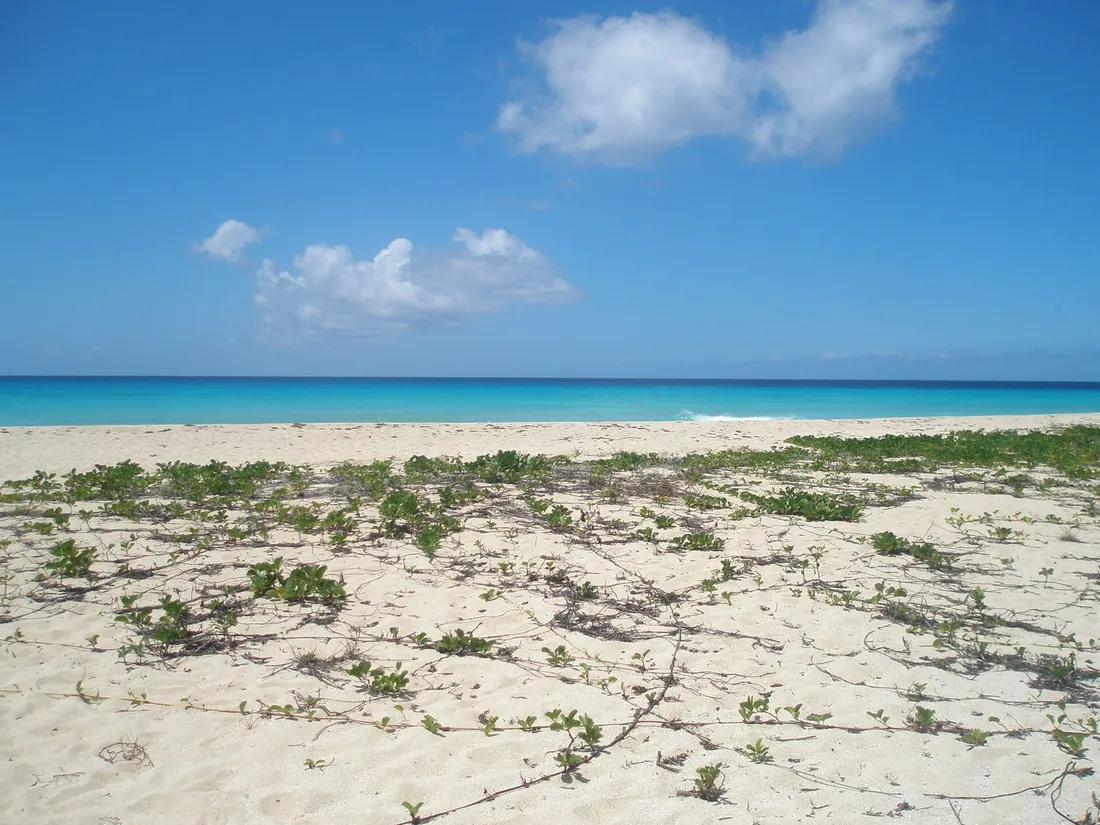
St. Croix beaches do not come with rope lines, resort fees, or rows of reserved loungers. Most are open, lightly used, and distinct from one another. A sampler:
| Beach | Where | What it offers |
|---|---|---|
| The Shoys | East of Christiansted | Calm, sheltered crescent; quiet swimming close to town |
| Cane Bay | North shore | Shore snorkeling and diving over the Cane Bay Wall; beach bars steps away |
| Rainbow Beach | West end | Watersports rentals, a long-running beach bar, sunset views |
| Chenay Bay | East End | Shallow, protected water; turtles and rays; good for kids |
| Jack's and Isaac's Bays | Far East End | Hike-in beaches in a nature preserve; no facilities, few people |
| Sandy Point | Southwest | Two miles of undeveloped sand; open weekends 10 to 4, September through March only |
| Turtle Beach, Buck Island | Offshore | Powder sand inside the national monument; boat access only |
Sandy Point deserves its own caveat, because it is both the island's most photographed beach and its most protected. The refuge is the largest leatherback sea turtle nesting site under U.S. jurisdiction, and it closes entirely from April 1 through August 31 for nesting season. The rest of the year it opens weekends only, 10 to 4. Plan around that and you get two miles of bare sand; ignore it and you drive to a locked gate.
The larger point is choice. On a small resort island, the beach is a fixed amenity. Here it is a daily decision, and a week is not long enough to run out of options.
Rum, beer, and a breadfruit vodka
Sugar built St. Croix, and rum is what remains of that economy, still working. Cruzan Rum distills at Estate Diamond on a site with a distilling tradition dating to 1760, with the Nelthropp family name still attached after eight generations. Tours run on weekday afternoons, with a tasting at the end; at last check they ran at noon, 1:30, and 3, and reserving ahead is smart. Across the island, the Captain Morgan Visitor Center opens Monday through Friday, 10 to 4 at last check, with tastings in the early afternoon.
The newer generation is here too. Sion Farm Distillery makes Mutiny Island Vodka, the world's first vodka distilled from breadfruit, and offered free tours Monday through Friday as of this writing. Leatherback Brewing in Kingshill brews with collected rainwater and keeps its taproom open daily. That is three distilleries and a brewery on an island of 41,000 people, all of them pouring for visitors, none of them staged.
This is also where the duty-free math from earlier becomes a plan. Five liters of spirits per adult can fly home inside the $1,600 exemption when at least one liter is made in the territory. Guests routinely pack a box of Cruzan single barrel and Mutiny that would cost meaningfully more at home, if it were available at home at all.

The food
Crucian food is its own cuisine, shaped by West African, Danish, and broader Caribbean lines, and it is one of the clearest ways this island differs from a resort destination where the menu was written in a corporate office. The everyday canon: pate, a fried pastry stuffed with saltfish, beef, or vegetables; johnny cakes; kallaloo, a green stew with West African roots; fungi, a cornmeal-and-okra side that pairs with fish; saltfish for breakfast; stew conch; and "provisions," the boiled starches, breadfruit, cassava, yams, that anchor a plate.
You can eat this food at roadside institutions like La Reine Chicken Shack, where spit-roasted chicken and johnny cakes draw a steady local line, and you can eat fresh wahoo, mahi, and lobster at waterfront tables in both towns the same week. The range runs from paper plates to serious kitchens, and the good news is that the best meals on the island are not hiding behind a resort day-pass. They are on public streets, priced for a town that eats there year-round.
Food is also the island's festival calendar. AgriFest, the Virgin Islands' big agriculture and food fair, fills Estate Lower Love over Presidents' Day weekend each February. Taste of St. Croix gathers the island's chefs each spring; dates move, so check the current calendar. And the Crucian Christmas Festival runs from late December into early January with a food fair alongside the pageants and parades. Time a trip to any of these and the island does the entertaining for you.
When to go
St. Croix is a year-round island in the plainest sense: winter days average around 83 degrees, summer days 88 to 89, and the sea stays swimmable every month. The texture of the seasons is worth knowing anyway.
Mid-December through mid-March is peak season, and for a reason locals call the Christmas Winds: brisk trade winds make this the coolest, driest, breeziest stretch of the year. January through April is the dry season. May brings occasional showers, June and July a drier lull, and September through November the greenest months and roughly 40 percent of the year's rain, usually as short passing showers rather than lost days.
Atlantic hurricane season runs June 1 through November 30, with the statistically active window in August and September. We state that to every guest: book those months with travel insurance and flexible cancellation terms, and read the weather clauses before you buy. In exchange, September through November is the quietest, best-value stretch on the calendar, and longtime repeat guests quietly prefer it.
If you want a specific event to build around, the winter list is strong: Crucian Christmas Festival into early January, AgriFest in February, Mardi Croix at Cane Bay the same month, and the boat-and-beach rhythm of high season in between.
Getting here and getting around
The old knock on St. Croix was the flight map. That map has improved. As of August 2026, Henry E. Rohlsen Airport (STX) has nonstop service from Miami on American year-round, with Charlotte service running Saturdays from early November and daily from mid-December, plus winter Saturday service from Chicago. Delta flies nonstop from Atlanta, Saturdays in season and near-daily from mid-December. And United begins Newark service in late October 2026, the first New York-area nonstop to St. Croix in more than 30 years. Schedules shift by season, so treat this as a snapshot and check current schedules when you book; our getting-here page stays updated.
Beyond the nonstops, San Juan works as a one-stop hub from most of the country, with Cape Air and other regional carriers covering the short hop. And if you want to pair islands, St. Thomas is a 25-minute seaplane ride into Christiansted Harbor or about two hours ten minutes on the car-free QE IV ferry, around $70 one way at last check.
On the ground, the rule is simple: rent a car. There is no Uber or Lyft on St. Croix; taxis and the VITRAN bus exist, but the island's spread-out geography is the whole point, and a car is how you use it. Driving is on the left, in ordinary left-hand-drive American cars, and it feels normal within a day. Your U.S. license works. Full details, including the rental agencies operating on island, are on our getting-around page.
How St. Croix compares to specific islands
Generic claims are easy, so we did the specific homework. Our compare series puts St. Croix head to head with more than two dozen destinations, Aruba, Punta Cana, Jamaica, the Bahamas, Turks and Caicos, and the rest of the usual short list, on logistics, cost structure, beaches, and what a day actually looks like. The short table below covers the structural differences that apply against almost any foreign Caribbean destination:
| Trip logistics | St. Croix | Typical foreign Caribbean destination |
|---|---|---|
| Passport | Not required for U.S. citizens; REAL ID works | Required for every traveler, including infants |
| Currency | U.S. dollar | Local currency or dollar-accepting at variable rates |
| Phone | U.S. networks, area code 340; most plans treat it as domestic | International roaming or a travel plan |
| Customs going home | U.S. pre-clearance at STX before boarding | Customs and immigration lines on arrival in the U.S. |
| Duty-free exemption | $1,600 per person every 30 days, up to 5 liters of alcohol | $800 standard exemption, 1 liter of alcohol |
| Driving | Left side, familiar U.S.-style cars, U.S. license valid | Varies by country; license rules vary |
None of that decides a vacation by itself. Beaches, food, and the feel of a place decide vacations. The point of the table is that St. Croix starts the comparison with a head start before any of those subjective questions even come up.
What St. Croix asks of you
A fair case names the trade-offs, so here they are. St. Croix has no mega-resorts, which means no all-inclusive wristband and no kids' club running 9 to 5; families here build their own days. You will need to drive, on the left, and there is no rideshare app to fall back on. Some businesses keep island hours, and a few run cash-only, so carry some. The pace is unhurried in ways that reward guests who match it and mildly frustrate guests who want mainland speed.
Manners matter here in a specific, learnable way: greet before you transact. "Good morning" or "good afternoon" before any question is basic Virgin Islands courtesy, and it changes every interaction that follows. Guests who adopt it in the first hour tend to have a different trip than guests who never notice.
If the ideal vacation is one where you never leave the property and every decision is made for you, a big resort island will serve that better, and there is no shame in it. If the ideal trip is a house near the water, a car, and an island worth exploring, this is the model St. Croix was built for.
Questions guests ask
Do U.S. citizens need a passport for St. Croix?
No. St. Croix is a U.S. territory, so U.S. citizens can fly from the mainland or Puerto Rico with the same ID they would use for any domestic flight. Since May 2025 that means a REAL ID-compliant license, marked with a star, or another accepted document such as a passport. Children fly under the standard domestic rules for minors. Non-U.S. citizens need whatever documents they would need to enter the United States. On the way home you clear a U.S. pre-clearance and agriculture check at the St. Croix airport instead of a customs hall on arrival.
Which airlines fly nonstop to St. Croix?
As of August 2026: American from Miami year-round, with Charlotte and winter Chicago service added seasonally; Delta from Atlanta; and United from Newark starting late October 2026. San Juan connections cover the rest of the country with one stop, and regional carriers plus a seaplane and ferry link St. Croix with St. Thomas. Schedules change by season, so check current timetables when you book; our getting-here page tracks the live picture.
Is there Uber or Lyft on St. Croix?
No. There is no rideshare service on the island. Taxis meet flights and run tours, and the VITRAN bus runs a limited route, but nearly every guest rents a car. The island is about 22 miles end to end, the beaches, towns, and restaurants are spread across all of it, and a car is what turns that spread into an advantage. Driving is on the left in normal American cars, and your U.S. license is valid. Book the car when you book the flight in winter, since inventory tightens in high season.
How do I get to Buck Island?
By permitted boat only. Five National Park Service concessionaires run trips, most from the Christiansted boardwalk, on half-day and full-day itineraries that include the underwater snorkel trail and time at Turtle Beach. The crossing takes 40 to 90 minutes depending on the vessel. Trips sell out in winter, so book before you arrive. Snorkel gear is provided on most boats, and the trail suits confident beginners; the lagoon is protected and the route is marked.
When is hurricane season, and should it change my plans?
Atlantic hurricane season runs June 1 through November 30, with the most active weeks statistically in August and September. It should inform your booking rather than veto it: buy travel insurance when you book those months, choose flexible cancellation terms, and read the weather clauses. In exchange, late summer and fall bring the greenest landscape, the calmest crowds, and the best value of the year. Rain in any season usually arrives as short passing showers rather than washed-out days.
Is St. Croix good for families?
Yes, with the caveat that it is a build-your-own-day island rather than a kids'-club island. The protected East End bays and beaches like Chenay Bay give small kids shallow, calm water. Buck Island works for confident swimmers, the fort in Christiansted is a genuine hit with school-age kids, and a villa gives a family a kitchen, laundry, and separate bedrooms that two hotel rooms never match. Our large-group villas handle multi-family and three-generation trips.
What is the best time of year to visit St. Croix?
December through April brings the driest, breeziest weather and the fullest calendar, including the Crucian Christmas Festival and AgriFest, at peak-season pricing. June and July offer a drier summer lull. September through November is the value window: greener, quieter, and cheaper, with the insurance caveat above. The sea is swimmable every month and daytime temperatures move only about five degrees between January and August, so no month is a wrong answer.
Where to base yourself on St. Croix
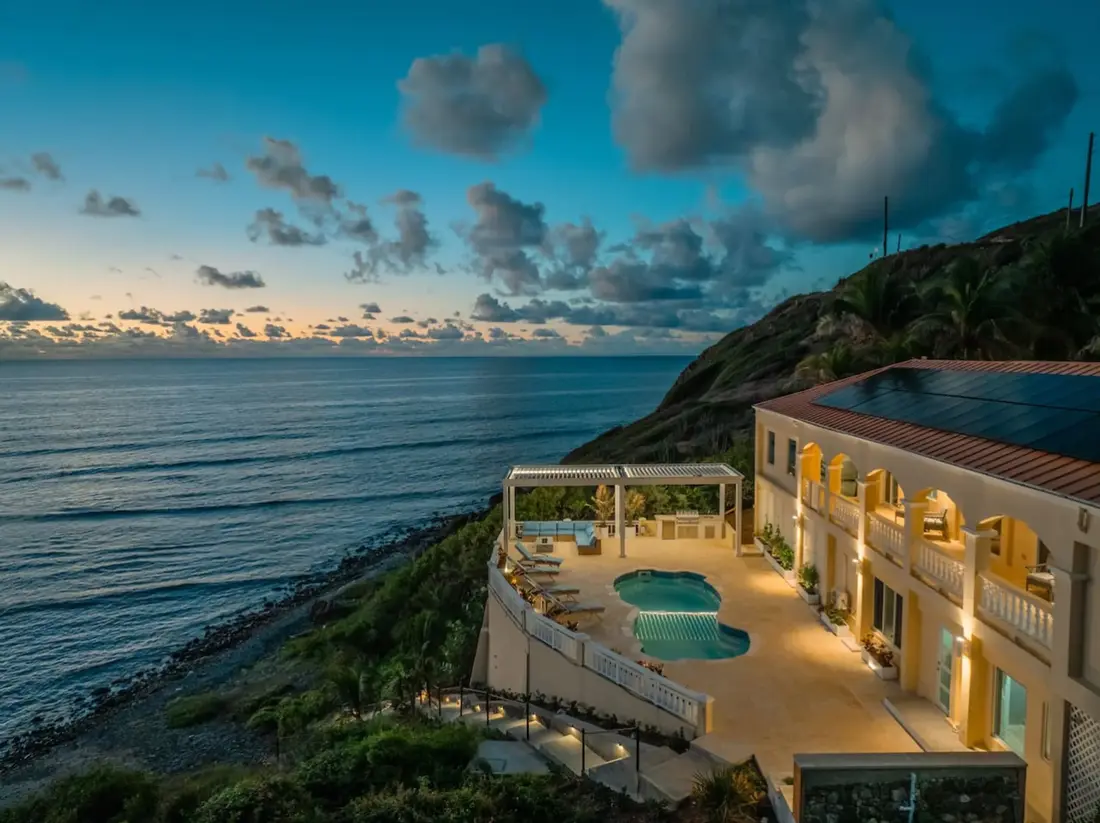
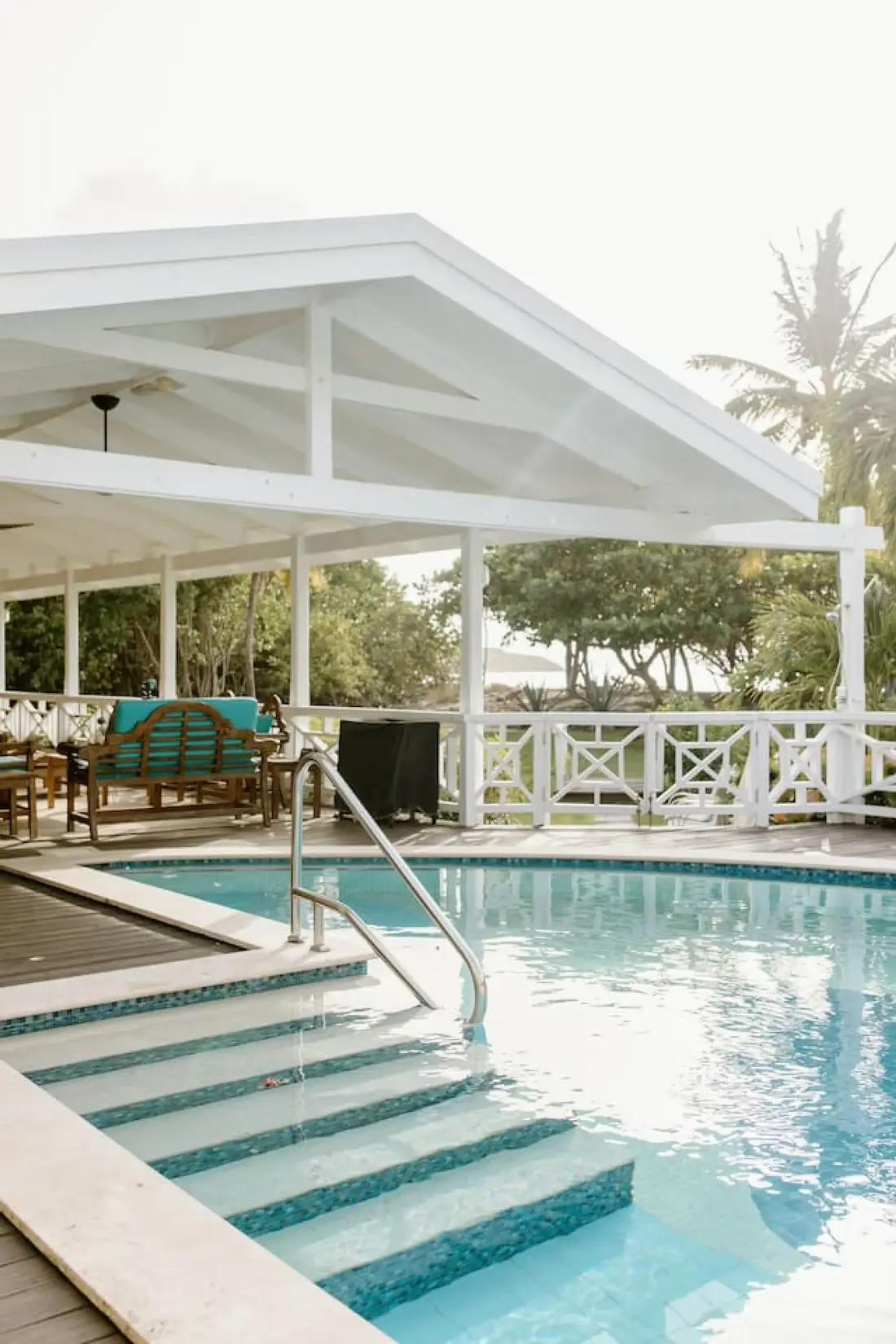
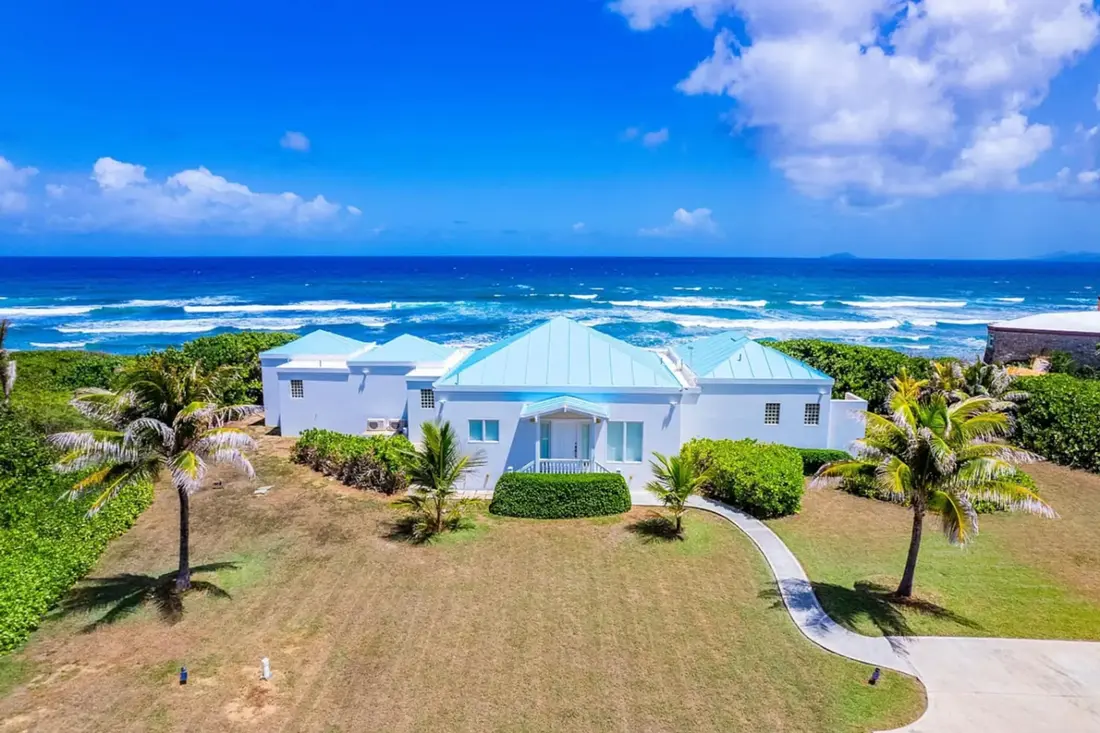
The villa model fits this island because the island itself is the amenity. Our portfolio covers every base in this post. Shoy's Beach House puts five bedrooms directly on The Shoys, the calm crescent east of Christiansted. The Cerulean sits on the East End with a private beach and Buck Island on the horizon. Sunset Oasis is a beachfront condo for smaller parties, and Sunset Sea-Clusion puts you on the west end, minutes from Frederiksted's pier and sunsets. Browse the full set by beachfront or East End collection, and see why guests book direct with us: local management on island, straight answers before you commit, and no platform fees between you and the house.
Sources
Written from official and first-party sources, checked August 2026. Hours, prices and event dates change — confirm before you go.