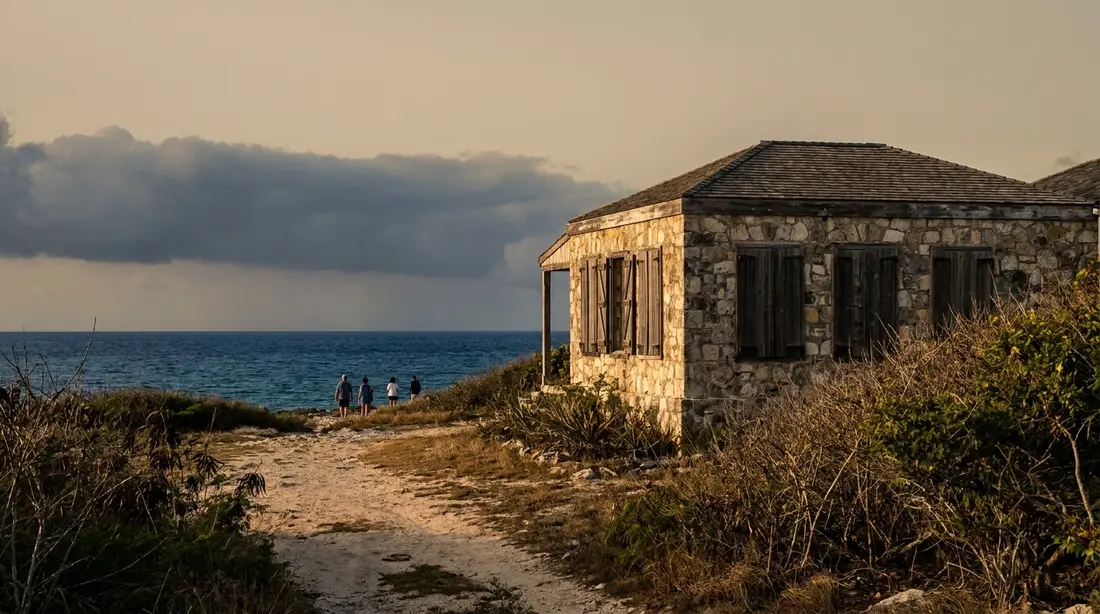
Hurricane season runs June 1 through November 30, and it overlaps some of the best-value months on the St. Croix calendar. This post lays out the whole decision: what the season actually is, how storms are tracked and announced, how the two categories of travel insurance work, what airlines do in a storm week, and what September and October really feel like on the ground.
Every summer we get the same email in different words. A family has found open dates in late September, the fare is good, the villa calendar is wide open, and then someone checks the dates against the hurricane season and the whole plan stalls. Is this a mistake? Is it fine? Who can we even ask who does not have something to sell us?
Fair questions, and they deserve a fuller answer than a reassuring paragraph. This is that answer. We manage villas on St. Croix year-round, we live here through every season, and we have watched hundreds of June-through-November bookings play out. Nearly all of them play out as ordinary warm weeks with a shower or two. A few require a conversation about a forecast. The difference between a traveler who handles that conversation calmly and one who loses money on it comes down to decisions made at booking time, months before any storm exists. This post walks through those decisions one at a time.
Two commitments before we start. We will not dramatize this subject; this island lived through 2017, and storm theater is for cable news. And we will not minimize it either. Tropical systems are real, the season has an active window, and pretending otherwise would be bad advice. The useful ground is in the middle, where the actual facts live.
What hurricane season actually is
The Atlantic hurricane season is a bookkeeping window defined by the National Oceanic and Atmospheric Administration: June 1 through November 30, the six months when tropical cyclones are climatologically most likely to form in the Atlantic basin. The basin is enormous. It covers the entire North Atlantic Ocean, the Caribbean Sea, and the Gulf, from the coast of Africa to Texas. When you read that a season produced a certain number of storms, that count is spread across all of that water.
The long-term numbers, from the National Hurricane Center's 1991 to 2020 climatology, run like this. An average Atlantic season produces 14 named storms, of which 7 become hurricanes and 3 become major hurricanes. The first named storm typically forms in mid to late June, and the first hurricane tends to form in early to mid August. The season's statistical peak lands on September 10, and most activity occurs between mid August and mid October.
That last sentence is the one worth keeping. The season on paper is six months long, but the climatologically active stretch is roughly eight weeks. June and July are historically quiet in the eastern Caribbean, and November tails off quickly. A trip in late June and a trip in mid September sit inside the same official season and carry meaningfully different weather histories. Anyone who talks about hurricane season as one uniform block of risk is rounding off the most useful detail.
It also matters where St. Croix sits. The island is at about 17.7 degrees north, in the northeastern Caribbean. Storms that form in the deep tropics off Africa pass through this general neighborhood on some tracks and miss it entirely on others, running north into the open Atlantic or south toward the mainland. The basin-wide storm count tells you how busy the ocean was. It does not tell you what happened on any one 84-square-mile island, and in most seasons the answer for any one island is: very little.
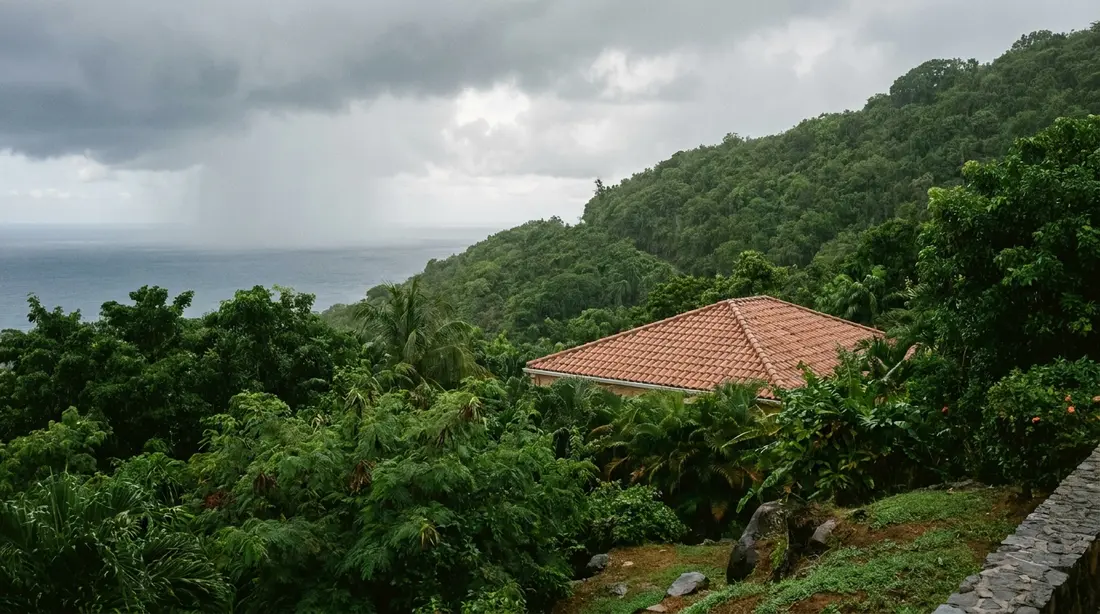
The odds for a single week
Here is where we have to be disciplined, because this is where travel writing usually goes wrong in one of two directions. One version invents a soothing statistic. The other implies that booking September is a coin flip. Neither is supported by anything.
What can be said with sources behind it is this. The average season's 14 named storms are distributed across the entire Atlantic basin over six months, and each individual system directly affects a small fraction of that area for a period of days. Most days on St. Croix during hurricane season are ordinary warm days, with highs around 88 or 89 degrees and rain arriving as short passing showers when it arrives at all. The island's long-term weather record shows this: even September, the wettest part of the year's wettest stretch, averages around five inches of rain for the whole month, most of it in brief bursts rather than lost days.
What cannot be said is a clean percentage for your specific week, and you should distrust anyone who offers one. The years vary too much. Some seasons the eastern Caribbean sees nothing closer than a swell; other seasons a system tracks through the neighborhood and everyone on island spends a few days watching a forecast cone. As of this writing, the last time hurricane conditions reached St. Croix was September 2017. In the nine seasons since, guests have come all summer and fall, and the overwhelming majority of those trips ran start to finish without weather ever becoming a topic.
So the realistic framing is this: a hurricane-season trip to St. Croix is a trip that will almost certainly be normal, paired with a small chance of a disruption you would see coming days in advance. The rest of this post is about that second clause, because everything about it is manageable, and the tools for managing it are cheap and well understood. If your dates fall between mid August and mid October, use all of the tools. If they fall in June, July, or November, the same tools apply with even better odds behind them.
How storms are tracked before anyone worries
A hurricane is one of the only natural hazards on earth with a multi-day appointment calendar. Earthquakes give no notice. Tornadoes give minutes. A tropical system that could matter to St. Croix is typically visible in National Hurricane Center outlooks while it is still a disorganized wave rolling off the African coast, days from the eastern Caribbean and days more from any decision you would need to make.
The rhythm works like this. The Hurricane Center publishes tropical weather outlooks for the Atlantic on a fixed schedule through the season, flagging areas of possible development with formation chances. When a system organizes into a depression or named storm, the Center begins issuing regular forecast advisories with a track, an intensity forecast, and the familiar cone graphic. Islanders read these the way mainlanders read a weekend forecast. The Virgin Islands Territorial Emergency Management Agency, VITEMA, layers local alerts on top, and residents can register for its notification system.
For a guest, the practical meaning is simple: nothing about this season ambushes you. If a system ever threatens your travel window, you will know while you are still at home, with days to talk to your airline, your insurer, and us. The sequence of a real storm week is a countdown of scheduled information, tightening from possibilities a week out to specifics two days out. Travelers who understand that calendar stop imagining a bolt from the blue, because that is a thing tropical forecasting made obsolete.
During your trip, checking the tropics takes thirty seconds with morning coffee, and from roughly late August to mid October we would suggest exactly that much attention and no more. If the map is clear, which it usually is, the tropics are done for the day and the argument about snorkeling first or breakfast first can proceed.
What watches and warnings mean for a guest
If a system does approach the northeastern Caribbean, the alerts that matter come in a fixed vocabulary with fixed clocks attached. The definitions are the National Hurricane Center's own, and the hour counts refer to the anticipated arrival of tropical-storm-force winds, because those winds are what shut down preparation work, ports, and flights.
| Alert | What it means | Lead time |
|---|---|---|
| Tropical storm watch | Sustained winds of 39 to 73 mph are possible in the area | Issued 48 hours ahead |
| Tropical storm warning | Sustained winds of 39 to 73 mph are expected in the area | Issued 36 hours ahead |
| Hurricane watch | Sustained winds of 74 mph or higher are possible in the area | Issued 48 hours ahead |
| Hurricane warning | Sustained winds of 74 mph or higher are expected in the area | Issued 36 hours ahead |
The two words carry the whole meaning. A watch says possible; a warning says expected. NOAA's guidance for a watch is to prepare and pay close attention to official instructions. Guidance under a warning is to complete preparations and follow local officials' directions.
Translated to a villa vacation, a watch is the moment plans go conditional. You confirm your flight status and any airline waiver, you review your insurance documents, and you hear from us about the plan for the house. Boat trips and dive charters for the coming days will start rescheduling on their own; operators here do not gamble with weather windows. A warning means the conditional plan executes: the property gets secured, you follow the guidance we and local authorities give, and everyone stays put through the weather. Between the two sits at least a full day, usually more, and the entire process is orderly because everyone on island has done it before.
Notice what is absent from that description: scrambling. The alert system exists precisely so that a region never has to improvise. The 48-hour and 36-hour clocks are engineered to leave time for deliberate action, and on an island that takes the season seriously, deliberate action is what happens.
Standard travel insurance and the named-storm rule
Now the money section, because this is where hurricane-season planning is actually won or lost, and it happens at your desk months before travel.
Standard trip insurance, the ordinary kind, is built around a list of covered reasons. You are reimbursed for prepaid, nonrefundable costs if your trip is cancelled or interrupted by one of the events named in the policy, and severe weather is on that list in policies sold for tropical destinations. Look for language covering trip cancellation and trip interruption due to weather, coverage that applies when your destination accommodation becomes uninhabitable, and travel delay benefits that pay for hotels and meals when weather strands you mid-route. The exact terms vary by policy, so the weather paragraphs are the ones to actually read before buying.
Here is the single most important sentence in this post: insurance only covers events that were unforeseeable when you bought the policy, and a storm becomes foreseeable the moment it gets a name. Once the Hurricane Center names a system, new policies will not cover disruptions from that storm. Every insurer applies some version of this rule. It is why buying coverage the week a storm appears on the news accomplishes nothing, and why the correct time to buy is the day of your first trip payment, in June for a September trip, when the Atlantic is empty and every future storm is still unforeseeable.
Bought early, standard coverage is the workhorse. It can reimburse up to the full insured trip cost when a covered weather event cancels the trip, and it is priced as a small fraction of what it protects. Bought late, it is a receipt for money spent on nothing. The clock, and only the clock, decides which one you own.
Cancel-for-any-reason coverage
The gap in standard coverage is judgment calls. Picture a system four days out with a forecast cone that brushes the islands and then shifts away. No watch is ever issued for St. Croix, no flight is cancelled, the weather turns out fine, and you decided on day one you were not going. Standard insurance owes you nothing in that scenario, because no covered event occurred. Your nerves are a real thing; they are just not on the list.
Cancel-for-any-reason coverage, sold as CFAR, exists for exactly this. It is an optional upgrade to a standard policy that lets you cancel for reasons of your own and recover a large portion of your costs. The structure is consistent across the industry, and it comes with strings worth knowing before you shop.
| Standard trip insurance | CFAR upgrade | |
|---|---|---|
| Pays out when | A listed covered reason occurs, including qualifying severe weather | You cancel for any reason at all |
| Typical reimbursement | Up to 100 percent of insured trip cost | Typically 50 to 75 percent of trip cost |
| When you must buy | Before a storm is named; buy at first payment | Usually within about 10 to 21 days of first trip payment |
| Cancellation deadline | Per policy terms | Usually at least 48 to 72 hours before departure |
| Typical added cost | Base premium | Roughly 40 to 50 percent more premium |
Those figures are industry patterns as published in mid 2026, and individual policies differ, so treat the table as a map of the category rather than a quote. Most CFAR plans also require you to insure your full prepaid, nonrefundable trip cost to qualify.
Whether the upgrade is worth it is a temperament question, and we mean that respectfully. If a shifting forecast cone five days out would ruin your sleep, CFAR converts that anxiety into a known, capped cost, and for a September trip that is a rational purchase. If you are comfortable letting the watch-and-warning system do its work and deciding on facts, standard coverage bought on deposit day covers the scenarios that actually take trips down. We have had guests in both camps and both were right for themselves. What we tell everyone equally: pick your category at booking time, because both doors close early. We are not insurance advisers and do not recommend carriers; compare policies directly, read the weather clauses, and buy inside the window.
What airlines do when a storm approaches
Airlines handle approaching tropical systems with a standard playbook, and knowing it removes most of the mystery from the flight side of a storm week.
The first move is the travel waiver, sometimes published while a storm is still days from any airport. When a system threatens a region, carriers post an advisory listing affected airports and dates and letting ticketed passengers rebook without change fees, typically into a window of days on either side of the disruption. Waivers are how a threatened trip gets moved intact: same routing, new dates, no penalty. They appear on the airline's own travel-alerts page, and during an active system that page is worth checking before you call anyone, because the waiver often answers the question the phone queue would.
The second piece is federal. Under U.S. Department of Transportation rules, if an airline cancels your flight, or changes it significantly, and you choose not to accept the rebooking it offers, you are entitled to a refund to your original form of payment, and that includes nonrefundable tickets and applies regardless of the reason for the cancellation, weather included. Since 2024 those refunds are required to be automatic and prompt. What airlines do not owe you for weather cancellations, since weather is outside their control, is compensation beyond the refund, and amenities like hotel rooms during weather delays are goodwill rather than obligation. That gap between refunded airfare and out-of-pocket stranding costs is precisely what the travel-delay benefit in a standard insurance policy exists to fill.
Put together, the flight-side outcomes in a real storm week are: flown as scheduled, moved free under a waiver, or cancelled with a refund owed. St. Croix's specific flight pattern is a footnote here worth knowing: in September and October the schedule into Henry E. Rohlsen Airport is at its thinnest, with more itineraries connecting through Miami or San Juan, so rebooking options are fewer than in winter. Details on routes are in getting here.
September and October on the ground
Now the part of the story that never makes the weather-anxiety articles: what these months are actually like on St. Croix when, as is usual, no storm comes.
They are the green months. The September-to-November stretch delivers roughly 40 percent of the island's annual rain, and the island answers it visibly. The west-end rainforest along Mahogany Road runs deep and dense, roadside hills that spent the spring khaki turn green, and the light after an afternoon shower is the kind photographers plan around. The rain itself behaves like Caribbean rain: a shower builds, drops its water, and gives the sky back, often inside half an hour. Days that are lost to weather are the exception in the record, even in these months. Daytime highs hold in the upper 80s, the sea is at its warmest, and mornings are commonly clear even in the wettest weeks. When a slow gray day does land, the island has answers, and we keep a rainy day plan written for exactly that.
They are the quiet months. September is the lowest-occupancy month of the island's year. Cane Bay on a weekday morning is you and the dive shops. Restaurants seat walk-ins. The boardwalk in Christiansted moves at a strolling pace, Buck Island boats run uncrowded, and the roads feel like a Sunday all week. A few restaurants use this stretch for their own vacations or trimmed hours, so check the current week's schedule rather than a months-old list; the flip side is that the places that are open have time for conversation, and this is the season guests come home talking about bartenders and boat crews by name.
They are the value months. Villa rates across the island are at their lowest, calendars are open enough to choose rather than settle, and the same beach week that gets fought over in February can often be booked weeks out instead of months. One more date that surprises people: Sandy Point National Wildlife Refuge, closed to the public all summer for turtle nesting, reopens for weekend visiting on September 1, Saturdays and Sundays 10 to 4 through March. Two miles of undeveloped white sand with a handful of people on it is a fall-season fact of life here; the details live in the Sandy Point guide.
Weigh all of that against the insurance-and-flexibility homework this post describes and you can see why a certain kind of traveler books September on purpose, year after year. The month-by-month specifics are in September and October, and the full-year picture is in weather and when to visit.
2017 and what came after
Any adult conversation about hurricanes on St. Croix includes 2017, so here it is, briefly.
On September 20, 2017, Hurricane Maria's center passed roughly 20 miles from St. Croix as a category 5 storm. The island took the outer eyewall while the most violent inner core stayed offshore, and it was still the worst storm here since Hugo in 1989. Two weeks earlier, Irma had raked the northern islands, hitting St. Thomas and St. John far harder than St. Croix. That September was a generational event for the whole territory, and pretending otherwise would insult people who lived it.
What matters for a traveler in 2026 is what the island did next. The territory rebuilt through the years that followed, and it rebuilt to a higher standard: updated building codes now require hurricane-resistant measures like anchoring systems, hurricane clips, and storm-rated windows or approved shutters, and hardening work extended to the power grid. The tourism plant you will use, the airport, the seaplane terminal, the boardwalk, the boat fleet, the villa inventory, has been operating at full speed for years. Guests sometimes arrive braced for visible scars and instead find that the takeaway from 2017 on St. Croix is a quieter one: this is a community that knows exactly what the season can do, prepares for it annually, and carries on. That knowledge is baked into how houses are built, how forecasts are read, and how seriously watches are taken, which, for a visitor, is the most reassuring version of the story there is.
How villas on this island are built
Mainland guests often picture beach housing as light wood-frame construction, because that is what much of the U.S. coast builds. Caribbean islands that live with tropical weather generally build differently, and St. Croix is a clear example of the pattern.
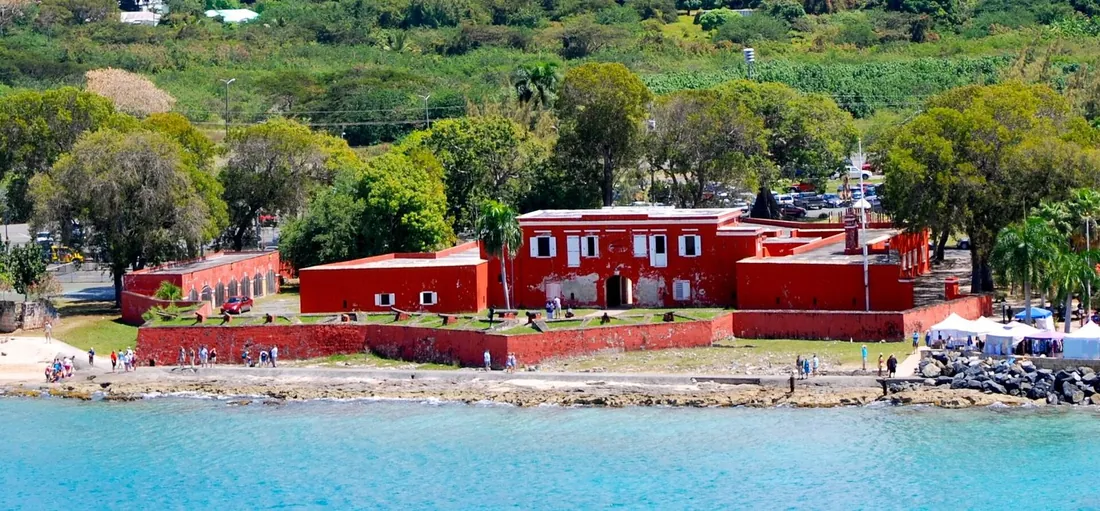
Masonry and poured concrete are the island's default building vocabulary, a tradition that runs from the 1700s Danish structures still standing in Christiansted to current construction. Heavy walls handle wind and shrug off sun, which is why so many older island homes have already stood through multiple named storms. Territorial building codes reinforce the pattern: new construction is required to include hurricane-resistant measures, with windows either meeting current impact standards or protected by approved storm-rated shutters. You will notice shutter hardware, roll-downs, panels, or the traditional hinged style, on buildings all over the island, sitting unused through the sunny months the way a mainland house wears its storm windows.
The most distinctive feature is under the house. Virgin Islands law requires new residential construction to include a cistern, sized by roof area with a floor of 2,000 gallons, that stores the rainwater the roof collects. Most homes here, including vacation villas, run their water supply from these cisterns. It is a rainwater economy with a useful side effect: a well-built island home carries its own substantial water reserve at all times, independent of any utility, which is a resilience feature mainland housing simply does not have.
Every property is its own case, so treat all of this as island pattern rather than a claim about any specific house, and ask us about the construction and equipment of the particular villa you are considering; that is a question we answer with specifics, not brochure language. The broader point stands: the housing stock of this island evolved under this climate, was rebuilt and re-coded after testing that climate's worst, and looks the way it does for reasons.
What an on-island manager changes about a storm week
The old version of this article made one argument we will carry forward whole, because nine more years of experience keep proving it: during hurricane season, who manages your villa matters more than in any other month.
SP Vacations is an on-island operation. The people who answer guest messages live on St. Croix, watch the same National Hurricane Center outlooks the whole island watches, and manage these specific houses through every season, storm seasons included. When the tropics are quiet, which is most of the time, that fact is invisible. When a system appears on the map, it becomes the difference between information and silence.
Concretely, it works like this. If a system ever bears on your travel window, we reach out rather than wait to be asked, and we tell you what we actually know: what the current forecast says, what the plan for the house is, and what your options look like on the calendar. We work with guests on flexibility when weather threatens a trip, because a guest who reschedules is a guest who comes, and a decade of doing this has taught us that fairness in a storm week is remembered for years. Contrast that with the alternative many travelers have lived: a booking platform listing managed from a distant time zone, a host who has never stood on the island, and an inbox that goes quiet exactly when the questions start. The forecast is identical in both cases; how the week feels depends on who picks up the phone when the questions start.
We make no promises about weather, and you should be suspicious of anyone in this industry who does. Communication, presence, and flexibility are the promises we can keep, because those are the three things actually in human control during a tropical forecast. How direct booking connects to all of this is laid out at book direct.
Booking a hurricane-season trip step by step
Everything above, collapsed into the order you would actually do it.
- Pick dates knowing the calendar. June, July, and November sit in the season's historically quiet bookends. Mid August through mid October is the active window and the deepest value. Either is a fine choice; make it on purpose.
- Buy insurance with your first payment. The same day. Standard coverage with clear weather clauses at minimum; decide on the CFAR upgrade now too, because its purchase window closes within about two to three weeks of that first payment.
- Favor flexible airfare. When the gap between fare classes is small, the changeable ticket is cheap insurance of its own, and it pairs well with how waivers work.
- Do nothing for months. This is most of the plan. The tropics need no attention from you until the trip approaches.
- Glance at the outlook the week before. Clear map, which is the usual finding: pack and go. Our packing list covers the wet-months additions, none of which weigh much.
- If a system appears, work the sequence. Forecast first, airline waiver page second, insurer third, us throughout. Decisions get made with days in hand, against real information, with your money protected by choices you made back at step two.
That is the entire discipline. It costs a policy premium and about ten minutes of attention, and it converts the season from a source of dread into a line item. The condensed version of this playbook lives in our hurricane season guide; broader trip-planning questions are gathered on our FAQ page.
Questions guests ask
Will a storm somewhere in the Atlantic affect my trip?
Almost certainly nothing about your trip changes. An average season sees 14 named storms across an ocean basin that spans from Africa to Texas, and the large majority never come near the northeastern Caribbean. Named systems thousands of miles away can coexist with flawless weather on St. Croix, and usually do. The only storms that matter to your week are ones whose forecast track approaches the Virgin Islands, and if that ever happens you will know from the National Hurricane Center's public forecasts days before any decision is needed.
Should I avoid September entirely?
Only if uncertainty itself would spoil the trip for you, which is a legitimate answer some travelers give. September carries the season's statistical peak, and it is also the island's quietest, greenest, best-priced month, with Sandy Point reopening on weekends September 1. The trade is real on both sides. Travelers who buy insurance at deposit time and keep plans flexible tend to be very happy with September; travelers who would watch the tropical outlook nightly with a knot in their stomach should book winter or early summer instead and enjoy that instead.
What happens if a hurricane warning is issued while we are on island?
A warning means tropical-storm-force winds are expected within about 36 hours, and it arrives after a watch has already put everyone on notice. Practically: the villa gets secured, you follow guidance from us and from VITEMA and local officials, you stock in food and water like everyone else on island, and you stay put through the weather. Island buildings are predominantly masonry with storm protection, and homes carry their own cistern water. It is a serious day managed by a community that has managed many of them.
Does travel insurance pay if my week is just rainy?
No. Ordinary weather, including a rainier-than-average week, is a covered event under no standard policy. Insurance responds to defined disruptions: a cancelled trip, an interrupted trip, a delay that strands you, a destination rendered uninhabitable, each as your policy defines it. Disappointment is uninsurable, which is worth knowing before you pay a premium imagining otherwise. The consolation is the record: even the wettest months here deliver most of their rain in short showers, and fully washed-out days are uncommon.
When is it too late to buy storm coverage?
The moment a storm is named, for that storm. Insurers treat a named system as a foreseeable event, so policies bought afterward exclude it, and cancel-for-any-reason upgrades close their own window earlier still, generally within about 10 to 21 days of your first trip payment. The rule of thumb that never fails: the day money first leaves your account for the trip is the day to buy the coverage. Everything purchased later protects less.
Is October better than September for avoiding storms?
The record says both months sit inside the active window, which runs to roughly mid October, so neither is a storm-free choice and the same planning rules apply to each. Late October trends quieter than mid September in the climatology, and November quieter still, but year-to-year variation swamps fine distinctions between adjacent weeks. Choose between them on other grounds: rates, flights, and the shape of your own calendar. Both deliver the same green, uncrowded island.
Where to stay between June and November
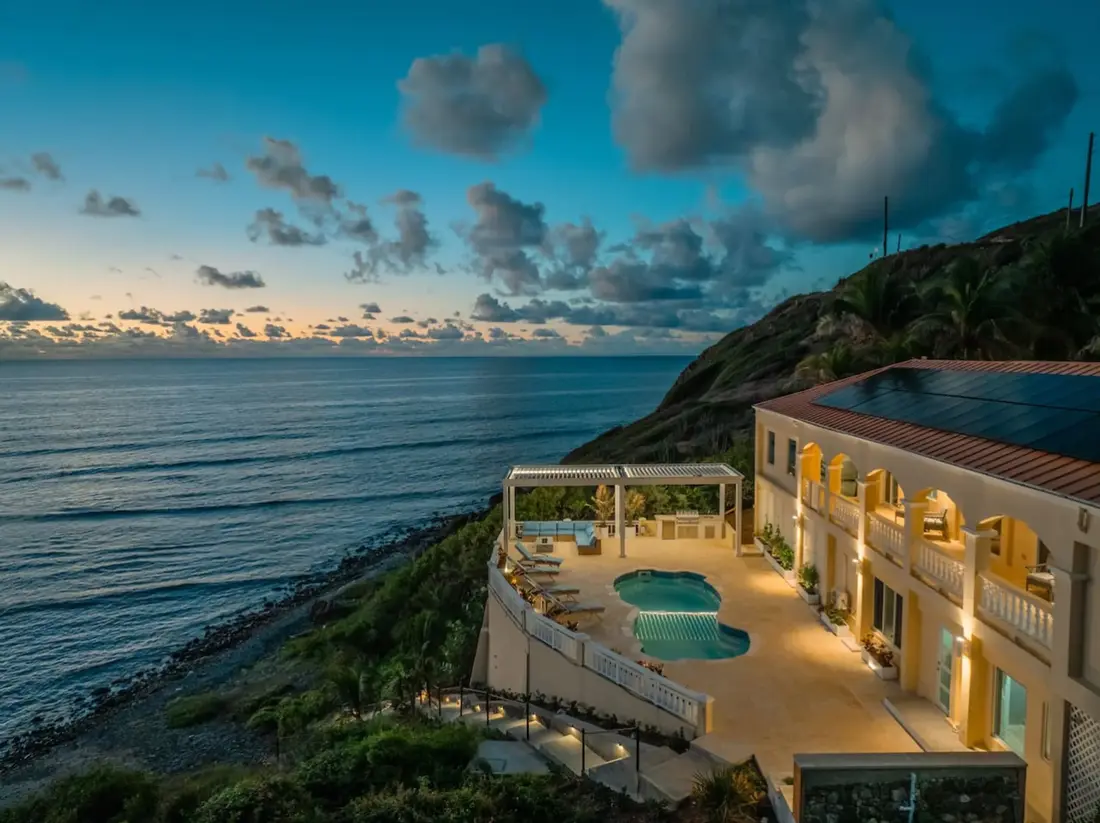
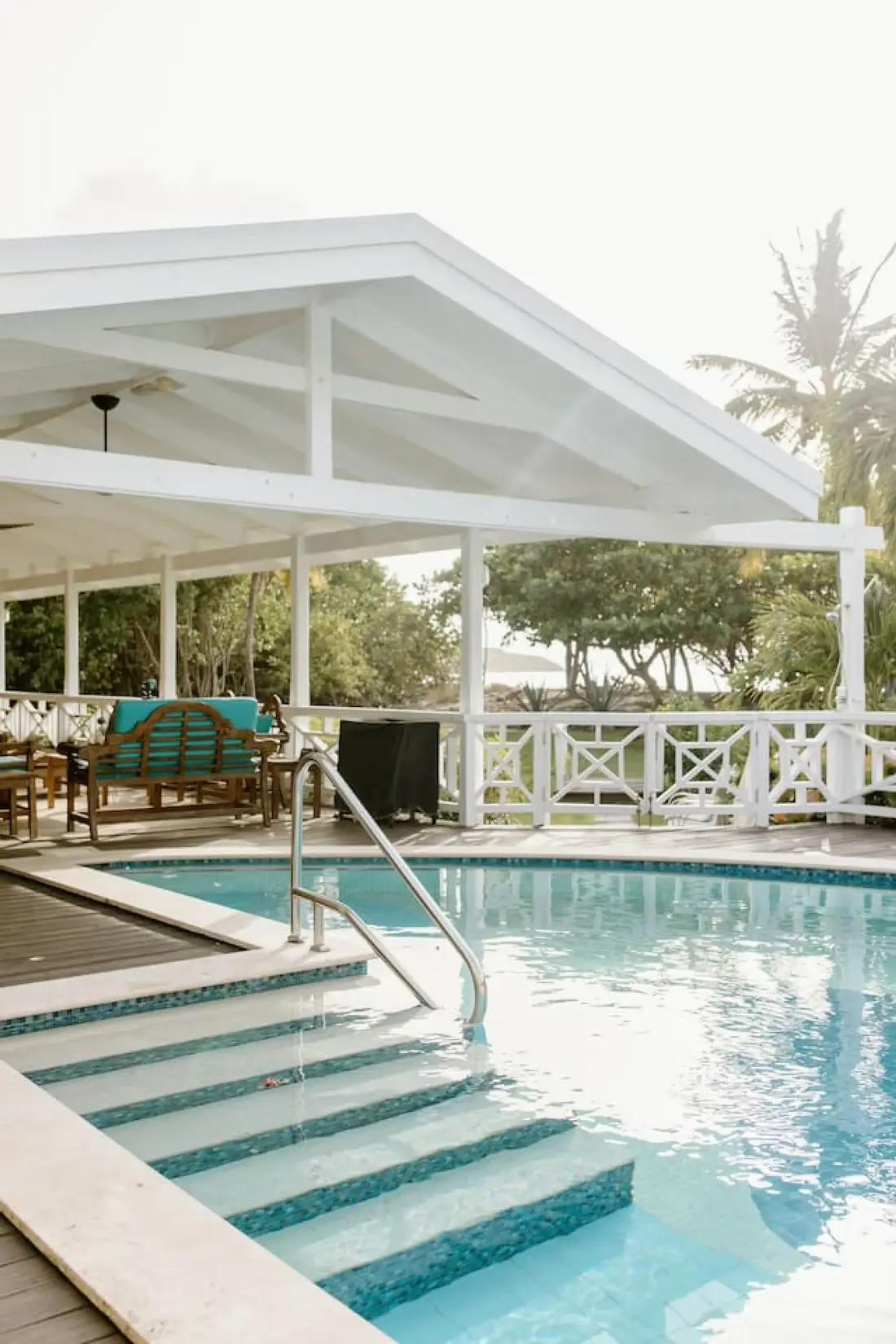
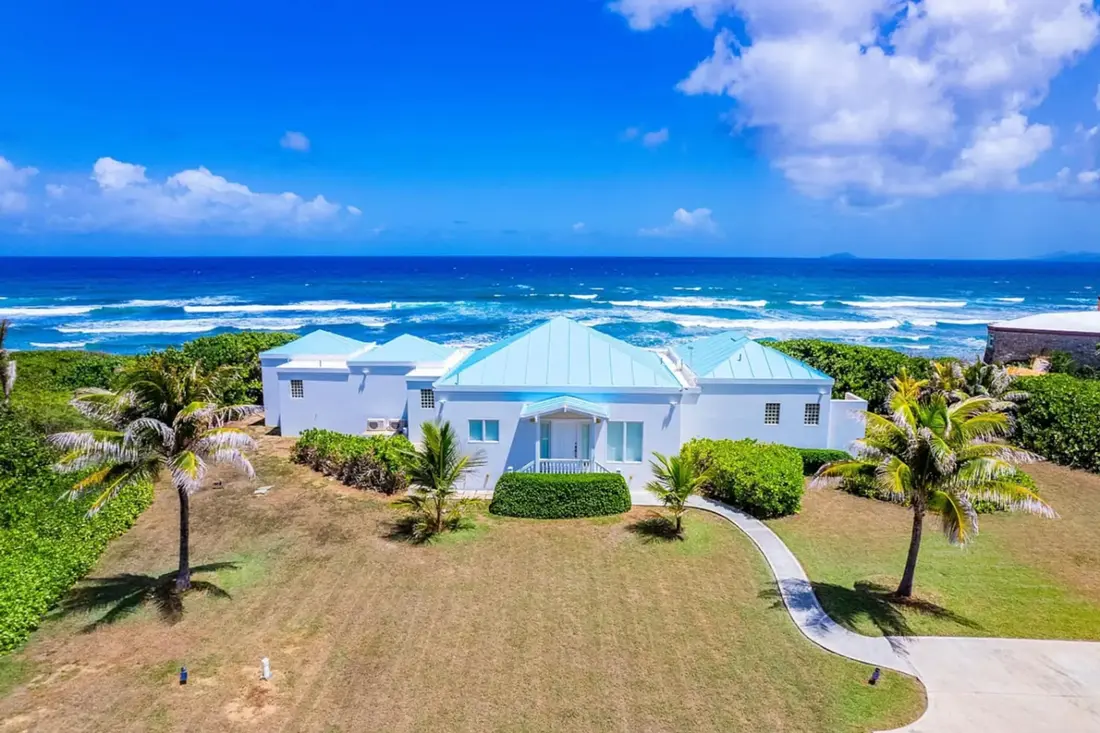
This is the season when the island's best houses are most available, so it rewards choosing well. Our beachfront villas put the summer-warm sea a few steps from the door: Shoys Beach House on its calm crescent east of Christiansted, and The Cerulean on the East End with a private beach facing Buck Island. Sunset Oasis puts you on the sand at a friendlier price point, and on the west end, Sunset Sea-Clusion sits near Frederiksted's sea-glass beach and calm evening water. Families and groups taking advantage of green-season rates should look at the large-group houses. Every home is managed by our on-island team, which, as this whole post has argued, is the feature that matters most in these particular months. Look around, then ask us anything, including the storm questions; we would rather answer them before you book than have you wonder after.
Sources
Written from official and first-party sources, checked August 2026. Hours, prices and event dates change — confirm before you go.