Carambola Golf Club
A Robert Trent Jones Sr. championship course from 1966 that the designer counted among his finest — the only one of its length in the USVI.
Carambola Golf Club plays eighteen holes at par 72 and stretches to roughly 7,181 yards from the back tees, the work of Robert Trent Jones Sr. and open for play since 1966. No other course in the U.S. Virgin Islands runs to championship length; this is the one. It lies inland, up a broad valley on the island's northwest side a few minutes above Davis Bay, and it is the course serious golfers cross St. Croix to play.
The course
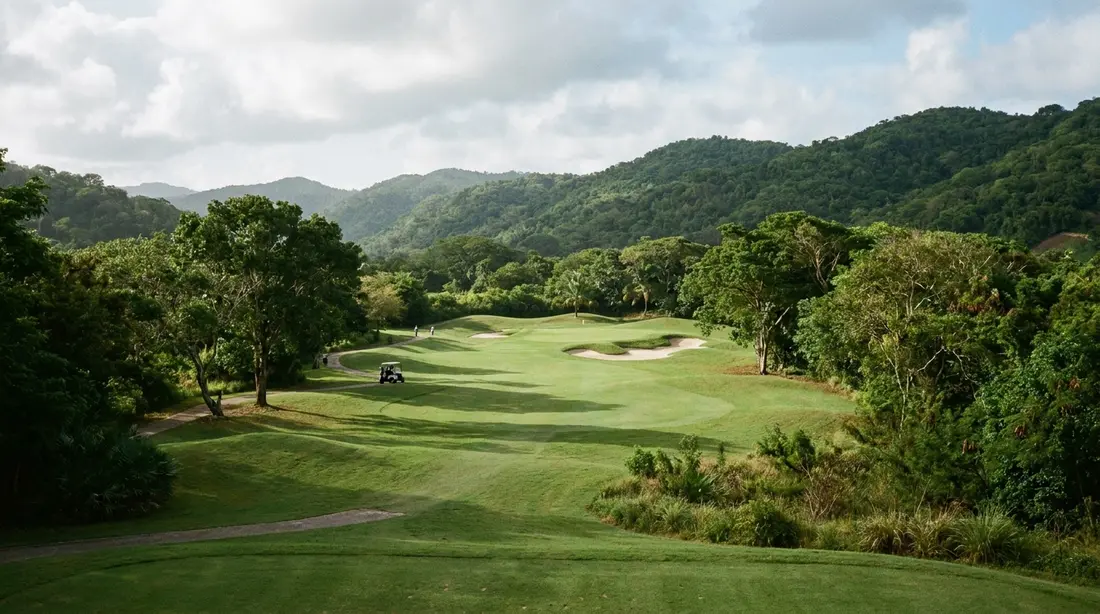
Trent Jones routed the course along the floor and lower slopes of a broad valley that was once a working sugar plantation. The result is a walk through the middle of the island's rainforest belt: fairways framed by green hills, water in play on a run of holes, and enough elevation change to make you think about the shot in front of you. From the tips it stretches to about 7,181 yards against a par of 72, which is long enough that a good player has to use the whole bag, and short enough from the forward tees that a mid-handicapper can still enjoy the day.
What sets it apart from the island's other courses is intent. This was built as a championship test, not a resort loop laid on for guests to stroll. The greens are large and contoured, the bunkering is placed to catch the shot that drifts off line, and several holes ask you to carry water to reach the putting surface. Jones was known for demanding golf, and the design here does what his courses tend to do: it gives you room off the tee and then makes you earn the green on the approach. Players who keep the ball below the hole and respect the water tend to score; players who attack every flag tend to pay.
The condition has swung with the course's fortunes over the decades, but the bones of the layout have never gone anywhere. The routing, the green complexes, and the way the holes use the valley walls are all original Trent Jones work, and that is the reason the course still draws golfers who could play anywhere. It reads as a real course with a real pedigree, dropped into a setting no mainland layout can match.
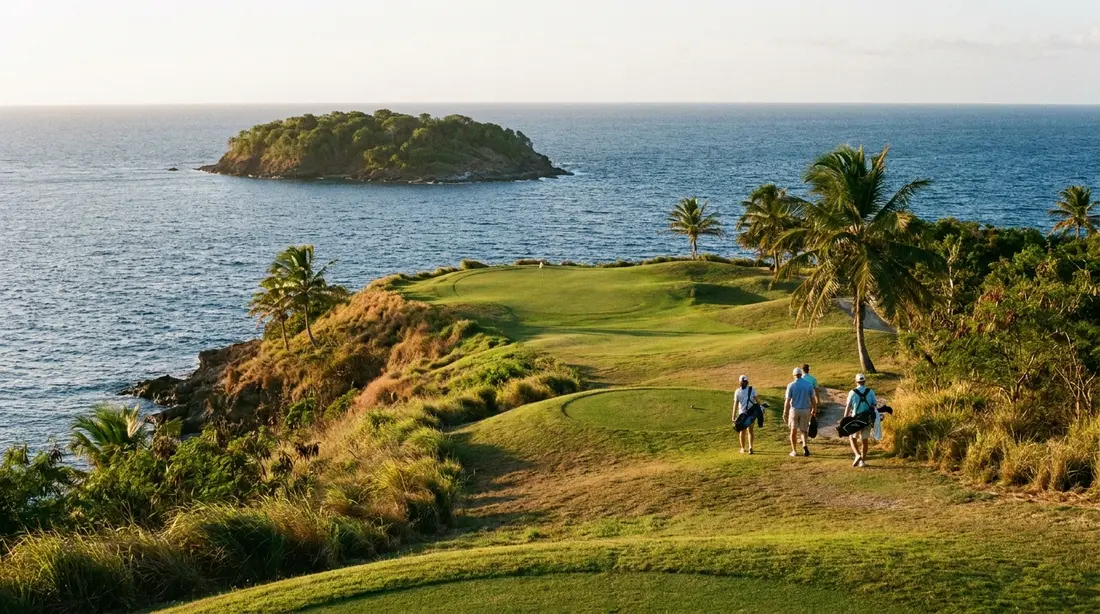
Course at a glance
The headline numbers, useful for planning a round. Treat the yardage as the championship figure from the tips; the forward tees play considerably shorter.
| Detail | Carambola Golf Club |
|---|---|
| Holes | 18 |
| Par | 72 |
| Length (back tees) | About 7,181 yards |
| Designer | Robert Trent Jones Sr. |
| Opened | 1966 |
| Access | Public daily-fee |
| Setting | Inland valley, northwest St. Croix |
| Hours | Dawn to dusk, seven days |
Course rating and slope were not published on the club's own pages at last check, so ask the pro shop if you want the exact numbers for a handicap round. The one figure everyone quotes is the length, and it is the clearest measure of why this course carries the championship label the others on the island do not.
How it plays
The valley setting changes the golf in one important way: it shelters the course from the trade wind. The seaside layout at the other end of the island lives and dies by the breeze, but Carambola sits low and inland, so the wind is usually a minor factor and the challenge comes from the design itself rather than the weather. That makes for a truer test of ball-striking. You are playing the architect, not the forecast.
Length is the first defense. At better than 7,000 yards from the back, the par-4s are long and the par-5s reward two good swings, so shorter hitters should move up a tee box and play the course at a scale that keeps it fun. Water is the second defense: several greens sit behind ponds or drainage that Jones worked into the routing, so club selection on the approach matters more than raw distance. The third is the greens, which are big enough to leave long two-putts and contoured enough to punish a lazy lag. None of it is tricked up. It is simply a course that asks for good shots and gives back pars to the player who hits them.
Pace and footing are easy to underrate. The fairways roll through the valley with some up-and-down, and while the course is walkable, most visitors take a cart in the island heat. The walking rate on the sheet is a real option and not a token: the valley routing stays gentle enough that a fit player who starts early can carry a bag around all eighteen. Rounds move at a reasonable clip outside peak weeks. If you want the course at its best, play in the morning while the valley is cool and the greens are freshly cut, and leave the afternoon for the beach.
The par-3s and the holes that shape the round
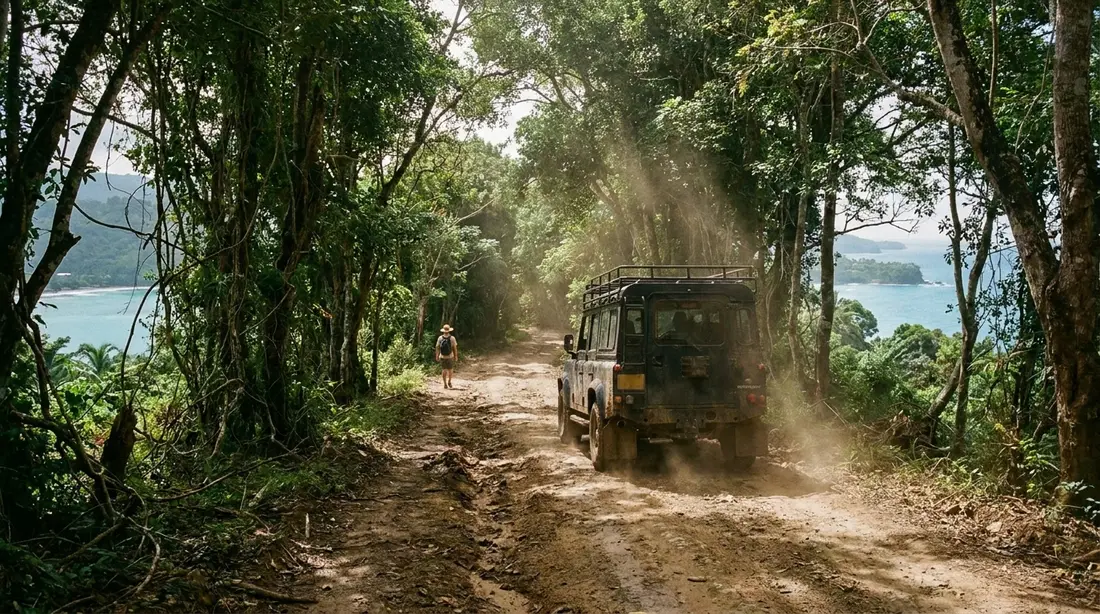
Carambola's reputation rests on its short holes. The course carries four par-3s, and they are the holes players remember. Three of them are short one-shotters that ask you to fly the ball over water to the green, so there is no bailing out and no running the ball on; you either carry it or you are wet. The mix of yardages keeps you changing clubs and changing plans, and on a still valley morning they are the most satisfying holes on the card.
The longest of the one-shotters is the counterweight. Golf-architecture reviewers single out a par-3 of around 223 yards that plays uphill to a well-guarded green, a genuine long-iron or hybrid test that stands apart from the shorter water holes. It is the kind of hole that separates the scorecard, and it is a big reason the course earns its championship billing rather than borrowing it.
The par-5s add the risk-and-reward layer. At least one long hole tempts a big hitter to take on water in exchange for a look at the green in two, which is exactly the choice a Trent Jones course likes to put in front of you. Published hole-by-hole numbering varies between the club's material and independent reviewers, so rather than promise you which hole is which, read the scorecard in the pro shop before you tee off. The pattern holds whatever the numbering: short par-3s over water, one long uphill par-3, and par-5s that pay the bold and punish the careless.
The valley and its wildlife
Part of what golfers come for is the setting. The course lies in the wet northwest interior, the same rainforest belt that feeds the island's hiking country, so the backdrop is green hills rather than open sea. The ponds that guard the greens double as habitat, and it is normal to share the round with herons, pelicans and ducks working the water. The big St. Croix iguanas turn up on the cart paths and the fringes, sunning themselves and ignoring the golf entirely. It is a quieter, more enclosed kind of course than a links or a coastal layout, and that seclusion is part of the appeal.
The valley also connects the golf to the rest of the northwest. The same hills hold the island's rainforest drives and its best inland walking, so a golf morning slots naturally into a day that also takes in the forest. For the wider picture of the wet side of the island, our two landscapes guide explains how St. Croix flips from dry east to green west, and the Creque Dam and rainforest guide maps the roads and trails just over the ridge from the course.
Green fees, carts and rentals
Carambola runs a two-tier rate sheet: a lower local price for anyone holding a Virgin Islands ID, and a visitor price for everyone else. The rates move with the season, so read the figures below as a last-check snapshot and phone the pro shop for the day's numbers before you commit.
| Round | Visitor | Local (VI ID) |
|---|---|---|
| 18 holes with cart | $115 | $75 |
| 18 holes walking | $85 | $45 |
| 9 holes with cart | $85 | $50 |
| 9 holes walking | $65 | $30 |
| Junior 18 holes | — | $50 |
| Junior 9 holes | — | $35 |
Carts, clubs and range balls are priced separately. You can fly in without a bag and still play a proper round, since the pro shop keeps rental sets in two grades. A practice range by the clubhouse lets you loosen up beforehand; buckets of balls are sold at the counter in large and small sizes, and a warm-up bucket is money well spent after a travel day.
| Item | 18 holes | 9 holes |
|---|---|---|
| Rider cart fee | $20 | $15 |
| Standard club set | $20 | $15 |
| Premium club set | $50 | $30 |
| Range balls | Large $8 | Small $5 |
If you plan to play more than once, the club sells discounted multi-round cards, and it runs annual and half-year memberships for residents and long-stay guests, with a family option and a cheaper junior tier. Members get a handful of discounted visitor rounds to bring guests along. For most vacationers a single round or a multi-round card is the sensible buy; the memberships make sense only for a long stay or a repeat visit. All of these prices were current at last check and are worth confirming by phone.
Tee times, access and hours
Carambola is a true public, daily-fee course. Membership or a resort booking is not required to play; anyone may reserve a tee time, warm up on the range, browse the pro shop, and walk on for a round. Play runs seven days a week from dawn to dusk. Book by calling the pro shop at 340-778-5638, or through the club's website.
Peak season on St. Croix falls roughly between December and April, the driest and busiest stretch of the year, and that is when the early tee times go first and a day or two of notice pays off. Through the hotter, quieter summer the sheet opens up and you can often play on short notice, though the earliest slot you can get is the one that beats the heat. Carry a Virgin Islands ID if you qualify for the local rate. Standard golf etiquette on dress applies; a collared shirt is the safe call, and soft spikes or trainers are fine.
Getting to the course
The club sits at Estate River near Kingshill in the northwest, roughly twenty minutes up from Henry E. Rohlsen Airport on the south coast, about half an hour across the middle of the island from Christiansted, and less again from the Frederiksted end. Two facts trip up first-timers. St. Croix has no rideshare at all, so reaching the course means your own car or a taxi booked ahead, and the island keeps to the left, a habit left over from its Danish and British centuries. A rental car is the sensible answer, all the more because the course sits well away from town and most players want to fold the round into a beach afternoon or a forest drive on this side of the island. The logistics are laid out in our renting a car guide and getting to St. Croix guide, and our Christiansted guide covers the town most visitors drive through to reach it.
Robert Trent Jones Sr. and why golfers seek the course out
The name on the design is the draw. Robert Trent Jones Sr. was the most prolific and influential golf architect of the twentieth century, credited with hundreds of courses across dozens of countries and a hand in the setup of major-championship venues. His signature was hard, fair golf: generous landing areas off the tee, then trouble arranged around the green so the approach shot decides the hole. Golfers travel to play a Trent Jones course the way film buffs seek out a particular director, and Carambola is his mark on the U.S. Virgin Islands.
The course collects the kind of praise that pairing of architect and setting tends to earn. The specialist site Top 100 Golf Courses ranks it first in the U.S. Virgin Islands and among the top fifty in the Caribbean, and the club points to a four-star rating from Golf Magazine. Trent Jones himself is often said to have counted the design among his favorites, a line repeated so widely it is worth treating as lore as much as fact, though it squares with the care visible in the routing. Whatever weight you give the rankings, the shorthand golfers use holds up: on an island with three courses, this is the one built to a championship standard.
That pedigree is also what sets the island's two eighteen-hole courses apart. Carambola is the championship layout, longer and greener, built to test a good player. The Buccaneer, on the resort grounds east of Christiansted, is the seaside alternative: shorter, breezier, made for an easy morning before the beach. Neither outranks the other; they answer different wants, and plenty of visitors play both on one trip, taking the Buccaneer for the view and the company and Carambola for the round they came to win. If you want a full test of your game, this is the island's course.
Fountain Valley and the Rockefeller origin
The course predates the beach resort down the hill by twenty years, and both began with a single Rockefeller plan from the early 1960s to lay out one resort district across the island's northwest. Golf came first: the course opened in 1966, and the lodging was meant to follow, though the hotel on Davis Bay did not open until 1986. How Laurance Rockefeller and his brother pieced the acreage together, and the resort's own long history since, belong to our Davis Bay guide. What the plan left on the ground is what a golfer notices: the course set inland, the resort out on the sand, the green valley held between them, still the way this corner reads today.
The course opened under the name Fountain Valley Golf Course and spent years on the Caribbean golf map, with the Puerto Rican star Chi Chi Rodríguez serving a stretch as its director of golf — a name that signals the profile it once carried. Its plantation past stays in view from the first tee: the stone ruins of an eighteenth-century sugar works still stand behind the clubhouse, a reminder that these fairways run over ground that grew cane for two centuries before it grew grass.
Ownership changes and hurricane recovery
Like most of St. Croix, the course has had to come back from the Caribbean's storms and its share of financial turns. The most consequential ownership change came in 2003, when a group of residents on the surrounding property bought a half-share of the course. That brought in fresh capital and a restoration of the old Trent Jones layout, and golf reviewers credit the move with returning the course to form after leaner years.
The hardest recent blow was Hurricane Maria in September 2017, which tore through the island and left the course badly damaged. It reopened the following spring and has run a steady program of improvements to the grounds and facilities since. That recovery arc is worth keeping in mind when you read older reviews: the course has swung between rough patches and good form more than once, so the fair thing to do is call ahead and ask about current conditions rather than trust a review from a bad year. Hurricane season on the island runs roughly June through November, with the wettest stretch late in that window; our weather and when-to-visit guide lays out the seasonal pattern for planning a golf trip.
The clubhouse and the 19th hole
The clubhouse holds the pro shop, where you check in, book carts and clubs, and pick up the scorecard, and it has a bar for a cold drink after the eighteenth. Food service has come and gone with the course's fortunes over the years, so if you are counting on lunch at the turn or a full meal after the round, ask when you book rather than assume. On a day when the kitchen is quiet, the Cane Bay and north-shore spots a short drive away cover the meal, and our restaurant guides for Christiansted and the East End round out the options across the island.
Golf on St. Croix
St. Croix has three courses, and each answers a different mood: this championship layout up the valley, the seaside Buccaneer resort course near Christiansted, and the short, casual nine at The Reef out on the East End. A golfer with a few days can play all three without repeating a hole. Rather than restate the details here, our Buccaneer guide lines the three up side by side — holes, designers and character in one table — so lean on that to plan the order.
A golf, rainforest and beach day
The best thing about Carambola for a villa guest is where it sits. The northwest packs golf, rainforest and a north-shore beach into one corner of the island, so a morning round can flow straight into an afternoon that has nothing to do with golf. The most natural pairing is the hike to the Annaly Bay tide pools, which starts a few minutes down the hill at the Davis Bay resort grounds and climbs through rainforest to natural rock pools that are only safe to enter when the sea is calm. It is a half-day walk, so most people choose the golf or the hike on a given day rather than both, but the two share the same drive.
For a gentler afternoon, the rainforest roads are right there. The Mahogany Road drive and the wider Creque Dam rainforest loop run through the green hills just over the ridge, and the island's serious walking is gathered in our St. Croix hiking guide. When you want the water, Davis Bay is the beach directly below the course, wide and scenic and good for a long walk, while Cane Bay a few minutes east has the north shore's best snorkeling and the food and drink to close out the day. The high ground west of Davis Bay carries the island's Maroon history, walked on our Maroon Ridge history hike, for travelers who want the story as well as the scenery.
Questions guests ask
Is Carambola open to the public?
Yes. It is a public, daily-fee course, with no membership and no resort stay required to play. Anyone can reserve a tee time, rent clubs and a cart, warm up on the practice ground, and play all eighteen. Booking is by phone at 340-778-5638 or through the club's website. Through the busy December-to-April months the cool morning times go first, so give a day or two of notice; in summer you can usually get on at short notice. Bring a Virgin Islands ID if you qualify for the discounted local rate.
What does a round cost?
At last check the visitor rate ran about $115 for eighteen holes with a cart and $85 walking, with nine-hole rates of $85 and $65. Residents holding a Virgin Islands ID pay less: roughly $75 for eighteen with a cart and $45 walking. Clubs, carts and range balls cost extra, and the club sells discounted multi-round cards for anyone playing more than once. Green fees shift from season to season, so treat the fee tables above as last-check figures and call the pro shop for the day's rate when you book.
Can I rent clubs, or do I need to bring my own?
You can rent. The pro shop keeps rental sets in two grades, a standard set and a premium set, so you can fly to St. Croix without a golf bag and still play a proper round. Carts are available and priced separately, and there is a practice area with range balls for sale to warm up beforehand. If you are particular about your own clubs, bring them, but nothing about the course requires it. Rental prices were modest at last check and are listed in the rentals table above.
How hard is the course?
Harder than the island's other courses, by design. It is the only course in the territory built to championship length, playing better than 7,000 yards from the back tees, with water guarding several greens and a demanding set of par-3s. It rewards accurate approach play and punishes the wild shot. That said, the forward tees bring the course back to a friendly scale, so a mid-handicapper who moves up a box and plays within themselves can have a fine day. If you want the sternest test of your game on the island, this is it; if you want a relaxed round with ocean views, the Buccaneer is the better fit.
Should I play Carambola or the Buccaneer?
Play both if the days allow, since each delivers a different round. Carambola is the championship test, longer and greener, set inland up its valley, the round a serious golfer drives across the island for. The Buccaneer near Christiansted is the seaside option: shorter, breezier, quick to play, with the sea in sight from nearly every hole. Time for only one? Pick Carambola for the stern test, the Buccaneer for scenery and a relaxed morning before the beach. Both are public and book by phone.
How do I get there, and do I need a car?
The course is at Estate River near Kingshill in the northwest, about twenty minutes from the airport and half an hour from Christiansted. A rental car is the practical way there, since it sits well outside town and the island runs no rideshare service; you drive yourself or book a taxi, and remember the traffic keeps to the left. A car also lets you pair the round with the Annaly Bay hike, a forest drive, or a north-shore beach on the same side of the island, which is the whole reason to play this corner.
When is the best time of day and year to play?
Play in the morning. The valley is coolest early, the greens are freshly cut, and the afternoon stays free for the beach or a hike. Over the year, the December-to-April high season brings the driest weather and the fullest tee sheet, so book ahead; summer runs hotter and quieter with easy times, and the late-summer-into-fall stretch is the wettest and the core of hurricane season. Play carries on year-round, so the only real choice is how early in the day to tee off.
Villas near the course
This corner of the northwest holds almost no lodging, part of why it stays so quiet, so plan Carambola as a drive in from whichever coast you are based on. Closest are the west-end villas near Frederiksted, a well-under-an-hour run to the first tee over the mountain roads. If you would rather wake to water, our ocean view collection spans houses on both coasts, an easy launch point for a morning up the valley and an afternoon on the sand below it. See the full list of St. Croix villas and condos, then build the golf day around the home you choose.
Sources
Written from official and first-party sources, checked August 2026. Hours, prices and event dates change — confirm before you go.
In this guide
Stay nearby
On The Shoys beach: six bedrooms, six baths, pool and hot tub, room for twelve, and the beach through the back garden.
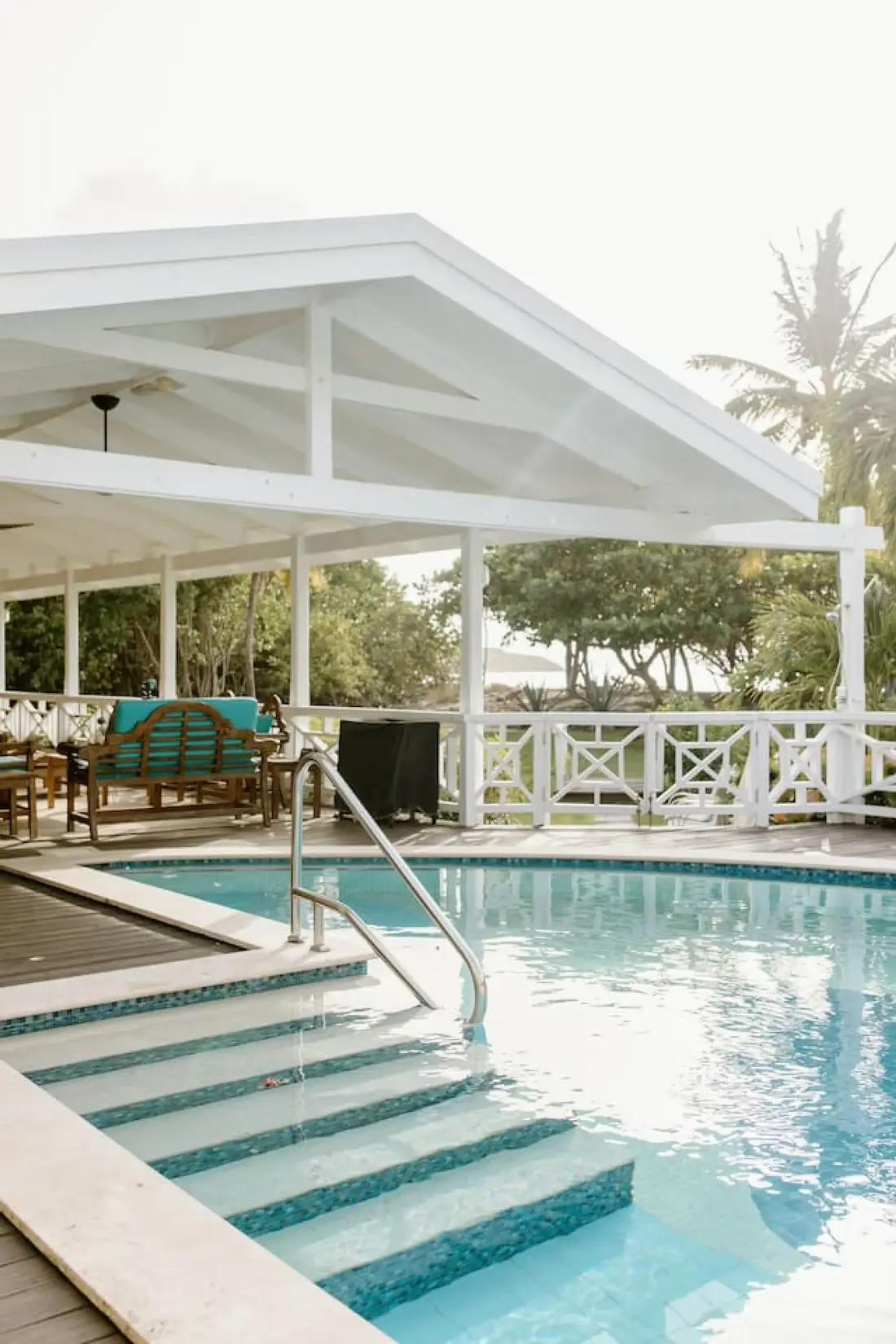 Shoy's Beach House6 bd · 6 ba · sleeps 12 · Christiansted
More in Land & Adventure
Sources
9 references, listed in full at the end of this guide — official park, refuge, tourism-board and business sources, checked August 2026.