Kallaloo & Fungi
A West-African-rooted green stew and a cornmeal-okra side that pairs with fish: two dishes that carry the island's history onto the plate.
Kallaloo and fungi are the two plates a Crucian kitchen turns to when it wants to cook its own past. Kallaloo is the greens pot: a thick, dark stew of melted-down leaf and okra carried on a broth of crab, conch, fish or salted meat, with a straight line back to West Africa. Fungi, said foon-jee, is the cornmeal-and-okra staple that sits under a piece of fish. This is the long-form reference for both — what goes in each pot, where the dishes and even their names come from, why kallaloo owns the last night of the year, and how a visitor gets to eat the real thing without pretending to hold a recipe that belongs to someone's family.
The island's two identity dishes
Ask a Crucian to name the food that tastes like home and these two surface fast. They sit near the center of the wider island table laid out in our Crucian food guide, and they earn a page of their own because each holds more history than one line in an overview can carry. Both were the work of the enslaved Africans brought to cut cane on St. Croix's Danish sugar estates, assembled from the plants that grew in the provision grounds and the rations the estates handed out. Kallaloo took the old African practice of stewing leaf with okra and turned it into a pot; fungi took the old African practice of cooking a ground starch into a smooth, firm mass and turned it into a side. Neither is dressed up, both appear everywhere at the right moment, and between them they explain most of how the island learned to feed itself. For the fried-dough branch of that same story, see pates and johnny cakes.
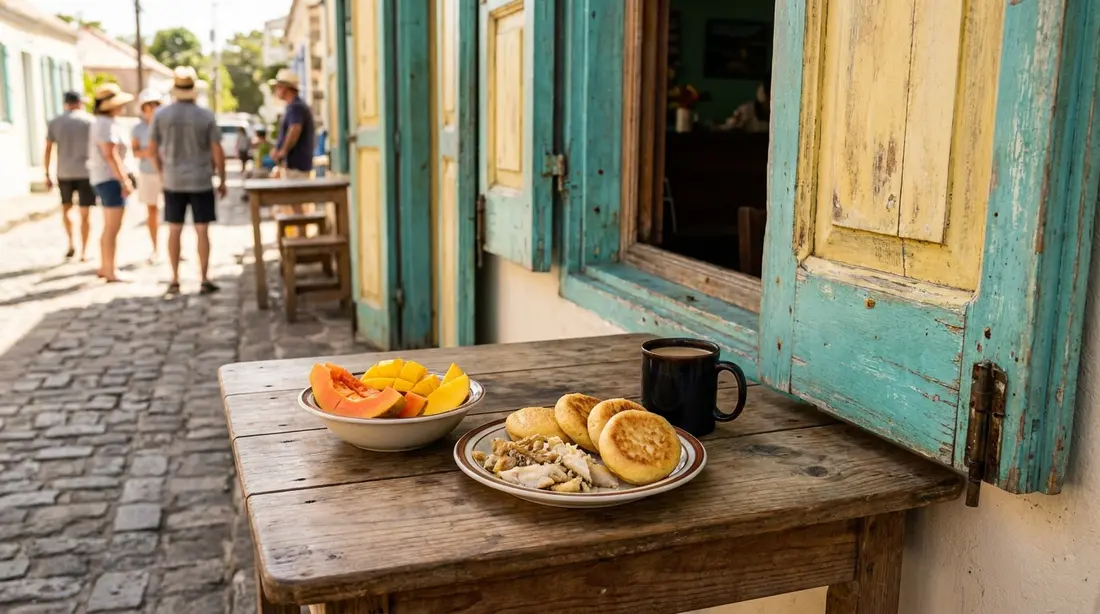
Kallaloo, the greens pot
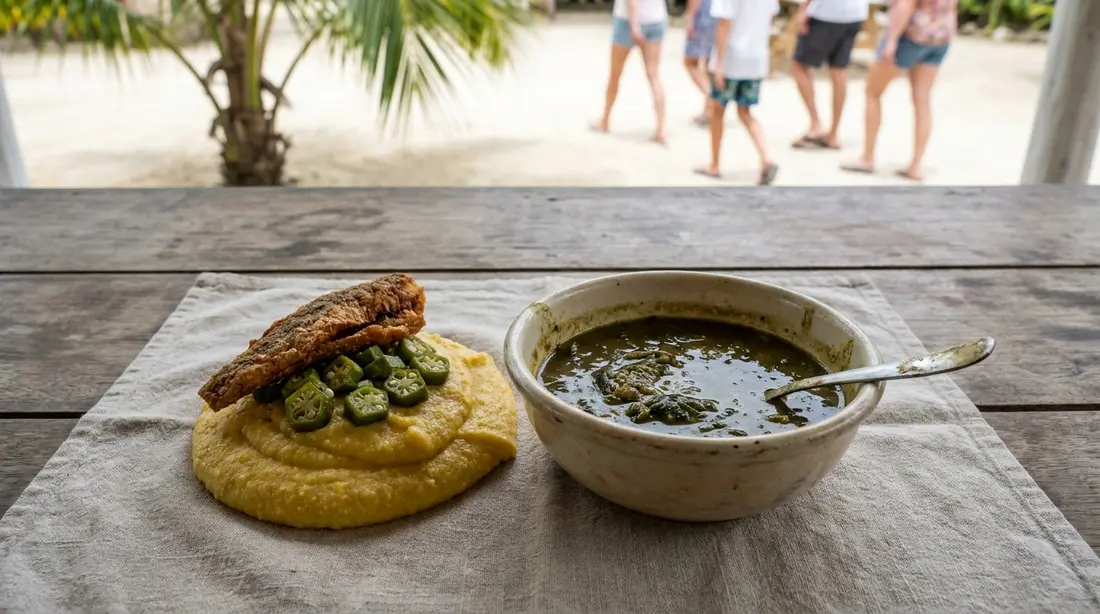
Kallaloo is a stew of cooked-down greens, thick and dark enough to sit closer to a loose gravy than to a clear soup. The body of it is leaf: a large volume of greens simmered until they collapse, given slip and weight by okra, and floated on a broth pulled from whatever the household had to spend. It is a slow dish. Cooks talk about hours at the stove once the picking, washing and chopping are done, because the greens have to break all the way down and the flavors have to marry. Nothing about it is standardized. The proportions of leaf to okra to protein, the exact greens, the choice of crab over ham or fish over both — all of it moves from one kitchen to the next, and a Crucian will defend a family pot the way other people defend a football team. What holds constant is the color, a deep forest green; the texture, spoonable and a little ropey from the okra; and the depth, which comes from time rather than any single seasoning.
The greens that go in the pot
The traditional base leaf is the one the plant world calls taro, known on island as dasheen and as the callaloo bush itself. Its broad leaves, cooked until tender, gave the dish its backbone for generations, sometimes joined by the leaves of tannia, the related tuber also called yautia or malanga. Those old provision-ground greens have grown scarcer, and most cooks now build the pot on spinach instead, which stews down the same way and is easy to buy by the bag. Around that base go the pot herbs a Crucian keeps within reach: onion, celery, thyme, parsley, garlic and green onion, with whole hot pepper simmered in for warmth and often lifted out before it turns the pot fierce. Okra earns its own mention because it is in nearly every version, sliced into the greens where it does double duty as vegetable and thickener, giving kallaloo the particular slick body that separates it from a plain pot of stewed spinach. That slipperiness is the okra earning its keep: cut pods release a natural mucilage as they cook, the same property that thickens a West African okra soup, and in the pot it binds greens and broth into one glossy body with no flour required. The groceries guide covers where the greens, the okra and the seasonings are sold.
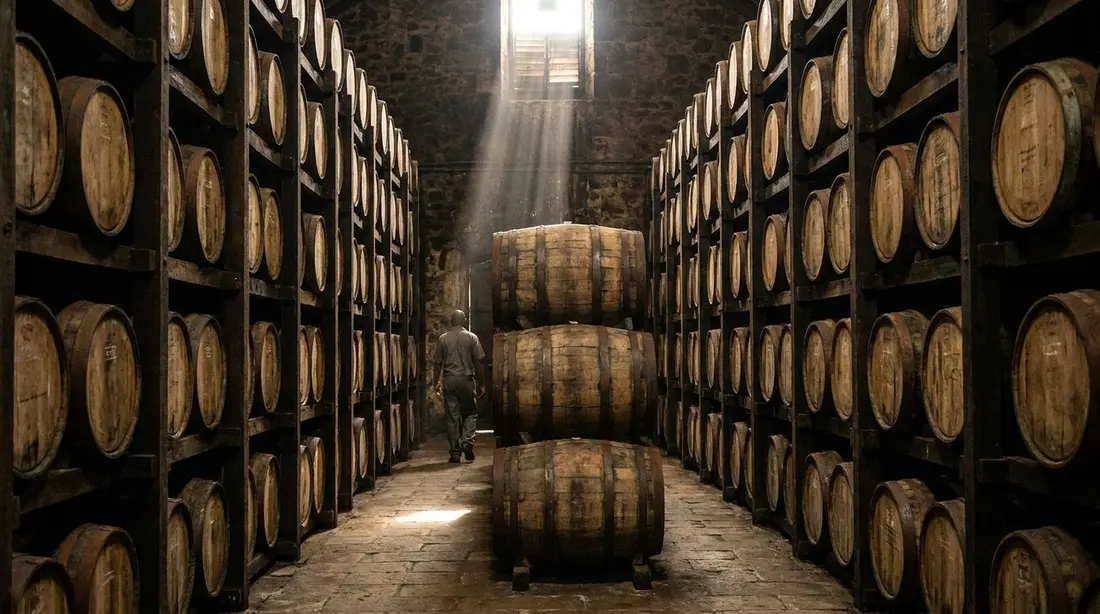
The crab, the conch and the salt meat
The broth is where a cook shows off. The prestige version leans on the sea: land crab or blue crab cooked in the shell, conch, fresh fish, sometimes lobster, each throwing its own richness into the greens. The everyday version leans on the smokehouse and the salt barrel — salted pork or beef, a ham bone saved from a holiday, pig tail or pig snout, the same preserved cuts that stretched a plantation ration across a week. Many pots use both at once, seafood and salt meat together, which is exactly why the flavor runs so deep. This is thrift raised to a craft: the greens were free or nearly so, the okra grew in the yard, and the protein was whatever could be caught, saved or cured. A visitor who orders kallaloo is tasting the logic of the whole cuisine in one bowl, the same waste-nothing habit that produced saltfish and souse over on the main food page. The finished pot is almost always served over or beside a mound of fungi, which turns two dishes into one plate.
The okra-soup lineage out of West Africa
Kallaloo did not begin in the Caribbean. Its direct ancestor is the West African okra soup, a foundational dish across the region and a delicacy in Nigeria among the Igbo, Yoruba, Efik and Hausa, with its own long history in Ghana as well. Okra itself is an African plant, and the very word came into the Americas from the Igbo tongue, where the pod is o-kwu-ru. When enslaved Africans were carried to St. Croix and the other sugar islands, the technique of stewing leaf and okra into a thick pot came with them, and it was rebuilt from whatever local leaf could stand in for the greens of home. Food scholars connect the whole family to the West African tradition sometimes called palaver sauce, the leafy stews of the Gulf of Guinea, with a thread of the Caribbean's older Taino plant knowledge worked in once the two met on the islands. The result on St. Croix is a dish that is African in its bones and Crucian in its particulars, and that lineage is a large part of why the pot means so much at the turn of the year.
Kallaloo, callaloo, calalu: one word, many pots
The spelling is a small argument all its own. St. Croix and the rest of the Virgin Islands tend to write kallaloo with a K; Trinidad and its neighbors spell it callaloo with a C; older texts and other islands use calalu, calalloo and more. The name is as traveled as the dish. Linguists trace it to the Kimbundu word kalulu, an Angolan term for okra or an okra dish, with a competing theory pointing to the Tupi word caaruru, meaning thick leaf, by way of the Portuguese caruru; versions of the word turn up in Haitian Creole and in the Portuguese of Sao Tome. The plates behind the name differ as much as the spellings. The Trinidadian callaloo is built on dasheen leaf loosened with coconut milk and is often puréed smooth; Jamaica, Belize and Guyana use amaranth greens and cook them drier, closer to a sautéed side than a stew. The Crucian pot skips the coconut milk, keeps its greens chunky rather than blended, and relies on its crab, conch and salt meat for body. On a St. Croix menu, kallaloo means the local version and nothing else.
The New Year pot
Kallaloo keeps one fixed appointment on the calendar. On St. Croix it is the dish of Old Year's Night, December 31, cooked as one year rolls into the next. The belief behind the custom is specific and still repeated: a pot of kallaloo eaten as the year turns brings good fortune for the year ahead, and there is a romantic corollary that older folks pass down with a grin — serve it to the one you love on Old Year's Night and there will be a wedding by June. There is a practical logic braided into the ritual too. The last night of the year is the moment to empty the garden and the larder, to throw the season's greens and the saved bits of meat into one generous pot and start the new year clean. Families historically built it as a shared effort, each household adding what it had, including the bone left from the Christmas ham. The Crucian Christmas Festival guide sets that New Year's pot inside the island's whole December-to-January carnival season.
Fungi, the cornmeal staple
Fungi is the plate's other half, and it could not be simpler on paper: cornmeal, okra, water, salt and a knob of butter, cooked and stirred until they set into one soft, cohesive mass. Done right it holds its shape on a spoon, firm enough to mound yet tender enough to give under a fork, with the sliced okra worked through it for silk and a faint green fleck. You say it foon-jee, and the spelling ambushes every first-timer, because it is written exactly like the biological kingdom of molds and mushrooms. That is pure coincidence and a standing island joke; there is no fungus of any kind in the dish. The comparison mainlanders reach for is polenta, and it is a fair one, with grits the next guess — all three are boiled ground grain — though the okra gives fungi a smoothness and a slight pull that neither cousin has. It is a starch built to carry a sauce, which is why it almost never travels alone.
Turning fungi
The whole craft of fungi is in the stirring, and island cooks have a verb for it: you turn fungi, you do not merely stir it. Cornmeal goes into hot water in a steady stream while the free hand works without stopping, folding and beating the meal against the side of the pot so it swells evenly and never seizes into lumps. Lumps are the tell of an unpracticed hand, and a smooth pot is a point of pride. The traditional tool is a flat wooden paddle, a fungi stick or fungi turner, the same implement Barbados calls a cou-cou stick: a long, flat blade shaped a little like a small cricket bat, made for pushing stiff cornmeal around a hot pot. When it is ready the fungi is scooped and shaped into rounded mounds with a wet spoon or a buttered bowl so it does not stick, and it is served straight away. Time is the enemy after that, because fungi stiffens as it cools, which is one more reason it belongs to home kitchens and busy local counters rather than to a plate that sat under a heat lamp.
The Caribbean cousins and the African root
Fungi has relatives up and down the island chain, all of them cornmeal cooked with okra under different names. The Windward Islands say coo-coo or cou-cou; the Leeward Islands and Dominica say fungee, close to the Virgin Islands spelling; and in Barbados cou-cou is half of the national dish, paired with flying fish and traditionally eaten on Fridays. The Dutch islands of Aruba, Bonaire and Curaçao cook the same cornmeal staple under the name funchi, and some cooks trade the cornmeal for boiled breadfruit when it is in season, which lands the dish somewhere between a starch and a dumpling. Push the family tree back across the Atlantic and the root is clear. Fungi descends from fufu, the pounded starch that anchors kitchens across West and Central Africa, where a boiled staple is worked into a smooth, firm mass to be eaten with a stew or soup. The same idea survives in the Angolan funge and the Ghanaian banku, and it arrived in the Caribbean with enslaved cooks who swapped yam or cassava for the cornmeal the estates supplied. Knowing the cousins helps a visitor read a regional menu: fungi, funchi, cou-cou and funge are branches of one African tree, adjusted island by island. The breadfruit that St. Croix now turns into Mutiny Island Vodka is another descendant of that same make-do larder.
Fish and fungi, the plate
Fungi's natural partner is fish, and the pairing is so settled that the two words run together as one dish. The fish is local catch — snapper, grouper, kingfish, the mixed reef fish Crucians call pot fish — cooked two common ways. The older, more traditional method is to boil or gently stew a whole fish in a seasoned broth sharpened with lime and hot pepper; the everyday restaurant method is to pan-fry a fillet. When fresh catch runs short, cooks fall back on salted fish or conch, and the seasoned broth left behind by a boiled fish is prized in its own right, spooned over the fungi as a gravy of its own. Either way the plate is finished with a creole gravy: onion, sweet pepper, celery, tomato and thyme cooked down, with a measured hit of scotch bonnet and a squeeze of lime, spooned over the fish and pooling against the fungi. Two rounded scoops of fungi and a piece of sauced fish is the classic serving, and that plate is the one the territory chose to honor above all others. It is the sit-down meal a visitor should order first, and the restaurant guides for Christiansted, Frederiksted and the East End track who is cooking the catch this season.
The official dish of the Virgin Islands
Fish and fungi now holds a title in law. In the summer of 2024, Governor Albert Bryan Jr. approved Bill No. 35-0078 — one of nineteen bills he acted on that July 11 — and the measure crowned fish and fungi the territory's official dish and the tart its official dessert; the 35th Legislature had passed it on June 24. The road there is worth telling, because it was more careful than a simple proclamation. Senator Angel Bolques Jr. introduced the bill and built it in two stages: first a territory-wide survey to let residents pick the dish, then the legislation to make the winner official. The Department of Tourism designed the vote to reach everyone, with a digital poll, in-person drop boxes, a call-in line and deliberate outreach to churches and senior groups so the oldest cooks had a say. An earlier attempt by Senator Marvin Blyden to name the dish outright had not carried, which is part of why the survey approach was chosen. The neighboring British Virgin Islands honor the same plate as their territorial dish, a sign of how far the pairing reaches across the whole archipelago. Supporters framed the designation as economics as much as pride, tying an official dish to culinary tourism and to the work of the territory's culinary ambassadors, who make the case for Virgin Islands cooking off-island. Kallaloo, for the record, has its own passionate camp who argued it should have worn the crown.
Where a visitor meets them
These are home-kitchen and community dishes first, restaurant dishes second, and knowing that changes how you find them. Fish and fungi turns up on plenty of local menus, since a sauced fillet over fungi suits a working kitchen. Kallaloo is harder to pin down: it is labor for a crowd, so it appears most reliably at family gatherings, church fundraisers, and the food fairs where island cooks set up side by side. The single densest place to taste both is a festival food village — the AgriFest grounds in mid-February and the food fair of the Crucian Christmas Festival around New Year, where the kallaloo tradition is at its most literal. Everyday counters and takeout kitchens carry fungi beside fish and stews; the named year-round spots live in local food institutions and the breakfast guide rather than getting re-listed here. The reliable move is to ask. A villa manager or a market cashier will know whose pot is on this week, and a cook who has kallaloo that day will be glad you asked for it by name.
Cooking them in a villa kitchen
Both dishes are within reach of a rental kitchen, but they sit at opposite ends of difficulty, and it is fair to say so. Fungi is the approachable one. The method described in local recipes is short: bring salted water to a boil with a handful of sliced okra, then rain cornmeal in while you turn the pot hard and steady until it thickens and pulls from the sides, finishing with butter and shaping mounds with a wet spoon. A first attempt may lump; a second usually does not. Kallaloo is the project, a half-day of picking and washing greens, building the crab-and-salt-meat broth, and holding a low simmer for hours, and it rewards a cook who has made it many times more than a visitor making it once. We run villas, not a family recipe box, so we will point you to the technique rather than pretend to own the measurements, which differ from one Crucian household to the next. Every ingredient is on island; the provisioning guide maps the markets, and the island's private chefs will cook a full Crucian menu in your kitchen if you would rather watch an expert turn the fungi.
What the two dishes carry
It is worth stepping back from the recipes to the reason they matter. Kallaloo and fungi are not curiosities for a menu; they are the surviving, everyday proof of how enslaved Africans kept a culture alive on a Danish sugar island, feeding themselves and one another from leaf, okra, cornmeal and the cuts nobody else wanted. The recipes were never written down in any authoritative book. They passed down by showing and watching, from grandmother to grandchild, which is why every family pot differs and why the loss of an elder can mean the loss of a version. That fragility is exactly what pushed the territory to write fish and fungi into law, and it is why a plate of either dish is treated with a respect that surprises visitors expecting simple comfort food. Order it, finish it, and say so; a cook who fed you the New Year pot handed you something with a very long memory.
The two pots side by side
| Dish | What it is | When and where you meet it |
|---|---|---|
| Kallaloo | Thick stew of stewed-down greens and okra on a broth of crab, conch, fish or salt meat | Old Year's Night, family gatherings, church fundraisers and food fairs |
| Fungi | Cornmeal and okra turned smooth with butter into a firm, moundable staple | Local kitchens and counters year-round, always beside a main |
| Fish and fungi | Local fish, boiled or pan-fried, in a creole gravy over fungi; the official territorial dish | Local restaurants and home tables; the plate to order first |
| The greens | Traditionally taro (dasheen) and tannia leaf; spinach is the common stand-in now | Markets and gardens; the base of every kallaloo pot |
| The cousins | Cou-cou, coo-coo, fungee and funge across the islands and Africa | Regional menus; the same African fufu root under new names |
Questions guests ask
What is kallaloo?
Kallaloo is a thick Crucian stew of leafy greens cooked all the way down with okra and carried on a broth of crab, conch, fish, salted meat or all of them together. It is deep green, spoonable and slightly ropey from the okra, and it is almost always served over or beside a mound of fungi. Every household cooks its own version, so no two pots taste quite alike. It descends from West African okra soup, and on St. Croix it is both an everyday dish and the traditional meal of the last night of the year.
Does fungi have mushrooms in it?
None whatsoever. Virgin Islands fungi is a cornmeal side turned smooth with okra, water, salt and butter, firm enough to mound and said foon-jee. It happens to be spelled exactly like the scientific word for the kingdom of molds and mushrooms, which is a coincidence that has amused generations of visitors, but there is no fungus in it. Think of it as the island's close relative of polenta, with grits as a second comparison. Its natural partner is fish, and the two together, fish and fungi, are the official dish of the territory.
How is Crucian kallaloo different from Trinidad callaloo?
They share a name and an African ancestry but land as different dishes. The Trinidadian callaloo is built on dasheen leaf loosened with coconut milk and is often blended smooth. The Crucian kallaloo skips the coconut milk, keeps its greens in pieces rather than puréed, and leans on crab, conch and salted meat for its richness. Jamaica, Belize and Guyana use amaranth greens and cook theirs drier still, closer to a sautéed side. On a St. Croix menu, kallaloo means the local pot; the spelling with a K is the Virgin Islands habit.
Why do people eat kallaloo on New Year's?
On St. Croix, kallaloo is the dish of Old Year's Night, December 31. Custom holds that eating it as the year turns brings good luck for the year ahead, with a well-worn saying that serving it to your sweetheart means a wedding by June. There is a practical side too: the last night of the year is the moment to use up the garden's greens and the saved bits of meat in one big, generous pot. Families historically cooked it as a shared effort, everyone contributing something, and the custom is covered in our Crucian Christmas Festival guide.
Where can I try kallaloo and fungi on St. Croix?
Fish and fungi shows up on many local restaurant menus, so that plate is the easy one. Kallaloo is more of an occasion dish and turns up most reliably at food fairs, church fundraisers and family gatherings; the festival food villages at AgriFest in February and the Crucian Christmas Festival around New Year are the densest places to find it. Everyday counters and takeout kitchens carry fungi beside fish and stews. The best method is simply to ask a local or your villa manager whose pot is on that week, because these dishes move with the cook rather than the calendar.
Can I make fungi in my villa kitchen?
Yes, and it is a good first Crucian dish to attempt. The described method is to boil salted water with a little sliced okra, then pour cornmeal in slowly while you stir hard and without stopping until it thickens and pulls away from the pot, finishing with butter and shaping mounds with a wet spoon. The only real skill is keeping it lump-free, and a second try usually gets there. Kallaloo is far more work, a half-day of greens and slow simmering, and it is better eaten from an experienced hand. Every ingredient is sold on island; see the groceries guide.
Is fish and fungi really the official dish?
Yes. In July 2024 Governor Bryan approved Bill No. 35-0078, which named fish and fungi the territory's official dish and the tart the official dessert, after the 35th Legislature passed it that June. Senator Angel Bolques Jr. wrote the bill around a territory-wide survey so residents could choose the dish themselves, with drop boxes, a call-in line and outreach to senior groups to include the oldest cooks. The neighboring British Virgin Islands claim the same plate as their territorial dish, which shows how deeply the pairing runs across the islands.
Kallaloo, fungi and a villa kitchen
A villa week is the right way to eat these dishes, because it gives you a real kitchen and a manager on island who eats this food every week. Provision once, keep a market fish and a bag of cornmeal on hand, and you can turn your own fungi one night and let a private chef cook the full spread another. On the East End, The Cerulean keeps a full kitchen within easy reach of the markets and the takeout counters, and Shoy's Beach House sits the same quick hop from Christiansted's food. Every home in the villa collection is run by people on island who can tell you whose kallaloo is worth the drive this week. Ask us early, especially around New Year, when the island's best pots go fast.
Sources
Written from official and first-party sources, checked August 2026. Hours, prices and event dates change — confirm before you go.
In this guide
Stay nearby
On The Shoys beach: six bedrooms, six baths, pool and hot tub, room for twelve, and the beach through the back garden.
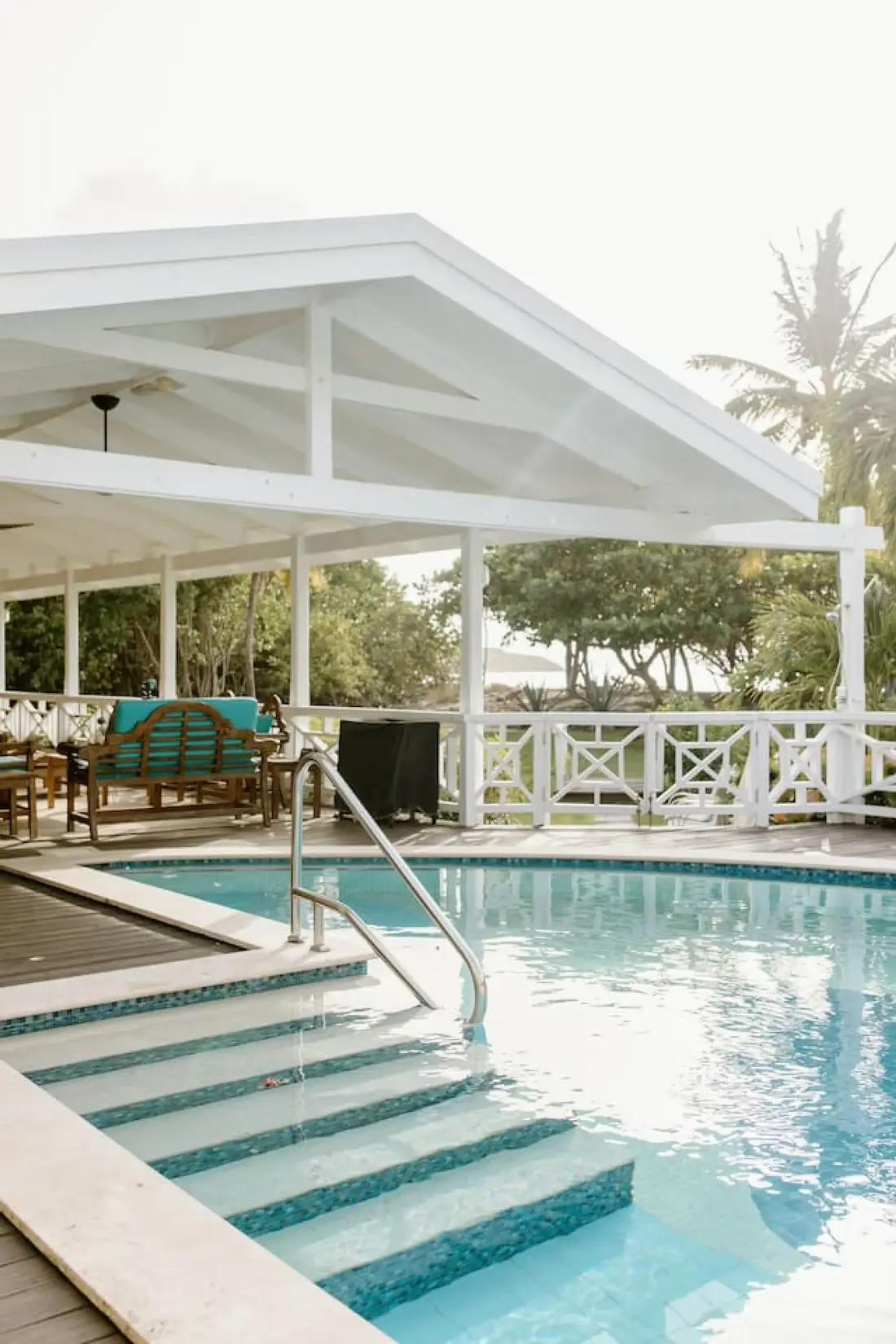 Shoy's Beach House6 bd · 6 ba · sleeps 12 · Christiansted
More in Food & Drink
Sources
10 references, listed in full at the end of this guide — official park, refuge, tourism-board and business sources, checked August 2026.