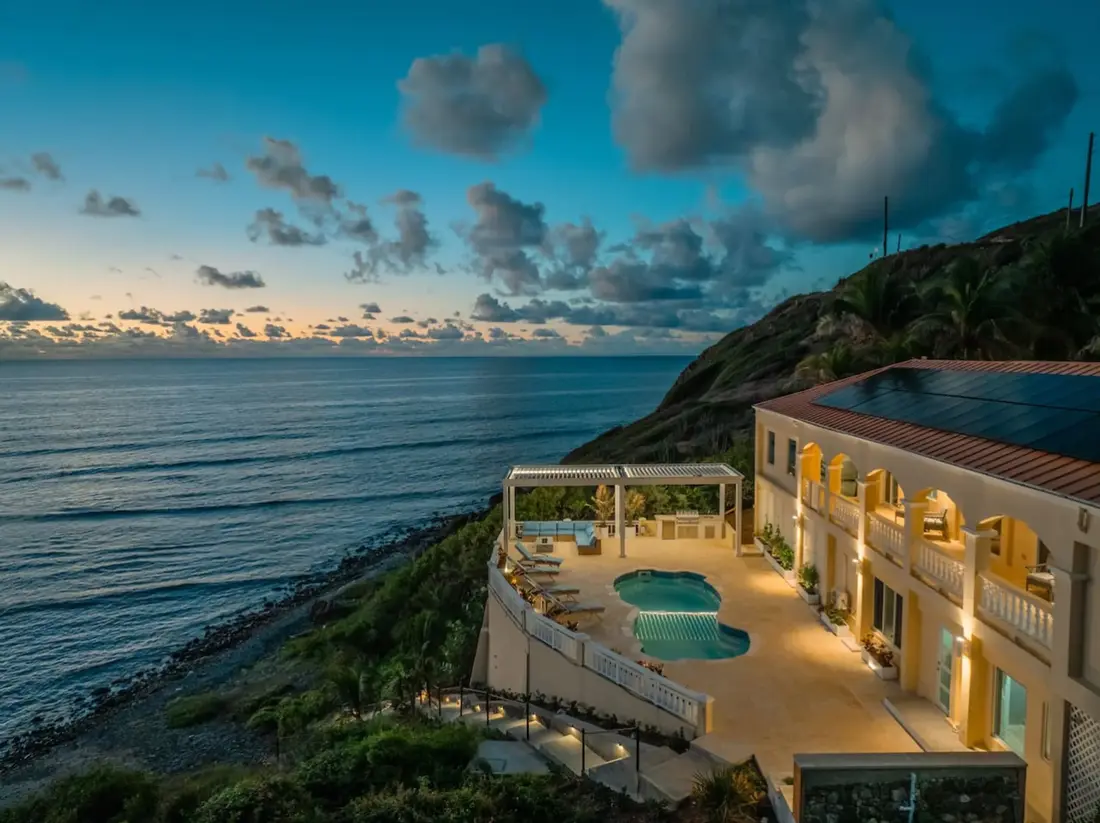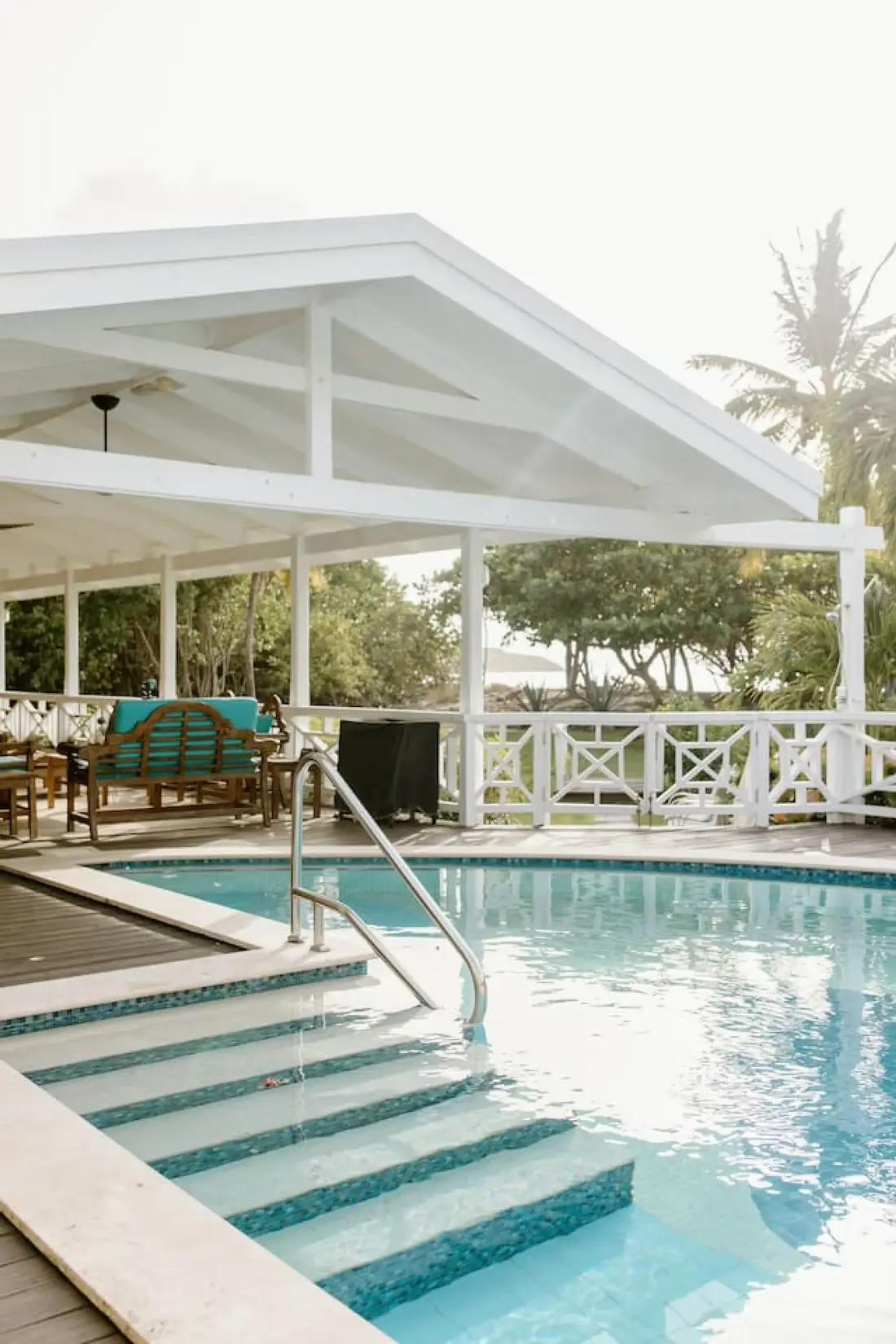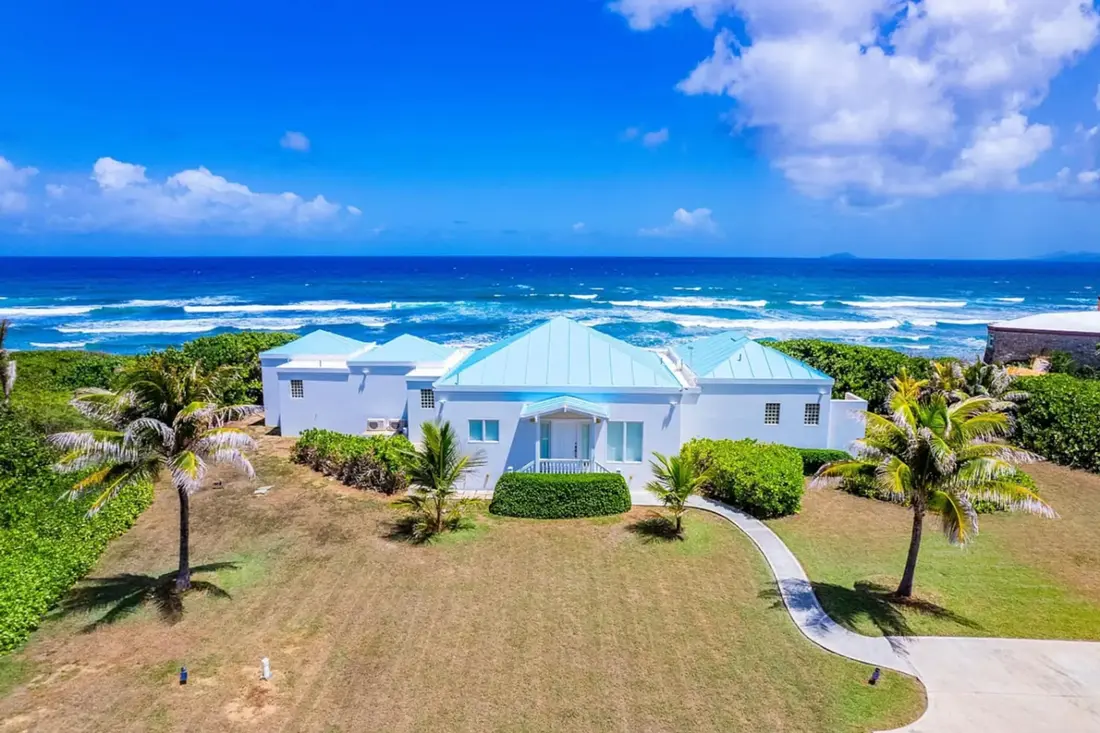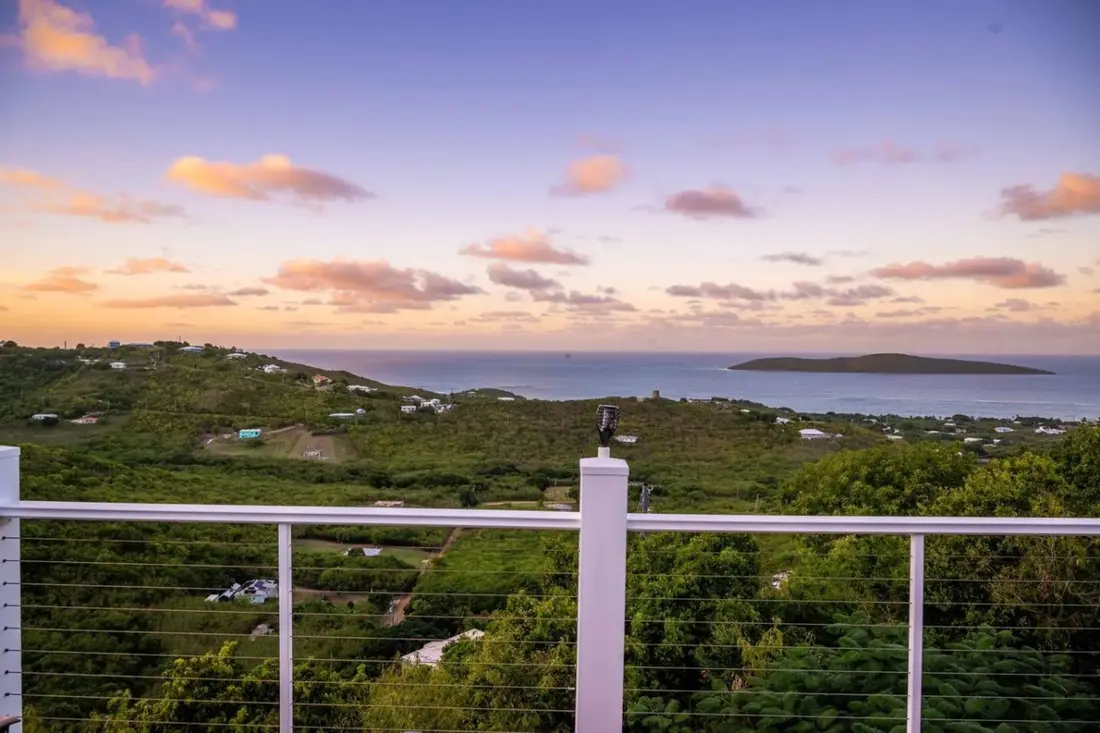
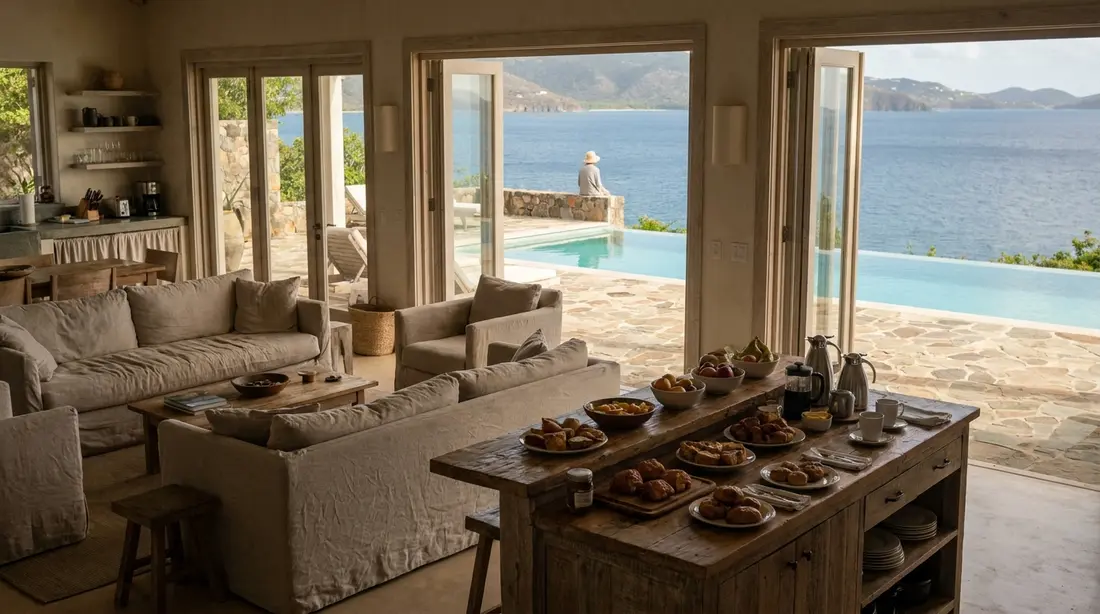
A steady share of the people who rent our villas end up asking about buying a home on St. Croix. This post explains why that happens and what the path actually looks like: why a U.S. Virgin Islands purchase is simpler for American buyers than almost anywhere else in the Caribbean, how the closing process differs from a mainland one, what the stamp tax and property taxes run, where people tend to buy, and how a few long villa stays can settle the question before a single dollar changes hands.
The pattern is old enough that everyone in the island's real estate business can recite it. A couple comes down for a week in February. They come back the next year for two weeks. The year after that they stay a month, and somewhere in that month one of them says the sentence out loud: what would it take to own something here? Some people let the question go when the plane lifts off. Others start reading listings on the flight home.
We run a rental company, so we see the front half of this pipeline every season. Guests book an East End villa for a family trip and spend the last two days driving around Estate Shoys and Teague Bay with the windows down, looking at houses. Guests who came for the diving start asking what a condo near the Christiansted boardwalk costs to carry. This post is for them, and for anyone a few trips behind them. It stays at the level a rental company should: how the process works, what is different here, and how to test the idea properly. For what daily life costs once you own, read our post on living here; for what renting a home to guests involves, read the owner's post, linked near the end. This one is about the path to the deed.
The pattern repeats itself
Why St. Croix, specifically? Plenty of islands have warm water. The short answer is that St. Croix feels less like a resort and more like a town that happens to sit in the Caribbean. There are 41,000 residents, two real towns, a farm fair in February, school pickup lines, hardware stores, and a Saturday morning rhythm that has nothing to do with tourism. Visitors notice this within a day or two. The island does not perform for you. It just goes about its life and lets you join.
That is exactly the quality that converts a vacationer into a buyer. Nobody buys a house inside a performance. People buy houses in places where they can picture a Tuesday: coffee on the gallery, a swim before work, errands in town, dinner with people whose names they know. St. Croix supplies the Tuesday picture more readily than most islands because ordinary life is visible everywhere you look. Our repeat guests tell us versions of this constantly, and the old owners around the island tell the same story in the past tense. They came on vacation, they returned enough times that returning began to feel like the point, and eventually the arithmetic of paying for a villa every winter met the daydream halfway.
Remote work sharpened the whole pipeline. A question that used to be about retirement, someday, is now about next year for anyone whose job lives in a laptop. The island sits in the Atlantic time zone, one hour ahead of Eastern in winter and level with it in summer, which makes a St. Croix workday almost frictionless for East Coast teams. A month here with a laptop is the cheapest possible rehearsal for ownership, and more people are running that rehearsal every year.
American soil, American paperwork
Here is the structural reason so many of these daydreams actually close: St. Croix is a United States territory, and buying property here is a U.S. transaction from start to finish. That single fact removes nearly every barrier that complicates buying elsewhere in the Caribbean.
Start with the list of things you do NOT need. No passport to visit, for U.S. citizens. No foreign bank account; the currency is the U.S. dollar. No government license to own land as an outsider; there are no citizenship or residency restrictions on buying here, and a buyer from Ohio holds the same fee-simple title as a buyer born in Frederiksted. Compare that with much of the region, where non-citizen buyers commonly face landholding licenses, government approvals, added alien-buyer taxes, or leasehold-only tenure. In the USVI, none of that applies. You buy, the deed is recorded, and you own the property outright.
The plumbing underneath the transaction is familiar too. Deeds are recorded with the Recorder of Deeds under the Office of the Lieutenant Governor. Title insurance exists and works the way mainland buyers expect, with a title search, an owner's policy, and a lender's policy when there is a mortgage. Contracts are enforced in U.S. courts under U.S. law. Your mainland attorney can read every document in the file without a translator or a foreign-law primer. Estate planning, 1031 considerations, financing, insurance: all of it happens inside the American legal system. People underestimate how much this matters until they compare notes with a friend who bought on a foreign island and spent a year learning another country's property regime. On St. Croix the exotic part is the view, and only the view.
What is different from a mainland closing
Familiar does not mean identical, and it helps to know the differences before you write an offer. The biggest one: the USVI is an attorney-closing jurisdiction. There is no large title-company industry running closings the way there is in most states. A licensed local attorney reviews title, prepares documents, and conducts the closing, and both sides typically have counsel. Budget for that, and hire someone who closes island deals every week rather than importing your mainland lawyer for the occasion.
Second, the clock runs slower. From accepted offer to closing, sixty to ninety days is the range brokers here commonly quote, and complex titles or financing can stretch it further. The island has a limited bench of appraisers, surveyors, and inspectors, so each step waits its turn. Older properties can carry long paper trails, estate parcels sometimes need heirs tracked down, and surveys take time. None of this is a defect. It is a small market doing careful work at small-market speed, and buyers who arrive with mainland urgency mostly succeed in raising their own blood pressure.
Third, the diligence list has island items on it. A survey matters more here, where boundaries can date back to Danish-era estate lines. The inspection should cover the cistern, the roof that feeds it, the pumps, and any generator or solar equipment, because on St. Croix the house is also its own water utility. Insurance quotes belong early in the process rather than the week before closing, since windstorm coverage is a real underwriting exercise in this territory and its cost belongs in your math from day one. We cover what those systems are like to live with in the living post; at the buying stage, the point is simply to inspect them like the infrastructure they are.
How you actually shop for a home here
St. Croix has a proper multiple listing service. The St. Croix Board of Realtors runs its own MLS with well over a hundred member agents on island, separate from the St. Thomas board's system, and its listings feed the search sites you already use. So the mechanics of shopping look familiar: you browse, you shortlist, you tour with an agent. What differs is the shape of the inventory behind the search box.
This is a small market of mostly custom homes. There are no subdivisions of near-identical houses to comp against each other, so pricing runs on view, elevation, construction quality, and condition rather than on price per square foot alone. Two houses a quarter mile apart can sit in different markets entirely because one looks at Buck Island and one looks at a hillside. Inventory at any given moment is thin compared with a mainland metro, and good properties in the known neighborhoods can move through word of mouth before they are ever photographed. That is one more argument, which we will keep making, for spending real time here before you shop: buyers who are on island, known to an agent, and clear about what they want hear about houses that pure internet shoppers never see.
A note on expectations, borrowed from every longtime islander who has ever helped a friend house-hunt: do not shop for the perfect house. The stock is individual, quirky, and built across decades of different codes and tastes. Shop for good bones, a good roof, a sound cistern, and a location you love, and plan to make the rest yours over time. The buyers who thrive here are renovators at heart, even if the renovation is only paint and a better kitchen.
The stamp tax
The USVI has no general sales tax, but real estate transfers pay a stamp tax at recording, and it is the number that surprises mainland buyers most because it is larger than the transfer taxes most states charge. The rate is graduated by price. As published in the territory's code and quoted by island brokerages at last check, the brackets look like this:
| Purchase price | Stamp tax rate | On a sale at the bracket top |
|---|---|---|
| Up to $350,000 | 2 percent | $7,000 on $350,000 |
| $350,001 to $1,000,000 | 2.5 percent | $25,000 on $1,000,000 |
| $1,000,001 to $5,000,000 | 3 percent | $150,000 on $5,000,000 |
| Over $5,000,000 | 3.5 percent | $350,000 on $10,000,000 |
Who pays it is the island's favorite negotiation. There is no law assigning it. Custom historically put it on the seller, and in recent years it has increasingly been paid by the buyer or split, market conditions deciding who blinks. The only rule that matters is that your purchase contract must say, in plain words, who pays the stamp tax. Ask your agent what current custom looks like the month you make your offer, and treat the answer as a negotiating lever rather than a fixed fee.
Beyond the stamp tax, plan for the familiar closing lineup: title search and title insurance, commonly quoted around six to eight tenths of a percent of the price for the policy; the appraisal, survey, and inspections; attorney fees on your side of the table; and lender charges if you finance. Your attorney will give you a real estimate early. Nothing on the list is exotic. The stamp tax is simply the line that deserves a highlighter.

Financing an island purchase
You can absolutely get a mortgage on St. Croix, and thousands of owners have one. What you cannot do is assume mainland lending habits travel intact. Most loans here are written by banks and lenders that know the territory, and much of that lending is portfolio business, held by the bank rather than sold on, which makes underwriting more deliberate and more local. Island mortgage brokers exist for exactly this reason, and a good one earns their fee the first week.
Expect more skin in the game. Private mortgage insurance has not been available in the territory, per island lending guides at last check, so conventional loans start at twenty percent down, and second homes and investment condos commonly want twenty-five percent or more. Government programs reach here too: VA and FHA loans are available for primary residences, within their usual limits and rules. Rates and terms move constantly, so treat every number in this paragraph as a doorway rather than a quote, and get pre-qualified before you shop. Pre-qualification is typically good for about ninety days, which happens to be roughly one house-hunting trip plus one follow-up trip. Sellers and agents in a small market take pre-qualified buyers seriously and file the rest under someday.
Cash buyers, of whom this market sees many, skip the underwriting but should not skip the discipline. The appraisal, survey, inspection, and early insurance quotes protect a cash buyer just as much, and the slower island timeline gives you the time to use them properly.
Property taxes after you close
Here is the pleasant surprise waiting on the far side of the stamp tax: annual property taxes in the USVI are low by mainland standards. Residential property is taxed at 0.377 percent of assessed value, with assessment pegged to fair market value. Run the arithmetic on a $500,000 home and the gross bill is $1,885 a year, before credits, for a number that would be several times higher in most mainland counties. Owners who make the island their true primary residence can apply for a homestead credit of $400, with additional credits for seniors, veterans, and owners with disabilities, applications due by March 1 each year. Bills issue in June.
Two cautions keep this paragraph out of trouble. First, assessments and rates are set by the territory and can change, so verify the current numbers with the Office of the Lieutenant Governor's tax division when you are ready to buy rather than relying on any blog post, ours included. Second, the low property tax sits inside a larger cost picture, with electricity and windstorm insurance carrying the weight that property tax carries stateside. The fair way to compare St. Croix with your county is the whole annual bundle, and we laid that bundle out line by line in the living post linked above.
| Ownership cost | Figure at last check | Note |
|---|---|---|
| Property tax, residential | 0.377 percent of assessed value | Assessed at fair market value; credits available for primary residents |
| Homestead credit | $400 per year | Primary residences only; apply by March 1 |
| Windstorm insurance | Commonly quoted at 1.35 to 2 percent of replacement cost per year | Deductibles often percentage-based; lenders require coverage |
| Stamp tax at purchase | 2 to 3.5 percent of price, graduated | One-time, at recording; payer is negotiable |
Where people buy on St. Croix
Every buyer eventually discovers that St. Croix is several islands wearing one name, and the neighborhood question matters more than any spreadsheet. What follows is character, not valuation; prices move, and your agent has the current numbers.
The East End is the classic second-home landscape: dry, breezy hills running out toward Point Udall, with gated communities and standalone homes looking across the water at Buck Island. The Estate Shoys enclave behind its guard gate, the Teague Bay stretch near The Reef's nine-hole golf course, and the ridges above the north shore hold many of the houses that show up in daydreams. This is where several of our own villas sit, including The Buck Island Overlook and Shoy's Beach House, so guests who stay out east are effectively touring the neighborhood all week.
Christiansted and its harbor fringe suit a different buyer: the one who wants to walk to dinner. Town condos, harborfront communities, and the Gallows Bay pocket put the boardwalk, the restaurants, and the seaplane within a few minutes of your door, with the lock-and-leave convenience that condo life offers an owner who is only here part of the year. North shore communities like gated Judith's Fancy, on the point beside Salt River Bay, offer beachfront and near-beach living an easy drive from town.
The west end is the island's quiet register. Frederiksted and the coast running north and south of it are greener, calmer, and slower, with sunset water views, the pier's diving, and a strong community feel; the buyers who choose the west tend to have fallen for the island's local life rather than its resort face. Our villa Sunset Sea-Clusion sits on that coast, and a week there tells you quickly whether west-end quiet is your speed. The only real mistake is buying on one end after vacationing exclusively on the other. Stay on both ends first. The island will sort you.
The EDC program, in one careful paragraph
Sooner or later, anyone researching a USVI purchase trips over the territory's tax-incentive headlines. They are real. The U.S. Virgin Islands runs an economic development program, administered through the Economic Development Authority, that grants approved businesses benefits on the order of a ninety percent reduction in income taxes plus exemptions on other territorial taxes. The requirements are equally real: a qualifying investment, a minimum number of full-time Virgin Islands resident employees, an actual operating business on island, ongoing compliance, and genuine residency for owners who want the personal benefits, with tests that have teeth. This is a program for people relocating a real enterprise, and the mistakes are expensive. If the incentives are part of your interest in the island, hire a tax professional who works USVI cases before you do anything else, including falling in love with a house. That is the whole mention; a villa-rental journal is the wrong place for tax planning, and anyone who tells you otherwise is selling something.
What ownership adds to your life
Owning here means adopting a few systems that mainland houses do not have. Your roof catches your water and stores it in a cistern under the house, as territorial law has required of new construction for decades. Your electricity comes from an island grid that blinks often enough that owners keep a generator or battery bank, and increasingly panels on the roof. Your insurance file contains a windstorm policy priced for a territory that sits in the hurricane belt, with a season that runs June through November and asks for real preparation in August and September. None of this is a reason to hesitate. All of it is a reason to buy with your eyes open, to inspect those systems hard, and to budget for them without flinching. The full resident-level picture, from WAPA bills to water trucks, lives in the living post, and every serious buyer should read it twice.
What ownership adds on the other side of the ledger is harder to put in a table. It is the difference between visiting a place and having a stake in it: hurricane-season group texts with neighbors, a mango tree you planted, a bar where the bartender starts your order when your car pulls in, a kid who learns to snorkel off the same beach every year of her childhood. Renters get a lovely week. Owners get a relationship. That, and no other line item, is what the repeat visitors are actually buying when they finally buy.
Try the island before you buy it
Now the advice we are most qualified to give, because we watch it work: rent long, rent twice, rent in different seasons, and rent on different ends of the island before you make an offer anywhere. A house is a thirty-year decision being made about a place most buyers have only met in February. The island in February and the island in September are different characters, and you should meet both before either of you commits.
A month in high winter shows you the island at its breeziest and busiest: the Christmas Winds, the full restaurant calendar, AgriFest and Mardi Croix, and the peak-season energy that makes January villas book out early. A stay in the low season, say September, shows you the green, quiet, humid island that owners actually live on for a third of the year, hurricane-season attention included. If you can only manage two scouting trips, make them those two. Base one on the East End and one out west. Work your normal job from the villa if you can, because a Tuesday of video calls teaches you more about island living than any Saturday at the beach ever will.
Use the trips like the reconnaissance they are. Drive the neighborhoods at night as well as noon. Time the run from your favorite estate road to the airport, the hospital, and the grocery store. Sit through a power blink and see how you feel about it. Talk to owners, who are easy to find and generally delighted to deliver their whole file of opinions. Browse our 150 guides to cover the ground a listing never mentions. And notice, at the end of the second trip, whether leaving feels like ending a vacation or interrupting a life. That feeling is the actual answer to the ownership question. The spreadsheet only confirms it.
Renting it out when you are away
Many buyers close the math by planning to rent the home to vacationers when they are off island, and on St. Croix that is a real, established business rather than a hopeful theory. It is also a regulated one, with a business license, room taxes, real off-season economics, and salt-air maintenance that never sleeps. We wrote the full owner's briefing separately, covering the licensing, the tax lines, the seasonal calendar, and what professional management does all day, and if income is part of your purchase logic you should read that post before you write the offer, so the rental plan shapes which house you buy rather than being bolted on after. The short version here is one sentence: buy the house that guests would also love, in a location they ask for, with the systems that survive being used by strangers, and the two halves of your plan will pull in the same direction.
When you are ready to talk to someone
SP Vacations is the rental side of Sterling Point, a licensed real-estate operation based on St. Croix, which means the people who manage the villas you stay in also work the island's property market every week. We keep those two hats separate, and this site wears the rental hat: you will find no listings here and no pitch. But when a guest's questions shift from restaurants to closings, we are a natural first conversation, because we know the houses, the neighborhoods, the agents, the attorneys, and the real answers to what a place costs to run. If a stay with us starts turning into the bigger question, say so at checkout or write to us afterward. We will point you at the right people, starting with the professionals every buyer needs regardless of who they buy through: a local attorney, a local lender or broker, and an insurance agent who quotes windstorm coverage every day.
Questions guests ask
Can U.S. citizens buy property in St. Croix?
Yes, with no special permissions of any kind. St. Croix is a U.S. territory, so a purchase here works like a purchase in any state: U.S. dollars, recorded deeds, title insurance, U.S. courts. There are no citizenship or residency requirements to own, no foreign-buyer licenses, and no limits on fee-simple ownership. You do not need to live here, and you do not need a passport even to visit. For U.S. buyers it is the most administratively familiar purchase in the Caribbean, which is a large part of why so many vacationers here end up owning.
How much is the stamp tax in the USVI?
The transfer stamp tax is graduated by price: 2 percent up to $350,000, 2.5 percent to $1 million, 3 percent to $5 million, and 3.5 percent above that, as published at last check. Who pays is negotiable. Custom has drifted between seller-pays and buyer-pays over the years, and splits are common, so the contract must spell it out. On a typical home purchase it is the largest single closing cost, so build it into your budget from the first offer rather than discovering it at the closing table.
Are property taxes high on St. Croix?
No. Residential property tax runs 0.377 percent of assessed value, which on a $500,000 home works out to $1,885 a year before credits, far below most mainland rates. Primary residents can claim a homestead credit, with additional credits for seniors, veterans, and owners with disabilities. The balancing items are electricity and windstorm insurance, which cost more here than property tax savings alone would suggest, so compare the whole annual bundle rather than the tax line by itself. Verify current rates with the territory when you buy.
Can I get a mortgage on St. Croix?
Yes. Local and regional banks lend here, much of it as portfolio lending, and island mortgage brokers arrange the rest. Plan on at least twenty percent down for a conventional loan, since private mortgage insurance has not been available in the territory at last check, and more for second homes and investment condos. VA and FHA loans work for primary residences within their usual rules. Get pre-qualified before you shop; in a small market it moves you to the front of every conversation.
How long does closing take in the Virgin Islands?
Sixty to ninety days from accepted offer is the range commonly quoted, and longer is unremarkable. The USVI closes through attorneys rather than title companies, and the island's small bench of appraisers, surveyors, and inspectors works at small-market speed. Older properties can need extra title work. Build the timeline into your plans, use the weeks for insurance quotes and inspections, and resist the urge to hurry it; the deliberate pace exists because the diligence is real.
Is buying on St. Croix a good investment?
We are a rental company, so we will stay in our lane: nobody should buy an island home purely as a financial instrument, and we do not give investment advice. What we can say factually is that this is a small market of custom homes where location and views drive value, that vacation-rental demand is an established business with a strong winter season, and that carrying costs, especially insurance and electricity, are higher than mainland owners expect. Buyers who love the island first and run the numbers second tend to be the ones still smiling years later.
Should I rent on the island before buying?
Emphatically yes, and more than once. Stay a month if you can, in different seasons and on different ends of the island, and live as normally as possible while you are here: work your job, buy groceries, sit through a power blink, drive your would-be commute. High season and low season are different islands, and East End, town, and west end are different lives. A few thousand dollars of long villa stays is the cheapest diligence in the entire buying process, and it is the step that saves people from the wrong house.
Where to stay while you decide
This is the part of the pipeline we can actually help with today. Scout the East End from The Cerulean or The Buck Island Overlook and you are living in the neighborhood most buyers shortlist first. Try beach-house life at our beachfront homes, test the west end's pace at Sunset Sea-Clusion, or base a working month near town and see whether the Tuesday picture holds. Every villa is booked direct with a local team on the other end of the phone, which, conveniently, is also a preview of what good island management feels like from the owner's side. Start with the East End collection, pick two ends of the island, and come meet the place properly. The house can wait until the island has answered.
Sources
Written from official and first-party sources, checked August 2026. Hours, prices and event dates change — confirm before you go.