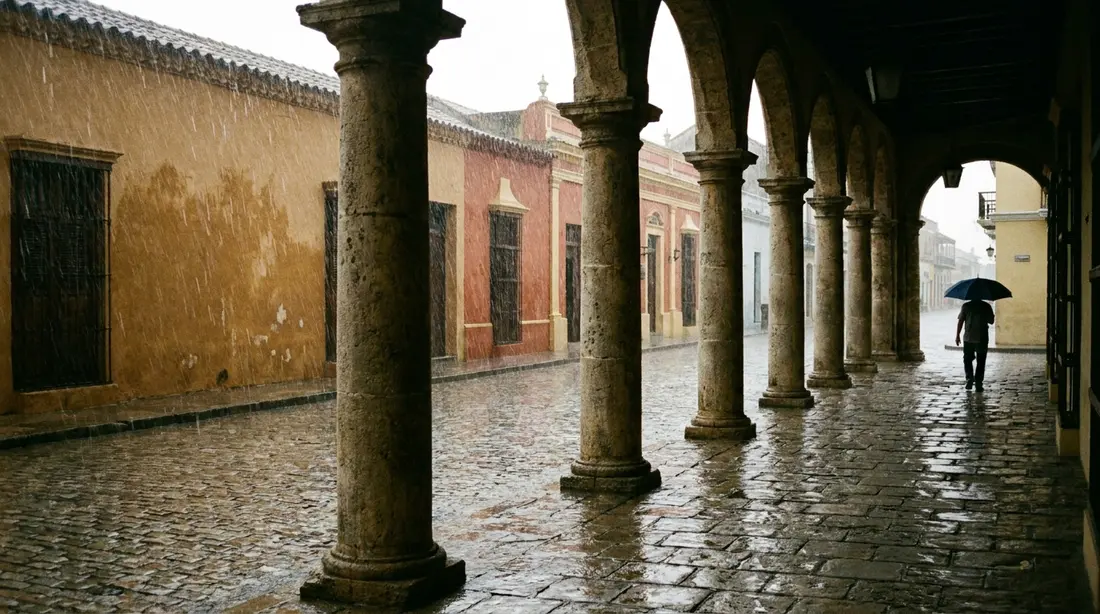
Rain reaches St. Croix most often as a shower that blows through and is gone before lunch. This post covers what the island's rain really is, month by month and end to end, and then the full wet-day playbook: rum and vodka tours, forts and museums, the covered arcades of Christiansted, a Crucian meal cooked at the villa, a massage that comes to you, and why the rainforest is at its best right after the sky clears.
Every so often a guest writes us mid-trip with a photo of a gray sky and a one-line question about what to do with the day. Nine times out of ten, by the time we answer, the sky in the photo is already blue again. That is the starting point for this whole subject: on St. Croix, rain is usually an event measured in minutes, and the most common mistake travelers make on a wet morning is canceling things that would have gone ahead fine.
But sometimes it does settle in. A trough parks over the northeastern Caribbean, or a wet-season afternoon builds into two or three rounds of showers, and the beach day is off. The island handles that day well, better than most beach destinations, because St. Croix has an unusually deep indoor bench: three centuries of history under masonry roofs, two distilleries and a brewery you can tour, a downtown that was deliberately built with covered sidewalks, and villas designed around shaded galleries where watching weather cross the sea is its own entertainment.
This is the long version of the plan. If you want the quick checklist instead, the two-landscapes guide and our rainy-day plan in the guides section cover the short form. What follows is the full essay: the climatology first, because it changes how you read every forecast, and then each option in enough detail to actually use it.
How much it actually rains
St. Croix's weather record is clear on the big picture. The dry season runs January through April, with March the driest month at roughly an inch and a quarter of rain on average. The wet season runs May through December, with a drier lull in June and July, and the wettest stretch comes in September, October, and November. Those three fall months carry roughly 40 percent of the whole year's rain, and even then September, the peak, averages around six inches for the entire month. Spread six inches across thirty days of short tropical downpours and you get the practical truth: most wet-season days still deliver hours of sun.
The National Park Service, which staffs Fort Christiansvaern year-round, describes the pattern the same way on its weather page for the site: little rainfall between April and June, showers that can develop quickly at any time of year, and a suggestion to keep an umbrella handy regardless of the forecast. That is the local relationship with rain in one sentence. Nobody plans around it; everybody keeps a plan B within reach.
The mechanism explains the brevity. Trade winds push weather across the island from the east more or less continuously, so a shower cell that soaks Christiansted at 10:15 is typically over the west end by 10:40 and out to sea after that. Long gray soaking days of the kind the Pacific Northwest produces are rare here. What the island gets instead is a rhythm: squall, sun, squall, sun, often with the pavement steaming dry between rounds.
Hurricane season is a separate subject from any of this. Its official dates are June 1 to November 30, and the statistics concentrate the activity in August and September; it is about tracked storm systems with days of advance notice, worth reading up on before a fall booking. An ordinary wet-season shower has no more to do with a hurricane than a summer thunderstorm in Ohio does. This post is about the showers.
The dry end and the wet end
Here is the fact that changes rainy-day decisions more than any other: St. Croix has two climates. The east end is dry, 25 to 38 inches of rain a year, low scrub and cactus country that looks almost like south Texas in places. The west end, where the hills around Mount Eagle rise to 1,165 feet and squeeze moisture out of the trade winds, gets more than 50 inches a year and grows a genuine forest canopy. Those are two different rainfall regimes on an island 22 miles long.
The travel meaning is simple. Rain at your villa is a local report, and a 25-minute drive is often a full change of weather. A gray morning on the lush north shore frequently coexists with a bright one at Point Udall, and the radar on any weather app will show you exactly which way the cells are drifting. Before you write off a beach day, look at where the rain actually is and where the wind is taking it, then consider simply driving out from under it.
| Part of the island | Average rain per year | What it looks like |
|---|---|---|
| East End (Point Udall side) | 25 to 38 inches | Dry hills, cactus and scrub, the sunniest odds on island |
| Mid-island and Christiansted | In between | Green pasture and town, brief passing showers |
| Northwest hills and rainforest | More than 50 inches | Mahogany and kapok canopy, the wettest and greenest corner |
The same geography sets your season expectations. A January or February trip may pass without a single interrupted plan; the Christmas Winds months, mid-December to mid-March, are the coolest and driest of the year. A late-September trip should assume a few showers and pocket the reward, which is the island at its greenest and its quietest, with the best villa availability on the calendar. The east-versus-west contrast is worth a drive in its own right, rain or no rain.
Tour the Cruzan Rum Distillery
Rum first, because it is the classic Crucian answer to weather. Cruzan Rum traces its history to 1760 at Estate Diamond on the west end, and the Nelthropp family name has been attached to the operation for generations. The guided tour runs about an hour, moves through the working distillery, and ends with a tasting. At last check, tours ran in a handful of scheduled afternoon slots on weekdays, with Saturday times appearing seasonally, and the distillery asks you to reserve ahead on its website rather than turn up cold.
Two practical notes for a wet day. First, portions of the route cross open ground between buildings, so this is an umbrella outing rather than a strictly roof-to-roof one; in a passing shower that costs you nothing but a short wait under an eave, which on a rum tour is not a hardship. Second, the tasting pours are real, so decide in advance who is driving, and remember that driving here is on the left.
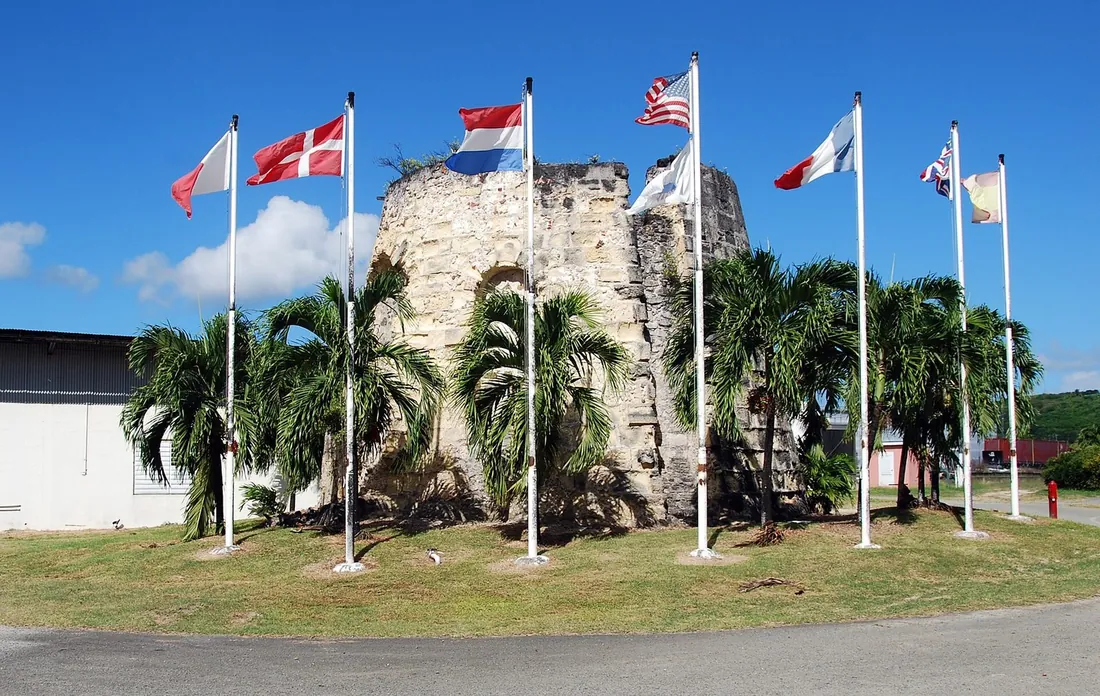
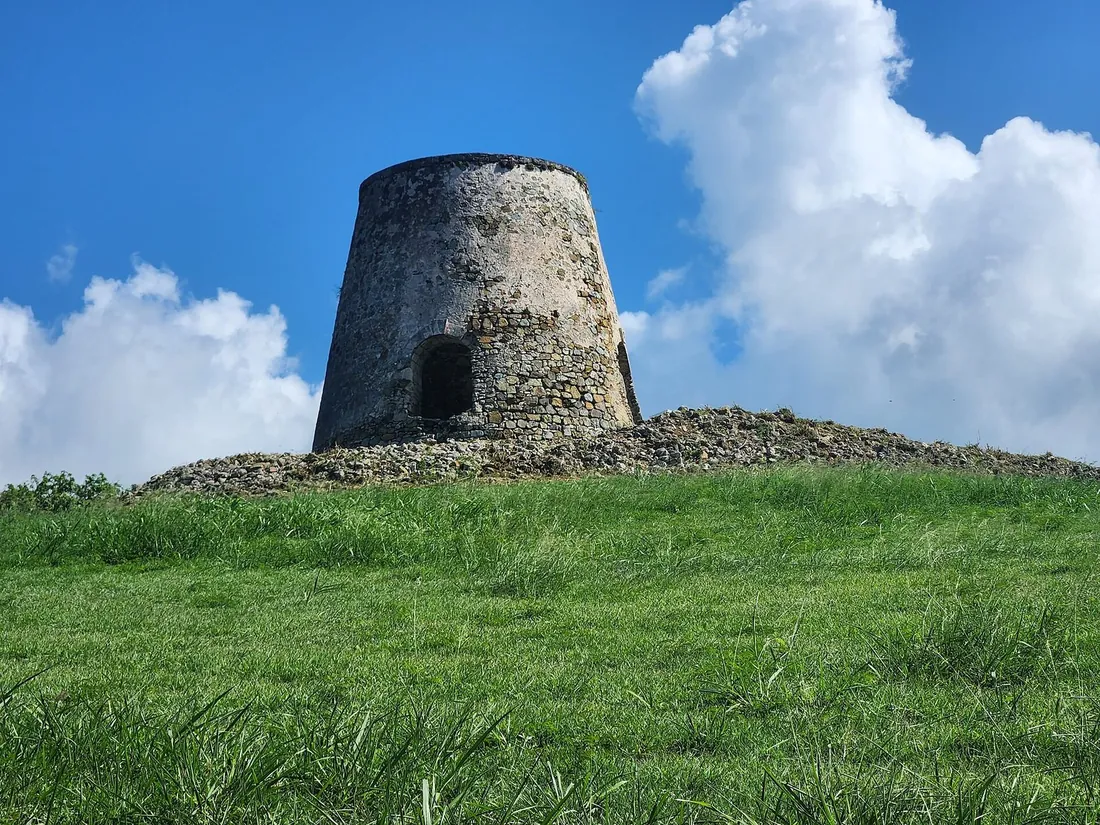
What makes the hour worthwhile has as much to do with history as with rum. Sugar built St. Croix. More than 150 mills once turned on this island, and the ruined stone windmills you pass on Centerline Road are what remains of that economy. Cruzan is the piece of it that never stopped running, which makes the tour a working museum as much as a brand experience. Our Cruzan distillery guide has the full visit details.
Captain Morgan, Sion Farm, and Leatherback Brewing
The rum trail does not end at Cruzan, and the other three stops are, if anything, better suited to rain because they keep you under a roof nearly the whole time.
The Captain Morgan Visitor Center sits mid-island near the airport corridor, home base for one of the biggest rum brands in the world. At last check it was open weekdays from 10 to 4 with a tasting session in the early afternoon, and the visitor center itself is a fully indoor, accessible building. It is the polished, exhibit-driven counterpart to Cruzan's working-factory feel, and doing both in one trip makes a good compare-and-contrast.
Sion Farm Distillery is the small-batch story. This is the home of Mutiny Island Vodka, distilled from breadfruit, the first vodka in the world made from it, and a gold-medal winner at the San Francisco World Spirits Competition in 2022. At last check the distillery offered free tours on weekdays from 11 to 5, with a bar and kitchen on site, which turns a rainy afternoon errand into a long, unhurried stop. The breadfruit angle is local: the trees grow all over the island, and the founder's pitch is that the Caribbean should be distilling its own crops. Details are in our Sion Farm guide.
Leatherback Brewing in Kingshill rounds out the set for anyone who would rather hold a beer. The brewery makes its beer with collected rainwater, which on the day in question feels almost like a joke written for you, and at last check it was open daily from 11:30 to 8 with an indoor taproom. On a weekday you can string all four stops together; on a weekend, check each schedule before you drive.
Fort Christiansvaern and the waterfront historic site
Christiansted National Historic Site is the roofed history option, and it is a strong one. Five harbor-front structures sit under National Park Service protection: the warehouse of the Danish West India and Guinea Company, the Danish Customs House, the Scale House, the Steeple Building, and Fort Christiansvaern itself. The fort, completed by 1740 in yellow Danish brick, is the centerpiece, and at last check it was open daily from 8:30 to 4:30, closing only for Thanksgiving and Christmas, with the park's welcome center and bookstore keeping shorter early-week hours. Check the NPS site for the current schedule before you go, and note that the parking lot clears at closing time.
A fort is a nearly ideal rainy-day building. The walls are massive, the rooms are vaulted and cool, and the covered battlements look out over the harbor, so a squall moving across the water becomes part of the exhibit. Give yourself an hour to walk the rooms, the ramparts, and the grounds between showers, more if the history takes hold.
And it tends to take hold, because the story here is bigger than the building. Christiansted was laid out in 1734 to serve as capital of the Danish West Indies, and the town's most famous clerk was a teenager named Alexander Hamilton, who worked for the export firm Beekman and Cruger a block away on Company Street before sailing for New York in 1772. Standing in the fort, you are at the administrative center of the world that shaped him. The fort guide covers the visit; the surrounding streets are the next section of this post.

Estate Whim Museum
Out west near Frederiksted, Estate Whim is the island's preserved sugar plantation: 12 acres of museum grounds in the care of the St. Croix Landmarks Society, holding a restored great house alongside a windmill and the factory buildings where cane was processed for two centuries. It is the single best place on St. Croix to understand what the sugar economy physically was, and what it cost the enslaved people who built and worked it.
Be clear-eyed about current conditions before you drive over. Since the 2017 hurricanes damaged several of the estate's buildings, the interior of the great house has stayed shut, and repairs have moved slowly; what you visit today is the grounds, the mill, the factory ruins, and the outbuildings and exhibits, viewing the great house from outside. At last check the museum was open Wednesdays and Saturdays from 10 to 3, plus cruise-ship days, and the Landmarks Society's research library and archives, a serious resource for Crucian genealogy, opens by appointment. Confirm the current schedule before you go; hours at small museums here shift with staffing and season.
On a showery day the estate works in intervals: covered exhibit spaces and eaves when the rain moves through, open lawn between the ruins when it passes. The stone of the mill dark with rain, with the light changing behind it, is also simply the best photograph on the property. Visit details are in the Estate Whim guide.
Apothecary Hall and the art museum in Frederiksted
Two smaller indoor stops deserve their own mentions. In Christiansted, Apothecary Hall preserves a Danish colonial pharmacy established in 1820, which stayed in service for more than 140 years before being restored as a museum in 1987. It is a single, dense, remarkable room: original cabinetry, apothecary bottles, drawers of dried medicines, the working furniture of nineteenth-century medicine. Access arrangements have varied over the years, from viewing windows to opened hours, so treat it as a bonus stop and check with the St. Croix Landmarks Society for the current setup rather than planning a day around it.
In Frederiksted, the Caribbean Museum Center for the Arts anchors Strand Street, and it is one of the easiest recommendations on the island: free admission, air conditioning, and rotating exhibitions of Caribbean artists that change every couple of months, so repeat visitors rarely see the same show twice. At last check it was open Tuesday through Saturday from 9 to 4, plus cruise days, with a museum shop and a calendar of classes and workshops. Pair it with a walk down the Frederiksted waterfront when the sky opens up, and see the museum guide for the longer writeup.
Christiansted under the galleries
Christiansted may be the only town in the Caribbean that was effectively built for rain. The Danish plan lined King Street and Company Street with arcaded stone sidewalks, called galleries, and those covered walks still connect most of the downtown core. You can spend two hours moving between shops, coffee, and lunch and barely feel a drop. The town has been called an African-Danish town, one of very few anywhere in the world, laid out to Danish designs by the enslaved Africans who built it, and the arcades are the feature you use most and think about least.
The shopping under them is local, led by the island's jewelers. Sonya Ltd on Company Street is the home of the original St. Croix hook bracelet, designed in the mid-1960s by Sonya Hough and now in its seventh decade; islanders read the hook's direction as a relationship status, toward the heart for taken, away for open. Crucian Gold on Strand Street is the Bishop family's studio, working gold, silver, and copper into designs that borrow from island history. ib designs, a Christiansted fixture for more than 20 years, is the home of the infinity band. None of this is cruise-port chain retail; you will likely meet the people who made what you buy.
Add a bookstore and you have a full wet afternoon. Undercover Books and Gifts in Gallows Bay keeps a covered reading spot with coffee and pastries at hand, and hosts signings and story hours through the year. Downtown, small galleries come and go with the seasons; at last check a newer art space had opened on Strand Street near Crucian Gold, and asking in any shop for what is currently showing will get you a better answer than any listing we could print here.
Take the long lunch
The old version of this article gave one piece of advice we will repeat outright: rainy weather is the excuse to stop rushing and eat properly. Christiansted's restaurant row sits on and around the boardwalk, much of it under cover, and a table with a view of rain sweeping the harbor is not a consolation prize. Frederiksted's dining scene clusters near the water on the west end and catches the clearing sky first when weather moves through. We keep current, verified restaurant lists in the Crucian food guide rather than here, because island restaurants change faster than journal posts do.
One category note: seek out the local plates while you have the time to linger. A leisurely lunch is the right occasion for stewed oxtail, fresh-caught wahoo or mahi, conch in butter sauce, or a proper saltfish plate, dishes that reward slowing down in a way a beach-bar burger does not.
If lunch alone will not fill the afternoon, two more indoor options exist at the resorts. The Buccaneer's pro shop runs an indoor golf simulator loaded, at last check, with more than 90 famous courses, a rainy-day answer for anyone who came to St. Croix partly for the real fairways. And the casino at Divi Carina Bay on the East End runs its gaming floor into the night, if that is your kind of weatherproofing.
Cook a Crucian meal at the villa
Now the option that outperforms every expectation: stay in and cook, and cook Crucian. A rainy afternoon is the built-in occasion to engage with one of the Caribbean's most distinct food traditions in the best-equipped kitchen you have access to on island, which is very likely your own villa's.
Start with the canon. Kallaloo is the West-African-rooted stew of greens, simmered down dark and rich, the dish with the deepest history on the island. Fish and fungi, the plate most often named as the Virgin Islands' national dish, pairs stewed fish with a firm cornmeal-and-okra polenta whose name is pronounced FOON-jee and has nothing to do with mushrooms. Johnnycakes are the fried dough of the islands, crisp outside and soft inside, eaten with everything. Add saltfish, peas and rice, and a pot of boiled provisions, the local word for starchy staples like breadfruit, cassava, and yams, and you have a full Crucian table. Our provisioning guide covers where to buy all of it, from supermarkets to fish landings, and the deeper food history lives in the guides section.
The villas hold up their end. These are full residential kitchens, and guests notice: a February 2026 review of The Cerulean called it the best-stocked kitchen the group had ever had in a rented house, and a Shoy's Beach House group last winter singled out the full kitchen and laundry as what made a five-suite villa feel like home. Cooking a big pot of kallaloo while rain works the roof, with the doors open to the smell of wet ground and the sea still in view, is the kind of trip memory that outlasts most beach days.
And if the group would rather eat that meal than cook it, private chefs work the island's villas year-round and a rainy evening books them solid last; arrange it a day or two ahead through the contacts in our guides rather than the day of.
Book a massage that comes to you
St. Croix has day spas and resort spas, but the villa-native version of a spa day is the mobile one: licensed massage therapists on the island travel to villas, condos, and even boats, bringing the table, the linens, and the music with them. At last check, established operators were offering Swedish, deep-tissue, and couples sessions on villa decks and in villa living rooms across the island, with same-day availability outside peak season. Names, contacts, and the current landscape are kept up to date in our spa and wellness guide, because this is a category where practitioners come and go.
The logistics are easy from the guest side. You need a quiet room or a covered outdoor space, which every villa in our collection has, and about 15 minutes of setup on either end. Rain improves the experience rather than spoiling it; a massage under a gallery roof with a shower drumming past is the single most relaxing hour this island sells. Book a day ahead when you see rain in the forecast, since you will not be the only one with the idea.
Head for the rainforest when it stops
Here is the counterintuitive move that separates repeat visitors from first-timers: when the rain ends, do not race back to the beach. Drive west into the rainforest, because the hour after rain is the best hour that forest has.
The route is Mahogany Road, Route 76, a paved lane that tunnels under mahogany, kapok, and turpentine trees between Centerline Road and the west coast. After rain the canopy drips, the air smells like turned earth, every green in the forest goes a shade deeper, and the seasonal guts, the island word for the steep stream ravines, actually run with water, which they rarely do in the dry months. The 1926 Creque Dam sits in the forest as a moody stone relic of the island's water infrastructure, at its most photogenic exactly when everything is wet. Our rainforest guide maps the drive.
Two stops fill it out. Mt. Pellier Domino Club, in the forest since 1971, is the roadside bar famous for its beer-drinking pigs and its house mamawanna; it is a roof, a cold drink, and a story to take home, in exactly that order. And for hikers, the Caledonia Valley holds the island's only natural waterfall, a seasonal one that runs precisely because of days like this. Treat it with respect: it is a guided-only trek of around two and a half hours round trip with wading and scrambling, and no one should ever be in a gut while heavy rain is falling or forecast, because they flash. Go with a guide a day or two after the weather, when the falls are running and the sky is done.
Walk the botanical garden between showers
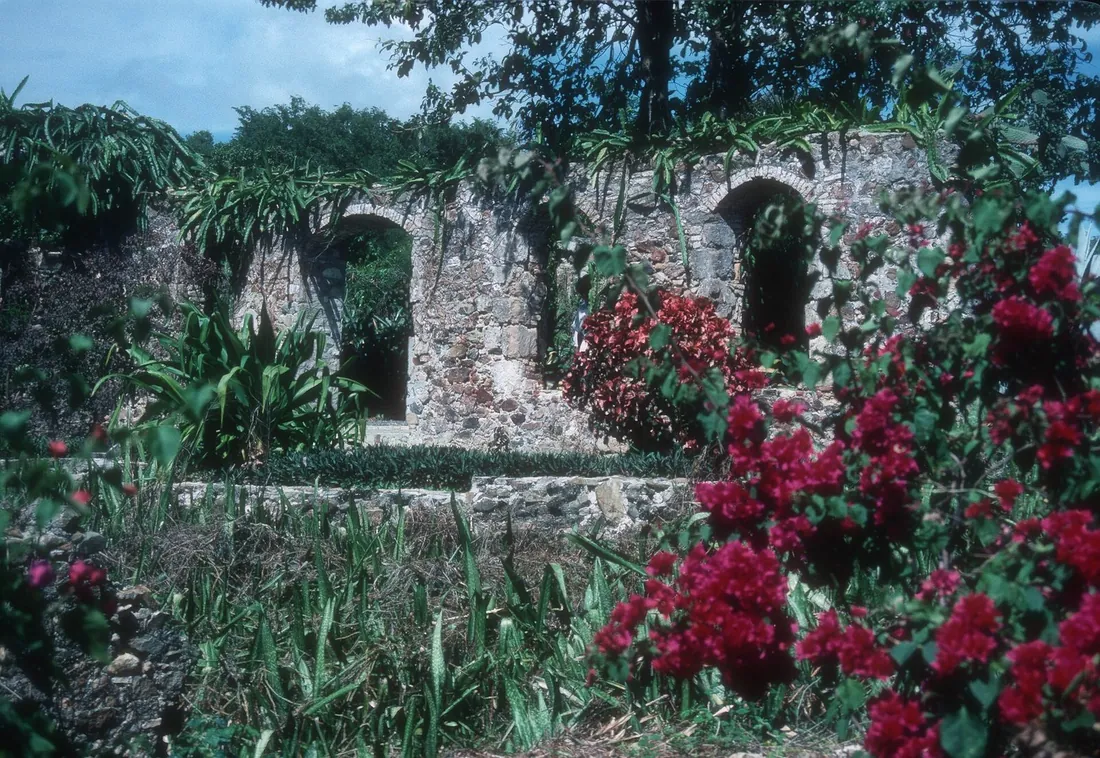
St. George Village Botanical Garden, mid-island off Centerline Road, is the gentler version of the same idea. Sixteen acres of gardens, more than 1,500 plant species from cactus to orchids, grown up through the ruins of a Danish-era sugar plantation village, with the restored Great Hall, workers' cottages, factory walls, and an old Danish cemetery woven between the beds. It is the rare attraction that rain actively improves: the crowds thin, the stone darkens, the orchids and ferns look the way they are supposed to look, and the covered spaces are never more than a short walk away when the next cell moves through.
Plan on one to two unhurried hours, carry the umbrella the Park Service already told you to pack, and check the garden's website for current hours and event days before you drive over, since the garden also hosts weddings and fairs that change public access. The full visit writeup is in our botanical garden guide. Pairing the garden with Estate Whim makes a natural half-day of mid-island history in any weather, wet or dry.
Watch the storm from a covered deck
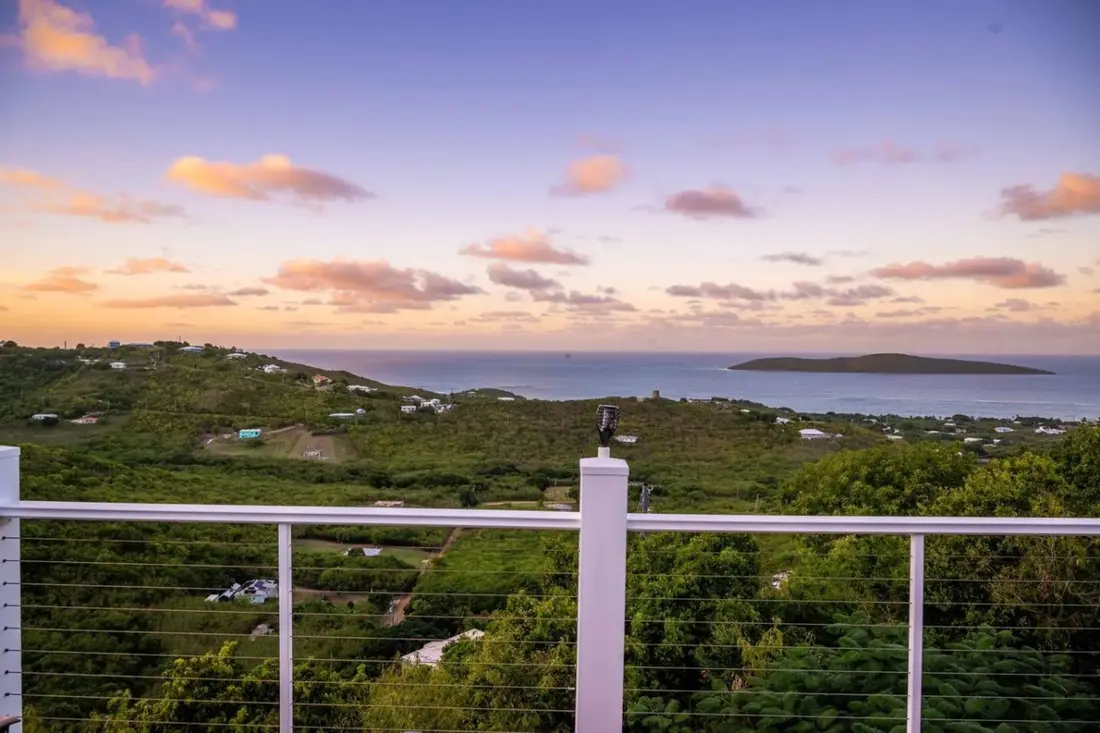
We want to make the case for the option most rainy-day lists are embarrassed to print: do nothing, deliberately, in a good seat. Villa architecture on St. Croix is built around covered galleries and deep verandas because islanders have always lived with fast weather, and those spaces turn a squall into theater. From an east-facing deck you can watch a shower stand up over the channel in a gray column, drag its curtain across Buck Island, and slide off the edge of the world, with sun on the water in front of it and behind it. The whole show takes twenty minutes and no two are alike.
The supporting program writes itself: coffee or a Cruzan pour depending on the hour, the book you packed and have not opened, dominoes if the villa has a set, and the group all in one room for once instead of scattered across a beach. Guests tell us versions of this every year, that the afternoon the weather came through was the afternoon the trip slowed down to the speed they had wanted all along. The sea here stays warm and swimmable year-round, tomorrow is statistically on your side, and nothing on this island requires you to earn it by staying busy.
What to skip when it rains
A short list of things that do not belong in the wet-day plan, because a useful playbook includes the noes.
- The Annaly Bay tide pools. The hike crosses rainforest terrain and ends at pools that are only safe at low tide in calm seas. Rain adds slick rock and runoff, and north-shore swell can follow weather; after a wet stretch, give it a day or two and check conditions. The tide pools guide covers how to do it right.
- The unpaved Scenic Road. The dirt ridge road through the northwest hills turns greasy in rain, and a rental sedan has no business on it wet. Save the 4x4 adventure for a dry day.
- Any gut, anywhere. The stream ravines flash during and after heavy rain. Guided Caledonia hikes go after weather clears, never during it, and canyon-bottom photo stops are the same call.
- Fast driving. The island's roads are narrow, cambered, and driven on the left. Wet, they demand the slower speed you should be doing anyway, plus a margin for standing water on Centerline.
- Writing off the boats too early. Charter captains here read weather for a living and reschedule around cells rather than canceling whole days. If you hold a Buck Island booking, call the operator before assuming the trip is dead; it usually is not.
Questions guests ask
Does it rain every day in St. Croix?
No. Even in the wet season, rain typically arrives as brief showers between stretches of sun rather than as all-day events. The dry season, January through April, can run weeks between meaningful rain, with March the driest month. The wettest stretch is September through November, which carries roughly 40 percent of the year's total, and even those months average a few inches spread across many short bursts. Plan around showers, never around washouts.
What is the rainiest month in St. Croix?
September, with October and November close behind. September averages around six inches of rain, most of it in passing downpours, and the three fall months together account for about 40 percent of annual rainfall. The tradeoff is real: those are also the greenest, quietest, best-value months on the villa calendar, and most fall days still include long sunny stretches. If you book the fall, pack for showers and read up on hurricane-season logistics separately, since tracked storms and daily showers are different subjects.
Does one end of the island really get less rain?
Yes, and by a wide margin. The East End receives roughly 25 to 38 inches per year while the northwest rainforest hills get more than 50, because the high ground around Mount Eagle wrings moisture out of the trade winds before it reaches the dry side. On a showery day, checking the radar and driving east is a legitimate strategy; villas on the East End and near Christiansted sit on the statistically sunnier half of the island.
Can you still swim when it rains?
Usually, with judgment. The sea stays warm year-round and a light shower changes nothing about a calm bay. What should keep you out of the water is lightning, rough surf, or murky runoff near gut mouths and beaches after heavy rain, when visibility drops and currents get unpredictable. Snorkelers should wait for the water to clear, which typically takes hours rather than days after an ordinary shower. When in doubt, ask someone local; on this island somebody at the beach always knows.
Should I pack rain gear for a St. Croix trip?
Pack small and soft: a compact umbrella or a light packable shell, and sandals or shoes that can get wet without complaint. Skip the serious rain jacket; showers here are warm, brief, and usually easier to wait out under a roof than to march through. The Park Service's own advice for visitors to Christiansted is simply to keep an umbrella handy year-round, and that is the whole kit. A dry bag for phones on boat days is the one addition worth its space.
Will rain cancel my Buck Island or catamaran trip?
Not automatically. Operators watch the radar and routinely run trips between cells, shift departure times, or reschedule to the next day rather than scrapping bookings outright, and a brief shower mid-sail is part of the experience rather than the end of it. Sustained wind and rough seas are what actually cancel boats, and captains make that call early and communicate it. If the sky looks doubtful on your trip day, call the operator before you decide anything on your own.
Where to stay for all of this
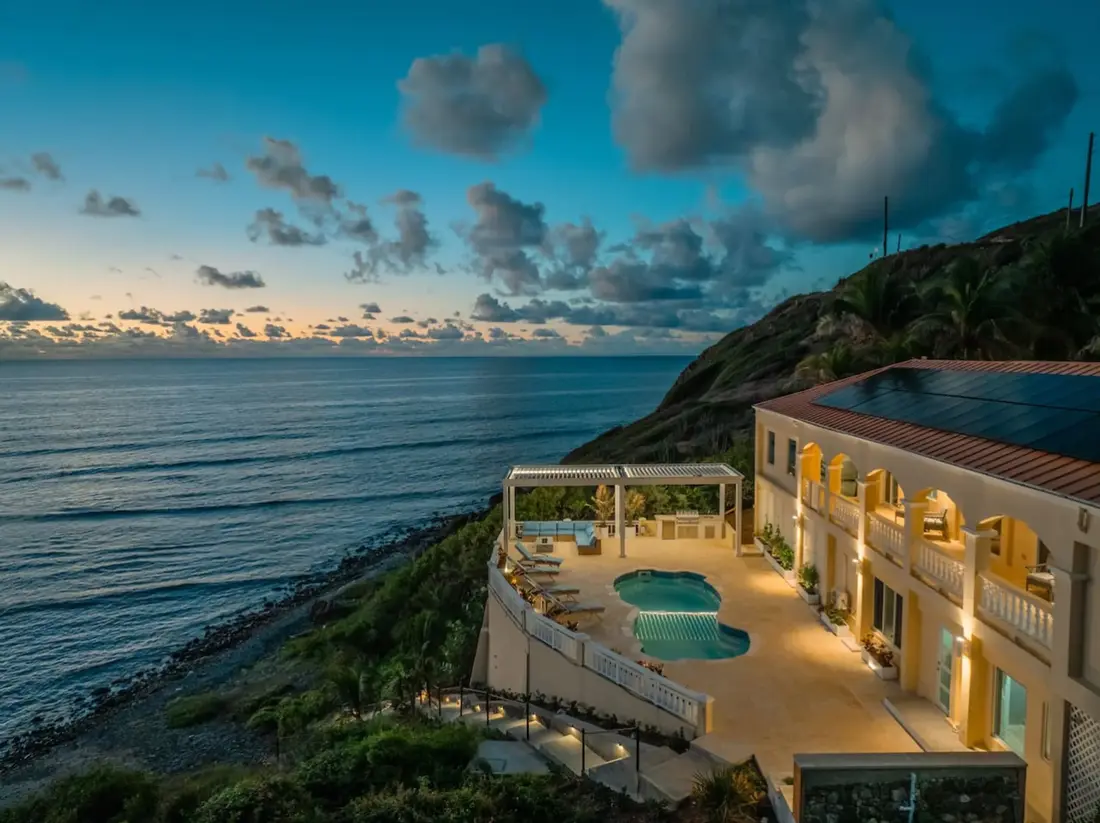
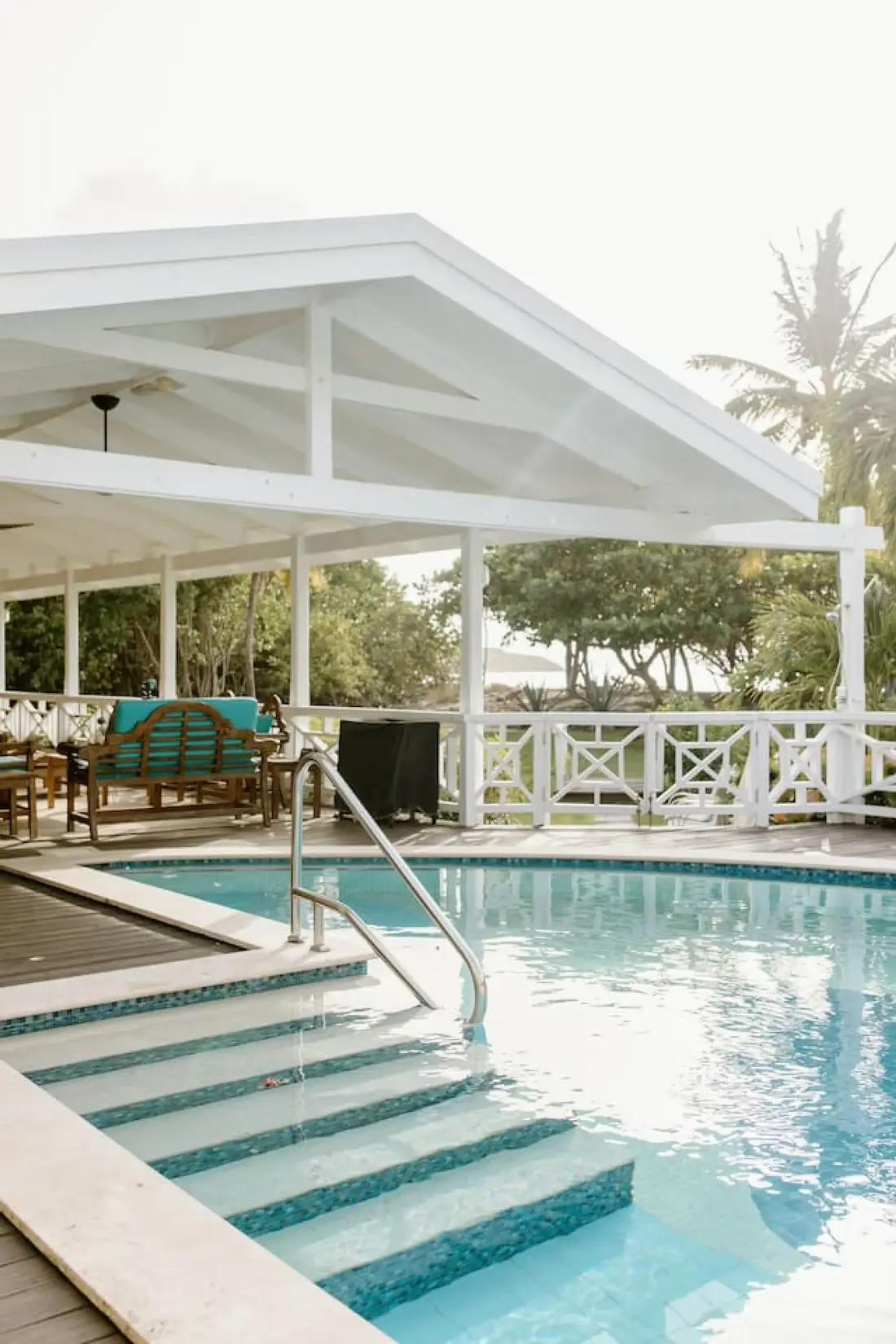
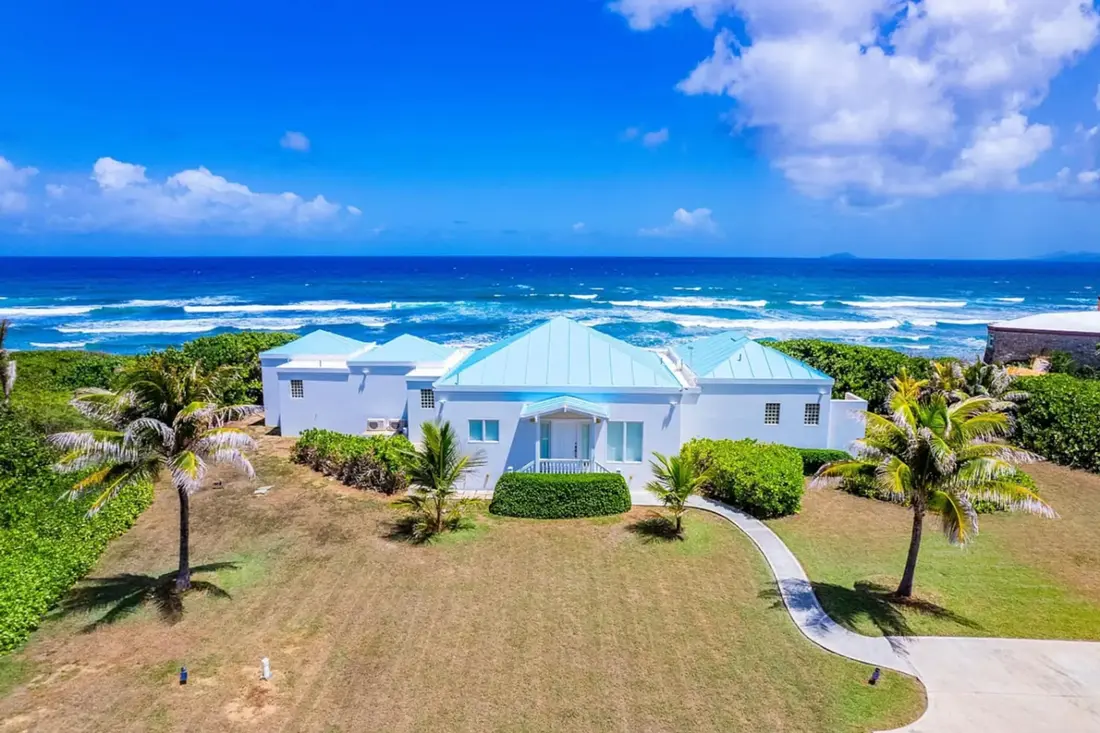
Every option in this post works better from a villa, because the villa is the rainy-day plan that requires no driving at all: the full kitchen for the kallaloo experiment, the covered gallery for the massage and the storm-watching, the laundry for the wet towels, and the space for a group to spread out until the sun returns. The Cerulean faces Buck Island from the East End, the dry side of the island, with the kitchen that guests keep writing home about. Shoy's Beach House puts five suites directly on a calm crescent of beach east of Christiansted, ten minutes from the fort and the arcades. The rest of the beachfront collection covers the island from the East End to the west. Rain or shine, they are locally managed by people who live here, which is exactly who you want answering the phone when the sky goes gray.
Sources
Written from official and first-party sources, checked August 2026. Hours, prices and event dates change — confirm before you go.