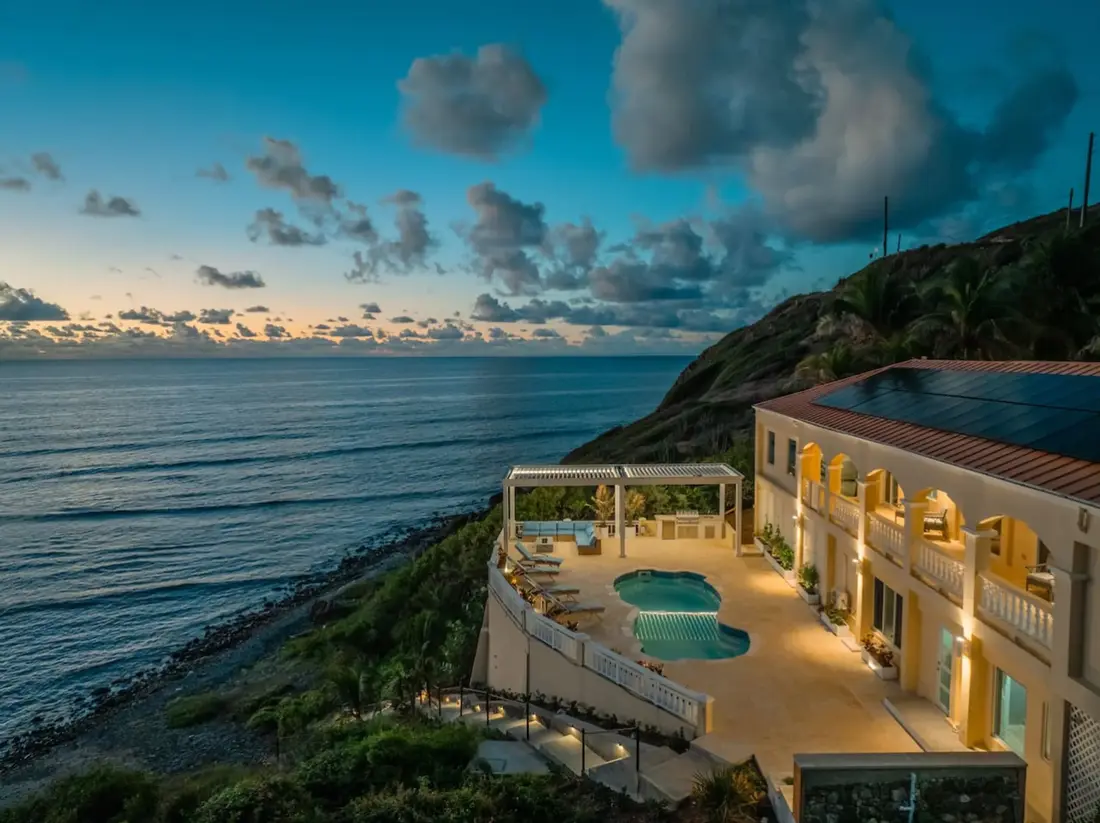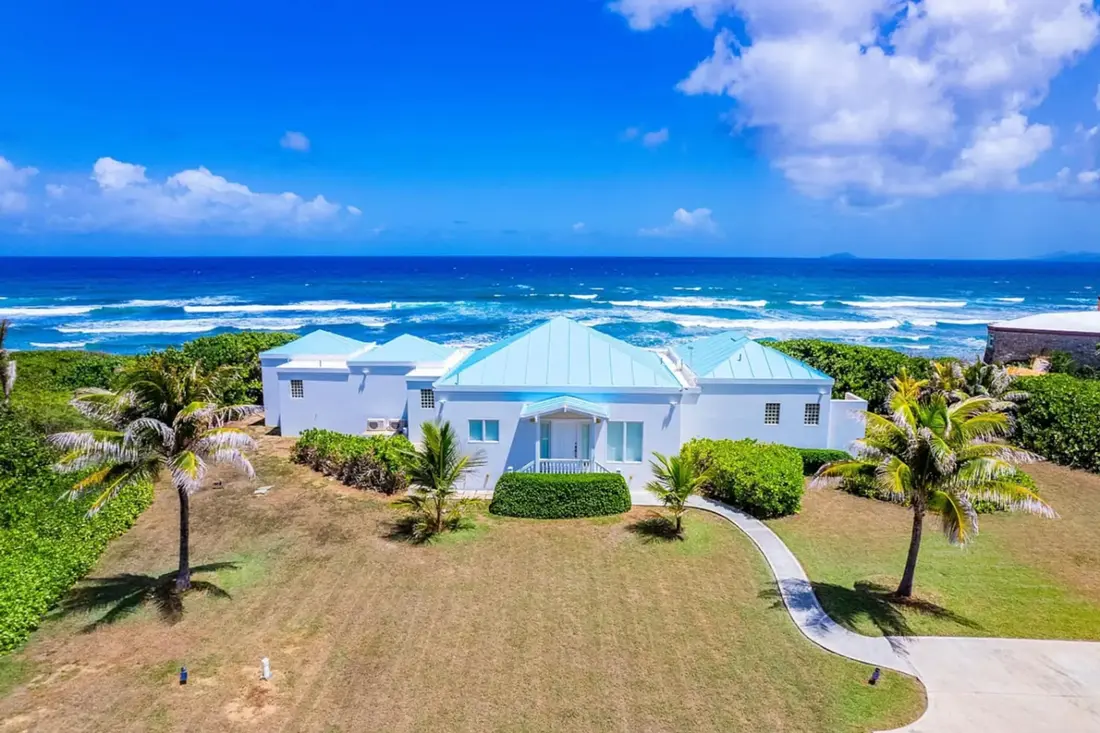
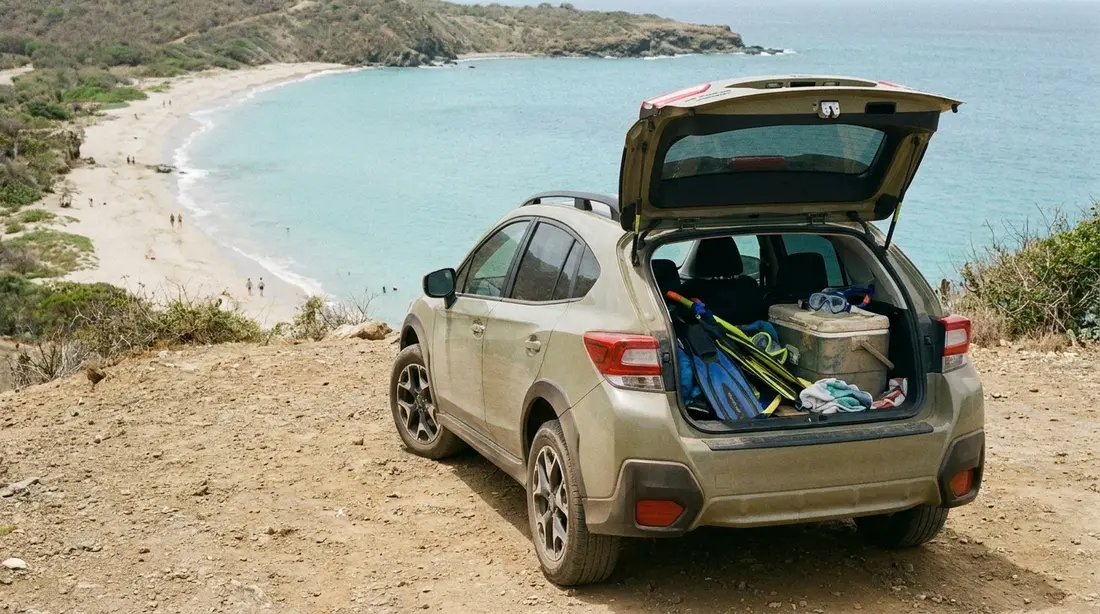
The most common pre-trip question we get is also the easiest one to answer badly. This post answers it properly: when you need a rental car on St. Croix, when you do not, what taxis cost under the commission rate sheet, what the bus actually is, where four-wheel drive matters, and how the decision changes depending on where on the island you sleep.
The short version has not changed since the first version of this article ran on our old website: for most visitors, yes, rent the car. But "most visitors" is doing a lot of work in that sentence, and the travelers who should skip the car deserve a real answer too, along with the numbers that make the decision instead of a vague push toward the rental counter. We rent villas and condos, and a car makes almost every one of our homes work better. That is a bias worth naming up front. It is also why we know the details below cold, because we answer this question for arriving guests every single week.
Here is the frame for everything that follows. St. Croix is the largest of the U.S. Virgin Islands, about 22 miles end to end and about 7 miles at its widest, with two towns on opposite coasts and its best beaches, reefs, trails, and restaurants scattered across the whole map. There is no Uber and no Lyft anywhere in the territory. Taxis exist and work fine for point-to-point trips, at set per-person rates. A public bus runs between the towns on a schedule best described as occasional. Everything else is your own two feet or your own set of keys. That is the entire on-island menu, and once you see it laid out, the decision mostly makes itself. Reaching the island in the first place, and hopping to St. Thomas by seaplane, small plane, or ferry, is a separate subject with its own moving parts; our getting around page covers all of that, and this post stays on the ground.
The short answer
Rent the car if any of the following is true: your home is outside walking distance of downtown Christiansted or Frederiksted, you plan to visit more than two or three beaches, you want to see both ends of the island, you are traveling as a family or a group, or your trip is longer than a long weekend. That covers, by our estimate, the large majority of people who stay with us.
Skip the car if all of the following are true: you are staying in or right beside a town, your plans center on boat trips and in-town restaurants instead of beach-hopping, your party is small, and your stay is short. That is a real category of traveler, and it gets a full section below, because a carless St. Croix trip can be done well. It just has to be designed on purpose.
What does not work is the middle path people sometimes imagine from home: staying somewhere quiet and remote, then improvising rides day by day. On islands with rideshare apps, that plan limps along. Here it fails, for reasons the next two sections make concrete.
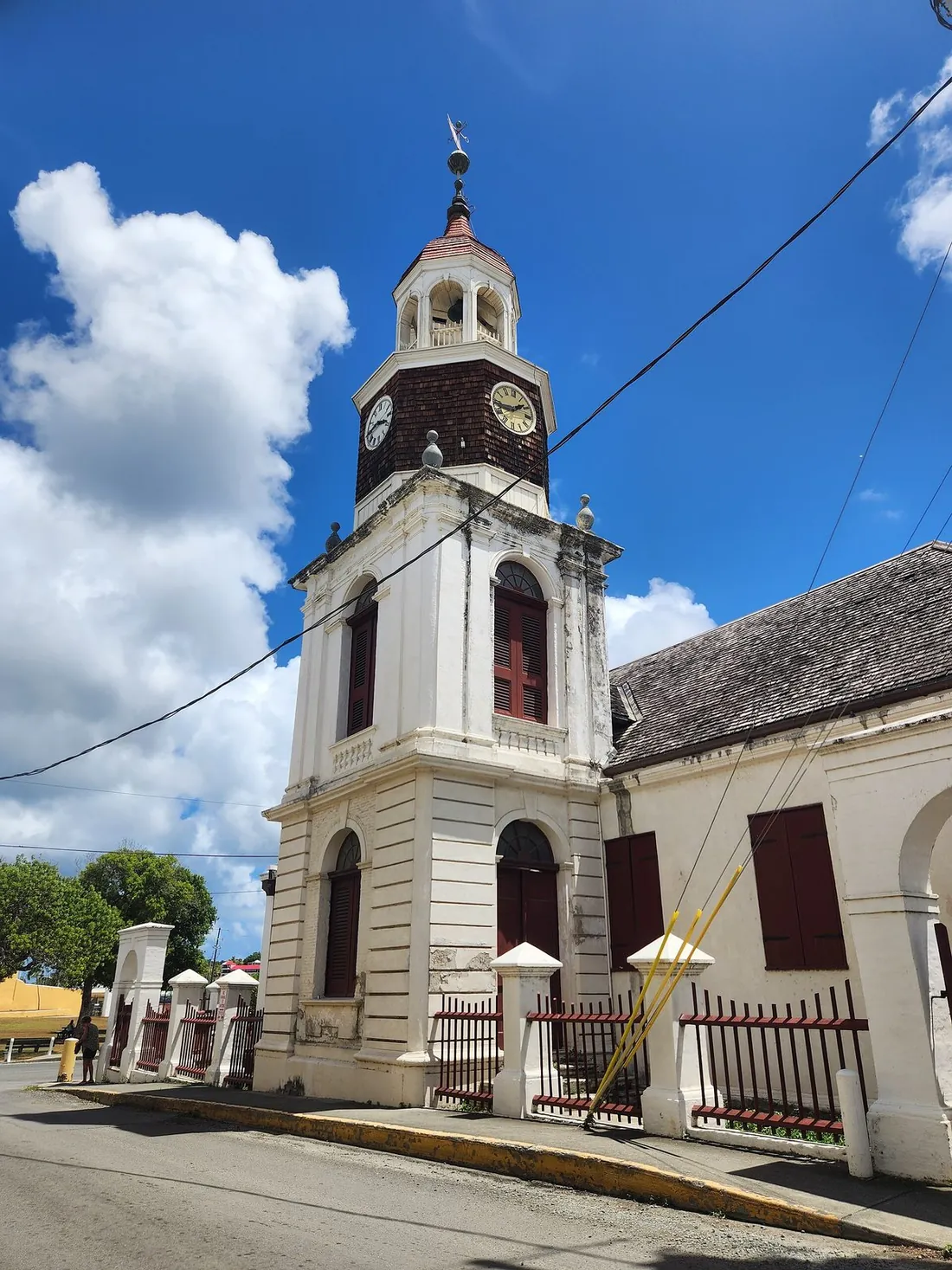
How far apart everything is
Distances on St. Croix are small in miles and larger in minutes. Roads are mostly two-lane, speed limits are low, and the routes bend around hills, so a trip that looks like ten minutes on a map takes twenty behind the wheel. The times below are approximate, drawn from our own driving and the usual mapping tools, and they assume normal daytime traffic. Add time for the morning school run around mid-island and for cruise days in Frederiksted.
| Trip | Approximate drive | Notes |
|---|---|---|
| Airport to Christiansted | 15–25 min | Mid-island to the northeast coast |
| Airport to Frederiksted | ~15 min | Shortest airport run on the island |
| Airport to the East End | 35–45 min | Past Christiansted, then East End Road |
| Airport to Cane Bay | ~30 min | Over the hills to the North Shore |
| Christiansted to Frederiksted | ~45 min | Centerline Road, town to town |
| Christiansted to Point Udall | 25–30 min | East End Road to the easternmost point of the U.S. |
| Christiansted to Cane Bay | 25–30 min | Route 80 along the north shore |
| Frederiksted to Cane Bay | ~25 min | North Shore Road past the rainforest hills |
| Frederiksted to Point Udall | ~1 hour | The full length of the island |
Read that table the way a taxi meter would. A week of beach mornings, dinner runs, and one or two full-island days means ten to twenty of those trips. In a rental car, each one costs a few dollars of gas. By taxi, each one costs a per-person fare in each direction, arranged in advance, at the driver's schedule as much as yours. The math section on taxis below puts numbers on that, but the shape of the problem is already visible: the island is spread out, and the spread is exactly what you came for. The snorkeling is at Cane Bay on the north shore. The sunset is off Frederiksted in the west. The sunrise is at Point Udall in the east. The restaurants cluster in Christiansted. No one place has all of it.
No Uber, no Lyft, and what exists instead
Neither Uber nor Lyft operates anywhere in the U.S. Virgin Islands. This is the single most important fact in this post, because mainland instincts are built around the assumption that a ride is always eight minutes away. On St. Croix that assumption is false at noon and very false at 10 p.m.
What exists instead is a small local layer. A homegrown app-based service called VI Hail has operated in the territory, and a handful of independent drivers such as Owen's Taxi Services take pre-booked airport runs and errands. These are real and useful, and we point guests to them for specific jobs like an early airport drop-off. They are also small operations on a small island. Coverage is thin at night, cars are few, and none of it resembles on-demand rideshare as mainland visitors know it. Treat anything app-shaped here as a pre-arranged ride with extra steps, and confirm it the day before, and you will be fine. Count on hailing something spontaneously from a villa on a residential road and you will spend part of your vacation standing in a driveway making phone calls.
How taxis work here
St. Croix taxis are unmetered. Fares are set per person, by destination, under a rate sheet approved through the V.I. Taxi Commission, and drivers can quote you the number before you get in. That is the system working as designed: confirm the fare first, then ride. Licensed taxis carry a dome light and TP plates, vans meet arriving flights at the airport, and stands operate in both towns, including near Government House on King Street in Christiansted and near Fort Frederik in Frederiksted.
The published rate sheet, as we last checked it, prices the airport-to-Christiansted run at about $16 per person for one or two riders, dropping to about $9 per person for three or more. Airport to Frederiksted runs about $12 and $6 on the same structure, and the full cross-island trip from Christiansted to Frederiksted about $24 for one or two riders. Luggage adds a couple of dollars per bag. Rates change from time to time, so treat these as the shape of the pricing, and confirm the current number with your driver.
Do that arithmetic for a family of four staying east of Christiansted. The airport pickup is manageable. But every beach day, every dinner in town, every grocery run is four fares each way, arranged by phone, both directions. Over a week that adds up to more than most rental cars cost, with none of the freedom. This is the calculation behind the standing advice, and it is why the old version of this article said what it said: taxis on St. Croix are a fine tool for airport transfers and single outings, and a poor foundation for an entire week.
One taxi product deserves a better reputation among villa guests: the island tour. Drivers run set sightseeing tours, roughly $100 for one to four passengers for a three-hour circuit at last published rates, or by the hour with sedan, van, and open-air safari options. On a first day, before you have made peace with driving on the left, a driver-narrated loop of the island is a good way to get your bearings, and the drivers know their history. Our short taxis and getting around guide covers the quick-reference version of all this.
When you can skip the car
Now the case for going carless, made properly, because it is real. The trick is that it only works from one kind of address: in or beside a walkable town, which on St. Croix effectively means Christiansted.
Picture the week. You stay in a condo near the harbor, somewhere like Sunset Oasis on the beach just outside town or Caribbean Blue Hideaway in the Christiansted area. A taxi van brings you in from the airport for the flat published fare. For the rest of the week, the boardwalk is your transportation hub. The Buck Island snorkel boats leave from it. The seaplane to St. Thomas leaves from the harbor a few blocks away, if a day trip tempts you. Forty-plus restaurants, the fort, the arcaded shopping streets, and the nightly evening scene are all within a ten-minute walk. On day three or four, a taxi tour or a pre-booked driver takes you west for a Frederiksted afternoon and a Rainbow Beach sunset. You come home having spent a fraction of a rental car's cost, having never once thought about which side of the road you were on.
That trip works because every day leans on something that comes to you: a boat, a boardwalk, a booked driver. Two or three boat days are the backbone of it, and the boats are a highlight of any St. Croix trip anyway; our experiences page lists what leaves from the wharf. The carless week fails the moment you add ambitions it cannot carry. If the plan includes Cane Bay snorkeling on a whim, a rainforest drive, Point Udall at sunrise, or comparing five beaches to find your favorite, you are describing a rental-car trip. Book accordingly.
A second, smaller carless case: travelers on a two- or three-night stopover who mostly want rest, a pool, and a couple of dinners. At that trip length the car barely earns its keep even from a quieter address, and a pair of pre-arranged taxi rides covers the whole itinerary. Beyond three nights, the balance tips fast.

The VITRAN bus
St. Croix has public transit, and it deserves an accurate description. VITRAN, the territory's public bus system, runs routes 27 and 28 between Christiansted and Frederiksted by way of mid-island stops. The fare is a dollar or two, exact change into the box, and service runs from early morning to early evening on weekdays. At last check a single bus was covering the cross-island route, which puts the practical frequency somewhere around every couple of hours, and schedules shift; the Department of Public Works publishes current route information.
What that means for a visitor: VITRAN is a legitimate way to make one unhurried cross-island trip on a flexible day, and residents use it daily for exactly that kind of travel. It does not go to Cane Bay, Point Udall, or the beaches, it does not run at dinner time, and it cannot anchor a vacation schedule. We mention it because an accurate map of your options should include all of them, and because the question comes up. No guest of ours has ever built a week around it, and we do not suggest starting.
Driving on the left, briefly
The rule that gives first-timers pause: the U.S. Virgin Islands drive on the left side of the road, and they do it in ordinary American cars with the steering wheel on the left. It is the only place under the U.S. flag where this is true, a leftover from the Danish era that the islands simply kept.
We keep a full guide to driving on the left with the habits that make it easy, so this post will make only the argument that matters for the rental decision: this should not be the reason you skip the car. The adjustment is real and it is also brief. The roads are slow, two-lane, and forgiving, local drivers are famously courteous about letting people merge and pull out, and the low speed limits mean mistakes happen at 25 mph rather than 60. Nearly every guest reports the same arc: intense concentration for the first drive, occasional self-reminders on day two, and by day three it feels normal. If it still worries you, book a taxi island tour for day one and pick the rental up on day two, once you have watched someone else do it for three hours. Several agencies will deliver the car to your villa, which solves the logistics of that plan neatly.
Where four-wheel drive matters
Most of St. Croix is paved and fine for an ordinary sedan, and most guests never need anything more. The exceptions are few enough to list.
The famous one is the back road toward Annaly Bay and the tide pools on the northwest coast. That route is a rutted dirt track with steep grades, and the local 4x4 tour operators who run it treat it as the attraction it is. It is no place for a street car, and rental agreements commonly exclude unpaved roads entirely, which makes the decision for you. If the tide pools are on your list, hike in from the Carambola trailhead, a roughly five-mile round trip, or book the 4x4 tour and let someone else's truck take the abuse. Either way, calm seas only; the pools are dangerous in swell.
Beyond that: the unpaved Scenic Road along the island's western spine calls for high clearance and a rental contract that permits it, a few driveways on north-shore and East End hillsides are steep enough that guests appreciate the extra grip, and after heavy rain some side roads develop potholes that a low sedan feels keenly. None of our homes require four-wheel drive to reach; where a driveway is steep, we tell guests before arrival. The practical advice is simple. If your week includes rough-road ambitions, or you would just rather sit higher over the potholes, book an SUV or Jeep and read the rental agreement's road restrictions before you sign. If your week is beaches, towns, and restaurants, a sedan does the whole job.
Book the car when you book the house
Here is the mistake that produces the most panicked pre-arrival emails, and it has nothing to do with choosing wrong. It is booking late. St. Croix's rental fleet is finite in a way mainland travelers do not anticipate. Every car on the island is already on the island; when a peak week sells out, no overflow inventory drives in from the next county, because there is no next county. It is 40 miles of open water in every direction.
In the high season, from the December holidays through April, and around event weeks like the Crucian Christmas Festival and the St. Croix Ironman, the fleets sell out. Guests who wait until a month before a February trip sometimes find nothing available at any price, or nothing but the last few premium SUVs. The fix costs nothing: reserve the car the same day you book your home. Most reservations are cancelable, so the early booking is a free option. This is the single most repeated piece of logistics advice we give, and every winter someone learns it the expensive way. Book the flight, book the house, book the car, in that order, on more or less the same afternoon. Our FAQ page says the same thing, because guests keep asking after it is too late.
Local agencies and the majors
The island's rental market splits into two camps, and the split is worth understanding because it works differently from a mainland airport.
The majors are here: Budget and Hertz operate at the airport, with Budget also keeping in-town locations, and Avis has operated on the field as well. They work the way they work everywhere, points programs and familiar counters included. Alongside them runs something the mainland has mostly lost: a bench of long-established local independents. Centerline Car Rentals has served the USVI since 1990 and runs airport and in-town locations with a fleet from sedans to vans. Judi of Croix, family-run since 1984, delivers cars anywhere on the island and picks them up again at the end, with unlimited mileage. Olympic Rent-A-Car, on island since the early 1970s, and Skyline Car Rental round out the independents, several offering free airport or lodging delivery. All of these were operating as of our last check; island businesses change, so confirm when you book.
The local agencies' delivery habit deserves emphasis because it changes trip design. A car delivered to your villa on the morning of day two, after a taxi transfer and a first-night dinner in town, is a pleasant way to start a trip: no counter line after a travel day, no first drive on the left in airport traffic at dusk. The independents also know their island. When a Judi of Croix or Centerline agent tells you a given car will or will not like your plans, believe them. Prices between the camps are usually comparable; inventory and service style are the real differences. Our renting a car guide keeps the current at-a-glance list.
Gas, roads, and driving after dark
Three practical realities round out the driving picture, none of them dealbreakers, all of them worth knowing in advance.
Fuel is easy mid-island and thinner at the edges. Stations cluster around Christiansted, the mid-island corridor along Centerline Road, and Frederiksted, and the East End has had a station at Ziggy's Island Market, with another near Gallows Bay east of Christiansted. You will never be dangerously far from a pump on a 22-mile island, but the habit that serves you is filling up mid-island before a far-end day. Note that a week of enthusiastic exploring burns surprisingly little fuel; the whole island fits in a tank or two.
The roads are country roads. The main routes are paved and generally good; side roads carry potholes, especially after rain, and local drivers weave around the known ones with the casual precision of long practice. Follow their lines with your own eyes engaged. Watch for wildlife with no road sense: chickens everywhere, and the occasional deer, goat, or cow on rural stretches.
Night driving is the one that surprises people. Outside the towns, St. Croix's roads are largely unlit, and rural stretches are dark, the same darkness that makes the stargazing from an East End deck so good. Combine dark roads, potholes, wandering animals, and left-side driving, and the sensible policy writes itself: do your unfamiliar long drives in daylight, keep night trips to routes you have already driven, and slow down after dark. This is not a reason to fear the island. It is a reason to schedule the rainforest drive for the afternoon rather than after dinner. For a full-island route worth a daylight day, see drive around the island.
Parking in the two towns
The question behind the question, for anyone imagining mainland-city parking misery: parking on St. Croix is easy everywhere except the six blocks of downtown Christiansted, and even there it is merely a town-scale puzzle, solved with a few facts.
In Christiansted, street parking on the shopping streets is time-limited and enforced, so treat Company and Queen Cross Streets as drop-off territory, and use the lots for anything longer. The lot beside Fort Christiansvaern on the east side of downtown has charged about $10 a day at last check, card only, with a hard afternoon closing tied to the historic site's hours, so it suits a daytime visit and not a long dinner. The government lot near King Cross and Strand Streets has run about a dollar an hour with a daily cap, and a small free lot has operated near the seaplane terminal on the west side of downtown. Evenings are simpler than that list sounds; after the lots and shops close, street spaces open up within a block or two of the boardwalk restaurants. Give yourself five spare minutes and it works out.
Frederiksted is easy. Street and waterfront parking near the pier and Fort Frederik generally absorbs everyone except on cruise-ship days, when the blocks nearest the pier fill and you park a few streets deeper and walk. Beaches island-wide have sand lots or roadside pull-offs, free and informal. Leave nothing visible in a parked car anywhere, the standard advice on any island, and parking will never once be the story of your day.
Car or no car, by where you stay
Because the real answer to this post's question is an address, here is the decision mapped onto the island's areas, with our homes as the worked examples. The full lodging-side version of this logic lives in our post on where to stay in St. Croix; this is the transportation cut.
On the East End, the car is not a judgment call. The area's entire appeal is spacious quiet at the end of a coastal road, with Point Udall up the way and Buck Island filling the view. There is no town, and dinners, groceries, and boat docks are all a drive. Guests at Dragonfly Villa, Moko Vista, The Cerulean, or The Buck Island Overlook should have keys in hand from day one, and many choose an SUV for the hills. The same is true of the beachfront homes east of Christiansted; Shoy's Beach House sits in a gated residential neighborhood a ten-minute drive from the boardwalk, which is exactly the point of it.
In and around Christiansted, the car becomes a genuine choice. The condos near town are the one place on the island where the carless week described earlier actually works, and even car-renting guests here use it less than they expected, walking to dinner and driving only for beach days. If you want the option of skipping the rental, book this area; browse the full collection and check each home's distance to downtown.
On the west end, rent the car. Frederiksted itself is walkable and the beaches north and south of town are close, so a guest at Sunset Sea-Clusion could cover several good days within a short radius. But the west end sits an hour from the East End and 45 minutes from Christiansted's restaurant row, and a carless week out west means either a very local trip or a large taxi budget. West-end guests drive more miles than anyone, and the drives are good ones, over the rainforest hills and along the north shore.
Questions guests ask
Is there Uber or Lyft on St. Croix?
No. Neither company operates anywhere in the U.S. Virgin Islands, and that has been true for years, so do not build any part of your plan around rideshare. The alternatives are set-rate taxis, a small pre-booked local service or two, the VITRAN bus between the towns, and rental cars. If your lodging is outside walking distance of a town, the rental car is the plan; if you are staying in Christiansted, taxis plus walking can cover a short, town-centered trip.
How much is a taxi from the St. Croix airport?
Fares are set per person by destination under the territory's taxi commission rather than by meter. At last published rates, the airport run cost about $16 per person to Christiansted for one or two riders and about $12 to Frederiksted, with lower per-person rates for three or more and a small charge per bag. Confirm the fare with the driver before you load luggage, which is normal practice here, not haggling. Vans meet arriving flights, so no advance booking is needed for the arrival ride.
Can I rent a car for just part of my stay?
Yes, and it is a popular pattern. Guests staying near Christiansted often take a taxi from the airport, spend their first days on foot and on boats, then have a car delivered for the back half of the week to cover Cane Bay, the rainforest, and Point Udall. Several local agencies deliver and collect cars anywhere on the island, which makes the split-week painless. In high season, reserve the partial-week car as early as you would a full-week one, since it comes from the same finite fleet.
Is driving on the left hard?
It is easier than it sounds from home. You drive an ordinary American car, so the driver still sits on the left; only the side of the road changes. Speeds are low, roads are two-lane, and local traffic is patient. Most guests say the strangeness fades within a day or two. The moments that deserve real attention are turns, the first drive out of the airport, and quiet roads where old instincts can drift you rightward. If it worries you, do a taxi island tour first and start driving on day two.
Do I need a Jeep or 4WD on St. Croix?
Usually not. Paved roads reach every beach and attraction most visitors want, including Cane Bay, Point Udall, and both towns, and a sedan handles all of it. The exceptions are the rough 4x4 track toward the Annaly Bay tide pools, which is tour-truck or hiking territory and typically off-limits under rental agreements anyway, the unpaved Scenic Road, and some steep private driveways. If you want extra clearance for potholes or hilly driveways, an SUV is a comfort upgrade rather than a requirement.
Should I book the rental car in advance?
Yes, and earlier than feels necessary. The island's fleet is fixed, and peak winter weeks and festival periods can sell out entirely, leaving latecomers with no car at any price. Book the car when you book your lodging; most reservations cost nothing to cancel, so early booking is all upside. December through April deserves the most lead time, and holiday weeks the most of all. Summer and fall are far more forgiving, but the same-day-as-the-house habit never hurts.
How long does it take to drive around St. Croix?
The island is about 22 miles long, and the town-to-town drive on Centerline Road takes about 45 minutes. A full loop touching Point Udall in the east, the north shore at Cane Bay, the rainforest, and Frederiksted in the west makes a comfortable full day with stops, roughly two and a half hours of it behind the wheel. Nothing on the island is much more than an hour from anything else, which is exactly why a rental car turns the whole map into day-trip range from any home.
Where to stay once you have decided
Transportation and lodging are one decision wearing two hats, so choose them together. If the carless town week appeals, look at our Christiansted-area condos and homes and check the walking distances. If the answer is a car, and for most trips it is, then the whole island opens up and the better question becomes which coast you want to wake up on: the East End for quiet and Buck Island views, a beachfront home with the water at the door, or the west end for sunsets. Every home's page notes where it sits and what is nearby, the island map shows them all in one view, and if you tell us how you are arriving we will happily talk through the car question for the specific home you are eyeing. Direct answers from people who drive these roads every day; that is most of what booking direct means.
Sources
Written from official and first-party sources, checked August 2026. Hours, prices and event dates change — confirm before you go.