
This post is for people who own a home on St. Croix and are thinking about renting it to vacationers. It walks through the business side: the territorial license, the hotel room tax, the rest of the tax picture, insurance, upkeep in salt air, what the season really looks like, how pricing works across the year, and what a management relationship involves. It is not tax or legal advice; confirm anything with a bill attached to it with the BIR, the DLCA, and your own accountant.
St. Croix keeps growing as a destination for travelers who want a quieter, more local Caribbean trip, and the flight map keeps widening to match. More demand means more homeowners asking the same question: should this house earn its keep as a vacation rental? Sometimes the answer is yes. Sometimes it is no, and it is better to hear that early than to learn it after a year of turnovers.
What follows is the version of the conversation we have with owners before anyone signs anything. It covers the parts that show up in brochures and the parts that only show up in practice: the tax form due every month, the hinge that rusts, the September calendar, the guest who lands at 9 p.m. and cannot find the house. If you want the short version, it lives on our owners page. This is the long one.
Whether your home fits the market
Start with the house itself, because no amount of management fixes a poor fit. Guests renting on St. Croix are paying for some combination of water, view, privacy, and comfort. A home with any two of those can work. A home with none of them competes on price alone, and competing on price in a leisure market is a hard way to make money.
Location weighs heaviest. Homes near Christiansted put guests close to restaurants, the boardwalk, and the Buck Island boats. East End homes trade town access for views and quiet. West end homes near Frederiksted own the sunsets and the calm west water. All three areas rent; they rent to different guests at different rates, and the marketing has to match. Our own portfolio runs across all three, from a one-bedroom condo to a six-bedroom beach house, so we see the differences weekly.
Layout and condition matter next. Bedrooms with their own bathrooms rent better than bedrooms that share. Air conditioning in every sleeping room has moved from nice-to-have to expected. A pool widens the market, especially for homes that are not on a beach. And the house has to hold up to strangers using it hard: a home full of fragile heirlooms and quirks that only you understand is a home that will generate calls.
Last, think about your own use. If you want the house for February and March, understand that those are the weeks it earns the most. Owner stays are normal and any decent manager builds them into the calendar, but a home blocked for the whole high season is running a business with its best inventory removed.
The business license
Short-term rentals in the U.S. Virgin Islands are licensed businesses. Since July 1, 2021, the Department of Licensing and Consumer Affairs has required a license specifically for short-term rentals, defined as accommodations offered for less than ninety days in private homes, condominiums, or villas. There are two categories: one for properties that sleep five or more people, and one for properties that sleep up to four. At last check the published annual fees were $260 for the larger category and $195 for the smaller one, but fees change, so treat those as a ballpark and confirm the current schedule with the DLCA directly.
The application is more involved than a form and a check. Public summaries of the process describe supporting requirements along the lines of zoning sign-off, a fire inspection, a tax clearance from the Bureau of Internal Revenue, and a Virgin Islands resident identified as responsible for the business. The exact checklist can shift, and the DLCA is the only authoritative source for what applies to your property today, so call them before you plan a timeline. The practical point for an off-island owner is the last item: the territory expects a person on the ground to stand behind the operation. That is one of several places where the rules themselves push toward local management.
Budget real time for this step. Government processes on the island run at their own pace, inspections have to be scheduled, and a tax clearance requires your other filings to be in order first. Owners who start the licensing process while the house is still being furnished tend to be glad they did.
The hotel room tax
The number every owner should know is 12.5 percent. The Virgin Islands imposes a hotel room occupancy tax on short stays, and it applies well beyond hotels: the BIR's own tax structure booklet says it covers anyone who rents an apartment, condominium, or residence for a day, week, or month when the total rental period is less than ninety days. A villa rented to vacationers is squarely inside that definition.
The tax is charged on the gross room rate. Per the BIR, that means the total charged to the guest for the use of the rooms plus additional charges such as an energy surcharge or a maintenance fee, but excluding charges for food, beverages, and gratuities. The guest pays it; the owner or manager collects it and remits it to the Bureau of Internal Revenue monthly, on Form 722 V.I., due by the 30th day of the month after the month it was collected. The return asks you to identify the type of property, with villa and condominium among the checkboxes, so the territory is explicit that this tax is for you, and it is a monthly rhythm, twelve filings a year, whether you had a busy month or an empty one.
One wrinkle that trips up owners who list on the big platforms: Airbnb has collected and remitted the tax on its USVI bookings under an agreement with the government dating to 2017. Bookings that come through other channels, or directly, are your responsibility to collect and remit. An owner listed in three places can end up with one channel handling the tax and two that do not, which is exactly the kind of bookkeeping that goes wrong quietly. Whoever manages the home needs one ledger that reconciles all of it.
To repeat the caveat, because it matters: this is a research-level summary of published sources, current as of mid-2026. Rates, forms, and agreements change. Before you take a single booking, confirm the current rules with the BIR and have an accountant who knows Virgin Islands filings set up your process.

The rest of the tax picture
The room tax is the visible one, but a rental home touches several other parts of the territorial system, and this is where a good accountant earns their fee. The Virgin Islands levies a gross receipts tax on business receipts; the BIR booklet describes a five percent rate, with an exemption structure for smaller businesses built around a monthly receipts threshold. Whether and how it applies to your rental depends on how the operation is structured, which is a question for a professional, and one to ask before the first guest, never at filing time.
Income earned by the home is taxable income. The Virgin Islands runs a mirror of the U.S. federal income tax code, administered by the BIR rather than the IRS, and where you file depends on your residency. Bona fide Virgin Islands residents file with the BIR; stateside owners with USVI rental income have their own filing considerations. Then there is real property tax, billed through the Office of the Lieutenant Governor, which continues regardless of how the home is used. None of these are reasons to skip renting. They are reasons to build the operation on real bookkeeping from day one.
| Obligation | Who administers it | What to know |
|---|---|---|
| Short-term rental license | Dept. of Licensing and Consumer Affairs | Required since July 2021; two size categories; renewed annually; confirm the current checklist with the DLCA |
| Hotel room occupancy tax | Bureau of Internal Revenue | 12.5% of the gross room rate on stays under 90 days; guest pays, you remit monthly on Form 722 V.I. |
| Gross receipts tax | Bureau of Internal Revenue | Territorial tax on business receipts; whether it applies to your setup is an accountant question |
| Income tax | Bureau of Internal Revenue | Mirror of the U.S. code; filing depends on residency and structure |
| Real property tax | Office of the Lieutenant Governor | Ongoing regardless of rental use |
Treat the table as a map, and treat the agencies and your accountant as the territory. Published summaries, this one included, go stale; the current rules are whatever the BIR and the DLCA say they are this year.
What guests expect from a managed home
The guest who books a villa on St. Croix in 2026 has stayed in professionally run rentals before, and that experience sets the bar. They expect a reply to a question within hours. They expect arrival instructions that work in the dark, on the first try, on an island where street addresses are estate names and the driveway may be an unmarked cut off a two-lane road. They expect the home to match its photos, the beds to match the listing, the wifi to hold a video call, and someone to answer when the air conditioning quits on a Saturday night.
None of that is exotic. All of it is work, and the standard is set off-island by the best-run rentals guests have stayed in anywhere. What we have learned running homes here is that guests forgive an island quirk when it is explained ahead of time and someone responds fast when something breaks. What they do not forgive is silence. A dead phone number turns a fixable problem into a one-star review, and reviews are the compounding asset of this whole business: they are what future guests read before they book, and they follow the home, not the platform.
We wrote a separate essay on what makes a rental successful here, which covers the standards side in depth. For this post the point is narrower: those expectations translate directly into staffing. Someone has to be reachable, on island time, every day the home has guests in it. Decide who that someone is before you list, because the first late-night call arrives sooner than you think.

The week-by-week workload
Here is what a rental home actually generates in a normal week, with no emergencies. Inquiries come in and want answers the same day, because a slow reply loses the booking to a faster one. Confirmed guests ask pre-arrival questions: directions, groceries, which beach for a toddler, whether they need a car. On changeover day the departing guests leave by mid-morning and the arriving ones land mid-afternoon, and in that window the home gets cleaned, the linens turned, the supplies restocked, and everything checked, because whatever the cleaners miss, the next guest finds within an hour.
Behind that weekly cycle sits a monthly one: the tax filing, the pricing review, the calendar look-ahead, the supply order, the small repairs batched into a handyman visit. And behind that sits a seasonal one: deep cleans, pool and appliance servicing, storm preparation in summer, and the touch-up painting and refinishing that salt air makes routine here. Miss the small cycles and they surface in reviews. Miss the big ones and they surface as capital expenses.
Self-managing all of this from on island is a part-time job that peaks at the worst times, holidays and weekends, because that is when guests travel. Self-managing it from the mainland means running a small hospitality business by phone, in a place where the fix for most problems is a person physically going to the house. Some owners do it. Most who try it with a busy calendar stop within a couple of years, and the ones who keep going usually have a helper on island who is a manager in everything but name.
Maintenance in salt air
The Caribbean is hard on houses, and the line items are specific. Salt air corrodes metal: door hinges, lock sets, cabinet hardware, light fixtures, grill grates, the coils on air-conditioning condensers, the frames of outdoor furniture. Appliances near open windows age faster than the same models stateside. Wood swells, fades, and wants oiling; painted surfaces on the weather side of the house want attention on a schedule, and homes close to the water feel all of it soonest, which is its own irony since those are the homes that rent best.
Water is its own subject. Many St. Croix homes collect rainwater in cisterns, with pumps and filtration between the tank and the tap. That system is reliable when maintained and a trip-ender when neglected: a failed pump means a house with no water and guests in it. The same goes for pool equipment, water heaters, and the standby generator if the home has one. Power on the island can blink; guests who were told about it in advance shrug, and guests who were not do not.
The operating rule that follows from all this is simple: inspect on a schedule instead of waiting for reports. A home that is only checked when a guest complains is always one step behind its own decay, and every discovery costs a review. A home that someone walks regularly, with the same eyes and a checklist, stays ahead of it. This is the quiet argument for on-island management: proximity turns maintenance from a crisis response into a routine, and routines are cheaper. It is how we run our own portfolio, and it is the difference guests feel without knowing why.
Hurricane season and insurance
The Atlantic hurricane season spans June 1 to November 30, and August and September are statistically its most active stretch. That is a fact of geography, and the sensible response is preparation rather than either drama or denial. A rental home needs a written storm plan: who installs the shutters, where the outdoor furniture goes, how the cistern and generator are readied, who checks the house afterward and photographs it, and how guests in residence, or about to arrive, are communicated with. The owners who come through storm seasons calmly are the ones who wrote that plan in April.
Insurance is the financial half of the same subject. In hurricane-exposed markets, wind coverage commonly behaves differently from the rest of a homeowner policy: industry references describe windstorm and hurricane deductibles set as a percentage of the insured value, often in the range of one to five percent and higher in some coastal markets, rather than a flat dollar amount. A percentage deductible on a coastal home is a large number, and owners should know theirs before the season starts, along with exactly what triggers it. Coverage in the territory has its own market realities, so this is a conversation for an insurance professional who writes policies on St. Croix, and it should happen before the home takes its first booking. Renting the home to paying guests can also change what kind of policy the home needs at all, which is one more question for that same professional.
The guest-facing half is policy. Fall bookings deserve clear cancellation terms, and travelers booking in the season increasingly expect flexibility or buy travel insurance. Set the policy in writing before you need it, apply it evenly, and remember that how an owner behaves around one disrupted booking gets written up where every future guest can read it.
The shape of the year
St. Croix has a real high season and a real quiet season, and pretending otherwise is how owners end up disappointed. Winter is the engine. From mid-December to mid-March the Christmas Winds bring the driest, breeziest, most comfortable weather of the year, and the territory's visitor statistics show the pattern: roughly sixty percent of U.S. Virgin Islands visitors arrive between December and May, and in 2024 territory-wide hotel occupancy ran near 78 percent in February against about 38 percent in September, per the USVI Bureau of Economic Research. Villas follow the same curve.
| Stretch | What it is | What it means for an owner |
|---|---|---|
| Mid-December to April | Peak season: dry, breezy, festival season, holiday weeks | Highest rates and fullest calendar; minimum stays make sense; owner blocks here cost the most |
| May to June | Shoulder: warm, drier lull in early summer | Steady bookings at softer rates; good window for owner stays |
| July to August | Summer: family travel, warm and greener | Decent demand around school breaks; storm season is open, watch the plan |
| September to November | The quiet months: wettest stretch, peak storm window | Lightest demand and best value; the natural slot for maintenance, projects, and longer discounted stays |
Every leisure market has a quiet season, and this is ours. It is the stretch when the island is greenest, the sea is warmest, and the homes need their projects done. Owners who treat September as the maintenance and improvement window, and price October and November for longer value-minded stays, get more out of the year than owners who leave the calendar open at February rates and wonder why nothing books.
How to think about occupancy
The most common mistake prospective owners make is arithmetic: they multiply a peak nightly rate by 365 and fall in love with the result. No rental anywhere earns that number. A realistic year subtracts a lot of nights before the first dollar arrives: the gaps between bookings that minimum-stay rules and turnover days create, the owner's own weeks, the nights lost to repairs and deep cleans, the soft months, and the simple fact that demand is a curve while the calendar is flat.
We publish no revenue projections anywhere, and we tell owners the same thing in person: anyone who quotes your home an annual number from a web form has not seen your home, your season, or your calendar. Real analysis is comparative. What do homes of this size, in this area, at this standard, actually book across a full year? What did they do in September? What did they do in the two weeks around Christmas, and at what minimum stay? Those answers exist, they are specific to the home, and they come from walking the property and knowing the market, which is why we say that numbers come after the walkthrough.
The other habit worth building early: judge the home on trailing twelve months, never on a single month. A rental here will have a February that flatters it and a September that insults it. Both are normal. The business is the year.
Pricing through the seasons
Pricing a St. Croix rental is a rhythm, and the rhythm follows the table above. In the peak, the home should hold its rate with confidence and protect itself with minimum stays, because holiday-week demand is deep enough that a home which books too cheap in October for the following February has simply given money away. Festival season and the holiday weeks are the top of the curve; the island's event calendar, from the Crucian Christmas Festival through the winter and spring events, adds local spikes worth knowing about.
In the shoulders, flexibility earns its keep: shorter minimums, modest adjustments, and responsiveness to how the calendar is filling. In the deep fall, the goal changes from rate to utilization, and the tools change with it: longer-stay discounts, weekly and monthly pricing, and openness to the remote workers and slow travelers who want a month somewhere warm. Territory data also shows stays lengthening, with the average visitor stay in 2024 at 3.7 nights, up from 3.4 the year before, and longer bookings are good business in any season, since every stay that replaces two shorter ones removes a turnover cost and a vacancy gap.
Whoever prices the home has to actually watch it. Set-and-forget pricing leaves money on the table in the peak and leaves the calendar empty in the fall. Automated tools help but need local judgment on top, because software does not know that a festival moved its dates or that a new nonstop route just opened a city's worth of demand. This is a place where a manager who prices a whole portfolio on the same island sees patterns a single-home owner cannot.
Photography and the accurate listing
Photography is the highest-leverage money an owner spends. Guests choose with their eyes, and the difference between phone snapshots and a professional shoot shows up directly in booking volume. Shoot after the home is fully furnished and staged, in good light, with the spaces styled the way a guest will actually find them. Show every bedroom, every bathroom, the kitchen, the outdoor spaces, and the view exactly as it exists. If the sea is a ten-minute drive away, the photos should not imply it is at the bottom of the garden.
That last sentence is the whole listing philosophy: the listing is a promise, and reviews are the enforcement mechanism. Every exaggeration gets billed later with interest. Say which rooms have air conditioning. Say the house is on cistern water and what that means. Say there are stairs, or a steep driveway, or a rooster next door with opinions about sunrise. The guest who knows in advance treats it as island character; the guest who finds out on arrival treats it as a defect and writes it up. Accurate bed counts, real amenity lists, and plain descriptions filter for the guests who will love the home, and filtering is the point: the wrong guest in the right house is still a bad review.
Every home we manage is presented this way on its own page, with the full photo set and its real reviews, including the critical ones; the villas index shows the standard. It costs some bookings from guests who wanted something else. It earns the reviews that bring the next hundred.
Who your guests are
It helps to know who is on the other side of the calendar. The core market for St. Croix villas is American travelers, and the island holds a structural advantage with them: it is U.S. soil, so U.S. citizens fly in without a passport, spend dollars, and use their phones as if at home. That widens the funnel to families and groups where somebody's passport is always expired. The territory's own numbers show the demand direction, with air arrivals to the USVI up 16.2 percent in 2024 per the Bureau of Economic Research.
The flight map is widening too. As of this writing, nonstops reach St. Croix from Miami year-round, with Charlotte, Atlanta, and Chicago in the schedule and a Newark route announced for a late-October 2026 start, the New York area's first nonstop in decades, plus the short hops from San Juan and St. Thomas. Every added route opens a metro area of potential guests; our getting here page tracks the current schedule. Guests arrive, rent cars, and drive on the left, which is why arrival instructions and a good pre-arrival email are part of the product; see getting around for what they are dealing with.
What these guests do all week matters to how a home is marketed: Buck Island trips, diving, the two towns, the rainforest, the beaches. A listing that connects the home to the island sells the trip and the house together, which is why this site surrounds every villa with 150 guides, an experiences section, and a full island reference. Content is marketing infrastructure, and it works for every home attached to it.
Managing from off island
Plenty of St. Croix homes are owned by people who live somewhere else, so the management question is really a question about distance. Messaging can be done from anywhere. Almost everything else cannot. Cleaners need scheduling, supervising, and backup when one cancels on a changeover morning. Trades need meeting at the house. Lockouts, power blinks, pump failures, and lost-in-the-dark arrivals need a person who can be at the property within the hour. Storm prep needs hands on shutters, on a specific afternoon, whether or not it is convenient in another time zone.
Remote hosts solve this with a patchwork: a cleaner who moonlights as a keyholder, a neighbor with a spare key, a handyman who answers sometimes. The patchwork works until the week it does not, and that week is usually a full-occupancy holiday week, because load finds weakness. The licensing framework points the same direction, with a Virgin Islands resident expected to stand behind the business. And guests can tell the difference: reviews of well-run island homes name the people who took care of them, and several of the reviews on this site name Rich, who manages ours, because he was there.
None of this means an off-island owner cannot have a rental here. It means the home needs a real local operation under it, whoever provides it. The choice is between assembling and supervising that operation yourself, from a distance, or hiring a manager whose job it is. The math of that choice depends on how much your own time is worth and how much risk a patchwork carries in the weeks that matter most.
What working with a manager looks like
A management relationship, done properly, follows a plain sequence. It starts with a conversation about the home and what you want from it: income, personal use, care for a family house, or all three. Then a walkthrough, because no serious manager evaluates a home from photographs. Then a frank assessment: what the home would rent well as, what it needs first, and whether the fit is right at all, including the possibility that it is not, or not yet.
If both sides go forward, onboarding covers the licensing and tax setup, photography, the listing build, pricing, and the operational wiring: cleaners, trades, supplies, arrival procedures. Then the home goes live, on the manager's own channels and the major platforms, and the relationship settles into its steady state: guests handled, turnovers run, maintenance coordinated, the calendar priced season by season, owner stays blocked when you want them, and reporting that tells you what happened in plain terms, what was earned and what was spent. Our version of this includes direct booking, which keeps more of each stay with the home instead of a third-party platform.
The questions to ask any manager, ours included: who exactly answers guests, and from where? Who walks the home between stays, and how often? How is the hotel room tax handled, and can I see how it is reported? What does the agreement cost, all-in, with nothing buried? How do owner stays work? And can I talk to owners already in the portfolio? A good manager answers all of these without flinching. Evasive answers to any of them are your answer.
Questions guests ask
Whoever runs your home will answer the same questions hundreds of times, before booking and mid-stay. Knowing them in advance tells you a lot about what the operation needs to have ready.
Do we need a passport to come to St. Croix?
No, U.S. citizens do not. Because St. Croix is a U.S. territory, a domestic-style ID gets guests here and home again; the return trip includes U.S. pre-clearance and an agriculture screening at the airport. This question arrives constantly, which is why the answer belongs in the listing, the pre-arrival email, and the FAQ. Guests from other countries follow regular U.S. entry rules. Our FAQ page carries the current details, and it is a genuine selling point worth stating everywhere.
Do we need a rental car?
Almost always yes. St. Croix has no Uber and no Lyft; taxis exist and work for airport runs, but a week in a villa without a car means depending on someone else for every beach and grocery trip. Guests also need to know they will drive on the left, in cars with the wheel on the familiar American side, which sounds alarming and turns out fine within a day. Arrival instructions should assume a first-time left-side driver arriving at dusk, because eventually that is exactly who is coming.
Is the water safe to drink?
Many St. Croix homes run on cistern water, rainwater collected and stored at the house, with pumps and filtration between tank and tap. Practices vary by home: some owners treat and test to drinking standard, many stock or recommend bottled water for drinking and use cistern water for everything else. The answer for your home needs to be specific, written down, and stated in the listing, because guests ask before booking and again on arrival, and vagueness reads as evasion.
Which rooms have air conditioning?
Island homes often cool bedrooms and let living spaces breathe through cross-ventilation, and mainland guests do not assume that. The listing should say exactly which rooms are conditioned, and the answer had better match the thermostat count. Undisclosed AC gaps are one of the most reliable review complaints in the Caribbean rental business. The trade winds do real work here, especially in winter, and guests told this in advance settle in happily.
What happens if a hurricane threatens our dates?
Guests booking June through November increasingly ask before they pay. The answer is the cancellation policy, in writing, applied evenly: what happens if the airport closes, what happens if they cancel on a forecast, and whether travel insurance is recommended, which it is. An operation with a clear, fair storm policy converts nervous fall bookings that a vague one loses, and the fall calendar needs every booking it can get.
How do we check in, and what if we arrive late?
The island's addresses are estate names, the roads are dark at night, and phone GPS makes mistakes here. Guests want turn-by-turn directions written by a human, photos of the turnoffs, a lockbox or smart-lock procedure that works at 10 p.m., and a phone number a real person answers. Late arrivals are routine given the flight schedules. The check-in experience is the first hour of the stay, and reviews are disproportionately written about first and last hours.
The homes your house would join
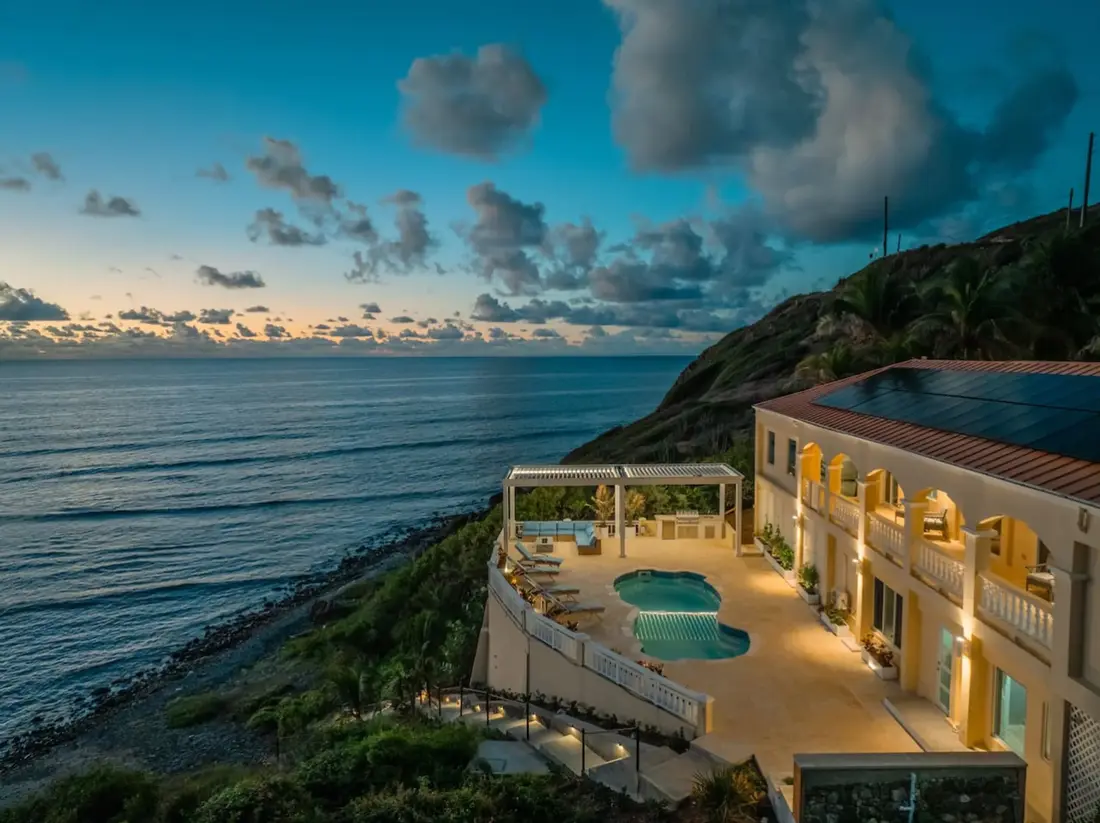
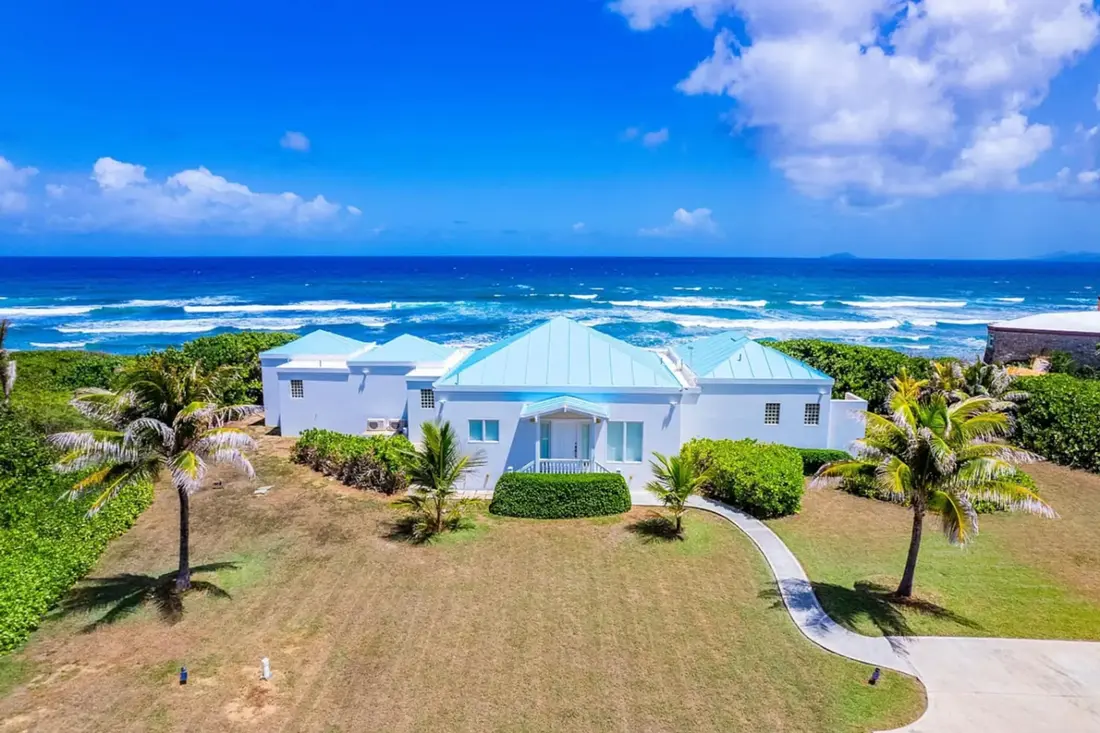
The clearest way to judge a manager is to look at the homes they already run. Ours are all on this site: beachfront houses, ocean-view villas and condos, East End places like The Cerulean above its private beach, and west end homes like Sunset Sea-Clusion near Frederiksted, each presented with its full photo set, its real reviews, and the island's guides wrapped around it. That presentation is the standard a new home joins on day one.
If you own a home on St. Croix and this post read more like a preview than a warning, the next step is small: tell us about the house on the owners page, or call. The first conversation costs nothing and comes with no obligation, and we will tell you whether the home and the market fit, including when the answer is that they do not. Either way, you will know what you are deciding.
Sources
Written from official and first-party sources, checked August 2026. Hours, prices and event dates change — confirm before you go.