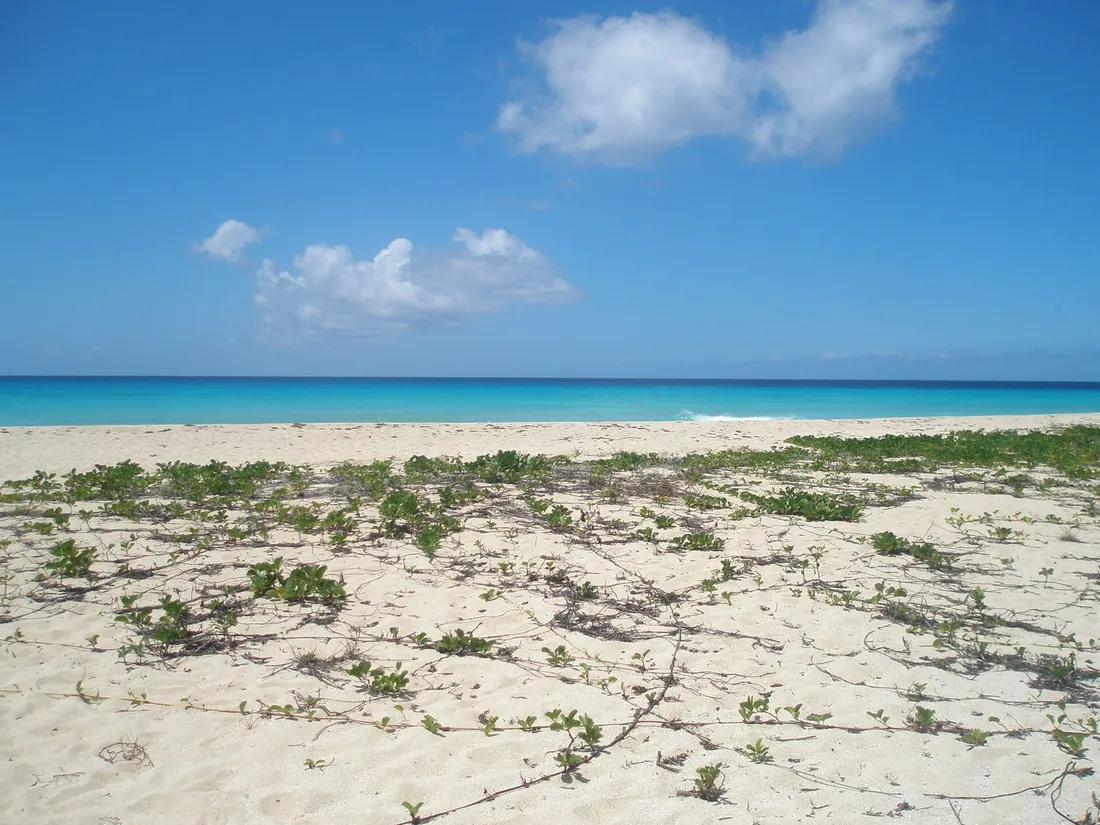
St. Croix has more beaches than a one-week trip can use, and they differ enough that the order you visit them in matters. This is a planning guide: which beach fits a calm-water day, a snorkel morning, a boat day, a sunset, or a day with small kids, how the seasons change those answers, and how to stack it all into a week.
We already keep a coast-by-coast catalog of the island's beaches in our beach guide, with a separate page on nearly every one. This post does a different job. A list tells you what exists. It does not tell you that Cane Bay is a morning beach, that Sandy Point is only reachable on certain weekends, that the Buck Island trip should be booked for early in your week, or that the west end earns its keep at 6 p.m. Those timing decisions are what separate a good beach week from a fine one, and they are what this post covers.
A quick orientation first. St. Croix is about 22 miles long and 7 miles wide, with Christiansted on the northeast coast and Frederiksted on the west. Driving from one town to the other takes around 40 minutes. That is the longest beach commute you will face. Everything in this post is a day trip from every villa we manage, which is why the real question is never "can we get there" but "which one today."
The island's layout, in beach terms
The trade winds blow out of the east almost every day of the year, and that one fact organizes the whole coastline. The west coast sits in the island's lee, so its water is the flattest: this is where you float, wade and watch the sun go down over open sea. The north shore fronts deeper water, with a reef close to shore and a famous drop-off, so it is the snorkeling and diving coast, and the one that feels winter swell first. The East End is dry, breezy and mostly undeveloped, with bays you walk into rather than park beside. The south shore holds the long, wild strands, Ha'penny and Grapetree among them, where you go to walk rather than to swim laps.
A serviceable rule of thumb: swim west, snorkel north, wander east. It breaks down in places, because the northeast bays around Christiansted are sheltered and swim beautifully, but as a first sorting device it will not steer you wrong.
Two practical notes ride along with the geography. First, you will want a rental car; rideshare apps never made it to the island, and taxis work better for a single planned trip than for beach-hopping. Second, you drive on the left, in the same left-hand-drive cars you know from home, and it stops feeling strange by the second day. The roads to every beach in this post are paved except the last stretch to a couple of the wilder ones.
Which beach for which day
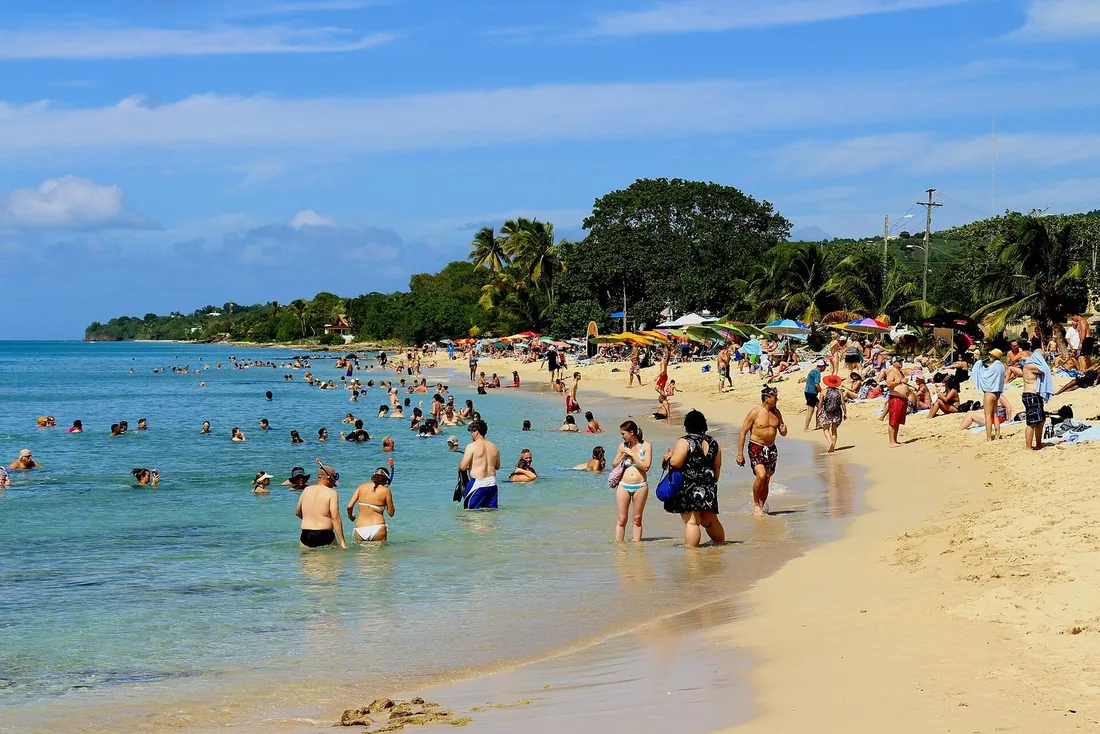
Here is the short version of this entire post, in one table. The rest of the sections explain the reasoning, the timing and the fallbacks.
| The day you want | First choice | Backup | Timing note |
|---|---|---|---|
| Calm swim, no agenda | Rainbow Beach | Dorsch Beach | Any day; check the cruise schedule |
| Shore snorkel | Cane Bay | Frederiksted Pier | Morning, before the wind builds |
| Boat day | Buck Island | Sunset sail | Book it for early in the week |
| With small kids | Chenay Bay | Cramer's Park, Columbus Landing | Morning for the calmest water |
| A beach to yourselves | Jack's and Isaac's Bays | Grapetree Beach | Early, before the heat; carry everything |
| A long walk | Sandy Point | Ha'penny Beach | Open weekends only, 10 to 4, September through March |
| Sunset | Frederiksted Beach | Rainbow Beach | Arrive an hour before the sun drops |
The first beach after you land
Arrival day has its own rules. You landed at midday or later, the grocery run still has to happen, and nobody wants 40 minutes in the car. So the first beach should be the nearest decent one, and on St. Croix the nearest one is usually good.
If you are staying east of Christiansted, that means The Shoys, a calm, sheltered crescent reached through the Estate Shoys entrance gate by The Buccaneer, with a small reef at its eastern end and rarely more than a handful of people on it. Chenay Bay, a few minutes further east, does the same job with even shallower water. If you are staying on the west end, drive the few minutes to Rainbow Beach and be done with it.
The other arrival-day task matters more than the swim: book your Buck Island trip now, for day two, three or four. The boats fill up, and putting the trip early in the week leaves room to slide it if the weather argues. Booking the boat from the beach chair, feet in the water, is a fair way to start a vacation.
The calm-water day
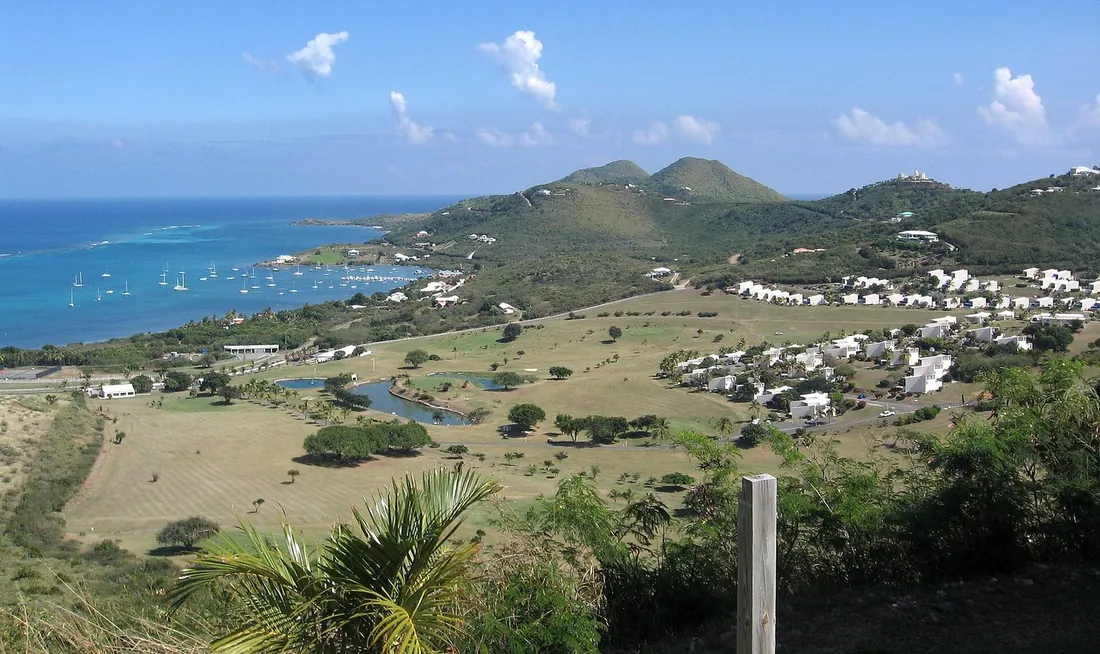
When the plan is to swim, float, read and repeat, drive west. The lee-side water along the Frederiksted coast is the most reliably flat on the island, and it stays that way even in winter when the north shore is churning.
Rainbow Beach is the fully-serviced version of this day: soft sand, easy parking, West End Water Sports renting kayaks, paddleboards, snorkel gear and jet skis on the sand, and Rhythms, the beach bar that has been pouring here for around three decades at last check. It is the one St. Croix beach where you can arrive with nothing and want for nothing. The trade-off is company, especially on weekends and cruise days.
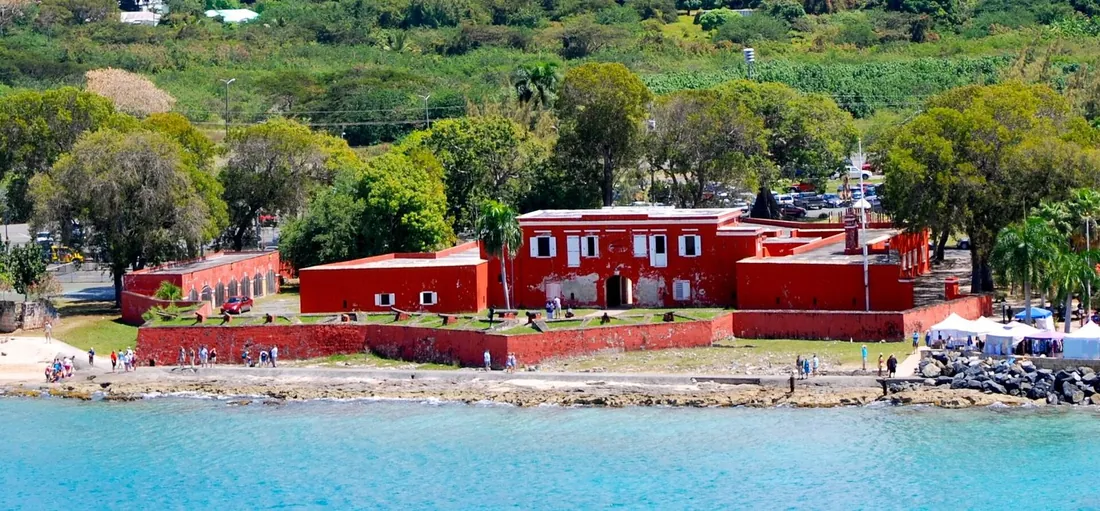
Dorsch Beach, just south of Frederiksted, is the quieter cousin: palms and sea grapes for real shade, notably soft sand, calm water, and the Sand Castle on the Beach property alongside if you want lunch. On a weekday it can feel close to private. Frederiksted Beach proper, the town strand, adds sea glass hunting along the waterline and puts cafes and the historic fort at your back.
One scheduling caveat for all three: Frederiksted is the island's cruise port. When a ship is in, the town beach and Rainbow absorb the passengers. The port schedule is public, so if a silent west-end day matters to you, check it before you commit the day. East-side alternates for a calm swim without the drive are The Shoys and Chenay Bay, both sheltered by the island's northeast geography.
The snorkel morning
Snorkeling on St. Croix is a morning discipline. The trades sleep late; the water is usually at its clearest and calmest before lunch, and by mid-afternoon the north shore can carry enough chop to sand the fun off a beginner's first reef. Build the snorkel around breakfast, then spend the afternoon on a lee-side beach.
Cane Bay is the marquee shore snorkel. The reef begins close in, with parrotfish, turtles and coral heads in comfortable depths, and about a hundred yards out the bottom reaches the lip of the Cane Bay Wall, which falls from roughly 40 feet toward abyssal depths. Confident swimmers can hang over that edge with a mask on; everyone else gets plenty of fish without leaving the inner reef. Dive shops sit across the road for gear, advice and guided trips, and there is food a few steps from your towel.
The island's second signature snorkel is the Frederiksted Pier, at the north end of the town beach. It is a slow-motion treasure hunt around the pilings, in flat, clear harbor water: seahorses, octopus, frogfish, juvenile fish in clouds. Because the west side is sheltered, the pier is also the snorkel to keep in your pocket for days when the north shore is rough. Davis Bay, below the Carambola resort, offers a shallow inner reef and a deeper outer one for mixed-ability groups, and the small reefs at The Shoys and Chenay Bay suit kids still learning the mask.
Two habits keep the reef alive and your skin intact: never stand on or touch coral, and use mineral sunscreen. The USVI restricts sunscreens made with oxybenzone, so bring reef-safe from home or buy it on island.
The Buck Island boat day
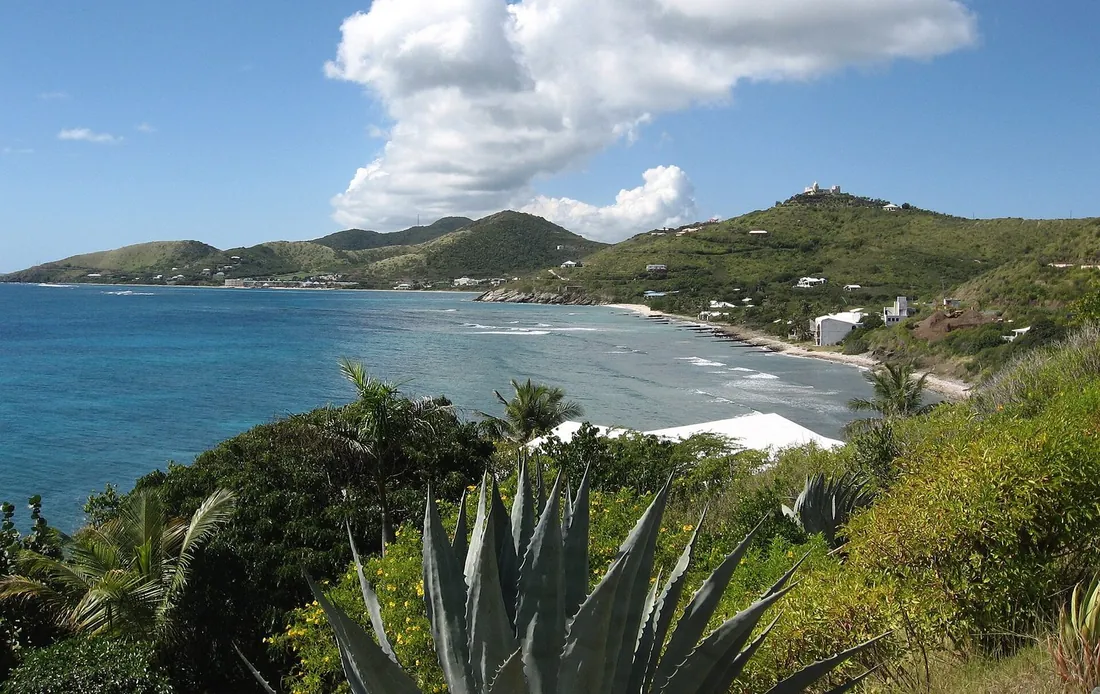
If the week holds one boat trip, this is it. Buck Island Reef National Monument, sitting a mile and a half from the northeast coast, has been federally protected since President Kennedy set it aside in 1961, and the surrounding water is a no-take marine reserve. The draw is double: Turtle Beach, the powder-sand strand on the island's west end, and the marked underwater snorkel trail through an elkhorn coral lagoon on the east side, one of a tiny number of underwater trails anywhere in the country.
You cannot drive, wade or kayak there. Access is by boat only, either with one of the NPS-authorized concessionaires that run from Christiansted's boardwalk and nearby marinas, or on a private vessel with an NPS permit. The crossing takes roughly 40 to 90 minutes; each boat is different. Operators offer half-day trips built around the snorkel trail and full-day versions that add more time on Turtle Beach; ask what each includes, because it varies by boat.
The planning rules: book early in the week, so a windy forecast can push the trip rather than sink it. Take the seasickness precautions you know you need before the boat leaves the dock, since the ride out crosses open water. Bring mineral sunscreen, a hat, water and cash for the crew. And keep expectations calibrated in winter, when a north swell can make the crossing sportier and occasionally cancels trips altogether; the operators make that call, and they are right to.
The hike-in day at Jack's and Isaac's Bays
For the day when you want sand with nobody on it, drive to the far East End, park in the lot just before Point Udall, and take the cactus-lined trail down into the Jack and Isaac Bay Preserve. The Nature Conservancy has held these 301 acres since 1999, which is why Jack's and Isaac's Bays remain what most of the Caribbean no longer is: undeveloped beaches you walk to, with reef snorkeling on calm days and sea turtle nests in season.
The logistics are the point here, so take them seriously. There are no facilities of any kind: no water, no shade to speak of, no lifeguard, no trash cans. Carry in everything you need and carry out everything you brought. Start early, both for the cooler walk and for the calmest snorkeling, and wear real shoes for the trail and reef shoes for the entry. On a swell day, stay out of the water and make it a walking day instead.
Pair the hike with Point Udall itself, the far eastern tip of the United States, where the Millennium Monument sundial stands on the ground that caught the country's first sunrise of 2000. Ambitious risers do Point Udall at dawn, then walk down to the bays and have them alone for hours. If you want seclusion without the hike, Grapetree Beach on the southeast shore is a long, narrow, sea-grape-backed strand with some surf, no facilities and, most days, almost no people.
Sandy Point and its calendar
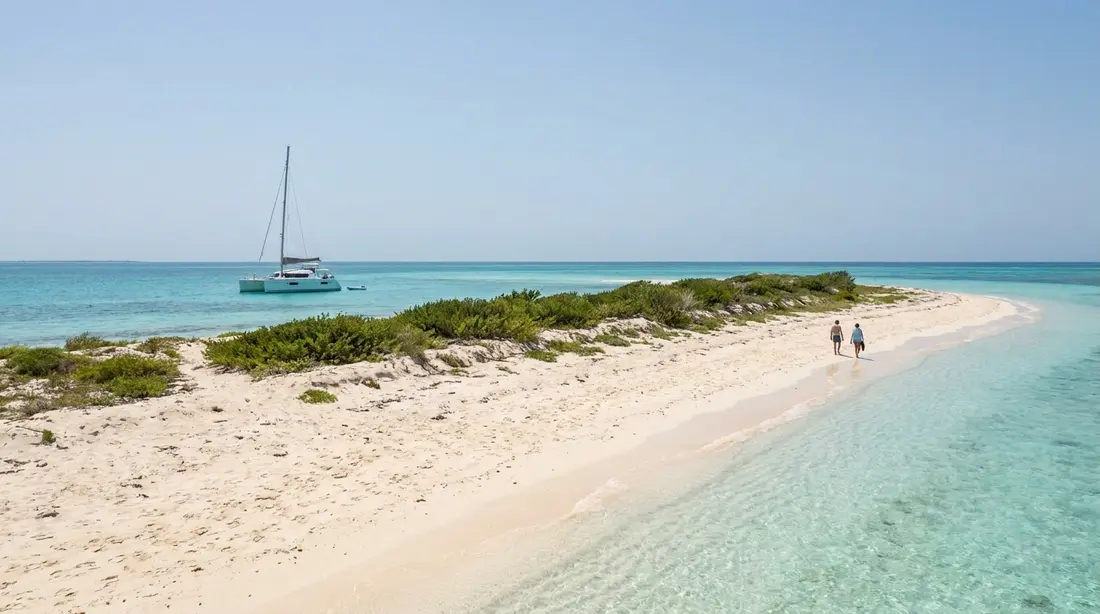
Sandy Point National Wildlife Refuge, at the island's southwest tip, holds the longest beach on St. Croix: about two miles of wide, bright sand with nothing built on it, inside a roughly 360-acre federal refuge. It is the beach in the final scene of The Shawshank Redemption, and it is also the most important nesting ground for leatherback sea turtles anywhere under U.S. jurisdiction, which is why you cannot simply show up.
The access rules are strict, and they are the single most common way visitors' beach plans go sideways, so here they are in a table.
| Dates | Access at last check |
|---|---|
| September 1 through March 31 | Open weekends only (Saturday and Sunday), 10 a.m. to 4 p.m. |
| April 1 through August 31 | Closed entirely, for leatherback nesting season |
Leatherbacks nest here roughly March through July, and the U.S. Fish and Wildlife Service closes the refuge to protect them; hours and closures can shift, so check the refuge's current notices before you drive out. The planning consequence is simple: if your trip includes a Saturday or Sunday between September and March, Sandy Point deserves that morning. Bring water, shade and everything else you need, because the refuge has essentially no visitor facilities, and be out by 4. If you visit between April and August, take Sandy Point off the list without regret and give its slot to Dorsch, Ha'penny or the East End bays. During nesting season, organized turtle watch programs are sometimes the one sanctioned way onto the sand at night; they book out, so ask early.
Beach days with kids
The kid question sorts St. Croix's beaches fast, because what matters is depth, shade and bathrooms, in that order.
Chenay Bay is the standing answer. The East End bay is shallow a long way out and well protected, the resident green turtles and stingrays give snorkeling-age kids something to find in three feet of water, and kayaks and paddleboards are commonly available. Cramer's Park, the territorial park beach near Point Udall, adds picnic pavilions, easy swimming and local family energy, especially on weekends; it is a public park, so mind the posted hours. Columbus Landing Beach at Salt River puts calm, shallow water next to restrooms, grills and picnic tables inside the national historical park, and hands you a ready-made story for the drive: the 1493 landing party from Columbus's second voyage came ashore right here.
On the west side, Dorsch Beach earns the family nod for its shade trees, soft sand and the cafe next door. Wherever you go, the standard tropics rules apply: morning beach slots beat afternoon ones for calm water and cooler sand, pack more drinking water than seems reasonable, put reef shoes on the smallest feet, and learn to recognize the manchineel tree, whose sap and fruit are toxic; do not picnic or shelter under one.
The sunset evening
St. Croix runs east to west, so the sun only sets over open water on the west coast. That makes the sunset a scheduling decision: at least one evening of the week belongs to the Frederiksted side, and the natural build is a west-end afternoon that simply refuses to end.
The reliable pattern: Rainbow Beach from mid-afternoon, with the rental gear and the bar doing their work, then either stay put as the sun drops in front of Rhythms or roll five minutes south to the Frederiksted town beach, where the pier goes to silhouette and the restaurants along the waterfront handle dinner. Dorsch works the same way at lower volume. If you would rather be on the water than beside it, Lyric Sails runs sunset cruises out of Frederiksted aboard the Jolly Mon, a 63-foot catamaran with live music on deck.
Guests staying on the East End should not bother chasing the sunset across the island every night; that is the wrong trade. Take the west end once or twice for the evening show, and collect the other end of the day instead: the East End gets the sunrise, and it is a short, dark drive to watch it happen from Point Udall.
A week of beach days, in order
Every group rearranges this, and should. But as a starting skeleton, here is how the logic of this post assembles into seven days.
- Day 1, arrival: the nearest beach to your villa, one unhurried swim, and the Buck Island booking made for day 2 or 3.
- Day 2, snorkel morning: Cane Bay early, lunch across the road, lee-side afternoon at The Shoys or Chenay Bay.
- Day 3, Buck Island: the boat day, with the evening kept easy near home.
- Day 4, west-end day: Rainbow Beach afternoon, Frederiksted Pier snorkel for the ambitious, town beach or Rhythms for sunset. If it is a Saturday between September and March, start with a Sandy Point morning.
- Day 5, hike-in day: Point Udall early, down the trail to Jack's and Isaac's Bays, out by early afternoon, pool or shade for the rest.
- Day 6, kid day or repeat day: Chenay Bay or Cramer's Park with the family, or a return to whichever beach won the week.
- Day 7, departure: a short morning swim close to home; The Shoys and Chenay both sit conveniently on the airport side of a checkout.
Three principles hold the skeleton together. Boats and hikes go early in the week and early in the day, because weather and heat both worsen as the clock runs. The west end is an afternoon-into-evening destination, so pair it with a slow morning. And every big-effort day buys a low-effort day beside it, which on this island is never a sacrifice.
Seasonality and swell
The beaches keep the same names all year, but they change character with the calendar, and a few of the changes are worth planning around.
From mid-December to mid-March the Christmas Winds blow, the coolest and driest stretch of the year and the heart of high season. The cost of that fine weather lands on the north shore: winter swell can turn Cane Bay choppy and murky for days at a time. When that happens, move the snorkel to the Frederiksted Pier or the sheltered eastern bays and give the wall a calmer morning later in the week. The west coast, meanwhile, barely notices, and Sandy Point is in its open season, weekends 10 to 4.
January through April is the dry season, with the most dependable beach weather of the year. April 1 closes Sandy Point for nesting. Summer brings the warmest days, longer calm spells on the north shore, and thinner crowds everywhere. Hurricane season opens June 1 and closes November 30, statistically most active in August and September; St. Croix life continues normally through nearly all of it, and the sensible response is travel insurance and flexible bookings rather than avoidance. September through November is the greenest, quietest, best-value stretch, with rain that usually arrives as short passing showers. The sea itself stays swimmable every month of the year.
Turtles, and how to plan around them
Sea turtles shape the St. Croix beach calendar more than any other animal, and a little planning turns them from a closure notice into the best sighting of the trip. Three species use the island. Leatherbacks, the giants, nest at Sandy Point roughly March through July, which is the reason the refuge shuts for the summer. Greens and hawksbills nest at Buck Island, along the East End bays including Jack's and Isaac's, and on Ha'penny's long south-shore sand.
For daytime sightings, you do not need luck so much as the right water. Green turtles graze the seagrass at Chenay Bay and turn up regularly over the Cane Bay reef, so an ordinary snorkel morning is the most reliable turtle plan on the island. Give any turtle room, never chase or corner one for a photo, and let it surface to breathe undisturbed.
Seeing a nesting leatherback is a different undertaking. It happens at night, in season, on a closed beach, and the sanctioned route is a guided program: the St. Croix Sea Turtle Project and SEA's summer Turtle Watch programs run escorted nesting-season visits with trained leaders. Spots are limited and go early, so ask about dates as soon as your travel window is set. What you should not do is walk a nesting beach at night on your own, use white lights or flash photography near the sand, or dig at marked nests; hatchlings orient by light, and a phone screen can send a clutch the wrong way.
What to pack for a St. Croix beach day
The single most useful fact about St. Croix beaches is how few of them sell you anything. Outside of Rainbow, Cane Bay, the Frederiksted strand and Dorsch, assume there is no food, no water, no chair rental and no bathroom, and pack accordingly.
- Water, more than you think, and a cooler if the villa has one to lend; ask us what beach gear your rental keeps on hand.
- Mineral sunscreen. The USVI restricts oxybenzone sunscreens, and the reefs you will be swimming over are alive.
- Shade you carry: a beach umbrella or sun shelter, since natural shade is scarce on the East End and at Sandy Point.
- Reef shoes, for rocky entries, urchins and hot sand; real shoes for the Jack's and Isaac's trail.
- Snorkel gear, your own or rented from the Cane Bay dive shops or West End Water Sports at Rainbow.
- Cash, for beach bars, boat crews and the occasional parking honor box.
- A dry bag for phones and keys, and the discipline to leave nothing valuable visible in the parked car.
None of this is exotic. It is the difference between a four-hour beach day and a ninety-minute one.
Parking, gates and access
A few access realities save confusion on the ground. By longstanding USVI law, the shoreline itself is open to the public; what varies is how you reach it and where you leave the car. The Shoys sits behind the Estate Shoys security gate near The Buccaneer, and beach visitors pass through it routinely. The Buccaneer's own beaches, Mermaid and Grotto among them, are resort-kept but publicly accessible. Cramer's Park is a territorial park with posted hours, and Sandy Point's gate opens and closes on the refuge schedule above, with no entry outside it.
Parking is informal nearly everywhere: sand lots, roadside pull-offs, a real lot at Cane Bay and at the Point Udall trailhead. Arrive by mid-morning at the popular spots in high season and parking is rarely the problem it is on busier islands. The practical constraints are the ones already named: a rental car, since there is no rideshare on the island and the beaches are scattered across 22 miles; left-side driving, which asks for a little extra attention on the winding North Shore Road; and the cruise calendar, which decides whether Frederiksted feels like a village or a port on any given day.
Questions guests ask
What is the best beach in St. Croix?
There is no single answer, which is the point of this post. The best swimming water is on the west coast at Rainbow and Dorsch. The best shore snorkeling is Cane Bay, with the Frederiksted Pier close behind. The most spectacular single outing is Buck Island's Turtle Beach and underwater trail, and the most beautiful empty sand is Sandy Point when it is open and Jack's and Isaac's Bays when it is not. Pick by the day you want, and you will come home with your own answer.
Can you swim at Sandy Point?
Yes, when the refuge is open: weekends from 10 a.m. to 4 p.m., September 1 through March 31, at last check. It closes entirely from April through August for leatherback nesting, and there is no legal access outside posted hours. The water is usually calm and the sand shelves gently, but there are no lifeguards and no facilities, so treat it as a bring-everything, self-reliant beach day and confirm current hours with the U.S. Fish and Wildlife Service before driving out.
How do you get to Buck Island?
By boat only. A short list of NPS-authorized operators runs half-day and full-day trips from the Christiansted boardwalk and nearby marinas, with crossings that take between 40 and 90 minutes, vessel depending. Private boats need a permit from the National Park Service. Book a day or two ahead in high season, earlier around holidays, and schedule the trip for early in your week so weather can postpone it without cancelling it.
Do St. Croix beaches have chairs, umbrellas and food?
Mostly no, and it is one of the island's defining traits. Rainbow Beach has rentals and a bar; Cane Bay, the Frederiksted strand and Dorsch have food and some gear nearby. Nearly everywhere else, including the entire East End and Sandy Point, you bring your own water, shade and seating. If you want a serviced beach-club day, go west. If you want sand without commerce, the rest of the island is exactly that.
When is the water calmest?
The west coast is calm nearly year-round because it sits in the island's lee. The north shore is calmest in summer and choppiest during the winter Christmas Winds, from roughly mid-December to mid-March, when swell can cloud Cane Bay for days. Mornings beat afternoons everywhere, since the trade winds strengthen through the day. If a forecast turns the north shore over, swap the snorkel to the Frederiksted Pier or the sheltered bays east of Christiansted.
Do you need a car to reach the beaches?
Realistically, yes. Neither Uber nor Lyft serves the island, and while taxis handle a planned round trip well, beach-hopping on taxi fares adds up fast. A rental car turns the whole coastline into a menu, with nothing more than about 40 minutes away. You will be driving on the left side, in normal American cars, and the adjustment takes a day. Book the car early in high season; the island's fleet is finite.
How crowded do the beaches get?
By Caribbean standards, lightly. St. Croix gets a fraction of the visitor traffic of St. Thomas, and its beaches are spread along 22 miles of coast, so even in high season most of them stay uncrowded on weekday mornings. The pressure points are predictable: Rainbow and the Frederiksted strand on cruise-ship days, Cramer's Park and other local favorites on weekends and holidays, and Cane Bay's parking on fine winter mornings. Shift an hour earlier, or one beach over, and the crowd problem generally disappears.
A base near the beaches
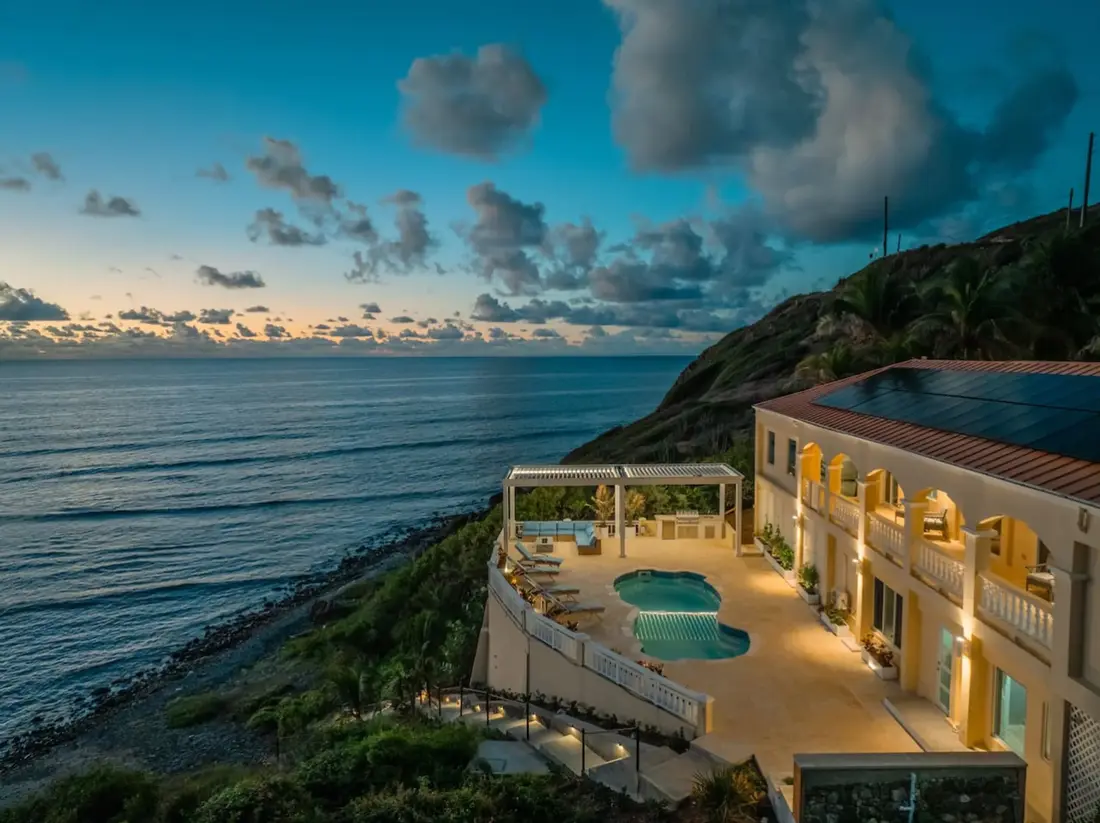
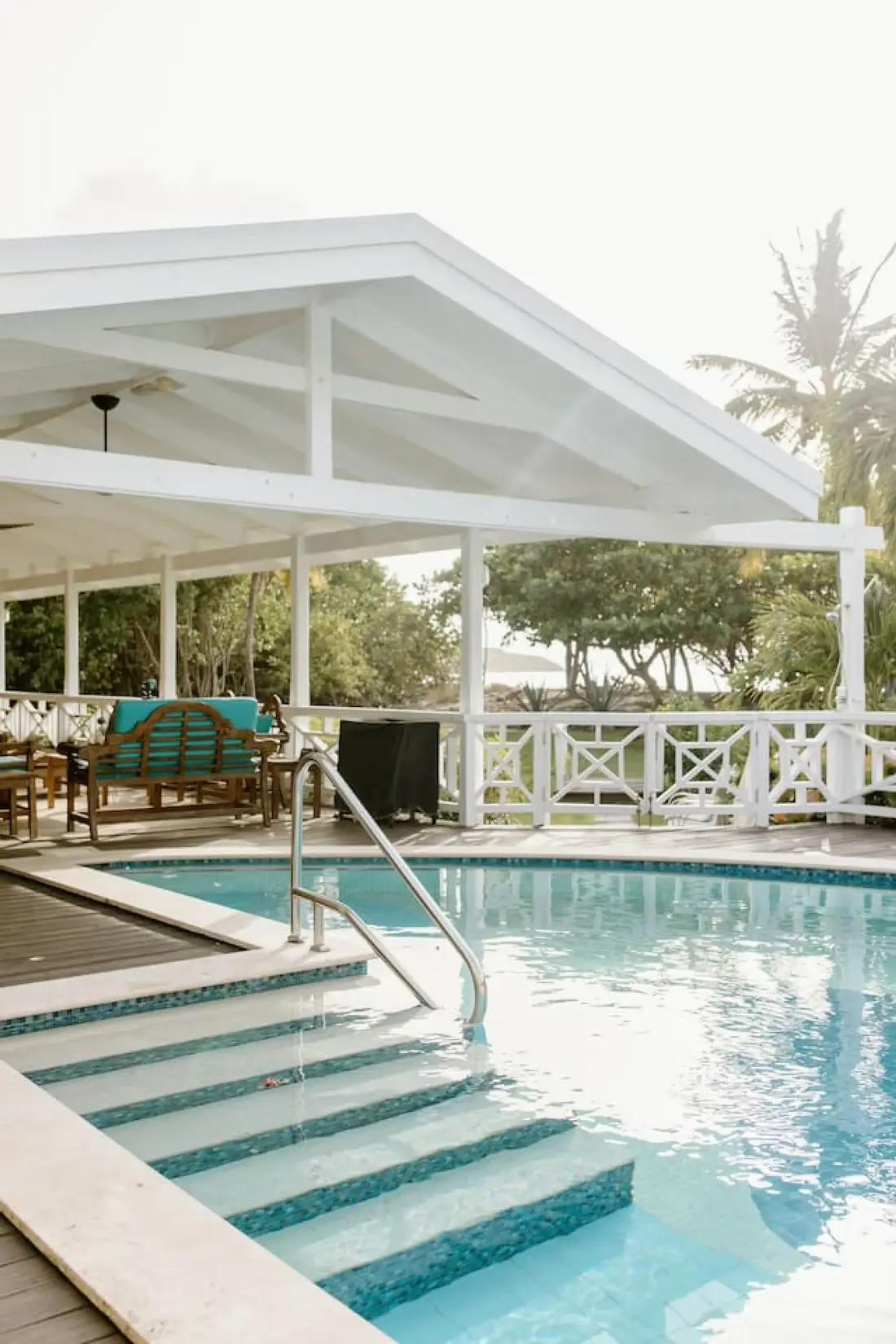
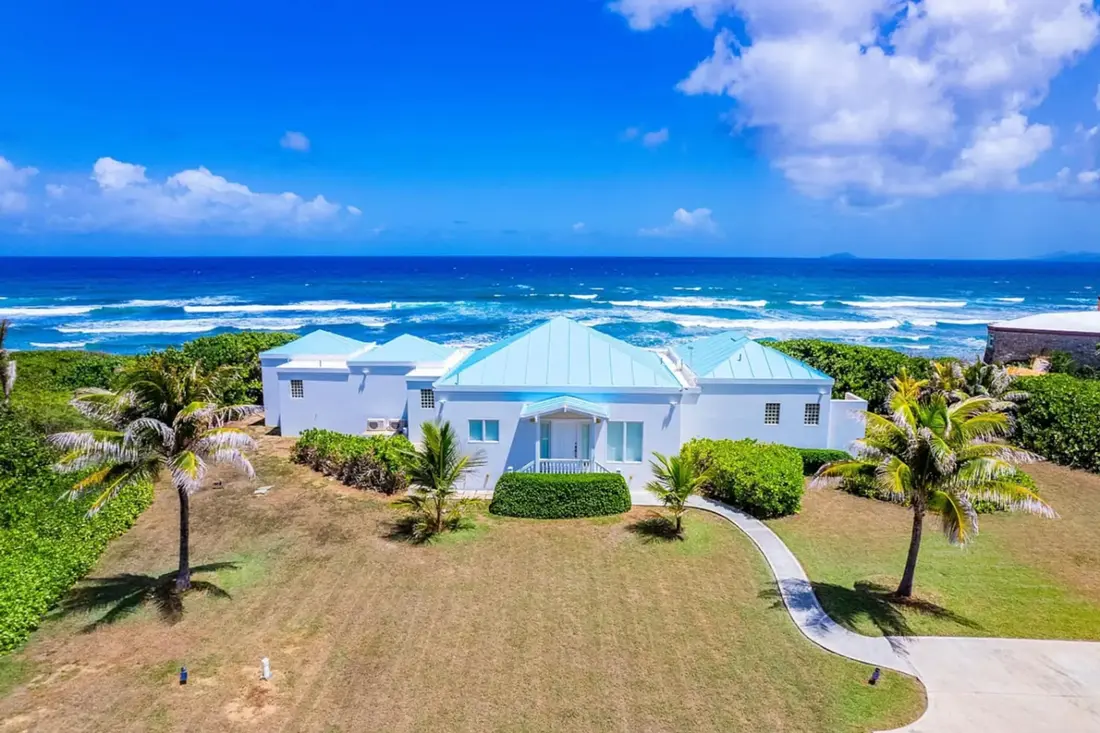
Beach planning gets easier when the first beach is a walk away. Shoy's Beach House sits directly on The Shoys, the calm crescent from the first-morning section of this post. The Cerulean has its own private beach on the East End with Buck Island on the horizon, and Sunset Sea-Clusion puts the west end's calm water and sunsets a few minutes from the door. The rest of our homes cluster around Christiansted and the East End, closest to the sheltered northeast bays. Browse the beachfront collection or the East End collection, and ask us which beaches fit the week you have in mind; matching guests to coastlines is most of what we do.
Sources
Written from official and first-party sources, checked August 2026. Hours, prices and event dates change — confirm before you go.