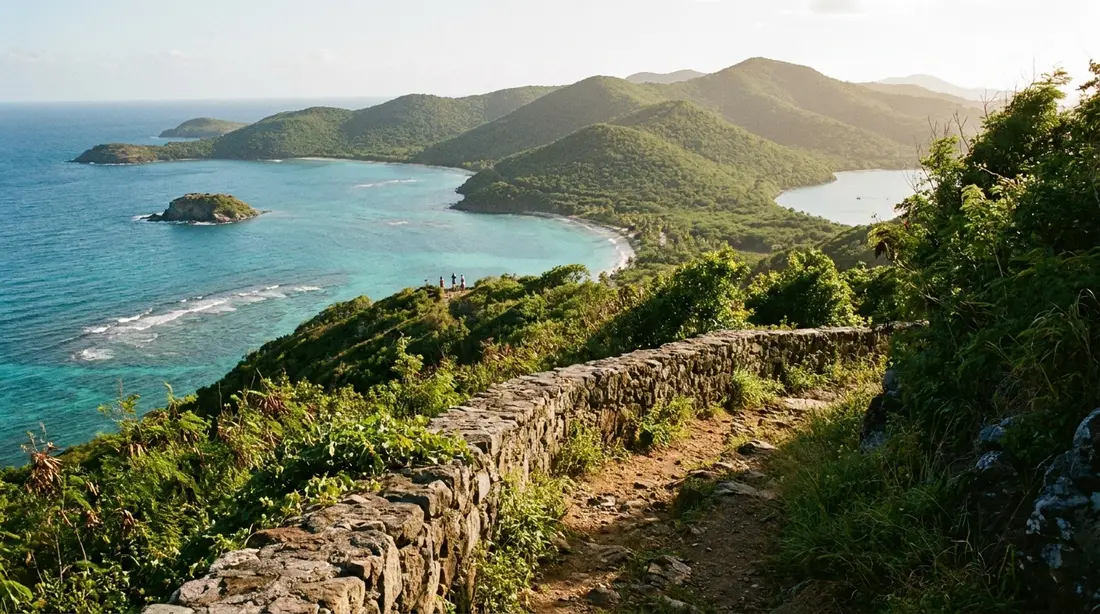
Choosing where to stay in St. Croix is really two decisions: what kind of roof you want over your head, and which part of the island you want it in. This post works through both. It covers the island's actual hotels, fairly, area by area; it covers villas and condos; and it covers the group-size math, the kitchens, and the grocery stores that make self-catering work here.
Most articles on this subject are written by people selling one of the two options, and it shows. We rent villas and condos, so read us with that in mind too. But the case for a vacation rental on St. Croix is strong enough that it does not need the hotels talked down. Some travelers should book a hotel here. Many should book a home. The useful thing is knowing which one you are before you put a deposit down, and the answer depends less on taste than on head count, trip length, and what you want your mornings to look like.
The other half of the decision gets skipped even more often. St. Croix is the largest of the U.S. Virgin Islands, about 22 miles long and 7 wide, with two towns and several distinct coasts. The east end is dry and cactus-covered. The west end gets more than 50 inches of rain a year and grows a real rainforest. A stay near Point Udall and a stay near Frederiksted pier are different vacations, in a way that a stay in one Cancun hotel versus the next is not. So this post spends real time on geography before it gets to the villa-versus-hotel question. If you want the two-minute version instead, our short villa vs hotel guide covers it; this is the long one.
The shape of the decision
Start with four questions and the rest mostly answers itself.
- How many people? Two travelers can stay anywhere. Six or more start running into the arithmetic of hotel rooms, and twelve pretty much settles it. The math section below walks through the numbers.
- How many nights? For two or three nights, the conveniences of a hotel carry real weight and the advantages of a home barely have time to register. At a week, the balance flips. At a month, it is not close.
- Will you cook at all? St. Croix has good restaurants, and it also has good supermarkets. A kitchen changes what a week costs and how it feels. If you will never once make breakfast, one of a villa's biggest advantages is off the table.
- Do you want people around, or not? Some travelers relax in a lobby, a swim-up bar, a crowd. Others relax when the only voices on the deck are the ones they brought. Neither is wrong. They book different things.
Hold your answers to those four while you read the geography, because the island's regions push the same questions around. Christiansted rewards travelers who want to walk to dinner. The East End rewards travelers who want quiet and a view. The west end rewards sunset people. Almost everyone ends up driving regardless; there is no Uber or Lyft on St. Croix, and the island runs on rental cars, taxis, and the VITRAN bus. See getting around for the details, including the one everybody asks about: you drive on the left here, in ordinary American cars.

How the island is laid out
Two towns anchor St. Croix. Christiansted sits on the northeast coast, the old Danish capital, with a harbor, a boardwalk, a fort, and most of the island's restaurant scene. Frederiksted sits on the far west coast, smaller and slower, with a long pier, calm water, and the island's famous sunsets. Centerline Road runs between them through the island's agricultural middle; allow about 45 minutes town to town. The airport is on the south side of mid-island, and neither town is a long drive from it.
Around those two towns, five areas matter for a lodging decision.
| Area | Character | Who tends to book it |
|---|---|---|
| Christiansted and its shoreline | Historic harbor town; boardwalk, restaurants, shops, Buck Island boats | First-timers, couples, anyone who wants to walk to dinner |
| East End | Dry, quiet, residential; Point Udall, Buck Island views, calm bays | Groups, families, privacy seekers, sunrise people |
| North Shore | Cane Bay wall diving, green hills, a few small resorts | Divers, snorkelers, travelers who want scenery over town life |
| Mid-island | Working center: supermarkets, the distilleries, the airport | Almost nobody stays here; everybody shops here |
| Frederiksted and the west end | Sunset coast; pier, sea glass, rainforest behind it, cruise days in town | Divers, sunset people, travelers who like the quieter town |
Distances stay manageable everywhere. Cane Bay is roughly 25 to 30 minutes from either town. The far East End is a similar run from Christiansted. Nothing on the island is much more than an hour from anything else, so no choice strands you. But you will eat most dinners, buy most groceries, and watch most sunsets near where you sleep, so the choice still sets the tone of the week. Flights and ferries are their own subject, covered elsewhere on this site; the rest of this post assumes you have landed.
Christiansted and its shoreline
Christiansted is the reason many people pick St. Croix over other islands in the first place. The Danish colonial core is intact: pastel stone buildings, red roofs, arcaded sidewalks that shade the shopping streets, and the yellow walls of Fort Christiansvaern over the harbor. The boardwalk carries the evening scene, the Buck Island boats leave from it in the morning, and you can spend a full day within six blocks without getting bored.
The in-town hotels trade on exactly that. The King Christian Hotel sits right on the harbor in the heart of downtown, a historic boutique property. The Company House Hotel is its modern-boutique neighbor a street back. The Caravelle, at last check newly renovated, runs a small casino along with its rooms near the waterfront. The Comanche Hotel occupies a building put up in 1756 from coral stone. None of these are beach resorts; they are town hotels, and the trade is plain: a short walk to dinner in exchange for no sand at your door. If you want to be carless for a long weekend of restaurants, galleries, and a Buck Island day trip, a Christiansted town hotel is the strongest hotel case on the island.
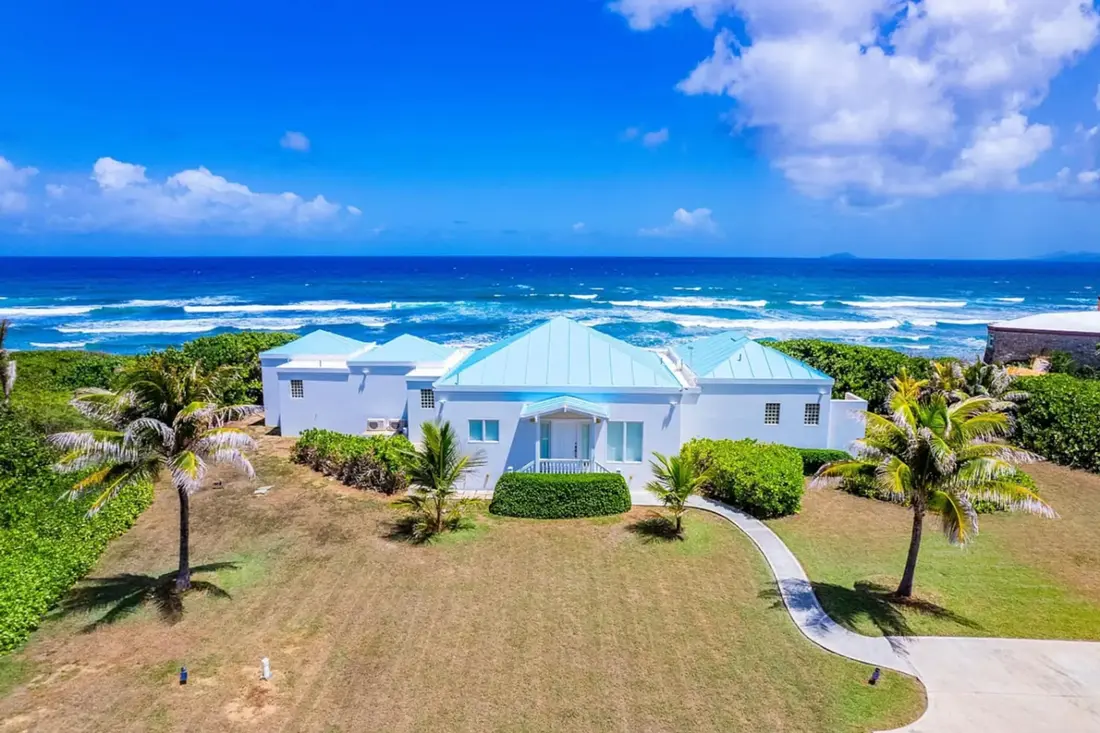
East of town the shoreline turns into the island's old estate country. The Buccaneer, the island's grande dame, spreads over 340 oceanfront acres here with three beaches, an 18-hole golf course, eight tennis courts, a spa, and three restaurants; it has been operating since 1947. Just beyond it, the gated Estate Shoys neighborhood fronts one of the island's calmest, prettiest crescents of sand. Our Shoy's Beach House sits in that neighborhood, five ensuite bedrooms plus an optional cottage, with the beach a short walk from the pool deck. Tamarind Reef Resort, Spa & Marina carries the hotel option a little further east at Green Cay Marina. This stretch, town-adjacent but residential, is where a lot of the best of both worlds lives: ten minutes to the boardwalk, silence at night.
The East End
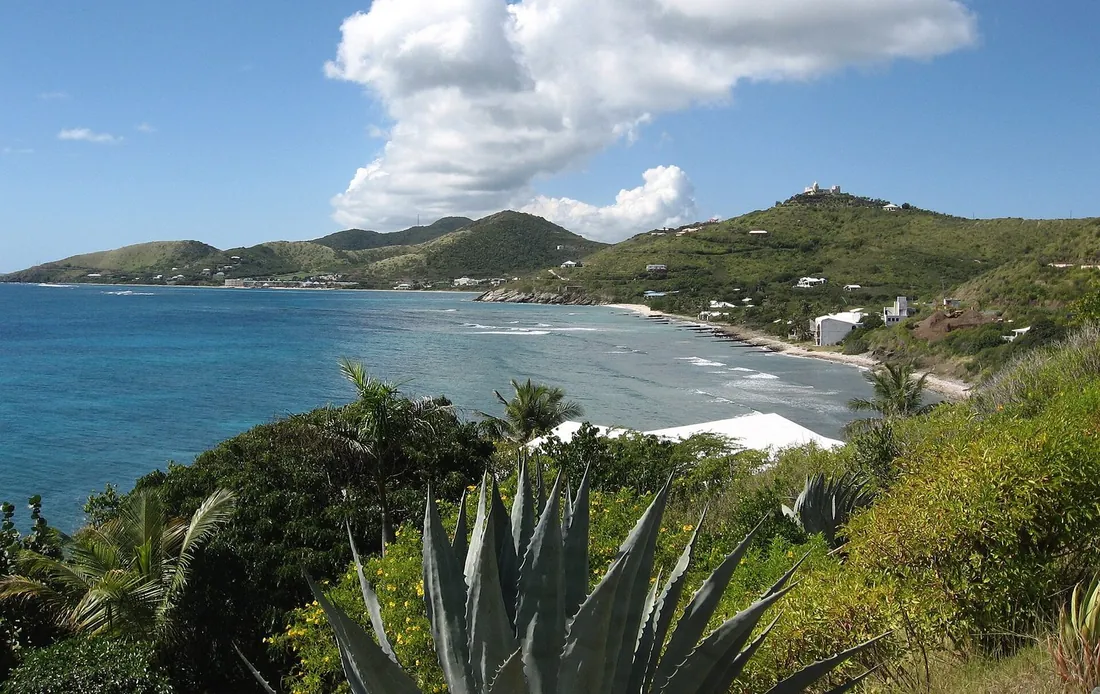
Keep driving east and the island dries out, the traffic thins, and the road eventually ends at Point Udall, the easternmost point of the United States. The East End has no town. It has ridgelines, cactus scrub, protected bays, and long views across the water to Buck Island. People who stay out here trade walkability for that view and rarely regret it.
The hotel options are fewer and more specific. Grapetree Bay Hotel & Villas, newly renovated at last check, sits on a secluded 45-acre property on the southeast shore, with 18 guest rooms and seaside villas. Carina Bay, the former Divi Carina Bay, runs on the southeastern coast as an adults-only all-inclusive with a casino across from it; at last check it billed itself as the only adults-only all-inclusive resort in the U.S. Virgin Islands. If an all-inclusive week with no decisions is what you want, that is the one place on St. Croix that sells it, and it is fair to say so.
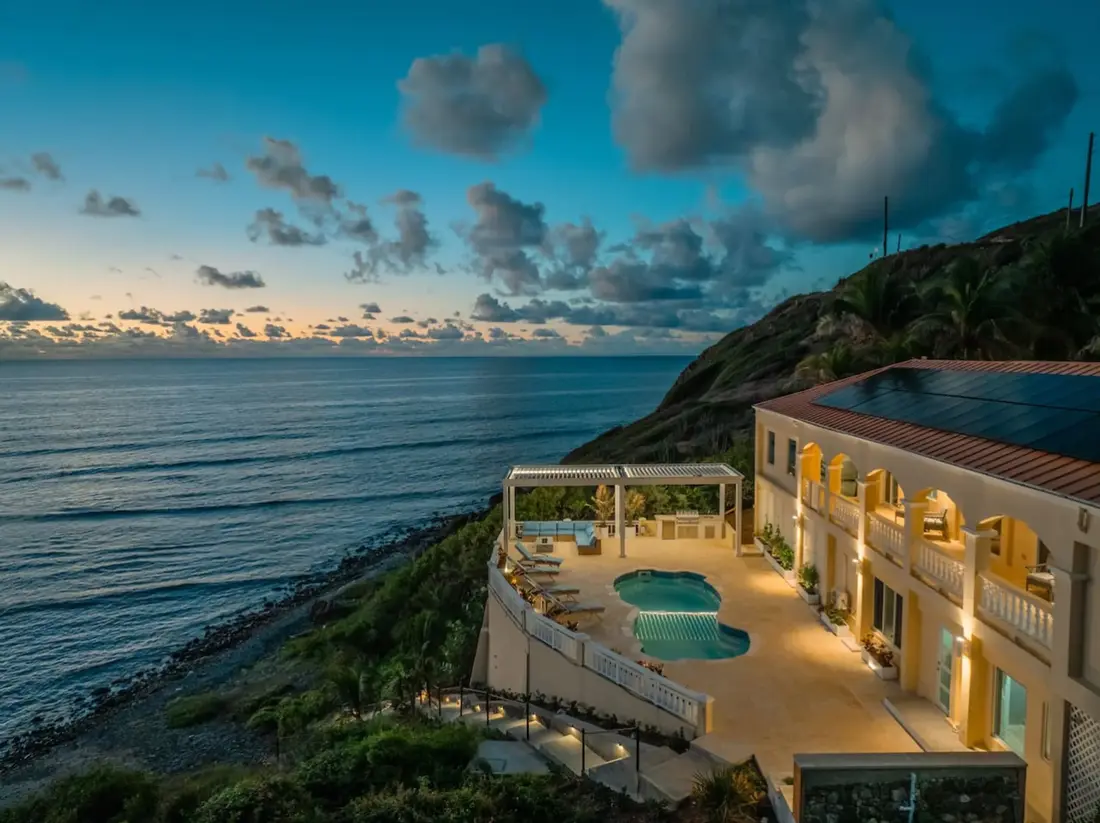
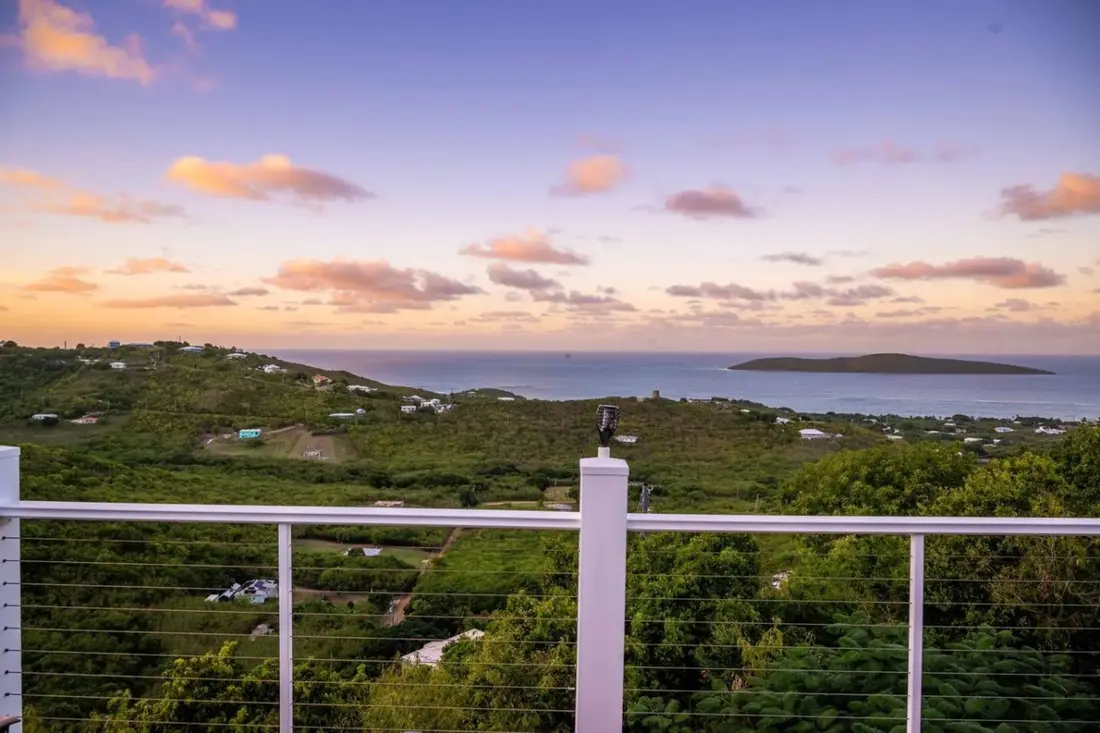
The East End is also where our own portfolio is thickest, because it is villa country by nature. The Cerulean faces Buck Island from a private beach, five bedrooms and five baths, sleeping twelve. The Buck Island Overlook does what its name says for another party of twelve. Dragonfly Villa sleeps eight around its pool, and Moko Vista watches the same water from a hilltop for a party of four. Guests at these homes tell us the same two things: the sunrise side of the island earns its reputation, and the quiet takes about one day to recalibrate to, after which town feels loud.
Frederiksted and the west end
Frederiksted is the smaller, slower town, and the travelers who love it really love it. The water off the west coast is the calmest on the island. The pier is one of the Caribbean's known shore-diving and snorkeling sites. The town beach gives up sea glass, the sunsets land straight out front, and the rainforest starts in the hills just behind. On cruise-ship days the town wakes up; on the other days it is very quiet, and you should know which of those two you are hoping for.
The west end hotel scene is small, personal, and mostly adults-oriented. Sand Castle on the Beach sits directly on the sand south of town with two pools and an oceanfront restaurant; at last check it books guests 21 and over, with a minimum age of 16 for anyone in the party. The Fred, on the Frederiksted waterfront, is an adults-only boutique hotel, about 22 rooms at last check, with a pool and a bar that has become the town's sunset fixture. Cottages by the Sea has been family-owned on this coast since 1949. Victoria House occupies a late-18th-century building on the waterfront. These are good, characterful small properties, and for a couple who wants a low-key beach town, they are real competition for anything on the island.
Our west-end home, Sunset Sea-Clusion, sleeps four ocean-side near the same coast, for travelers who want the west's calm water and sunset light with their own kitchen and no bar tab downstairs. The west end suits divers doing repeat pier dives, couples on unhurried weeks, and anyone whose ideal evening is a beach chair facing due west.
The North Shore and mid-island
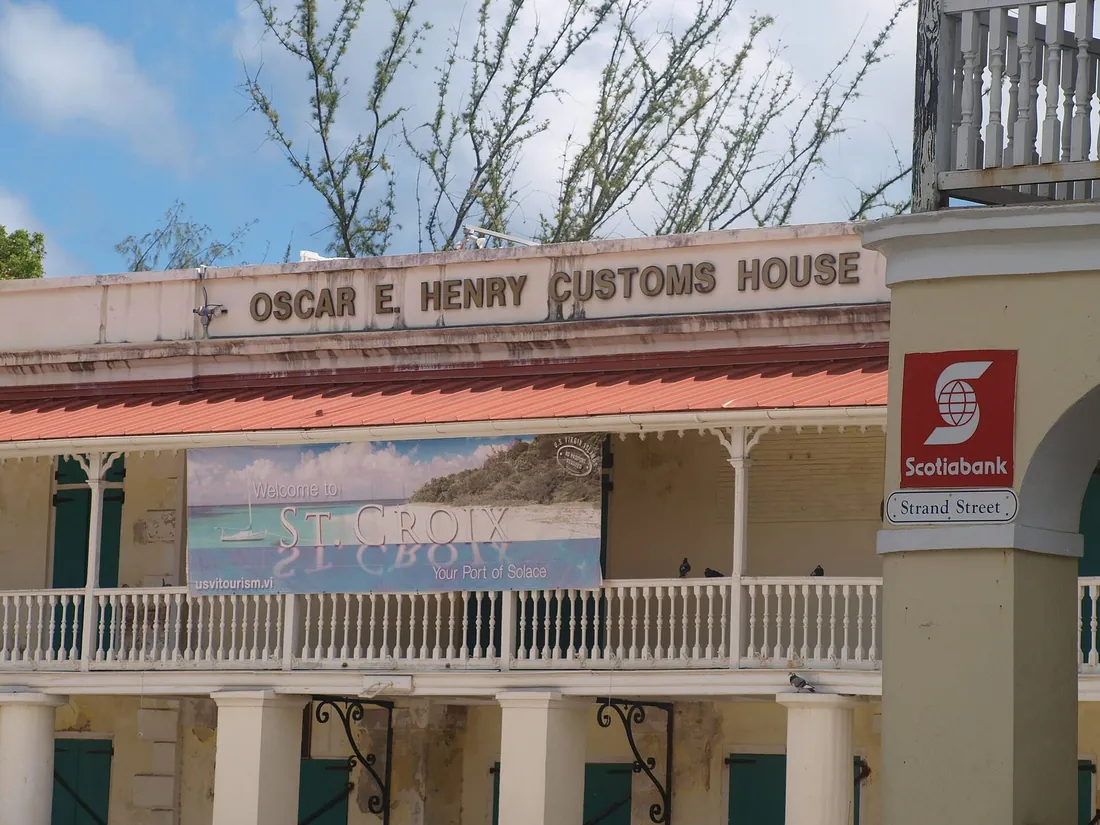
The North Shore is the island's scenery reel: green hills dropping to Cane Bay, where the sea floor falls off a wall toward depths past 13,000 feet within swimming distance of the sand. Divers and snorkelers base themselves here for obvious reasons. The Waves at Cane Bay, renovated in 2021, is a small oceanfront boutique hotel with a restaurant and bars right on that water. Further west along the coast at Davis Bay, Carambola Beach Resort spreads villa-style suites across a former estate above one of the island's most dramatic beaches, with a pool, spa, tennis, and several restaurants; the Robert Trent Jones Sr. golf course up the valley, opened in 1966, is the USVI's only championship-length course. The North Shore has few vacation rentals compared to the east, and no town; you drive for dinner options beyond your resort, and you accept that for the setting.
Mid-island, nobody's vacation daydream, still matters to your decision more than any brochure admits. The supermarkets are here. The distilleries are here. The airport is here. If you stay anywhere on the island, your provisioning run comes through mid-island, which is why staying at either end never cuts you off from a full-size grocery store. More on that below, because it is half the case for a kitchen.
What the hotels offer
Here is the fair version of the hotel side, because it deserves one.
- Somebody is always on duty. A front desk answers questions at 11 p.m. Housekeeping resets the room daily. If the air conditioning fails, it is somebody's job within the hour. That baseline of service is the core hotel product, and it is worth something real.
- Dinner is downstairs. The Buccaneer runs three restaurants on property. Sand Castle has an oceanfront cafe. The Waves feeds you steps from the water. After a long travel day, eating where you sleep is a genuine luxury.
- Resort facilities you would never get at a home. Golf on property, eight tennis courts, a full-service spa, a casino, a water-sports desk. If your vacation is built around those, the resort wins on its own terms.
- All-inclusive budgeting. One number covers the week at Carina Bay. Some travelers find that certainty worth more than any amount of space.
- Short stays. For one or two nights, check-in friction matters and kitchens do not. Hotels are built for exactly that trip.
The limitations are equally plain, and they are the same ones the old version of this post named years ago: rooms are smaller than homes, privacy is reduced, and shared spaces fill up in peak season. From mid-December to mid-March, when the Christmas Winds bring the island its best weather and its most visitors, the pool deck at a full resort is a busy place. Whoever you are, you are one of a hundred guests, and the property's rhythm is set for the average of all of you. None of that is a flaw. It is the deal, and for the right trip it is a good deal.

What a villa changes
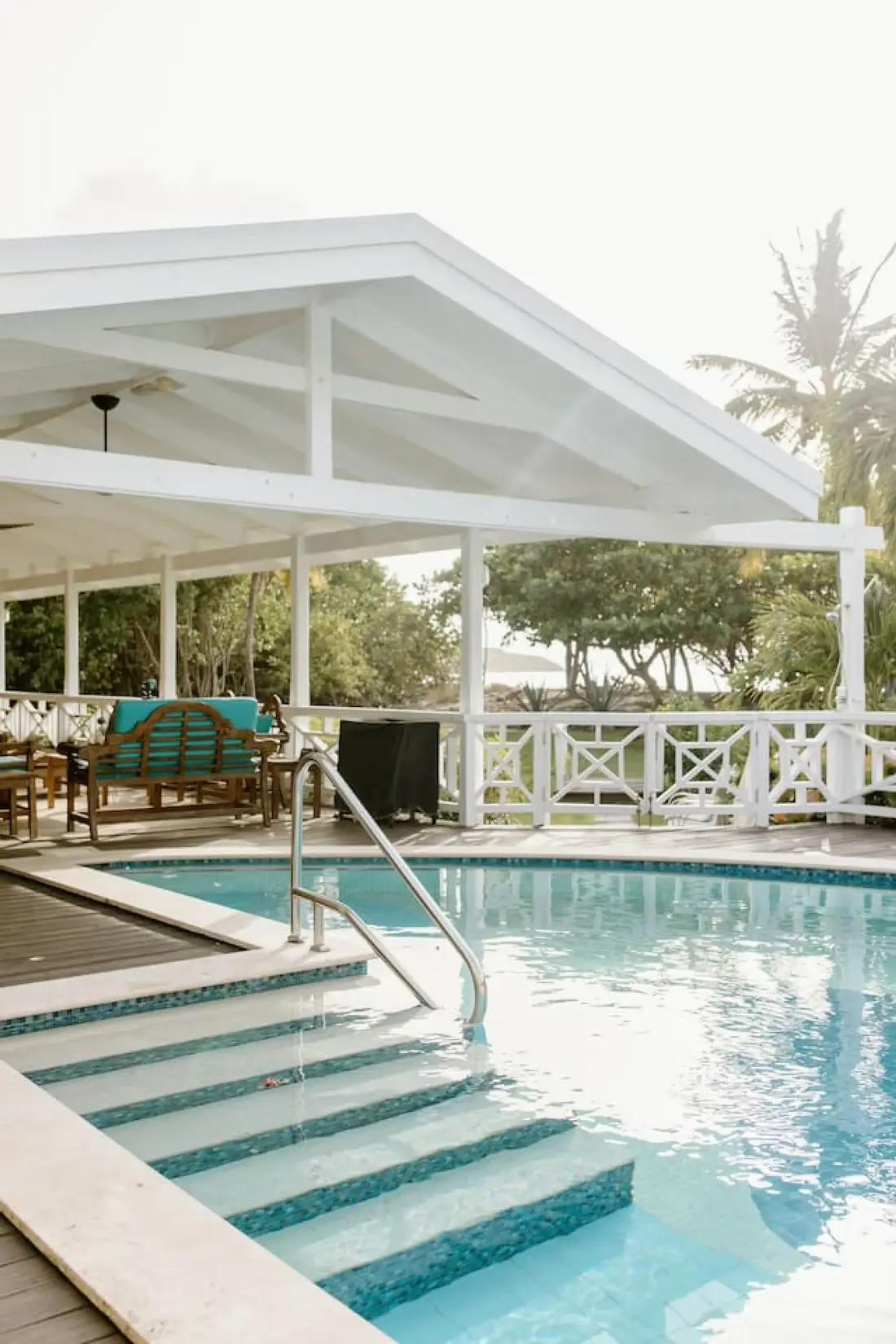
A villa or a rental condo replaces that deal with a different one. Instead of a room, you get a house: bedrooms, living space, a full kitchen, laundry, outdoor areas, and in most of our homes a pool that belongs to the people you came with and nobody else. Every home in our portfolio has a full kitchen; most have a washer and dryer, air conditioning, Wi-Fi, and free parking. Four are beachfront. Those facts come straight from the listings, and they add up to a specific set of changes in how a week runs.
The mornings change first. Coffee happens on your own deck, in whatever you slept in, on no schedule. Kids eat cereal at 6:30 without anyone getting dressed for a buffet. The middle of the day changes next: wet towels go in your own dryer, dive gear dries on your own rail, groceries live in a real refrigerator, and nobody carries a room key to the pool. The evenings change most. Dinner can be a restaurant in town, a grilled fish on your own terrace, or a provisioned spread that took ten minutes, and the night ends with your group around your table for as long as it wants, no last call.
Privacy is the part guests mention afterward. One of the old lines from this post's first version still says it best: instead of sharing common areas with other guests, you have your own space to enjoy, and a quiet morning overlooking the water feels personal in a way a shared deck cannot. Add local management on the ground here, private chefs and provisioning arrangeable on request, and a direct line to people who live on island, and the home stops feeling like a compromise on service. It is a different kind of service: less daily, more yours. For stays of a month and up, which St. Croix attracts more of than most islands thanks to U.S. banking, U.S. phones, and no passport for U.S. citizens, the home is the only version that really works; our long stays guide covers that case.
Condos, the middle path
Between the resort and the standalone villa sits the condo, and on St. Croix it is a bigger category than visitors expect. Condo communities dot the shoreline around Christiansted and the coasts either side of it, and a rented condo buys most of the villa advantages, kitchen, laundry, living room, your own front door, at the scale of a couple or a small family rather than a house party. Many communities add a shared pool and beach access, so you keep a little of the resort feel without the resort's crowds or its dinner prices.
Two of ours show the range. Sunset Oasis is a two-bedroom beachfront condo sleeping four, with the sand directly below. Caribbean Blue Hideaway is a one-bedroom with an ocean view, sized for a couple who wants a kitchen and a washer without paying for bedrooms they will not use. For honeymooners, remote workers, and pairs of divers, a condo is frequently the correct answer to the whole question this post asks, and it costs the least of the three options in most seasons. If your party is two to four people and you want to self-cater, start your search in this category before deciding between the extremes.
The group-size math
Now the arithmetic, because this is where the decision usually gets made for groups. A standard hotel room is built around one king or two queens and comfortably holds two adults, maybe two adults and two small kids. Nobody publishes it that way, but every family that has shared one room with teenagers knows it. So as the party grows, the hotel bill grows in whole-room increments, while the group spreads across more and more separate doors, separate floors, sometimes separate wings.
| Party | What a hotel stay looks like | What one home looks like |
|---|---|---|
| 2 | 1 room | A 1-bedroom condo such as Caribbean Blue Hideaway |
| 4 | 2 rooms, ideally adjacent, often not | A 2-bedroom home: Sunset Oasis, Moko Vista, or Sunset Sea-Clusion |
| 6–8 | 3 to 4 rooms on one folio | A 3-bedroom villa sleeping 8: Dragonfly or Toes in the Sand |
| 10–12 | 5 to 6 rooms and a group booking | One 5-bedroom house sleeping 12: Shoy's Beach House, The Cerulean, or The Buck Island Overlook |
We deliberately print no prices in that table, ours or the hotels'; rates move by season everywhere, and inventing numbers helps nobody. Run the comparison yourself with live dates: multiply a hotel's nightly rate by the rooms your group needs, then put the same dates into a villa that sleeps everyone. For six or more people, the one-roof option compares well far more often than travelers expect, and that is before the kitchen starts replacing a few restaurant meals for eight.
The part the math cannot show is what one roof does to the trip itself. A three-generation family in five hotel rooms coordinates by text and meets in the lobby. The same family in Shoy's Beach House drifts in and out of one courtyard all day, every bedroom with its own bath and its own door onto the shared middle. Grandparents get their quiet suite; kids get the pool; everyone gets the same table at dinner. Groups tell us afterward that the house was the vacation. Our large-group collection exists for exactly this trip.
Kitchens and groceries
The villa case leans on the kitchen, so it is fair to ask what stocking one here actually involves. The answer is: a normal American grocery run, on an island. St. Croix has full-size supermarkets, and knowing the names in advance removes most of the anxiety.
- Plaza Extra East, at Sion Farm mid-island, is a full-size supermarket with a bakery, deli, and meat counter; the VI consumer-affairs department has measured it as the island's cheapest family basket. Plaza Extra West on Centerline Road serves the Frederiksted side.
- Pueblo, the long-established chain with stores at Golden Rock near Christiansted and Villa La Reine, is known for produce and low beer and liquor prices.
- Cost-U-Less, next to Plaza Extra East, is warehouse-style with no membership required, useful for long stays and big groups.
- The Market STX, mid-island, is a modern full-service supermarket.
- Seaside Market and Deli in Christiansted is the island's gourmet stop: bakery, deli, wine, cheese, fresh seafood, and party platters, the natural first-day run for villa guests.
Two managing expectations: there is no ShopRite, no Trader Joe's, and no Instacart here, and imported goods cost more than they do stateside, as they do across the Caribbean. At last check, IsleAtDelivery delivers groceries and packages island-wide, and pre-arrival provisioning can be arranged so the refrigerator is full when you walk in. The full rundown, including the fish trucks and farm stands, lives in our groceries guide. And nobody self-caters every meal; the realistic pattern is breakfasts and a few dinners at home, the rest out. A kitchen does not obligate you to cook. It gives you the option, and on day five, when a nine-year-old wants pancakes at 7 a.m., the option is worth a lot.
A week from a hotel, a week from a villa
Put the same seven nights side by side and the difference stops being abstract. From a Christiansted hotel: breakfast at the hotel or a cafe in town, a Buck Island boat off the boardwalk one morning, the fort and the shops another, dinners at a rotating cast of restaurants a short walk away, drinks on the boardwalk after. It is a good week. It is also a week lived almost entirely in public, on the schedules of kitchens and front desks, and by Thursday the room has gotten small.
From an East End villa: sunrise from your own deck with Buck Island on the horizon, slow breakfast, a beach or a boat or a hike as the day's one appointment, back for an afternoon in your own pool, grilled fish and a long table as the light goes. Town is twenty minutes away when you want it, and two or three nights you will. The week has fewer line items and more hours in it. Neither version is objectively better. But most people reading a 4,000-word article about where to stay are planning more than a weekend, and the longer the trip, the harder it is for the first version to keep up with the second.
When a hotel is the right call
To keep this even-handed, here are the trips where we would tell a friend to book a hotel on St. Croix without hesitation.
- A solo trip or a work trip. One traveler, a few nights, no cooking: a town hotel in Christiansted is efficient, sociable, and walkable to everything.
- A two-night stopover. Kitchens and laundry earn nothing in 48 hours. Book close to what you came for and keep it simple.
- A resort-amenity vacation. If the golf, the tennis, the spa, and dinner on property are the vacation, The Buccaneer is the island's complete package and has been refining it since 1947.
- The no-decisions week. One prepaid number, meals included, pool bar open: Carina Bay is the island's one true all-inclusive, adults only, and it does what that model promises.
- A first date with the island. Some travelers scouting St. Croix for a future longer stay like a central hotel base for three or four days of reconnaissance. Fair enough; we get a share of villa guests who did exactly that the year before.
When a villa is the right call
And the trips where the home wins, usually by a wide margin.
- Six or more people. The room math, the one-table dinners, the single shared pool. This is the clearest case in the whole post.
- A week or longer. Time amortizes every villa advantage: the kitchen pays off more days, the laundry matters more, the privacy compounds.
- Families with small kids. Naps behind a real door, early dinners on your own schedule, a bathtub, a washer for the inevitable. Parents know.
- Divers and snorkelers with gear. Rinse tanks, drying racks, your own vehicle, no dripping through a lobby.
- Remote workers and snowbirds. U.S. phones, villa Wi-Fi, a desk with a view, and month-plus stays that no hotel prices sanely.
- Celebrations. Milestone birthdays, anniversaries, reunions: one house, one table, a private chef for a night if you want one. Our celebrations page covers how we help set these up.
- Anyone who came for quiet. If the point of the trip is to hear wind and water and your own people, a home is the only product that sells that.
Questions guests ask
Do I need a car if I stay in a hotel in Christiansted?
For a short stay built around town, no. Restaurants, shops, the fort, and the Buck Island boats are all within a walk of the downtown hotels, and taxis cover the airport runs. For everything else the island offers, beaches, Cane Bay, the rainforest, Point Udall, you will want a rental car, and villa guests should plan on one from day one. Remember that St. Croix has no Uber or Lyft, and that you drive on the left in normal left-hand-drive cars. It feels odd for about twenty minutes and then it does not.
Are there all-inclusive resorts on St. Croix?
One, at last check: Carina Bay, the former Divi Carina Bay, on the southeastern shore, an adults-only all-inclusive with a casino for guests 21 and over. No family all-inclusive operates on the island. Families who want the everything-handled feel usually get it a different way here: a villa with pre-arrival provisioning, a private chef for a night or two, and boats and tours booked ahead. It costs out differently, and there is no wristband, but the effect, nobody thinking about logistics at 6 p.m., is much the same.
Which part of the island has the best beaches?
It depends what a beach is for, in your book. The calmest swimming water is on the west coast around Frederiksted and in the protected East End bays. The best shore snorkeling is Cane Bay on the North Shore and the Frederiksted pier. The prettiest wild sand is on hike-in East End beaches like Jack's and Isaac's Bays, and on Buck Island's Turtle Beach, reached by boat. Every area in this post puts some version of a good beach within a short drive; no choice locks you out of the others.
When is peak season, and does it change where I should stay?
Mid-December to mid-March is peak: the Christmas Winds bring the driest, breeziest, coolest weather, and the most visitors. Hotels and villas alike book out and price up; the difference is that a full hotel feels full, while a full villa feels exactly like an empty one. Hurricane season runs June 1 to November 30, most active August and September; September to November is the island's quietest, greenest, best-value stretch, and travel insurance plus flexible cancellation is the sensible pairing for it, wherever you stay.
Can we get groceries before we arrive?
Yes. Pre-arrival provisioning can be arranged for our homes, so the first-morning coffee and the first night's dinner are already in the kitchen when you walk in. IsleAtDelivery, at last check, delivers groceries island-wide for mid-stay top-ups, and the supermarkets named above cover everything else. First-day tip regardless: do one real Plaza Extra or Pueblo run early, because a stocked kitchen on day one shapes the whole week, and mid-island is on the way from the airport to almost everywhere.
Are the villas managed by someone actually on the island?
Ours are. SP Vacations is run by Sterling Point, a licensed on-island real-estate operation, which means the people answering questions before your trip and during it live here. That is worth asking about wherever you book a rental, on any island: who holds the keys, how fast do they answer, and are they physically present when something needs fixing. A home without real local management is where the horror stories come from, and it is the villa industry's version of the overbooked hotel.
Where this leaves you
Short version: solo travelers, two-nighters, and resort-amenity vacations should look hard at the hotels, and St. Croix's are good ones, from the boardwalk boutiques to The Buccaneer's 340 acres. Couples self-catering should start with condos. Groups of six or more, families, divers, long-stayers, and anyone who came for quiet should price one home against the pile of hotel rooms and see for themselves. Our beachfront collection covers the toes-in-sand cases, the East End collection covers the view-and-quiet cases, and every listing shows live rates and availability, booked direct with the people who manage the homes. Wherever you land, on either question, the island holds up its end.
Sources
Written from official and first-party sources, checked August 2026. Hours, prices and event dates change — confirm before you go.